Marine Flexible Solar Panels: Lightweight Solar Power Solutions for Boats and Yachts
Marine flexible solar panels are designed to deliver reliable solar energy on boats, yachts, and offshore equipment where traditional rigid panels are difficult to install. Their lightweight structure, waterproof protection, and curved-surface compatibility make them ideal for marine environments.
When we first started developing flexible solar solutions for marine customers at Bright Solar, the biggest challenge was not producing electricity. It was creating a solar module that could survive real ocean conditions.
A panel installed on land usually faces sunlight, rain, and temperature changes. A marine solar panel faces much more:
- Saltwater exposure
- Continuous vibration
- Strong UV radiation
- Limited installation space
- Wind and wave movement
During our field discussions with boat builders and marine equipment suppliers in Europe, one point became clear: marine solar systems cannot be designed like ordinary rooftop systems.
The ocean changes everything.
A solar panel that performs well on a building roof may not be suitable for a sailing yacht moving thousands of kilometers through different climates.
What Are Marine Flexible Solar Panels?
Marine flexible solar panels are lightweight photovoltaic modules specifically designed for boats, yachts, and other marine applications.
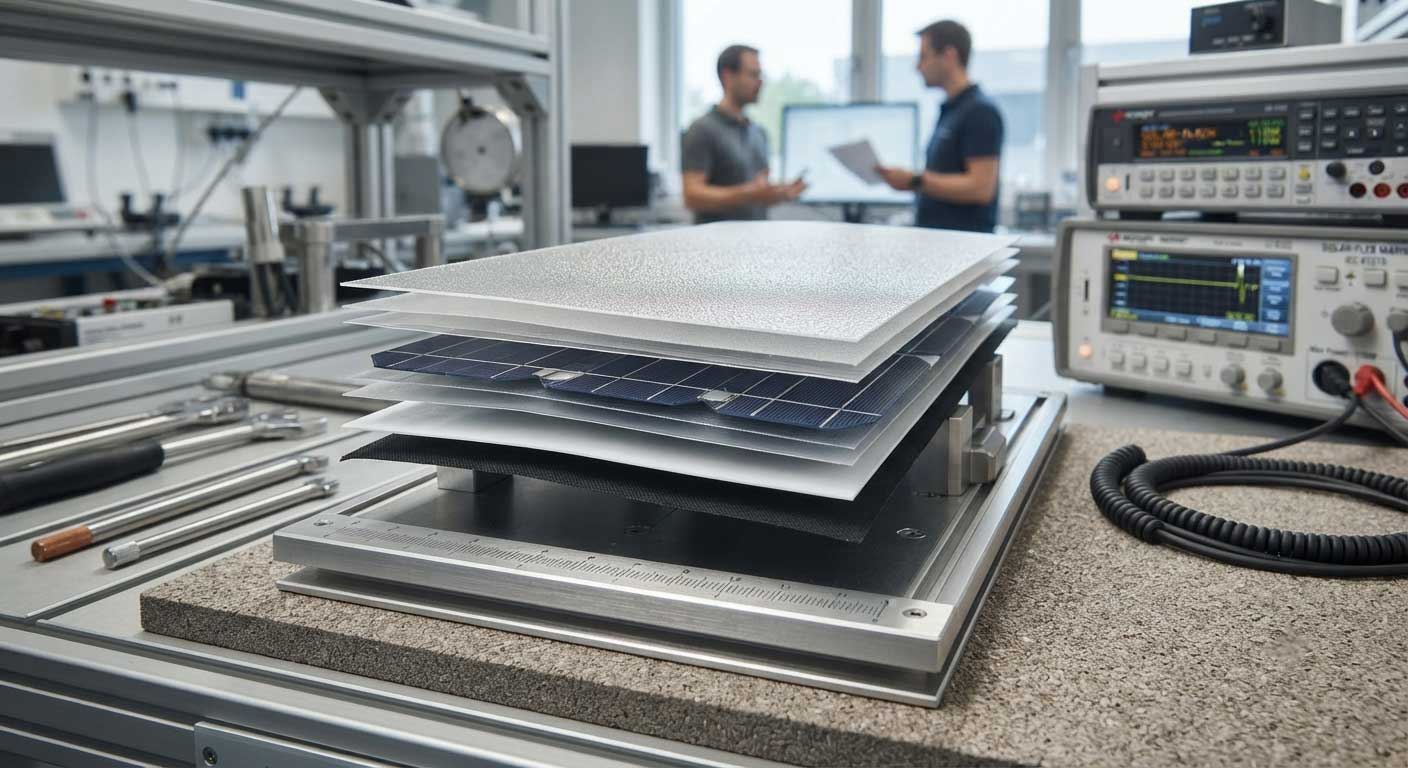
Unlike conventional rigid solar panels that rely on glass surfaces and aluminum frames, flexible marine solar panels use advanced materials that allow them to adapt to curved surfaces while reducing installation weight.
A typical marine flexible solar panel consists of:
| Component | Function |
|---|---|
| ETFE protective coating | Protects against UV rays, saltwater, and scratches |
| Monocrystalline solar cells | Convert sunlight into electricity |
| Flexible substrate | Allows installation on curved surfaces |
| Waterproof encapsulation | Prevents moisture penetration |
| Junction box and cables | Transfers generated power safely |
At Bright Solar, marine solar products are developed around one principle:
The solar panel must survive the environment where it will be used.
A boat is not a stationary rooftop. It moves, vibrates, heats up, and experiences constant weather exposure.
Why Use Flexible Solar Panels for Boats Instead of Traditional Solar Panels?
The biggest advantage of marine flexible solar panels is installation flexibility.
Boats rarely have large, perfectly flat areas suitable for traditional solar modules.
Available spaces often include:
- Curved cabin roofs
- Bimini tops
- Deck surfaces
- Hatch covers
- Side structures
Rigid panels usually require:
- Metal brackets
- Additional mounting structures
- Reinforced installation areas
Flexible panels can follow the shape of the boat while maintaining a low-profile appearance.
This is especially important for sailing yachts where design and weight distribution matter.
Weight Reduction in Marine Solar Applications
Weight is a critical factor on any vessel.
Every additional kilogram affects:
- Fuel consumption
- Sailing performance
- Balance
- Available storage capacity
A traditional glass solar panel may weigh significantly more because of its protective structure.
Flexible marine solar panels reduce weight by replacing:
- Tempered glass
- Heavy aluminum frames
- Large mounting systems
with:
- Lightweight composite layers
- Polymer protection
- Thin photovoltaic structures
For smaller boats, this difference can determine whether a solar system is practical.
A yacht owner may want additional battery charging capacity but may not want hundreds of kilograms added above the deck.
How Marine Flexible Solar Panels Work in Ocean Environments
The photovoltaic principle is the same as traditional solar technology.
Solar cells capture sunlight and convert it into electrical energy.
However, marine environments create additional engineering requirements.
A marine solar panel must handle:
Saltwater Corrosion
Salt spray is one of the biggest challenges for marine equipment.
Salt particles can accelerate corrosion of:
- Electrical connections
- Metal components
- Mounting hardware
For marine solar applications, protection around electrical components is essential.
High-quality flexible solar modules use sealed junction boxes and protective encapsulation to reduce moisture risks.
UV Exposure
Boats often operate under direct sunlight for extended periods.
According to the U.S. Department of Energy, photovoltaic modules experience performance changes due to environmental conditions including temperature and solar radiation exposure.
Source:
U.S. Department of Energy Solar Photovoltaics
https://www.energy.gov/eere/solar/solar-photovoltaics
Marine solar panels require surface materials that maintain transparency and protection after years of UV exposure.
Bright Solar uses ETFE surface technology in selected flexible modules because of its strong outdoor resistance.
Temperature Changes
Marine environments create rapid temperature variations.
A boat may experience:
- Cool ocean mornings
- Strong midday sunlight
- Hot deck temperatures
Materials must expand and contract without damaging internal electrical connections.
This is one reason flexible construction can be beneficial.
The panel structure can better accommodate small movements compared with rigid glass-based designs.
Marine Flexible Solar Panels Material Technology
ETFE Coating for Marine Durability
The surface layer is one of the most important parts of a marine solar panel.
ETFE (Ethylene Tetrafluoroethylene) is widely used in premium flexible solar products because it provides:
- Excellent UV resistance
- High transparency
- Scratch resistance
- Chemical stability
- Lightweight protection
For boats operating near coastal areas, this protection helps reduce surface degradation.
During Bright Solar product evaluations, we found that surface coating quality often affected long-term performance more than the solar cells themselves.
The cells generate energy.
The protective layers determine whether they continue working years later.
Monocrystalline Cells for Limited Marine Space
Boat surfaces are limited.
A yacht owner cannot simply add more roof area when more electricity is needed.
This makes efficient solar cells valuable.
Monocrystalline cells are commonly selected for marine flexible solar panels because they provide strong output in limited installation areas.
The National Renewable Energy Laboratory (NREL) identifies crystalline silicon as the leading photovoltaic technology due to its efficiency, reliability, and established manufacturing process.
Source:
National Renewable Energy Laboratory
https://www.nrel.gov/solar/
For marine applications, efficient cells allow designers to generate more power without increasing panel size.
Real Marine Project Experience: Flexible Solar Panels on Sailing Boats
One of the most valuable lessons we learned from marine customers was that installation space matters more than expected.
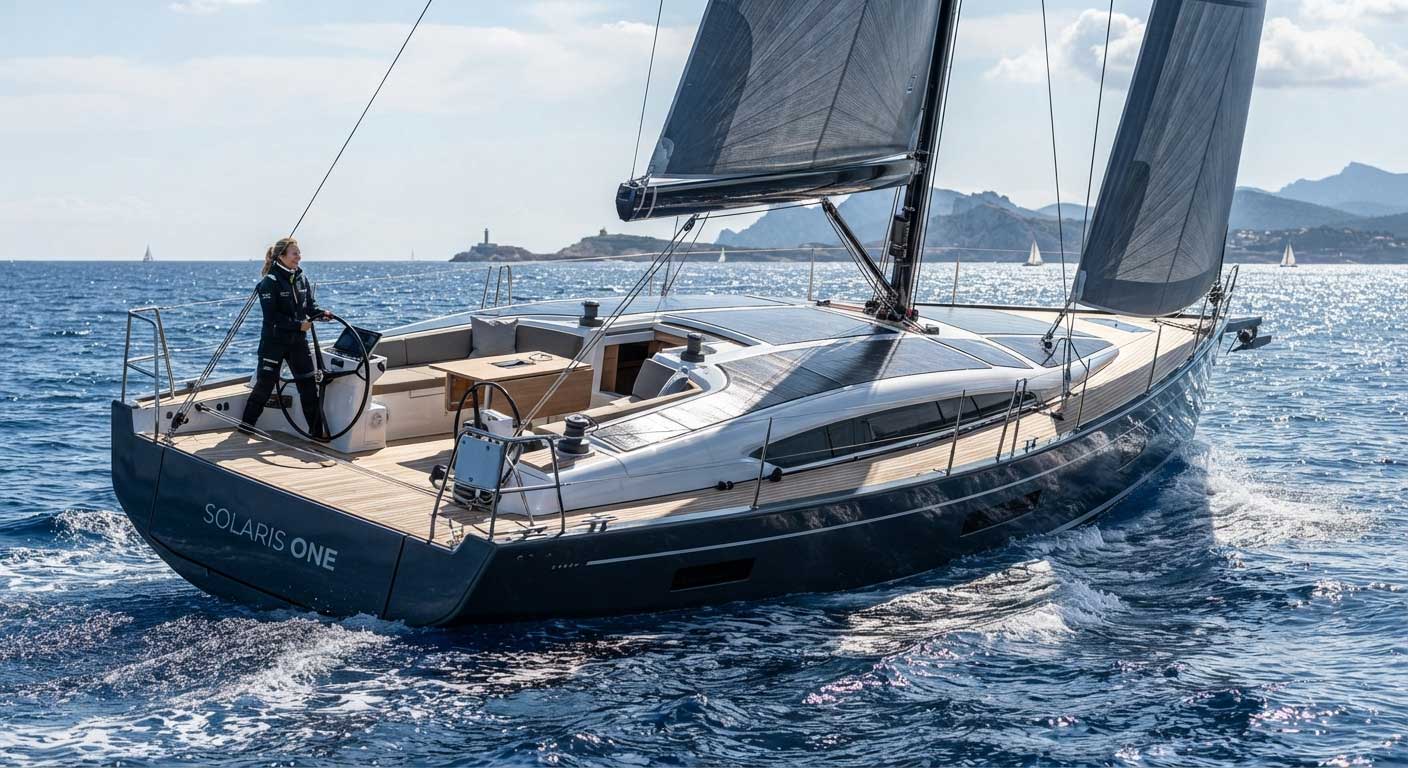
A European sailing equipment supplier approached Bright Solar with a challenge: they needed additional charging capacity without changing the appearance of a yacht.
The original design used traditional rigid panels.
The problems were:
- The available deck area was curved
- Additional brackets affected appearance
- Weight distribution became a concern
After evaluating the structure, the project team selected flexible marine solar panels.
The final system provided energy support for:
- Battery charging
- Navigation equipment
- LED lighting
- Communication systems
The customer specifically valued the low-profile installation because the solar system integrated into the vessel rather than becoming an external structure.
This project reinforced an important engineering principle:
Marine solar design is not only about generating watts. It is about integrating energy into the vessel.
How to Install Marine Flexible Solar Panels: Practical Guide Based on Field Experience
Installing marine flexible solar panels may look simple because the modules are lightweight, but marine environments require more careful planning than ordinary solar installations.
During Bright Solar marine projects, we found that most long-term problems were not caused by photovoltaic cells. They usually came from installation details:
- Poor surface preparation
- Incorrect cable routing
- Weak waterproof sealing
- Improper adhesive selection
A boat is constantly moving. Every wave, vibration, and temperature change creates stress on the solar system.
A successful marine installation begins before the panel touches the deck.
Step 1: Evaluate the Boat Installation Area
Before installing marine flexible solar panels, inspect the mounting surface carefully.
Important factors include:
- Surface material
- Available sunlight exposure
- Curvature
- Walking areas
- Water drainage
- Cable access
Common installation locations include:
| Installation Area | Advantages | Considerations |
|---|---|---|
| Cabin roof | Large sunlight exposure | Surface curvature |
| Bimini top | Lightweight solution | Flexible mounting required |
| Deck hatch | Easy access | Foot traffic protection |
| Rear platform | Good solar exposure | Saltwater exposure |
One mistake we often see is selecting the largest possible installation area without considering maintenance.
A panel placed in a convenient location is usually better than a slightly larger panel installed where inspection becomes difficult.
Step 2: Prepare the Surface Before Mounting
Marine surfaces often contain invisible contaminants:
- Salt residue
- Wax coatings
- Oil deposits
- Cleaning product residue
These materials can reduce bonding strength.
Professional installers usually follow this process:
- Remove dirt and salt deposits
- Clean with appropriate marine-safe solutions
- Allow the surface to dry completely
- Confirm adhesion compatibility
During a Mediterranean yacht installation project, our team discovered that the original deck surface had a protective coating applied by the manufacturer.
The flexible solar module could physically attach, but the bonding strength was insufficient.
After removing the coating and preparing the surface correctly, the installation performance improved significantly.
Small preparation details often determine long-term reliability.
Step 3: Design the Electrical Connection System
Marine solar systems require careful electrical planning because moisture and salt exposure create additional risks.
A typical marine flexible solar system includes:
| Component | Function |
|---|---|
| Flexible solar panel | Generates electricity |
| Charge controller | Controls battery charging |
| Battery bank | Stores energy |
| Inverter | Provides AC power if needed |
| Waterproof connectors | Protect electrical connections |
Cable routing should avoid:
- Standing water areas
- Sharp edges
- High-temperature surfaces
- Mechanical stress points
A well-installed cable system can extend the service life of the entire solar setup.
Step 4: Protect Against Marine Weather Conditions
Marine solar panels experience harsher conditions than many land-based systems.
Protection considerations include:
Saltwater Resistance
Saltwater can accelerate corrosion.
Recommended practices:
- Use marine-grade connectors
- Seal cable entry points
- Inspect connections regularly
UV Protection
Long exposure to sunlight can degrade lower-quality materials.
Premium flexible solar panels use protective coatings designed for outdoor environments.
Mechanical Stress
Boat movement creates repeated vibration.
Installation methods should minimize unnecessary movement between the panel and mounting surface.
Choosing the Right Marine Flexible Solar Panels Wattage
The correct panel size depends on the boat’s energy consumption.
Common marine flexible solar options include:
| Panel Power | Suitable Applications |
|---|---|
| 100W Flexible Solar Panel | Small boats, battery maintenance, basic electronics |
| 200W Flexible Solar Panel | Weekend boats, sailing yachts, moderate energy needs |
| 300W Flexible Solar Panel | Larger yachts and extended cruising |
| 400W Flexible Solar Panel | High-demand marine systems |
A common mistake is selecting solar power based only on available space.
The better approach is calculating daily energy requirements.
Example:
A cruising sailboat may use:
| Equipment | Daily Energy Demand |
|---|---|
| Navigation devices | Moderate |
| LED lighting | Low |
| Communication equipment | Moderate |
| Refrigerator | Higher |
| Entertainment devices | Variable |
The solar system should match actual usage patterns.
Marine Flexible Solar Panels vs Rigid Marine Solar Panels
Both technologies have advantages.
The better option depends on the vessel.
| Feature | Marine Flexible Solar Panels | Marine Rigid Solar Panels |
|---|---|---|
| Weight | Lower | Higher |
| Installation | Easier on curved surfaces | Requires mounting structures |
| Appearance | Low-profile | More visible |
| Efficiency | Depends on technology | Often higher |
| Maintenance | Simple surface inspection | Mounting hardware inspection |
| Best Use | Yachts, sailboats, curved areas | Large flat boat structures |
For commercial vessels or large boats with available flat areas, rigid panels can still be an excellent choice.
For smaller yachts, sailing boats, and custom marine projects, flexible solar panels often provide better integration.
Why Bright Solar Marine Flexible Solar Panels?
Bright Solar develops flexible solar solutions based on real application requirements.
Our marine customers usually care about more than output specifications.
They ask about:
- How much weight will be added?
- Will the installation affect the boat design?
- Can the panel handle saltwater exposure?
- How easy is maintenance?
Our engineering approach focuses on these practical questions.
A solar panel on a boat is not just an energy device.
It becomes part of the vessel.
That means the product must consider:
- Marine materials
- Installation methods
- Long-term environmental exposure
- User behavior
Marine Flexible Solar Panels for Off-Grid Marine Energy
Beyond recreational boating, flexible marine solar technology is also used for remote energy applications.
Examples include:
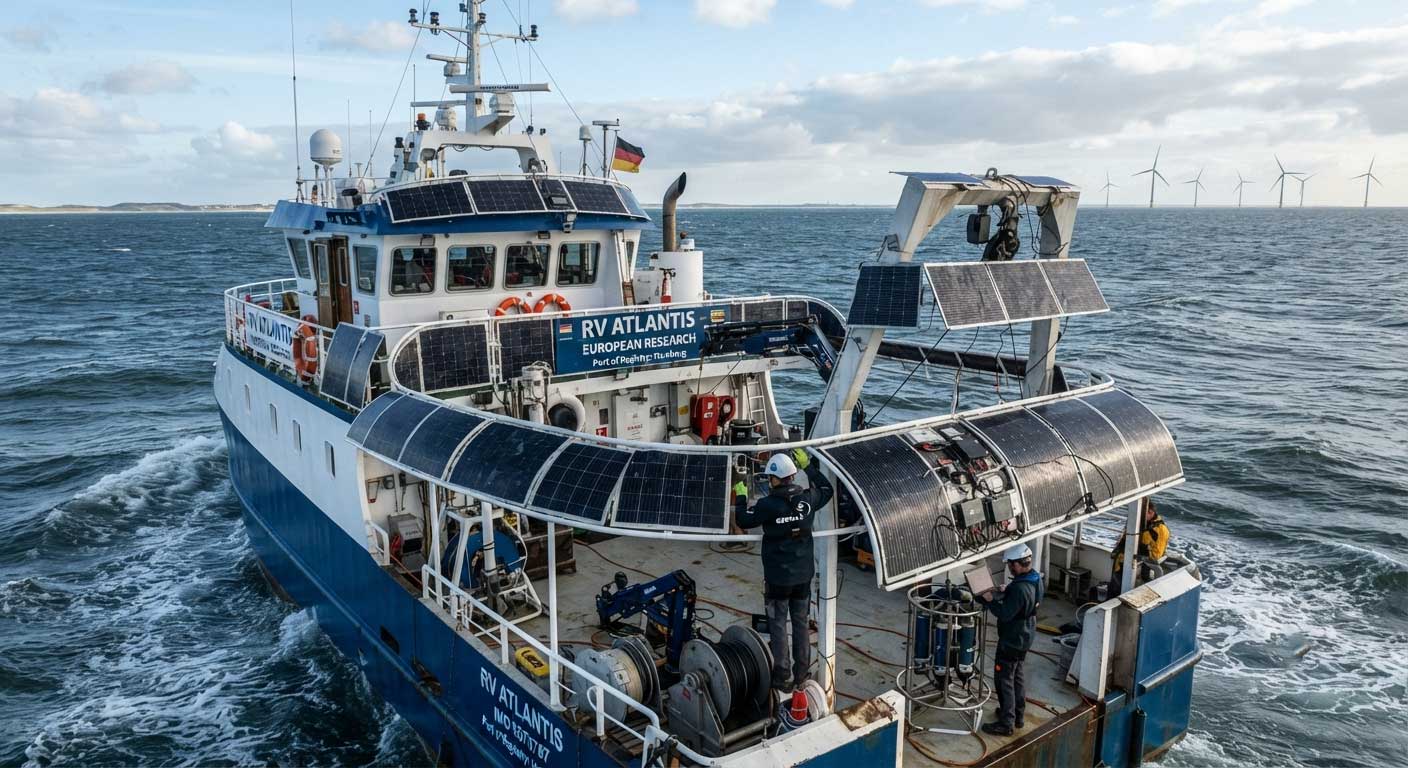
- Research vessels
- Fishing boats
- Navigation equipment
- Remote monitoring stations
- Emergency systems
These applications require dependable energy without frequent maintenance.
In remote marine environments, solar power reduces dependence on fuel generators and provides continuous battery support.
The International Energy Agency (IEA) highlights solar photovoltaic technology as one of the fastest-growing renewable energy sources globally, driven by improvements in technology and declining system costs.
Source:
International Energy Agency – Solar PV
https://www.iea.org/energy-system/renewables/solar-pv
FAQ About Marine Flexible Solar Panels
Are marine flexible solar panels waterproof?
Yes, high-quality marine flexible solar panels are designed with waterproof encapsulation and protective coatings. However, waterproof performance depends on product design, connectors, and installation quality.
Can flexible solar panels be installed on boats?
Yes. Boats are one of the most common applications because flexible panels can fit curved surfaces and reduce installation weight.
How long do marine flexible solar panels last?
Service life depends on materials, environmental exposure, and maintenance. Premium products using durable coatings and proper encapsulation are designed for long-term outdoor operation.
Are flexible solar panels suitable for saltwater environments?
Yes, when designed specifically for marine applications. Protective coatings, sealed electrical connections, and proper installation are essential for saltwater conditions.
How many watts of solar panels does a boat need?
The required wattage depends on daily energy consumption. Small boats may use 100W–200W systems, while larger cruising vessels may require several hundred watts or more.
Are marine flexible solar panels better than rigid panels?
Neither technology is universally better. Flexible panels are usually better for curved, lightweight installations, while rigid panels may provide higher efficiency for large flat areas.
Can marine flexible solar panels charge boat batteries?
Yes. When connected with a suitable solar charge controller, flexible marine solar panels can charge onboard battery systems.
Final Thoughts: Why Marine Flexible Solar Panels Are Changing Boat Energy Systems
Marine flexible solar panels solve a problem that traditional solar technology cannot always handle: installing renewable energy in challenging environments.
Boats move. Surfaces curve. Space is limited.
A successful marine solar solution must adapt to those conditions.
From small sailing boats to offshore equipment, flexible solar technology provides a practical way to generate clean energy without adding unnecessary weight or complicated structures.
At Bright Solar, our experience with marine applications has shown that the future of solar power is not only about higher efficiency.
It is about making solar energy available in more places.
The ocean is one of those places.
With lightweight materials, durable protection, and flexible installation options, marine flexible solar panels are becoming an important solution for modern marine energy systems.
Related recommendations
-

450 Watt Solar Panel Performance and Applications Guide
192Discover how a 450 watt solar panel delivers reliable power for RVs, homes, marine and off-grid systems. Learn output, efficiency and installation tips.
View details -
100W Flexible Solar Panels: Lightweight Solar Power for RV, Marine and Off-Grid Applications
212100W flexible solar panels deliver lightweight and portable solar power for RVs, boats, camping, and off-grid systems. Explore Bright Solar solutions and applications.
View details -
400w Flexible Solar Panels: Complete Guide for RV & Off-Grid Use
230Explore 400w flexible solar panels for RVs, boats and off-grid systems. Learn sizing, output, installation, wiring, efficiency and practical selection tips.
View details -
Black Flexible Solar Panel: Design, Performance, and Applications
82A black flexible solar panel combines a dark photovoltaic surface with lightweight construction for controlled curved-surface installations. Selection should...
View details