100W Flexible Solar Panel 12V: Complete Guide for RV, Marine and Off-Grid Use
Direct Answer :
A 100W flexible solar panel 12V is a lightweight solar solution designed for RVs, boats, vans, and off-grid systems where installation space and weight matter. It typically provides around 100 watts of rated power under standard test conditions and works with 12V batteries through a suitable solar charge controller.
What Is a 100W Flexible Solar Panel 12V?
A 100W flexible solar panel 12V is a lightweight photovoltaic module designed to generate electricity for mobile and space-limited applications.
Unlike traditional framed solar panels with rigid aluminum structures and glass surfaces, flexible solar panels use thinner materials that allow the module to bend slightly and conform to curved surfaces.
This makes them especially suitable for:
- RV roofs
- Camper vans
- Marine decks
- Tiny homes
- Portable power systems
- Remote monitoring equipment
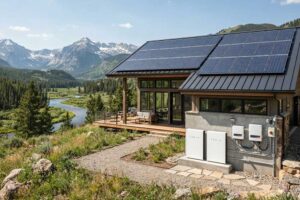
- Off-grid cabins
At Bright Solar, we design flexible solar solutions around real installation conditions rather than only focusing on laboratory wattage.
A panel installed on a moving vehicle experiences vibration, changing temperatures, moisture exposure, and limited mounting space. Those conditions are very different from a fixed rooftop installation.
A 100W flexible module is not intended to replace a large residential solar array.
Its strength is flexibility.
For a traveler needing battery charging, lighting, refrigeration support, communication devices, and small electronics, a properly configured 100W system can provide valuable daily energy.
How Much Power Does a 100W Flexible Solar Panel Produce?
A 100W solar panel is rated to produce 100 watts under Standard Test Conditions (STC).
STC typically refers to:
- Solar irradiance: 1000W/m²
- Cell temperature: 25°C
- Air mass: AM1.5
Real-world output is usually lower because outdoor conditions rarely match laboratory testing.
The U.S. Department of Energy explains that actual solar energy production depends on factors including location, sunlight availability, orientation, shading, temperature, and system losses. (energy.gov)
A realistic daily energy estimate depends on sunlight hours.
For example:
| Location Condition | Estimated Peak Sun Hours | Approximate Daily Energy |
|---|---|---|
| Strong summer sunlight | 5–6 hours | 400–600Wh/day |
| Average conditions | 3–5 hours | 300–500Wh/day |
| Cloudy conditions | 1–3 hours | Lower output |
A 100W panel does not continuously produce 100W from sunrise to sunset.
Solar output follows the sun.
Morning production gradually increases.
Peak output usually occurs around midday.
Production declines in the afternoon.
This daily pattern is important when designing a battery charging system.
100W Flexible Solar Panel 12V Electrical Specifications
Although specifications vary between manufacturers, a typical 100W flexible 12V solar panel may include:
| Specification | Typical Range |
|---|---|
| Rated Power | 100W |
| Working Voltage | Around 17–20V |
| Open Circuit Voltage | Around 20–24V |
| Working Current | Around 5–6A |
| Weight | Approximately 2–5 lbs depending on construction |
| Surface Material | ETFE or similar protective layer |
| Application | RV, marine, camping, off-grid |
The term “12V solar panel” can sometimes confuse buyers.
A solar panel labeled 12V does not usually output exactly 12V.
A 12V battery requires charging voltage above the battery’s nominal voltage.
For example:
- 12V lead-acid battery charging voltage may exceed 14V
- 12V lithium batteries require their own charging profile
The solar charge controller manages this difference.
Why Choose a Flexible Solar Panel Instead of a Rigid Panel?
The biggest advantage of flexible solar panels is installation freedom.
A rigid panel may require:
- Aluminum frame
- Mounting brackets
- Drilling
- Additional roof structure
- More installation height
A flexible panel can often be installed where rigid modules are difficult.”Learn more about the Flexible Solar Panel Installation Guide“
Common advantages include:
Lower Weight
For RV and marine users, every kilogram matters.
Reducing roof load can help maintain vehicle efficiency and simplify installation.
Low Profile Installation
Flexible panels sit closer to the mounting surface.
This helps maintain:
- Cleaner vehicle appearance
- Lower wind resistance
- Better roof clearance
Curved Surface Compatibility
Many boats, vans, and trailers do not have perfectly flat surfaces.
Flexible construction allows better adaptation.
Easier Installation
For some applications, installation can avoid complex mounting hardware.
However, installation still requires careful attention to:
- Surface preparation
- Adhesive selection
- Cable sealing
- Temperature expansion
- Manufacturer instructions
A flexible panel is not simply “stick it anywhere.”
Long-term reliability depends heavily on installation quality.
100W Flexible Solar Panel 12V for RV Applications
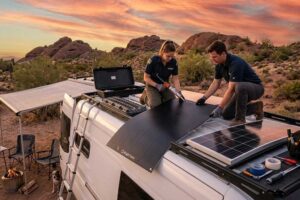
RV owners are one of the largest user groups for 100W flexible solar panels.
A typical camper electrical system may include:
- LED lights
- Phone charging
- Small fans
- Water pump
- Refrigerator
- GPS equipment
- Internet devices
A single 100W panel can contribute meaningful charging energy.
However, expectations should remain realistic.
A 100W panel is unlikely to power:
- Air conditioning
- Electric heating
- Large induction cooking loads
- High-power appliances for extended periods
Those applications require much larger solar arrays and battery banks.
Example: Weekend Camper Setup
A small camper uses:
| Device | Daily Energy |
|---|---|
| LED lights | 30Wh |
| Phone charging | 20Wh |
| Ventilation fan | 80Wh |
| Water pump | 20Wh |
| Small refrigerator support | 300Wh |
Total:
Approximately 450Wh/day
A 100W flexible panel producing around 400–500Wh on a good solar day could significantly offset this consumption.
The actual result depends on climate, battery efficiency, shading, and controller performance.
This type of application is where a 100W flexible panel performs best.

How to Install a 100W Flexible Solar Panel 12V
Installation quality directly affects long-term performance.
A typical installation process includes:
Step 1: Select the Installation Location
Choose a surface with:
- Maximum sunlight exposure
- Minimal shading
- Strong structural support
- Suitable ventilation
- Easy cable routing
Avoid placing the panel where roof equipment creates frequent shadows.
Step 2: Prepare the Surface
The mounting surface should be:
- Clean
- Dry
- Free from oil
- Free from dust
- Properly prepared
Poor surface preparation is one of the most common causes of installation problems.
Step 3: Connect the Charge Controller
A basic 12V solar system normally follows:
Solar Panel → Charge Controller → Battery → Loads
The controller protects the battery and manages charging voltage.
For a 100W panel:
Typical current:
100W ÷ 18V ≈ 5.5A
A suitable controller should comfortably handle the panel’s output.
Many small systems use:
- PWM controllers for basic setups
- MPPT controllers for improved energy harvesting
MPPT controllers can be especially useful when panel voltage varies or when extracting maximum energy from limited roof space.
Step 4: Protect the Wiring
Outdoor solar installations require attention to:
- Waterproof connectors
- Cable protection
- Fuse selection
- Proper polarity
- Strain relief
A small panel still produces electricity whenever sunlight reaches it.
100W Flexible Solar Panel 12V Battery Charging
A common application is charging a 12V battery.
The charging process depends on:
- Battery capacity
- Battery chemistry
- Charge controller type
- Daily solar availability
Example:
A 100Ah 12V lithium battery contains approximately:
12.8V × 100Ah = 1,280Wh
A 100W solar panel producing 400Wh/day could theoretically replace around one-third of that energy in favorable conditions.
Actual charging will vary because:
- Batteries are not 100% efficient
- Controllers consume some energy
- Solar production changes
- Loads may operate during charging
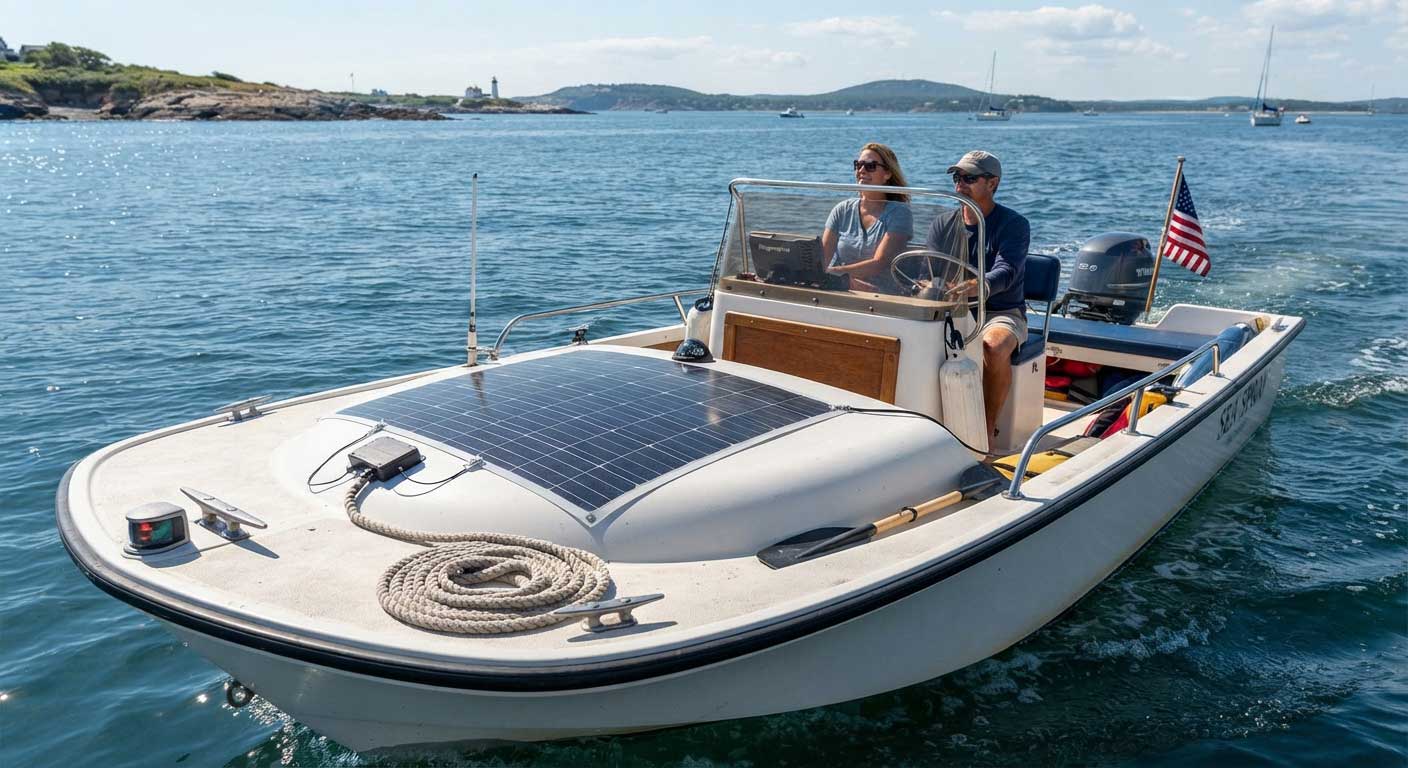
100W Flexible Solar Panel for Marine Use
Marine applications create demanding conditions.
Saltwater exposure, humidity, vibration, and limited space make lightweight solar solutions attractive.
Common uses include:
- Boat batteries
- Navigation electronics
- Communication equipment
- Small refrigerators
- Safety systems
For marine environments, protective materials matter.
Bright Solar flexible panels use durable surface materials designed for outdoor exposure, including options using ETFE protection for improved UV resistance and durability.
A marine solar installation should still include:
- Proper sealing
- Corrosion-resistant connections
- Regular inspection
Saltwater environments are not forgiving.
How Many 100W Flexible Solar Panels Do You Need?
The answer depends on energy consumption.
| Application | Suggested Solar Capacity |
|---|---|
| Basic camping electronics | 100W |
| Small RV electrical system | 200–400W |
| Full-time van life | 400W+ |
| Marine cruising | Depends on electronics and battery needs |
| Off-grid cabin | Usually multiple panels |
The correct approach is:
Calculate energy usage first.
Then:
Choose solar capacity.
Not the other way around.
Common Mistakes When Buying a 100W Flexible Solar Panel
Choosing Only by Wattage
Two 100W panels can have very different construction quality.
Look at:
- Materials
- Warranty
- Temperature performance
- Connector quality
- Manufacturer experience
Ignoring Installation Conditions
A high-quality panel can underperform if installed in permanent shade.
Using the Wrong Controller
The charge controller must match:
- Panel voltage
- Battery voltage
- Charging current
Expecting Too Much From 100W
A 100W panel is excellent for small systems.
It is not a replacement for a large solar installation.
Bright Solar 100W Flexible Solar Panel 12V Solution
Bright Solar develops flexible solar panels for applications where traditional framed modules are difficult to install.
Our design focus includes:
- Lightweight construction
- Flexible installation
- Outdoor durability
- RV applications
- Marine environments
- Custom solar solutions
A 100W flexible solar panel is often the starting point for mobile energy independence.
The best system is not always the largest.
It is the one that matches:
- Available space
- Energy requirements
- Travel conditions
- Battery storage
- Installation environment
100W Flexible Solar Panel 12V vs Rigid Solar Panel
Choosing between flexible and rigid solar panels depends on the installation environment.
A rigid solar panel usually offers higher mechanical protection because it uses a glass surface and aluminum frame. A flexible panel focuses on weight reduction, adaptability, and installation convenience.
The comparison is not about which technology is universally better.
It is about which one fits the application.
| Feature | 100W Flexible Solar Panel 12V | Traditional Rigid 100W Solar Panel |
|---|---|---|
| Weight | Lower | Higher |
| Installation height | Very low profile | Higher profile |
| Curved surfaces | Suitable | Limited |
| Mounting hardware | Usually simpler | Requires brackets |
| Wind exposure | Lower profile | Larger frame structure |
| Maintenance access | Depends on installation | Easier replacement |
| RV suitability | Excellent | Good |
| Marine suitability | Excellent | Moderate to good |
For a residential rooftop, rigid panels remain common because space is available and structural mounting is easier.
For a camper van roof with limited clearance, a flexible panel often makes more practical sense.
How Long Does a 100W Flexible Solar Panel 12V Last?
The service life of a flexible solar panel depends on:
- Solar cell quality
- Surface material
- Installation method
- UV exposure
- Temperature cycling
- Moisture protection
- Mechanical stress
High-quality flexible solar panels use protective layers designed to handle outdoor conditions.
Bright Solar focuses on materials suitable for mobile applications where panels experience:
- Vehicle vibration
- Outdoor temperature changes
- Continuous UV exposure
- Humidity
A common mistake is evaluating only the first-year power output.
For mobile solar systems, long-term durability matters.
A panel installed on a van roof may experience thousands of kilometers of vibration and repeated temperature changes that a fixed rooftop panel never encounters.
100W Flexible Solar Panel 12V Real-World Case Study
A practical example:
A weekend traveler in California operates a compact camper van with:
- 12V lithium battery system
- Portable refrigerator
- LED lighting
- Phone and laptop charging
- Ventilation fan
The daily energy requirement is approximately:
| Equipment | Daily Consumption |
|---|---|
| Refrigerator | 300Wh |
| LED lights | 30Wh |
| Electronics charging | 50Wh |
| Ventilation fan | 80Wh |
| Total | About 460Wh |
The owner installs:
- One 100W flexible solar panel
- MPPT charge controller
- 100Ah lithium battery
During clear summer days, the panel provides meaningful energy recovery and reduces dependence on campground electricity.
However, during cloudy coastal weather, the system requires more conservative energy management.
The important lesson is not that one 100W panel solves every energy problem.
The lesson is matching energy production with actual consumption.
How to Connect a 100W Flexible Solar Panel 12V System
A basic connection follows this order:
Solar Panel → Charge Controller → Battery → Electrical Loads
The charge controller should always be connected according to the manufacturer’s instructions.
A typical installation sequence:
Step 1: Connect the Battery First
Many charge controllers require battery connection before solar input.
This allows the controller to recognize the system voltage.
Step 2: Connect the Solar Panel
After the battery connection is complete:
- Confirm polarity
- Connect positive and negative cables correctly
- Verify charging status
Step 3: Connect Loads
Loads can be connected through:
- Battery terminals
- Controller load terminals (for suitable small systems)
- DC distribution panels
The exact configuration depends on the application.
Can a 100W Flexible Solar Panel 12V Charge a Lithium Battery?
Yes, a 100W flexible solar panel can charge a 12V lithium battery when paired with a compatible solar charge controller.
Lithium batteries require a charging profile different from traditional lead-acid batteries.
Important factors include:
- Battery voltage range
- Maximum charging current
- Low-temperature charging limits
- Controller compatibility
A 100W panel producing approximately 5–6A under good conditions is generally suitable for small lithium battery systems.
However, battery capacity should match expected energy use.
A large battery with a small panel may take many days to recharge.
MPPT vs PWM Controller for a 100W Flexible Solar Panel
The charge controller affects how much energy reaches the battery.
PWM Controller
Advantages:
- Lower cost
- Simple design
- Suitable for basic systems
Limitations:
- Less efficient when panel voltage is significantly higher than battery voltage
MPPT Controller
Advantages:
- Better energy harvesting
- More effective under changing conditions
- Useful for higher-voltage solar configurations
The National Renewable Energy Laboratory (NREL) explains that photovoltaic system performance depends on system components and operating conditions, including inverter/controller efficiency and environmental factors. (nrel.gov)
For a premium mobile installation, MPPT is often preferred.
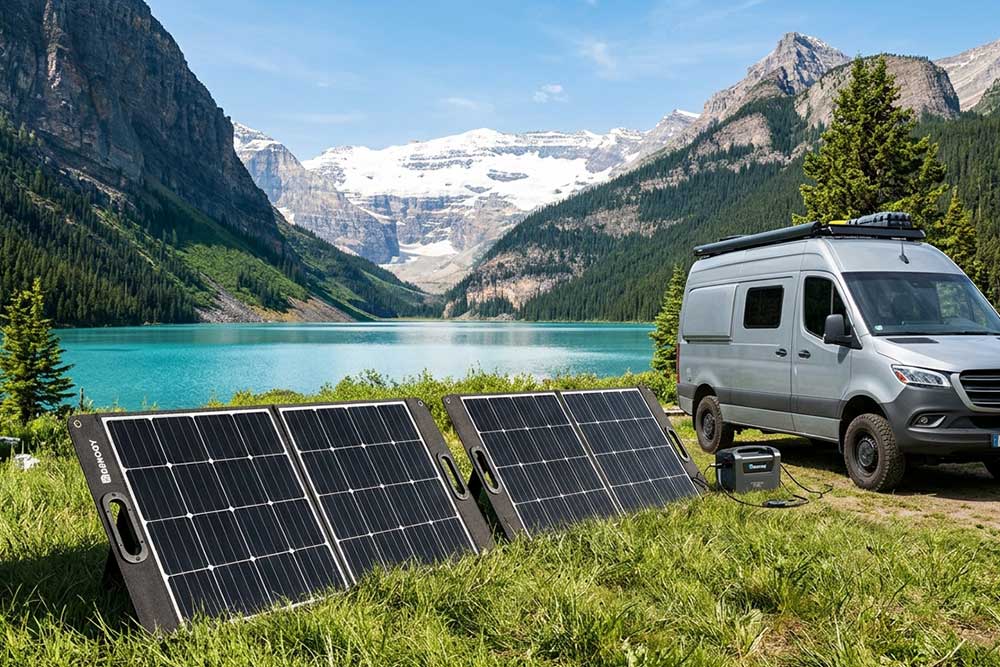
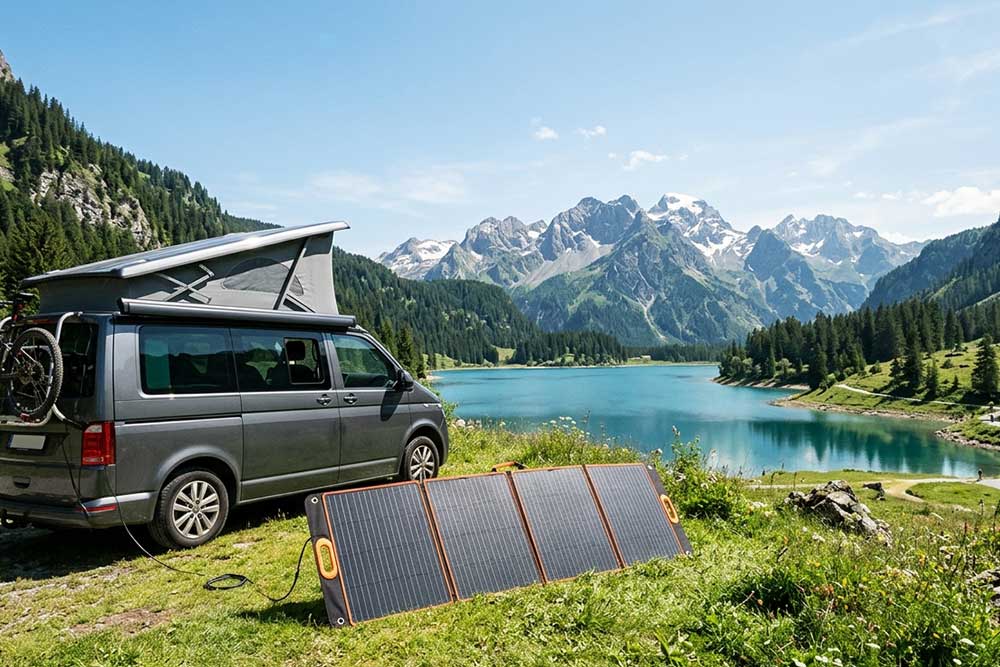
100W Flexible Solar Panel 12V for Van Life
Van life systems usually prioritize:
- Weight
- Space
- Reliability
- Low visual impact
A flexible 100W panel works well as:
- A starter solar system
- An auxiliary charging source
- A supplement to larger arrays
Example van setup:
| Component | Specification |
|---|---|
| Solar Panel | 100W flexible |
| Battery | 100Ah lithium |
| Controller | 10A MPPT |
| Usage | Lighting, electronics, small appliances |
For travelers spending most nights outdoors, adding multiple flexible panels can create a scalable system.
A van roof with enough space may combine:
- Two 100W panels
- Three 100W panels
- Four-panel configurations
depending on electrical needs.
How Many 100W Flexible Solar Panels Do You Need?
Energy consumption determines the answer.
Example:
Basic Camper
Daily use:
300–500Wh
Recommended:
1–2 × 100W panels
Full-Time Van Life
Daily use:
800–1500Wh
Recommended:
3–5 × 100W panels or larger system
Marine Electronics
Daily use varies greatly.
Consider:
- Navigation systems
- Refrigerator
- Communication equipment
- Pumps
The correct design starts with an energy audit.
Maintenance Tips for 100W Flexible Solar Panel 12V
Flexible solar panels require relatively low maintenance, but regular checks improve performance.
Recommended inspection:
Monthly
Check:
- Surface cleanliness
- Cable condition
- Connector sealing
Before Long Trips
Inspect:
- Adhesive or mounting condition
- Cable strain points
- Battery connections
After Extreme Weather
Check:
- Heavy rain exposure
- Strong wind events
- Saltwater contamination
Dust and dirt can reduce sunlight reaching the solar cells.
Cleaning should use:
- Soft cloth
- Clean water
- Mild soap if needed
Avoid abrasive materials that can damage the surface.
Common Questions About 100W Flexible Solar Panel 12V
What can a 100W flexible solar panel 12V power?
A 100W flexible solar panel can support small DC systems including LED lights, phones, fans, small refrigerators, and battery charging. It is commonly used for RVs, boats, and camping applications.
How many amps does a 100W 12V solar panel produce?
A typical 100W panel produces around 5–6 amps under normal operating conditions because solar panels usually operate above the battery voltage during charging.
Can a 100W flexible solar panel charge a car battery?
Yes, when paired with a suitable charge controller. Direct connection without proper regulation is not recommended because charging voltage must be controlled.
Is a flexible solar panel better for RVs?
Flexible panels are often better for RVs when low weight, curved roofs, and low-profile installation are priorities. Rigid panels may still be preferred when maximum mechanical protection is required.
Can I connect multiple 100W flexible solar panels together?
Yes. Multiple panels can be connected in series, parallel, or series-parallel depending on controller limits, battery voltage, and system requirements.
How much battery can a 100W solar panel charge?
A 100W panel can charge small and medium battery systems, but charging speed depends on sunlight hours, battery capacity, and energy consumption.
Does a 100W flexible solar panel work on cloudy days?
Yes, it can still produce electricity under cloudy conditions, but output is reduced because solar irradiance is lower.
Bright Solar 100W Flexible Solar Panel 12V Solution
Bright Solar develops flexible solar panels for customers who need reliable energy in environments where traditional panels are difficult to install.
Our flexible solar solutions are designed for:
- RV manufacturers
- Marine applications
- Outdoor equipment
- Portable energy systems
- Custom solar projects
A 100W flexible solar panel is often the first step toward energy independence.
It provides a practical balance between:
- Weight
- Installation flexibility
- Power generation
- Mobility
The right solar system is not determined by panel wattage alone.
It depends on how the energy will be used.
Conclusion
A 100W flexible solar panel 12V is a practical choice for RVs, boats, vans, and small off-grid systems where lightweight installation and flexible mounting are important.
It can provide reliable battery charging support when combined with the correct controller, battery capacity, and installation design.
Before choosing a solar panel, evaluate:
- Daily energy consumption
- Available installation space
- Sun exposure
- Battery type
- Charging requirements
For mobile solar applications, a well-designed 100W system can deliver dependable renewable power without adding unnecessary weight or complexity.
Related recommendations
-

Flexible Solar Panel Installation for RVs, Boats, and Off-Grid Systems
149Learn flexible solar panel installation for RVs, boats, vans, and off-grid systems. Discover lightweight mounting methods and real-world tips.
View details -
12V Folding Solar Panels: Output, Battery Charging and Uses
1712V folding solar panels provide portable solar power for camping, RVs, and compatible off-grid battery systems. Their actual energy output depends on panel ...
View details -
Off Grid Solar System Cost: Complete Price Guide for 2026
317Explore off grid solar system cost with our complete guide covering panels, batteries, installation, and pricing factors to build a reliable solar power solution with Bright Solar.
View details -
120W Solar Panel Folding: Output, Uses and Setup Guide
7A 120W solar panel folding system provides portable electricity for camping, RV travel, emergency charging, and small off-grid applications. Its actual energ...
View details