How to Attach Flexible Solar Panels?
How to Attach Flexible Solar Panels?
Flexible solar panels are usually attached using industrial adhesive, VHB tape, stainless screws, or hybrid mounting methods depending on the surface material and heat conditions. Correct airflow spacing and waterproof cable routing matter more than most first-time installers realize.
I learned that the hard way during a van retrofit in Arizona three summers ago. The panels themselves survived. The adhesive did not.
At Bright Solar, we’ve worked with flexible panel installations on RV roofs, marine decks, aluminum trailers, and curved industrial surfaces where rigid framed modules simply could not fit. The biggest misconception? People think attachment is only about “holding the panel down.” In reality, it’s mostly about thermal expansion, vibration, and moisture control over time.
According to the U.S. Department of Energy, rooftop solar surfaces can exceed 65°C (149°F) under strong summer exposure, which significantly affects adhesives and mounting materials over long periods. Temperature cycling is one of the leading causes of installation failure.
Source: U.S. Department of Energy – energy.gov
The Best Ways to Attach Flexible Solar Panels
Not every mounting method works equally well. Surface material changes everything.
Here’s the short version from field experience:
| Surface Type | Recommended Method | Risk Level |
|---|---|---|
| RV Fiberglass Roof | VHB tape + sealant | Low |
| Aluminum Roof | Hybrid screw + adhesive | Very Low |
| Marine Deck | Mechanical fasteners | Lowest |
| Curved Van Roof | Structural adhesive | Medium |
| Temporary Setup | Grommets + zip ties | High |
Some installers use only glue because it looks cleaner. I rarely recommend that on moving vehicles.
Preparing the Surface Before Installation
This step decides whether the panel stays attached for 8 years or peels off after one summer.
Most failures start here.
Clean the Surface Properly
Do not install directly over wax, oxidation, salt residue, or oily surfaces.
For RVs and boats, we usually clean using:
- Isopropyl alcohol (70% or higher)
- Non-residue degreaser
- Microfiber cloth
- Plastic scraper for old sealant
Even tiny contaminants weaken adhesive bonding.
On marine installations near Florida’s Gulf Coast, we noticed salt haze forming invisible layers within hours. We started wiping surfaces twice before every install. Failure rates dropped noticeably.
Check Roof Temperature
Flexible panels expand during heat exposure.
Installing panels onto an overheated roof can weaken adhesive curing before the bond stabilizes.Learn more about “300w flexible solar panels“
Ideal mounting temperature:
- 60°F–85°F (15°C–29°C)
Avoid:
- Direct midday summer installation
- Rain exposure during curing
- Cold surfaces below 50°F
3M, manufacturer of VHB mounting tapes, recommends controlled surface preparation and proper application pressure for maximum bonding performance.
Source: 3M Technical Bulletin – 3m.com
Using VHB Tape to Attach Flexible Solar Panels
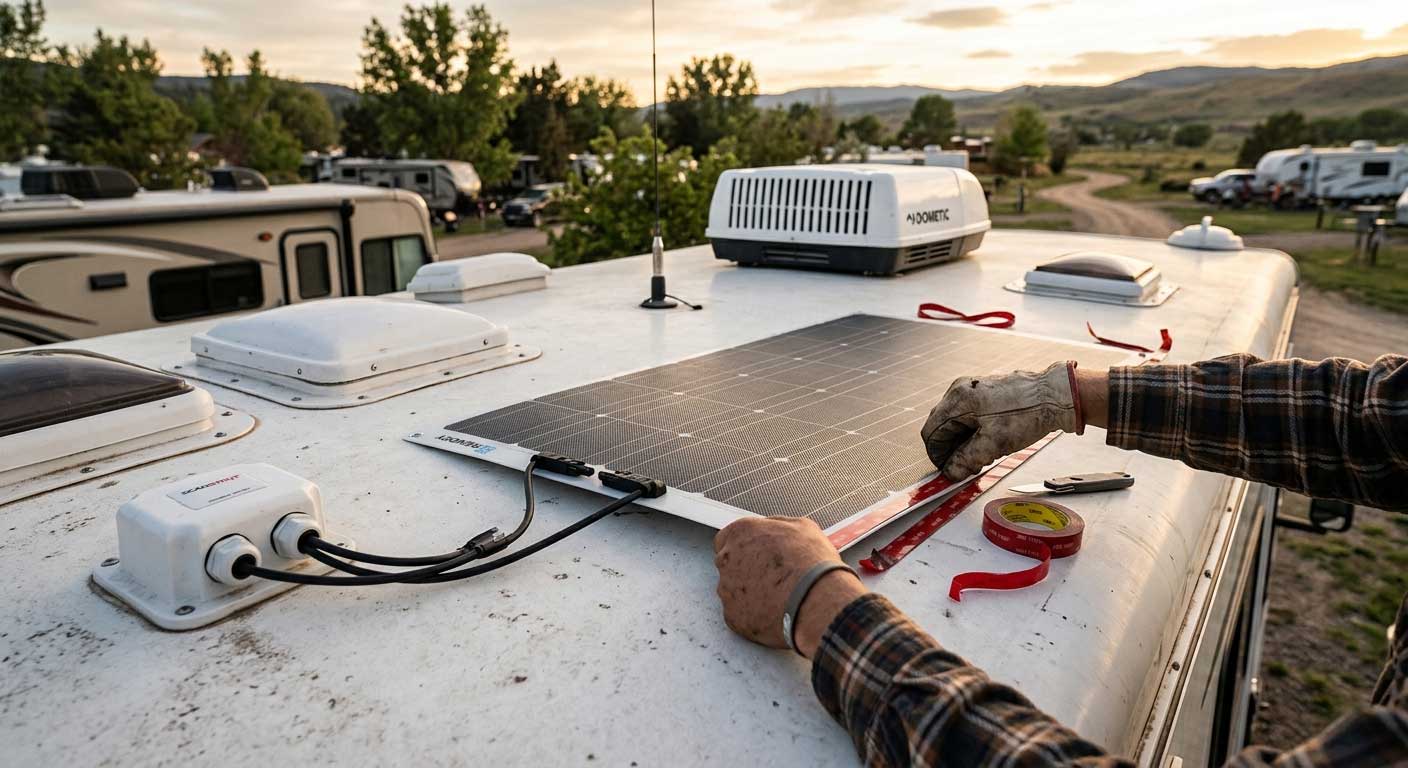
VHB tape is probably the most common solution today.
And honestly? When done correctly, it works extremely well.
But when done poorly, it fails spectacularly.
Why Installers Prefer VHB Tape
Advantages include:
- No roof drilling
- Cleaner appearance
- Reduced leak risk
- Better vibration absorption
- Faster installation
On lightweight camper vans, reducing roof penetrations matters a lot.
We tested industrial acrylic tape against screw-only mounting during rough-road travel in Nevada. The taped systems actually handled vibration better because they distributed stress across the panel surface instead of concentrating force around bolts.
Common Mistakes with Adhesive Mounting
I see these repeatedly:
- No airflow gap beneath panel
- Cheap construction tape instead of solar-grade tape
- Mounting over dirty roofs
- Pressing tape unevenly
- Ignoring thermal expansion
One failed installation I inspected in Texas had panels glued edge-to-edge without ventilation. Surface temperatures exceeded 80°C. The adhesive softened, dust collected underneath, and the panel corners lifted within months.
Heat is brutal on poorly ventilated systems.
Should You Drill Holes?
Sometimes yes.
Especially for:
- Marine applications
- High-speed vehicles
- Wind-exposed installations
- Permanent industrial systems
People often fear drilling, but properly sealed fasteners are safer than failed adhesive at highway speed.
The American Boat and Yacht Council emphasizes secure mechanical fastening for marine electrical equipment exposed to vibration and saltwater conditions.
Source: ABYC Standards – abycinc.org
Best Fasteners for Flexible Solar Panels
Recommended hardware:
- 316 stainless steel screws
- Aluminum backing plates
- EPDM rubber washers
- Marine polyurethane sealant
Avoid plain carbon steel hardware. Corrosion starts faster than expected near coastal regions.
I’ve opened junction areas after only 14 months and found rust trails already forming around cheap fasteners.
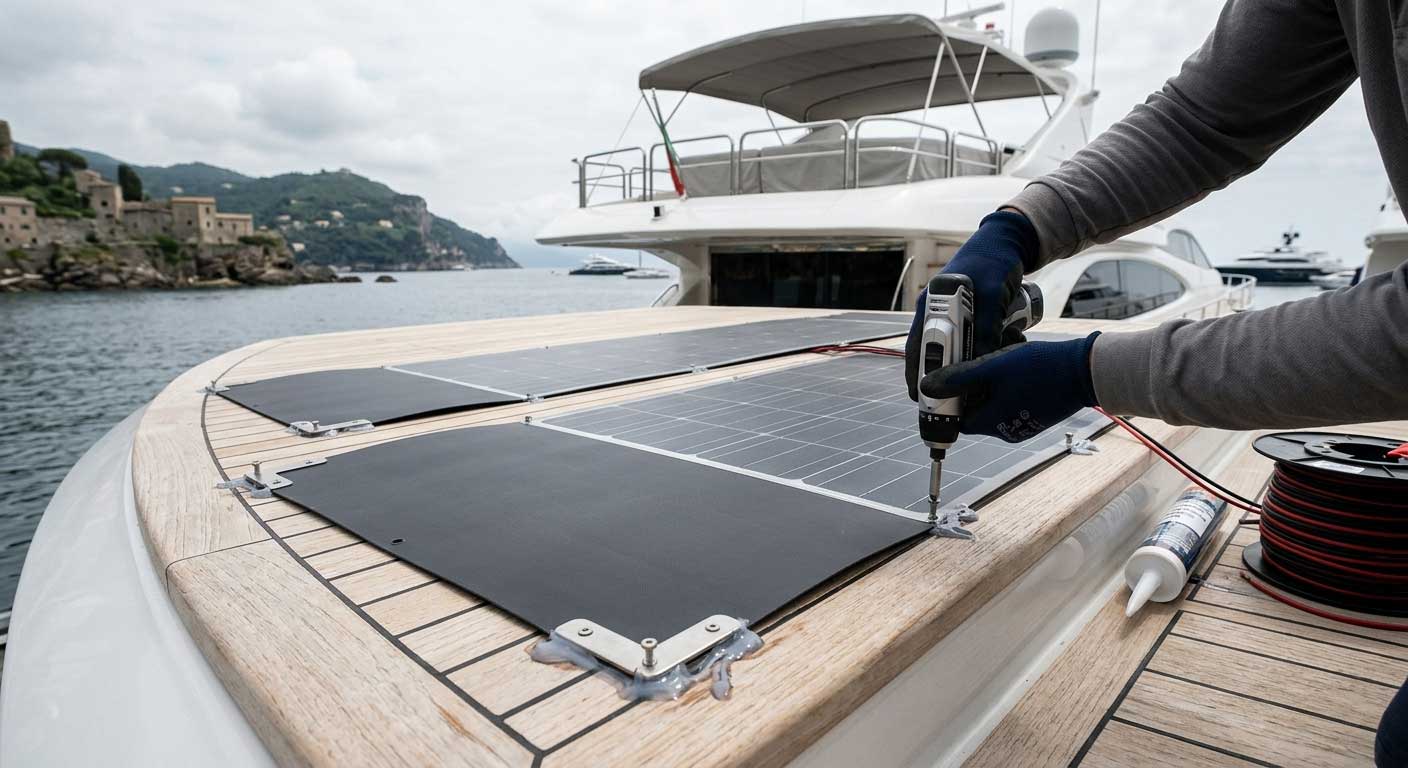
How to Attach Flexible Solar Panels on Different Surfaces
Every surface behaves differently under heat and vibration.
RV Roof Installation
Usually best with:
- VHB tape
- Dicor sealant
- Cable gland entry
Keep small airflow spacing underneath when possible.
Van Roof Installation
Curved van roofs expand aggressively under sunlight.
Hybrid installation works best:
- Adhesive underneath
- Small edge fasteners
- Flexible cable routing
One Sprinter van project recorded nearly 9 mm roof expansion between morning and afternoon temperatures.
That movement matters.
Boat Installation
Marine installations face:
- Salt exposure
- Constant vibration
- Water pooling
- UV reflection
Mechanical fastening is safer long term.
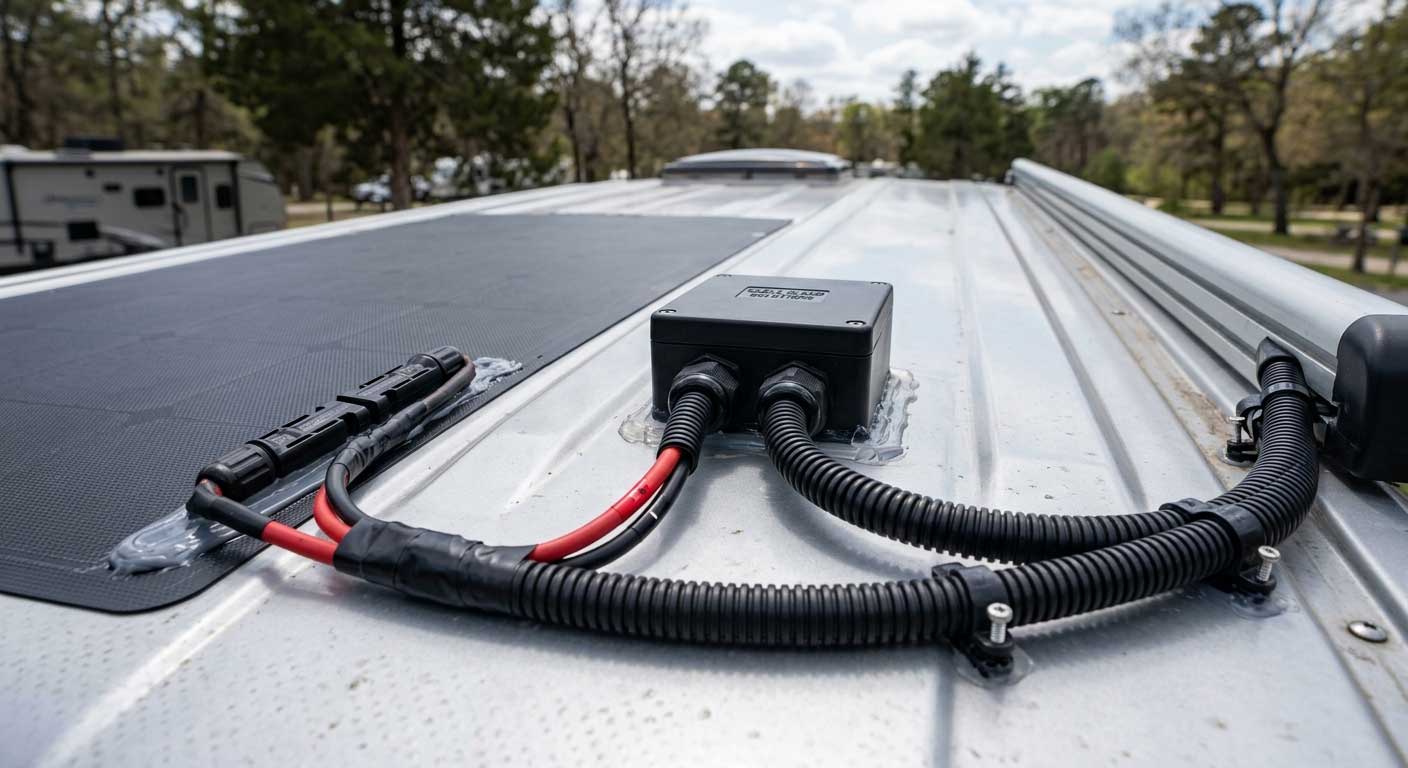
Cable Routing Matters More Than Most People Think
Oddly enough, panel attachment is not where most failures happen.
It’s cable entry points.
Poor cable routing causes:
- Water leaks
- Connector corrosion
- Roof membrane damage
- Electrical shorts
The National Renewable Energy Laboratory (NREL) has repeatedly highlighted environmental degradation as a major contributor to PV system failure rates.
Source: NREL – nrel.gov
Use:
- UV-resistant conduit
- Waterproof gland boxes
- MC4 connectors
- Strain relief clips
Loose cables destroy installations over time.
Realistic Lifespan Expectations After Installation
A properly mounted flexible solar panel can last:
- 5–10 years in mobile applications
- 10–15 years in low-stress environments
Poor mounting cuts that dramatically.
Most premature failures come from:
- Excessive heat buildup
- Water intrusion
- Adhesive fatigue
- Constant flex stress
This is why mounting quality matters almost as much as panel quality.
Installation Tips We Learned from Field Projects
Things that actually improved long-term reliability:
- Leave thermal expansion gaps
- Never fully seal panel underside edges
- Use rounded cable routing paths
- Avoid mounting directly above engine heat zones
- Inspect adhesive annually
One customer mounted panels directly over a black-painted steel roof without airflow. Summer infrared readings exceeded 92°C.
The panels still generated power.
But output dropped noticeably after extended heat exposure.
FAQ About How to Attach Flexible Solar Panels
Can I glue flexible solar panels directly to a roof?
Yes, but only with solar-grade adhesive or industrial acrylic mounting tape designed for outdoor thermal cycling.
Do flexible solar panels need airflow underneath?
Absolutely. Even small airflow spacing helps reduce overheating and extends panel lifespan.
Is drilling safer than adhesive?
For marine or high-vibration applications, yes. Hybrid mounting systems are often the safest overall solution.
Can flexible solar panels damage roofs?
Improper installation can trap heat or moisture, especially on rubber roofs. Correct spacing and sealing prevent most issues.
What adhesive works best for flexible solar panels?
Industrial VHB tape and marine polyurethane adhesives are the most commonly trusted solutions in professional installations.
How to Clean Flexible Solar Panels?
Flexible solar panels should be cleaned using soft water, a non-abrasive sponge, and mild soap while avoiding harsh chemicals, pressure washers, or stiff brushes. Regular cleaning improves energy output, prevents surface degradation, and helps flexible panels last significantly longer in outdoor conditions.Learn more about “How to Clean Flexible Solar Panels“
Final Thoughts on How to Attach Flexible Solar Panels
Learning how to attach flexible solar panels properly is less about sticking a panel onto a surface and more about understanding heat, movement, vibration, and weather exposure over time.
A clean-looking installation is easy.
A reliable installation after five summers on the road? That takes planning.
At Bright Solar, we’ve seen flexible panels survive desert heat, offshore moisture, and thousands of highway miles — but only when installation details were handled correctly from the start.
Related recommendations
-

What will a 100 watt solar panel kit run?
201What will a 100 watt solar panel kit run? Discover appliances, power limits, battery needs, and real-world applications of 100W solar kits with Bright Solar.
View details -
How Much Does It Cost to Get Solar Panels?
185How much does it cost to get solar panels? Explore real installation costs, system sizes, incentives, and long-term savings with expert insights from Bright Solar.
View details -
How Much Power Do Solar Panels Produce?
114A modern residential solar panel typically has a 400–460W rated output. Actual energy production depends on sunlight, temperature, shading, orientation, and ...
View details -
how much to install solar panels?
101Discover how much to install solar panels with real installation costs, field breakdowns, and pricing insights from Bright solar residential project experience.
View details