How to go off grid with solar panels?
To go off grid with solar panels, you need a complete solar system with properly sized panels, batteries, charge controllers, and inverters. The system must match your daily energy needs and local sunlight conditions.
How to go off grid with solar panels step by step
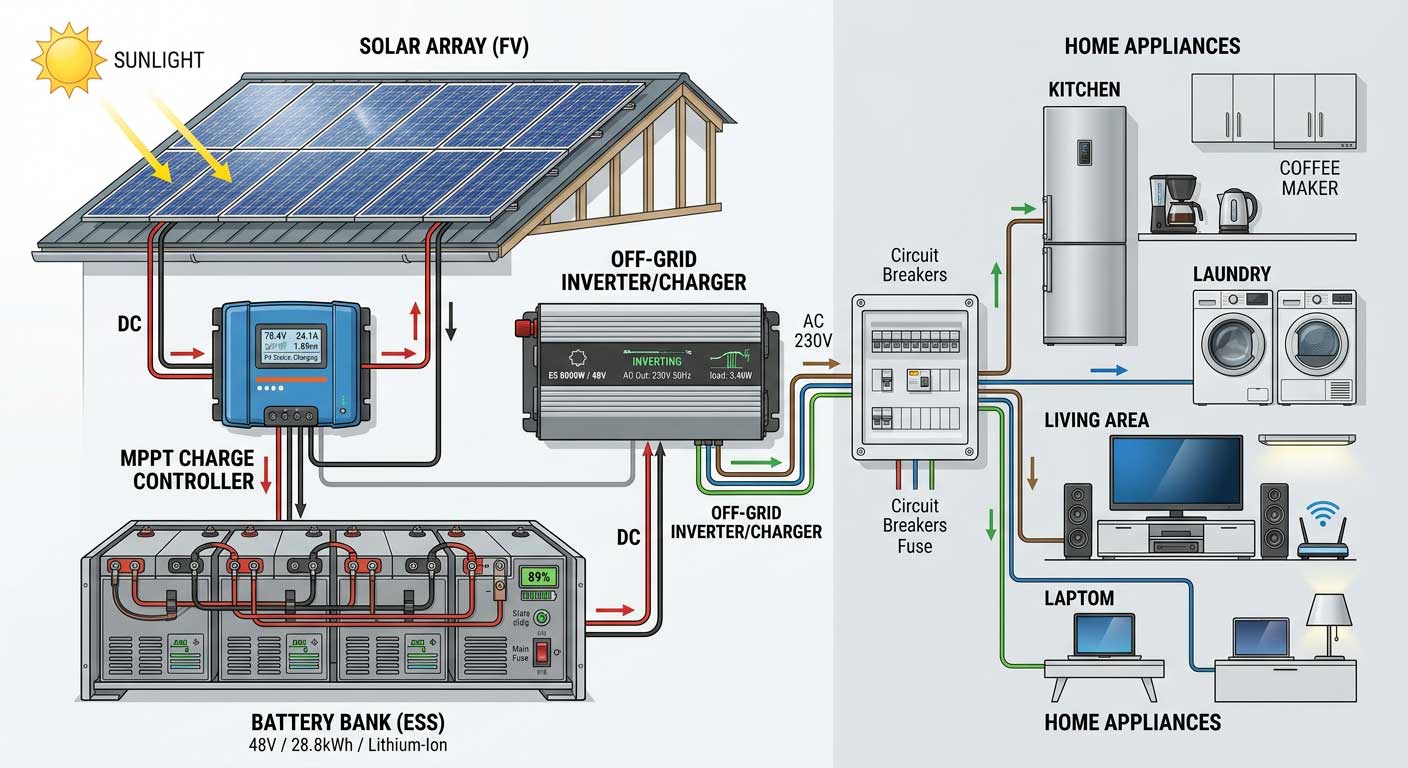
Learning how to go off grid with solar panels starts with understanding that solar independence is not only about installing panels. A reliable off-grid system is a combination of energy generation, storage, and efficient power management.
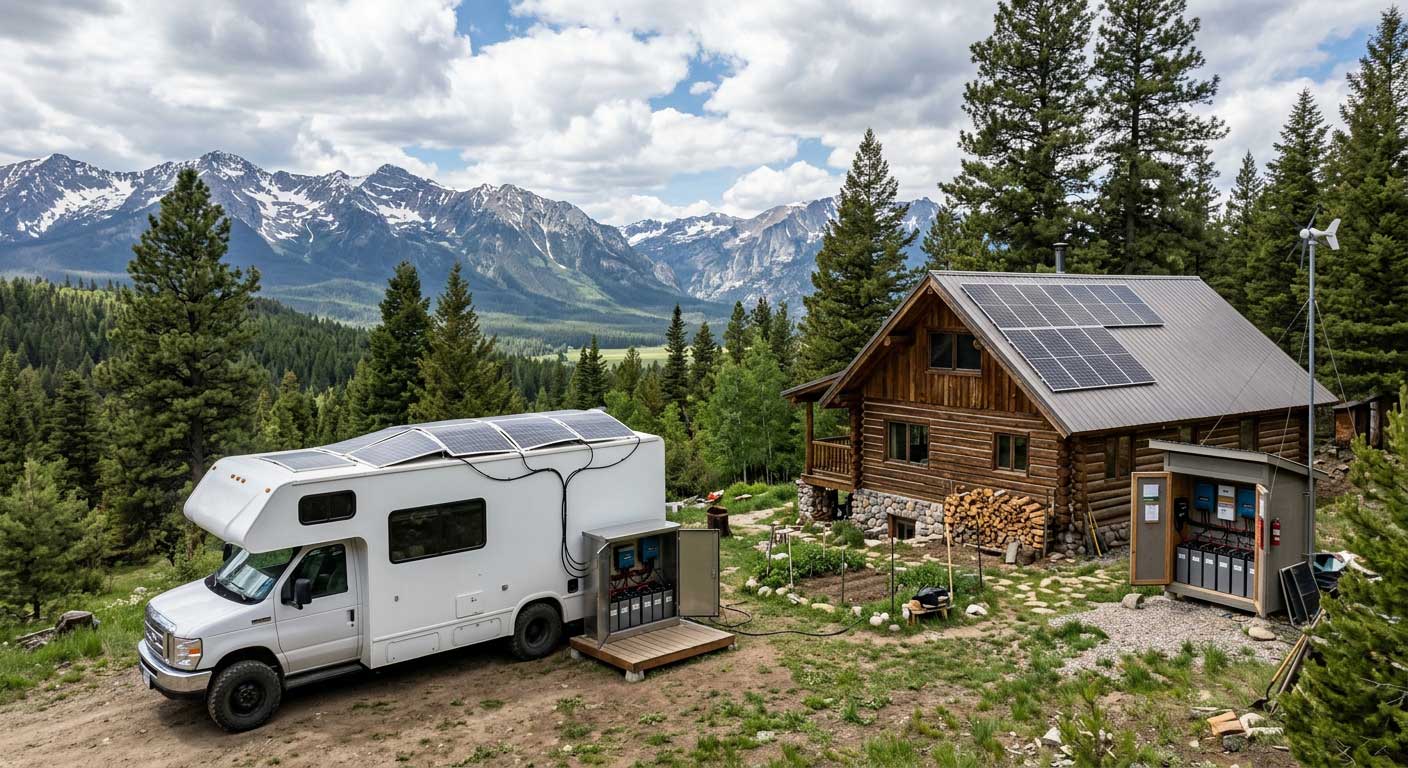
At Bright Solar, we work with RV builders, marine companies, and off-grid solution providers where system reliability is critical. During project discussions, we usually begin by asking about actual energy usage instead of starting with panel quantity. A remote cabin with a refrigerator and lighting has completely different requirements from an RV running air conditioning, communication equipment, and appliances.
A complete off-grid solar system includes:
| Component | Function |
|---|---|
| Solar panels | Generate electricity from sunlight |
| Charge controller | Regulate charging voltage |
| Battery bank | Store energy for later use |
| Inverter | Convert DC electricity into AC power |
| Monitoring system | Track energy production and consumption |
The basic energy flow:
Sunlight → Solar panels → Charge controller → Battery → Inverter → Appliances
According to the U.S. Department of Energy, off-grid photovoltaic systems require careful sizing of generation capacity, storage, and electrical loads to maintain reliable operation.
Step 1: Calculate your off-grid energy requirements
Determine daily electricity consumption
The first step is knowing how much energy you actually use.
Calculate:
Device Power (W) × Operating Time (hours) = Daily Energy Consumption (Wh)
Example:
| Device | Power Use | Daily Energy |
|---|---|---|
| LED lighting | 50W | 200Wh |
| Refrigerator | 100W | 800Wh |
| Laptop | 60W | 120Wh |
| Water pump | 80W | 160Wh |
Total daily requirement:
1,280Wh or 1.28kWh/day
This number determines the required solar panel and battery capacity.
In Bright Solar’s experience with mobile solar applications, energy estimates are often underestimated. Outdoor users frequently add extra loads later, such as communication devices, portable refrigerators, or additional lighting.
Step 2: Choose the right solar panel capacity
Calculate solar panel size
Solar panel capacity depends on:
- Daily energy consumption
- Peak sun hours
- System losses
- Seasonal changes
Basic formula:
Solar Panel Size = Daily Energy Need ÷ Peak Sun Hours × System Loss Factor
Example:
Daily energy need:
2kWh
Available sunlight:
5 peak sun hours
Calculation:
2,000Wh ÷ 5 hours = 400W
After considering system losses, a larger panel capacity may be recommended.
Common off-grid solar sizes:
| System Size | Typical Application |
|---|---|
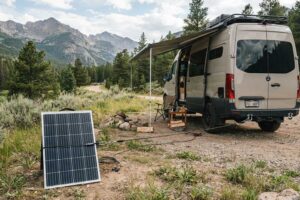
| 100W–300W | Camping and portable power |
| 400W–1000W | RV and small cabins |
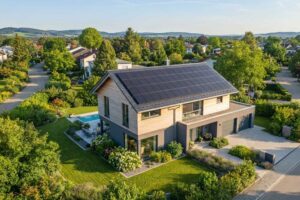
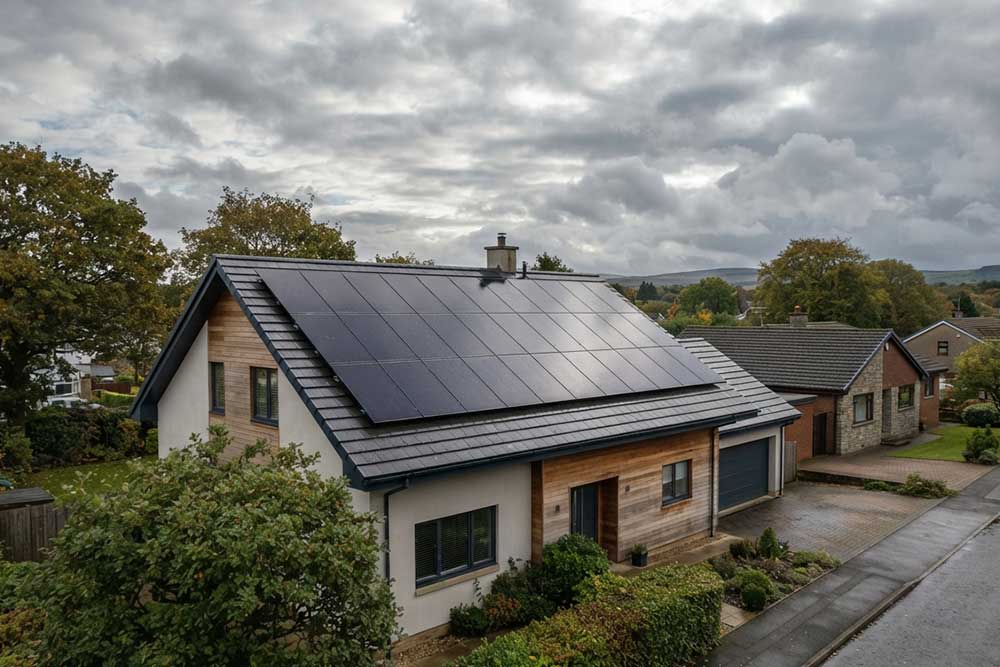
| 1kW–5kW | Off-grid homes |
| 5kW+ | Large independent systems |
The National Renewable Energy Laboratory (NREL) provides solar resource tools that help estimate photovoltaic production based on location and weather conditions.
Step 3: Select battery storage for off-grid solar
Why battery capacity matters
Solar panels only produce electricity during daylight hours. Batteries store excess energy for nighttime use or cloudy periods.
Battery capacity calculation:
Battery Energy (Wh) = Voltage × Amp Hours (Ah)
Example:
A 12V 200Ah battery:
12 × 200 = 2,400Wh
Battery storage should consider:
- Daily energy usage
- Required backup days
- Battery chemistry
- Depth of discharge limits
Common battery options:
| Battery Type | Advantage |
|---|---|
| Lithium battery | Lightweight, long cycle life |
| AGM battery | Lower upfront cost |
| Lead-acid battery | Traditional and widely available |
For RV and portable systems, weight and available space are usually major design factors.
Step 4: Install and optimize an off-grid solar system
Consider installation location
Solar production depends heavily on installation conditions.
Important factors:
- Panel direction
- Tilt angle
- Shading
- Temperature
- Ventilation
For flexible solar panels, installation possibilities expand because panels can be mounted on curved surfaces.
Bright Solar flexible panels are commonly used for:
- RV roofs
- Marine applications
- Portable solar systems
- Off-grid equipment
These applications often have limited flat installation areas, making lightweight and adaptable solar designs valuable.
Improve energy efficiency before adding more panels
Many off-grid users focus only on adding solar panels. Reducing energy waste can sometimes improve system performance more effectively.
Practical improvements:
- Replace inefficient lighting
- Use energy-efficient appliances
- Reduce standby power consumption
- Monitor daily electricity usage
A smaller, optimized system is often easier to maintain than an oversized system with unnecessary capacity.
Common mistakes when going off grid with solar panels
Installing too few batteries
Insufficient storage can cause power shortages during cloudy weather.
Ignoring seasonal sunlight changes
A system designed only for summer conditions may struggle during winter months.
Choosing panels without considering installation space
Available mounting area often determines the best solar solution.
Forgetting system monitoring
Energy monitoring helps identify unusual consumption and prevents unexpected power problems.
FAQ About Going Off Grid With Solar Panels
How many solar panels do I need to go off grid?
The number depends on daily energy consumption, sunlight hours, panel wattage, and battery storage requirements.
Can solar panels power a house completely off grid?
Yes. A properly designed solar system with enough panels and battery storage can provide independent household electricity.
How many batteries are needed for off-grid solar?
Battery quantity depends on energy usage, backup requirements, battery capacity, and system voltage.
Can flexible solar panels be used for off-grid systems?
Yes. Flexible solar panels are suitable for RVs, marine systems, portable power, and other off-grid applications where installation space is limited.
Do off-grid solar systems work during cloudy weather?
Yes, but electricity production decreases. Battery storage helps maintain power availability.
What size inverter is needed for off-grid solar?
The inverter size should match the maximum power demand of connected appliances.
Is off-grid solar cheaper than grid electricity?
The cost depends on location, equipment requirements, installation complexity, and long-term energy needs.
Final Answer: How to go off grid with solar panels?
Understanding how to go off grid with solar panels requires more than installing photovoltaic modules. A successful system combines accurate energy calculations, suitable solar panels, reliable battery storage, and proper system design.
Bright Solar provides flexible solar panel solutions for RV, marine, portable, and off-grid applications, helping customers build practical renewable energy systems based on real-world conditions.
The prev: how to mount portable solar panels?The next: How to install ring solar panel?
Related recommendations
-

how to keep portable solar panels from being stolen?
346Secure portable solar panels with a physical cable lock and a fixed anchor, avoid leaving them unattended, and store them inside the RV when practical.
View details -
how much can you save with solar panels?
287Discover how much can you save with solar panels using real cost data, electricity savings examples, and Bright solar insights for long-term energy value.
View details -
How Much Are Solar Panels for House?
199How much are solar panels for house? Explore real home solar costs, installation factors, system pricing, and expert insights from Bright Solar.
View details -
Do Solar Panels Charge on Cloudy Days?
305Yes. Solar panels can still generate electricity and charge batteries on cloudy days, but output and charging speed usually decrease as cloud cover becomes t...
View details