Do Solar Panels Charge on Cloudy Days?
Yes, do solar panels charge on cloudy days? Solar panels can still generate electricity when the sky is cloudy because clouds do not block all solar radiation. Output is usually lower than on a clear day, sometimes substantially lower, but photovoltaic cells continue responding to available direct and diffuse light. The actual reduction depends on cloud thickness, coverage, time, season, and location.
How Do Solar Panels Work When the Sky Is Cloudy?
Cloudy weather changes the amount and type of sunlight reaching the module rather than switching solar generation off completely.
The U.S. Department of Energy explains that sunlight reaching the ground consists of both direct beam radiation and diffuse solar radiation. Clouds can reduce direct radiation while some scattered light still reaches the solar panel. Under thick clouds, direct radiation can be reduced by as much as 100%, although diffuse radiation may remain.
That distinction matters on an actual rooftop.
A bright overcast morning may still produce useful electricity. A dark storm cloud covering the array can cause output to fall sharply. When a cloud edge moves across the roof, production can change again within minutes. DOE notes that cloud size, thickness, shape, and atmospheric conditions can cause photovoltaic generation to fluctuate as clouds pass over a system.
So, do solar panels charge on cloudy days? Yes—but “cloudy” is not a single operating condition.
What Happens to Solar Output During Different Cloud Conditions?
| Sky condition | Expected solar behavior |
|---|---|
| Light cloud cover | Panels can continue producing useful electricity |
| Bright overcast | Generation continues, but below clear-sky output |
| Thick cloud cover | Output can fall considerably |
| Fast-moving clouds | Power production may fluctuate rapidly |
| Heavy storm conditions | Very low generation may occur |
| Nighttime | Solar panels do not produce useful electricity from sunlight |
There is no responsible universal percentage such as “solar panels produce exactly 20% on cloudy days.” Real systems respond to actual irradiance at the module, not a simple weather label.
Why Cloudy-Day Output Can Change So Much
A common mistake is looking only at whether the weather app says “cloudy.”
For PV design and performance analysis, the important variable is the solar resource reaching the module. DOE notes that PV performance is influenced by time of day, season, solar angle, clouds, and other environmental conditions. PV modules are rated under standard test conditions of 1,000 W/m² irradiance and 25°C cell temperature, but real operating conditions are usually different.
This is why two cloudy days can produce very different results.
A thin cloud layer may scatter sunlight across a large area. A dense storm system can suppress irradiance much more strongly. A partly cloudy afternoon may also produce a strange-looking production curve: low output, a sudden increase when the sun breaks through, then another drop as the cloud returns.
NREL specifically identifies cloud conditions as a major challenge for solar forecasting because cloud properties can change quickly and create short-term ramps in solar irradiance.
Can Solar Panels Still Charge a Battery on a Cloudy Day?
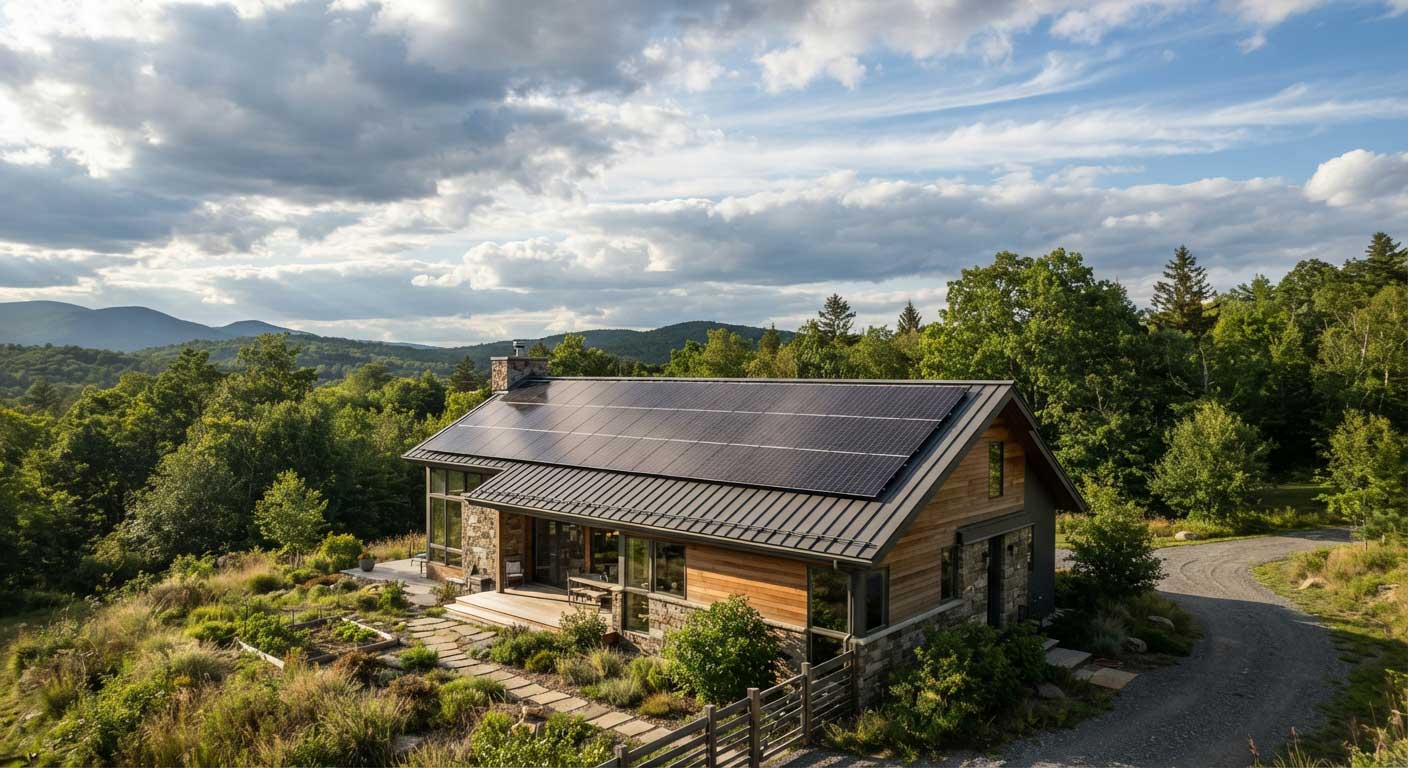
Yes. If the PV array is producing sufficient electrical power, a solar charge controller can direct that energy toward a battery while also supporting connected loads, depending on the system configuration.
The important point is that charging speed may be much lower when irradiance falls.
For example, if a battery system normally receives strong midday solar input under clear conditions, a thick cloud layer can reduce available PV power enough that the battery charges slowly—or that household loads consume most of the available generation before much surplus reaches storage.
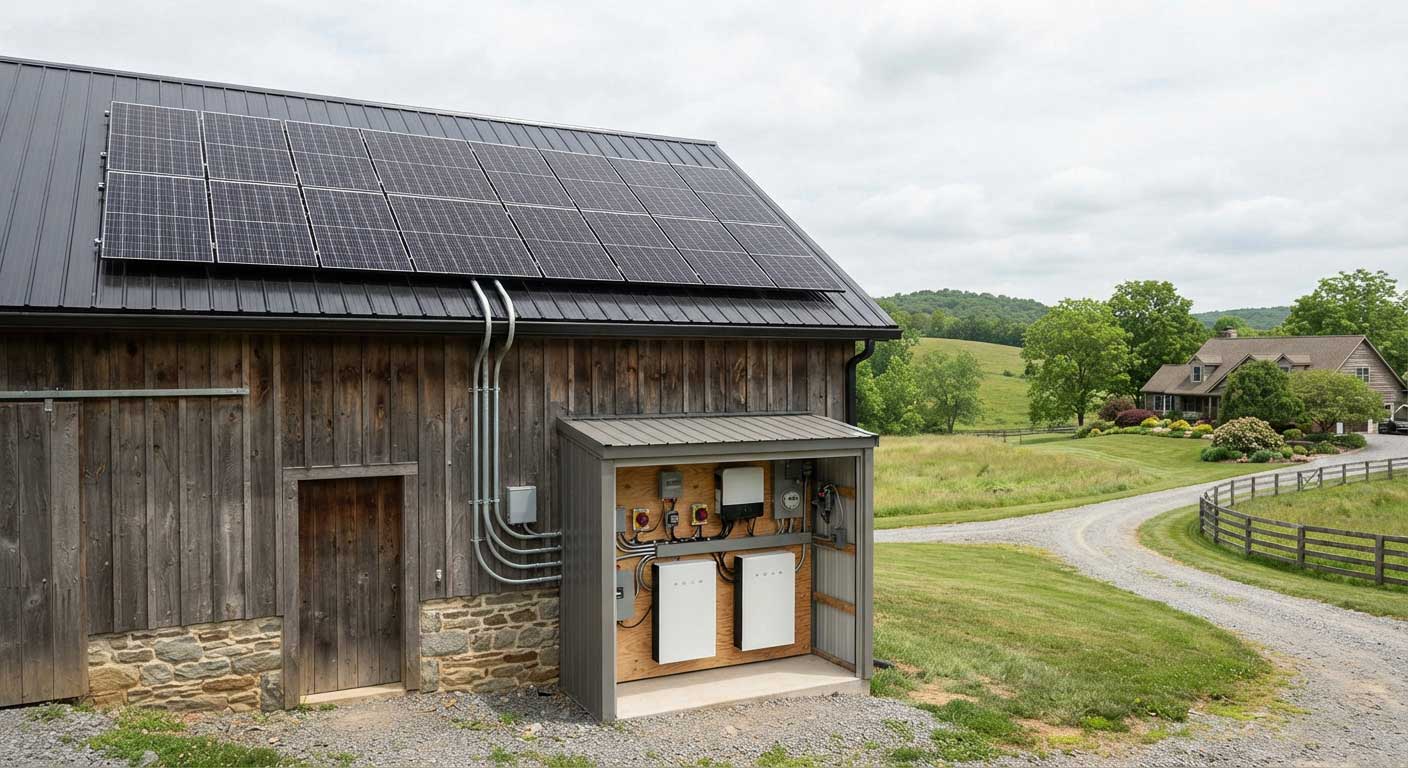
DOE explains that energy storage can help manage fluctuations in solar generation caused by passing clouds. Short-duration storage can smooth these changes, while larger storage systems can shift solar-generated electricity to periods when solar production is low.
For RVs, boats, off-grid equipment, and portable power applications, this distinction becomes especially noticeable. A cloudy afternoon may still add energy to the battery, but relying on one short weather window for a large energy requirement is risky.
What Affects Solar Charging on Cloudy Days?
Several factors can change how much electricity the system produces:
- Cloud thickness: Dense clouds generally transmit less solar radiation.
- Cloud movement: Passing clouds can create rapid production swings.
- Time of day: Morning and late afternoon generally provide less solar resource than around solar noon.
- Season: Winter usually provides different solar conditions than summer because day length and solar position change.
- Panel orientation and tilt: The amount of available irradiance reaching the module depends partly on its position.
- Shading: Trees, buildings, roof structures, and other obstructions can further reduce production.
- System condition: Dirt, equipment faults, and other losses can compound reduced weather-related output.
DOE’s PV guidance emphasizes evaluating actual system performance against expected production while accounting for solar resource and operating conditions.
For Bright Solar applications, this is particularly relevant when sizing flexible or semi-flexible panels for RVs, marine systems, and off-grid equipment. A panel’s rated wattage describes its performance under defined test conditions; it should not be interpreted as a guaranteed real-world output every hour of the day.
How Can You Tell If Your Panels Are Producing on Cloudy Days?
The simplest method is to check the system’s inverter, charge controller, monitoring platform, or power station display.
Look at the instantaneous power reading rather than assuming that cloudy weather means zero production.
For a more useful comparison, record:
- Weather conditions.
- Time of day.
- PV power output.
- Battery state of charge, if applicable.
- Daily energy production in kWh.
Comparing several days is much more informative than judging one cloudy afternoon. NREL provides solar-resource and PV modeling tools, including PVWatts, which estimates energy production using location and system characteristics.
If production remains unusually low after weather conditions improve, then the issue may deserve a separate inspection rather than being attributed automatically to clouds.
FAQ About Do Solar Panels Charge on Cloudy Days?
Do solar panels charge on cloudy days?
Yes. Solar panels can generate electricity from the available direct and diffuse solar radiation during cloudy weather, although output is normally lower than under stronger sunlight.
Do solar panels work in heavy clouds?
They can still produce electricity, but very thick cloud cover can greatly reduce irradiance and therefore electrical output. DOE notes that thick clouds can substantially reduce direct solar radiation.
Will solar panels charge a 12V battery on a cloudy day?
Yes, provided the PV system produces sufficient voltage and power for the charge controller and battery configuration. Charging may simply take longer because available solar energy is reduced.
Do solar panels work better in cold cloudy weather?
Temperature and sunlight are separate factors. Lower module temperature can be favorable for PV electrical performance, but cloudy conditions generally mean less available irradiance. Actual output depends on the complete operating environment.
Should I add more solar panels for cloudy weather?
Adding PV capacity can increase the amount of energy available during low-irradiance periods, but system sizing should be based on location, load, battery capacity, available installation area, and expected solar resource—not cloud cover alone.
Can solar panels charge batteries when there is no direct sunlight?
They can produce electricity from diffuse daylight, so direct visible sunshine is not required. However, when available irradiance becomes extremely low, useful charging may become very limited.
Conclusion
Do solar panels charge on cloudy days? Yes. They continue producing electricity from available sunlight, including diffuse radiation, but the charging rate and daily energy yield can drop as clouds become thicker or more persistent. For Bright Solar systems, realistic energy planning should use location-specific solar resources, actual load requirements, system configuration, and battery needs rather than assuming every cloudy day produces the same result.
The prev: Do Solar Panels Make Noise?The next: Do Solar Panels Add Value to Your House?
Related recommendations
-

How many amps 200 watt solar panel?
335How many amps 200 watt solar panel produces depends on voltage and conditions. Learn current calculations, charging performance, and solar system sizing tips.
View details -
how many kilowatts will a solar panel produce?
67A solar panel’s kilowatt rating depends on its wattage: 400W equals 0.4 kW, while 500W equals 0.5 kW. Actual output varies with sunlight, temperature, shadin...
View details -
How Much Are Solar Panels for a Home?
253How much are solar panels for a home? Explore real solar costs, system pricing, installation factors, and expert insights to plan your home solar investment.
View details -
what are solar panels made of?
139Discover what are solar panels made of, from silicon cells to glass and aluminum layers. Learn real manufacturing details and Bright solar insights.
View details