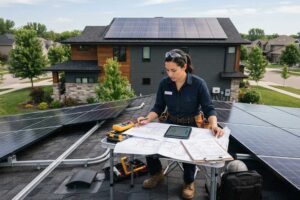
How Much Energy Does One Solar Panel Produce?
How much energy does one solar panel produce? One typical residential solar panel generates around 1.2 to 2.5 kWh of electricity per day, depending on its wattage, sunlight exposure, location, temperature, and installation conditions.
When homeowners ask me about solar energy production, they often look at the number printed on the panel label and assume that a 400W panel produces 400 watts continuously. In real installations, the story is different.
The watt rating represents the panel’s maximum power output under Standard Test Conditions (STC). It does not mean the panel produces that amount every hour of the day.
During a residential solar consultation, I once reviewed an installation where two neighboring homes used identical 400W panels. One system generated noticeably more electricity because the roof had better sun exposure and fewer shading issues. The hardware was the same—the environment was not.
After years working with photovoltaic products and Bright Solar solar applications, I have found that energy production is a combination of technology, design, and real-world conditions.
How Much Electricity Does One Solar Panel Produce Per Day?
The amount of energy produced by a single solar panel depends mainly on:
- Panel wattage
- Peak sunlight hours
- Solar system efficiency
- Weather conditions
- Installation angle
- Shading
The basic calculation is:
Solar Panel Energy Production = Panel Wattage × Peak Sun Hours
Example:
A 400W solar panel receiving 5 hours of usable sunlight:
400W × 5 hours = 2,000Wh
2,000Wh = 2 kWh per day
Typical energy production estimates:
| Solar Panel Size | Daily Energy Production |
|---|---|
| 100W panel | 0.3–0.6 kWh/day |
| 200W panel | 0.6–1.2 kWh/day |
| 300W panel | 0.9–1.8 kWh/day |
| 400W panel | 1.2–2.5 kWh/day |
| 500W panel | 1.5–3 kWh/day |
These values represent practical ranges rather than laboratory maximum ratings.
According to the National Renewable Energy Laboratory (NREL), photovoltaic system output depends on solar radiation, module characteristics, system losses, and environmental conditions.
Source:
- National Renewable Energy Laboratory (NREL): https://www.nrel.gov
What Factors Affect How Much Energy One Solar Panel Produces?
A solar panel’s energy production changes constantly because outdoor conditions are never exactly the same.
1. Solar Panel Power Rating
The panel wattage determines the maximum electricity output capability.
Common residential panel ratings include:
| Panel Type | Typical Power Rating |
|---|---|
| Small portable panels | 50W–200W |
| Residential panels | 300W–450W |
| High-output panels | 450W–600W+ |
A higher wattage panel can generate more electricity from the same area, which is useful when roof space is limited.
For example:
A 400W panel generally produces more energy than a 250W panel under identical sunlight conditions.
However, choosing the highest wattage panel is not always the best solution. The system should match:
- Available installation space
- Energy requirements
- Budget
- Application environment
2. Peak Sun Hours
Solar panels do not receive the same amount of sunlight throughout the day.
Peak sun hours measure the equivalent hours when sunlight intensity is strong enough for maximum solar generation.
Examples:
| Region Condition | Peak Sun Hours |
|---|---|
| High sunlight areas | 5–7 hours/day |
| Average sunlight areas | 3–5 hours/day |
| Lower sunlight areas | 2–4 hours/day |
A solar panel installed in California, Australia, or southern Europe may generate more electricity than the same panel installed in a cloudy northern climate.
3. Temperature and Weather Conditions
Many people assume extremely hot weather improves solar production. Actually, solar panels usually perform better under strong sunlight with moderate temperatures.
High temperatures can reduce photovoltaic efficiency because solar cells become less effective when operating above their ideal temperature range.
Weather impacts include:
- Clear sky → highest production
- Light clouds → reduced production
- Heavy clouds → significant reduction
- Snow coverage → temporary decrease
How Much Energy Does a 400W Solar Panel Produce?
A 400W solar panel is currently one of the most common choices for residential solar systems.
Estimated production:
| Sunlight Condition | Daily Output |
|---|---|
| 3 peak sun hours | About 1.2 kWh |
| 5 peak sun hours | About 2 kWh |
| 7 peak sun hours | About 2.8 kWh |
Annual production example:
A 400W panel generating 2 kWh daily:
2 kWh × 365 days = approximately 730 kWh per year
Actual production may vary because of:
- Seasonal changes
- Dirt accumulation
- Inverter efficiency
- Installation angle
- Temperature effects
How Many Appliances Can One Solar Panel Power?
The answer depends on the panel’s energy output and the appliance’s electricity consumption.
A single 400W solar panel producing around 2 kWh per day could support:
- LED lighting
- Mobile device charging
- Small electronics
- Wi-Fi equipment
- Energy-efficient appliances
However, it usually cannot power an entire home alone because household electricity demand is much higher.
For example:
A refrigerator may consume around 1–2 kWh per day depending on efficiency and usage. A single solar panel could potentially cover part of that demand, but a complete home requires multiple panels working together.
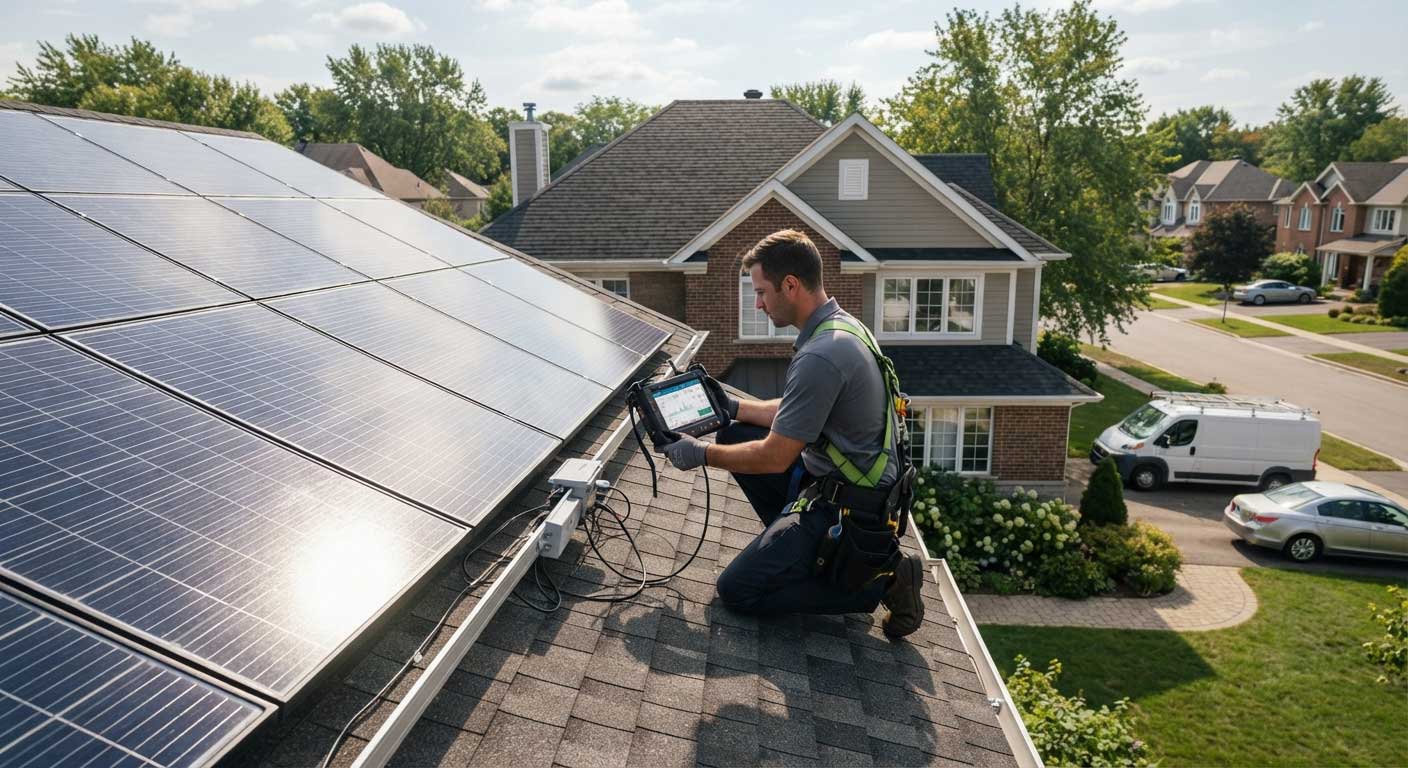
How Bright Solar Helps Improve Solar Energy Production
At Bright Solar, we understand that solar performance is not only about the rated wattage printed on a panel.
A practical solar solution considers:
- Installation location
- Available space
- Weight limitations
- Environmental exposure
- Energy goals
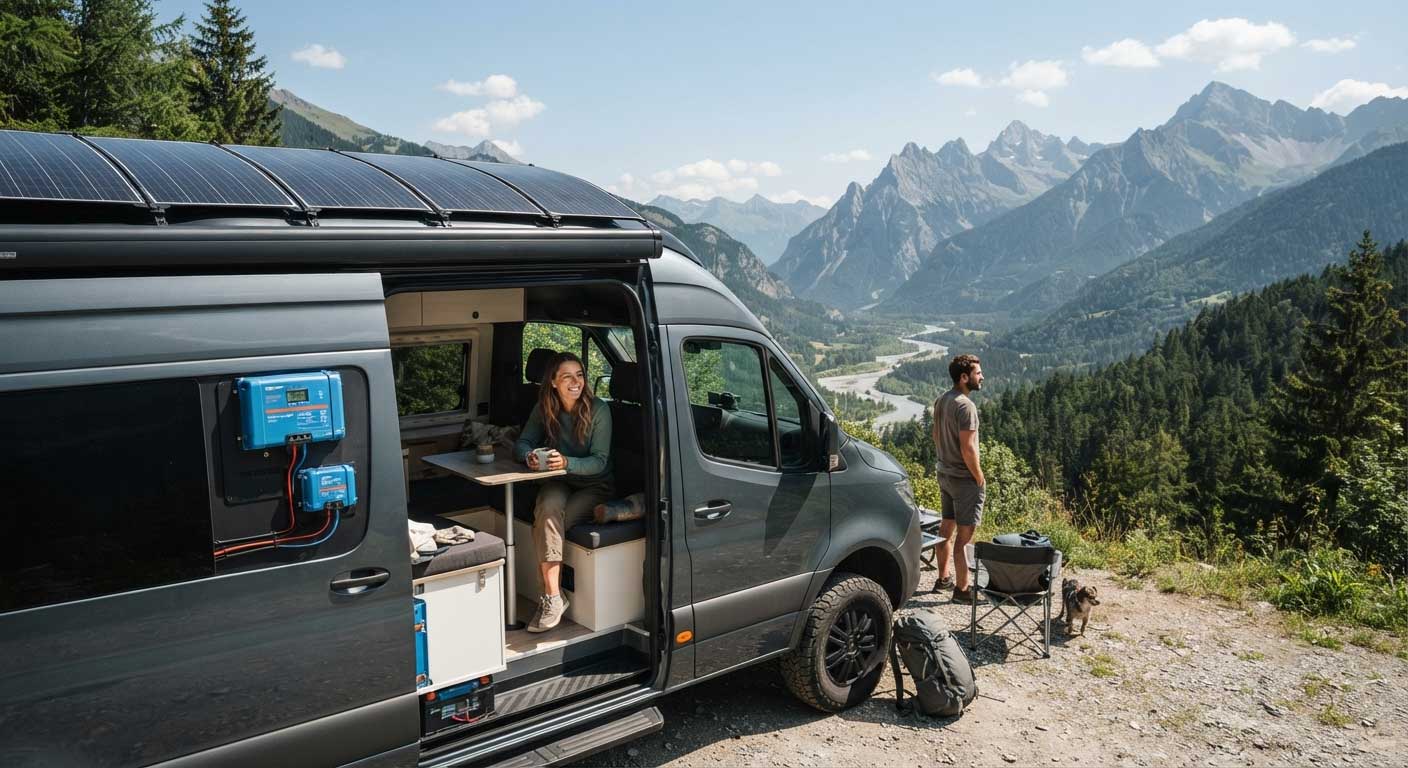
Bright Solar develops flexible solar panels for applications where traditional rigid panels may not be ideal.
Typical applications include:
- RV solar systems
- Marine solar installations
- Portable power solutions
- Lightweight structures
- Off-grid energy systems
In one project evaluation, a customer originally wanted the highest wattage panel available. After reviewing the installation environment, the main challenge was not electricity demand—it was limited mounting capacity. A lightweight flexible solar solution became the better choice.
Real-world solar performance comes from matching the right technology with the right application.
Why Solar Panel Energy Output Is Different From Rated Wattage
A common misunderstanding is:
400W solar panel = 400W electricity all day
This is incorrect.
A 400W rating means:
- Maximum output under laboratory conditions
- Specific temperature requirements
- Standard sunlight intensity
During a normal day:
Morning:
- Lower sunlight angle
- Lower output
Midday:
- Highest electricity production
Evening:
- Reduced output
Night:
- No solar production
Understanding this difference helps homeowners calculate realistic solar expectations.
How Much Energy Does One Solar Panel Produce in a Year?
Looking at annual production gives homeowners a more realistic understanding of solar performance because electricity generation changes throughout the year.
A solar panel may produce more electricity during long summer days and less during winter months when sunlight hours are shorter.
A typical calculation:
Annual Solar Energy = Panel Capacity × Average Sun Hours × 365 Days × System Efficiency
Example:
A 400W solar panel:
- Panel capacity: 0.4 kW
- Average sunlight: 5 peak sun hours/day
- System efficiency: approximately 80–90%
Estimated annual production:
0.4 kW × 5 hours × 365 days × efficiency
≈ 580–730 kWh per year
Typical annual production ranges:
| Solar Panel Size | Estimated Annual Energy Production |
|---|---|
| 100W panel | 100–250 kWh/year |
| 200W panel | 250–500 kWh/year |
| 300W panel | 450–750 kWh/year |
| 400W panel | 580–1,000 kWh/year |
| 500W panel | 750–1,300 kWh/year |
These numbers are estimates. Actual performance depends on location, installation quality, and environmental conditions.
The U.S. Department of Energy (DOE) explains that solar photovoltaic system output varies based on solar resource availability, system design, and equipment performance.
Source:
- U.S. Department of Energy: https://www.energy.gov
How Can You Increase the Energy Production of One Solar Panel?
A high-quality solar panel can still underperform if the installation environment is not optimized.
Several methods can improve real-world electricity production.
1. Reduce Shading Problems
Shading is one of the most common reasons solar panels produce less electricity than expected.
Possible shading sources include:
- Trees
- Nearby buildings
- Chimneys
- Roof structures
Even partial shading can affect output because solar cells in a module are connected together.
Before installation, professionals usually analyze:
- Sun path
- Roof obstacles
- Seasonal shadow changes
A panel receiving uninterrupted sunlight will usually outperform a higher-rated panel installed in a shaded location.
2. Choose the Right Installation Angle
Solar panels produce more energy when they receive sunlight at an effective angle.
Important installation factors include:
- Roof direction
- Tilt angle
- Local latitude
- Seasonal sunlight changes
For example, a south-facing roof in the Northern Hemisphere often provides strong solar exposure.
However, every property is different. A professional design should consider actual site conditions rather than rely only on general rules.
3. Select Solar Panels Based on Application
The best solar panel is not always the one with the highest power rating.
Different applications require different designs.
Rigid solar panels are widely used for:
- Residential rooftops
- Commercial buildings
- Large solar systems
Flexible solar panels provide advantages for:
- RV owners
- Boats
- Curved surfaces
- Portable energy systems
- Lightweight structures
Bright Solar focuses on flexible photovoltaic solutions that help customers install solar power in places where traditional panels may be difficult to use.
How Many Solar Panels Are Needed to Power a Home?
One solar panel usually cannot provide enough electricity for an entire house.
The required number depends on:
- Household electricity consumption
- Panel wattage
- Local sunlight conditions
- Energy goals
According to the U.S. Energy Information Administration (EIA), the average U.S. residential customer uses around 886 kWh of electricity per month.
Source:
- U.S. Energy Information Administration: https://www.eia.gov
Example:
A home using approximately 900 kWh/month may need:
- Around 15–25 panels
- Depending on panel wattage and sunlight conditions
A larger home with higher electricity consumption may require more panels.
Solar system design should start with energy usage, not simply available roof space.
How Bright Solar Supports Reliable Solar Energy Production
At Bright Solar, we believe solar panels should be designed around real-world applications.
Energy production depends on the relationship between:
- Solar panel technology
- Installation environment
- User requirements
- Long-term durability
Bright Solar flexible solar panels are designed with features such as:
- Lightweight construction
- Flexible installation options
- Outdoor durability
- Adaptability for different surfaces
For example, an RV owner may have limited roof capacity. Installing heavy rigid modules may not be practical, even if they provide high wattage. A lightweight flexible panel can offer a better balance between energy generation and installation limitations.
Solar technology works best when the product matches the environment.
FAQ About How Much Energy Does One Solar Panel Produce?
How much energy does one solar panel produce?
One residential solar panel typically produces around 1.2–2.5 kWh of electricity per day, depending on wattage, sunlight hours, location, and installation conditions.
How many kWh does a 400W solar panel produce?
A 400W solar panel commonly produces about 35–75 kWh per month, depending on sunlight availability and system efficiency.
Does a solar panel produce electricity at night?
No. Solar panels require sunlight to generate electricity. Energy can still be available at night if the system uses battery storage.
Why is my solar panel producing less energy than expected?
Lower production may result from shading, dirt, incorrect installation angle, high temperatures, weather changes, or equipment losses.
Can one solar panel power a refrigerator?
A single solar panel may produce enough energy to support part of a refrigerator’s daily consumption, but continuous operation usually requires battery storage and proper system sizing.
Are higher wattage solar panels always better?
Not always. Higher wattage panels provide more power per module, but the best choice depends on installation space, budget, and application requirements.
Do flexible solar panels produce less energy than rigid panels?
Flexible solar panels can provide comparable energy production when properly designed. Their main advantages are lightweight construction and installation flexibility.
Conclusion: Understanding How Much Energy Does One Solar Panel Produce
How much energy does one solar panel produce? A typical solar panel generates approximately 1.2–2.5 kWh of electricity per day, but the actual output depends on sunlight conditions, panel specifications, installation design, and environmental factors.
After working with solar technology and reviewing different installation scenarios, I have seen that real performance comes from proper system planning rather than simply choosing the highest wattage panel.
Bright Solar continues developing flexible and reliable solar solutions for residential, mobile, and off-grid applications.
Understanding solar panel energy production helps homeowners choose the right system size, estimate savings, and build a more effective renewable energy solution.
Related recommendations
-

What Is IRC Certificate for Solar Panels?
138An IRC reference for solar panels concerns residential building-code compliance, not a standalone solar product certification.
View details -
How Long a Solar Panel Will Last?
255How long a solar panel will last depends on quality, materials, and maintenance. Learn solar panel lifespan, degradation rates, and expert insights from Bright Solar.
View details -
how to calculate solar panel needs for home?
249Learn how to calculate solar panel needs for home with energy usage, sunlight hours, system losses, and panel output factors for accurate solar sizing.
View details -
how to secure portable solar panels?
153Secure portable solar panels with a weather-resistant security cable, a suitable fixed anchor, and stable mounting. Store the panel inside the RV when unatte...
View details