How to Mount Solar Panels on Roof?
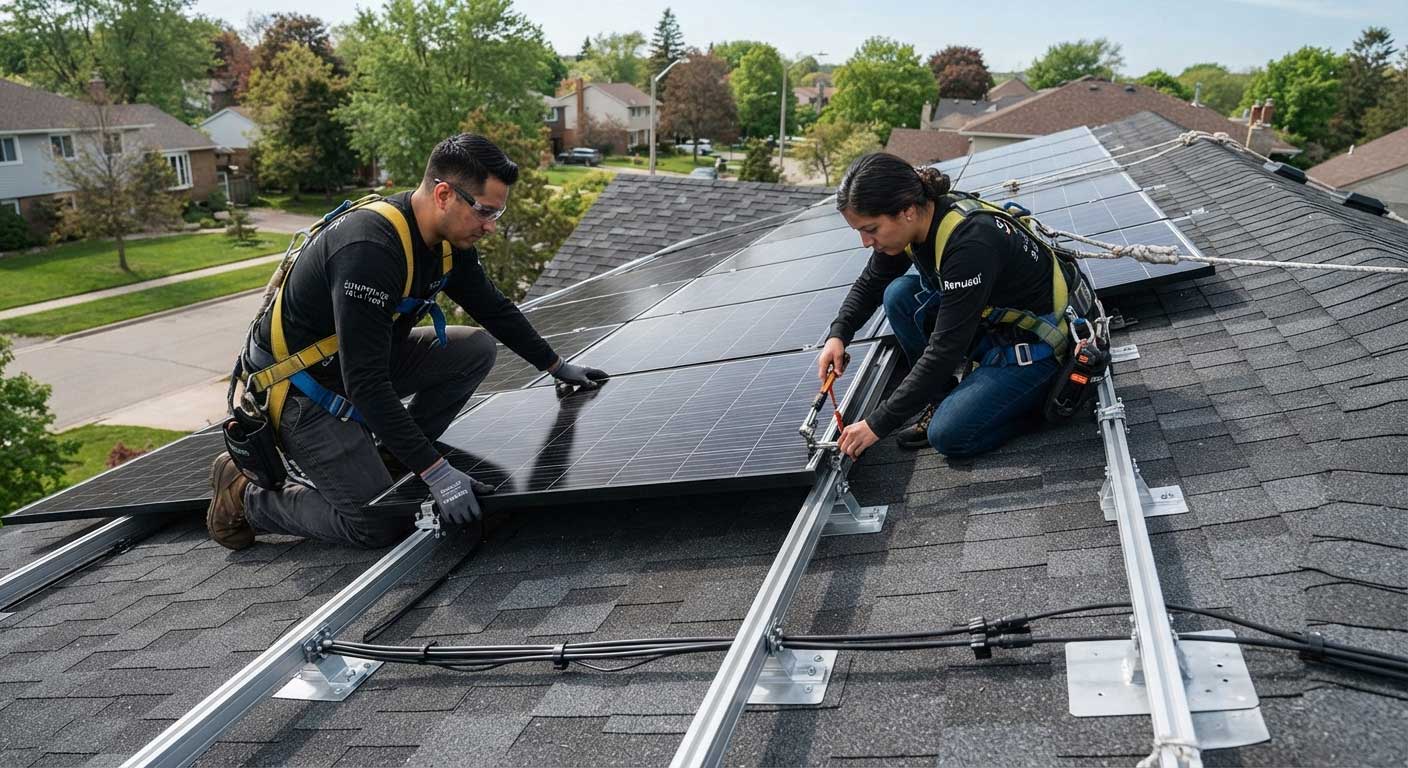
How to mount solar panels on roof? Solar panels are mounted on roofs by installing suitable roof mounts, securing rails to structural supports, attaching panels with clamps, and ensuring waterproof protection around mounting points.
Mounting solar panels is one of the most important stages in a rooftop solar installation. A high-quality panel can generate clean energy for decades, but poor mounting work may create problems such as roof leaks, loose panels, or reduced system performance.
At Bright Solar, we have worked with different solar applications, including residential rooftops, commercial projects, and flexible solar solutions. From installation feedback, one thing becomes clear: many homeowners focus on choosing the right solar panels but underestimate the importance of the solar panel roof mounting structure underneath.Visit the product page:Flexible Solar Panels
The mounting system is not just a frame holding panels in place. It must handle wind loads, weather exposure, roof movement, and long-term outdoor conditions.
Understanding Solar Panel Roof Mounting Systems
Why Are Solar Panel Roof Mounts Important?
Solar panel roof mounts provide the connection between the photovoltaic modules and the building structure.
A reliable mounting system helps:
- Keep panels securely attached during strong winds
- Maintain the correct solar panel angle
- Create airflow underneath panels
- Protect roof surfaces
- Support long-term solar performance
According to the U.S. Department of Energy, properly designed photovoltaic systems must consider structural requirements, electrical safety, and environmental conditions during installation.
Source: U.S. Department of Energy Solar Energy Technologies Office
Types of Solar Panel Roof Mounts
Roof Mounting Systems for Different Roof Types
The correct mounting method depends on the roof structure, material, and solar application.
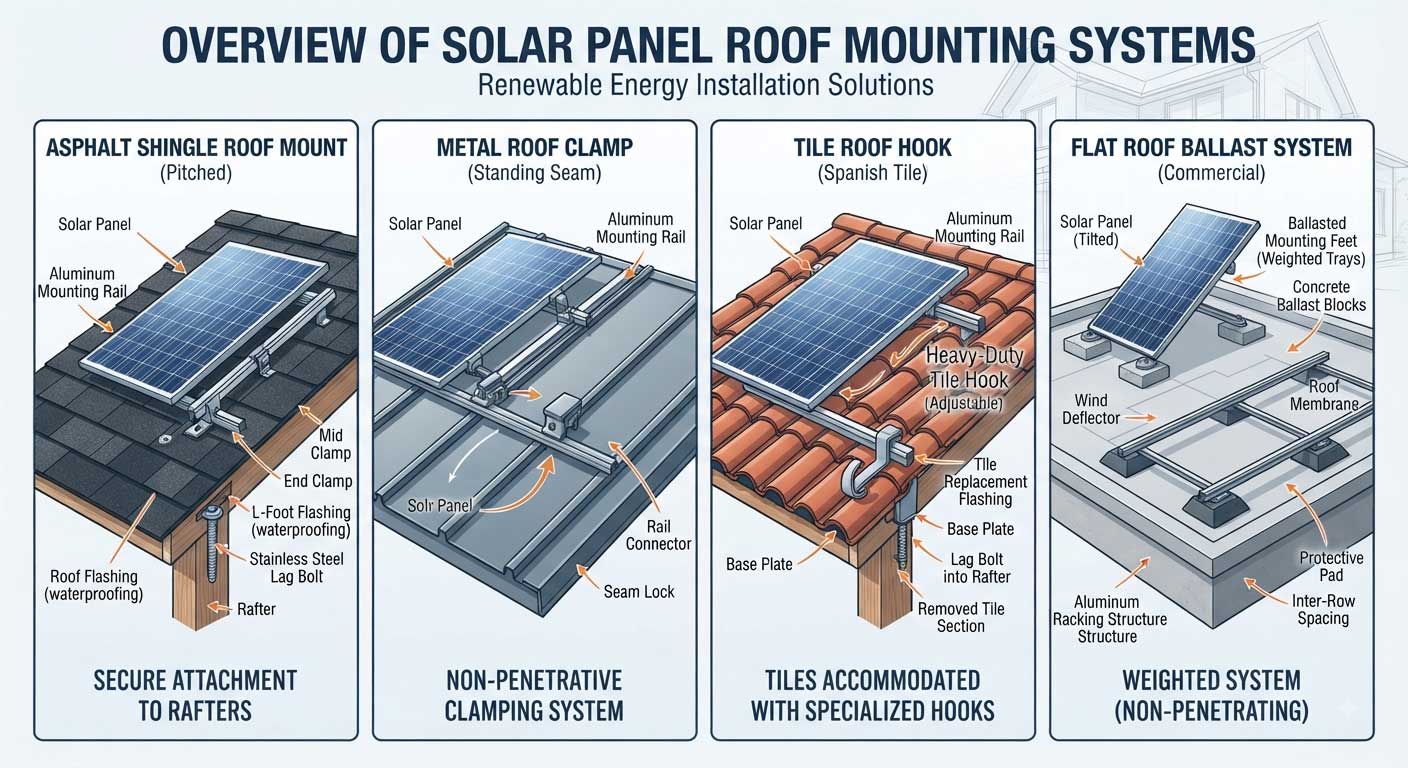
| Roof Type | Common Mounting Method | Installation Features |
|---|---|---|
| Asphalt shingle roof | Rail-based mounts | Uses flashing and roof attachments |
| Metal roof | Clamp mounting | Avoids unnecessary roof penetration |
| Tile roof | Tile hooks and brackets | Requires careful tile handling |
| Flat roof | Ballasted systems | Uses weighted mounting structures |
Fixed Roof Mount Systems
Fixed mounting systems are the most common choice for residential solar installations.
They include:
- Roof attachments
- Rails
- Mid clamps
- End clamps
- Grounding components
The panels remain at a fixed angle designed according to location and roof orientation.
Adjustable Solar Mounting Systems
Some installations require adjustable mounting structures.
These systems allow:
- Tilt angle adjustment
- Better seasonal optimization
- Improved solar exposure
They are commonly used for flat roofs or special solar applications.
How to Mount Solar Panels on Roof Step by Step
Step 1: Inspect the Roof Structure
Before installing solar panels on roof surfaces, check:
- Roof age
- Roof material
- Structural strength
- Existing damage
A solar array may last 25 years or longer, so installing it on an aging roof can create unnecessary future costs.
The National Renewable Energy Laboratory (NREL) notes that photovoltaic system design should include considerations for structural integrity and long-term reliability.
Source: National Renewable Energy Laboratory Solar Research
Step 2: Locate Roof Rafters
Mounting points should connect to strong structural members, not only the outer roof material.
Installers typically use:
- Rafter locations
- Structural beams
- Approved roof attachment points
Incorrect attachment placement is one of the most common causes of unstable solar installations.
Step 3: Install Roof Attachments and Flashing
Roof attachments transfer the solar array load to the building structure.
During installation:
- Mark attachment locations.
- Drill carefully where required.
- Install waterproof flashing.
- Seal penetration points.
- Secure mounting brackets.
Waterproofing is critical because even a small installation mistake can lead to roof moisture problems years later.
Step 4: Install Rails and Solar Panel Clamps
After mounting brackets are installed:
- Attach aluminum rails
- Align the mounting system
- Secure rail connections
- Install panel clamps
Rails must be accurately positioned because uneven mounting can place stress on solar modules.
How to Secure Solar Panels to Roof Correctly
Key Factors That Affect Mounting Strength
A secure solar installation depends on:
Wind Resistance
Solar panels experience strong wind pressure, especially near roof edges.
Correct Hardware
Use:
- Stainless steel bolts
- Aluminum rails
- Weather-resistant clamps
- Certified mounting components
Proper Torque Settings
Over-tightening can damage components.
Under-tightening can allow movement.
Professional installers follow manufacturer torque specifications to achieve the correct balance.
Bright Solar Installation Experience
During solar project evaluations, we often notice that mounting problems happen before the panels are even installed.
A common mistake is selecting a mounting system based only on price.
A cheaper bracket may appear attractive initially, but rooftop solar systems face:
- Rain
- UV exposure
- Temperature changes
- Wind pressure
every day.
At Bright Solar, we recommend evaluating the complete system:
- Panel type
- Roof condition
- Mounting hardware
- Installation environment
- Expected service life
The mounting structure should support the solar investment, not become the weakest point.
How to Mount Solar Panels on Roof? Complete Installation Guide
Common Mistakes When Mounting Solar Panels on Roof
Even experienced installers pay close attention to mounting details because small mistakes can create long-term problems.
When reviewing rooftop solar projects, I have found that most mounting failures are not caused by the solar panels themselves. They usually come from poor planning before installation begins.
Installing Solar Panels Without Checking Roof Condition
A solar array is designed to operate for decades, so the roof underneath must also be ready for long-term service.
Before installing solar panels on roof, check:
- Roof age
- Existing leaks
- Waterproofing condition
- Structural strength
- Future roof replacement plans
Installing a solar system on an aging roof may require removing the panels later for roof repairs, increasing project costs.
Solar installation guidance from Singapore’s Energy Market Authority also recommends checking roof material, pitch, and condition before installation to ensure the roof can safely support the PV system.
Using Incorrect Roof Attachments
Different roofs require different mounting solutions.
For example:
- Asphalt roofs usually need flashed attachments.
- Standing seam metal roofs often use clamps.
- Tile roofs require specialized hooks or brackets.
- Flat roofs may use ballasted systems.
Using the wrong attachment method can affect:
- Waterproof performance
- Wind resistance
- System lifespan
A mounting solution should always match both the roof structure and solar panel specifications.
Poor Waterproofing Around Mounting Points
One question homeowners often ask is:
“Will mounting solar panels damage my roof?”
The answer depends heavily on installation quality.
Professional mounting does not simply involve drilling holes and adding sealant.
A proper installation includes:
- Locating structural attachment points.
- Installing suitable flashing.
- Creating a weather-resistant seal.
- Testing attachment security.
Water protection is especially important because roof penetrations must remain reliable through years of temperature changes and rainfall.
Best Practices for Solar Power Mounting Systems
Keep Proper Panel Spacing
Solar panels need airflow underneath them.
A small gap between the roof and panels helps:
- Reduce heat buildup
- Improve module performance
- Allow easier maintenance
Overheated panels generally produce less electricity because photovoltaic efficiency decreases as temperature rises.
Follow Manufacturer Mounting Guidelines
Every solar module has approved mounting zones.
Installers should follow:
- Clamp positions
- Rail spacing requirements
- Maximum load limits
- Torque specifications
Incorrect clamping locations may place unnecessary stress on the solar module frame.
Consider Wind and Weather Conditions
A rooftop solar system must withstand local environmental conditions.
Important factors include:
- Wind speed
- Roof height
- Building location
- Panel orientation
- Mounting hardware strength
For rooftop solar projects, structural design and environmental conditions are key parts of safe installation planning.
Installing Solar Panels on Roof: Professional Installation Workflow
A typical rooftop solar mounting process includes:
| Step | Installation Task |
|---|---|
| 1 | Roof inspection and measurement |
| 2 | Solar layout planning |
| 3 | Marking mounting locations |
| 4 | Installing roof attachments |
| 5 | Installing rails |
| 6 | Mounting solar panels |
| 7 | Connecting electrical wiring |
| 8 | Final inspection and testing |
This workflow helps prevent problems after installation.
How to Secure Solar Panels to Roof for Long-Term Performance
A secure solar mounting system requires more than strong brackets.
It depends on the complete structure:
Structural Connection
Mounts should transfer panel loads into the roof structure.
Weather Protection
Flashing and sealing systems protect against water intrusion.
Quality Hardware
Reliable components include:
- Corrosion-resistant fasteners
- Certified mounting rails
- Durable clamps
- Proper grounding equipment
Bright Solar Expert Insight
During solar project discussions, we often see customers compare only panel prices.
However, the mounting structure is the part that physically protects the entire investment.
A solar panel may have a 25-year performance warranty, but the installation quality determines whether the system continues operating smoothly through years of storms, heat, and seasonal weather changes.
For residential solar power mounting systems, Bright Solar recommends evaluating:
- Roof structure first
- Mounting compatibility second
- Panel selection third
The strongest solar installation is not always the one with the most expensive equipment. It is the one where every component works together.
FAQ About How to Mount Solar Panels on Roof?
Can solar panels be mounted on any roof?
Most common roof types can support solar panels, including asphalt shingles, metal roofs, tile roofs, and flat roofs. However, the mounting method depends on roof material, condition, and structure.
Do solar panels damage the roof?
Properly installed solar panels should not damage a roof. Professional mounting systems use approved attachments and waterproofing methods to protect roof integrity.
How are solar panels attached to a roof?
Solar panels are attached using roof mounts, brackets, rails, and clamps. The mounting hardware connects the panels securely to the roof structure.
Should I replace my roof before installing solar panels?
If the roof is near the end of its useful life, replacing it before installation is usually better. Removing solar panels later for roof repairs can increase costs.
How long do solar panel roof mounts last?
Quality mounting systems are designed to last for decades when installed correctly and maintained properly.
Can I install solar panels myself?
Small solar projects may be suitable for experienced DIY users, but rooftop installations involve structural and electrical considerations. Professional installation is recommended for larger home solar systems.
Conclusion: Choosing the Right Solar Panel Roof Mounting Method
Learning how to mount solar panels on roof is about creating a safe connection between your solar investment and your home structure.
The best installation combines:
- Correct roof mounts
- Proper waterproofing
- Strong structural attachments
- Suitable panel positioning
- Professional installation practices
A solar system should not only generate electricity today. It should continue performing reliably for many years.
With the right solar panel roof mounting approach, homeowners can build a safer, more efficient, and longer-lasting solar energy system.
The prev: How to Clean Solar Light Panels?The next: How to Join Solar Panels?
Related recommendations
-

What Direction Should Solar Panels Face?
201Discover what direction should solar panels face for maximum energy output. Learn the best orientation, optimal angle, and installation tips from Bright Solar.
View details -
How Do You Replace a Roof With Solar Panels?
128A roof replacement with solar panels usually requires removing the solar system first, replacing and inspecting the roof, then reinstalling or replacing the ...
View details -
how are solar panels made?
141Learn how are solar panels made with real factory process insights, silicon production steps, and Bright solar engineering experience from global manufacturing lines.
View details -
How much electricity does one solar panel produce?
268How much electricity does one solar panel produce? Learn daily output, wattage calculations, energy factors, and real solar production examples.
View details