How to make your own solar panel?
To make your own solar panel, connect photovoltaic cells, organize electrical wiring, protect the module surface, and test output safely. A DIY solar panel can demonstrate solar technology but differs from certified commercial modules.
How to make your own solar panel step by step
Learning how to make your own solar panel is a practical way to understand photovoltaic technology, electrical connections, and renewable energy principles. A homemade solar panel project can be useful for education, small experiments, and learning how sunlight becomes electricity.
At Bright Solar, our engineers design flexible solar panels for RV, marine, portable, and off-grid applications. When customers ask about building their own panels, we usually explain the difference between assembling a small demonstration module and manufacturing a reliable solar product. A solar panel is not only a collection of photovoltaic cells. Long-term performance depends on cell quality, electrical design, encapsulation, environmental protection, and testing.
A basic DIY solar panel contains:
| Component | Purpose |
|---|---|
| Photovoltaic cells | Convert sunlight into electricity |
| Tab wires | Connect individual cells |
| Bus wires | Carry electrical current |
| Protective cover | Reduce physical damage |
| Junction connection | Transfer generated power |
The basic energy process:
Sunlight → Photovoltaic cells → DC electricity → Electrical load or battery
Materials needed to build your own solar panel
Choose the right solar cells
The first step in how to make your own solar panel is selecting suitable photovoltaic cells.
Common choices include:
- Monocrystalline solar cells
- Polycrystalline solar cells
- Small educational solar cells
Monocrystalline cells are widely used because they typically provide higher efficiency and better space utilization compared with older photovoltaic technologies.
According to the U.S. Department of Energy, photovoltaic cells work by absorbing sunlight and generating electrical current through semiconductor materials.
For a DIY project, cell selection affects:
- Output voltage
- Current capacity
- Physical size
- Final application
Prepare tools and materials
A typical DIY solar panel project requires:
- Solar cells
- Soldering iron
- Flux pen
- Electrical wire
- Protective sheet material
- Transparent cover
- Multimeter
- Frame or backing board
The workspace matters. Solar cells are thin and fragile. A small mistake during soldering can crack a cell or create a weak connection that reduces output.
In professional manufacturing environments, automated equipment is used because consistent pressure, temperature control, and alignment directly affect module reliability.
Step-by-step guide to make your own solar panel
Step 1: Plan the solar cell arrangement
Before connecting cells, decide the electrical configuration.
Two common methods:
| Connection Method | Result |
|---|---|
| Series connection | Higher voltage |
| Parallel connection | Higher current |
For example:
If one solar cell produces around 0.5V, connecting multiple cells in series increases the total voltage.
The final arrangement depends on the intended use, such as charging a small battery or powering low-energy devices.
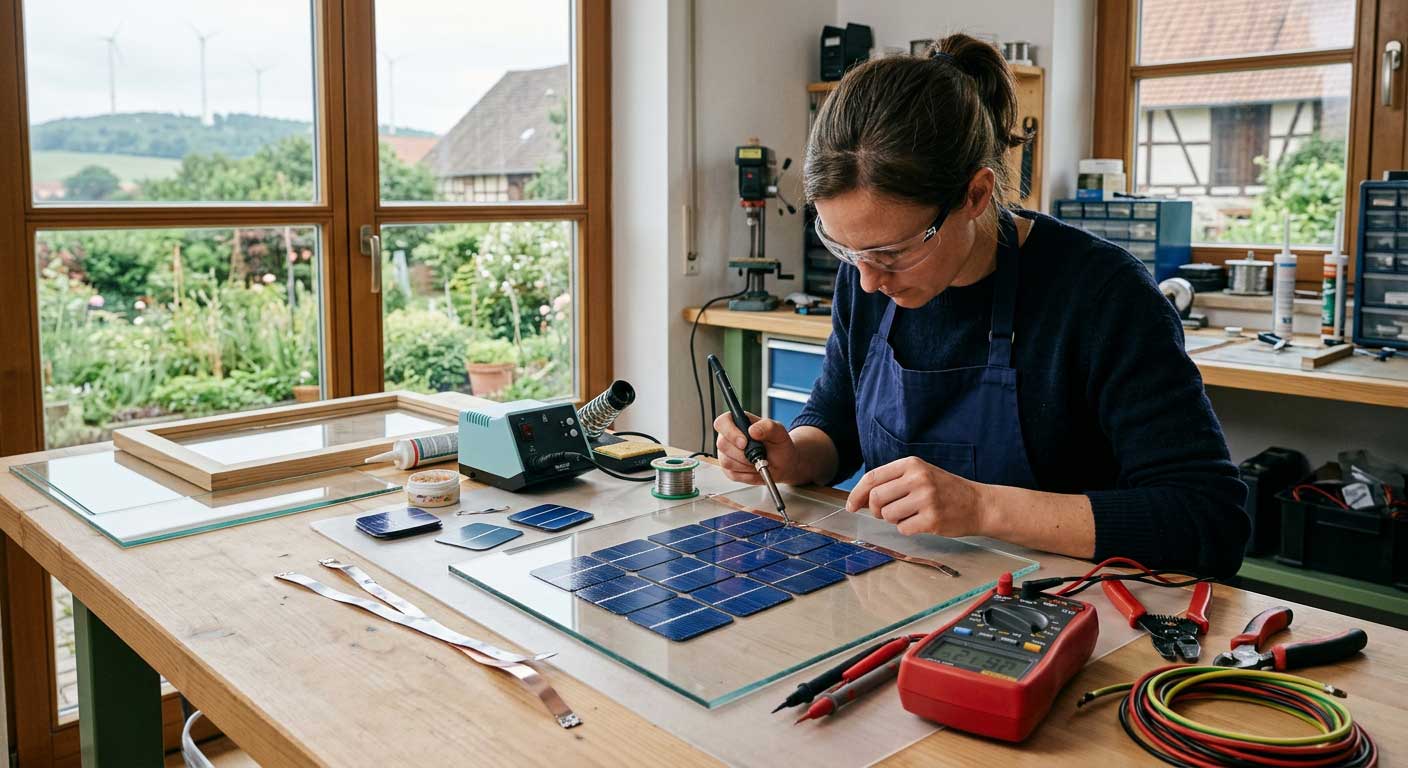
Step 2: Connect photovoltaic cells
Carefully connect each cell using tab wires.
Basic process:
- Position cells evenly
- Attach connecting wires
- Solder electrical joints
- Check polarity
- Measure voltage output
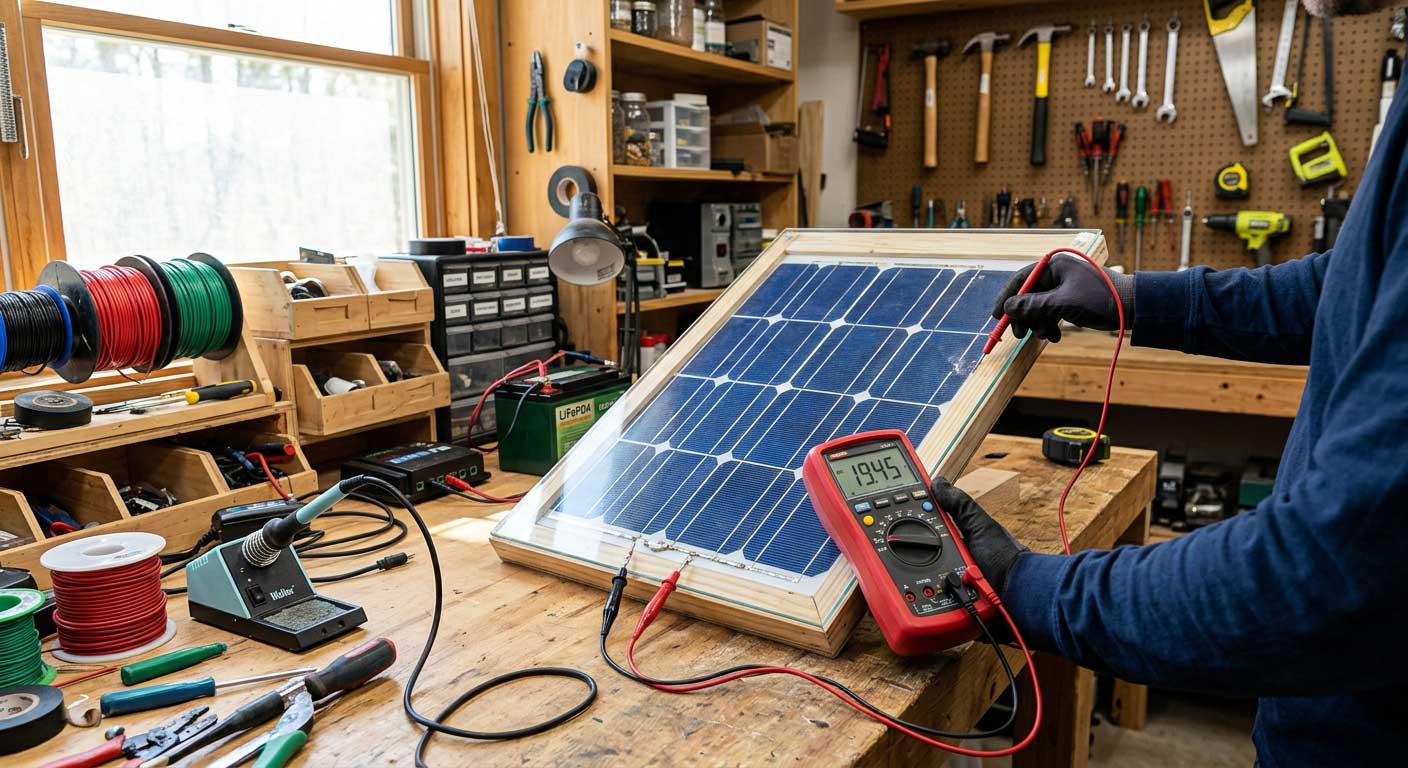
A multimeter is useful at this stage because it confirms whether electricity is flowing correctly before sealing the panel.
During Bright Solar engineering discussions, we often emphasize testing before final assembly. Once cells are sealed inside a module, correcting wiring problems becomes much more difficult.
Step 3: Protect the solar panel structure
A solar panel needs protection from outdoor conditions.
Protection helps reduce damage from:
- Moisture
- Dust
- Temperature changes
- Mechanical impact
Commercial modules use specialized materials such as glass, encapsulation layers, and protective backsheets to improve durability.
A homemade panel may work well for learning, but achieving long-term outdoor reliability requires professional materials and manufacturing processes.
How much electricity can your own solar panel produce?
Factors affecting DIY solar panel output
The energy production of a homemade solar panel depends on:
| Factor | Effect |
|---|---|
| Number of cells | Determines total output |
| Cell efficiency | Influences electricity generation |
| Sunlight intensity | Changes daily production |
| Wiring quality | Affects electrical losses |
| Panel protection | Influences long-term performance |
A small DIY solar panel may power:
- LED lighting
- Small fans
- Sensors
- Educational electronics
It is generally not designed to replace a residential solar installation.
DIY solar panel vs professional solar panel
Understanding the difference
| Feature | DIY Solar Panel | Professional Solar Panel |
|---|---|---|
| Assembly | Manual | Factory production |
| Testing | Basic measurement | Professional testing |
| Weather resistance | Depends on materials | Engineered protection |
| Application | Learning projects | Long-term energy systems |
| Certification | Usually unavailable | Industry certifications |
At Bright Solar, flexible solar panels are developed for demanding applications where weight, shape, and environmental conditions matter. RV roofs, boats, and portable systems often require designs that go beyond basic solar cell assembly.
Safety tips when making your own solar panel
Protect yourself during assembly
Follow these precautions:
- Use proper soldering tools
- Avoid touching exposed electrical connections
- Check polarity before connecting devices
- Prevent short circuits
Understand electrical limits
Before connecting your panel:
- Measure voltage
- Check current output
- Confirm battery compatibility
- Use appropriate controllers
A small solar panel can still generate electricity capable of damaging components if connected incorrectly.
Practical applications for homemade solar panels
A DIY solar panel is commonly used for:
- Science projects
- Educational demonstrations
- Small electronics
- Solar experiments
- Learning photovoltaic principles
For larger applications such as homes, RVs, marine systems, or off-grid power, professionally manufactured modules provide better reliability and durability.
FAQ About Making Your Own Solar Panel
Can I make my own solar panel at home?
Yes. You can build a small solar panel for learning and experiments, but commercial systems require professional manufacturing.
Is it cheaper to make your own solar panel?
For small educational projects, DIY may reduce costs, but professional panels provide better durability and performance.
What materials do I need to make a solar panel?
You need photovoltaic cells, wires, soldering tools, protective materials, and electrical testing equipment.
How many solar cells are needed to make a panel?
The number depends on the required voltage, current, and intended application.
Can a homemade solar panel power a house?
No. Residential solar systems require certified panels, inverters, batteries, and safety equipment.
How long will a homemade solar panel last?
The lifespan depends on materials, protection methods, and outdoor exposure.
Can beginners build a solar panel?
Yes. Beginners can build small educational panels with basic tools and careful assembly.
Final Answer: How to make your own solar panel?
Understanding how to make your own solar panel provides valuable knowledge about photovoltaic technology and renewable energy. A DIY panel can demonstrate how solar cells generate electricity, while professional solar modules require advanced manufacturing, testing, and protection.
Bright Solar develops flexible solar panel solutions for RV, marine, portable, and off-grid applications where reliable solar performance is essential.
The prev: How to make solar panel at home?The next: How to tell if solar panels are working?
Related recommendations
-

How much are residential solar panels?
184Discover how much are residential solar panels and what affects total costs, including panel prices, installation factors, system size, and expert solar insights from Bright Solar.
View details -
What are the benefits of solar panels?
46Solar panels generate clean electricity from sunlight, reduce grid dependence, and can lower long-term electricity costs. They also support renewable energy ...
View details -
how can solar panels help the environment?
255how can solar panels help the environment? Discover how solar energy reduces emissions, protects natural resources, and supports a cleaner sustainable future.
View details -
How Expensive Are Solar Panels for a Home?
260How expensive are solar panels for a home? Learn residential solar costs, installation factors, equipment pricing, and what affects your total investment with Bright Solar.
View details