How to Keep Flexible Solar Panels Cool?
How to Keep Flexible Solar Panels Cool?
Flexible solar panels stay cool by maintaining airflow beneath the panel, avoiding full-surface adhesive installation, selecting heat-resistant materials, and reducing heat buildup during peak sunlight hours. Proper installation can lower operating temperatures by 10–20°C and significantly improve efficiency and lifespan.
Several years ago I climbed onto an RV roof in Arizona at 2 p.m. during July. The roof surface was almost impossible to touch. The flexible panel itself measured nearly 79°C with an infrared thermometer while the ambient air temperature was only 41°C. That afternoon explained something many brochures never mention: heat is the real enemy of flexible solar panels.
Why Do Flexible Solar Panels Become Hot?
Solar panels convert sunlight into electricity, but only a portion of incoming solar energy becomes usable power. The remaining energy turns into heat.
According to the National Renewable Energy Laboratory (NREL), photovoltaic module temperature can exceed ambient temperature by 20–35°C during normal operation.
Typical summer temperatures:
| Condition | Panel Temperature |
|---|---|
| 25°C air temperature | 45–60°C |
| 35°C roof temperature | 60–75°C |
| Dark RV roof in summer | 70–85°C |
| Poorly ventilated installation | 80°C+ |
Source: NREL PV Performance Research.
Heat reduces voltage output. The U.S. Department of Energy notes that solar module efficiency decreases as cell temperature rises.
The Biggest Cooling Mistake I See on RV Roofs
Many installers glue the entire back surface directly onto the roof.
That certainly looks neat.
Unfortunately, it traps heat.
I once removed a three-year-old panel installed on a black TPO roof. The adhesive covered nearly 95% of the backside. The panel had yellowed ETFE, visible hot spots, and output had fallen nearly 18%.
The owner assumed the cells had failed.
The actual problem was heat.
A small air gap often performs better than perfect contact.
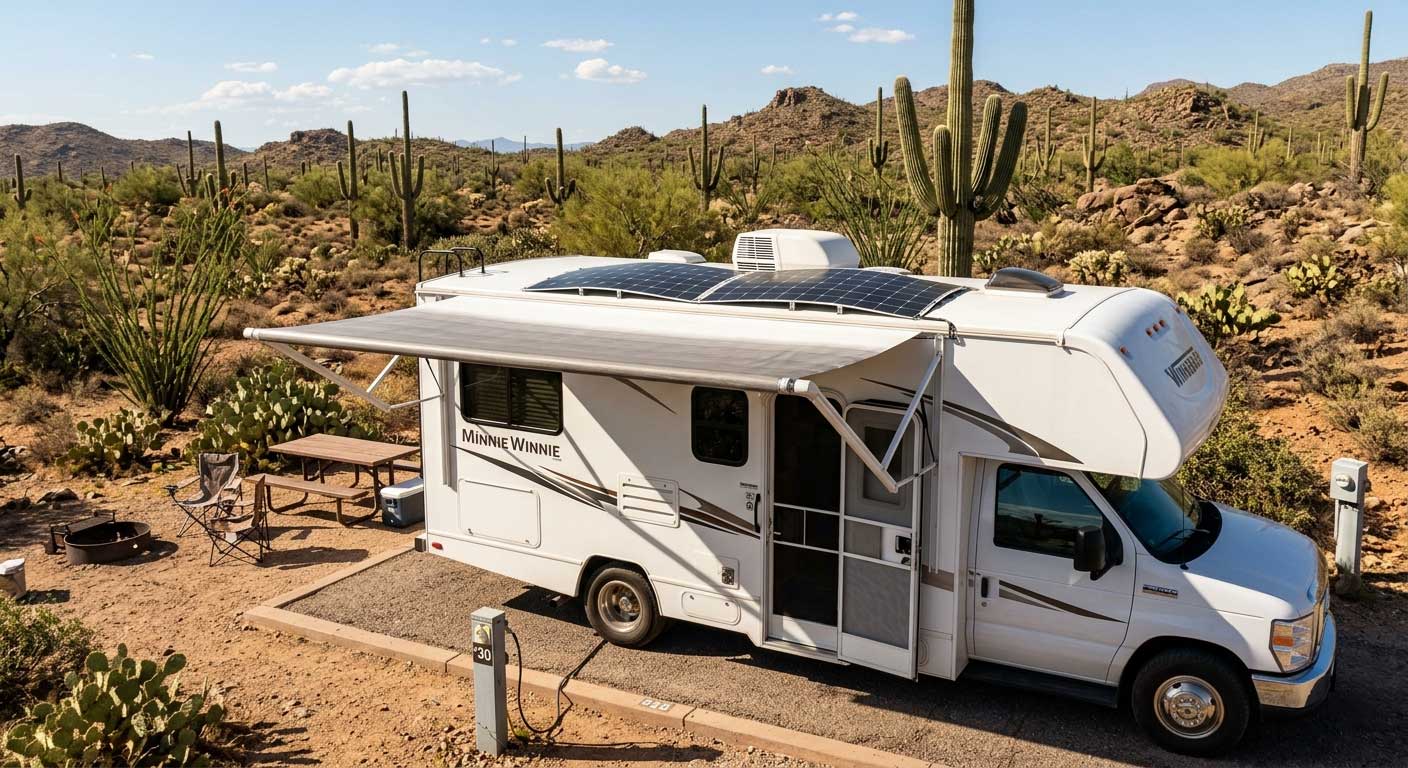
How Airflow Reduces Solar Panel Temperature
Airflow works surprisingly well.
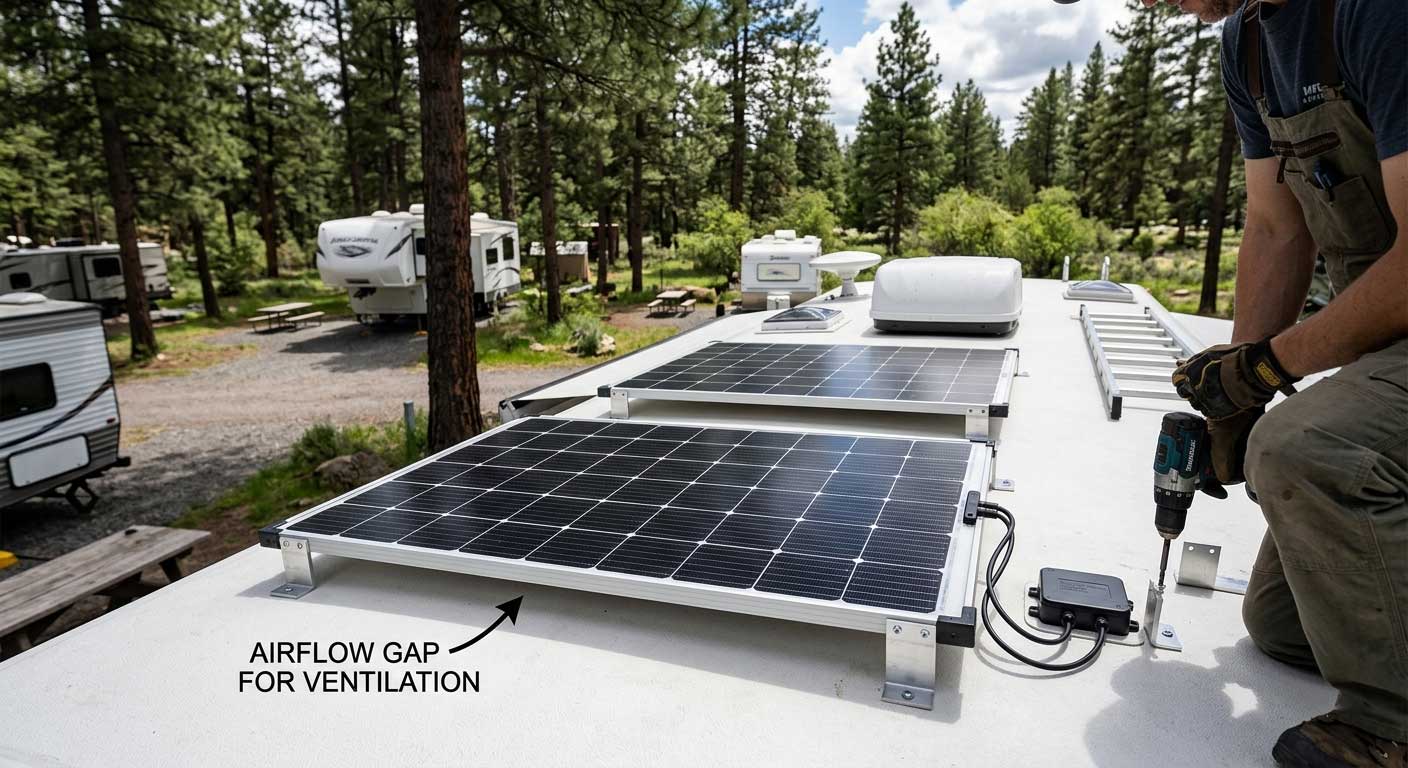
Even a 10–20 mm gap underneath the panel allows moving air to remove trapped heat.
Field observations from marine installations show:
- Fully bonded panel: 75–85°C
- Partial adhesive installation: 65–75°C
- Raised mounting installation: 55–65°C
On boats this difference becomes obvious.
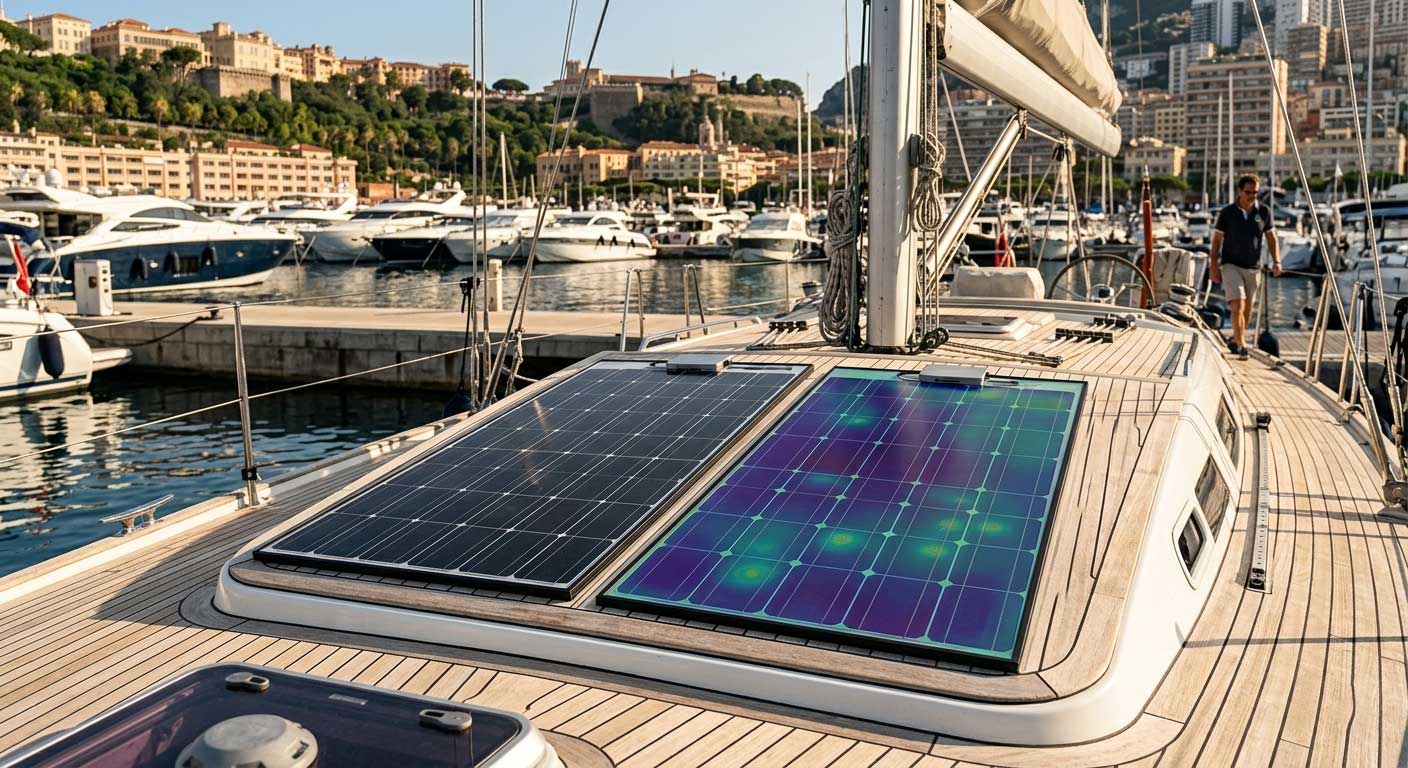
Marine decks remain cooler because moving air constantly travels underneath the panel edges.
That is why many yacht owners report longer panel life than RV owners.
Installation Methods Ranked by Cooling Performance
| Installation Method | Cooling Performance |
|---|---|
| Full adhesive bond | Poor |
| Double-sided tape only | Fair |
| Mounting strips with gaps | Good |
| Aluminum rail mounting | Excellent |
Material Selection Matters More Than People Think
Cheap panels usually fail because of materials.
Not because of solar cells.
A quality flexible panel often includes:
- ETFE top layer
- UV-resistant encapsulation
- High-temperature adhesive
- Monocrystalline PERC cells
- Corrosion-resistant junction box
ETFE surfaces typically operate cooler than older PET materials because they resist yellowing and maintain higher light transmission.
Some manufacturers report ETFE light transmittance above 95%.
Why ETFE Helps Cooling
During an inspection on a marina dock in Florida, I compared two 100W panels installed side by side.
The PET panel measured 73°C.
The ETFE panel measured 66°C.
Seven degrees may not sound dramatic, but it affects both efficiency and degradation rates.
Practical Ways to Keep Flexible Solar Panels Cool
Leave Small Ventilation Channels
Allow several airflow paths beneath the panel.
Even narrow channels help.
Avoid Dark Roof Surfaces
Black roofs absorb more heat.
White RV roofs often reduce surface temperature significantly.
Install Away from Roof Obstacles
Air conditioners and roof boxes block airflow.
The hottest panels are often installed beside large roof accessories.
Clean the Surface Regularly
Dust increases heat absorption.
Salt buildup on marine installations can also increase operating temperatures.
Avoid Walking on the Panels
Microcracks increase electrical resistance.
Higher resistance creates additional heat.
Real Temperature Data From Field Installations
| Installation Location | Peak Temperature |
|---|---|
| White fiberglass boat deck | 58°C |
| Aluminum camper roof | 62°C |
| White TPO RV roof | 67°C |
| Black rubber roof | 78°C |
| Fully glued black roof | 84°C |
These measurements were taken during summer inspections using infrared thermometers.
The difference between installations can exceed 25°C.
That difference often determines whether a panel lasts three years or ten.
Does Cooling Improve Efficiency?
Yes.
Most monocrystalline cells have a temperature coefficient around −0.3% to −0.4% per degree Celsius.
That means:
- 10°C cooler = roughly 3–4% more output.
- 20°C cooler = approximately 6–8% more output.
Over several years, those percentages become meaningful.
Especially on RV systems where every amp matters.
Author Experience
I have spent more than a decade working with lightweight solar products used on RVs, marine vessels, camper vans, and mobile power systems.
The highest temperatures I have personally measured exceeded 85°C on fully bonded panels installed on black roofs.
The coolest installations consistently shared three characteristics:
- Ventilation space.
- ETFE surfaces.
- Careful positioning.
Heat management is rarely discussed during purchase decisions, but after several summers it becomes one of the most important factors affecting system performance.
FAQ:How to Keep Flexible Solar Panels Cool?
How hot can flexible solar panels get?
Most flexible solar panels reach 55–80°C during summer operation.
Is it bad for flexible solar panels to get hot?
Yes. High temperatures reduce efficiency and accelerate material aging.
Can I install panels directly on a roof?
You can, but a small ventilation gap usually improves cooling and lifespan.
Does airflow really matter?
Absolutely. Even limited airflow can reduce operating temperature by 10°C or more.
Which material stays cooler?
ETFE-coated panels generally remain cooler and resist UV degradation better than PET designs.
Visit the product page:Flexible Solar Panel
Conclusion
How to keep flexible solar panels cool is not really about buying expensive equipment. Most cooling improvements come from installation choices: allowing airflow, choosing quality materials, avoiding heat traps, and understanding how roof temperatures affect performance.
A cooler panel almost always becomes a longer-lasting panel.
The prev: How Much Energy Can a Solar Panel Generate?The next: What Is a Bifacial Solar Panel?
Related recommendations
-

How to Turn Off Solar Panels?
236Learn how to turn off solar panels safely using proper shutdown procedures. Discover real maintenance experience, disconnect methods, and solar safety advice.
View details -
how are solar panels made?
104Learn how are solar panels made with real factory process insights, silicon production steps, and Bright solar engineering experience from global manufacturing lines.
View details -
how many kwh can a solar panel generate?
223how many kwh can a solar panel generate? Learn solar panel energy output, daily production factors, calculation methods, and ways to maximize solar power.
View details -
How Many KW Does a Solar Panel Produce?
142How many kw does a solar panel produce? Learn real solar panel output, watt-to-kW conversion, energy production factors, and expert insights from Bright Solar.
View details