how many solar panels do i need for my house?
Most U.S. homes need roughly 15–25 solar panels when using 400W modules, but there is no universal panel count. The right number depends on household electricity use, local sunlight, roof space, panel wattage, shading, and the percentage of electricity the system is designed to offset.
How Many Solar Panels Does an Average House Need?
The starting point is not the size of the house. It is electricity consumption.
According to the U.S. Energy Information Administration, the average U.S. residential electric-utility customer purchased 10,791 kWh of electricity in 2022, equal to about 899 kWh per month. EIA also cautions that electricity purchases can differ from total household consumption when homes have on-site solar generation.
That gives us a useful benchmark, but not a universal system size.
For a simple example, assume:
- Annual household electricity use: 10,791 kWh
- Solar module: 400W
- Total module capacity: calculated from the number of panels
- Actual production: estimated for the home’s location and installation conditions
If 20 × 400W panels are installed:
20 × 0.4 kW = 8 kW DC
An 8 kW array does not automatically produce 8 kWh per hour or 8,000 kWh per year. Its annual energy yield depends on the solar resource and system design.
NREL‘s PVWatts calculator is specifically designed to estimate PV energy production using location, system size, orientation, and other system inputs.
How to Calculate How Many Solar Panels You Need
A practical calculation has two stages.
Step 1 — Find Your Annual Electricity Consumption
Look at the last 12 months of utility bills rather than relying on a national average.
For example:
| Annual electricity use | Monthly average |
|---|---|
| 6,000 kWh | 500 kWh |
| 9,000 kWh | 750 kWh |
| 12,000 kWh | 1,000 kWh |
| 15,000 kWh | 1,250 kWh |
| 18,000 kWh | 1,500 kWh |
A home with an electric heat pump, pool equipment, EV charging, or electric water heating can use considerably more electricity than a similar-looking house without those loads.
Step 2 — Determine the Required Solar Capacity
Once the expected annual PV production per kW is known for the site, the approximate system size can be calculated:
Required system size = Annual electricity demand ÷ Expected annual production per kW
Then:
Number of panels = Required system size ÷ Panel wattage
This is why simply searching for “how many panels for a 2,000-square-foot house” is not enough. Two houses with identical floor areas can have very different electricity loads.
How Many 400W Solar Panels Do You Need?
400W modules make the arithmetic easy because each panel represents 0.4 kW of DC nameplate capacity.
| Number of 400W panels | Array capacity |
|---|---|
| 10 panels | 4.0 kW |
| 12 panels | 4.8 kW |
| 15 panels | 6.0 kW |
| 20 panels | 8.0 kW |
| 25 panels | 10.0 kW |
| 30 panels | 12.0 kW |
These figures describe installed DC capacity, not annual electricity production.
For example, 20 panels × 400W gives an 8 kW array. Whether that system produces enough electricity for a particular house requires a site-specific production estimate.
NREL emphasizes that PV system sizing depends on the solar resource available at the proposed site and that PVWatts can be used to estimate annual production.
What Changes the Number of Solar Panels You Need?
The same electricity bill can lead to different panel counts in different locations.
Solar Resource
A house in an area with stronger annual solar resources may require less installed capacity to produce the same annual amount of electricity than a house with poorer solar conditions.
NREL’s PVWatts model uses solar-resource and weather data to estimate PV output rather than applying one national production figure to every property.
Roof Orientation and Shading
A south-facing roof is not automatically the only viable roof surface, and a roof with excellent orientation can still perform poorly if trees shade it during important production hours.
During an actual site assessment, look beyond the roof’s appearance. A tall tree several yards away can cast a long winter shadow, while a neighboring building may affect only part of the array.
Panel Wattage
Higher-wattage panels can reduce the number of modules required for a target system capacity.
For example, an 8 kW DC system would require:
- 20 × 400W panels
- 16 × 500W panels
- 14 × 600W panels = 8.4 kW
But fewer panels do not necessarily mean a smaller roof footprint in every case. Physical module dimensions and efficiency must also be checked.
Roof Space Can Limit Your Solar System
Electricity demand may suggest one system size while the roof allows another.
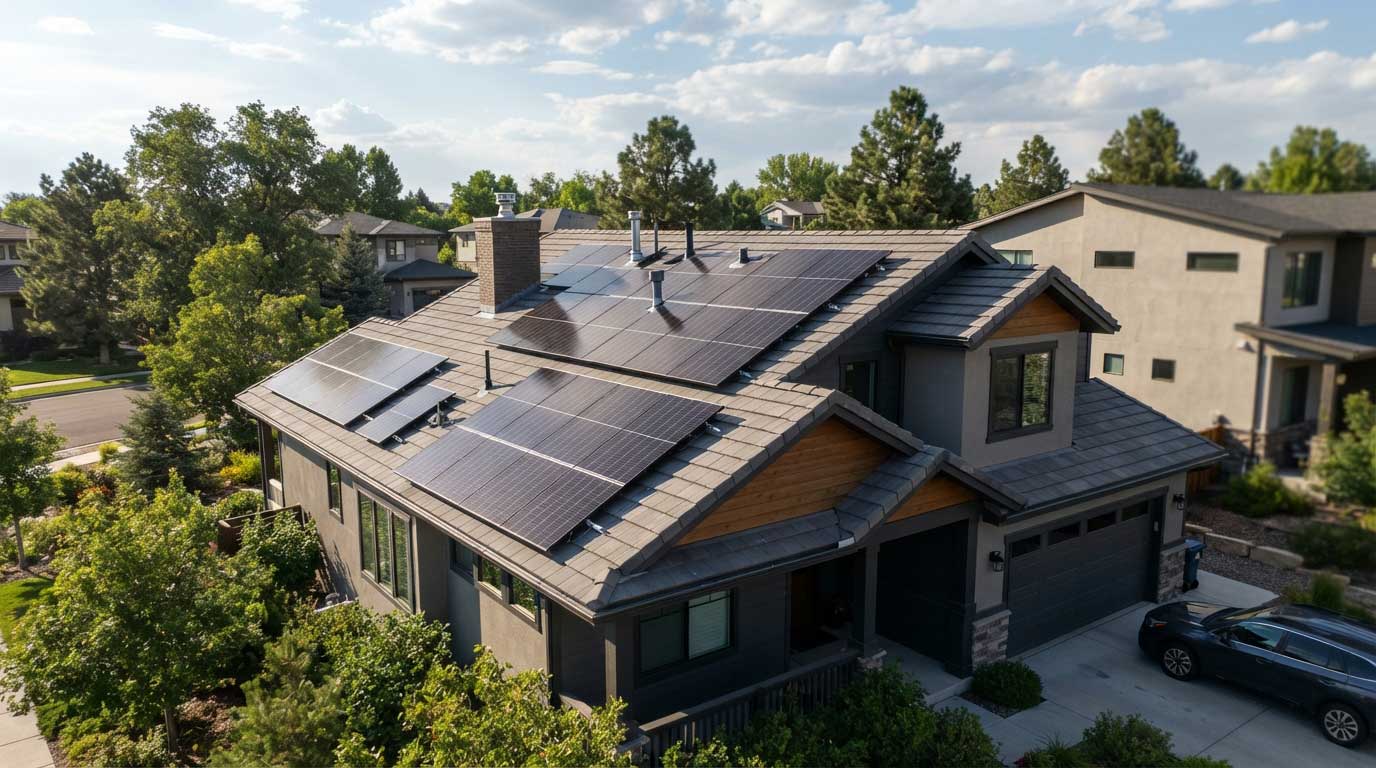
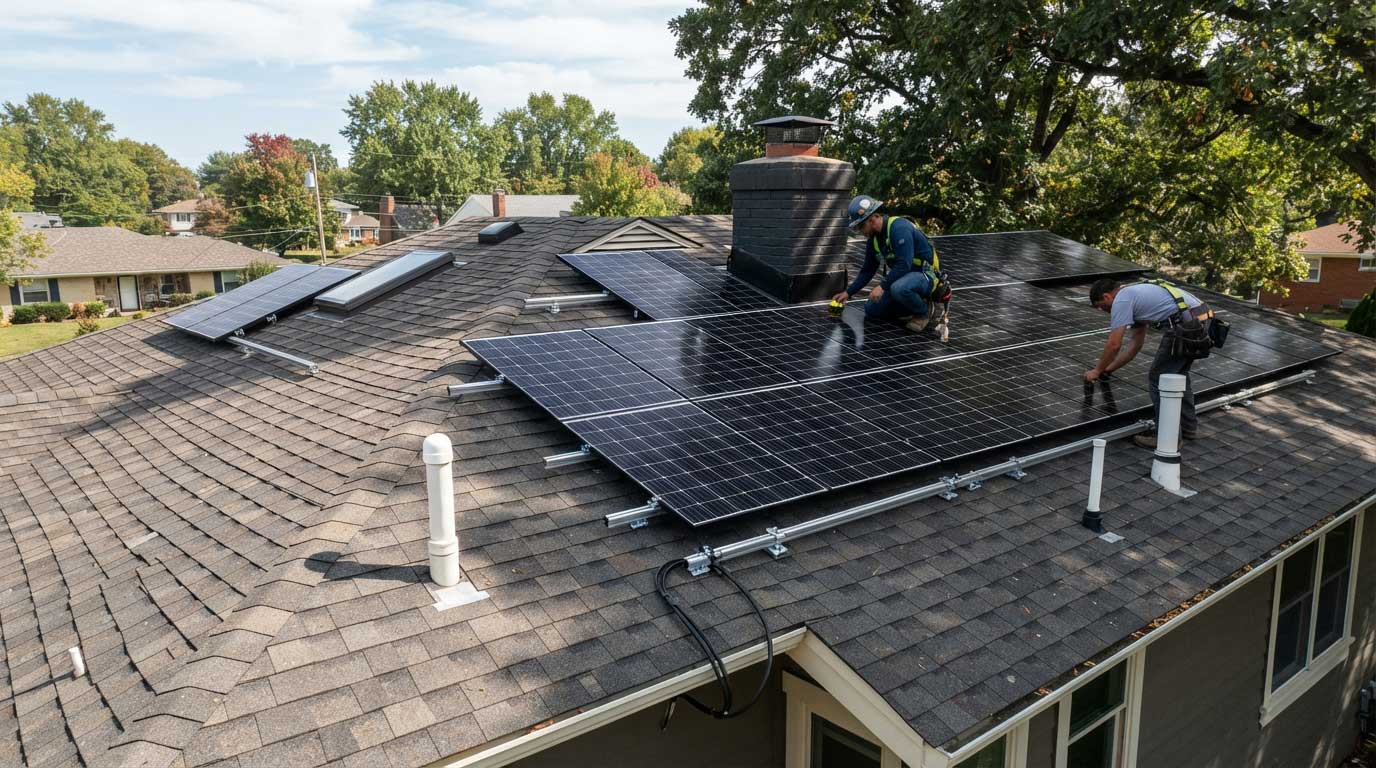
NREL notes that rooftop PV area depends on module technology and roof configuration. Available area, shading, roof geometry, and row spacing can all affect how much capacity can actually be installed.
Before finalizing a panel count, check:
- Usable roof area
- Roof orientation
- Roof pitch
- Shading throughout the year
- Obstructions such as vents and chimneys
- Panel dimensions
- Required maintenance access
- Local electrical and structural requirements
This is particularly important when comparing standard rigid modules with flexible solar products for specialized surfaces.
How Bright Solar Fits Into Residential and Flexible Solar Projects
For conventional home rooftop systems, rigid modules are common. However, some applications require a different form factor.
Bright Solar develops flexible and semi-flexible solar panel solutions for applications where weight, profile, dimensions, or surface conformity are important. These can include RVs, campers, boats, and other off-grid applications.
For B2B projects, panel selection should start with the required electrical capacity and then account for the physical installation. A module’s rated wattage, dimensions, weight, bending requirements, and application conditions should all be checked against the project specification.
The same principle applies to residential solar planning: the correct panel count is determined by the energy target and the actual site, not by house size alone.
FAQ About how many solar panels do i need for my house?
How many solar panels does a 2,000-square-foot house need?
There is no fixed number. A 2,000-square-foot home may have very different electricity use depending on heating, cooling, appliances, occupants, and EV charging. Use the home’s annual kWh consumption and a site-specific PV production estimate.
How many 400W solar panels do I need for a house?
It depends on the required system capacity. For example, 20 × 400W panels create an 8 kW DC array. The appropriate capacity must then be compared with the home’s annual electricity demand and expected PV production.
How many solar panels do I need for 10,000 kWh per year?
You first need to determine how much annual electricity one installed kW can produce at the specific property. NREL PVWatts can estimate annual production using location and system characteristics.
Does a larger house always need more solar panels?
No. Floor area is only one factor. A smaller home with electric heating, air conditioning, an EV, or a pool can consume more electricity than a larger energy-efficient home.
Can I install fewer high-wattage solar panels?
Yes. Higher-wattage modules can provide the same system capacity with fewer physical modules. However, compare actual module dimensions, efficiency, roof layout, and electrical specifications before choosing the panel count.
How much roof space do solar panels need?
The required area depends on panel dimensions, module efficiency, system capacity, roof geometry, and installation layout. NREL notes that available area and module technology affect the achievable rooftop system size.
Conclusion
The answer to how many solar panels do i need for my house starts with your electricity bill, not the square footage of the house. Determine annual kWh consumption, estimate site-specific solar production, check usable roof area, and then select the panel wattage that fits the design. A 400W module makes the capacity calculation simple, but the final panel count should always reflect the actual property.
The prev: How solar panels work diagram?The next: How to connect solar panels in series?
Related recommendations
-

how can i tell if my solar panels are working?
175how can i tell if my solar panels are working? Learn how to check solar output, inverter status, monitoring data, and common signs your PV system is not producing power.
View details -
How many 300 watt solar panels to run a house?
205How many 300 watt solar panels to run a house? Learn solar panel calculations, energy needs, system sizing, and real home solar examples.
View details -
How do you convert solar energy into electricity?
145How do you convert solar energy into electricity? Learn how solar panels generate power, photovoltaic technology, inverters, and complete solar systems.
View details -
How large is a solar panel?
195How large is a solar panel? Learn solar panel dimensions, output capacity, and sizing factors to understand how many panels you need for your energy system.
View details