120 Watt Flexible Solar Panel: Lightweight Solar Solution for Mobile Power
A 120 watt flexible solar panel is a lightweight solar solution designed for RVs, boats, camping, and portable applications. It provides reliable energy generation while fitting curved or limited spaces where traditional rigid panels are difficult to install.
When customers ask Bright Solar whether a 120W flexible solar panel is powerful enough, the answer depends on the application.
For mobile energy users, 120 watts is often the practical middle ground.
It provides more output than basic 50W or 100W portable panels, while keeping the advantages of flexible design:
- Lower weight
- Easier installation
- Better surface compatibility
- Portable energy independence
During our product testing, we found that many outdoor users do not need the largest solar system available.
They need a panel that fits their lifestyle.
A marine customer from Norway once shared feedback after testing one of our flexible modules on a small fishing boat:
“The most important thing was not maximum wattage. It was whether the panel could fit the limited deck space without adding unnecessary weight.”
That experience influenced how we approach flexible solar products at Bright Solar.
Solar technology is not only about converting sunlight into electricity.
It is about solving installation problems in real environments.
What is a 120 watt flexible solar panel?
A 120 watt flexible solar panel is a photovoltaic module capable of producing up to 120 watts of electrical power under standard test conditions (STC).
Unlike conventional rigid solar panels that use aluminum frames and glass surfaces, flexible solar panels are manufactured with lightweight materials that allow bending and easier integration.
A typical 120W flexible solar panel includes:
| Component | Function |
|---|---|
| Solar cells | Convert sunlight into electricity |
| Protective surface layer | Shields cells from outdoor conditions |
| Flexible backing | Allows curved installation |
| Junction box | Transfers generated power |
| Cable connectors | Connects to controllers and batteries |
Most modern flexible solar panels use monocrystalline solar cells because they provide higher efficiency compared with older photovoltaic technologies.
According to the U.S. Department of Energy, monocrystalline silicon technology is among the most efficient commercially available photovoltaic technologies used today.
Source:
U.S. Department of Energy – Solar Photovoltaic Technology Basics
https://www.energy.gov/
Why choose a 120 watt flexible solar panel?
A 120W flexible solar panel is designed for users who need a balance between portability and energy output.
A smaller 50W or 80W panel may be enough for charging small electronics.
However, many real-world applications require additional capacity.
Examples:
- RV battery maintenance
- Camping refrigerators
- Marine electronics
- Portable power stations
A 120W panel provides additional charging capability without becoming difficult to transport.
Lightweight design for mobile applications
Weight matters in mobile environments.
For RV owners, every additional kilogram affects:
- Fuel consumption
- Roof loading
- Installation complexity
Traditional glass solar panels can be difficult to install on curved roofs or lightweight structures.
Flexible solar panels solve this problem by reducing structural requirements.
In our experience working with outdoor product manufacturers, weight reduction is often one of the first reasons customers choose flexible solar technology.
Suitable for curved surfaces
One of the biggest advantages of flexible solar panels is installation freedom.
A rigid solar module requires a flat mounting area.
A flexible module can adapt to:
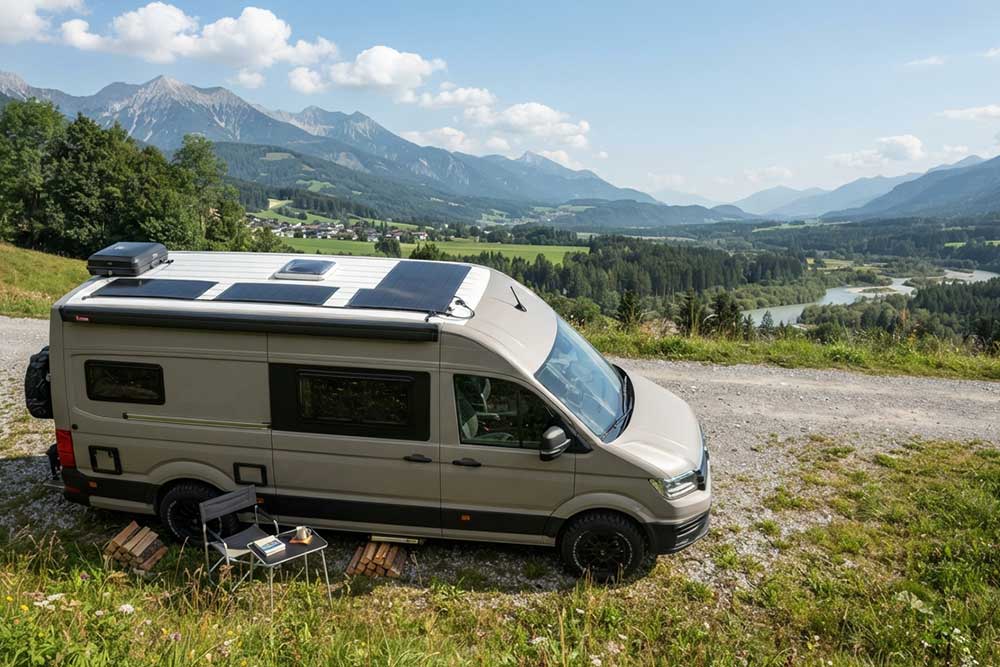
- RV curved roofs
- Boat cabins
- Camper surfaces
- Portable shelters
This makes a 120 watt flexible solar panel especially useful where installation space is limited.
Portable off-grid energy solution
Many customers using flexible solar panels are not trying to power an entire house.
They need independent electricity in remote locations.
Typical applications include:
- Weekend camping
- Remote work locations
- Emergency backup
- Outdoor photography
A 120W solar system can provide meaningful daily energy when paired with the correct battery and charge controller.
How much power can a 120 watt flexible solar panel produce?
The actual energy output of a solar panel depends on sunlight conditions.
The basic calculation is:
Daily Energy Production = Panel Wattage × Peak Sun Hours × System Efficiency
For example:
120W panel × 5 peak sunlight hours × 80% efficiency
≈ 480Wh per day
Actual output changes depending on:
- Geographic location
- Weather
- Panel angle
- Temperature
- Shading
The National Renewable Energy Laboratory (NREL) explains that photovoltaic performance varies according to solar resource availability and system conditions.
Source:
National Renewable Energy Laboratory
https://www.nrel.gov/
A 120W flexible solar panel can commonly support:
| Equipment | Suitable |
|---|---|
| Smartphones | Yes |
| LED lighting | Yes |
| GPS devices | Yes |
| Cameras | Yes |
| Small refrigerators | Limited |
| Large appliances | Not recommended |
120 watt flexible solar panel applications
RV and camper solar systems
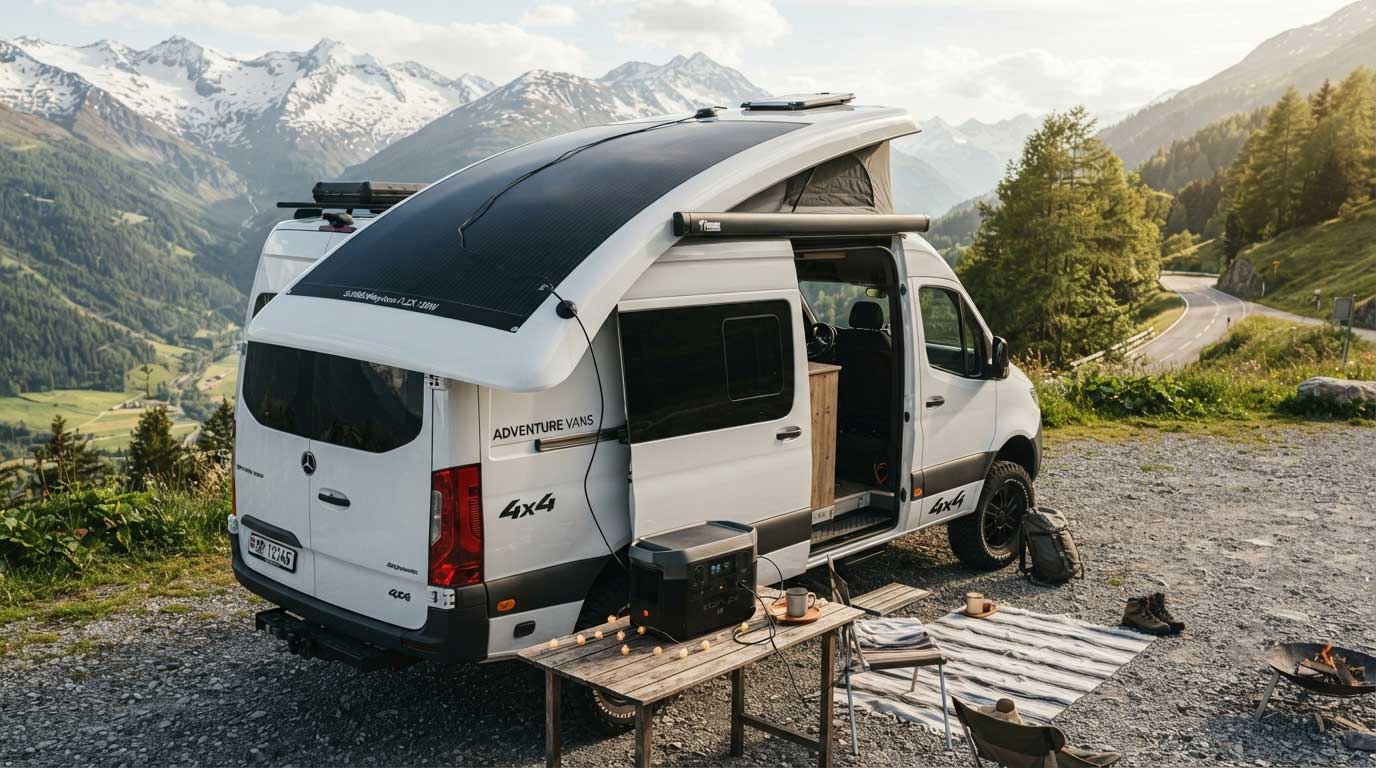
RV owners are one of the largest user groups for flexible solar panels.
The challenge is simple:
RV roofs are limited.
Users want electricity but do not want heavy equipment occupying valuable space.
A 120W flexible panel can help provide power for:
- Battery charging
- Interior lighting
- Small electronic devices
- Travel equipment
A European camper owner working with Bright Solar installed a 120W flexible module on a compact camper van.
The project requirements were:
| Requirement | Result |
|---|---|
| Low weight | Achieved |
| Easy installation | Achieved |
| Roof compatibility | Improved |
| Portable energy | Supported |
The owner later reported that the system was mainly used during weekend trips where campsite electricity was unavailable.
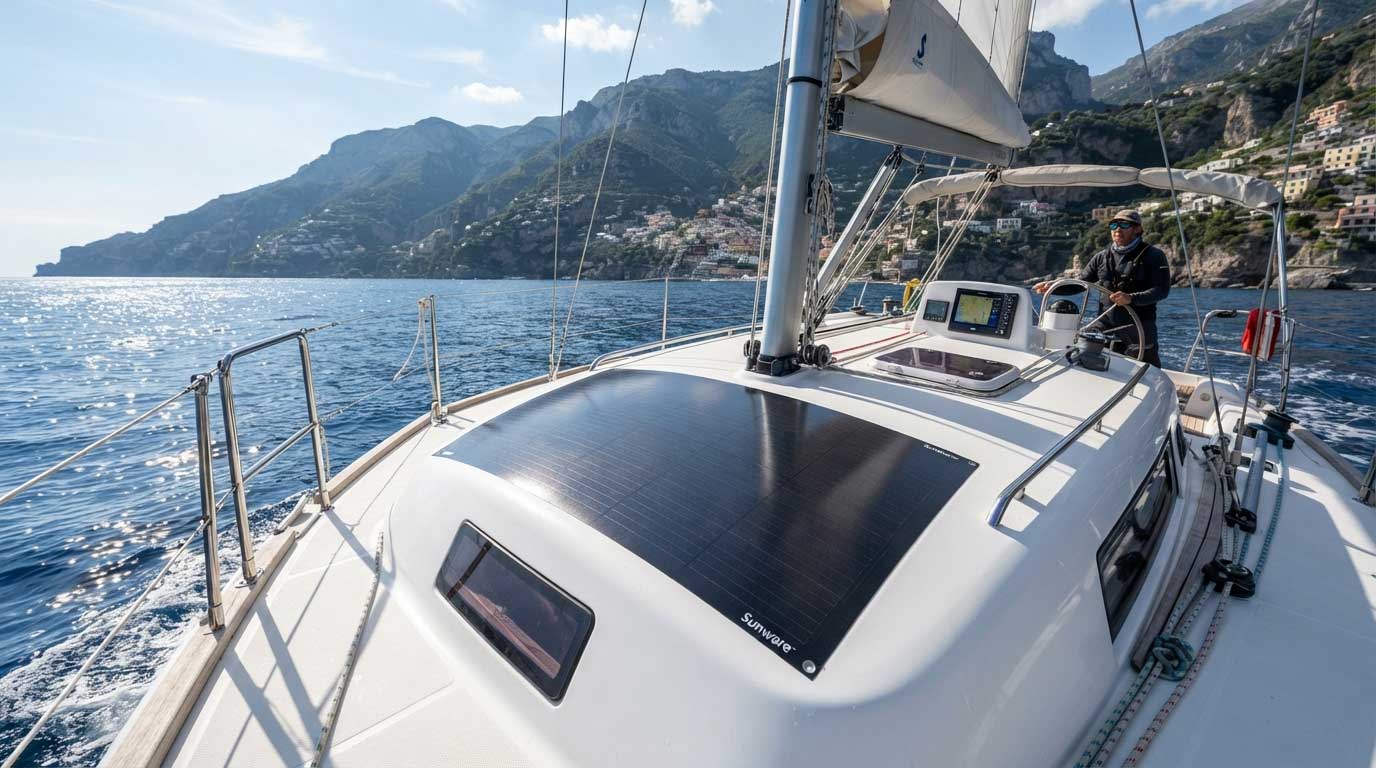
Marine solar applications
Boats create unique solar challenges.
Available space is limited.
Surfaces may not be flat.
Weight is always a concern.
A flexible solar panel can be installed on:
- Boat cabins
- Deck areas
- Bimini tops
Marine users often prefer flexible solar because it avoids adding heavy mounting structures.
Camping and outdoor activities
For outdoor users, portability is critical.
A 120W flexible solar panel can work with portable batteries to create a compact energy station.
Common uses:
- Charging laptops
- Powering lights
- Running communication devices
How to install a 120 watt flexible solar panel?
Installing a 120 watt flexible solar panel is easier than installing many traditional framed solar modules, but correct preparation still determines long-term performance.
At Bright Solar, we have seen installation problems usually come from three areas:
- Poor surface preparation
- Incorrect electrical connections
- Wrong panel positioning
A flexible panel is lightweight, but it still requires careful handling.
Step 1: Select the installation location
The first step is identifying an area with strong sunlight exposure.
Good installation locations include:
- RV roofs
- Boat cabins
- Camper trailers
- Portable solar platforms
Avoid areas with frequent shadows.
A small shadow from:
- Roof accessories
- Antennas
- Ventilation equipment
can reduce the overall output of the solar system.
For mobile applications, we recommend checking the sunlight path during different times of the day before fixing the panel permanently.
Step 2: Prepare the surface
Before installation:
- Clean the mounting area
- Remove dust and oil
- Dry the surface completely
- Confirm the final position
For adhesive installation, surface preparation is especially important.
Common mistakes we have observed include:
- Installing on dusty surfaces
- Applying adhesive in humid conditions
- Ignoring temperature changes
Outdoor environments are not static.
An RV roof in Arizona and a boat in Northern Europe experience completely different conditions.
The installation method should match the environment.
Step 3: Connect the solar charging system
A typical 120W flexible solar system connection follows this order:
120W Solar Panel → Solar Charge Controller → Battery → Electrical Devices
The main components include:
| Component | Purpose |
|---|---|
| Flexible solar panel | Produces DC electricity |
| MPPT/PWM controller | Controls charging process |
| Battery | Stores energy |
| Inverter | Converts DC to AC power |
For higher efficiency applications, many users choose MPPT controllers because they can better optimize energy harvesting when sunlight conditions change.
Step 4: Test before daily operation
After installation, check:
- Open circuit voltage
- Charging current
- Battery charging status
- Cable connection quality
A simple monitoring record helps identify future problems.
Example:
| Test Item | Record |
|---|---|
| Installation date | July 2026 |
| Solar panel | 120W flexible module |
| Battery | 12V lithium battery |
| Controller | MPPT |
| First charging test | Completed |
This small step is often ignored, but it helps users understand whether the system is working correctly.
What battery size works with a 120 watt flexible solar panel?
Battery matching is one of the most common questions from customers.
A 120W solar panel does not directly determine battery size.
The correct battery depends on:
- Daily energy consumption
- Backup requirements
- Charging time
- Battery chemistry
Typical combinations:
| Battery Type | Recommended Range |
|---|---|
| Lead acid battery | 60Ah–120Ah |
| Lithium battery | 50Ah–150Ah |
For RV and marine applications, lithium batteries are becoming increasingly common because they provide:
- Lower weight
- More usable capacity
- Longer cycle life
Example:
A 120W flexible solar panel producing approximately 480Wh per day could recharge a small lithium battery system used for:
- LED lighting
- Mobile devices
- Communication equipment
120 watt flexible solar panel vs traditional 120W rigid solar panel
Both panels have the same rated power.
The difference is not the wattage.
The difference is where they can be used.
| Feature | Flexible Solar Panel | Rigid Solar Panel |
|---|---|---|
| Weight | Lightweight | Heavier |
| Installation | Simple | Requires mounting structure |
| Curved surface | Excellent | Limited |
| Transportation | Easy | More difficult |
| Portable use | Suitable | Less suitable |
| Durability | Depends on materials | Usually strong frame protection |
A rigid panel may be the better choice for:
- Large fixed rooftops
- Ground solar installations
A flexible panel is often preferred for:
- RVs
- Boats
- Camping equipment
- Mobile power systems
Materials used in high-quality 120 watt flexible solar panels
Not all flexible solar panels have the same construction.
At Bright Solar, material selection focuses on real outdoor conditions.
Important materials include:
Monocrystalline solar cells
High-efficiency flexible panels commonly use monocrystalline cells because they provide better energy conversion performance in limited installation areas.
When space is restricted, efficiency becomes important.
A smaller surface area needs to produce more usable power.
ETFE protective coating
Many premium flexible solar panels use ETFE surface protection.
Advantages include:
- UV resistance
- Better transparency
- Scratch resistance
- Outdoor durability
For marine and RV users, surface protection directly affects product lifespan.
Flexible composite structure
The flexible layer allows the panel to bend and adapt to different surfaces.
However, flexibility should not mean weakness.
A good flexible solar panel requires:
- Strong cell protection
- Reliable electrical connections
- Quality lamination technology
How Bright Solar develops 120W flexible solar solutions
At Bright Solar, our approach comes from application experience rather than only laboratory specifications.
We have worked with customers in:
- Europe
- North America
- Australia
- Marine markets
Different regions create different challenges.
For example:
A customer in Australia focused on:
- UV exposure
- High temperatures
A European RV user focused on:
- Weight reduction
- Easy installation
A marine customer focused on:
- Moisture resistance
- Space limitations
The same 120W solar panel can have different requirements depending on where it is used.
This is why product design should start with the application.
FAQ About 120 Watt Flexible Solar Panel
What can a 120 watt flexible solar panel power?
A 120 watt flexible solar panel can support small electronic devices, LED lighting, battery charging, communication equipment, and portable power systems when paired with a suitable battery.
Is a 120W flexible solar panel enough for an RV?
Yes, it can be suitable for small RVs and camper vans with moderate electricity needs. Larger RV systems may require multiple panels.
Can a 120 watt flexible solar panel be installed on a curved roof?
Yes. One of the main advantages of flexible solar technology is that it can adapt to curved surfaces such as RV roofs and boat cabins.
How many watts does a 120W solar panel produce daily?
Daily production depends on sunlight conditions. In good conditions, a 120W panel may generate several hundred watt-hours per day.
Is a flexible solar panel better than a rigid panel?
It depends on the application. Flexible panels are better for lightweight and curved installations, while rigid panels may be better for permanent flat installations.
How long can a 120W flexible solar panel last?
The lifespan depends on materials, installation quality, and environmental conditions. Premium flexible solar panels with durable coatings are designed for long-term outdoor use.
Does Bright Solar provide custom flexible solar solutions?
Yes. Bright Solar develops flexible solar products for different applications, including RV, marine, camping, and portable energy systems.
Conclusion: Is a 120 watt flexible solar panel the right choice?
A 120 watt flexible solar panel is a practical option for users who need more power than basic portable panels but still want lightweight installation.
It is especially suitable for:
- RV travelers
- Boat owners
- Outdoor enthusiasts
- Remote workers
- Off-grid users
The biggest advantage is flexibility — not only physical flexibility, but application flexibility.
A good solar system should fit the user’s environment.
A 120W flexible solar panel installed on a camper roof, boat cabin, or portable platform can provide reliable energy without the complexity of traditional solar installations.
At Bright Solar, we believe successful solar products come from understanding real usage conditions.
The best panel is not always the largest one.
It is the panel that delivers the right energy solution where people actually need power.
Related recommendations
-

flexible solar panel 100w: Lightweight Solar Solution for RV, Marine and Off-Grid Applications
239Discover flexible solar panel 100w solutions from Bright Solar with lightweight design, durable materials, and reliable solar power for RV, marine, camping, and off-grid use.
View details -
Flexible 12 Volt Solar Panels: A Practical Guide to RV, Marine and Off-Grid Power
193Flexible 12 volt solar panels suit selected RV, marine, and off-grid systems, but compatibility depends on actual voltage, power, mounting limits, controller...
View details -
Bifacial Flexible Solar Panel: Design, Performance, and Applications
197A bifacial flexible solar panel generates power from both sides when rear-side light is available. Its value depends on clearance, reflectivity, curvature, t...
View details -
highest watt flexible solar panel: Powerful Flexible Solar Solution for High Energy Demand
272Discover the highest watt flexible solar panel for RVs, marine, and off-grid applications. Learn power output, technology, installation, and benefits from Bright Solar.
View details