Flexible solar panel 300w: Lightweight Solar Solution for Mobile and Home Applications
A flexible solar panel 300w provides reliable solar power with a lightweight and bendable design for RVs, boats, homes, and off-grid systems. A 300W flexible panel can typically generate around 0.9–1.5kWh of energy per day depending on sunlight conditions and installation location.
When customers ask Bright Solar about a 300W flexible solar panel, the first thing they usually mention is not power output.
They mention space.
A camper owner says:
“My RV roof has limited room.”
A boat owner says:
“I cannot install heavy glass panels.”
A homeowner says:
“My structure cannot support traditional solar modules.”
These situations are exactly where flexible solar technology becomes valuable.
A flexible solar panel 300w is designed for applications where power generation matters, but weight, installation space, and surface shape create limitations.
At Bright Solar, our experience with flexible photovoltaic products comes from working with distributors, RV builders, marine suppliers, and off-grid solution providers.
Over time, we have learned one important lesson:
The best solar panel is not always the panel with the highest wattage.
It is the panel that fits the real environment.
What is a flexible solar panel 300w?
A flexible solar panel 300W is a photovoltaic module designed to produce approximately 300 watts of rated power while maintaining a lightweight and flexible structure.
Unlike traditional rigid solar panels that rely on:
- Tempered glass
- Aluminum frames
- Heavy mounting systems
Flexible panels use advanced materials to reduce weight and improve installation possibilities.
A typical flexible 300W solar panel includes:
| Component | Purpose |
|---|---|
| Monocrystalline solar cells | Convert sunlight into electricity |
| ETFE surface layer | Protect against UV and outdoor exposure |
| Flexible substrate | Allows bending and lightweight installation |
| Junction box | Provides electrical connection |
| Protective layers | Improve durability |
The result is a solar product that can be installed on surfaces where traditional modules are difficult to use.
Common applications include:
- RV roofs
- Camper trailers
- Boats
- Tiny homes
- Remote monitoring systems
- Portable power stations
According to the U.S. Department of Energy, photovoltaic system output depends on several factors including solar radiation, orientation, shading, and system design.
Source:
U.S. Department of Energy – Solar Photovoltaic System Design
https://www.energy.gov/energysaver/solar-photovoltaic-system-design
Why choose a 300W flexible solar panel instead of a smaller panel?
The main advantage of a 300W flexible solar panel is the balance between power and installation freedom.
A 100W or 200W panel may work for basic charging.
However, many modern applications require more energy.
Examples:
- RV users running refrigerators
- Marine users powering navigation equipment
- Remote workers using electronics
- Off-grid homes needing battery charging
A 300W panel provides more usable energy without requiring multiple smaller panels.
For example:
| System Size | Typical Usage |
|---|---|
| 100W flexible panel | Phones, lights, small devices |
| 200W flexible panel | Basic backup power |
| 300W flexible panel | RV appliances, batteries, electronics |
| 400W+ system | Larger off-grid applications |
During a Bright Solar project with an RV manufacturer in Germany, the customer originally planned to install three separate 100W rigid panels.
The problems appeared quickly:
- Too many mounting points
- More cable connections
- Increased installation time
- Uneven roof appearance
After switching to a 300W flexible panel design:
- Installation points were reduced
- Roof layout became cleaner
- Weight was lowered
- The installer completed the solar installation faster
The customer did not choose flexible solar because it was a trend.
They chose it because the vehicle design required it.
How much power does a flexible solar panel 300w produce?
A common question is:
“How much electricity can a 300W flexible solar panel actually generate?”
The answer depends on sunlight conditions.
The basic formula is:
Daily Energy Output = Panel Wattage × Peak Sun Hours × System Efficiency
For a 300W flexible solar panel:
| Location | Estimated Daily Output |
|---|---|
| California, USA | 1.0–1.5kWh/day |
| Southern Europe | 1.1–1.6kWh/day |
| Northern Europe | 0.7–1.1kWh/day |
Actual production changes because of:
- Weather
- Installation angle
- Temperature
- Dirt accumulation
- Partial shading
The National Renewable Energy Laboratory (NREL) provides solar resource data showing that geographic location has a major influence on photovoltaic energy production.
Source:
National Renewable Energy Laboratory – Solar Resource Maps
https://www.nrel.gov/gis/solar-resource-maps.html
For many users, a 300W flexible solar panel can provide enough daily energy for:
- LED lighting
- Communication equipment
- Laptop charging
- Small refrigerators
- Battery charging systems
It is not intended to replace a complete residential solar array.
Its strength is providing independent energy in places where standard systems are inconvenient.
Flexible solar panel 300W vs traditional rigid solar panels
Choosing between flexible and rigid solar panels depends on the application.
A rigid panel is often ideal for:
- Large rooftops
- Permanent installations
- Utility projects
A flexible panel is often preferred for:
- Mobile applications
- Curved surfaces
- Lightweight structures
| Feature | Flexible Solar Panel 300W | Traditional Solar Panel |
|---|---|---|
| Weight | Lower | Higher |
| Installation flexibility | Excellent | Limited |
| Surface compatibility | Curved surfaces possible | Mainly flat surfaces |
| Mounting hardware | Minimal | More components |
| Mobility | High | Low |
In many Bright Solar customer projects, the decision is not based only on efficiency.
It is based on whether the panel can physically fit the application.
How to install a flexible solar panel 300w correctly
A flexible solar panel 300w is easier to install than many traditional solar modules, but correct preparation still determines long-term performance.
At Bright Solar, we often remind customers that the panel itself is only one part of the system.
The installation surface, electrical connection, and environmental conditions all influence the final result.
A reliable installation usually follows these steps:
Step 1: Check the installation area
Before installing a 300W flexible solar panel, evaluate:
- Available surface area
- Daily sunlight exposure
- Possible shading
- Surface condition
- Cable routing path
A common mistake is choosing the largest available space without checking sunlight quality.
For example, one RV customer in France planned to install the panel on the rear roof section because it looked convenient.
During inspection, we found the area was shaded by a roof rack for several hours every afternoon.
After relocating the panel:
- Solar exposure improved
- Battery charging became more stable
- The owner avoided adding another panel
Small installation decisions can have a bigger impact than increasing panel size.
Step 2: Prepare the mounting surface
Flexible panels are lightweight, but the surface must still be properly prepared.
Recommended preparation:
- Remove dust and debris
- Clean grease or protective coatings
- Ensure the surface is completely dry
- Confirm adhesive compatibility
Suitable surfaces may include:
- RV roofs
- Marine decks
- Metal structures
- Composite panels
- Portable solar frames
The most common installation issue we see is not related to solar technology.
It is surface preparation.
A strong product cannot compensate for poor installation conditions.
Step 3: Connect the solar system
A 300W flexible solar panel system normally works with:
- MPPT solar charge controller
- Battery storage
- Inverter
- Monitoring device
For mobile and off-grid applications, users commonly combine flexible panels with:
- Lithium batteries
- Portable power stations
- DC appliances
The energy flow is simple:
Solar panel → Charge controller → Battery → Electrical devices
However, selecting the correct controller and battery capacity is important.
A 300W panel can produce significant energy during peak sunlight hours, and the storage system must be designed accordingly.
Step 4: Test the system after installation
After installation, check:
| Inspection Item | Purpose |
|---|---|
| Voltage output | Confirm panel operation |
| Charging current | Verify energy production |
| Cable temperature | Detect connection problems |
| Battery status | Confirm storage performance |
| Surface condition | Check installation stability |
A basic monitoring system helps identify changes over time.
This is especially useful for RVs and marine applications where access may not always be convenient.
Applications of flexible solar panel 300w in real-world projects
The strongest advantage of a 300W flexible solar panel is not only electricity production.
It is application flexibility.
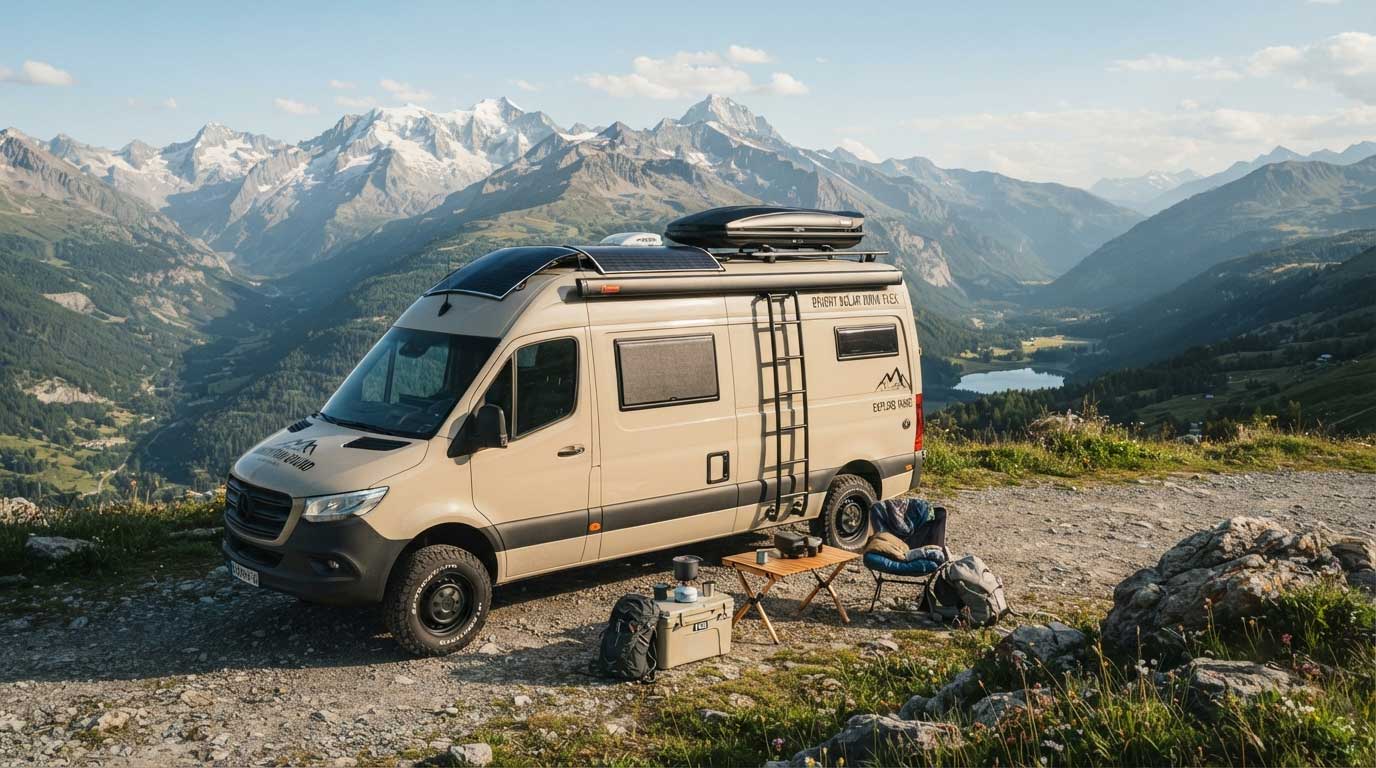
RV and camper solar systems
RV owners are one of the largest user groups for flexible solar technology.
Their requirements are different from home solar:
- Limited roof space
- Weight restrictions
- Vibration during driving
- Need for independent energy
A 300W flexible panel can support:
- Refrigerator operation
- Lighting systems
- Device charging
- Battery replenishment
Many RV owners prefer one larger flexible panel instead of several smaller rigid modules because it creates a cleaner roof layout.
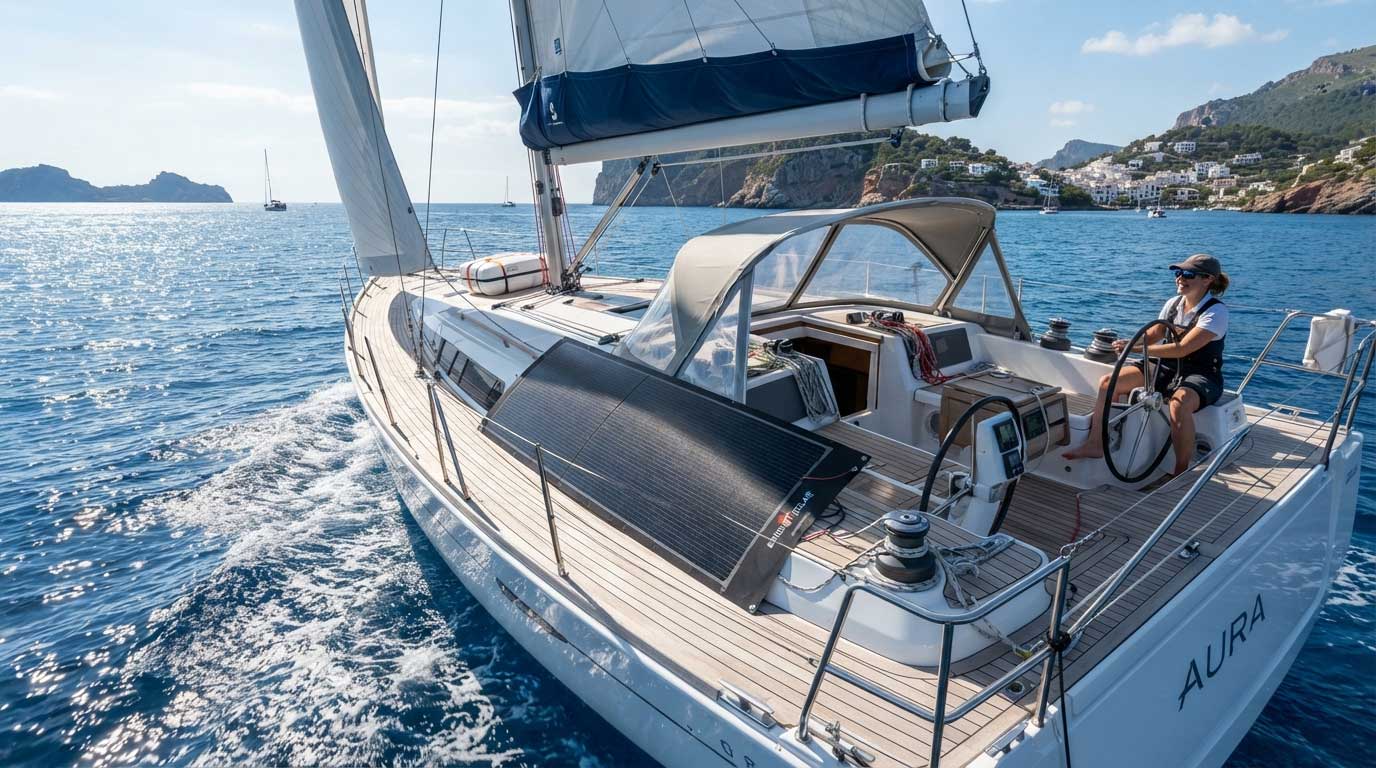
Marine solar applications
Boats face unique solar challenges:
- Curved surfaces
- Saltwater exposure
- Limited installation area
- Weight sensitivity
Flexible solar panels can be installed on:
- Cabin roofs
- Bimini tops
- Deck surfaces
For marine users, reducing unnecessary weight is often more valuable than simply adding more solar capacity.
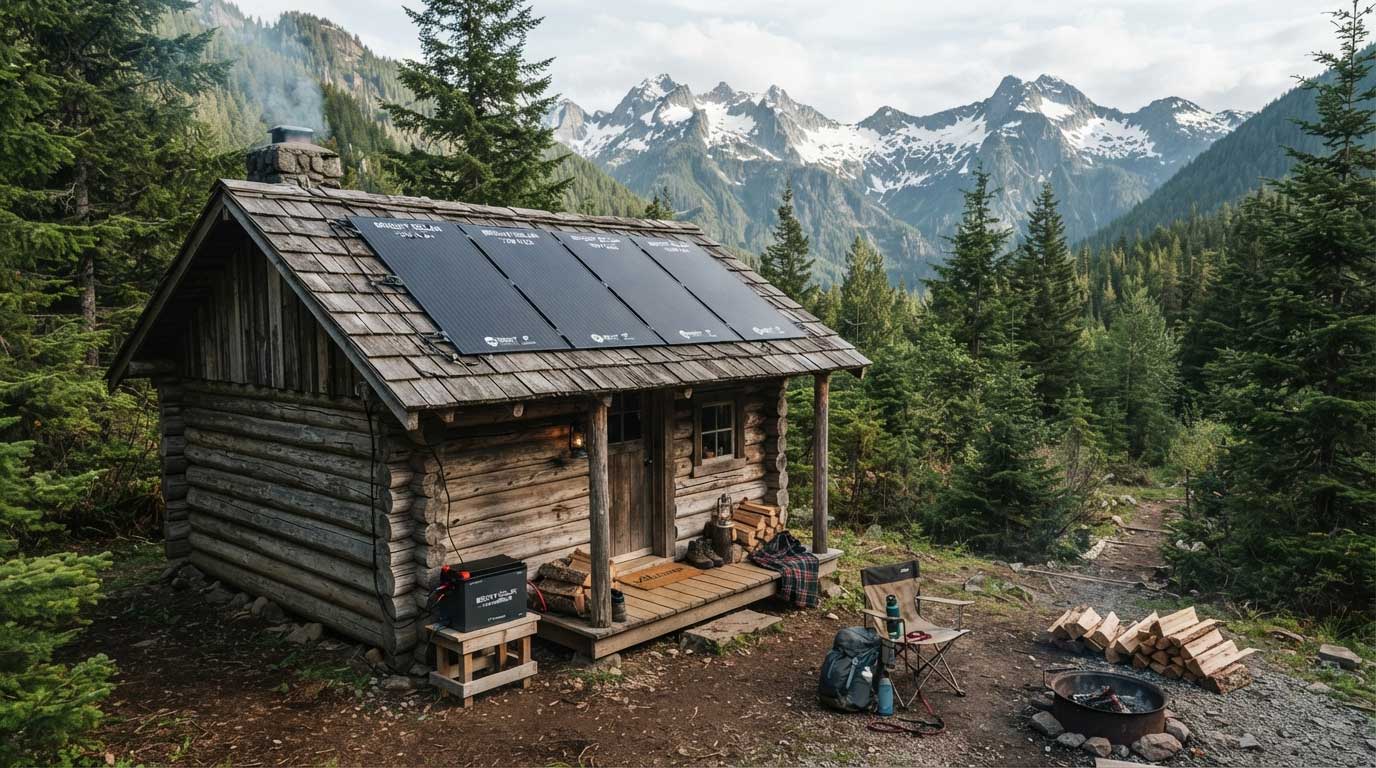
Off-grid homes and cabins
Remote homes often require practical energy solutions.
A flexible 300W solar panel can work with battery storage systems to provide electricity for:
- Lighting
- Communication equipment
- Small appliances
It is especially useful where transporting heavy solar equipment is difficult.
Portable energy systems
Emergency and outdoor applications increasingly require lightweight power.
Examples:
- Disaster response equipment
- Outdoor research stations
- Remote monitoring systems
Flexible solar panels simplify transportation and deployment.
How durable is a flexible solar panel 300w?
Durability is one of the most important questions from customers.
A solar panel installed outdoors must handle years of environmental exposure.
Important durability factors include:
UV protection
Continuous sunlight can affect materials over time.
High-quality flexible panels use protective surface materials designed to improve resistance against UV exposure.
Water and weather resistance
Outdoor solar panels experience:
- Rain
- Humidity
- Temperature changes
- Dust
Proper sealing and electrical protection are essential.
Mechanical flexibility
The ability to bend helps flexible panels adapt to different applications.
However, flexibility does not mean unlimited bending.
Installation should always follow manufacturer specifications.
The International Energy Agency (IEA) notes that photovoltaic reliability depends on module quality, environmental conditions, and installation practices.
Source:
International Energy Agency – Solar PV Tracking Report
https://www.iea.org/reports/solar-pv
How much does a flexible solar panel 300w cost?
The price of a 300W flexible solar panel depends on:
- Cell technology
- Surface materials
- Manufacturing quality
- Warranty
- Accessories
Typical market range:
| Product Type | Estimated Cost |
|---|---|
| Basic flexible 300W panel | $280–$450 |
| Premium ETFE flexible panel | $450–$700 |
| Complete solar kit | $700–$1,500+ |
A cheaper panel may appear attractive initially.
However, customers should consider total ownership cost:
- Replacement difficulty
- Installation labor
- Product lifespan
- Support service
For mobile applications, reliability often matters more than the lowest initial price.
Maintenance tips for flexible solar panel 300w systems
Flexible solar panels require limited maintenance, but regular inspection improves performance.
Recommended actions:
Clean the surface
Remove:
- Dust
- Leaves
- Bird residue
- Salt deposits
Inspect connections
Check:
- Cable condition
- Junction box area
- Connector protection
Monitor output
A sudden decrease may indicate:
- New shading
- Dirt buildup
- Connection problems
Regular monitoring helps extend system life.
FAQ About Flexible Solar Panel 300W
How much power can a flexible solar panel 300w produce?
A 300W flexible solar panel can typically generate around 0.9–1.5kWh per day depending on sunlight hours, installation angle, and location.
Can a 300W flexible solar panel power a home?
A single 300W panel is usually suitable for small energy needs and backup applications. A complete home requires a larger solar system based on electricity consumption.
Is a flexible solar panel 300w good for RV use?
Yes. RV owners often choose 300W flexible panels because they provide strong power output while reducing roof weight and installation complexity.
Can flexible solar panels be installed on curved surfaces?
Yes. Flexible solar panels are specifically designed for applications where traditional rigid panels cannot easily fit.
Are flexible solar panels waterproof?
Quality flexible solar panels are designed for outdoor use with protective layers, but correct installation and electrical sealing remain important.
How long does a flexible solar panel 300w last?
The lifespan depends on materials, environmental conditions, and installation quality. High-quality flexible panels are designed for long-term outdoor operation.
What battery size works with a 300W flexible solar panel?
Battery size depends on energy usage and charging requirements. Many users combine 300W panels with lithium batteries for mobile and off-grid applications.
Final Thoughts: Choosing the Right Flexible Solar Panel 300W Solution
A flexible solar panel 300w is not simply a smaller version of a traditional solar panel.
It represents a different approach to solar installation.
Instead of asking:
“Where can I mount a solar panel?”
Flexible solar technology allows users to ask:
“Which surfaces can become energy sources?”
For RV owners, boat operators, off-grid users, and homeowners with unusual installation requirements, a 300W flexible solar panel provides a practical balance between power output, weight, and installation freedom.
At Bright Solar, our experience shows that successful solar projects begin with understanding the real environment.
A good solar solution should fit the customer’s lifestyle, not force the customer to redesign everything around the panel.
Related recommendations
-

Jinko Solar Signed a Supply Agreement with Datang Group for About 1 GW of n-type Tiger Neo Components
203Jinko Solar signed a supply agreement with Datang Group for about 1 GW of n-type tiger Neo components, supplying 560W Tiger Neo n-type TOPCon modules to Datang Group’s large ground-mounted projects in China, including agricultural-PV and rocky des...
View details -
RV Flexible Solar Panels: Lightweight Solar Power Solution for Off-Grid Travel
109Discover rv flexible solar panels from Bright Solar. Learn how lightweight solar technology helps RV owners generate reliable off-grid power with easy installation and durable performance.
View details -
Solar Panel for AC: How Many Solar Panels Are Needed to Run an Air Conditioner?
209Discover how a solar panel for ac systems works, how many panels are required, and how Bright Solar solutions reduce cooling costs for homes, RVs, and off-grid applications.
View details -
Solar Panels Wired in Series: Wiring, Voltage, and Safety Guide
217Solar panels wired in series increase voltage while current stays nearly unchanged. Safe string design requires checking Voc, temperature effects, MPPT volta...
View details