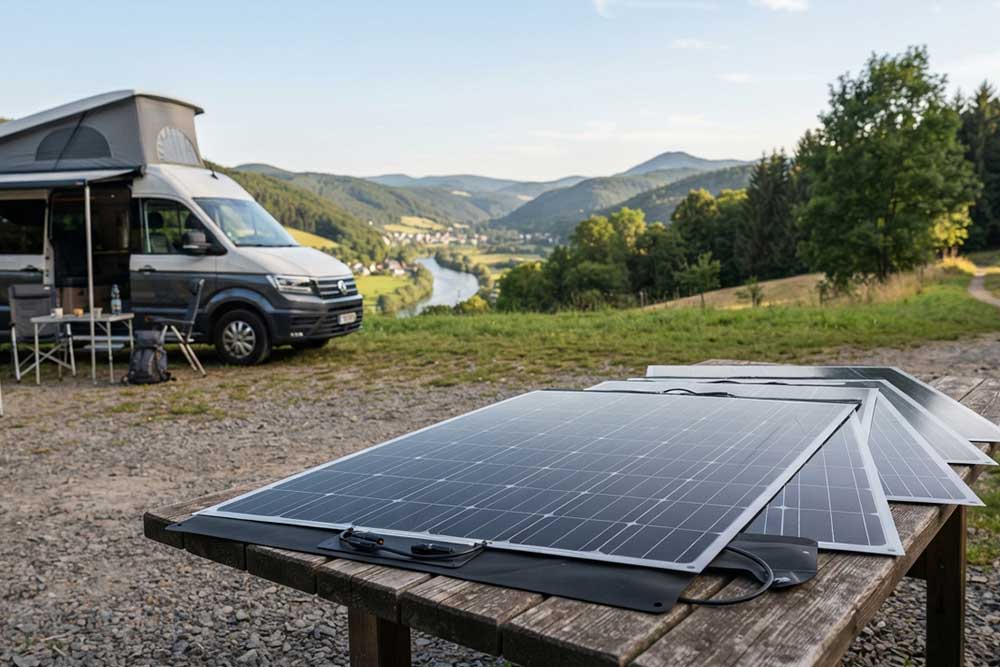
Series vs Parallel Solar Panels: Which Wiring Method Performs Better?
Series vs parallel solar panels is not just a technical wiring decision. It directly affects charging speed, voltage stability, shade performance, cable efficiency, and long-term solar reliability. In most real-world installations, the best setup depends on system size, environmental conditions, and actual power usage patterns.
People often expect a universal answer. They want someone to simply say:
“Series is better.”
Or:
“Parallel is safer.”
But field installations rarely behave that cleanly.
At Bright Solar, we have worked with RV owners in Arizona heat, marine systems along the Florida coast, and remote cabins in northern Europe where winter sunlight barely lasts six hours. The wiring strategy that works beautifully in one environment can become frustratingly inefficient somewhere else.
One installer we partnered with in Utah said something memorable after troubleshooting a poorly performing campervan:
“The panels were expensive. The mistakes were cheap.”
That sentence captures the reality of solar wiring surprisingly well.
Understanding Series vs Parallel Solar Panels
Before comparing advantages, it helps to understand what actually changes electrically.
Solar panels produce two primary electrical characteristics:
- Voltage (V)
- Current (A)
Series and parallel wiring manipulate those values differently.
What Happens When Solar Panels Are Wired in Series
In a series connection:
- Voltage increases
- Current remains the same
Example:
Four 12V Flexible solar panels connected in series become approximately:
- 48V total
- Same amperage as one panel
This configuration is common in higher-voltage MPPT solar systems because it reduces transmission losses.
Higher voltage generally means:
- Smaller cable requirements
- Lower heat generation
- Better efficiency over long distances
However, series wiring introduces one significant weakness.
Shade.
If one panel in the string becomes partially blocked, the entire string output can drop sharply.
That becomes especially noticeable on RV roofs where air conditioners, antennas, and roof racks create moving shadows throughout the day.
What Happens When Solar Panels Are Wired in Parallel
Parallel wiring works differently.
In a parallel setup:
- Voltage stays constant
- Current increases
Example:
Four 12V panels in parallel remain:
- 12V total
- Combined amperage increases
This configuration handles partial shading more effectively because one weak panel does not limit the others as aggressively.
For mobile applications with unpredictable sunlight angles, that advantage matters.
But there is a tradeoff.
Higher current requires:
- Thicker cables
- Larger breakers
- More heat management
As systems scale upward, those details become expensive quickly.
Why the Series vs Parallel Solar Panels Debate Matters in Real Installations
Online discussions often reduce the topic to theory.
Installers think differently.
They think about:
- Roof temperature
- Cable routing
- Connector reliability
- Cloud behavior
- Seasonal sunlight changes
- Voltage drop
- Future battery upgrades
The Solar Energy Industries Association (SEIA) has repeatedly emphasized the importance of proper photovoltaic system design and electrical matching in long-term solar reliability.
Reference Source:
https://www.seia.org/
A poorly wired system can technically “work” while quietly wasting energy every single day.
That is the dangerous part.
Real RV Case Study: Series vs Parallel Solar Panels in Desert Heat
A Bright Solar customer operating a Class B campervan in Nevada originally used a pure parallel wiring setup:
- Four 200W panels
- PWM controller
- AGM battery bank
The system initially appeared functional.
Then summer arrived.
Observed problems included:
- Cable heat buildup
- Reduced charging efficiency
- Slow afternoon battery recovery
- Voltage instability during peak temperatures
The installer later rebuilt the system into a higher-voltage series configuration using an MPPT controller.
Results over 45 days:
| Performance Metric | Parallel Setup | Series Setup |
|---|---|---|
| Average Daily Harvest | 2.1kWh | 2.8kWh |
| Cable Surface Heat | High | Moderate |
| Battery Recovery Time | Slower | Faster |
| Generator Usage | Frequent | Reduced by 60% |
The owner later admitted something most beginners overlook:
“I thought solar panels either worked or didn’t. I didn’t realize wiring changed performance this much.”
That realization happens constantly in off-grid systems.

Comparing Series vs Parallel Solar Panels
Both wiring methods solve different problems.
Neither is universally perfect.
| Feature | Series Wiring | Parallel Wiring |
|---|---|---|
| Voltage | Higher | Lower |
| Current | Lower | Higher |
| Cable Thickness | Smaller | Larger |
| Shade Performance | More sensitive | Better tolerance |
| Long Distance Efficiency | Better | Moderate |
| Heat Loss | Lower | Higher |
| Installation Complexity | Moderate | Simpler |
Experienced installers rarely choose based only on wattage numbers.
They prioritize environmental behavior.
A mountain cabin with clear sunlight behaves differently from a city RV parked beneath trees.
That difference changes everything.
Why MPPT Controllers Favor Series Wiring
Modern MPPT controllers usually perform more efficiently at higher input voltages.
The National Renewable Energy Laboratory (NREL) has published multiple studies showing that higher-voltage photovoltaic systems can reduce resistive losses under many operating conditions.
Reference Source:
https://www.nrel.gov/
This is why larger solar arrays often lean toward series or hybrid configurations.
One commercial installer we interviewed described it bluntly:
“Voltage is easier to manage than current.”
That statement sounds simple. In practice, it is usually true.
Especially in larger systems above 800W.
Where Parallel Solar Panels Still Perform Better
Parallel systems remain extremely useful.
Especially in environments with:
- Partial shading
- Complex roof layouts
- Constant movement
- Mixed sunlight exposure
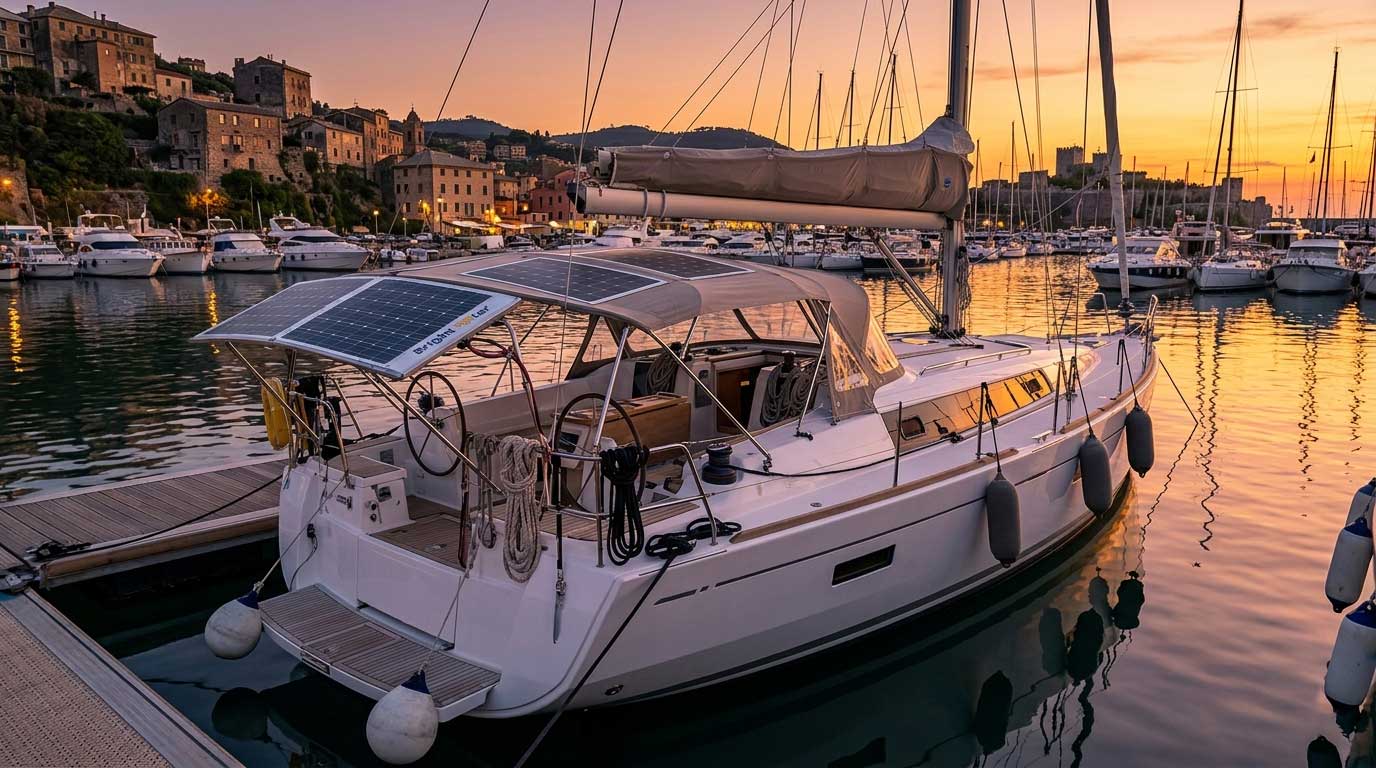
Marine systems are a good example.
Boat sails, radar equipment, and dock structures constantly create uneven shadows.
In those conditions, parallel wiring often maintains more stable charging behavior.
The same applies to compact campervans parked beneath trees during summer travel.
Sometimes lower efficiency on paper produces better real-world consistency.
Installers learn this quickly.
The Hidden Problem: Partial Shading
This is where theory collides with reality.
Solar panels almost never receive perfectly even sunlight.
Small shadows matter more than many buyers realize.
Examples include:
- Roof vent shadows
- Tree branches
- Satellite antennas
- Dirt accumulation
- Snow edges
- Bird droppings
In series systems, one shaded panel can reduce output across the entire string.
In parallel systems, the impact usually stays more isolated.
That is why experienced installers often avoid long series strings on complicated RV roofs.
The roof itself becomes the limiting factor.
Not the panel quality.
Cable Size and Voltage Drop Considerations
Cable loss is one of the least glamorous solar topics.
It is also one of the most expensive mistakes.
Higher current requires thicker cable.
Thicker cable means:
- Higher cost
- More installation difficulty
- Larger conduit requirements
The U.S. Department of Energy explains that resistive electrical losses increase significantly as current rises.
Reference Source:
https://www.energy.gov/
In practical terms:
- Parallel systems often require heavier wiring
- Series systems reduce transmission loss
- Long cable runs strongly favor higher voltage
This becomes extremely important in:
- Large RVs
- Remote cabins
- Farm solar systems
- Marine installations
One improperly sized cable can quietly waste power for years.
Common Mistakes in Series vs Parallel Solar Panels Wiring
Most failures are surprisingly ordinary.
Mixing Different Panel Specifications
Combining unmatched panels creates electrical imbalance.
Voltage mismatch reduces efficiency and may confuse MPPT tracking behavior.
Best practice:
- Use identical wattage
- Match voltage ratings
- Match current output
- Maintain equal string lengths
Ignoring Temperature Voltage Rise
Cold temperatures increase panel voltage.
A system operating safely during summer may exceed controller limits during winter mornings.
This catches many DIY installers off guard.
Poor Connector Crimping
Loose MC4 connectors create resistance.
Resistance creates heat.
Heat destroys long-term reliability.
One Bright Solar inspection found a single connector running nearly 28°C hotter than adjacent wiring because of improper crimp pressure.
The panels were fine.
The connector nearly failed the entire system.
Which Is Better for RV Solar Systems?
For smaller RV systems:
Parallel wiring often performs adequately.
For larger systems above 600W:
Series or hybrid series-parallel layouts usually become more practical.
Especially when using:
- MPPT controllers
- Lithium batteries
- Long roof cable runs
- High-power inverters
There is no universal answer because RV layouts vary enormously.
A compact campervan in cloudy forests behaves differently from a fifth-wheel trailer parked permanently in Arizona.
Real installers design around behavior patterns, not internet myths.
FAQ About Series vs Parallel Solar Panels
Are series solar panels more efficient?
They often reduce cable losses and improve MPPT efficiency, especially in larger systems. However, they are more sensitive to shading.
Do parallel solar panels charge faster?
Not necessarily. Charging performance depends on sunlight conditions, controller efficiency, cable size, and battery configuration.
Is parallel safer than series wiring?
Both can be safe when properly designed. Parallel systems typically operate at lower voltage but higher current.
What is best for RV solar systems?
Many RV systems benefit from hybrid series-parallel layouts because they balance voltage efficiency with improved shade tolerance.
Can shading damage solar panels?
Shading itself usually does not damage panels, but repeated hotspot conditions and mismatch stress can reduce long-term performance.
Final Thoughts on Series vs Parallel Solar Panels
The conversation around series vs parallel solar panels has evolved.
A decade ago, most RV owners simply wanted lights and basic charging.
Today, people run:
- Starlink internet
- Induction cooking
- Lithium battery banks
- Air conditioning systems
- Mobile workstations
Power demand has changed dramatically.
So wiring decisions matter far more than they once did.
At Bright Solar, we have consistently found that the best-performing systems are not always the highest wattage systems.
They are usually the systems designed around realistic conditions:
- Real shadows
- Real temperatures
- Real cable lengths
- Real travel habits
That practical mindset tends to outperform theoretical perfection surprisingly often.
Because in the field, stability always reveals itself faster than marketing numbers.
Related recommendations
-

Solar Panel Flexible: A Practical Guide to Lightweight Solar Power
188Explore solar panel flexible technology for RVs, marine applications, camping, and off-grid systems. Learn benefits, efficiency, durability, and installation tips.
View details -
150 Watt Flexible Solar Panel: Lightweight Solar Power Solution for RV and Off-Grid Applications
109Discover the 150 watt flexible solar panel from Bright Solar for RV, marine, and off-grid applications. Learn efficiency, installation, output, and real-world uses.
View details -
Cost of Flexible Solar Panels: Prices, Factors and Buying Guide
121The cost of flexible solar panels varies by power, technology, materials, dimensions, customization, quantity, and installation requirements.
View details -
100 Watt Flexible Solar Panel Kit: Complete Guide
163A 100W flexible solar panel kit combines a 100W flexible panel with compatible charging, wiring, and mounting components for small off-grid systems such as R...
View details