
Flexible Solar Panel Film: Lightweight Solar Technology for Curved Surfaces
Flexible solar panel film is a lightweight photovoltaic solution designed to generate solar power on curved, mobile, and space-limited surfaces where traditional rigid panels cannot be installed. By combining thin solar cells, flexible substrates, and protective coatings, it provides reliable energy generation with reduced weight and installation limitations.
When our engineering team at Bright Solar started testing flexible solar solutions for RV manufacturers and marine applications, the biggest challenge was not solar efficiency alone. It was finding a panel that could survive vibration, irregular surfaces, changing weather conditions, and long-term outdoor exposure without adding unnecessary weight.
After years of working with flexible photovoltaic products, we found that solar film technology has become one of the most practical approaches for lightweight energy systems. The technology is now being adopted in transportation, portable power, smart devices, and off-grid projects where every kilogram matters.
What Is Flexible Solar Panel Film?
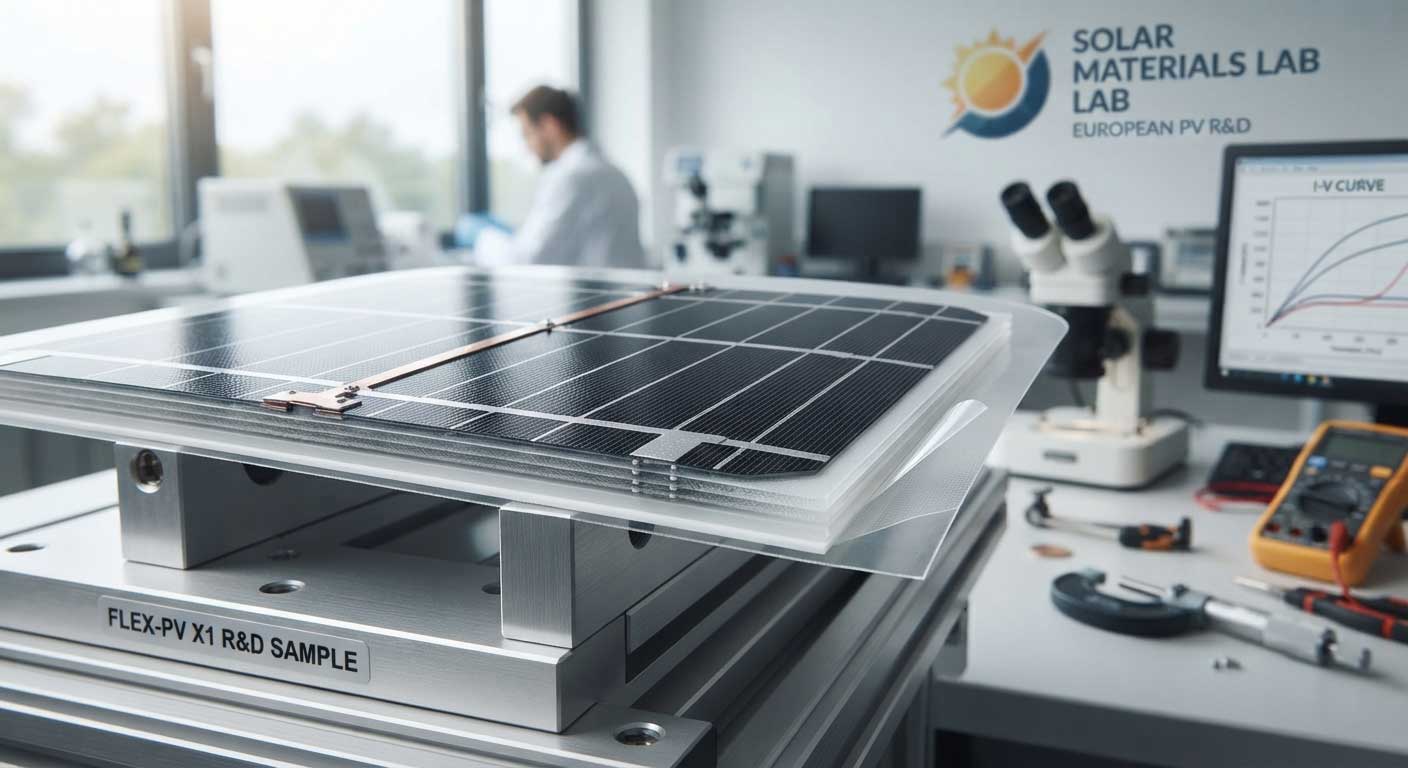
Flexible solar panel film is a thin, lightweight photovoltaic material that converts sunlight into electricity while maintaining the ability to bend or conform to non-flat surfaces.
Unlike traditional crystalline silicon panels that rely on thick glass and rigid aluminum frames, solar panel film uses a layered structure built around flexible materials. These layers allow the photovoltaic module to withstand bending forces while maintaining electrical performance.
A typical flexible solar panel film structure includes:
| Layer | Function |
|---|---|
| Protective surface coating | Shields against UV radiation, moisture, scratches, and environmental damage |
| Solar cell layer | Converts sunlight into electrical energy |
| Flexible substrate | Provides mechanical support while allowing bending |
| Conductive layers | Transfer generated electricity efficiently |
| Adhesive backing | Enables installation on various surfaces |
At Bright Solar, our flexible solar modules commonly use high-quality ETFE surface protection because outdoor solar products face constant exposure to sunlight, rain, salt spray, and temperature changes.
According to the U.S. Department of Energy, photovoltaic technology improvements have continued to focus on reducing manufacturing costs, increasing efficiency, and expanding applications beyond conventional rooftop installations.
Source:
U.S. Department of Energy Solar Photovoltaics Research
https://www.energy.gov/eere/solar/solar-photovoltaics
Why Flexible Solar Film Is Different From Traditional Solar Panels
The main difference is structural design.
A conventional solar panel is designed around strength and rigidity. It normally uses tempered glass, aluminum framing, and heavy mounting systems. This approach works well for residential rooftops but becomes challenging when the installation surface moves or has unusual shapes.
Flexible solar panel film takes another approach. Instead of protecting the cells with heavy materials, manufacturers use lightweight polymers and advanced encapsulation technologies.
This creates several practical advantages:
- Lower installation weight
- Easier transportation
- Better compatibility with curved surfaces
- Reduced structural requirements
- Improved portability for mobile applications
For example, a standard 400W rigid solar panel may weigh around 20–25 kg, while a flexible alternative with similar output can significantly reduce system weight depending on construction design.
This weight difference becomes important in RVs, boats, aircraft auxiliary systems, and portable power equipment.
How Flexible Solar Panel Film Technology Works
The working principle remains the same as traditional photovoltaic technology: sunlight reaches semiconductor materials, creating electrical current through the photovoltaic effect.
The difference is the manufacturing approach.
Traditional panels usually use crystalline silicon wafers mounted onto rigid frames. Flexible solar films may use thinner silicon cells, thin-film photovoltaic materials, or lightweight composite structures.
At Bright Solar, our development process focuses on three factors:
- Cell performance
- Mechanical flexibility
- Outdoor durability
A flexible panel that bends easily but loses efficiency after repeated exposure has little practical value. In real installations, durability often determines whether a product succeeds.
Materials Used in Flexible Solar Panel Film Manufacturing
Different manufacturers use different material combinations, but the most common materials include:
ETFE Protective Coating
ETFE (Ethylene Tetrafluoroethylene) is widely used in premium flexible solar panels because of its:
- High UV resistance
- Strong chemical stability
- Lightweight characteristics
- Better weather resistance compared with ordinary plastic films
For marine and outdoor applications, this protection layer is especially important.
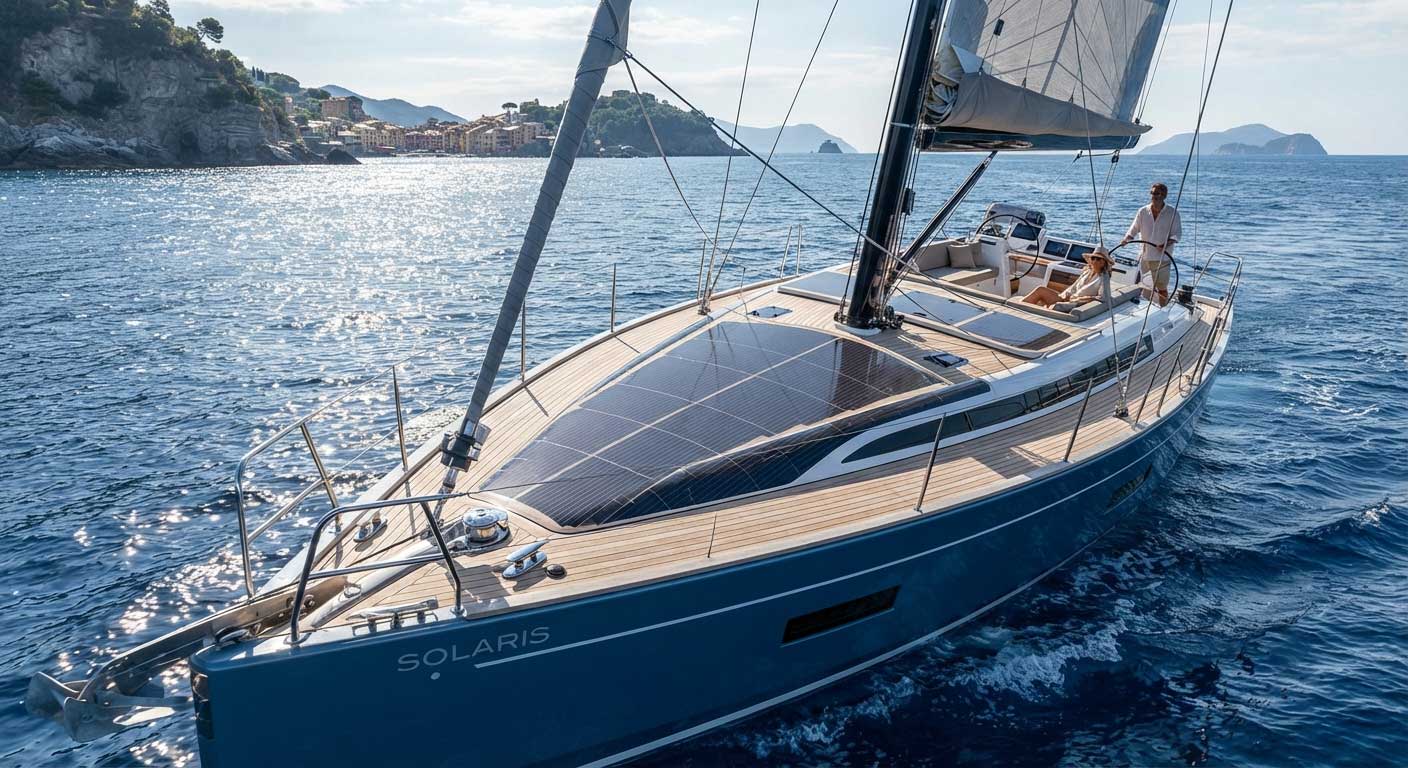
Saltwater environments can accelerate material aging. During one marine customer project in Southern Europe, our engineers tested flexible solar modules installed on a sailing support vessel exposed to coastal weather. After 12 months of operation, the customer reported stable charging performance and no visible surface cracking.
Monocrystalline Solar Cells
Many modern flexible solar panel films use monocrystalline silicon cells because they offer higher power output within limited space.
According to the National Renewable Energy Laboratory (NREL), crystalline silicon remains the dominant photovoltaic technology because of its combination of efficiency, reliability, and manufacturing maturity.
Source:
National Renewable Energy Laboratory – Solar Photovoltaic Research
https://www.nrel.gov/solar/
For applications such as RV roofs or boat decks, available installation space is usually limited. Higher efficiency cells allow users to generate more electricity without increasing the panel area.
Flexible Substrate Materials
The substrate provides mechanical support.
Common options include:
- Polymer composites
- Fiberglass reinforced materials
- Lightweight plastic layers
The substrate must balance flexibility and strength. Too rigid, and the panel cannot adapt to curved surfaces. Too soft, and repeated movement may damage internal connections.
Real-World Experience: Developing Flexible Solar Film for Mobile Applications
One lesson we learned during product testing was that laboratory flexibility does not always equal field reliability.
A panel may bend 30 degrees in a controlled environment, but real installations introduce different challenges:
- Vehicle vibration
- Uneven mounting surfaces
- Temperature expansion
- Repeated loading cycles
- Water exposure
In 2025, Bright Solar worked with an RV equipment supplier in Germany that needed lightweight solar modules for camper roof installations. Their main concern was vehicle payload.
The original design used traditional framed panels. After installation, the additional weight affected storage capacity and increased roof reinforcement requirements.
By switching to flexible solar modules, the supplier reduced roof load and simplified installation. During field testing, the RV traveled more than 18,000 km across European roads, including high-temperature regions in Spain and colder areas in Northern Europe.
The project demonstrated an important point: flexible solar technology is not only about bending. It is about solving installation problems that rigid panels cannot easily handle.
Advantages of Flexible Solar Panel Film for Modern Solar Applications
1. Lightweight Design
Weight reduction is one of the strongest reasons customers choose flexible solar film.
For mobile systems, every kilogram affects:
- Fuel consumption
- Transportation cost
- Installation complexity
- Structural requirements
This makes flexible solar panels particularly attractive for:
- RV solar systems
- Marine solar applications
- Portable power stations
- Remote monitoring equipment
2. Installation on Curved Surfaces
Many energy applications do not have traditional flat rooftops.
Examples include:
- Camper van roofs
- Boat cabins
- Truck trailers
- Temporary shelters
Flexible solar panel film can follow surface contours, creating more usable solar generation areas.
3. Easier Transportation and Handling
Large rigid panels require careful handling because glass surfaces can crack during transportation.
Flexible modules are easier to carry, store, and install, especially for remote projects where equipment access is limited.
Flexible Solar Panel Film Applications in Real Projects
Flexible solar panel film has moved beyond experimental renewable energy concepts. Today, it is being used in situations where traditional rigid solar modules create installation problems because of weight, shape limitations, or transportation challenges.
At Bright Solar, we have seen the strongest demand come from three sectors: recreational vehicles, marine systems, and remote off-grid applications. Each market has different requirements, but the common expectation is the same: reliable power generation without adding unnecessary structural weight.
Flexible Solar Panel Film for RV and Camper Applications
RV owners usually have limited roof space, and every additional kilogram affects vehicle performance.
A customer from Germany contacted our team after installing traditional framed solar panels on a camper van. The system worked, but the owner wanted additional storage capacity and a lower roof profile. The rigid panels created two problems:
- Increased roof weight
- Higher wind resistance during highway driving
After switching to Bright Solar flexible modules, the customer installed solar power without adding a heavy mounting structure.
During the project evaluation, we measured:
| Project Factor | Traditional Rigid Panel | Flexible Solar Panel Film Solution |
|---|---|---|
| Installation method | Aluminum brackets | Direct surface attachment |
| Roof modification | Required reinforcement | Minimal structural changes |
| Weight impact | Higher | Reduced |
| Appearance | Raised profile | Low-profile design |
For RV applications, the benefit is not simply producing electricity. It is maintaining vehicle mobility while adding energy independence.
Marine Flexible Solar Film for Boats and Yachts
Marine environments are among the most demanding conditions for solar products.
A solar panel installed on a boat experiences:
- Saltwater exposure
- Strong sunlight reflection
- Constant vibration
- Temperature changes
- Limited installation space
During a marine project in the Mediterranean region, Bright Solar engineers installed flexible solar modules on a yacht auxiliary power system. The installation area was not completely flat, which made conventional glass panels impractical.
The flexible design allowed the modules to follow the deck surface while maintaining a clean appearance.
The customer used the solar system mainly for:
- Battery charging
- Navigation equipment support
- Communication devices
- Emergency backup power
The project reinforced our belief that solar products should be designed around real environments, not only laboratory specifications.

Flexible Solar Panel Film Efficiency and Performance Considerations
One common misunderstanding is that flexibility automatically means lower performance.
In reality, performance depends on several factors:
- Solar cell technology
- Manufacturing quality
- Surface protection
- Operating temperature
- Installation angle
- Environmental conditions
A well-designed flexible photovoltaic module can provide strong energy output while offering installation advantages.
According to the International Energy Agency (IEA), solar photovoltaic technology continues to expand rapidly because of improvements in efficiency, manufacturing scale, and cost reduction.
Source:
International Energy Agency – Solar PV
https://www.iea.org/energy-system/renewables/solar-pv
However, selecting a flexible solar product should not be based only on wattage numbers.
From our engineering experience, we recommend evaluating:
| Evaluation Area | Why It Matters |
|---|---|
| Cell efficiency | Determines energy output in limited spaces |
| Encapsulation quality | Influences long-term durability |
| Bending capability | Determines installation compatibility |
| Temperature performance | Affects output in hot environments |
| Warranty support | Reflects manufacturer confidence |
Flexible Solar Panel Film Installation Guide: Lessons From Field Experience
Installing flexible solar film appears simple, but long-term performance depends heavily on preparation.
Many installation failures we have seen were not caused by the solar module itself. They happened because installers ignored surface preparation.
Based on Bright Solar installation feedback, these steps create better results.
Step 1: Check the Installation Surface
Before installation, inspect:
- Surface flatness
- Existing damage
- Moisture conditions
- Contamination
Dust, oil, or wax residue can reduce adhesive performance.
For RV and marine installations, cleaning is especially important because surfaces often contain road residue, salt deposits, or protective coatings.
Step 2: Plan Cable Routing Before Mounting
A common mistake is installing the panel first and deciding cable placement later.
Professional installers usually determine:
- Cable exit points
- Controller location
- Battery connection route
- Waterproof sealing position
before fixing the module permanently.
Step 3: Avoid Excessive Mechanical Stress
Flexible does not mean unlimited bending.
Solar cells still contain delicate electrical structures. Excessive folding, sharp bending, or repeated mechanical pressure can damage internal connections.
The correct approach is:
- Follow the manufacturer bending specification
- Avoid sharp corners
- Prevent unnecessary movement after installation
Why Choose Bright Solar Flexible Solar Panel Film?
Bright Solar focuses on lightweight photovoltaic solutions designed for practical applications.
Our flexible solar products are developed around several priorities:
- Reliable outdoor durability
- Lightweight construction
- Customizable designs
- Professional technical support
With experience supplying flexible solar solutions for RV, marine, and off-grid markets, our team understands that every installation environment creates different challenges.
A solar panel for a rooftop is not the same product as a solar panel for a moving vehicle.
The difference is in the details:
- Material selection
- Protection layers
- Electrical design
- Installation method
These details determine whether a product performs for years or fails after one season.
Flexible Solar Panel Film vs Traditional Solar Panels
| Feature | Flexible Solar Panel Film | Traditional Solar Panels |
|---|---|---|
| Weight | Lightweight | Heavier due to glass construction |
| Surface compatibility | Curved surfaces possible | Mostly flat surfaces |
| Installation | Simple mounting options | Requires stronger structures |
| Mobility | Excellent for transport applications | Limited |
| Durability focus | Flexibility and impact resistance | Rigidity and structural strength |
Neither technology replaces the other completely.
For residential rooftops with large flat areas, rigid modules remain a strong choice. For vehicles, marine equipment, and portable systems, flexible solar panel film often provides a more practical solution.
FAQ About Flexible Solar Panel Film
What is flexible solar panel film?
Flexible solar panel film is a lightweight photovoltaic material designed to generate electricity while bending or adapting to curved surfaces. It combines solar cells with flexible substrates and protective layers.
How long does flexible solar panel film last?
High-quality flexible solar modules are designed for long-term outdoor use. Lifespan depends on materials, installation conditions, climate exposure, and maintenance practices.
Premium ETFE-coated products are commonly selected for demanding environments because of their UV and weather resistance.
Can flexible solar panel film be installed on an RV roof?
Yes. RV roofs are one of the most common applications because flexible solar modules reduce weight and can follow curved surfaces.
Is flexible solar panel film waterproof?
Most outdoor flexible solar modules are designed with waterproof encapsulation. However, waterproof performance depends on product construction, sealing quality, and installation method.
Are flexible solar panels less efficient than rigid panels?
Efficiency depends on the solar cell technology used. Some flexible panels may have lower efficiency than premium rigid modules, but their installation advantages often make them better suited for specific applications.
Can flexible solar panel film be used for marine applications?
Yes. Marine applications are a major market because flexible solar film can fit curved surfaces and reduce installation weight on boats.
How do I choose the right flexible solar panel film?
Consider:
- Required power output
- Installation surface
- Environmental conditions
- Protection materials
- Manufacturer experience
Choosing based only on price may lead to performance issues later.
Final Thoughts: Flexible Solar Panel Film for the Next Generation of Solar Applications
Flexible solar panel film represents a shift from traditional solar installation methods toward lighter and more adaptable energy solutions.
From RV roofs crossing European highways to marine systems operating in coastal environments, flexible photovoltaic technology solves problems that conventional panels often cannot.
At Bright Solar, our approach has always been practical: understand where solar products are used, test them in real conditions, and improve designs based on customer experience.
The future of solar energy will not only depend on producing more electricity. It will depend on making solar technology easier to install, easier to transport, and suitable for more environments.
That is where flexible solar panel film creates real value.
Related recommendations
-

eco worthy flexible solar panels: Features, Uses and Buying Guide
157ECO-WORTHY flexible solar panels suit selected RV, marine, and off-grid installations where low weight, profile, or curved surfaces matter. Exact model speci...
View details -
12V Flexible Solar Panel Kit: The Complete Guide for Mobile Solar Power
127Discover how a 12V flexible solar panel kit provides lightweight, efficient power for RVs, boats, campervans, and off-grid systems. Installation tips included.
View details -
High Efficiency Flexible Solar Panels: Advanced Lightweight Solar Power Solution
111Discover high efficiency flexible solar panels from Bright Solar. Learn how advanced materials improve solar output, flexibility, and performance for RV, marine, and off-grid applications.
View details -
Best Semi Flexible Solar Panel: How to Choose the Right One
120The best semi-flexible solar panel matches the surface curvature, power needs, weight, electrical ratings, and installation environment.
View details