120W Solar Panel Folding: Output, Uses and Setup Guide
A 120w solar panel folding system provides portable electricity for camping, RV travel, and small off-grid applications. Its 120W rating describes peak power under specified test conditions; actual daily energy depends on sunlight, shading, panel angle, and charging-system losses.
For travelers who need power without installing permanent rooftop equipment, a folding solar panel offers a useful balance between portability and generation capacity. It can recharge a compatible power station, support a battery system through an appropriate charge controller, and help keep phones, lights, cameras, and other small electronics running away from the grid.
At Bright Solar, choosing a portable solar solution starts with the application rather than the wattage printed on the product. Buyers should consider the daily energy demand, available storage, electrical compatibility, folded dimensions, and conditions in which the panel will be used. These details determine whether a 120W panel is sufficient or whether a larger array is needed.
What Is a 120W Solar Panel Folding System?
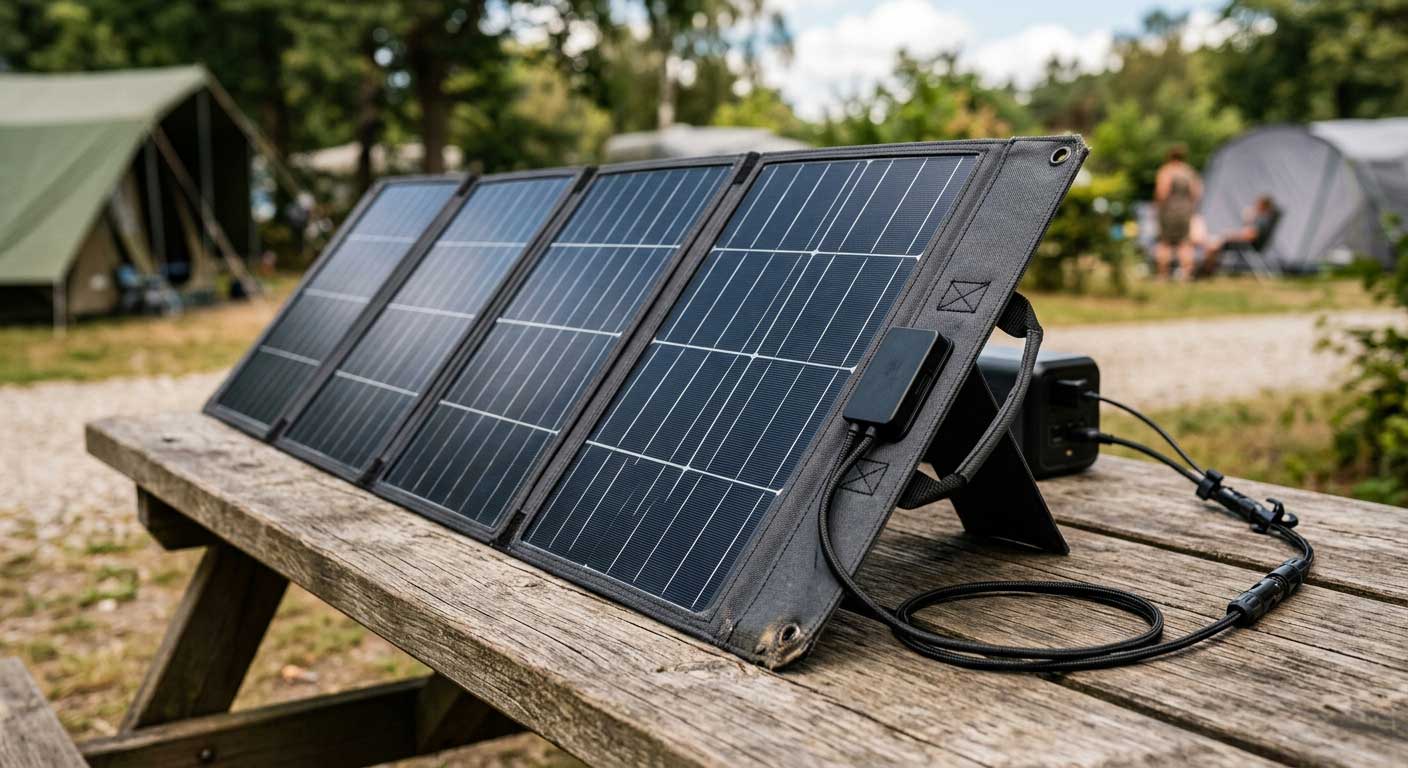
A 120W folding solar panel is a portable photovoltaic product designed to open for sunlight collection and fold into a more compact form for transportation and storage. Depending on the model, it may consist of several linked panel sections, an integrated carrying case, support legs, and connecting cables.
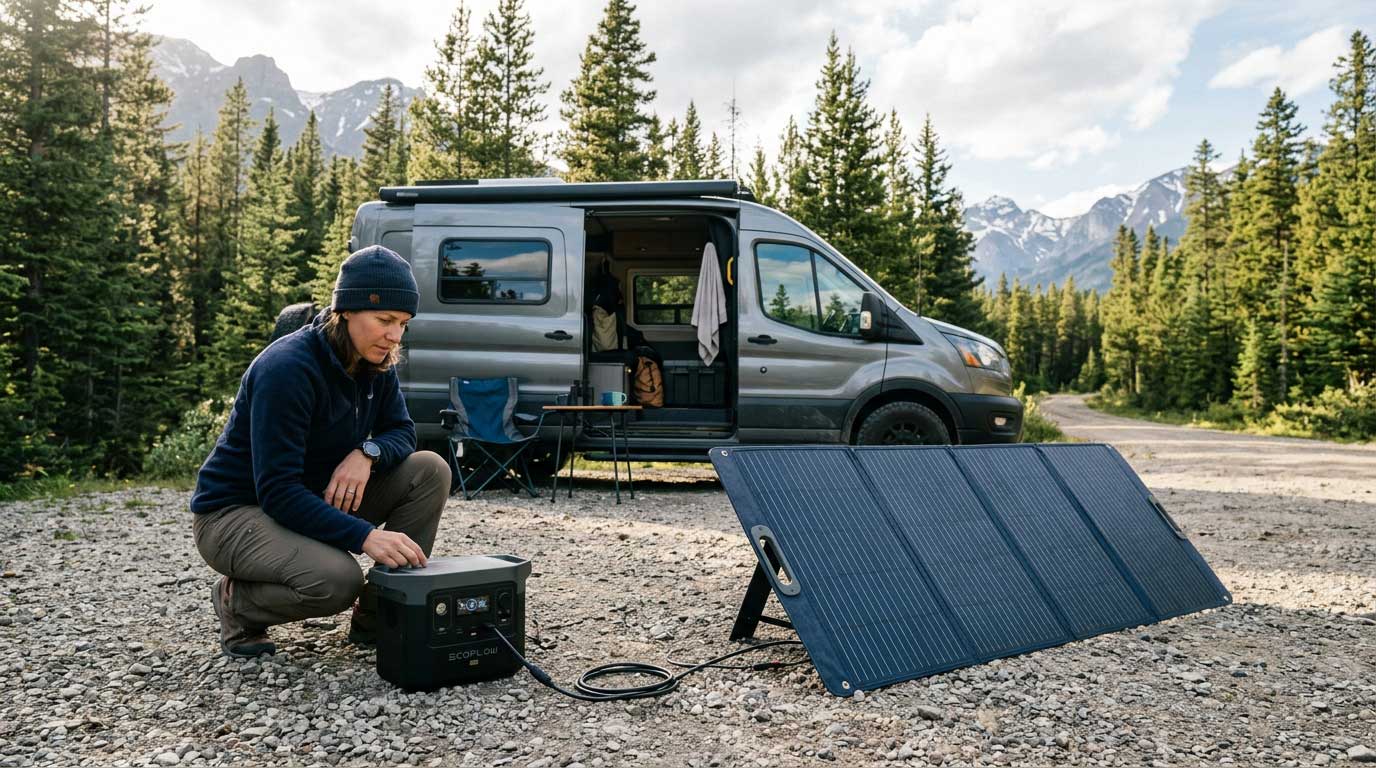
Unlike a fixed solar installation, a folding panel can be positioned in a sunny area beside a campervan, tent, or vehicle. Users can move it during the day to reduce shading or improve its orientation toward the sun.
Common applications include:
- Camping: Charging power stations, phones, lights, and camera batteries.
- RV travel: Supplementing an onboard battery without permanently occupying roof space.
- Outdoor recreation: Supporting compatible electronics at remote campsites.
- Emergency preparedness: Providing a supplementary charging source when grid power is unavailable.
- Small off-grid systems: Contributing energy to a properly configured battery and controller setup.
A 120W panel is not a complete power system by itself. Whether it can run a particular device depends on the device’s power demand, the available battery or inverter, and the panel’s actual output at that moment.
How Much Power Does a 120W Folding Solar Panel Produce?
A 120W panel can theoretically generate 120Wh in one hour at a continuous output of 120W. Over a day, energy production depends on the number of equivalent peak sun hours and the losses between the panel and the equipment being charged.
The U.S. Department of Energy describes standard photovoltaic testing conditions using irradiance of 1,000 watts per square meter and a cell temperature of 25°C. These conditions establish a reference for rated performance; outdoor conditions are not constant. See the U.S. Department of Energy’s Solar Photovoltaic Cell Basics.
Estimated Daily Energy Output
The table below uses rated power multiplied by equivalent peak sun hours. These are theoretical estimates, not measured results for a specific Bright Solar model.
| Equivalent peak sun hours | Theoretical energy at 120W |
|---|---|
| 2 hours | 240Wh |
| 3 hours | 360Wh |
| 4 hours | 480Wh |
| 5 hours | 600Wh |
| 6 hours | 720Wh |
Real energy delivered to a battery will usually be lower because sunlight changes, the panel heats up, and the controller and battery introduce losses.
For a simple planning example, assume a system delivers 80% of the theoretical energy to its intended use. With four peak sun hours:
120W × 4 hours × 0.80 = 384Wh of estimated usable energy.
The 80% factor is an illustrative assumption, not a verified Bright Solar panel efficiency or a universal system-loss value.
For location-specific estimates, use the NREL PVWatts Calculator. It estimates photovoltaic energy production from location and system inputs. Because portable panels are often repositioned throughout the day, treat any estimate as a planning reference rather than a guaranteed result.
Why Actual Output Changes
Three conditions commonly explain the gap between rated and observed power:
- Partial shading: A tree branch, awning, or vehicle shadow can reduce output. The effect depends on cell layout and electrical design.
- Panel temperature: Solar modules generally do not maintain their laboratory-rated output under every outdoor temperature condition.
- Orientation: A panel lying flat may receive less direct sunlight than one angled toward the sun, depending on the time and location.
A useful field habit is to check the power station display twice: once shortly after positioning the panel and again when the sun has moved. If input power falls, check for a new shadow before assuming the equipment has failed.
Best Applications for a 120W Folding Solar Panel
A 120W folding panel is most useful when users need supplemental electricity but cannot justify carrying or installing a larger solar array. Its suitability depends on the energy demand, local weather, and available battery storage.
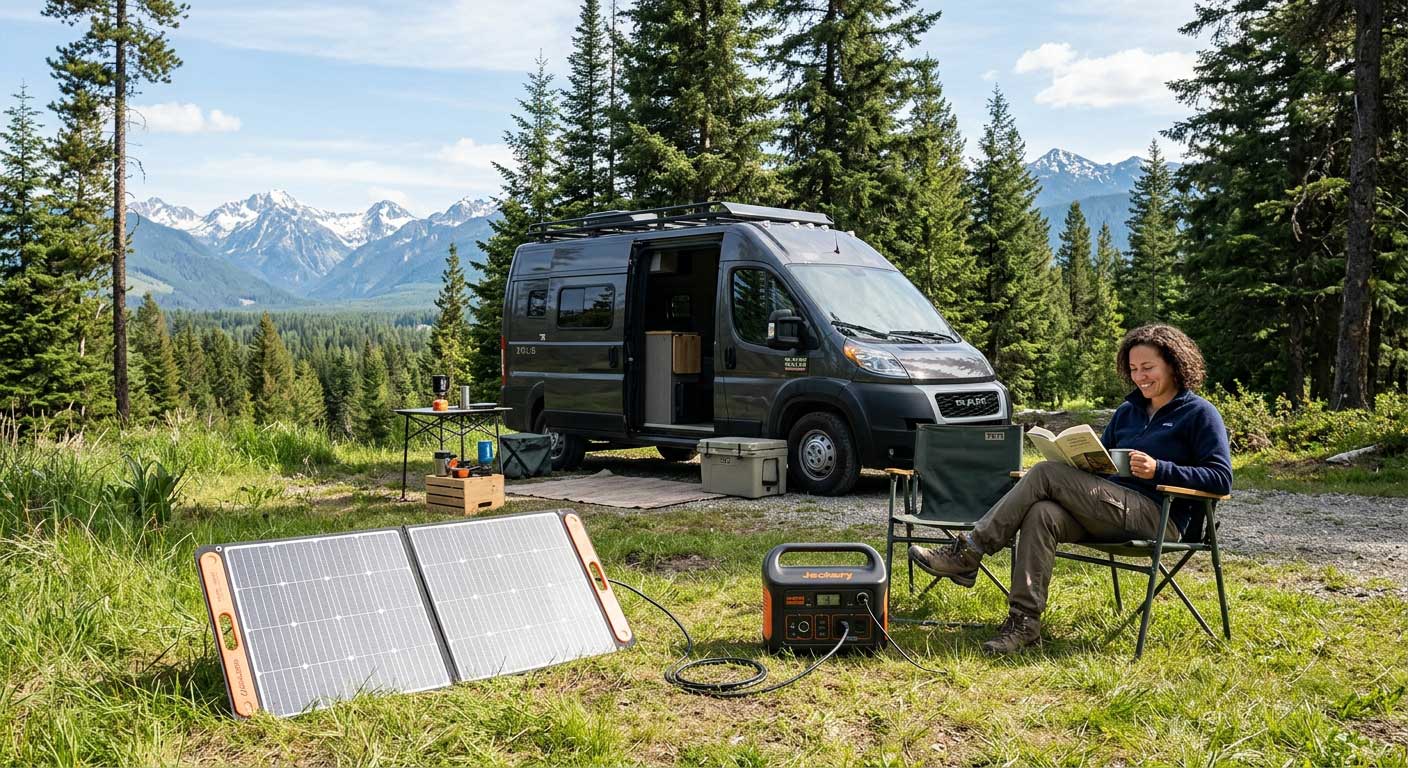
Camping and Portable Power Stations
For a weekend campsite, the panel can help replenish a compatible power station during daylight. The stored electricity can then be used after sunset, when solar generation stops.
Consider this illustrative daily load:
| Device | Assumed daily consumption |
|---|---|
| Phone charging | 20Wh |
| LED camping lights | 30Wh |
| Camera battery charging | 25Wh |
| Small USB fan | 60Wh |
| Total | 135Wh |
These are example values, not measured results. Actual consumption varies by device and usage.
If the panel delivers 384Wh of usable energy under the earlier four-peak-sun-hour scenario, it could cover this example load on a suitable day. The remaining energy could recharge the power station, subject to its charging limits and state of charge.
The practical limitation is weather. If clouds, shade, or poor positioning reduce production, the user may need to conserve energy or recharge from another source.
RVs and Camper Vans
A folding panel is useful when a vehicle’s roof is already occupied by vents, antennas, roof racks, or permanent solar modules. It can be deployed beside the vehicle when parked and packed away before departure.
A sensible setup includes:
- A level position that receives direct sunlight.
- A cable route that does not cross a doorway or walking path.
- Connectors protected from moisture and accidental damage.
- A stable support structure that cannot easily tip over in wind.
- A compatible power station, battery, or charge controller.
A 120W panel should not be treated as a complete solution for high-demand appliances such as air conditioners, induction cooktops, or electric heaters. These loads can consume energy much faster than a small portable panel can replenish it.
Emergency Charging and Remote Work
For photographers, remote workers, and outdoor travelers, a folding panel can provide a supplementary charging source for small electronics. A laptop may be supported through a compatible power station, but direct USB charging is only possible when the panel includes the appropriate regulated output.
For emergency planning, remember that a panel needs sunlight to generate power. Keep a battery charged in advance and consider how essential devices will operate during several cloudy days.
How to Choose the Right 120W Solar Panel Folding Model
The rated wattage does not tell the whole story. Buyers should compare electrical specifications, folded dimensions, weight, durability, and the intended application before choosing a product.
Specifications to Check
| Specification | Why it matters |
|---|---|
| Rated power | Confirms the nominal output class. |
| Vmp | Indicates voltage at maximum power. |
| Imp | Indicates current at maximum power. |
| Voc | Helps verify the controller’s maximum voltage limit. |
| Isc | Helps check the controller’s permitted input current. |
| Folded dimensions | Determines how easily the panel can be stored and transported. |
| Weight | Affects portability and handling. |
| Connector type | Determines compatibility with the charging equipment. |
| Weather protection | Establishes the conditions in which the panel may safely be used. |
| Warranty | Clarifies the manufacturer’s coverage and exclusions. |
These details should be taken from the exact model datasheet. Do not assume that every 120W folding panel has the same voltage, weight, efficiency, connector, or protection rating.
Check Electrical Compatibility Before Connecting
A power station may accept solar input only within a specified voltage range and maximum current. Even if the panel’s rated wattage appears suitable, its open-circuit voltage may exceed the receiving equipment’s limit.
Check the manual for the recommended connection procedure, polarity, cable requirements, and charge-controller compatibility. For a battery-based system, also verify the battery chemistry and charging profile.
The U.S. Department of Energy’s Solar Photovoltaic System Design Basics explains that modules are only one component of a complete PV system; other equipment is needed to make their electricity useful for the intended loads.
How to Set Up a 120W Solar Panel Folding System
The setup process is straightforward, but the order of operations matters when batteries and charge controllers are involved.
Step 1 — Find a Sunny, Stable Position
Unfold the panel on level ground and check for shadows from trees, awnings, or the vehicle. Leave enough space around the panel to adjust its angle and prevent people from stepping on the cables.
Step 2 — Adjust the Angle
Position the panel toward the sun using its built-in supports, if provided. Recheck the angle as the sun moves. A panel that receives direct sunlight at breakfast may be partially shaded by the vehicle later in the morning.
Step 3 — Connect Compatible Equipment
Check the panel and receiving equipment manuals before connecting anything. Follow the manufacturer’s specified connection sequence, and confirm voltage, current, polarity, and connector compatibility.
Step 4 — Monitor Actual Charging
Record the displayed input power and accumulated energy after the panel has been operating for a while. If the output is unexpectedly low, check shading, orientation, cable connections, battery charge limits, and the receiving device’s maximum input.
Step 5 — Clean, Disconnect, and Store
Disconnect the system according to the manufacturer’s instructions. Clean the panel using an approved method, let it dry as required, and fold it without pinching cables or stressing the joints.
A Practical Weekend Camping Example
Consider a hypothetical camper using a 120W folding panel with a 500Wh portable power station. The planned devices consume approximately 135Wh per day, based on the illustrative load table above.
Over two days, the total demand is 270Wh. Under the earlier sunny-day scenario, the panel could deliver approximately 384Wh of usable energy in a day. That would be enough in principle to cover the example demand, provided the power station accepts the input and the charging schedule matches consumption.
The important qualification is that this is an energy-budget example, not a measured customer case. In a shaded campground or during cloudy weather, production could be much lower. Starting with a charged power station and reducing unnecessary loads provides a more reliable plan than assuming the panel will reach its rated output every day.
For B2B purchasers, Bright Solar recommends evaluating the end application before settling on a product configuration. RV accessories, camping equipment, portable power stations, and emergency charging kits can have different connector, packaging, durability, and transportation requirements. Confirm the actual product specifications and customization options with the manufacturer before finalizing a bulk order.
FAQ About 120W Solar Panel Folding
How much power can a 120W solar panel produce in a day?
At four equivalent peak sun hours, a 120W panel has a theoretical output of 480Wh. Actual usable energy is lower when sunlight, temperature, shading, and system losses are considered.
Can a 120W folding solar panel charge a portable power station?
Yes, provided the power station supports the panel’s voltage, current, connector, and solar input requirements. Always check the equipment manuals before connecting the panel.
Is a 120W folding solar panel good for camping?
Yes. It can support charging for small electronics and compatible battery systems, especially when portability matters. Its suitability depends on daily energy consumption and available sunlight.
Can I use a 120W folding panel with a 12V battery?
Yes, if the panel and battery are connected through a compatible charge controller and the charging settings match the battery chemistry. Verify the panel’s electrical ratings first.
Does a 120W panel always produce 120 watts?
No. The 120W figure is a rated power value under specified test conditions. Outdoor output changes with irradiance, temperature, shading, and panel orientation.
Is a 120W folding solar panel waterproof?
Not necessarily. Weather resistance depends on the specific design and its documented protection rating. Check the manufacturer’s instructions before exposing the panel, connectors, or controller to rain.
What should B2B buyers check before ordering in bulk?
Confirm the datasheet, voltage and current ratings, folded dimensions, weight, connector options, intended operating environment, warranty, packaging, sample availability, and customization terms. Ask the supplier to verify all model-specific claims in writing.
Conclusion — Choosing a 120W Solar Panel Folding Solution
A 120w solar panel folding solution is worth considering for camping, RV travel, portable power stations, and modest off-grid charging needs. The right choice depends on actual energy demand, expected sunlight, storage capacity, and electrical compatibility—not just the rated wattage.
For buyers comparing portable solar products, Bright Solar can discuss application requirements and available product configurations. Request the relevant datasheet to verify specifications before purchasing or integrating a panel into a larger system.
Related recommendations
-

flexible 400w solar panel: Lightweight High-Power Solar Solution for RV, Marine and Off-Grid Use
275Explore flexible 400w solar panel solutions from Bright Solar with lightweight design, high efficiency, and reliable power for RV, marine, and off-grid applications.
View details -
Parallel vs Series Solar Panels: Complete Guide to Solar Panel Connections
217Learn parallel vs series solar panels wiring, voltage differences, and the best setup for RV, off-grid, and solar systems. Discover expert tips from Bright Solar.
View details -
Amorphous Flexible Solar Panel: Thin Film Solar Technology for Lightweight Applications
105Amorphous flexible solar panels use thin-film silicon for lightweight, flexible solar applications where adaptability and low-light response matter.
View details -
Series vs Parallel Solar Panels: Which Wiring Method Performs Better?
147Compare series vs parallel solar panels for RVs, homes, and off-grid systems. Bright Solar explains voltage, current, shading, and wiring efficiency.
View details