Flexible 200W Solar Panel: Output, Uses and Installation Guide
A flexible 200W solar panel is a lightweight photovoltaic module designed to deliver up to 200 watts under specified test conditions while accommodating limited bending when permitted by the manufacturer. It can be used in suitable RV, campervan, marine, and off-grid applications where weight, roof shape, or installation space matters. Actual energy production depends on sunlight, temperature, shading, orientation, and system losses.
The 200W rating describes nominal power, not a guaranteed daily energy output. Before choosing a panel, buyers should check its dimensions, electrical specifications, bending limits, mounting requirements, and compatibility with the intended charge controller and battery system. For B2B projects, these details help determine whether the module is appropriate for the installation rather than relying on wattage alone.
What Is a Flexible 200W Solar Panel?
A flexible 200W solar panel is a photovoltaic module rated to produce 200 watts under specified test conditions, with a lightweight construction designed to accommodate limited bending when permitted by the manufacturer. It can be considered for suitable RV, campervan, marine, and off-grid installations where weight or surface shape matters.
The 200W rating describes nominal power—not a promise of 200 watts throughout the day. Actual energy production depends on sunlight, temperature, shading, orientation, and system losses. Buyers should also distinguish a panel’s nominal battery-system category from its actual operating voltage.
For Bright Solar customers, the useful starting point is to match the module’s dimensions, electrical specifications, and mechanical limits to the intended installation rather than selecting by wattage alone.
How Does a Flexible Solar Panel Work?
A flexible solar panel converts sunlight into direct-current electricity through photovoltaic cells. The U.S. Department of Energy explains that photovoltaic cells use semiconductor materials to convert light into electrical energy. Multiple cells are assembled into a module to provide usable power.
A flexible module may include:
- Solar cells: Convert sunlight into electricity.
- Encapsulation: Protects the cells and supports the module structure.
- Front protective surface: Allows light to reach the cells while providing protection.
- Back layer: Provides support and contributes to the module’s mechanical construction.
- Electrical connections: Transfer DC output to the solar system.
The exact materials and cell technology vary by model. Product-specific datasheets should be used to confirm construction, efficiency, permitted bending, and environmental ratings.
What Does 200W Mean in Practice?
A 200W rating is the module’s nominal maximum power under defined test conditions. It does not mean the panel will continuously supply 200 watts in normal outdoor use.
For a simple illustration:
200W × 5 equivalent full-power hours = 1,000Wh, or 1kWh.
This is a theoretical calculation before system losses. Five equivalent full-power hours is an assumption for the example, not a universal daily sunlight value.
Actual output changes with:
- Local solar conditions and season.
- Cloud cover and shading.
- Module temperature.
- Panel orientation and tilt.
- Dirt and surface contamination.
- Wiring, controller, and battery-charging losses.
The National Renewable Energy Laboratory’s PVWatts model includes loss categories such as shading, soiling, wiring, connections, and mismatch. Its assumptions are modeling inputs, not guarantees for a particular flexible-panel installation.
Benefits of a Flexible 200W Solar Panel
Lightweight Construction for Mobile Power
On an RV or campervan, every installed component contributes to the total vehicle load. A lightweight solar module may reduce the panel portion of that load compared with some conventional framed alternatives.
But panel weight is only one part of the decision. Mounting materials, wiring, controllers, and batteries must also be included when assessing the complete system.
Before choosing a product, compare:
- Module weight and dimensions.
- Total number of panels planned.
- Mounting hardware or adhesive requirements.
- Roof load constraints.
- Cable routing and access for inspection.
Low-Profile Fit on Suitable Surfaces
Some flexible modules can conform to gently curved surfaces within their specified mechanical limits. This can make them candidates for selected RV roofs, campervans, and boat surfaces.
The word flexible does not mean foldable or suitable for every curve. Excessive bending, twisting, or pressure can damage cells and connections. The manufacturer’s instructions should define the acceptable installation geometry.
Useful Capacity for Space-Constrained Projects
A 200W module may provide a useful amount of rated capacity where roof space is limited, but the actual fit depends on the product’s dimensions and the layout of the installation area.
Roof vents, antennas, hatches, air-conditioning units, and shadows can reduce the space available for panels. Measure the unobstructed area and check the shading pattern before deciding how many modules can be installed.
Practical insight: A roof with enough area for two panels on paper may not have enough usable area once cable exits, service access, and required clearances are included.
Flexible Product Choices for B2B Buyers
For distributors, vehicle converters, marine suppliers, and system integrators, the purchasing decision may involve product configuration as well as performance.
Relevant questions include:
- Are the dimensions compatible with the project?
- Does the module support the intended surface curvature?
- Are its voltage and current suitable for the system?
- Does the product have the required environmental ratings?
- Are the connectors and cables appropriate?
- Are customization options available for the project?
Bright Solar offers flexible solar panel solutions for B2B applications. Confirm current model specifications, OEM/ODM options, and order requirements directly with the manufacturer.
Flexible 200W Solar Panel Applications
A 200W flexible module can be considered for several types of installation, but the requirements differ significantly between vehicles, boats, and stationary systems.
RV and Campervan Solar Power
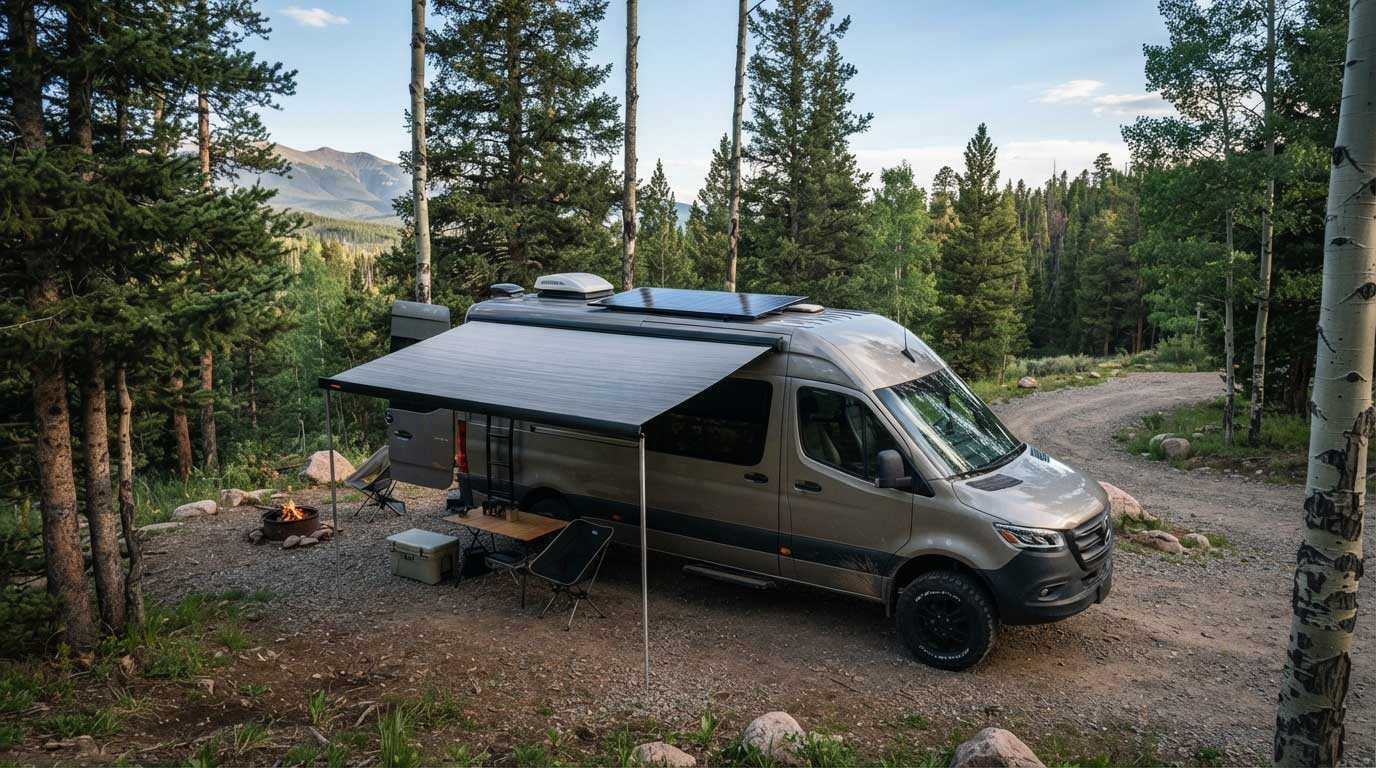
For RV owners, a flexible 200W solar panel may be useful when the roof layout or weight constraints make a low-profile module attractive.
Typical loads in a recreational vehicle may include:
- LED lighting and USB charging.
- Ventilation fans.
- Small DC appliances.
- Battery charging for later use.
- Selected electronics and monitoring equipment.
Refrigerators, cooking equipment, heating systems, and air conditioners can have very different energy requirements. A 200W panel should not be assumed to operate these appliances continuously without a load assessment and, where necessary, additional generation or battery storage.
Marine and Boat Installations
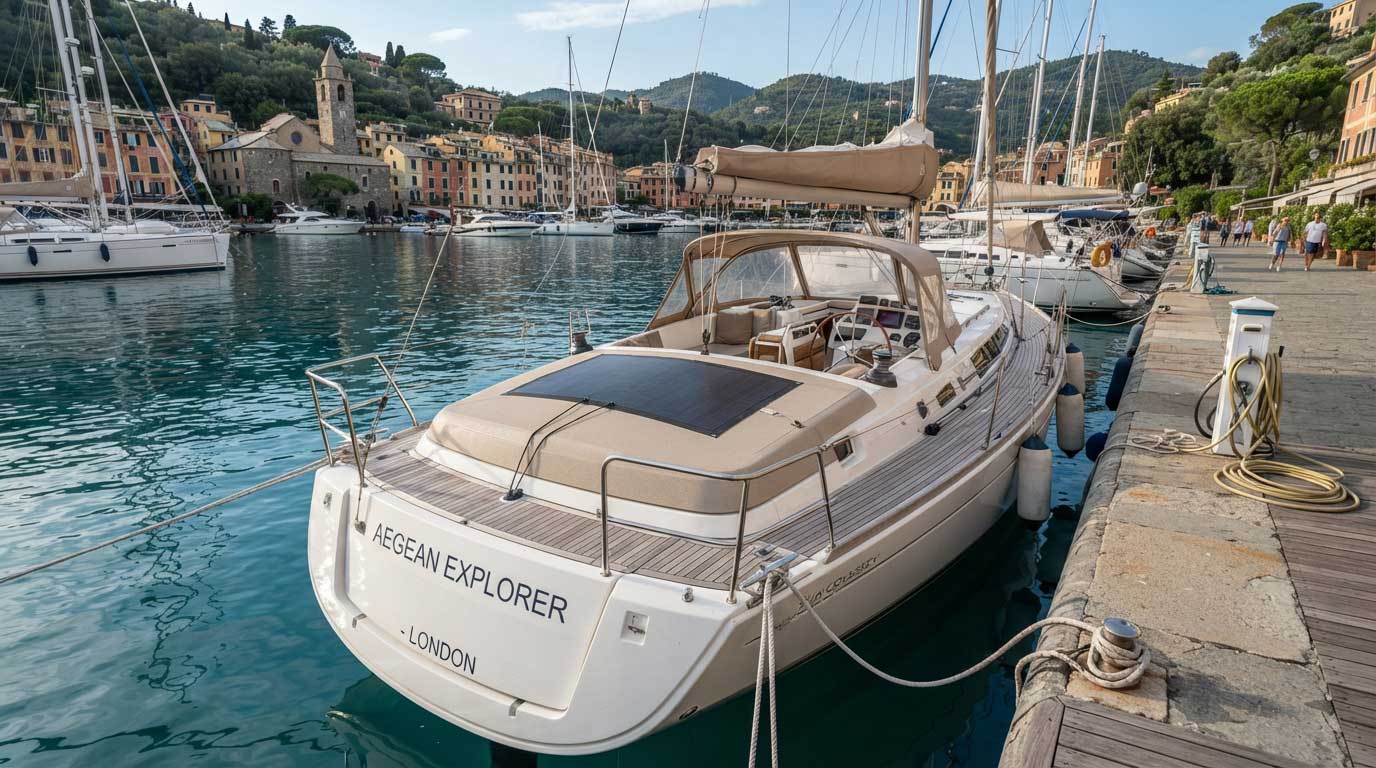
A flexible 200W solar panel may be considered for suitable boat surfaces where available space is limited.
Marine buyers should pay particular attention to salt exposure, moisture, vibration, cable protection, surface temperature, and mounting compatibility. A panel intended for a general outdoor application is not automatically suitable for a marine environment.
Before ordering, verify the manufacturer’s stated environmental ratings and confirm whether the proposed installation involves foot traffic. Do not treat a panel as walkable unless the product documentation explicitly supports that use.
Off-Grid and Remote Power
For selected off-grid applications, a 200W module can contribute to battery charging or DC power generation. The required array size depends on the energy demand, local sunlight, battery capacity, and system losses.
A remote monitoring station, for example, may have a very different consumption pattern from a campervan with refrigeration and lighting. The load profile should determine the system design.
How to Install a Flexible 200W Solar Panel
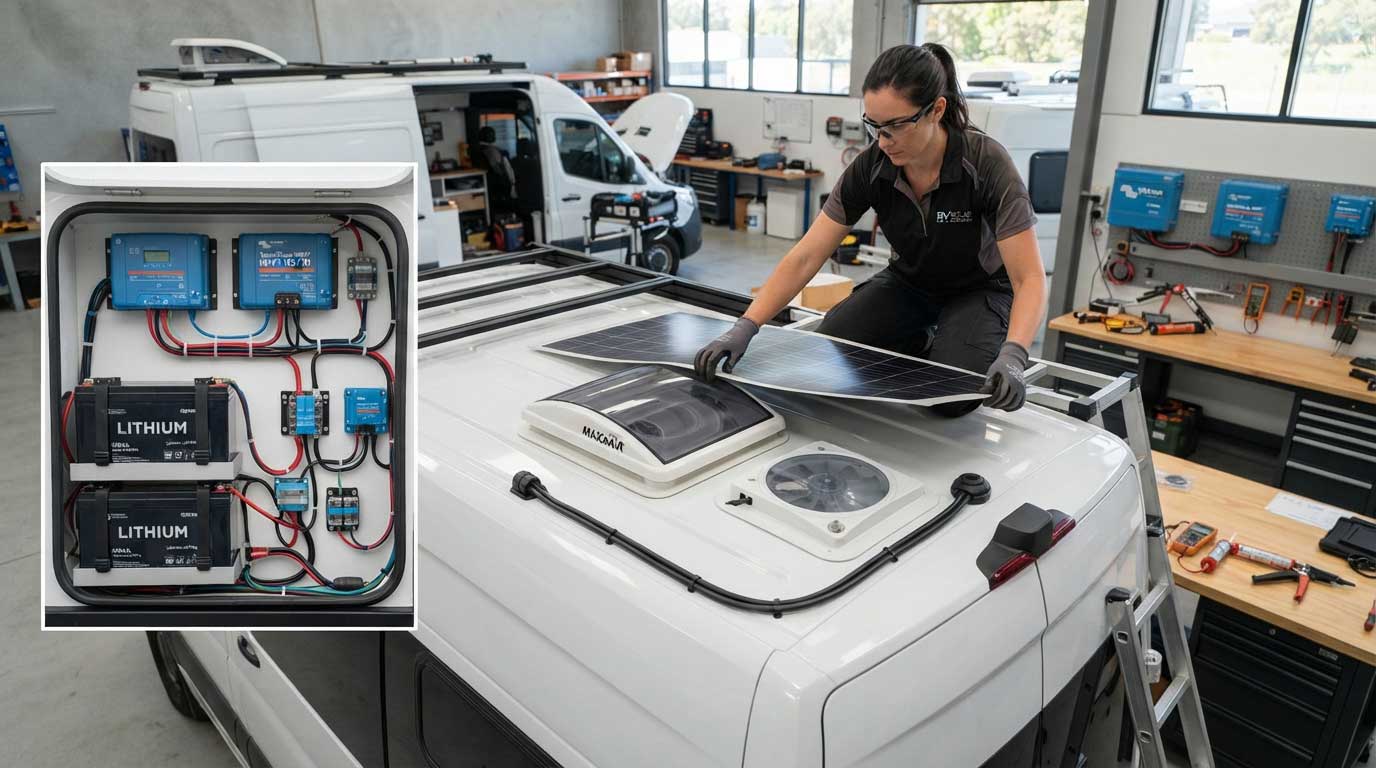
Installation must follow the specific module instructions. The steps below describe a planning and inspection workflow, not a substitute for the manufacturer’s mounting and electrical guidance.
Step 1 — Inspect the Surface and Measure the Available Area
Check the roof or mounting surface for damage, loose coatings, sharp edges, and obstructions. Measure the usable area rather than relying on the overall roof dimensions.
For curved surfaces, confirm that the shape falls within the panel’s permitted bending limits. Do not force the module into place if it does not sit correctly.
Step 2 — Confirm the Mounting Method
Use only mounting materials and methods approved for the module and compatible with the installation surface.
Depending on the product, mounting may involve an approved adhesive system or specified mechanical attachment. Incorrect adhesive selection or unsuitable fasteners can damage the roof or compromise the attachment.
Step 3 — Plan Cable Routing
Before making connections, decide how the cables will reach the controller.
Keep wiring protected from abrasion, heat, water exposure, and moving parts. Ensure connectors remain accessible for inspection and that cable entries do not compromise the roof’s weatherproofing.
Step 4 — Check the Electrical Configuration
Verify the panel’s voltage and current ratings against the charge controller’s input limits and the battery manufacturer’s charging requirements.
Check polarity before connecting the system. For multiple panels, calculate the combined voltage and current for the planned series or parallel arrangement.
Step 5 — Inspect and Test the Completed Installation
After installation:
- Inspect the panel surface, edges, and attachment points.
- Check cable routing and connector security.
- Verify polarity and relevant electrical measurements.
- Confirm that the controller recognizes the solar array.
- Check that battery settings match the battery manufacturer’s specifications.
- Record baseline readings for future maintenance.
A neat installation is not just about appearance. Accessible wiring and a documented configuration make later inspection and troubleshooting easier.
Output, Temperature, and Real-World Performance
A flexible 200W solar panel’s daily energy production depends on how much sunlight reaches the cells and how the module operates under the actual installation conditions.
The U.S. Department of Energy explains that temperature affects PV performance: higher cell temperatures generally cause voltage to decrease, which can reduce output. Good thermal management is therefore an important part of system design.
Understanding the Difference Between Rated Power and Daily Energy
Rated power is measured under defined test conditions. Daily energy is measured in watt-hours or kilowatt-hours.
For an illustrative calculation:
| Equivalent full-power hours | Calculation | Theoretical energy |
|---|---|---|
| 3 hours | 200W × 3h | 600Wh |
| 4 hours | 200W × 4h | 800Wh |
| 5 hours | 200W × 5h | 1,000Wh |
| 6 hours | 200W × 6h | 1,200Wh |
These values are mathematical examples before system losses. They are not predictions for a particular location or product.
NREL’s PVWatts calculator accounts for system-loss categories including soiling, shading, wiring, connections, and mismatch. Its default assumptions should not be treated as a measured performance result for a flexible panel on a moving vehicle or boat.
Why Installation Conditions Matter
Two installations using panels with the same rated power can produce different amounts of energy.
Important differences include:
- One panel may receive more direct sunlight during the day.
- A roof vent or antenna may shade part of a module.
- A close-mounted panel may operate at a different temperature from an elevated panel.
- Dirt or salt deposits may reduce the sunlight reaching the cells.
- Different wiring lengths and system components may introduce different losses.
When comparing products, ask whether the quoted performance information is based on standardized test conditions, a model, or measured field operation. Those are different types of evidence and should not be presented as interchangeable.
Product Selection Case Study: A 200W Campervan Project
The following is an illustrative engineering scenario, not a verified Bright Solar customer installation or a claim of measured field performance.
A campervan conversion business is considering a 200W flexible solar module for a vehicle with a limited roof area. The roof has a ventilation opening and a gently curved section. The company wants to support routine battery charging for lighting, device charging, and other modest electrical loads.
The team starts by measuring the usable roof area and checking the proposed module’s dimensions. It reviews the panel’s permitted bending limits and identifies a suitable mounting location that does not obstruct roof equipment.
Next, the electrical designer checks the module’s Vmp, Imp, Voc, and Isc against the proposed charge controller. Battery chemistry and charging requirements are reviewed before the team decides how the panel will connect to the system.
The company then prepares a load estimate. For example, if the planned daily consumption is 600Wh, a 200W module would require three equivalent full-power hours to produce that amount of energy in a loss-free calculation:
600Wh ÷ 200W = 3 hours.
That result does not establish that the system will meet the load every day. The designer still needs to account for local sunlight, temperature, shading, charging losses, and periods of poor weather. If the vehicle will be parked in shaded campsites or used during low-sunlight seasons, additional generation or storage may be needed.
Before ordering, the business confirms the mounting method, environmental suitability, cable arrangement, and product documentation.
Project takeaway: The 200W label provides a useful starting point, but the installation area, electrical compatibility, and energy demand determine whether the module is appropriate for the vehicle.
FAQ About Flexible 200W Solar Panels
How much electricity can a flexible 200W solar panel produce per day?
A 200W panel operating at its rated power for five equivalent full-power hours would theoretically produce 1,000Wh, or 1kWh, before losses. Actual daily generation depends on sunlight, temperature, shading, orientation, and system configuration.
Can I use a flexible 200W solar panel with a 12V battery?
Yes, if the panel’s electrical specifications are compatible with the battery system and a suitable charge controller. Check the panel’s operating voltage, open-circuit voltage, current ratings, and the battery manufacturer’s charging requirements.
Is a flexible 200W solar panel suitable for an RV?
It can be suitable for an RV when the roof area, surface curvature, mounting method, and electrical system match the product’s specifications. Consider roof obstructions, shading, ventilation, and total installed weight before choosing a module.
Can I install a flexible 200W solar panel on a boat?
Some flexible modules are suitable for selected marine applications. Confirm that the specific product is designed for the intended environmental exposure and mounting conditions. Salt-water resistance, walkability, and waterproofing should not be assumed without supporting product documentation.
Can I connect two 200W flexible solar panels together?
Yes, if the modules and system components support the planned configuration. Connecting panels in series increases voltage, while connecting them in parallel increases current. The combined electrical values must remain within the charge controller’s limits.
Does a flexible solar panel need a charge controller?
A charge controller is commonly used when a solar panel charges a battery. It regulates charging according to the system design and battery requirements. Follow the panel and battery manufacturers’ instructions when selecting the controller and wiring arrangement.
What should I check before buying a flexible 200W solar panel?
Check the rated power, Vmp, Imp, Voc, Isc, dimensions, weight, permitted bending, mounting requirements, environmental ratings, and connectors. Also confirm the panel’s compatibility with the intended controller and battery system.
Choosing a Flexible 200W Solar Panel From Bright Solar
A flexible 200W solar panel can be considered for RV, campervan, marine, and selected off-grid applications where a lightweight, low-profile module may suit the installation. Its suitability depends on the real surface conditions, electrical design, environmental exposure, and the manufacturer’s specifications.
For B2B buyers evaluating Bright Solar products, prepare the following information before requesting a quotation:
- Intended application and operating environment.
- Available mounting dimensions and surface curvature.
- Required rated power and electrical configuration.
- Battery type and charge-controller specifications.
- Mounting method and environmental requirements.
- Customization needs, order quantity, and documentation requirements.
Bright Solar supports B2B flexible solar panel projects. Confirm the available product configurations, technical parameters, OEM/ODM options, and installation requirements directly with the manufacturer before finalizing a design.
The key to choosing a flexible 200W solar panel is to look beyond the rated wattage. A suitable module must fit the mounting surface, operate within the system’s electrical limits, and contribute an appropriate amount of energy for the intended application.
Related recommendations
-

Best Marine Solar Panels for Boats and Yachts
243Find the best marine solar panels for boats, yachts and RVs near the water. Compare flexible and rigid panels, salt-mist resistance, mounting, wiring and maintenance.
View details -
1000 Watt Solar Panel: Reliable Solar Power for Off-Grid and Home Energy Systems
3181000 watt solar panel systems provide powerful off-grid and backup energy solutions. Learn real output, installation tips, efficiency, and sizing.
View details -
10 Watt Foldable Solar Panel: Uses, Output, and Buying Guide
5A 10 watt foldable solar panel provides portable, supplemental power for compatible small electronics, USB devices, and power banks. Its practical output dep...
View details -
200W Flexible Solar Panels: Lightweight Off-Grid Power for RVs, Boats, and Van Life
204Explore how 200W flexible solar panels provide lightweight, reliable off-grid energy for RVs, boats, vans, and portable solar systems.
View details