400W Solar Panel: High Power Solar Solution for Residential and Off-Grid Energy
A 400W solar panel is a high-output photovoltaic solution designed for residential, RV, marine, and off-grid applications. It provides strong energy generation while maintaining flexible installation options for users who need more power from limited spaces.
When customers ask Bright Solar whether a 400W solar panel is worth choosing, the answer is usually related to one question:
“How much energy do you need from your available installation area?”
A 400W module represents a significant step above small portable solar panels.
It is no longer only for charging small devices.
It can support:
- Residential backup systems
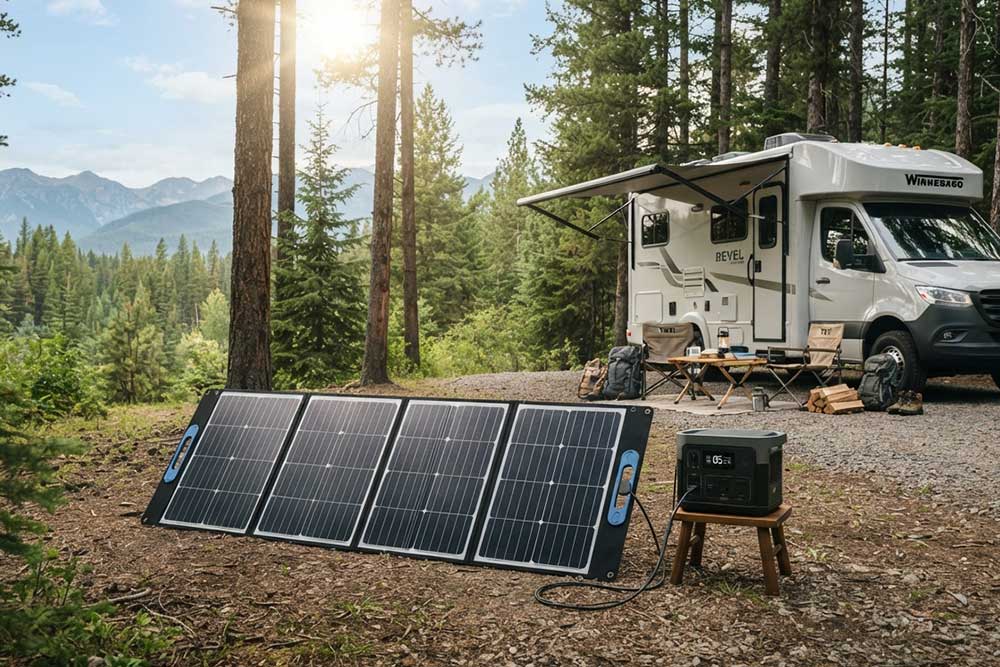
- RV energy systems
- Marine applications
- Remote power stations
- Portable battery storage
During our product consultation process, we noticed a common misunderstanding.
Many customers believe higher wattage automatically means a better solar solution.
That is not always true.
A solar panel should match the application.
A homeowner with limited roof space may benefit from a higher-efficiency 400W module.
An RV owner may prefer a lightweight 400W flexible solar solution because every kilogram matters.
At Bright Solar, we evaluate solar products from real installation conditions, not only laboratory specifications.
A customer from Germany contacted our team for an RV upgrade project.
His original system used two smaller panels.
The problem was not electricity generation.
The problem was:
- Too many connections
- Limited roof space
- Difficult maintenance
After switching to a higher-output solar configuration, the installation became simpler and provided better space utilization.
This experience reinforced an important idea:
The best solar panel is the one that fits the user’s environment.
What is a 400W solar panel?
A 400W solar panel is a photovoltaic module capable of producing up to 400 watts of electrical power under Standard Test Conditions (STC).
It converts sunlight into direct current (DC) electricity through photovoltaic cells.
A typical 400W solar panel consists of:
| Component | Function |
|---|---|
| Solar cells | Convert sunlight into electricity |
| Glass or protective layer | Protects photovoltaic cells |
| Encapsulation material | Improves durability |
| Junction box | Transfers electrical output |
| Frame or flexible backing | Provides structural support |
Modern 400W solar panels commonly use monocrystalline silicon cells because of their higher efficiency and better performance in limited spaces.
According to the U.S. Department of Energy, photovoltaic technologies continue improving in efficiency through advances in solar cell materials and manufacturing processes.
Source:
U.S. Department of Energy – Solar Energy Technologies Office
https://www.energy.gov/eere/solar
Why choose a 400W solar panel?
The main advantage of a 400W solar panel is higher power output from a single module.
For users with limited installation space, this matters.
Instead of installing several smaller panels, a higher wattage module can simplify the system design.
Common advantages include:
- More electricity per panel
- Fewer electrical connections
- Better space utilization
- Easier system expansion
Higher energy production
A 400W solar panel produces more power compared with:
- 100W panels
- 120W panels
- 200W panels
For example:
A 400W panel receiving 5 peak sun hours:
400W × 5 hours × 80% system efficiency
≈ 1.6kWh daily energy production
Actual production depends on:
- Location
- Weather
- Installation angle
- Temperature
- Shading
The National Renewable Energy Laboratory (NREL) explains that photovoltaic output changes according to solar resource conditions and system design.
Source:
National Renewable Energy Laboratory
https://www.nrel.gov/
Better use of limited space
Space is often the biggest limitation in solar projects.
This is especially true for:
- RV roofs
- Boats
- Small homes
- Portable systems
A 400W solar panel allows users to generate more electricity without increasing installation area significantly.
For example:
A small camper roof may only have enough space for one or two modules.
Choosing a higher-output panel helps maximize available space.
Suitable for modern energy storage systems
Energy storage has become increasingly popular.
Many users now combine solar panels with:
- Lithium batteries
- Portable power stations
- Home backup systems
A 400W solar panel can provide a stronger charging source for these systems.
400W solar panel applications
Residential solar backup
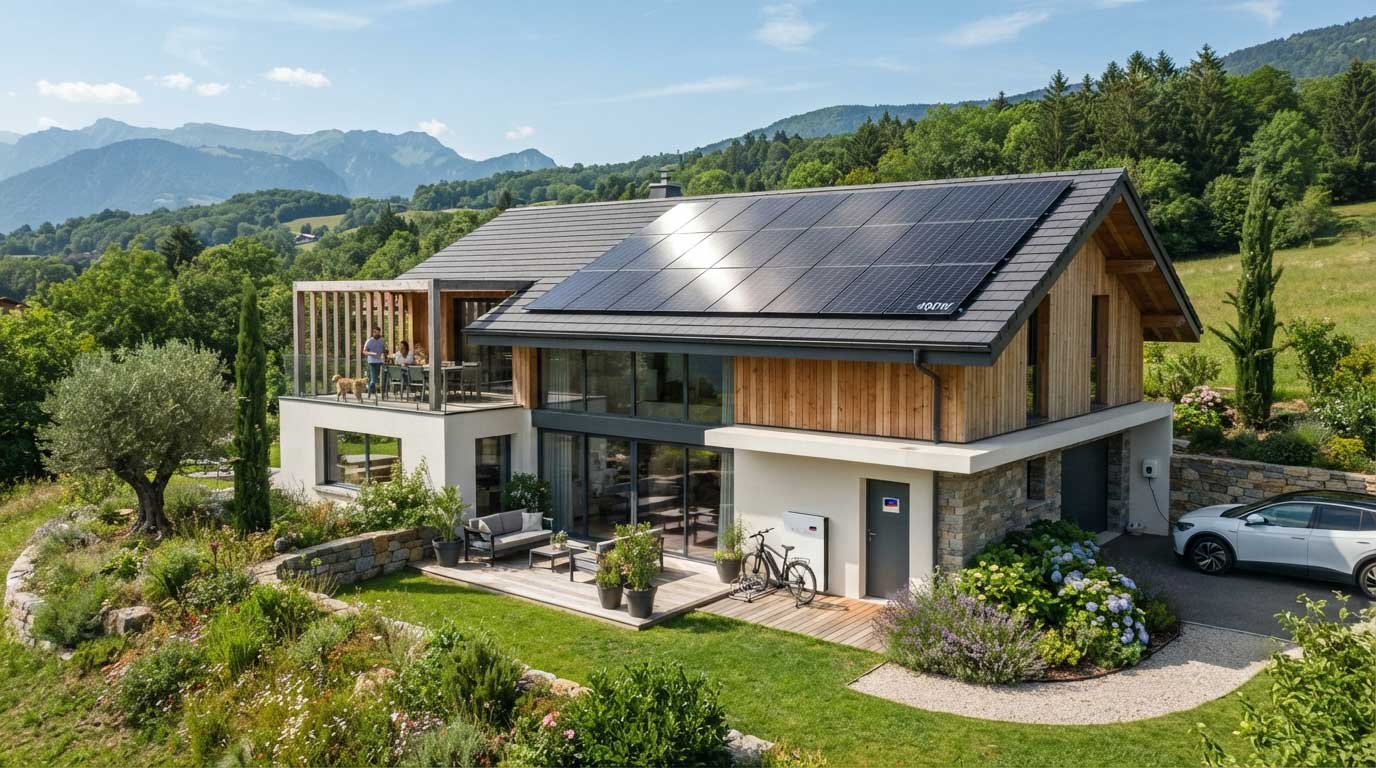
Although complete homes usually require multiple panels, a 400W module can be an important building block in residential systems.
Applications include:
- Battery charging
- Emergency backup
- Small solar installations
For homeowners starting with solar, 400W panels provide a practical balance between size and performance.
RV and camper solar systems
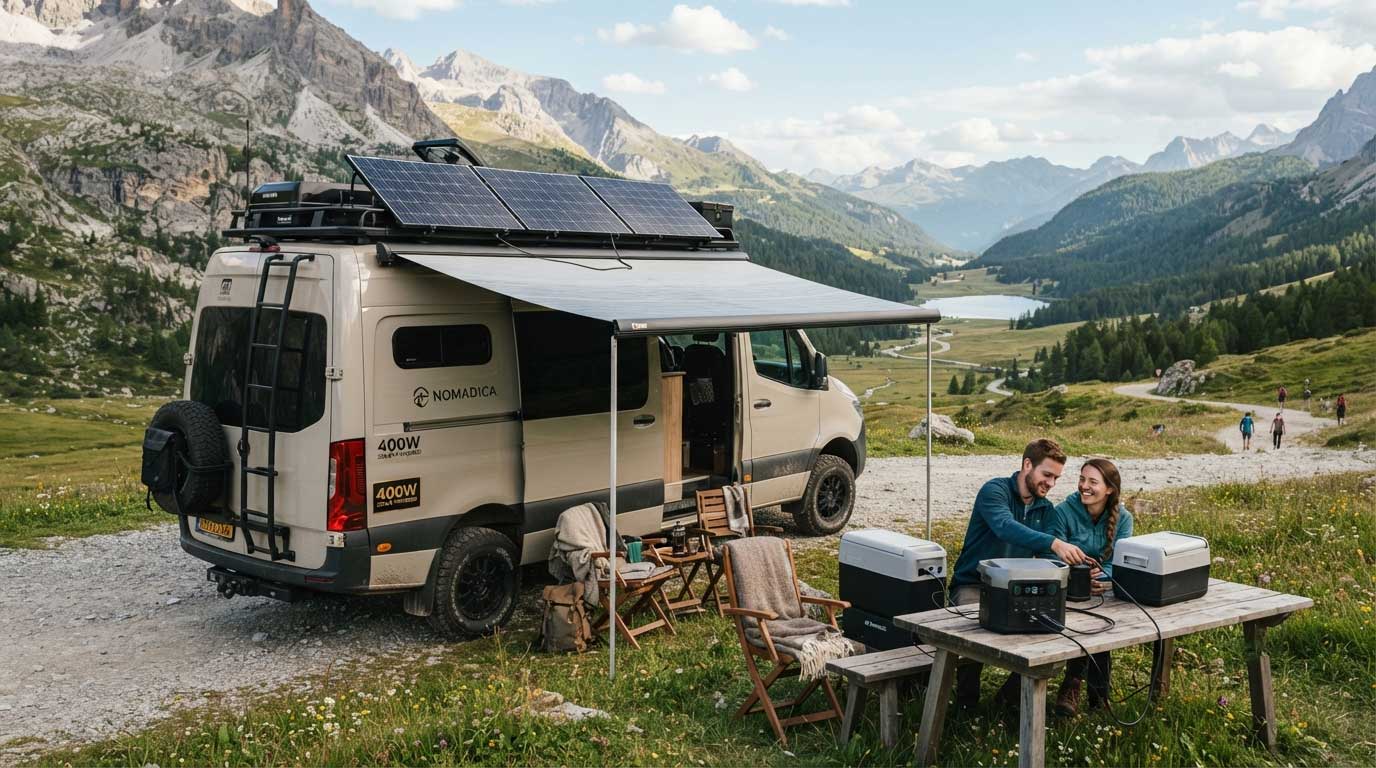
RV users often choose higher wattage panels because roof space is limited.
A 400W solar panel can support:
- Refrigerator operation
- Lighting
- Mobile devices
- Communication equipment
The biggest challenge for RV solar is not only power generation.
It is installation efficiency.
A larger single panel can reduce:
- Wiring complexity
- Mounting points
- Maintenance requirements
Marine solar applications
Boats require lightweight and reliable energy solutions.
A 400W solar panel can help provide power for:
- Navigation systems
- Battery charging
- Marine electronics
For curved surfaces, flexible versions provide additional installation possibilities.
400W Solar Panel Technology at Bright Solar
At Bright Solar, our flexible solar panels products are developed around practical customer requirements.
We work with users who need solar power in challenging environments:
- Outdoor travel
- Marine applications
- Remote locations
- Mobile energy systems
One project involved an outdoor equipment company in Europe.
Their requirement:
Create a portable energy solution without adding excessive weight.
The first design used conventional rigid modules.
The performance was acceptable.
However, transportation and installation created difficulties.
After evaluating the application, a flexible solar solution was introduced.
The final design improved:
| Requirement | Result |
|---|---|
| Installation flexibility | Improved |
| Transportation | Easier |
| Space usage | Optimized |
| Product integration | Better |
This type of feedback helps guide our product development.
Solar technology should adapt to users, not force users to adapt to the technology.
How much power can a 400W solar panel produce?
The actual electricity production of a 400W solar panel depends on sunlight conditions, installation angle, temperature, and system efficiency.
A simple calculation method is:
Daily Energy Output = Solar Panel Wattage × Peak Sun Hours × System Efficiency
For example:
400W × 5 peak sunlight hours × 80% efficiency
≈ 1.6kWh per day
In regions with stronger solar resources, production may be higher.
In areas with frequent cloudy weather, output may decrease.
According to the National Renewable Energy Laboratory (NREL), solar photovoltaic performance is affected by factors including solar radiation, module temperature, shading, and system design.
Source:
National Renewable Energy Laboratory
https://www.nrel.gov/
A typical 400W solar panel may support:
| Device or Application | Suitable Usage |
|---|---|
| LED lighting | Excellent |
| Smartphones and laptops | Excellent |
| Portable power stations | Excellent |
| RV appliances | Good |
| Small refrigerators | Possible |
| Large household appliances | Requires larger system |
How to install a 400W solar panel?
Installation requirements depend on whether the panel is used for:
- Home solar systems
- RV applications
- Marine systems
- Portable energy solutions
At Bright Solar, we recommend evaluating three factors before installation:
- Available space
- Sunlight exposure
- Electrical system compatibility
A high-output panel performs best when the installation environment is properly prepared.
Step 1: Evaluate the installation area
Before installing a 400W solar panel, check:
- Available surface area
- Shadow conditions
- Structural strength
- Panel orientation
For residential rooftops:
South-facing roofs in the Northern Hemisphere usually provide strong solar exposure.
For RVs and boats:
The priority is often maximizing available space rather than achieving perfect orientation.
Step 2: Prepare mounting surface
For rigid panels:
A mounting structure is normally required.
For flexible 400W solar panels:
Installation may be simpler because they can adapt to certain curved surfaces.
Before fixing the panel:
- Clean the surface
- Remove dust and oil
- Confirm the mounting position
- Check cable routing
Poor installation preparation is one of the most common causes of long-term problems.
Step 3: Connect solar components correctly
A typical solar system connection:
400W Solar Panel → Charge Controller → Battery → Inverter → Electrical Devices
Main components:
| Component | Function |
|---|---|
| Solar panel | Generates electricity |
| MPPT controller | Optimizes charging efficiency |
| Battery | Stores energy |
| Inverter | Converts DC power into AC power |
For many 400W applications, MPPT charge controllers are preferred because they can improve energy harvesting under changing sunlight conditions.
Step 4: Monitor system performance
After installation, record:
- Voltage
- Charging current
- Battery status
- Daily energy production
A basic monitoring record helps identify performance changes.
Example:
| Item | Data |
|---|---|
| Panel power | 400W |
| Battery type | Lithium |
| Controller | MPPT |
| Installation date | Recorded |
| Daily production | Monitored |
400W solar panel battery sizing guide
Battery selection depends on how much energy you need to store.
A 400W panel generating approximately 1.6kWh daily can work with different battery capacities depending on usage.
Common combinations:
| Application | Recommended Battery |
|---|---|
| Basic backup | 100Ah lithium |
| RV system | 100Ah–200Ah lithium |
| Off-grid system | 200Ah+ lithium |
For example:
A camper user may combine:
- 400W solar panel
- 100Ah lithium battery
- MPPT controller
This setup can provide reliable energy for:
- Lighting
- Electronics
- Communication equipment
- Small appliances
400W solar panel vs lower wattage solar panels
Choosing solar panel wattage depends on your goals.
| Feature | 100W Panel | 200W Panel | 400W Panel |
|---|---|---|---|
| Output | Low | Medium | High |
| Installation quantity | More panels needed | Moderate | Fewer panels |
| Space efficiency | Lower | Medium | Higher |
| RV suitability | Small systems | Medium systems | Large RV systems |
| Home backup | Limited | Possible | Better |
A 400W solar panel is often selected when users want:
- More energy from limited space
- Fewer panels
- Simpler wiring
- Higher system capacity
Advantages of flexible 400W solar panels
Flexible solar technology creates additional installation opportunities.
Reduced weight
Weight is important for:
- RV roofs
- Boats
- Portable structures
A lighter solar solution can simplify installation and transportation.
Installation flexibility
Traditional solar panels require flat surfaces.
Flexible panels can work better for:
- Curved RV roofs
- Marine surfaces
- Custom equipment
This makes them valuable for applications where standard panels cannot easily fit.
Better integration with mobile products
Many modern energy products are becoming portable.
Examples:
- Mobile power stations
- Adventure vehicles
- Remote monitoring systems
Flexible 400W solar panels can integrate more naturally with these products.
Limitations of a 400W solar panel
Although 400W panels provide strong performance, users should understand their limitations.
Large energy requirements need multiple panels
A single 400W panel cannot power an entire large home independently.
Large residential systems usually require multiple modules combined together.
Performance depends on sunlight
Solar energy production changes with:
- Weather
- Season
- Location
- Installation angle
Solar panels do not generate the same output every day.
Quality affects lifespan
Two 400W panels may have different long-term performance.
Important factors include:
- Cell quality
- Protective materials
- Manufacturing process
- Testing standards
Bright Solar experience: designing practical 400W solar solutions
At Bright Solar, we focus on solving practical energy challenges.
One customer project involved a mobile communication company operating in remote areas.
Their challenge was:
- Limited electricity access
- Difficult transportation
- Need for reliable power
The original solution used traditional equipment.
However, the system created problems:
- Heavy transportation requirements
- Longer setup time
- Limited installation locations
After reviewing the application, the team moved toward a lightweight solar solution.
The improved system provided:
| Improvement | Result |
|---|---|
| Transportation | Easier |
| Installation time | Reduced |
| Energy independence | Increased |
| Maintenance | Simplified |
This project demonstrated that solar design should consider the entire user experience, not only the wattage number.

FAQ About 400W Solar Panel
How much electricity does a 400W solar panel produce?
A 400W solar panel can produce around 1–2kWh per day in suitable sunlight conditions. Actual production depends on location, weather, and installation conditions.
Is a 400W solar panel enough for a home?
A single 400W panel is usually not enough for a complete home but can contribute to backup systems or small solar projects.
Can a 400W solar panel be used for an RV?
Yes. A 400W solar panel is a popular choice for RV users because it provides more energy while using limited roof space.
What battery size works with a 400W solar panel?
Battery size depends on energy usage. Many RV and off-grid systems combine 400W panels with 100Ah–200Ah lithium batteries.
Are flexible 400W solar panels available?
Yes. Flexible 400W solar panels are designed for applications requiring lightweight construction and curved installation surfaces.
How long does a 400W solar panel last?
The lifespan depends on materials, environmental conditions, and product quality. Premium solar panels are designed for many years of outdoor operation.
Why choose Bright Solar 400W solar panels?
Bright Solar focuses on flexible solar technology, customized solutions, and practical applications including RV, marine, and off-grid energy systems.
How Much Does It Cost for One Solar Panel?
How much does it cost for one solar panel? A single solar panel usually costs between $90 and $350, depending on wattage, efficiency, technology, and brand quality. Most residential 400W solar panels are priced around $140–$220 before installation, while premium models can cost more.Learn more about “How Much Does It Cost for One Solar Panel“
How Much Is One Solar Panel?
How much is one solar panel depends on its wattage, technology, efficiency, and application. A single solar panel usually costs between $100 and $350 for standard residential models, while premium and flexible panels can range from $200 to over $700 depending on specifications.Learn more about “How Much Is One Solar Panel“
Conclusion: Is a 400W solar panel the right choice?
A 400W solar panel is a powerful and practical option for users who need higher energy output without installing many smaller modules.
It works especially well for:
- RV solar systems
- Off-grid applications
- Marine energy solutions
- Residential backup power
The key advantage is efficiency of space.
Instead of adding more equipment, users can generate more electricity from fewer panels.
At Bright Solar, we believe solar solutions should be designed around real-world conditions.
A successful solar installation is not only measured by wattage.
It is measured by how well the system fits the user’s daily life.
A properly selected 400W solar panel can provide reliable, clean, and independent energy for years of use.
Related recommendations
-

eco worthy flexible solar panels: Features, Uses and Buying Guide
157ECO-WORTHY flexible solar panels suit selected RV, marine, and off-grid installations where low weight, profile, or curved surfaces matter. Exact model speci...
View details -
flexible solar panel 100w: Lightweight Solar Solution for RV, Marine and Off-Grid Applications
178Discover flexible solar panel 100w solutions from Bright Solar with lightweight design, durable materials, and reliable solar power for RV, marine, camping, and off-grid use.
View details -
Folding Solar Panels for Camping: A Practical Guide to Portable Power
17Folding solar panels provide portable camping power and can be repositioned to capture better sunlight when campsites become shaded.
View details -
Flexible Bifacial Solar Panels: Design, Output and Uses
54Flexible bifacial solar panels generate power from both sides when rear-side irradiance is available, making installation geometry critical to their performa...
View details