Do Solar Panels Work in Cloudy Weather?
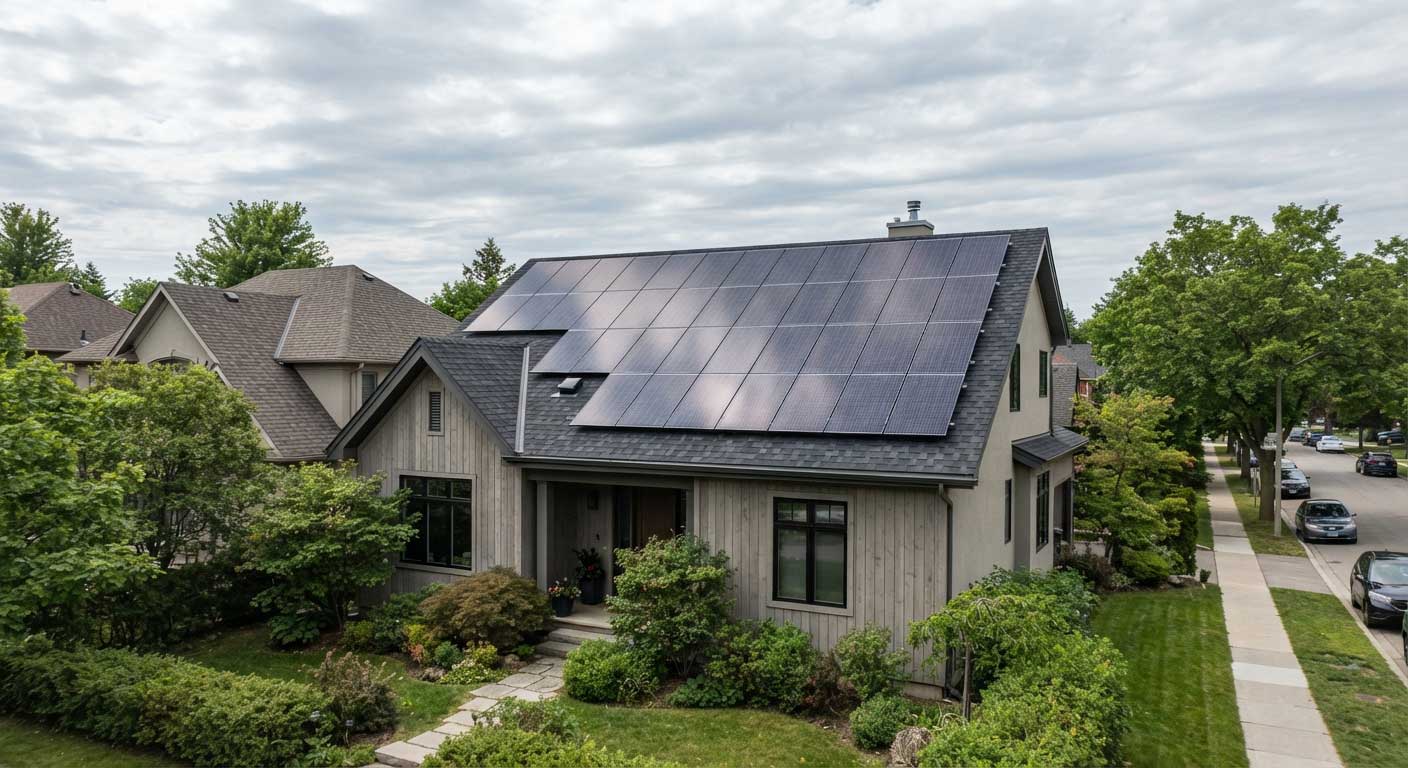
Yes, do solar panels work in cloudy weather? They do. Photovoltaic panels can generate electricity from both direct and diffuse sunlight, so clouds reduce output rather than automatically stopping generation. The actual effect depends on cloud thickness, time of day, season, panel orientation, and the solar resource reaching the module.
How Do Solar Panels Work When It Is Cloudy?
Clouds change the sunlight reaching a solar panel, but they do not necessarily eliminate it.
The U.S. Department of Energy explains that solar radiation reaching the ground includes direct beam radiation and diffuse solar radiation. When sunlight passes through the atmosphere, clouds, water vapor, dust, and other particles scatter or absorb part of it. Under thick clouds, direct beam radiation can be reduced by as much as 100%, while diffuse radiation can still reach the surface.
That is the important detail behind the question do solar panels work in cloudy weather.
A panel does not need a bright, unobstructed blue sky to produce electricity. It needs usable solar radiation.
On a bright overcast morning, the array may still show a meaningful power reading. Under a dark storm cloud, that reading can drop dramatically. When the cloud moves away, production can climb again. The change can happen surprisingly quickly.
NREL treats cloud cover as one of the reasons solar generation is variable and difficult to forecast accurately over short periods. Its solar-resource datasets specifically account for direct and diffuse irradiance under cloudy conditions.
What Happens to Solar Output Under Different Cloud Conditions?
| Weather condition | Typical PV response |
|---|---|
| Thin clouds | Generation continues, often with a moderate reduction |
| Bright overcast | Panels continue producing from available diffuse light |
| Thick clouds | Output can fall substantially |
| Dark storm clouds | Very low production may occur |
| Passing clouds | Output can rise and fall quickly |
| Night | No useful solar generation |
There is no reliable rule such as “cloudy weather means panels produce exactly 20% of rated power.” A weather label is too broad. Irradiance at the module is what actually drives PV production.
Why Cloudy Weather Does Not Mean Zero Solar Energy
A useful way to understand cloudy-day performance is to stop thinking of sunlight as only the bright beam coming directly from the sun.
Diffuse light is spread through the sky after sunlight interacts with atmospheric particles and clouds. DOE describes this scattered component as diffuse solar radiation.
That light can still reach photovoltaic cells.
This also explains why two days described by a weather app as simply “cloudy” can produce very different amounts of electricity. One may have a bright layer of thin cloud. Another may have dense, low cloud for most of the afternoon.
The difference is not cosmetic.
DOE notes that PV module ratings are measured under 1,000 W/m² irradiance and a 25°C cell temperature. Real operating conditions are usually different, and clouds are one of the factors that make the actual solar resource vary.
For that reason, a 100W, 200W, or 400W panel should not be expected to deliver its nameplate wattage continuously. The rated number is a standardized reference point, not an hourly production guarantee.
Does Cloud Cover Affect Solar Panel Efficiency?
Cloud cover primarily affects the amount of solar energy available to the panel. It should not be confused with the module’s rated conversion efficiency.
When irradiance falls, the electrical operating point of a PV module changes. The amount of electricity available from the array therefore falls as the available solar resource falls.
There is another interesting detail: cloudy weather can sometimes produce brief changes that are not as simple as “cloud = lower output.” When sunlight reflects or scatters around cloud edges, irradiance can temporarily behave differently from a uniform overcast condition. For system operators, these rapid changes are one reason short-term solar forecasting is challenging. DOE-funded research has examined the difficulty of predicting direct, diffuse, and global irradiance during changing cloud conditions.
For a homeowner, the practical lesson is simpler: watch the actual production curve, not just the weather icon.
Can Solar Panels Charge Batteries on Cloudy Days?
Yes, if the PV array is producing enough power for the charge controller and battery system.
Charging may be slower because less solar energy is reaching the modules. If household or RV loads are operating at the same time, they may consume much of the available PV power before significant surplus reaches the battery.
This is particularly relevant for:
- RV solar systems
- Marine and boat applications
- Off-grid cabins
- Portable power systems
- Remote monitoring equipment
- Residential solar-plus-storage systems
For these applications, battery capacity and PV capacity need to be considered together. A battery does not compensate for a shortage of solar generation indefinitely; it simply stores energy produced earlier or supplied from another source.
NREL provides tools such as PVWatts and the National Solar Radiation Database for estimating solar production using location-specific solar-resource data rather than relying on a generic “sunny versus cloudy” assumption.
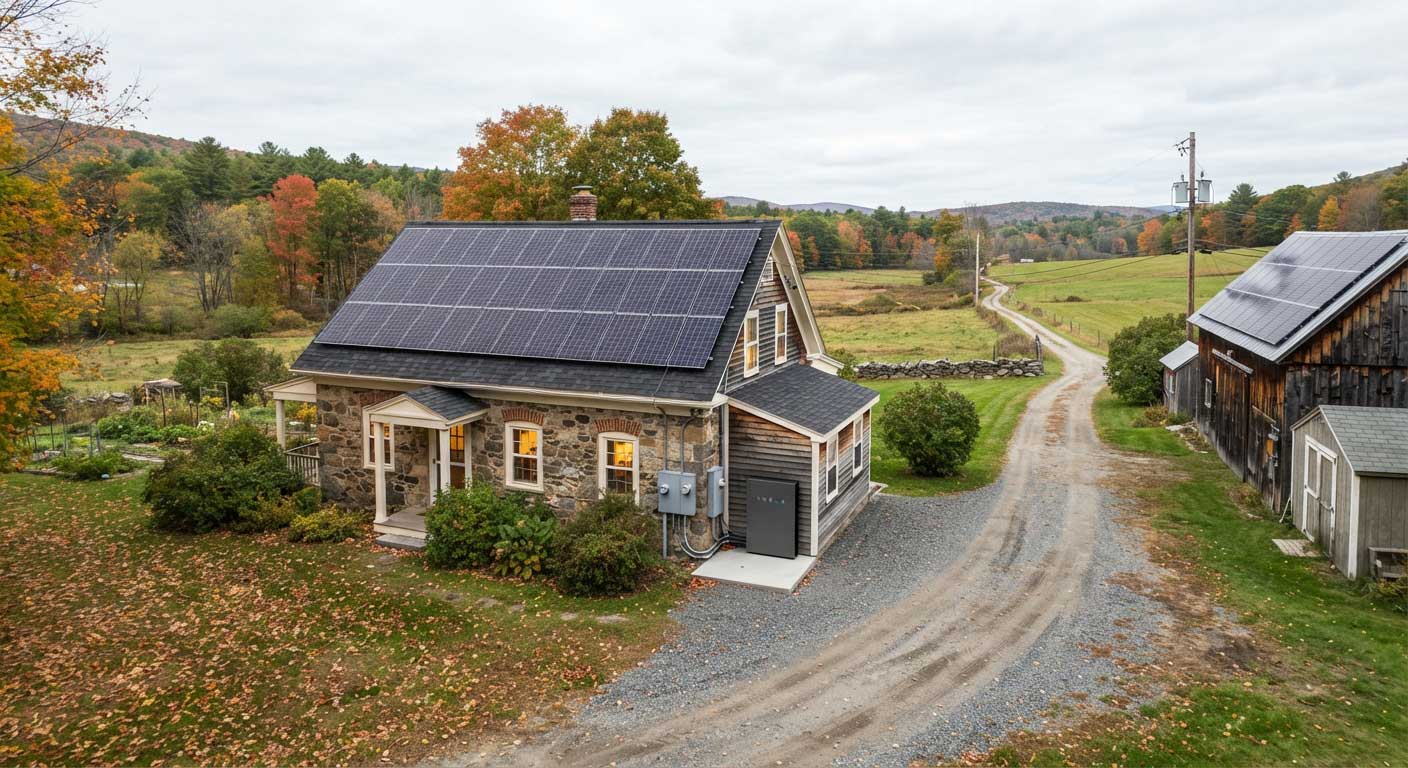
What Factors Affect Solar Panel Performance in Cloudy Weather?
Cloud cover is only one part of the picture.
Time of Day
Solar radiation varies during the day. DOE notes that the sun’s angle changes throughout the day, with solar energy generally strongest around solar noon.
A cloudy noon can therefore behave very differently from a cloudy early morning.
Season and Location
Latitude, season, local climate, and weather patterns all influence the available solar resource. NREL‘s solar databases use geographic and meteorological information to model these differences.
Panel Orientation and Shading
A well-oriented panel can receive more of the available irradiance. Trees, buildings, roof structures, and other obstructions can reduce production further.
Panel Condition
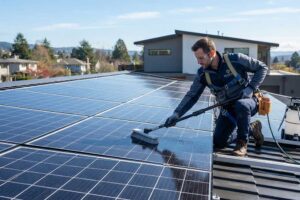
Dust, pollen, bird droppings, and other soiling can compound the reduction caused by cloudy weather. If production remains unusually low after weather improves, the cause may not be the clouds.
For Bright Solar applications, this is especially important when flexible and semi-flexible modules are used on RVs, boats, mobile platforms, or off-grid equipment. Rated power should be treated as a reference under defined test conditions, while system sizing should be based on the actual application and solar resource.
How Can You Tell If Your Solar Panels Are Working on a Cloudy Day?
Check the inverter, charge controller, monitoring platform, or portable power station display.
A useful field check is to record:
- Current PV power in watts
- Daily energy production in kWh
- Battery state of charge
- Approximate cloud conditions
- Time of day
- Any temporary shading
Then compare several days rather than judging the system from one afternoon.
This approach is much more useful than saying, “It was cloudy, so the panels must not be working.” NREL’s PVWatts tool exists specifically to estimate PV energy production using location and system parameters, while its solar-resource databases provide irradiance information for more detailed analysis.
If the array produces almost nothing during a period of bright overcast daylight while similar conditions normally produce measurable output, that is worth investigating. Clouds are an explanation only when the actual solar resource supports it.
FAQ About Do Solar Panels Work in Cloudy Weather?
Do solar panels work in cloudy weather?
Yes. Solar panels can generate electricity from diffuse and direct solar radiation during cloudy weather, although output generally decreases as available irradiance falls.
Do solar panels work on very cloudy days?
Yes, but production can become quite low under dense cloud cover. Thick clouds can greatly reduce direct solar radiation reaching the surface.
Can solar panels charge a battery when it is cloudy?
Yes. If enough PV power is available, the charge controller can continue supplying energy to the battery. Charging will generally take longer when irradiance is low.
Do solar panels work better in cold weather?
Temperature and cloud cover are separate variables. PV modules are rated under specific test conditions, including 25°C cell temperature, while real output depends on irradiance, temperature, and other operating conditions.
Should I install more solar panels if my area is often cloudy?
Potentially, but capacity should be determined using local solar-resource data, energy consumption, available installation area, battery requirements, and system losses. NREL’s PVWatts and solar-resource datasets can support location-specific estimates.
Do solar panels stop working when the sun disappears behind a cloud?
No. They can continue producing from the diffuse light that remains. Output may drop sharply, however, if the cloud is dense enough to reduce irradiance substantially.
Conclusion
Do solar panels work in cloudy weather? Yes. They continue converting available sunlight into electricity, including diffuse radiation scattered through the atmosphere. What changes is the amount of energy available to the modules. For Bright Solar systems, realistic expectations should come from local solar-resource data, system configuration, actual production records, and the application’s energy requirements—not simply whether the day’s forecast says “cloudy.”
The prev: Will Solar Panels Work on a Cloudy Day?The next: Do Solar Panels Make Noise?
Related recommendations
-

How Often to Clean Solar Panels?
250Learn how often to clean solar panels, when washing solar panels is needed, and how proper cleaning improves solar PV performance and long-term energy output.
View details -
How Big Is a Solar Panel?
304How big is a solar panel? Learn standard solar panel dimensions, weights, and sizes for homes, RVs, and off-grid systems with expert guidance from Bright Solar.
View details -
how much do solar panels save?
138Learn how much do solar panels save with real examples, electricity bill reductions, and long-term financial benefits from Bright solar experts.
View details -
How Much To Install Solar Panels On My House?
255How much to install solar panels on my house? Learn real solar installation costs, system factors, and expert advice from Bright Solar for homeowners.
View details