Amorphous Flexible Solar Panel: Thin Film Solar Technology for Lightweight Applications
An amorphous flexible solar panel uses thin-film photovoltaic technology to generate solar power with lightweight and adaptable construction. It performs well in applications where flexibility, low weight, and low-light response are more important than maximum power density.
Unlike conventional crystalline silicon solar panels, amorphous solar technology uses a non-crystalline silicon structure deposited in thin layers. This manufacturing approach creates a different performance profile, making it suitable for portable systems, curved surfaces, specialty electronics, and lightweight energy solutions.
At Bright Solar, we evaluate flexible solar products based on real installation requirements rather than only rated wattage. In mobile and custom applications, the available surface area, weight limitation, environmental conditions, and electrical design often determine whether a solar technology is suitable.
An experienced solar designer does not start with the question:
“How many watts can we fit?”
The better question is:
“What solar technology matches the application conditions?”
For certain projects, an amorphous flexible solar panel provides advantages that traditional rigid modules cannot easily achieve.
What Is an Amorphous Flexible Solar Panel?
An amorphous flexible solar panel is a type of thin-film solar module that uses amorphous silicon (a-Si) as the photovoltaic material.
The word “amorphous” means the silicon atoms do not form the same ordered crystal structure found in crystalline silicon solar cells.
Instead, manufacturers deposit extremely thin silicon layers onto flexible substrates.
The basic structure usually includes:
- Flexible substrate layer
- Thin-film amorphous silicon photovoltaic layer
- Protective coating
- Electrical connections
Because the active photovoltaic material is extremely thin, these panels can be manufactured with reduced weight compared with traditional glass solar modules.
The U.S. Department of Energy explains that thin-film photovoltaic technologies use semiconductor materials deposited in thin layers, allowing different manufacturing approaches compared with conventional silicon wafer-based modules.
Source:
https://www.energy.gov/
How Does an Amorphous Flexible Solar Panel Work?
The working principle is similar to other photovoltaic technologies.
When sunlight reaches the solar cell:
- Photons from sunlight enter the semiconductor layer.
- Energy from photons excites electrons.
- Electrical current is created.
- The current is collected and converted into usable electricity.
The difference is the solar material structure.
Traditional crystalline silicon panels use silicon wafers with organized crystal structures.
Amorphous silicon uses a disordered silicon network.
This difference affects:
- Efficiency
- Temperature behavior
- Manufacturing process
- Application suitability
Amorphous flexible solar panels are not designed to compete only through maximum efficiency.
Their value often comes from:
- Lightweight design
- Manufacturing flexibility
- Better adaptation to unusual surfaces
Advantages of Amorphous Flexible Solar Panels
1. Lightweight Solar Solution for Special Applications
Weight is often the first reason engineers consider thin-film flexible solar technology.
In applications such as:
- Portable charging systems
- Emergency power equipment
- Outdoor sensors
- Mobile structures
every kilogram matters.
A traditional framed solar panel requires:
- Glass protection
- Aluminum frame
- Rigid mounting structure
An amorphous flexible solar panel can eliminate some of these heavy components.
This creates opportunities for applications where conventional modules are impractical.
2. Better Performance Characteristics Under Certain Lighting Conditions
One interesting characteristic of amorphous silicon technology is its ability to maintain solar generation under lower light conditions compared with some crystalline technologies.
This does not mean it produces maximum energy in every environment.
Solar output still depends on:
- Sun intensity
- Temperature
- Installation angle
- System design
However, for applications with changing light conditions, this characteristic can be valuable.
Examples include:
- Outdoor monitoring equipment
- Portable devices
- Building-integrated applications
3. Flexible Design Possibilities
Many solar installations are limited by physical shape.
Examples:
- Curved vehicle roofs
- Portable equipment surfaces
- Irregular outdoor structures
A flexible solar module can provide additional design options.
However, flexibility must always follow manufacturer specifications.
Flexible does not mean unlimited bending.
Excessive folding or sharp bending may damage internal electrical connections.
Amorphous Flexible Solar Panel vs Crystalline Flexible Solar Panel
Different solar technologies have different strengths.
| Feature | Amorphous Flexible Solar Panel | Crystalline Flexible Solar Panel |
|---|---|---|
| Solar material | Amorphous silicon thin film | Monocrystalline silicon cells |
| Weight | Generally lightweight | Lightweight depending on design |
| Efficiency | Usually lower than crystalline | Usually higher |
| Low-light response | Strong characteristic | Depends on cell design |
| Manufacturing | Thin-film deposition | Silicon wafer technology |
| Best use | Specialty lightweight applications | Higher power flexible systems |
Choosing between technologies depends on project goals.
A camper owner looking for maximum watts from limited roof space may prefer high-efficiency crystalline flexible panels.
A designer building lightweight portable equipment may prioritize thin-film characteristics.
Where Are Amorphous Flexible Solar Panels Used?
Amorphous flexible solar technology is used in applications where traditional solar modules are difficult to install.
Common applications include:
Portable Solar Systems
Portable energy systems benefit from reduced weight.
Examples:
- Camping equipment
- Emergency power kits
- Field communication devices
Off-Grid Monitoring Equipment
Remote equipment often requires reliable low-maintenance power.
Examples:
- Environmental sensors
- Security monitoring devices
- Remote data collection systems
Curved Surface Solar Applications
Some structures cannot easily support Rigid Solar Panels.
Examples:
- Specialty vehicles
- Outdoor equipment
- Architectural surfaces
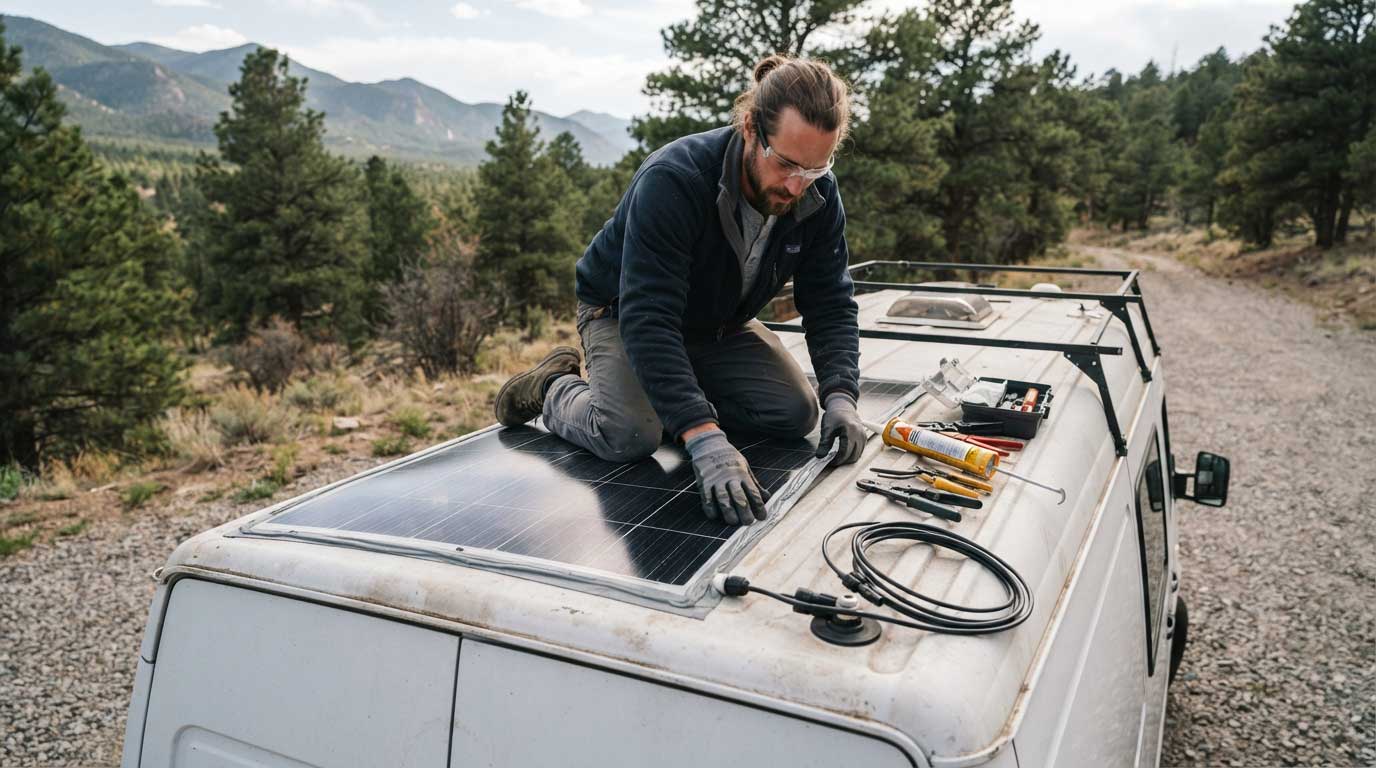
Amorphous Flexible Solar Panel Installation Considerations
Installation quality directly affects system performance.
Before installation, consider:
Surface Compatibility
Check:
- Surface material
- Heat exposure
- Weather conditions
- Mounting method
A solar panel installed on an unsuitable surface may experience premature failure.
Electrical Matching
The solar panel must match:
- Charge controller voltage range
- Battery requirements
- Wiring design
- Power management system
A complete solar solution includes more than the panel itself.
Environmental Conditions
Outdoor solar products experience:
- UV exposure
- Rain
- Temperature changes
- Dust
- Mechanical stress
For this reason, protective materials and manufacturing quality are critical.
Real Application Example: Lightweight Solar Design
A practical example from mobile energy applications involved designing a solar solution where the main limitation was not sunlight availability but installation weight.
The equipment needed continuous outdoor operation while remaining easy to transport.
A traditional glass solar module created several challenges:
- Higher carrying weight
- Additional mounting requirements
- Limited installation flexibility
The design team evaluated thin-film flexible technology because the application required:
- Low weight
- Simple integration
- Reliable energy generation
The final approach focused on balancing power output with mobility.
The result showed an important lesson:
The best solar technology is not always the one with the highest laboratory efficiency.
It is the one that fits the real operating environment.
How to Select the Right Amorphous Flexible Solar Panel
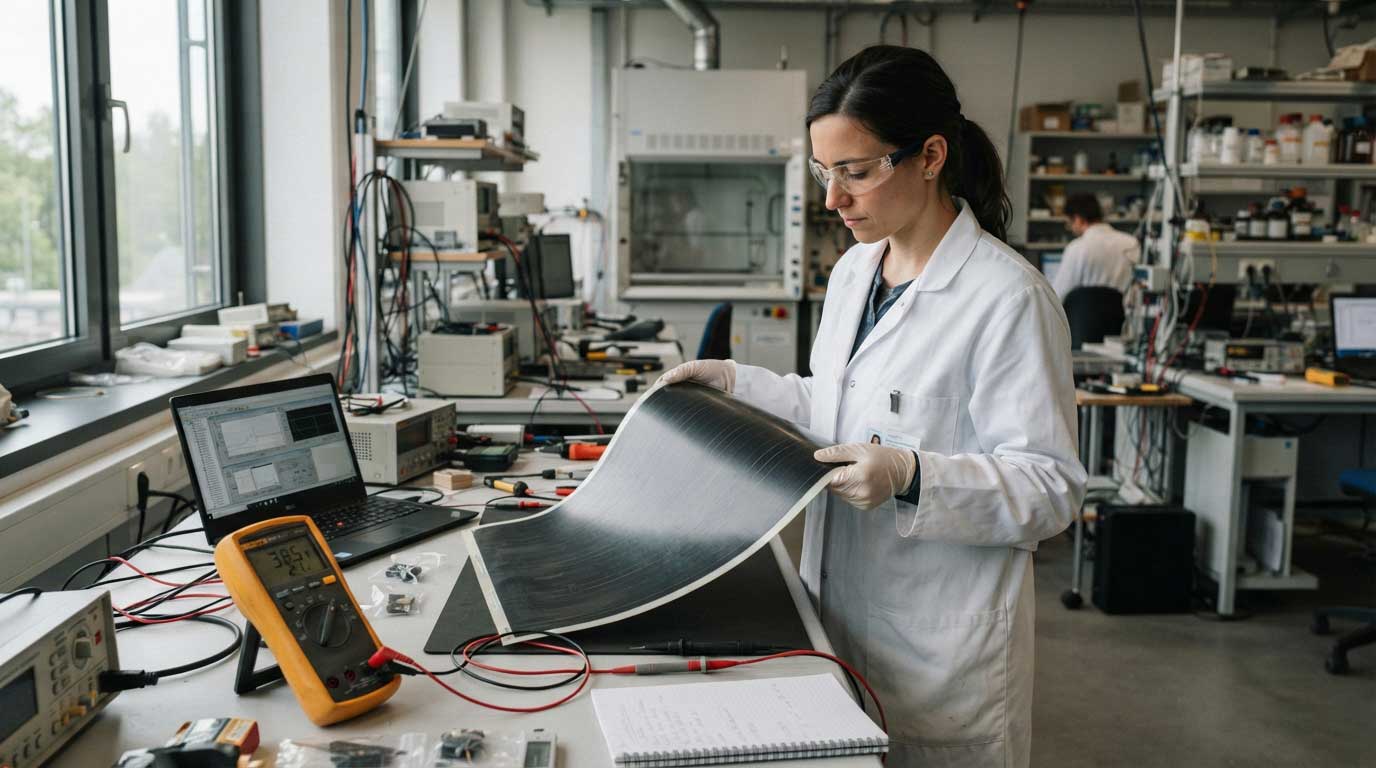
Choosing an amorphous flexible solar panel requires understanding the actual operating conditions instead of selecting a product only by appearance or price.
For engineering teams and system integrators, several technical points should be reviewed before finalizing a solar solution.
1. Evaluate Required Power Output
The first step is calculating the energy requirement.
A small monitoring device may only need several watts per day, while a portable power system may require hundreds of watts.
Important factors include:
- Daily energy consumption
- Operating hours
- Battery capacity
- Available sunlight
- Backup requirements
For example:
A remote sensor operating continuously may prioritize reliability and low-light performance.
A camper electrical system may prioritize higher watt output because it needs to power multiple devices.
The solar panel should be selected according to the application, not simply the panel rating.
2. Check Panel Dimensions and Installation Area
Flexible solar projects often involve limited installation space.
Before choosing a panel, measure:
- Available surface area
- Mounting location
- Cable routing distance
- Potential shading areas
A larger panel does not always mean a better solution.
A correctly sized panel that fits the installation surface can outperform a larger panel installed in an unsuitable position.
3. Understand Temperature Effects
Solar modules operate outdoors, and temperature affects electrical performance.
According to the National Renewable Energy Laboratory (NREL), photovoltaic module performance changes with environmental conditions including temperature, irradiance, and system design.
Source:
https://www.nrel.gov/
For flexible solar applications, consider:
- Operating temperature range
- Heat exposure
- Ventilation conditions
- Installation material
Vehicles, rooftops, and outdoor equipment can experience significant temperature changes throughout the day.
How Bright Solar Approaches Flexible Solar Panel Design
At Bright Solar, flexible solar projects are evaluated from the perspective of actual use conditions.
A solar panel installed on a vehicle, marine structure, or portable system faces different challenges from a residential rooftop.
During project discussions, several practical details usually determine the final design:
- How much available surface area exists?
- How much weight can the structure support?
- What weather conditions will the panel experience?
- How will the user maintain the system?
In real installations, small details often decide long-term reliability.
For example, a panel that fits perfectly on paper may create problems if:
- Cable routing is difficult
- The surface preparation is poor
- The controller is incorrectly sized
A successful solar solution considers the complete system.
Maintenance Tips for Amorphous Flexible Solar Panels
Although solar panels require limited maintenance, regular inspection helps protect long-term performance.
Cleaning the Surface
Dust, pollen, and environmental contamination can reduce sunlight reaching the photovoltaic layer.
Recommended maintenance:
- Inspect the panel surface regularly
- Remove accumulated dirt
- Check for physical damage
Cleaning frequency depends on the environment.
A desert installation may require more frequent cleaning than a rainy coastal location.
Checking Connections
Electrical connections should be inspected periodically.
Check:
- Cable condition
- Connector protection
- Signs of moisture
- Mounting stability
Outdoor equipment experiences vibration and weather changes, especially in mobile applications.
Monitoring System Performance
Performance monitoring helps identify problems early.
Useful data includes:
- Charging current
- Battery voltage
- Daily energy production
- Controller status
A sudden drop in output may indicate:
- Shading
- Connection issues
- Surface contamination
- Component problems
Common Applications Compared
| Application | Why Amorphous Flexible Solar Panels Fit |
|---|---|
| Portable power equipment | Lightweight and easy integration |
| Outdoor sensors | Suitable for long-term remote operation |
| Specialty vehicles | Adaptable installation possibilities |
| Emergency systems | Simple transport and deployment |
| Custom solar projects | Flexible design options |
Future Development of Amorphous Flexible Solar Technology
Solar technology continues to develop toward lighter, more adaptable energy solutions.
Future flexible solar applications are expected to focus on:
- Improved material performance
- Better durability
- More integration possibilities
- Wider use in mobile systems
The demand for lightweight energy solutions continues growing because modern equipment increasingly requires independent power sources.
From outdoor electronics to mobile energy systems, flexible solar technology provides designers with more choices.
FAQ About Amorphous Flexible Solar Panels
What is an amorphous flexible solar panel?
An amorphous flexible solar panel is a thin-film photovoltaic module that uses amorphous silicon technology. It is designed for applications where lightweight construction and installation flexibility are important.
Are amorphous flexible solar panels efficient?
Amorphous flexible solar panels generally have lower efficiency than many crystalline silicon panels, but they offer advantages in flexibility, weight, and certain application conditions.
Can amorphous flexible solar panels work in low light?
Yes, amorphous silicon technology is known for maintaining solar generation under some lower-light conditions. However, actual output still depends on environmental factors.
Are amorphous flexible solar panels suitable for RVs?
They can be suitable for certain RV applications, especially when lightweight design and flexible installation are priorities. System requirements should be evaluated before selection.
How long do flexible solar panels last?
The lifespan depends on materials, manufacturing quality, installation method, and outdoor exposure. Proper installation and maintenance can help improve long-term reliability.
Can flexible solar panels be bent?
Flexible solar panels can handle limited bending according to manufacturer specifications. They should not be folded or sharply bent beyond the recommended bending radius.
Conclusion
An amorphous flexible solar panel provides a unique approach to solar power by combining thin-film technology with lightweight and adaptable design. While it may not always deliver the highest efficiency compared with crystalline solar modules, it offers valuable advantages for specialized applications.
For portable systems, curved surfaces, and lightweight energy solutions, amorphous flexible solar technology creates new installation possibilities.
Bright Solar focuses on developing practical solar solutions that consider real-world conditions, helping customers select technologies that match their application requirements.
Related recommendations
-

Cheap Flexible Solar Panels: Cost, Quality, and Buying Guide
117Cheap flexible solar panels can reduce upfront cost, but the lowest price does not always mean the lowest total project cost. Buyers should compare specifica...
View details -
Folding Solar Panels for Camping: A Practical Guide to Portable Power
15Folding solar panels provide portable camping power and can be repositioned to capture better sunlight when campsites become shaded.
View details -
Solar Panel Series vs Parallel: Which Wiring Setup Works Better?
237Compare solar panel series vs parallel wiring for RVs, boats, and off-grid systems. Learn efficiency, shading, voltage, and real installation tips.
View details -
Mounting Solar Panels on RV: Complete Installation Guide for Secure Solar Power
201Mounting solar panels on RV made simple. Learn installation methods, brackets, flexible panels, waterproofing tips, and expert solutions from Bright Solar.
View details