Solar Panel Flexible: A Practical Guide to Lightweight Solar Power
Solar panel flexible technology provides lightweight, durable, and space-efficient solar energy for RVs, boats, campervans, portable power systems, and off-grid applications. Unlike traditional rigid modules, flexible solar panels can adapt to curved surfaces, reduce installation weight, and simplify deployment while maintaining reliable energy production.
For years, solar panels were associated with glass, aluminum frames, and heavy rooftop installations.
That picture is changing.
At Bright Solar, we have watched flexible solar technology evolve from a niche product used mainly by sailors into a mainstream solution for mobile energy systems. Today, flexible panels appear on luxury motorhomes, commercial service vehicles, expedition trucks, and even remote environmental monitoring stations.
One customer joked during a campervan installation:
“I spent weeks finding ways to save weight, then almost put 40 kilograms of glass on the roof.”
The comment was funny.
The engineering concern behind it was not.
Weight, space, and installation flexibility have become just as important as wattage for many modern solar users.
What Is Solar Panel Flexible Technology?
A solar panel flexible design replaces traditional tempered glass and rigid aluminum framing with lightweight composite materials and advanced polymers.
The photovoltaic cells remain similar to those used in conventional panels.
The structure changes dramatically.
Flexible solar panels are designed to:
- Bend slightly without damaging solar cells
- Conform to curved mounting surfaces
- Reduce overall system weight
- Simplify installation
- Expand installation possibilities
This flexibility creates opportunities where rigid panels often struggle.
Common applications include:
- RV roofs
- Campervans
- Sailboats
- Portable charging systems
- Emergency power stations
- Remote monitoring equipment
In many cases, flexibility is not simply convenient.
It is necessary.
Why Flexible Solar Panels Are Growing Faster Than Ever
The solar industry is expanding beyond rooftops.
Energy is becoming mobile.
According to the International Energy Agency (IEA), solar photovoltaic deployment continues to accelerate globally as energy systems become more decentralized and diversified.
Reference Source:
https://www.iea.org
That trend is visible in everyday life.
People increasingly want power while:
- Traveling
- Camping
- Sailing
- Working remotely
- Exploring off-grid locations
Traditional solar panels were designed primarily for buildings.
Flexible solar panels were designed for movement.
That distinction explains much of their growing popularity.
How Solar Panel Flexible Designs Differ from Traditional Panels
The differences become obvious when comparing key characteristics.
| Feature | Flexible Solar Panels | Traditional Glass Panels |
|---|---|---|
| Weight | Very Low | High |
| Curved Surface Installation | Excellent | Limited |
| Transportability | High | Moderate |
| Structural Load | Low | High |
| Installation Complexity | Lower | Moderate |
| Roof Adaptability | Excellent | Limited |
Weight savings are often substantial.
A typical 100W glass panel may weigh between 6 and 9 kg.
A flexible equivalent often weighs only 2 to 3 kg.
For multi-panel systems, the reduction becomes significant.
Especially on vehicles.
Real-World Case Study: Flexible Solar on an Adventure Camper
A Bright Solar customer from Colorado converted a Mercedes Sprinter into a long-distance expedition vehicle.
The original design called for:
- Four glass solar panels
- Roof rack
- Storage box
- Air conditioning system
After calculating total roof load, the vehicle approached weight limits faster than expected.
The installer recommended a solar panel flexible solution instead.
Results after installation:
| Metric | Original Plan | Flexible Panel System |
|---|---|---|
| Roof Solar Weight | 32 kg | 11 kg |
| Installation Time | Estimated 2 Days | 1 Day |
| Roof Clearance Issues | Multiple | Minimal |
| Vehicle Handling | Baseline | Improved |
The owner later reported something interesting.
The greatest benefit was not energy production.
It was confidence.
The lighter roof system made the vehicle feel more stable on winding mountain roads.
That practical advantage rarely appears in product specifications.

Flexible Solar Panels for RV Applications
The RV market has become one of the largest users of flexible solar technology.
Space limitations create constant challenges.
Typical RV roofs already contain:
- Skylights
- Roof vents
- Air conditioning units
- Satellite equipment
- Storage racks
Flexible panels help installers work around these obstacles.
Instead of requiring large uninterrupted surfaces, panels can often fit into irregular spaces.
This improves overall roof utilization.
For many RV owners, flexibility creates more usable solar capacity without increasing roof size.
Why Weight Matters on RV Roofs
Every kilogram added above the vehicle’s center of gravity affects:
- Stability
- Fuel efficiency
- Handling
- Payload capacity
Flexible panels help minimize those impacts.
For long-distance travelers, that advantage becomes increasingly valuable.
Marine Applications: Where Solar Panel Flexible Technology Excels
Marine installations present unique engineering challenges.
Saltwater.
Vibration.
Limited mounting surfaces.
Constant movement.
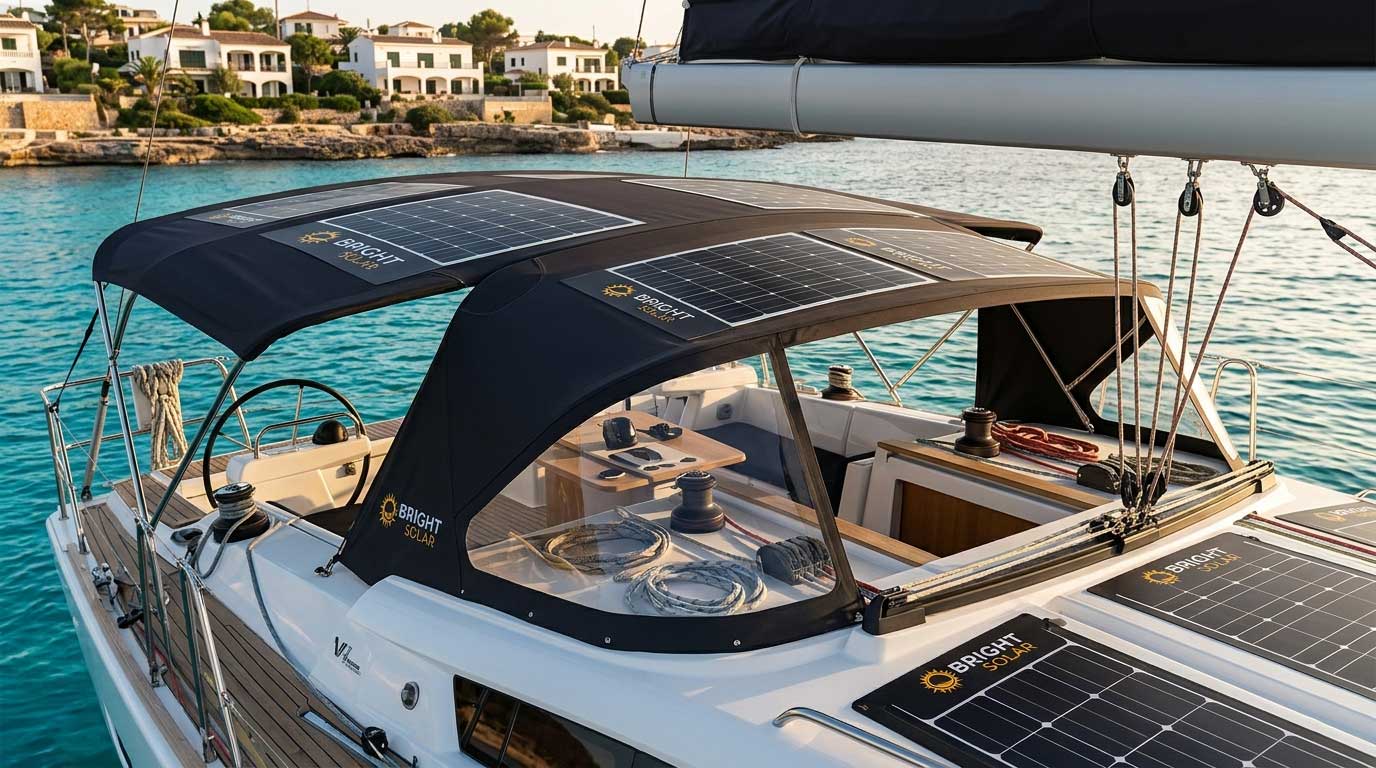
Traditional solar panels can perform well on boats, but flexible panels often simplify installation significantly.
Common marine applications include:
- Battery charging
- Navigation systems
- Lighting
- Refrigeration
- Communications equipment
A flexible panel mounted directly onto a curved deck often requires less hardware than a rigid alternative.
Fewer components usually mean fewer potential failure points.
How Efficient Are Flexible Solar Panels?
One of the oldest myths in the industry is that flexible panels are inefficient.
That was sometimes true years ago.
It is far less accurate today.
Many modern flexible panels use high-efficiency monocrystalline cells exceeding 22% cell efficiency.
The National Renewable Energy Laboratory (NREL) continues to document efficiency improvements across photovoltaic technologies.
Reference Source:
https://www.nrel.gov
Performance depends on several factors:
- Cell quality
- Sunlight exposure
- Temperature
- Installation method
- Ventilation
In real-world use, placement often influences performance more than panel flexibility itself.
A perfectly positioned flexible panel may outperform a poorly installed rigid panel.
The Hidden Challenge: Heat Management
This topic deserves more attention.
Flexible panels often sit closer to mounting surfaces than framed modules.
That can reduce airflow.
Reduced airflow increases operating temperature.
Higher temperatures reduce solar efficiency.
Experienced installers compensate by:
- Choosing cooler mounting locations
- Improving ventilation paths
- Avoiding excessive adhesive coverage
- Monitoring heat accumulation
One marine installer described solar performance in a single sentence:
“Sunlight creates power. Heat steals it.”
Years of field experience suggest he was right.
Durability: Are Flexible Solar Panels Reliable?
Modern flexible solar panels are far more durable than early generations.
Quality products are engineered to withstand:
- UV exposure
- Rain
- Snow
- Salt spray
- Vibration
- Thermal cycling
The International Electrotechnical Commission (IEC) publishes environmental testing standards widely used throughout the solar industry.
Reference Source:
https://www.iec.ch
Durability depends heavily on manufacturing quality.
Premium materials matter.
Installation quality matters even more.
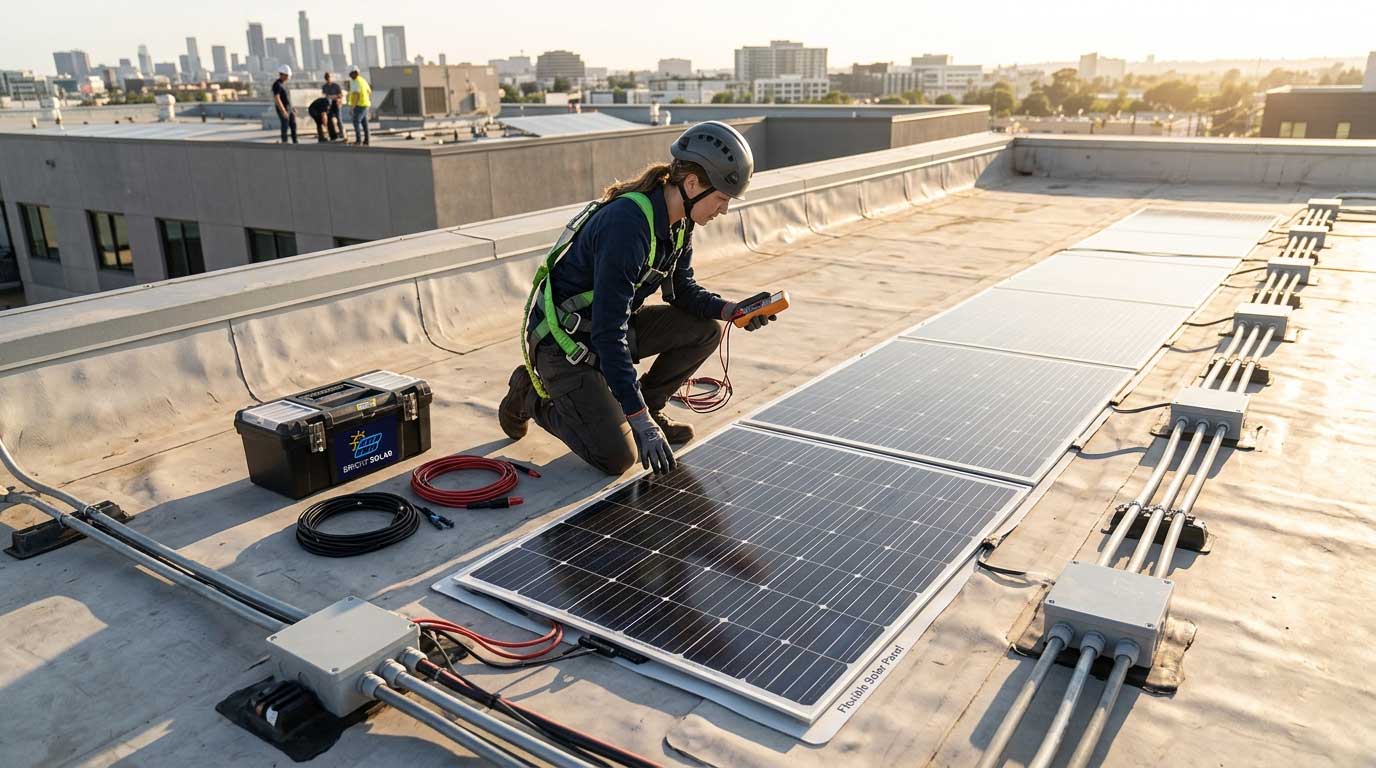
Many system failures originate from poor wiring rather than solar cells.
That pattern appears repeatedly during field inspections.
Flexible Solar Panels vs Rigid Solar Panels
The question is not which technology is universally better.
The question is which technology fits the project.
| Factor | Flexible Panels | Rigid Panels |
|---|---|---|
| Weight | Excellent | Moderate |
| Curved Surfaces | Excellent | Limited |
| Portability | Excellent | Moderate |
| Structural Strength | Moderate | Excellent |
| Installation Flexibility | Excellent | Moderate |
| Residential Rooftops | Good | Excellent |
Most mobile applications favor flexible panels.
Most fixed residential systems still favor rigid panels.
The best solution depends on context.
Not marketing claims.
FAQ About Solar Panel Flexible Systems
Are flexible solar panels waterproof?
Most outdoor-rated flexible panels are designed to withstand rain and outdoor weather conditions when properly installed.
Can flexible solar panels be mounted on curved surfaces?
Yes. Their ability to conform to slightly curved surfaces is one of their primary advantages.
Are flexible solar panels suitable for boats?
Absolutely. Marine environments are among the most common applications for flexible solar technology.
Do flexible solar panels last as long as rigid panels?
High-quality flexible panels can provide many years of reliable service, though lifespan depends on materials, installation, and environmental conditions.
Are flexible solar panels worth the investment?
For weight-sensitive and space-constrained applications, flexible panels often provide advantages that rigid panels cannot easily match.
Final Thoughts on Solar Panel Flexible Technology
The growth of solar panel flexible solutions reflects a broader shift in how people use energy.
Solar is no longer confined to rooftops.
It travels.
It moves.
It powers equipment far from traditional infrastructure.
At Bright Solar, we have seen flexible panels installed on:
- Campervans crossing Europe
- Offshore yachts
- Mobile workstations
- Remote monitoring stations
- Expedition vehicles
Every project is different.
The common challenge is usually the same:
Limited space.
Limited weight capacity.
Unlimited demand for reliable power.
That is exactly where solar panel flexible technology continues to prove its value.
Related recommendations
-

Best Semi Flexible Solar Panel: How to Choose the Right One
120The best semi-flexible solar panel matches the surface curvature, power needs, weight, electrical ratings, and installation environment.
View details -
Solar Roof Tile Solutions from Bright Solar for Modern Homes
247Solar Roof Tile from Bright Solar combines power generation and roofing in one, offering a discreet alternative to traditional solar panels while protecting your home and reducing electricity bills.
View details -
best solar panels for rv (Real Off-Grid Field Guide from Bright Solar)
119best solar panels for rv explained with real camping data, off-grid RV cases, installation insights, and efficiency tips for reliable mobile solar power systems.
View details -
Enphase Expands Mini Inverter Deployment in Southern California
284Enphase expands Mini inverter deployment in Southern California, with more homes adopting IQ8 Microinverters and IQ Batteries to prepare for summer outages. Local installers from Anaheim to Riverside share how sunlight-only backup and flexible sys...
View details