50w flexible solar panel: Lightweight Solar Solution for RV, Camping and Portable Power Applications
A 50w flexible solar panel is a lightweight photovoltaic module designed to provide reliable solar energy in compact spaces. It is ideal for RVs, camping equipment, boats, portable power systems, and small off-grid applications where traditional rigid panels are difficult to install.
At Bright Solar, we have tested flexible solar products in different environments, from outdoor camping equipment to customized mobile energy systems. Through these projects, we found that small solar panels are not simply about producing electricity — they are about delivering usable power where installation space, weight, and mobility are limited.
A customer installing solar on a compact camper once told our team, “The biggest problem was not finding sunlight. It was finding enough roof space without adding weight.”
That sentence represents why flexible solar technology continues to grow.
A well-designed 50w flexible solar panel offers a practical balance between portability, durability, and energy generation.
What is a 50w flexible solar panel?
A 50w flexible solar panel is a photovoltaic module rated to produce up to 50 watts of power under Standard Test Conditions (STC). Unlike traditional glass solar panels, flexible solar modules use lightweight materials that allow them to adapt to curved or irregular surfaces.
The product structure usually includes:
| Component | Function |
|---|---|
| Monocrystalline solar cells | Convert sunlight into electricity |
| ETFE surface layer | Protects against UV exposure and scratches |
| Flexible backing material | Allows lightweight installation |
| Conductive circuits | Transfers electrical energy |
| Junction box | Provides electrical connection |
According to the National Renewable Energy Laboratory (NREL), photovoltaic performance depends on multiple factors, including solar irradiance, temperature, module design, and installation conditions.
This means the rated 50W output is only one part of the performance equation.
A small flexible panel installed on the correct surface can sometimes provide better practical value than a larger rigid panel that cannot fit the application.
Why choose a 50w flexible solar panel instead of a rigid solar panel?
When people search for a small solar panel, they often compare wattage first.
However, after working with customers across different markets, we noticed that the deciding factors are usually:
- Available installation area
- Total system weight
- Surface shape
- Transportation requirements
- Installation difficulty
A 50W flexible solar panel provides several advantages.
Lightweight design for portable solar applications
The biggest advantage of flexible solar technology is weight reduction.
Traditional rigid solar panels normally require:
- Glass protection
- Aluminum frames
- Mounting brackets
Flexible panels remove these heavy components.
This makes them suitable for:
- Backpacking solar kits
- Camping equipment
- Small boats
- RV auxiliary power
- Portable battery charging
For outdoor users, carrying less weight directly improves usability.
A portable energy system that is technically powerful but difficult to transport often remains unused.
Fits curved and limited installation spaces
Many real-world surfaces are not designed for traditional solar panels.
Examples include:
- RV curved roofs
- Boat decks
- Outdoor equipment covers
- Portable shelters
A flexible 50W solar panel can follow these surfaces more naturally.
This is especially useful for users who want permanent solar charging without modifying the original structure.
How much power can a 50w flexible solar panel generate?
A 50w flexible solar panel can generate different amounts of electricity depending on sunlight conditions, location, temperature, and system efficiency.
The basic calculation is:
Daily Energy Output = Panel Wattage × Peak Sun Hours × System Efficiency
Example:
50W × 5 peak sun hours × 80% efficiency
= approximately 200Wh per day
Actual results depend on:
- Weather conditions
- Installation angle
- Shading
- Controller efficiency
- Battery capacity
The U.S. Department of Energy Solar Energy Technologies Office explains that solar system output varies depending on geographic location, solar resources, system orientation, and equipment performance.
A 50W flexible panel is generally designed for low-power applications rather than powering an entire household.
Typical applications include:
| Application | Supported Equipment |
|---|---|
| Camping | Phones, GPS devices, lights |
| RV | Battery maintenance, small electronics |
| Marine | Sensors, navigation accessories |
| Remote monitoring | Small communication devices |
Technical advantages of Bright Solar 50w flexible solar panel
At Bright Solar, flexible solar panel development focuses on solving practical installation problems.
A product may look simple from the outside, but internal design determines reliability.
High-efficiency monocrystalline cells
Modern flexible solar panels commonly use monocrystalline cells because they provide better conversion efficiency compared with older photovoltaic technologies.
For small panels, efficiency becomes particularly important.
A 50W module has limited surface area. Higher-efficiency cells help maximize power generation without increasing size.
Benefits include:
- Better energy output per area
- Compact design
- Reduced installation footprint
- Easier integration into portable systems
Durable ETFE protection layer
Outdoor solar panels experience:
- Strong sunlight
- Rain exposure
- Dust accumulation
- Temperature changes
Bright Solar flexible solar solutions use protective surface materials designed for outdoor environments.
ETFE coating provides advantages including:
- UV resistance
- Light transmission
- Scratch resistance
- Surface protection
This is especially valuable for marine and camping applications where replacing equipment is inconvenient.
50w flexible solar panel applications in real projects
Camping and outdoor adventure
Camping users often need simple and reliable charging solutions.
A 50W flexible solar panel can connect with:
- Portable power stations
- USB charging systems
- Small battery packs
Compared with carrying fuel generators, solar systems provide silent and clean energy.
For backpackers and outdoor travelers, weight is often more important than maximum power output.
RV auxiliary charging
Many RV users already have battery systems but need additional charging capability.
A small flexible solar panel can help maintain:
- Leisure batteries
- Communication devices
- Lighting systems
For compact camper designs, installation flexibility is often more valuable than installing the largest possible panel.
Marine equipment
Small boats often require electricity for:
- GPS equipment
- Sensors
- Communication devices
- Battery maintenance
Flexible solar panels work well because marine surfaces are often curved and space is limited.

Real customer experience: Small solar panels solving big installation problems
One Bright Solar application involved a European outdoor equipment company developing compact emergency power kits.
The customer did not need a large solar system.
Their requirements were:
- Easy transportation
- Low weight
- Quick deployment
- Reliable battery charging
The first design considered rigid solar panels.
However, during testing, several issues appeared:
- The rigid structure increased package size.
- Transportation costs increased.
- Users found deployment inconvenient.
The flexible solar solution reduced these problems.
Final project improvements:
| Category | Result |
|---|---|
| Product weight | Reduced |
| Storage space | Improved |
| User deployment | Faster |
| Application flexibility | Increased |
The project demonstrated an important point:
For portable energy products, usability often determines success more than maximum theoretical output.
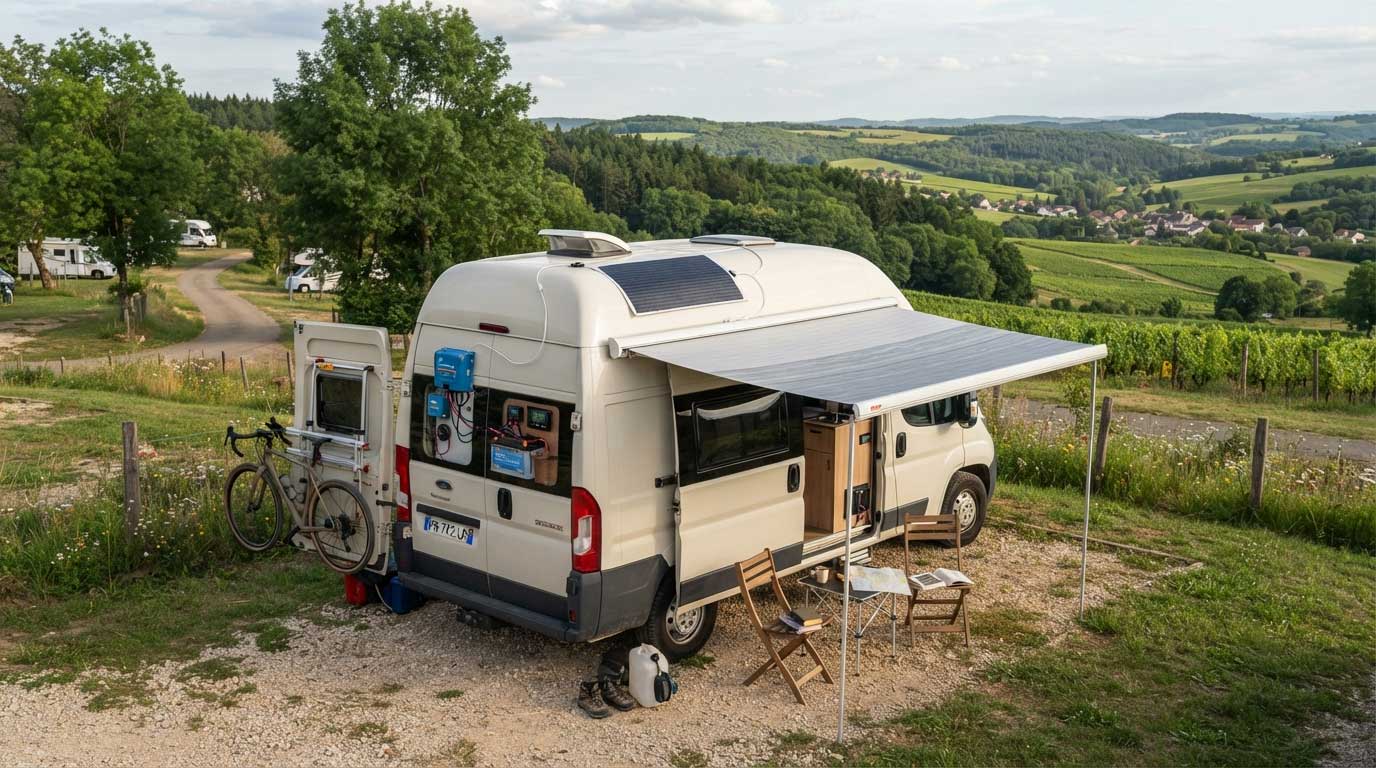
How to install a 50w flexible solar panel correctly?
Installing a 50w flexible solar panel is relatively simple compared with large rooftop solar systems, but correct installation still determines the panel’s long-term reliability.
In Bright Solar’s practical application experience, small flexible solar panels often fail because of installation details rather than solar technology itself. Poor cable protection, unsuitable mounting surfaces, or incorrect battery connections can reduce system performance.
A reliable installation should focus on:
- Surface preparation
- Mechanical protection
- Electrical compatibility
Step 1: Select the correct installation location
Before installing a 50W flexible solar panel, evaluate the available area carefully.
The ideal location should have:
- Direct sunlight exposure
- Minimal shading
- Stable surface structure
- Proper cable routing space
Avoid placing panels near objects that create shadows, such as:
- Roof vents
- Antennas
- Storage boxes
- Boat equipment
Even a small shadow can affect output because photovoltaic cells work as connected electrical circuits.
For example, during one outdoor monitoring project, a customer installed a flexible solar panel behind a camping equipment rack. The panel was exposed to sunlight most of the day, but afternoon shadows reduced charging performance.
After moving the panel only a short distance, the system achieved more stable output.
Small installation changes can create measurable differences.
Step 2: Prepare the mounting surface
Before attaching the flexible solar panel:
Clean the surface
Remove:
- Dust
- Oil
- Dirt
- Moisture
Check the material
Common mounting surfaces include:
- Fiberglass
- Plastic composite
- Metal surfaces
- RV roofs
- Boat decks
A clean and stable surface improves attachment reliability.
For permanent installations, many users choose adhesive mounting methods because they avoid drilling holes.
However, adhesive selection should consider:
- Temperature range
- Outdoor exposure
- Surface compatibility
Step 3: Connect the solar system properly
A 50W flexible solar panel usually works with:
- Charge controller
- Battery
- Portable power station
A basic connection structure:
Solar Panel → Charge Controller → Battery → Electrical Devices
Important specifications to check:
| Specification | Why It Matters |
|---|---|
| Voltage | Ensures system compatibility |
| Current | Determines cable requirements |
| Battery capacity | Controls energy storage |
| Controller type | Improves charging efficiency |
For battery charging applications, MPPT controllers are often preferred because they can maximize available solar energy under changing conditions.
50w flexible solar panel vs traditional 50W rigid solar panel
Both flexible and rigid solar panels have their own advantages.
The right choice depends on the application.
| Feature | 50W Flexible Solar Panel | 50W Rigid Solar Panel |
|---|---|---|
| Weight | Lightweight | Heavier |
| Surface compatibility | Curved surfaces | Flat surfaces |
| Installation | Simple mounting options | Requires brackets |
| Transportation | Easy | More difficult |
| Camping use | Excellent | Limited |
| Marine use | Suitable | Less convenient |
| Long-term rooftop use | Depends on design | Common choice |
A rigid panel may be better for a fixed structure with enough space.
A flexible panel becomes more valuable when the user needs:
- Mobility
- Compact storage
- Lower weight
- Installation freedom
This is why flexible solar technology continues to gain popularity in outdoor and mobile energy markets.
How much does a 50w flexible solar panel cost?
The price of a 50w flexible solar panel depends on several factors:
- Solar cell quality
- Surface material
- Waterproof performance
- Brand
- Production volume
- Custom requirements
Typical market pricing:
| Product Category | Approximate Price |
|---|---|
| Basic flexible 50W panel | $50–$100 |
| ETFE premium flexible panel | $90–$160 |
| Customized OEM version | Depends on specifications |
Flexible solar panels usually cost more than basic rigid modules because they require specialized materials and manufacturing processes.
According to photovoltaic market analysis from the International Energy Agency (IEA), solar technology costs have decreased significantly because of improved manufacturing efficiency. However, specialized solar products with lightweight designs often maintain higher prices because of additional engineering requirements.
When comparing suppliers, buyers should evaluate:
- Product reliability
- Warranty support
- Material quality
- Manufacturing capability
- Application experience
The cheapest product is not always the most economical choice.
How Bright Solar develops reliable flexible solar solutions
At Bright Solar, flexible solar panels are developed around real application requirements.
Our experience comes from working with customers who need solar products for:
- RV manufacturers
- Outdoor equipment companies
- Marine applications
- Portable energy systems
The development process focuses on:
Material selection
We evaluate:
- Solar cell performance
- Protective surface materials
- Flexible backing structures
- Waterproof designs
The goal is to create products that can operate in changing outdoor environments.
Application testing
A flexible solar panel designed for camping may have different requirements compared with a marine application.
For example:
Camping applications prioritize:
- Low weight
- Easy transportation
- Quick setup
Marine applications prioritize:
- Water resistance
- Salt exposure protection
- Mechanical durability
Understanding the application is the first step toward selecting the correct solar solution.
How to choose the right 50w flexible solar panel?
Before purchasing a flexible solar module, consider these points.
1. Check the technical specifications
Important information includes:
- Rated power
- Voltage
- Current
- Dimensions
- Weight
- Operating temperature
A professional supplier should provide complete technical documentation.
2. Check environmental protection
For outdoor applications, consider:
- UV resistance
- Waterproof design
- Surface durability
- Temperature performance
A solar panel installed outdoors may experience years of weather exposure.
3. Match the panel with your energy requirements
A 50W flexible solar panel is suitable for:
- Battery maintenance
- Small electronic devices
- Portable charging
- Low-power systems
It is not designed to replace large residential solar arrays.
Choosing the correct size avoids unnecessary cost and improves system efficiency.

FAQ About 50w flexible solar panel
What can a 50w flexible solar panel power?
A 50W flexible solar panel can support small electronic devices, battery charging systems, camping equipment, sensors, GPS devices, and other low-power applications.
Is a 50w flexible solar panel suitable for camping?
Yes. It is one of the most suitable applications because flexible panels are lightweight, easy to transport, and simple to connect with portable batteries.
Can a 50W flexible solar panel charge a battery?
Yes. When connected with a suitable solar charge controller, it can charge compatible batteries for portable and off-grid systems.
Can flexible solar panels be installed on curved surfaces?
Yes. Their lightweight construction allows installation on many curved surfaces, including RV roofs and boat decks.
Are flexible solar panels waterproof?
Quality flexible solar panels are designed for outdoor environments and usually include protective layers against moisture and weather exposure. Waterproof performance depends on product design and installation.
How long does a 50W flexible solar panel last?
The lifespan depends on materials, manufacturing quality, installation environment, and maintenance. Premium flexible panels are designed for long-term outdoor use.
Does a 50W flexible solar panel work on cloudy days?
Yes, but output will be lower because solar generation depends on available sunlight intensity.
Conclusion: Is a 50w flexible solar panel worth choosing?
A 50w flexible solar panel is an efficient choice for users who need lightweight, portable, and adaptable solar power.
It is especially valuable for camping, RV, marine, and small off-grid applications where traditional panels are inconvenient.
The best solar solution is not always the largest one. In many real-world situations, installation flexibility and usability determine the actual value of the system.
Bright Solar continues developing flexible solar products designed for customers who need dependable renewable energy in compact and challenging environments.
From outdoor adventures to mobile power systems, a properly selected flexible solar panel can provide reliable energy wherever sunlight is available.
Related recommendations
-

Enphase Energy Gains Ground in Germany’s Residential Solar-Plus-Storage Market
243Enphase Energy is seeing rising demand in Germany for its IQ microinverters and IQ Batteries as households react to high electricity prices. With partners like 1KOMMA5 and local installers, Enphase is combining safe LFP batteries, long-warranty mi...
View details -
100 Watt Semi Flexible Solar Panel: Output, Uses and Installation Guide
181A 100 watt semi flexible solar panel is designed for compact systems such as RVs, vans, boats, and cabins where low weight, slim profile, and limited curvatu...
View details -
300 Watt Solar Panels for RV, Marine and Off-Grid Power Systems
204Discover how 300 watt solar panels power RVs, boats, cabins, and off-grid systems. Learn real performance, battery charging, and installation tips from Bright Solar.
View details -
Solar Panels in Parallel: When Parallel Wiring Is the Smartest Choice
235Learn how solar panels in parallel improve system reliability, reduce shading losses, and optimize 12V battery charging. Expert guide from Bright Solar.
View details