12 Volt Solar Panels for Reliable Off-Grid and Mobile Power
12 volt solar panels are one of the most practical ways to charge batteries and power off-grid equipment. When properly sized, they provide dependable energy for RVs, boats, cabins, mobile homes, trailers, and remote installations while reducing fuel costs and maintenance requirements.
A few months ago, I was standing beside a livestock trailer parked nearly six miles from the nearest utility connection. The owner wasn’t concerned about internet access or television. His concern was simpler.
Would the water pump still run tomorrow morning?
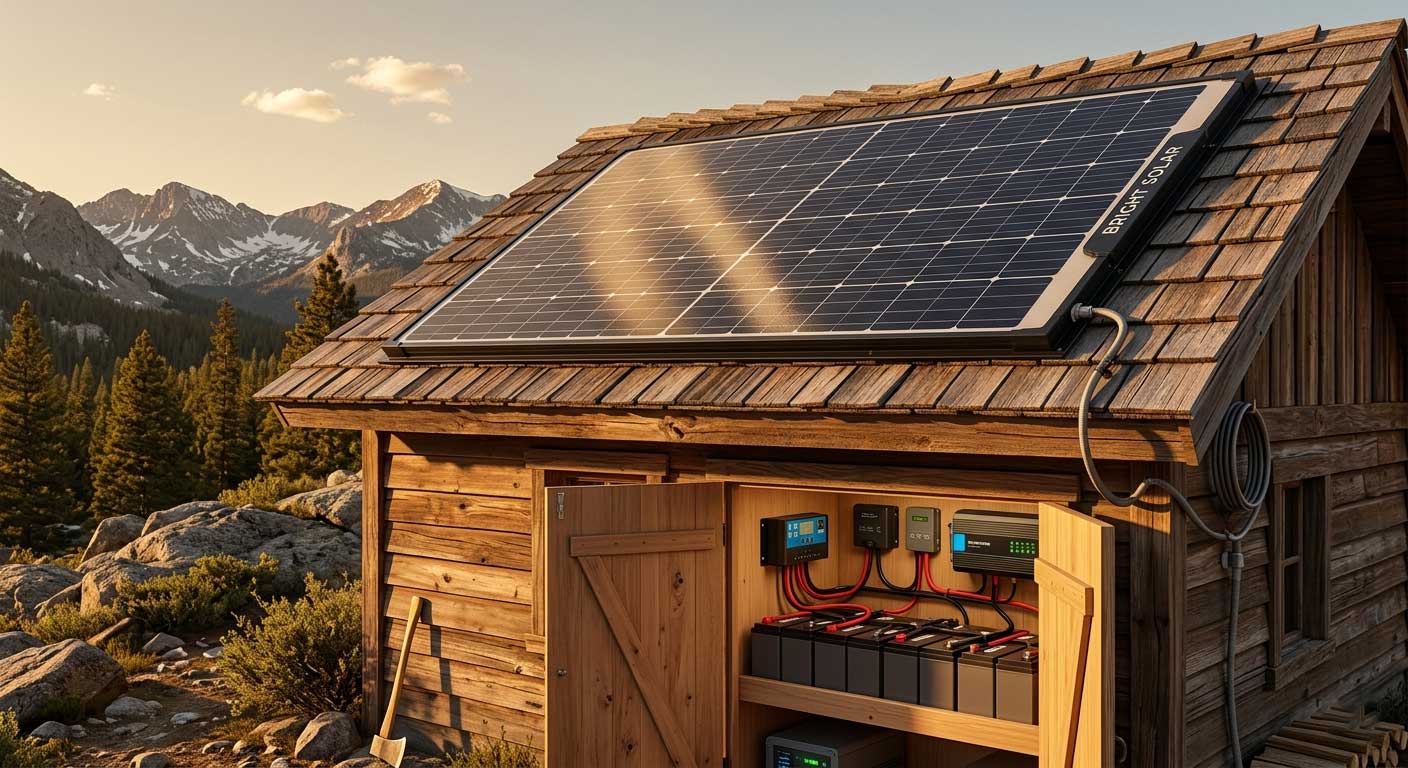
A single battery bank powered the pump, fence monitor, and security camera. Above it sat a pair of compact solar panels 12v quietly generating electricity.
Nothing looked impressive.
No large inverter.
No sophisticated monitoring dashboard.
Just a straightforward 12V system that worked every day.
After more than a decade working with solar-powered mobile and off-grid applications, I’ve found that this is where 12 volt solar panels perform best—not in marketing brochures, but in places where power simply has to be available.
Why 12 Volt Solar Panels Remain So Popular
People often assume residential solar and battery storage have made 12V systems obsolete.
The opposite is happening.
Mobile energy systems continue expanding.
According to the U.S. Department of Energy, distributed renewable energy adoption continues growing across residential and remote applications as equipment costs decline and efficiency improves.
The reason is straightforward:
Many electrical devices already operate on 12 volts.
Examples include:
- RV appliances
- Marine electronics
- Water pumps
- LED lighting
- Security cameras
- Livestock monitoring equipment
- Telecommunications hardware
- Portable refrigeration systems
Instead of converting solar power multiple times, a 12V system allows direct battery charging with minimal complexity.
That simplicity is often underestimated.
What Makes a 12 Volt Solar Panel Different?
Understanding Real Operating Voltage
One of the biggest misconceptions involves voltage ratings.
A “12 volt solar panel” does not actually output 12 volts.
Under normal operating conditions, most solar panels 12v produce:
| Specification | Typical Value |
|---|---|
| Nominal System Voltage | 12V |
| Operating Voltage (Vmp) | 17V–19V |
| Open Circuit Voltage (Voc) | 21V–24V |
This higher voltage is necessary because charging a 12V battery requires more than 12 volts.
For example:
A fully charged lead-acid battery may reach approximately 12.7V.
During charging, voltage often rises above 14V.
If a panel only generated 12V, charging would stop almost immediately.
Why This Matters in Real Installations
I once inspected a remote monitoring station where an installer purchased an inexpensive “12V panel” from an unknown supplier.
The solar panels 12v barely exceeded battery voltage.
Production looked acceptable on paper.
In reality, charging performance was inconsistent throughout the day.
Replacing that solar panels 12v with a properly engineered module immediately solved the issue.
The lesson?
Nominal voltage ratings alone tell very little about actual performance.
Where 12 Volt Solar Panels Are Most Commonly Used
Different applications place different demands on solar equipment.
Yet the same technology often serves all of them.
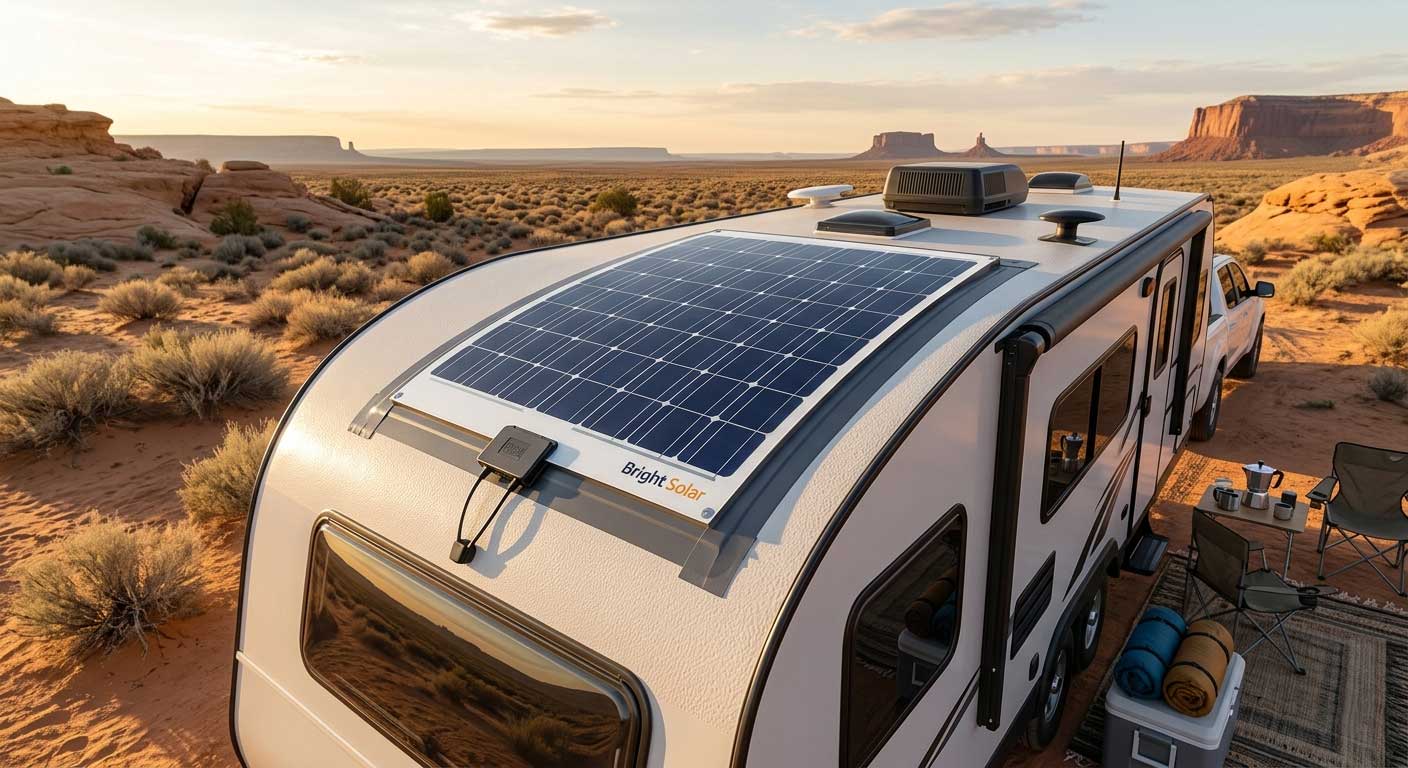
RV and Camper Systems
The RV industry remains one of the largest users of 12V solar.
Common loads include:
- Interior lighting
- Water pumps
- Ventilation fans
- Refrigerators
- USB charging ports
- Starlink terminals
- Small inverters
A typical weekend camper might consume:
| Device | Daily Energy |
|---|---|
| LED Lights | 50 Wh |
| Water Pump | 80 Wh |
| Refrigerator | 600 Wh |
| Device Charging | 120 Wh |
| Ventilation Fan | 150 Wh |
Total:
Approximately 1,000 Wh per day.
This energy requirement can often be supported by 300W–500W of solar depending on location and season.
Marine Applications
Marine environments are especially demanding.
Saltwater exposure destroys poorly protected equipment surprisingly fast.
I’ve visited vessels where electrical hardware looked ten years old after only two seasons.
For marine installations, panel selection becomes less about wattage and more about durability.
Key requirements include:
- Corrosion resistance
- UV stability
- Waterproof connectors
- Flexible mounting capability
- Lightweight construction
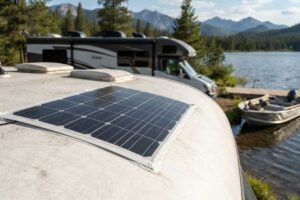
This is why flexible solar technologies continue gaining popularity among boat owners.Learn more:Flexible Solar Panel
Mobile Homes and Tiny Houses
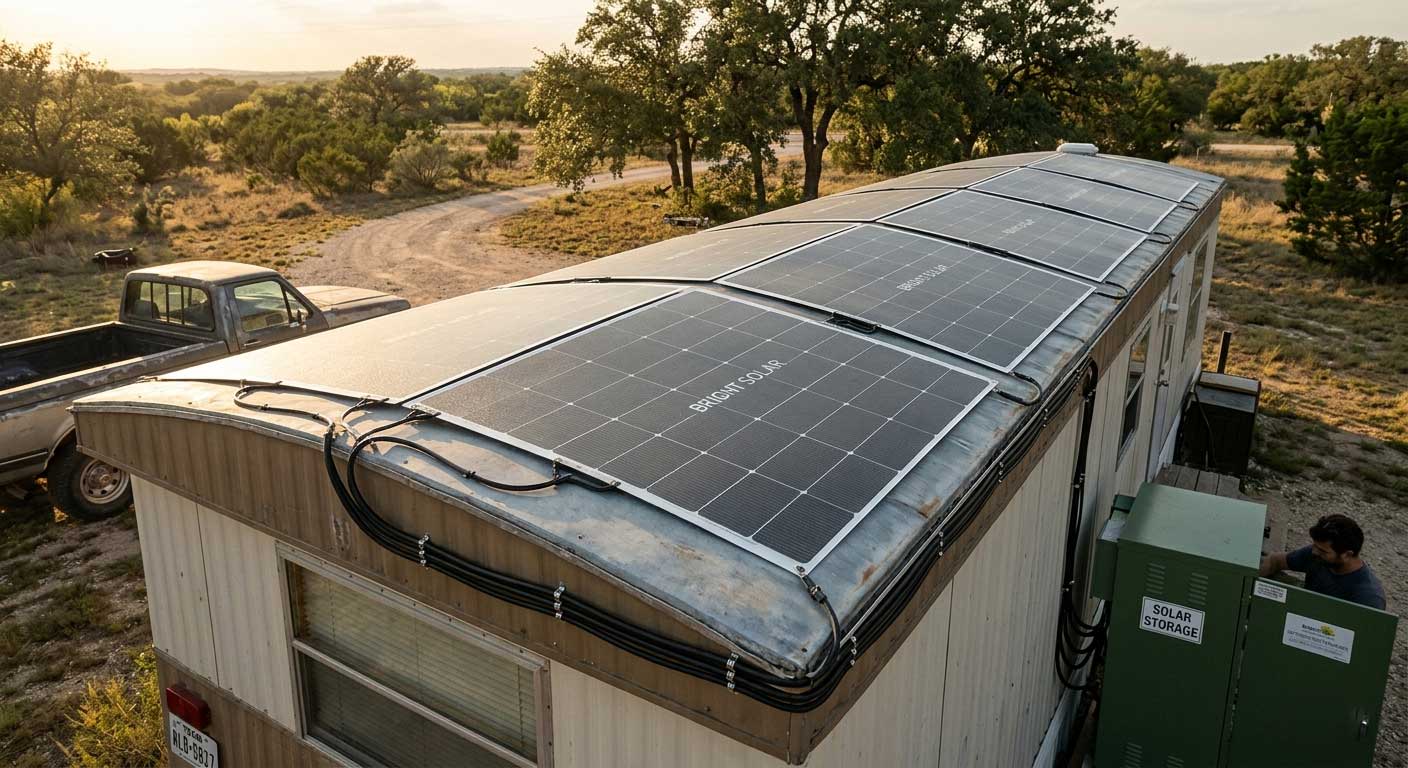
Mobile homes frequently present structural challenges.
Many older roofs were not designed for significant additional weight.
Traditional glass modules can become difficult to install safely.
Flexible panels often provide an alternative because they reduce roof loading while maintaining useful power output.
This trend has become increasingly common in:
- Manufactured homes
- Tiny homes
- Seasonal cabins
- Temporary housing units
Flexible vs Traditional 12 Volt Solar Panels
The discussion appears in nearly every customer conversation.
Should you choose rigid panels or flexible panels?
The answer depends on the installation environment.
Side-by-Side Comparison
| Feature | Flexible Panel | Rigid Panel |
|---|---|---|
| Weight | Very Low | Higher |
| Curved Surface Installation | Excellent | Poor |
| Roof Load Impact | Minimal | Moderate |
| Marine Use | Excellent | Good |
| Walkability Options | Available | Limited |
| Permanent Ground Mount | Fair | Excellent |
| Installation Speed | Fast | Moderate |
Neither technology wins every situation.
The correct choice depends on application.
How Much Power Can 12 Volt Solar Panels Produce?
This is where expectations and reality often collide.
Many buyers focus on wattage.
Experienced installers focus on daily energy harvest.
Those are not the same thing.
Consider a 200W solar panels 12v.
Theoretical output:
200 watts × 5 sun hours = 1,000 Wh
Actual field production may vary due to:
- Temperature
- Orientation
- Dust
- Cable losses
- Controller efficiency
- Seasonal sunlight changes
According to data published by the U.S. National Renewable Energy Laboratory (NREL), real-world solar performance frequently differs from nameplate ratings due to environmental conditions.
That doesn’t mean the system is failing.
It means physics is operating exactly as expected.
Lessons From a Mobile Ranch Installation
One project remains memorable.
A ranch owner in western Texas wanted solar-powered livestock monitoring.
The site was remote.
Utility power extension costs exceeded several thousand dollars.
The first proposal suggested a generator.
The second proposed a compact solar solution.
We selected:
- 300W solar array
- 200Ah battery bank
- MPPT controller
- Cellular monitoring equipment
Nothing oversized.
Nothing complicated.
Three years later, the owner reported only one maintenance task:
Removing dust after a particularly windy season.
That outcome highlights something many people overlook.
Reliable solar systems are rarely the largest systems.
They’re usually the best-matched systems.
Why Charge Controllers Matter More Than Most Buyers Realize
A surprising number of solar problems originate here.
Not at the panel.
Not at the battery.
At the controller.
PWM Controllers
Advantages:
- Lower cost
- Simpler design
- Reliable operation
Disadvantages:
- Lower efficiency
- Reduced performance during colder weather
MPPT Controllers
Advantages:
- Higher efficiency
- Better low-light performance
- Improved energy harvest
According to multiple field studies and manufacturer testing, MPPT controllers can improve charging performance significantly when panel voltage exceeds battery voltage.
For larger installations, the upgrade often pays for itself.
Choosing the Correct 12 Volt Solar Panel Size
The question customers ask most often:
“How many watts do I actually need?”
The answer starts with energy consumption, not panel wattage.
Before choosing any solar panel for 12v, calculate:
- Daily energy usage
- Battery capacity
- Expected sunlight hours
- Seasonal conditions
- Future expansion plans
Many systems fail because they were sized around budget rather than energy demand.
And that distinction becomes extremely important once batteries start cycling daily.
Real-World Sizing Guide for 12 Volt Solar Panels
When people ask me what size solar panel for 12v they need, I usually ask a different question first:
“What are you trying to keep running?”
The answer is rarely “everything.”
Most 12V systems support a handful of daily essentials.
A battery does not care how expensive the solar panel for 12v was. It only responds to energy entering and leaving the system.
That is why proper sizing begins with consumption.
Small Maintenance Charging Systems
These are common on:
- Utility trailers
- Livestock gates
- Security systems
- Seasonal cabins
- Backup battery banks
Typical consumption:
| Equipment | Daily Consumption |
|---|---|
| Security Camera | 10–20Wh |
| Gate Controller | 15–30Wh |
| Battery Maintenance | 5–20Wh |
Recommended solar:
20W–50W
These systems often operate for years with almost no intervention.
Weekend RV Users
A setup I frequently encounter looks like this:
- LED lights
- Vent fan
- Water pump
- Phone charging
- Portable refrigerator
Daily consumption:
Approximately 600–1,000Wh.
Recommended solar:
| Daily Usage | Recommended Array |
|---|---|
| 600Wh | 200W–300W |
| 800Wh | 300W–400W |
| 1,000Wh | 400W–500W |
Most users who camp only on weekends are surprised by how little solar they actually need.
The larger challenge is usually battery storage.
Full-Time Mobile Living
This category includes:
- Full-time RV travelers
- Mobile homes
- Tiny houses
- Work trailers
- Remote cabins
Typical daily consumption:
1,500–3,500Wh.
Recommended solar:
| Energy Need | Solar Size |
|---|---|
| 1.5kWh/day | 500W–700W |
| 2.5kWh/day | 800W–1,000W |
| 3.5kWh/day | 1,200W+ |
At this point, MPPT controllers become almost mandatory.
Small efficiency improvements accumulate quickly.
The Most Common Mistakes I See in 12V Solar Installations
Most solar failures are not product failures.
They are design failures.
After reviewing hundreds of systems, the same mistakes appear repeatedly.
Mistake #1 — Buying Panels Before Calculating Usage
This happens constantly.
Someone buys a 100W panel because it was on sale.
Later they discover their refrigerator alone requires several times that energy production.
Solar sizing should always begin with consumption.
Never the other way around.
Mistake #2 — Ignoring Shading
A single shadow can have a larger impact than many people realize.
I once inspected a ranch installation where a utility pole shadow crossed only one section of a panel for approximately two hours daily.
Production losses exceeded expectations dramatically.
Even premium solar modules cannot overcome poor placement.
Before installation:
- Check seasonal sun angles
- Examine nearby trees
- Consider future growth
- Monitor afternoon shadows
The cheapest solar upgrade is often better positioning.
Mistake #3 — Undersized Wiring
People spend thousands on panels and batteries, then save a few dollars on cable.
Voltage drop quietly steals performance.
Especially in 12V systems.
Because voltage is relatively low, cable sizing becomes more important than many beginners realize.
For longer runs:
- Increase cable gauge
- Minimize distance
- Use quality connectors
- Protect against corrosion
Mistake #4 — Oversized Battery Banks
This surprises people.
Bigger batteries are not always better.
A large battery bank with insufficient solar charging frequently spends its life partially charged.
That shortens battery lifespan.
A balanced system generally performs better than an oversized battery connected to undersized solar.
Flexible Solar Panels Are Changing 12V System Design
Ten years ago, flexible panels were viewed as specialty products.
Today they are increasingly common.
The reasons are practical.
Not fashionable.
Weight Matters More Than Most Buyers Expect
Consider a mobile home roof.
Or an RV.
Or a fiberglass boat deck.
Every additional pound matters.
Traditional glass modules may weigh several times more than flexible alternatives.
For many mobile installations, reduced weight directly improves:
- Installation options
- Roof safety
- Structural loading
- Fuel efficiency
Curved Surfaces Open New Possibilities
This is one area where flexible technology genuinely changes design options.
Applications include:
- RV roofs
- Marine decks
- Camper vans
- Utility trailers
- Curved mobile home roofs
Instead of building complex mounting structures, installers can often utilize existing surfaces.
That saves labor, materials, and installation time.
Matching Batteries With 12 Volt Solar Panels
Battery selection has changed dramatically in recent years.
The market is moving toward lithium technologies, though lead-acid still remains common.
Lead-Acid Batteries
Advantages:
- Lower upfront cost
- Widely available
- Familiar technology
Limitations:
- Heavier
- Lower usable capacity
- Shorter cycle life
Lithium Batteries
Advantages:
- Higher usable capacity
- Longer lifespan
- Faster charging
- Reduced weight
According to data published by the U.S. Department of Energy and battery manufacturers, lithium technologies can achieve substantially higher cycle counts compared to traditional flooded lead-acid batteries when properly managed.
For mobile applications, weight savings alone can justify the investment.

Frequently Asked Questions About 12 Volt Solar Panels
Can a 100W Solar Panel Charge a 12V Battery?
Yes.
A 100W panel can effectively charge a 12V battery when paired with an appropriate charge controller.
The actual charging speed depends on:
- Battery size
- Sunlight availability
- Temperature
- System efficiency
How Long Will a 100W Panel Take to Charge a Battery?
As a rough example:
A 100Ah battery stores approximately 1,200Wh.
A 100W panel producing about 400–500Wh daily could require several days for a complete recharge depending on battery condition and weather.
Real-world conditions always matter.
Are Flexible Solar Panels Durable?
Modern ETFE-coated flexible panels are significantly more durable than early flexible designs.
Quality products typically feature:
- UV-resistant surfaces
- Waterproof construction
- Corrosion resistance
- Enhanced abrasion protection
Durability ultimately depends on installation quality and environmental conditions.
Do 12 Volt Solar Panels Work During Winter?
Absolutely.
solar panel for 12v continue generating electricity throughout winter.
In some cases, cold temperatures can actually improve panel efficiency.
The larger challenge is reduced daylight duration and lower sun angles.
Proper system sizing should account for seasonal production differences.
Can I Connect Multiple 12 Volt Solar Panels Together?
Yes.
Panels can be connected:
- In series
- In parallel
- In series-parallel combinations
The correct configuration depends on:
- Charge controller specifications
- Battery voltage
- System design goals
Proper design becomes increasingly important as system size grows.
What We Have Learned at Bright Solar
At Bright Solar, we have supplied flexible solar solutions for:
- RV manufacturers
- Marine applications
- Mobile homes
- Utility trailers
- Agricultural operations
- Off-grid cabins
One pattern appears repeatedly.
The best-performing solar systems are rarely the most expensive.
They are the systems that match real-world energy usage.
A carefully planned 300W installation often outperforms an oversized 800W system burdened by poor placement, shading, or inadequate battery management.
The lesson is simple:
Solar success depends on system balance.
Not marketing numbers.
Final Thoughts
12 volt solar panels remain one of the most versatile and cost-effective energy solutions available for mobile and off-grid power applications. Whether supporting an RV, boat, mobile home, remote cabin, or agricultural system, a properly sized solar array can provide dependable charging and long-term energy independence.
After years of field installations and customer projects, I have found that the most successful 12 volt solar panels systems are not necessarily the largest. They are the systems designed around actual energy needs, quality components, and realistic operating conditions.
Related recommendations
-

Car Roof Solar Panel: How It Works and What to Know
306Explore car roof solar panel options for EVs and conventional vehicles. Learn sizing, energy output, flexible PV, installation, shading, safety, and real-world limits.
View details -
10 Watt Flexible Solar Panel: Uses, Output and Installation Guide
173A 10 watt flexible solar panel is designed for low-power applications such as sensors, small lights, GPS devices, battery maintenance, and small RV or marine...
View details -
150 Watt Flexible Solar Panel: Lightweight Solar Power Solution for RV and Off-Grid Applications
134Discover the 150 watt flexible solar panel from Bright Solar for RV, marine, and off-grid applications. Learn efficiency, installation, output, and real-world uses.
View details -
100W Flexible Solar Panels: Lightweight Solar Power for RV, Marine and Off-Grid Applications
282100W flexible solar panels deliver lightweight and portable solar power for RVs, boats, camping, and off-grid systems. Explore Bright Solar solutions and applications.
View details