
Jinko Solar Signed a Supply Agreement with Datang Group for About 1 GW of n-type Tiger Neo Components
At first glance, the sentence “Jinko Solar signed a supply agreement with Datang Group for about 1 GW of n-type tiger Neo components” sounds like a typical corporate announcement that only bankers and engineers care about. But if you unpack it a bit, it tells you something real about how fast China’s big state-owned generators are shifting from p-type to n-type modules in actual ground projects, not just in conference slides.
Datang Group is one of the very large state-owned power producers in China, with more than 100 GW of installed capacity. So 1 GW here is not the whole story, but it’s far from a small pilot. Roughly speaking, you can imagine it as ten to a dozen utility-scale plants of 80–100 MW each, spread across different provinces. One may sit on an agricultural-PV site in eastern China, another in a rocky desertification area in the southwest where land is hard to use for anything else.
From Data Sheets to Dirt and Concrete
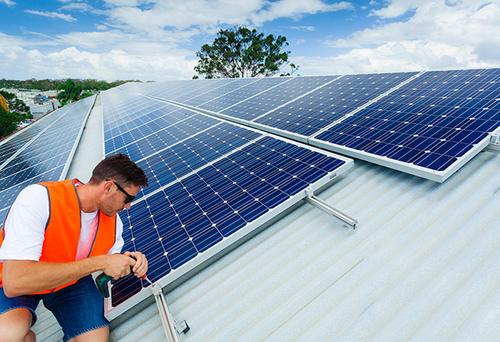
Under this deal, Datang will use Jinko’s Tiger Neo series, including 560 W n-type modules. On a clean spec sheet, that just looks like another high-efficiency number. On the ground, it means each module is around 2.3–2.4 square meters, mounted in long rows that follow the terrain.
If you try to visualize it in a simple way:
- One 560 W module can roughly keep a handful of household LED lights and a small appliance running in the evening,
- A single row of 40 modules is already a visible chunk of power for a farm building or a small irrigation pump,
- Scaled up to around 1 GW, the output is enough to cover daytime demand for hundreds of thousands of people, depending on how you count.
These back-of-the-envelope calculations are not “bankable,” but they’re the kind of rough comparisons project managers sometimes use when they explain the scale to local officials on site.
Why Datang Is Willing to Go n-type
Internally, Datang’s technical teams spent quite some time comparing n-type TOPCon with the p-type modules they have used for years. After field visits and what they call technical due diligence, they concluded that n-type TOPCon offers a few advantages that are no longer just theoretical:
- Higher cell conversion efficiency, even if the difference looks small on paper,
- Better long-term power output thanks to lower degradation,
- A smaller temperature coefficient, which matters on hot days when module surfaces are well above 40°C,
- Higher bifaciality and better weak-light behavior, which pays off in agricultural-PV projects and bright rocky sites where the rear side can pick up extra reflected light.
Of course, it is not as simple as “n-type always wins.” N-type modules are still priced higher than comparable p-type products, and some engineers inside large utilities are conservative by nature. One project engineer reportedly joked that they don’t “worship n-type,” but the IRR models on their laptops now show clearly better numbers when they plug in Tiger Neo instead of a standard p-type option.
Agricultural-PV and Rocky Desertification Projects
A notable detail in this agreement is the planned use of these modules in agricultural-PV and rocky desertification reconstruction projects. In the agricultural setups, modules are lifted higher above the ground, with crops or orchards growing underneath. That creates a strange balancing act: farmers don’t want too much shade, but investors want as much energy as possible.
Here, the slightly higher efficiency and bifacial performance of n-type Tiger Neo can help: even on cloudy mornings, or when the sun is low, the system squeezes out extra kilowatt-hours from both sides of the module. Those kilowatt-hours eventually show up in the plant’s PR (performance ratio) and, ultimately, in the project’s revenue.
On rocky desertification sites, the ground is often bright and uneven. Civil works and mounting take more effort — foundation piles sometimes need to dodge exposed rock, and designs get adjusted in the field. At the same time, the high ground reflectivity can boost rear-side generation. In other words, the difficult terrain partly pays back through extra bifacial gain.
Does 15–20 W per Module Really Matter?
One of the selling points Jinko highlights is that, on the same module size, an n-type Tiger Neo module can deliver 15–20 W more power than a comparable p-type module. On a single module, that does not sound dramatic. But on a large plant, it translates to:
- A few percent more DC capacity on the same land area,
- Higher lifetime energy yield with similar BOS,
- A visible difference in IRR when you stretch the model out to 25–30 years.
Inside EPC and investment teams, this is where the arguments start. Some people still care most about the initial capex per watt, while others focus on LCOE and long-term returns. The fact that Jinko Solar signed a supply agreement with Datang Group for about 1 GW of n-type tiger Neo components suggests that, at least for this batch of projects, the long-term view won.
Jinko’s Position in a Rising-Cost Environment
Jinko Solar has also been candid about one uncomfortable reality: PV module prices and construction costs have been under pressure from raw material and logistics volatility. In such a climate, low-efficiency, low-price modules can actually hurt project economics because they lock in lower output for the next two or three decades.
By pushing its n-type Tiger Neo series into a large state-owned portfolio like Datang’s, Jinko is effectively betting that bankable investors will pay a premium for efficiency and stability. Industry insiders are still watching to see whose n-type plants deliver the best real-world performance over time. In that sense, this 1 GW supply deal is not just a sales win; it is also a live test of n-type TOPCon claims in a set of high-visibility projects.
For now, what we can say is simple: Jinko Solar signed a supply agreement with Datang Group for about 1 GW of n-type tiger Neo components, and those modules will soon be out of the brochure and bolted onto racks in real fields, under real weather, feeding real grids — which is where all the marketing numbers finally have to prove themselves.
Related recommendations
-

solar panel golf cart roof Solutions from Bright Solar
257Bright Solar’s solar panel golf cart roof keeps golf cart batteries topped up while driving, reducing downtime and electricity use. Ideal for eco-conscious courses with solar charging options.
View details -
Wiring Solar Panels in Series: When It Works Best and When It Doesn’t
128Learn wiring solar panels in series correctly for RVs, boats, mobile homes, and off-grid systems. Discover voltage benefits, sizing tips, real-world examples, and installation best practices.
View details -
Amorphous Flexible Solar Panel: Thin Film Solar Technology for Lightweight Applications
64Amorphous flexible solar panels use thin-film silicon for lightweight, flexible solar applications where adaptability and low-light response matter.
View details -
1000W Solar Panel: Complete Guide to Size, Power Output, Cost, and System Setup
230Explore 1000w solar panel size, cost, power output, and system setup. Learn how to choose the right 1000 watt solar solution for RV, off-grid, and backup energy needs with Bright Solar.
View details