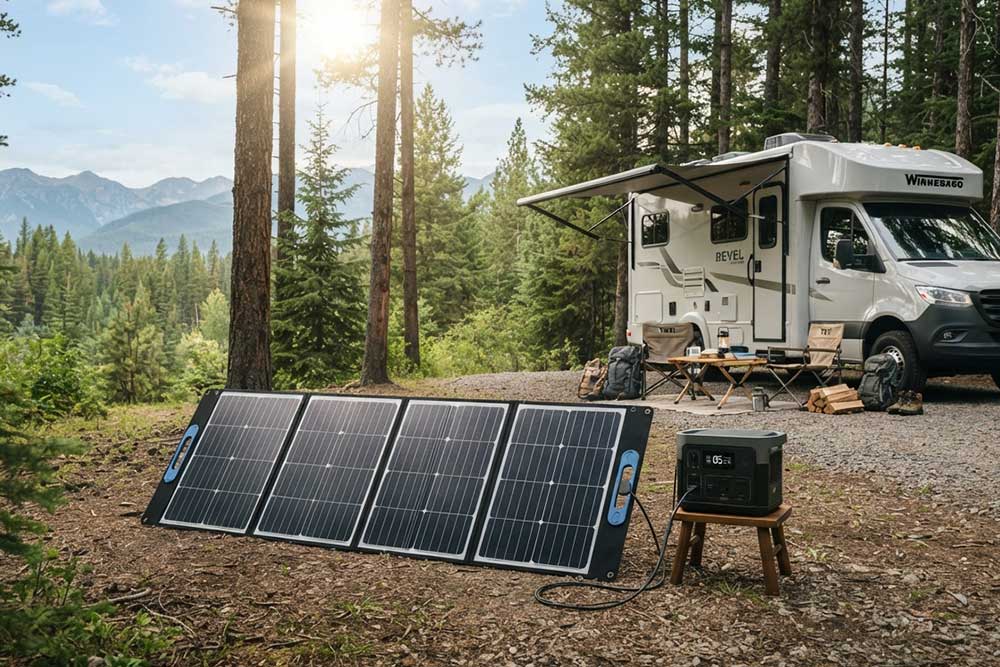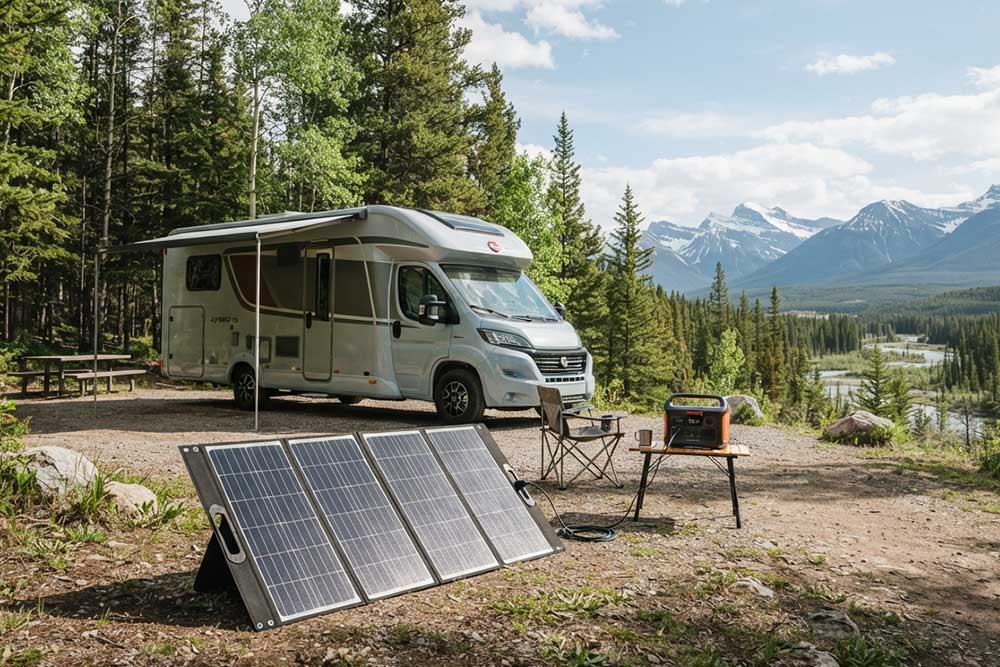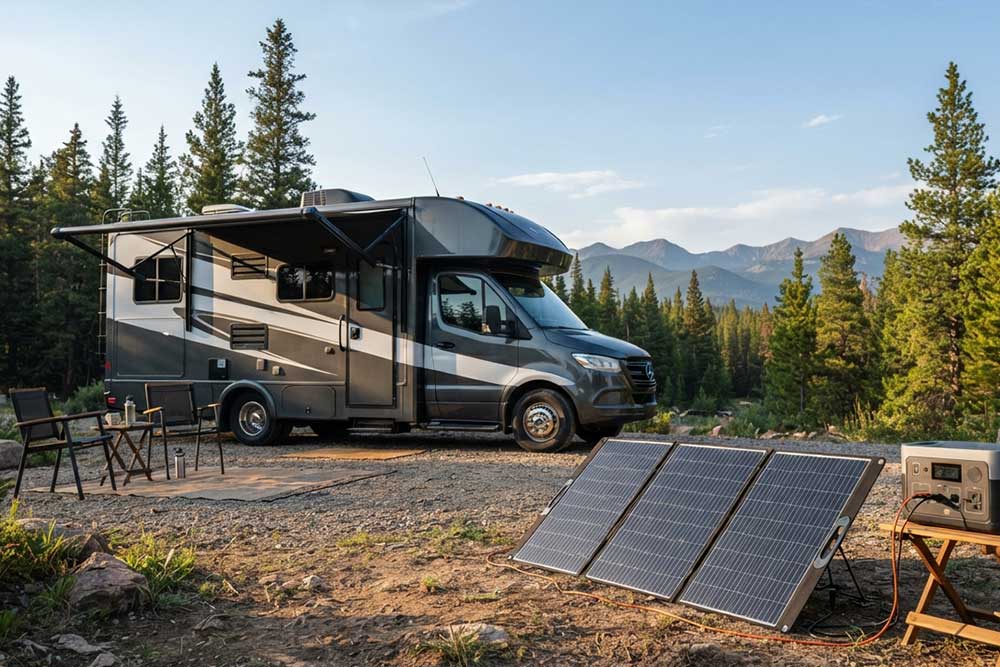
450 Watt Solar Panel Performance and Applications Guide
A 450 watt solar panel can typically generate 1.8 to 2.7 kWh of electricity per day depending on sunlight conditions, installation angle and temperature. This power range offers an excellent balance between output, roof space and system cost, making it suitable for RVs, off-grid cabins, marine systems and residential installations.
Several years ago, one of our customers in northern Italy replaced six older 280W modules with four 450W panels. The roof area became cleaner, cable runs became shorter, and daily production increased despite using fewer modules.
That project demonstrated something many installers already know: higher wattage modules often simplify the entire system.
Why 450 Watt Solar Panels Are Becoming Popular
The solar industry has steadily increased module power output over the past decade.
Older residential systems commonly used:
- 250W panels.
- 300W panels.
- 350W panels.
Today, 450W modules are becoming increasingly common because they reduce:
- Installation labor.
- Mounting hardware.
- Cable requirements.
- Roof penetration points.
According to the International Energy Agency, solar PV remains the fastest-growing renewable electricity technology worldwide.
Source:
https://www.iea.org/reports/solar-pv
Higher efficiency cell technologies such as:
- PERC cells.
- Half-cut cells.
- Multi-busbar technology.
- TOPCon technology.
have allowed manufacturers to increase output without dramatically increasing panel size.
Typical Specifications of a 450 Watt Solar Panel
| Specification | Typical Value |
|---|---|
| Rated Power | 450W |
| Module Efficiency | 20%–23% |
| Operating Voltage | 40V–42V |
| Operating Current | 10A–11A |
| Open Circuit Voltage | 48V–50V |
| Weight | 8–24 kg |
| Cell Type | Monocrystalline |
| Service Life | 25+ years |
Lightweight and flexible versions generally weigh significantly less than traditional glass modules.
This reduction becomes particularly important for:
- RV roofs.
- Boats.
- Tiny houses.
- Lightweight steel roofs.
- Portable systems.
How Much Electricity Can a 450 Watt Solar Panel Produce?
The answer depends largely on solar irradiation.
The National Renewable Energy Laboratory PVWatts Calculator remains one of the industry’s most widely used tools.
Source:
Estimated daily production:
| Peak Sun Hours | Daily Output |
|---|---|
| 3 hours | 1.35 kWh |
| 4 hours | 1.8 kWh |
| 5 hours | 2.25 kWh |
| 6 hours | 2.7 kWh |
Annual energy production:
- Southern Europe: 850–1000 kWh.
- Southwestern United States: 900–1100 kWh.
- Northern Europe: 650–850 kWh.
A customer operating a 450W panel on a camper in Spain reported average summer production exceeding 2.4 kWh per day during a three-week trip.
The system powered:
- Compressor refrigerator.
- Lighting.
- Water pump.
- USB charging.
- Laptop computers.
What Can a 450 Watt Solar Panel Run?
Approximate appliance operation:
| Appliance | Estimated Runtime |
|---|---|
| LED lights | 25 hours |
| Laptop | 15 charges |
| Refrigerator | 24 hours |
| Television | 10 hours |
| Router | 30 hours |
| Small fan | 20 hours |
Battery storage remains essential for stable operation.
The panel generates energy during daylight while batteries provide power during nighttime.
Applications of a 450 Watt Solar Panel
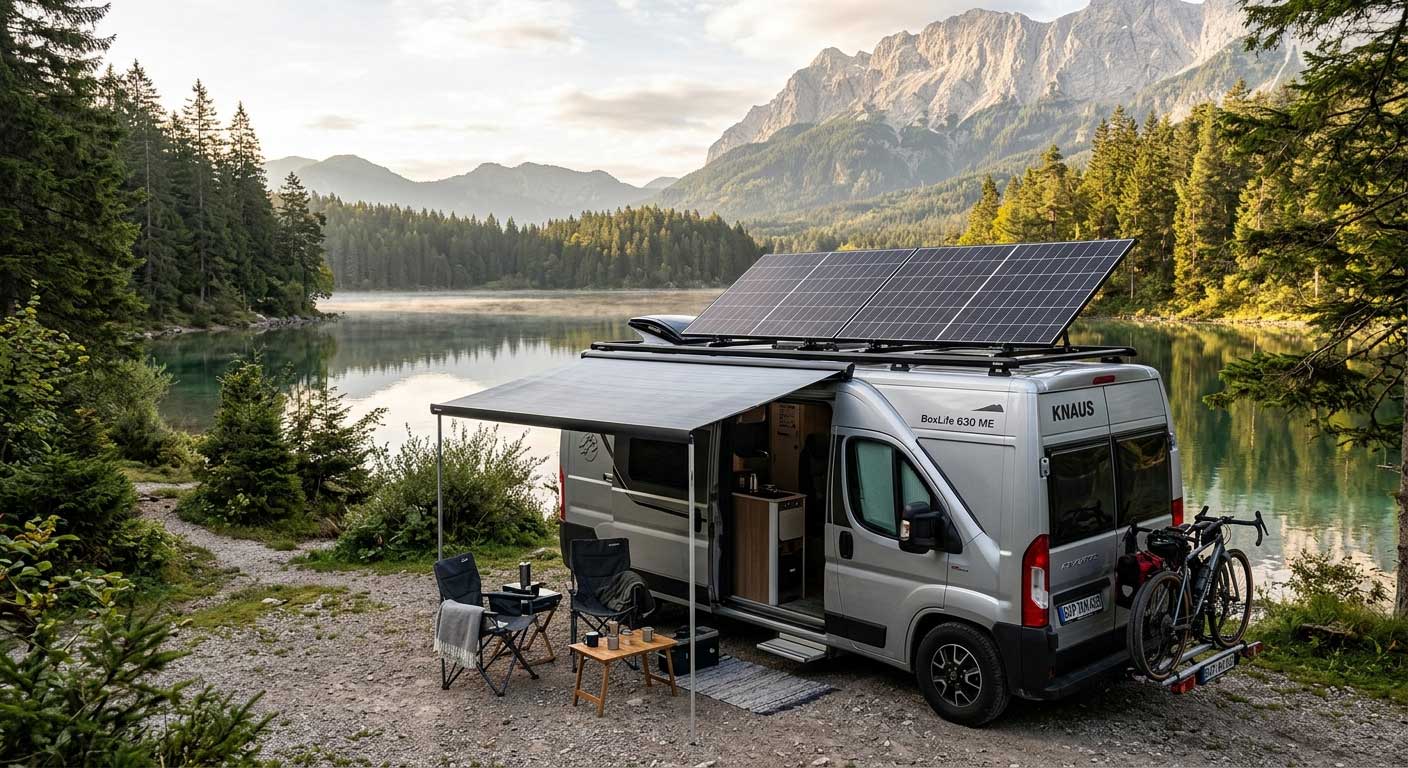
RV Solar Systems
One or two panels can support:
- Lighting.
- Refrigeration.
- Device charging.
- Water pumps.
Marine Systems
Marine installations benefit from:
- Reduced fuel use.
- Quiet operation.
- Lightweight construction.
Off-Grid Cabins
Two to four modules can supply:
- Lighting.
- Appliances.
- Internet equipment.
- Small tools.
Residential Backup Systems
Homeowners increasingly use 450W panels alongside battery storage for emergency power.
Flexible Versus Rigid 450W Panels
| Feature | Flexible Panel | Rigid Panel |
|---|---|---|
| Weight | Very low | Heavy |
| Roof Load | Minimal | Higher |
| Curved Surfaces | Excellent | Poor |
| Installation Speed | Fast | Moderate |
| Wind Profile | Low | Higher |
| RV Applications | Excellent | Limited |
| Residential Roof | Limited | Excellent |
Several Bright Solar projects involving trailers and mobile homes reduced roof weight by more than 30 kilograms after switching from conventional glass modules.
That reduction often improves vehicle handling and installation safety.
Visit product page: Flexible Solar Panel
Temperature and Performance
Heat affects solar output.
According to the U.S. Department of Energy, higher operating temperatures reduce module efficiency.
Source:
https://www.energy.gov/eere/solar
This is why panel ventilation matters.
A panel installed directly against a hot roof may lose measurable output during summer afternoons.
Proper airflow can improve production.
Real Project Experience
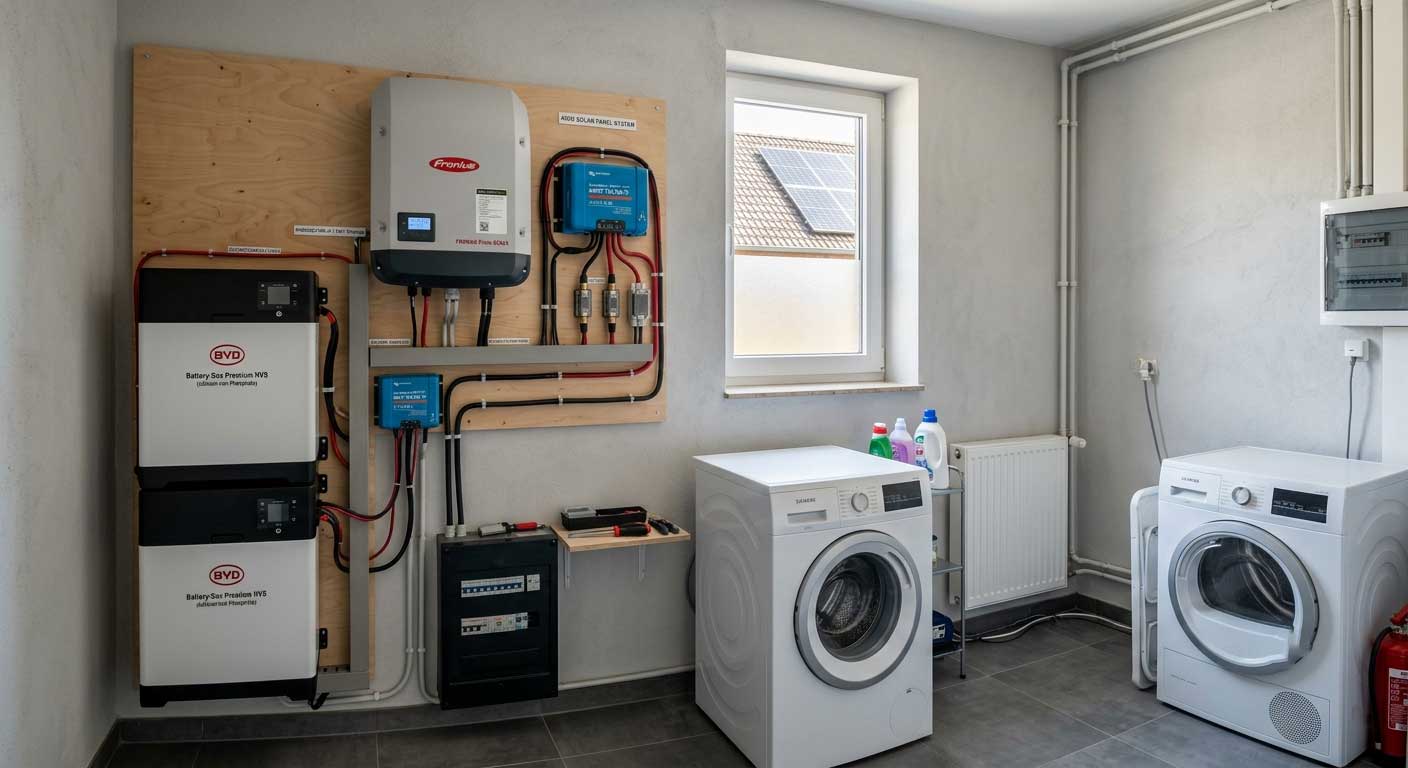
One installation completed in southern France involved:
- 2 × 450W modules.
- 24V lithium battery.
- 3000W inverter.
The owner reported:
- Refrigerator running continuously.
- Daily coffee maker use.
- Laptop charging.
- Lighting throughout the evening.
Generator runtime dropped to almost zero.
Those results closely matched expected production estimates.
Why Bright Solar Focuses on Lightweight Solutions
Over the years our engineering team has worked with:
- RV manufacturers.
- Marine builders.
- Portable power companies.
- Off-grid installers.
Many customers discover that installation limitations matter more than maximum efficiency.
A lightweight 450 watt solar panel can often solve problems involving:
- Roof load limits.
- Curved surfaces.
- Mobile applications.
- Transportation costs.
Sometimes reducing weight by 15 kilograms provides greater value than increasing efficiency by 1%.
Long-Tail Keywords Covered
- 450w solar panel output
- flexible 450 watt solar panel
- 450 watt solar panel for RV
- 450w off grid solar panel
Real-World Performance of a 450 Watt Solar Panel
A 450 watt solar panel rarely produces exactly 450 watts throughout the day. That figure comes from Standard Test Conditions (STC): 1000W/m² irradiance, 25°C cell temperature, and AM1.5 spectrum. Outdoor conditions almost never stay there.
According to the U.S. National Renewable Energy Laboratory (NREL), module operating temperatures can easily exceed 45–65°C during summer operation, reducing output noticeably.
Reference:
In Arizona, a rooftop system using 450W modules may produce 2.4–2.8kWh per panel daily during summer. In northern Germany, the same module often produces 1.3–1.8kWh per day depending on season.
I still remember measuring several high-power modules on a recreational vehicle roof in southern Spain. At noon, module temperatures climbed above 60°C. Despite perfect sunlight, actual power stabilized around 385–410W. Customers often assume a panel is defective, while the issue is simply heat.
Typical Daily Energy Production
| Location | Peak Sun Hours | Daily Output |
|---|---|---|
| California | 5.5 h | 2.3–2.5 kWh |
| Texas | 5.2 h | 2.1–2.4 kWh |
| Florida | 4.8 h | 1.9–2.2 kWh |
| Germany | 3.5 h | 1.4–1.7 kWh |
| United Kingdom | 2.8 h | 1.1–1.4 kWh |
Installation Considerations for 450 Watt Solar Panel Systems
Large-format panels create unique installation challenges.
Roof Space
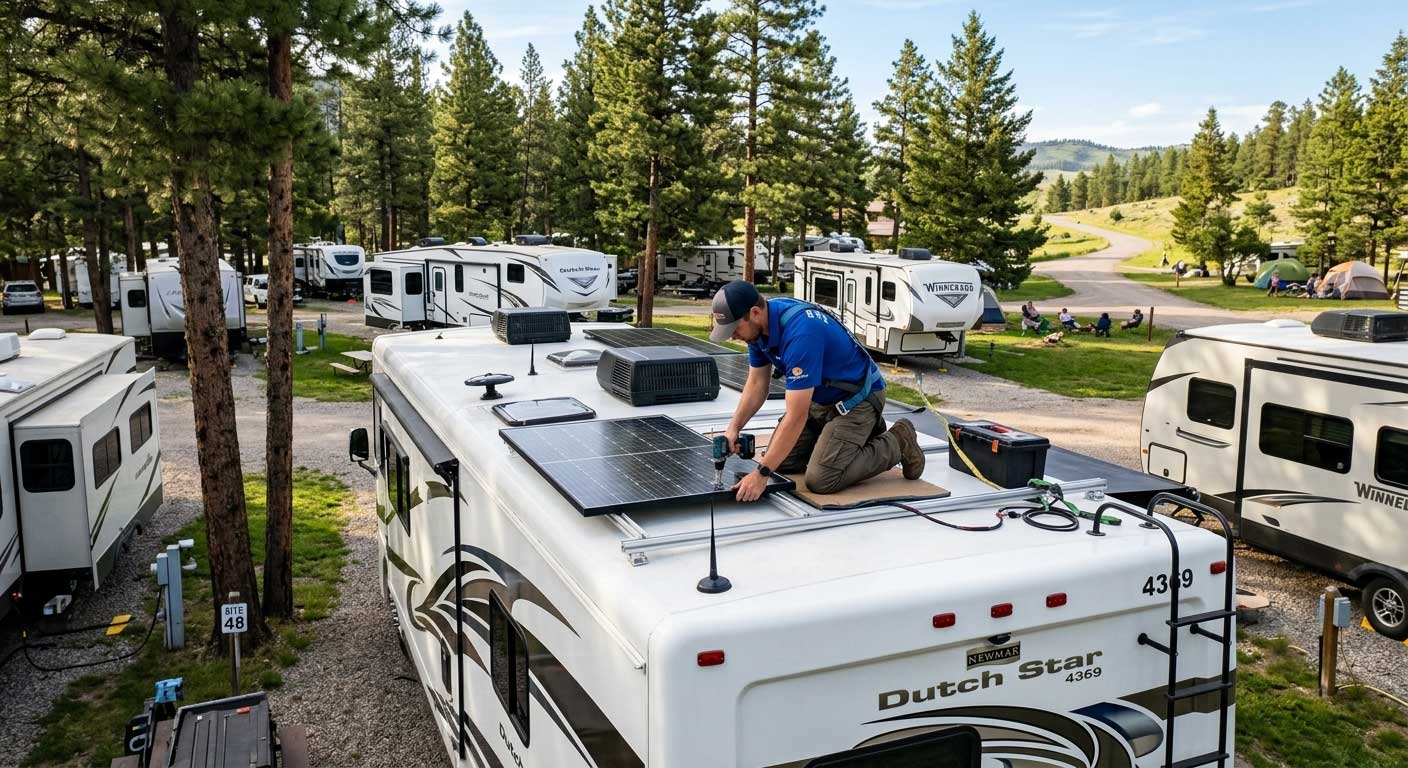
Most 450W modules occupy approximately:
- Length: 1900–2100 mm
- Width: 1000–1150 mm
- Weight: 22–28 kg
A van roof that comfortably accepts two 200W panels may only accommodate one large 450W module.
Wind Loading
Higher surface area means greater wind pressure.
On marine projects we often recommend multiple smaller modules rather than one very large panel because:
- Better weight distribution.
- Easier maintenance.
- Reduced stress on mounting points.
- Simpler replacement.
450 Watt Solar Panel for Residential Systems
Homeowners increasingly choose 450W modules because fewer panels can achieve the same system capacity.
Example:
| System Size | 300W Panels | 450W Panels |
|---|---|---|
| 4.5kW | 15 panels | 10 panels |
| 6kW | 20 panels | 14 panels |
| 9kW | 30 panels | 20 panels |
Fewer modules mean:
- Lower mounting hardware costs.
- Faster installation.
- Less roof penetration.
- Cleaner roof appearance.
According to the International Energy Agency, larger high-efficiency modules continue increasing market share because they reduce balance-of-system costs.
Reference:
https://www.iea.org/reports/solar-pv
Bright Solar Perspective on 450 Watt Solar Panel Design
At Bright Solar, our engineering experience shows that power rating alone does not determine field performance.
Three factors matter more:
- Temperature coefficient.
- Cell quality.
- Mechanical reliability.
A 430W module with better heat management may outperform a cheaper 450W module installed in high-temperature environments.
This is particularly important for:
- RV systems.
- Mobile power trailers.
- Marine applications.
- Hot-climate installations.
- Off-grid cabins.
Our field teams often see customers focusing exclusively on wattage while ignoring operating temperature and shading conditions.
FAQ About 450 Watt Solar Panel
How many batteries can a 450 watt solar panel charge?
A 450W panel can effectively charge:
- One 12V 200Ah battery.
- Two 12V 100Ah batteries.
- One 24V 100Ah battery.
The final configuration depends on the charge controller and daily sunlight.
Can one 450 watt solar panel run a refrigerator?
Yes.
Most household refrigerators consume 1–2kWh per day. Under good sunlight, one 450W panel may generate around 2kWh daily, making refrigerator operation possible when combined with battery storage.
Is a 450 watt solar panel suitable for RVs?
It depends on roof size.
Large fifth wheels and motorhomes can often accommodate one or two 450W panels. Smaller camper vans usually benefit from multiple flexible modules.
What size controller is needed?
Typical recommendations:
- 12V system: 40A MPPT controller.
- 24V system: 20–30A MPPT controller.
- 48V system: 10–20A MPPT controller.
Always verify Voc and Isc values.
How long do 450 watt solar panels last?
Most manufacturers provide:
- 12–25 years product warranty.
- 25–30 years power warranty.
NREL degradation studies indicate many modern crystalline modules degrade approximately 0.5% annually.
Reference:
https://www.nrel.gov/pv/lifetime.html
Final Thoughts
The modern 450 watt solar panel occupies an important middle ground between residential rooftop modules and commercial utility products. It delivers strong energy density, lower installation costs, and fewer modules per system.
Yet real-world performance depends on much more than the number printed on the label. Temperature, installation quality, shading, cable design, and system matching all influence final results.
For installers, distributors, RV builders, and off-grid integrators, selecting the right 450 watt solar panel means balancing efficiency, durability, and long-term reliability rather than chasing the highest advertised wattage.
Related recommendations
-

Folding Solar Panels for Camping: A Practical Guide to Portable Power
90Folding solar panels provide portable camping power and can be repositioned to capture better sunlight when campsites become shaded.
View details -
Fold Up Solar Panel: Portable Power for RVs, Camping and Off-Grid Use
93Fold up solar panels provide portable solar power that can be repositioned for better sunlight and stored when not in use.
View details -
Foldable Portable Solar Panels: A Practical Guide to Mobile Power
66Foldable portable solar panels provide mobile electricity and can be repositioned toward better sunlight without permanent installation.
View details -
flexible solar panels for rv (Real Field Engineering Guide from Bright Solar)
139flexible solar panels for rv explained with real installation cases, durability insights, RV roof design tips, and off-grid performance data for travelers.
View details