48V Solar Panel: Complete Guide for Modern Off-Grid Power Systems
A 48V solar panel system is one of the most efficient solutions for off-grid homes, energy storage systems, RV power stations, and commercial battery banks. Compared with 12V or 24V systems, a 48V solar panel setup reduces cable losses, improves inverter efficiency, and supports larger loads with lower current.
Over the past several years working with mobile energy systems, off-grid cabins, and battery storage projects, I have seen a noticeable shift toward 48V architectures. Installers who once built 12V systems now routinely recommend 48V platforms because the wiring is cleaner, the energy losses are smaller, and expansion is easier.
Author Experience
This article is written from practical experience working with solar integrators, RV builders, marine installers, and off-grid energy projects. The engineering team at Bright Solar has supplied lightweight solar solutions for mobile applications, battery charging systems, and customized solar projects across multiple markets.
Industry references:
- U.S. Department of Energy:
https://www.energy.gov/eere/solar - National Renewable Energy Laboratory:
https://www.nrel.gov - International Energy Agency:
https://www.iea.org/reports/solar-pv
What Is a 48V Solar Panel?
Strictly speaking, a “48V solar panel” is usually a solar module or group of modules designed to charge a 48V battery bank through an MPPT controller.
Most solar panels do not actually output exactly 48 volts.
Typical operating voltages include:
| Panel Type | Operating Voltage |
|---|---|
| 12V panel | 18V–22V |
| 24V panel | 36V–44V |
| 48V charging panel | 60V–90V |
The higher voltage allows the charge controller to efficiently convert power into a 48V battery system.
Why Are 48V Systems Becoming Popular?
Several years ago I visited an off-grid cabin installation in Arizona.
The original system operated at 12V.
The owner complained about:
- Hot cables.
- Voltage drop.
- Large copper conductors.
- Limited inverter capacity.
After upgrading to 48V, cable current dropped dramatically. The inverter operated cooler, and battery charging improved.
This experience is extremely common.
Main advantages:
- Lower current.
- Smaller cable sizes.
- Reduced energy losses.
- Higher inverter efficiency.
- Easier expansion.
- Better battery management.
According to the U.S. Department of Energy, reducing system losses significantly improves total system performance.
Source:
https://www.energy.gov/eere/solar
Current Reduction Example
Power equals voltage multiplied by current.
A 3000W load requires:
| System Voltage | Current |
|---|---|
| 12V | 250A |
| 24V | 125A |
| 48V | 62.5A |
Lower current means:
- Smaller wires.
- Lower temperatures.
- Improved safety.
- Reduced installation costs.
This is one reason why nearly every modern residential battery storage system uses 48V architecture.
Common Applications for 48V Solar Panel Systems
Off-Grid Homes
Remote houses often use:
- 5kW inverter.
- 48V battery bank.
- Multiple solar strings.
Energy Storage Systems
Modern lithium batteries frequently operate at 48V.
Telecom Stations
Telecommunications equipment commonly uses 48V DC systems.
RV and Mobile Power
Large motorhomes increasingly adopt 48V battery banks.
H3: Small Commercial Systems
Shops, remote offices, and agricultural buildings often benefit from 48V systems.
Typical Components of a 48V Solar Panel System
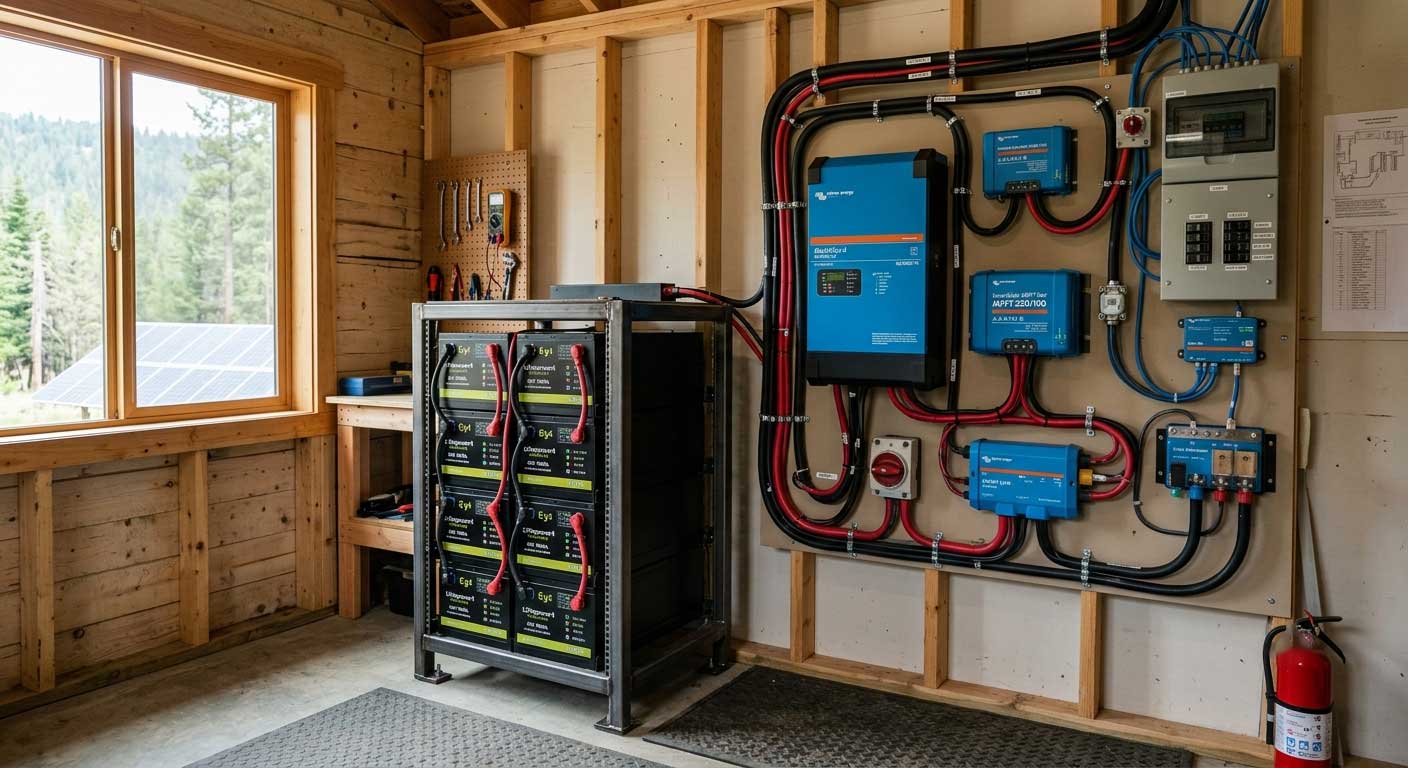
A complete system generally includes:
- Solar panels.
- MPPT charge controller.
- 48V battery bank.
- Inverter.
- DC protection devices.
- Monitoring equipment.
A common residential configuration:
- 8 × 450W modules.
- 48V 200Ah lithium battery.
- 5kW inverter.
- 100A MPPT controller.
Choosing Solar Panels for a 48V System
The best approach depends on the charge controller.
Examples:
| Module Size | Quantity | System Voltage |
|---|---|---|
| 450W | 4 panels | 48V |
| 550W | 4 panels | 48V |
| 300W | 6 panels | 48V |
Modern high-voltage modules work particularly well.
MPPT Controllers and 48V Charging
MPPT technology greatly improves efficiency.
According to NREL studies, advanced power electronics significantly increase energy harvest under changing conditions.
Reference:
A quality MPPT controller can:
- Increase charging efficiency.
- Optimize power output.
- Reduce energy loss.
- Improve battery life.
Common controller sizes:
- 60A MPPT.
- 80A MPPT.
- 100A MPPT.
Long-Tail Keyword Section — 48 Volt Solar Panels
Many installers search for “48 volt solar panels” because they want simplified system design.
In reality, the battery voltage determines the system architecture.
Large-format modules ranging from 400W to 600W have become popular choices.
According to the International Energy Agency, larger modules continue gaining market share because they reduce balance-of-system costs.
Source:
https://www.iea.org/reports/solar-pv
Long-Tail Keyword Section — 48V Solar System
A typical 48V solar system may power:
- Refrigerator.
- Lights.
- Internet equipment.
- Water pump.
- Television.
- Laptop charging.
- Air conditioning.
Approximate daily consumption:
| Appliance | Daily Energy |
|---|---|
| Refrigerator | 1.5 kWh |
| Lighting | 0.8 kWh |
| Electronics | 0.6 kWh |
| Small AC | 2–4 kWh |
Real Installation Experience
One customer in southern Spain upgraded from a 24V lead-acid system to a 48V lithium system.
The previous installation suffered:
- Voltage drop.
- Hot terminals.
- Large cables.
After conversion:
- Cable size reduced by nearly half.
- Charging efficiency improved.
- Inverter temperature decreased.
The customer’s monthly generator usage dropped substantially.
What surprised him most was not the extra solar production.
It was the silence.
The generator simply stayed off more often.
Bright Solar Engineering Perspective
At Bright Solar, we increasingly see customers requesting:
- 48V lithium compatibility.
- Higher charging efficiency.
- Lower installation costs.
- Expansion capability.
The future of off-grid systems is moving toward higher voltages because the economics become more favorable as power demand increases.
Smaller systems may still use 12V.
Medium systems often use 24V.
But larger installations increasingly choose 48V.
FAQ About 48V Solar Panel Off-Grid Systems
Is a 48V solar panel better than 24V?
For larger systems, yes. Lower current improves efficiency and reduces cable losses.
Can I charge a 48V battery directly?
Usually an MPPT controller is recommended between the 48 volt solar panels and battery.
What inverter works with 48V?
Most off-grid inverters from 3kW to 10kW support 48V battery banks.
Is 48V safer than high-voltage systems?
48V systems operate at relatively low DC voltages while still delivering excellent efficiency.
How many panels are needed?
System size determines 48 volt solar panels quantity.
Examples:
- 2kW system: 4–5 panels.
- 5kW system: 10–12 panels.
- 10kW system: 20+ panels.
Conclusion
The 48V solar panel market continues to grow because larger energy storage systems demand greater efficiency. Lower current, improved battery performance, reduced cable losses, and easier expansion make 48V systems attractive for off-grid homes, commercial installations, RVs, and modern energy storage projects.
Real-World Energy Production of a 48V Solar Panel System
The biggest misunderstanding surrounding a 48V solar panel system is that higher voltage somehow produces more electricity. It does not. The 48 volt solar panels collect the same sunlight. The advantage comes from moving the energy more efficiently.
During a 2025 off-grid installation in southern Portugal, a customer upgraded from a 24V lead-acid system to a 48V lithium battery bank while keeping almost the same solar capacity. The total energy production barely changed, but inverter losses decreased and cable temperatures dropped noticeably.
Typical daily production examples:
| System Size | Peak Sun Hours | Daily Production |
|---|---|---|
| 2kW | 5 hours | 8–10 kWh |
| 3kW | 5 hours | 12–15 kWh |
| 5kW | 5 hours | 20–25 kWh |
| 8kW | 5 hours | 32–40 kWh |
The National Renewable Energy Laboratory notes that system design, shading, orientation, and temperature significantly influence final output.
Reference:
Battery Sizing for a 48V Solar Panel System
Battery sizing often determines whether an off-grid system succeeds or fails.
A simple calculation:
Battery Capacity (Wh) = Voltage × Amp Hours
Example:
48V × 200Ah = 9,600Wh
Usable energy:
- Lead-acid battery: approximately 50%
- Lithium battery: approximately 80–90%
| Battery Bank | Usable Energy |
|---|---|
| 48V 100Ah | 4.8 kWh |
| 48V 200Ah | 9.6 kWh |
| 48V 300Ah | 14.4 kWh |
| 48V 400Ah | 19.2 kWh |
This capacity is sufficient for:
- Refrigerators.
- Lighting.
- Water pumps.
- Internet systems.
- Small air conditioners.
- Kitchen appliances.
Common Installation Mistakes
After seeing numerous installations, several mistakes appear repeatedly.
Oversized Inverter
Many users purchase a 10kW inverter for a 2kW solar array.
The inverter remains mostly unused while increasing system cost.
Undersized Battery Bank
Large solar arrays with insufficient battery storage often waste energy.
Ignoring Cable Length
Even with 48V systems, long cable runs still create losses.
Poor Ventilation
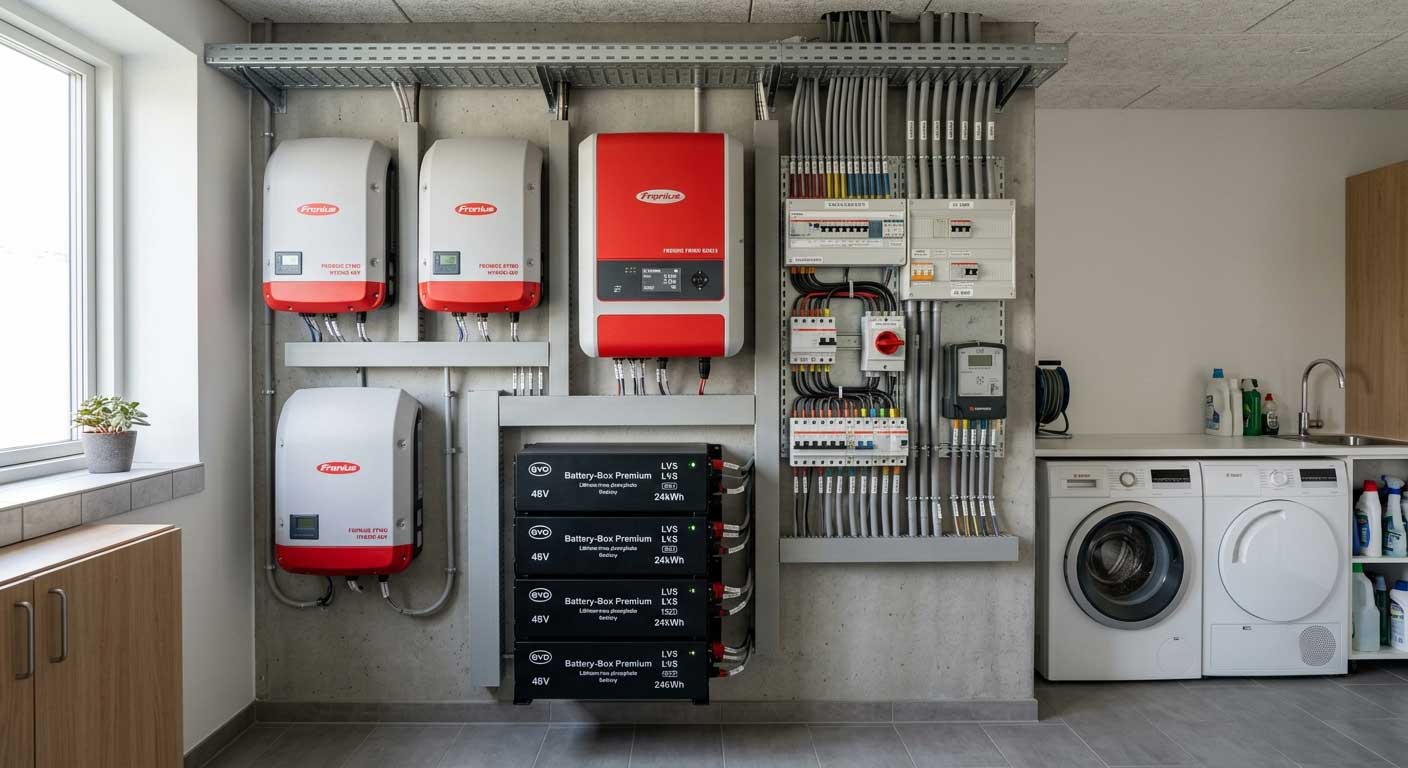
Battery rooms without airflow experience higher temperatures and reduced lifespan.
Cost Analysis of a 48V Solar Panel System
System pricing varies considerably depending on battery chemistry and equipment quality.
Approximate market ranges:
| System Size | Estimated Cost |
|---|---|
| 2kW | $2,500–4,000 |
| 3kW | $4,000–6,500 |
| 5kW | $6,500–10,000 |
| 10kW | $12,000–20,000 |
Battery storage frequently represents 40–60% of the total investment.
According to the International Energy Agency, battery prices have declined significantly over the past decade, accelerating adoption of residential energy storage.
Reference:
https://www.iea.org/reports/batteries-and-secure-energy-transitions
48V Solar Systems for RV Applications
Several large RV manufacturers have started adopting higher-voltage systems.
Advantages include:
- Smaller cable sizes.
- Higher inverter efficiency.
- Faster battery charging.
- Better air conditioner support.
- Reduced weight.
One RV project using a 48V lithium battery bank and 2.4kW solar array successfully operated:
- Refrigerator.
- Coffee machine.
- Microwave.
- Starlink internet.
- Air conditioning for limited periods.
The owner reported that generator use fell dramatically.
Commercial Applications
Commercial users increasingly select 48V systems because expansion becomes easier.
Typical applications:
- Remote telecom stations.
- Security monitoring.
- Agricultural irrigation.
- Small warehouses.
- Mobile offices.
- Outdoor power stations.
The telecommunications industry has used 48V DC systems for decades because of their reliability.
Bright Solar Engineering Insight
At Bright Solar, many customers initially request higher wattage 48 volt solar panels.
However, after discussing their actual energy needs, the conversation often shifts toward voltage architecture.
A properly designed 48V system frequently delivers:
- Better efficiency.
- Lower installation costs.
- Simpler maintenance.
- Easier future upgrades.
The largest savings often come not from buying larger 48 volt solar panels, but from reducing energy losses throughout the system.
FAQ About 48V Solar Panel Off-Grid Power Systems
Can I use regular solar panels with a 48V battery?
Yes. Multiple panels connected in series and combined with an MPPT controller can charge a 48V battery bank.
What is the best battery type?
Lithium batteries generally provide:
- Higher cycle life.
- Deeper discharge.
- Lower maintenance.
- Better efficiency.
How long do 48V batteries last?
Typical lifespans:
- Lead-acid: 3–7 years.
- Lithium: 10–15 years.
Is 48V enough for air conditioning?
Yes.
Many modern off-grid systems successfully operate inverter air conditioners using 48V lithium batteries and sufficient solar capacity.
Can I expand later?
One advantage of 48V systems is scalability.
Additional:
- Solar panels.
- Batteries.
- Inverters.
can often be added later.
Visit product page: Flexible Solar Panel
Final Thoughts
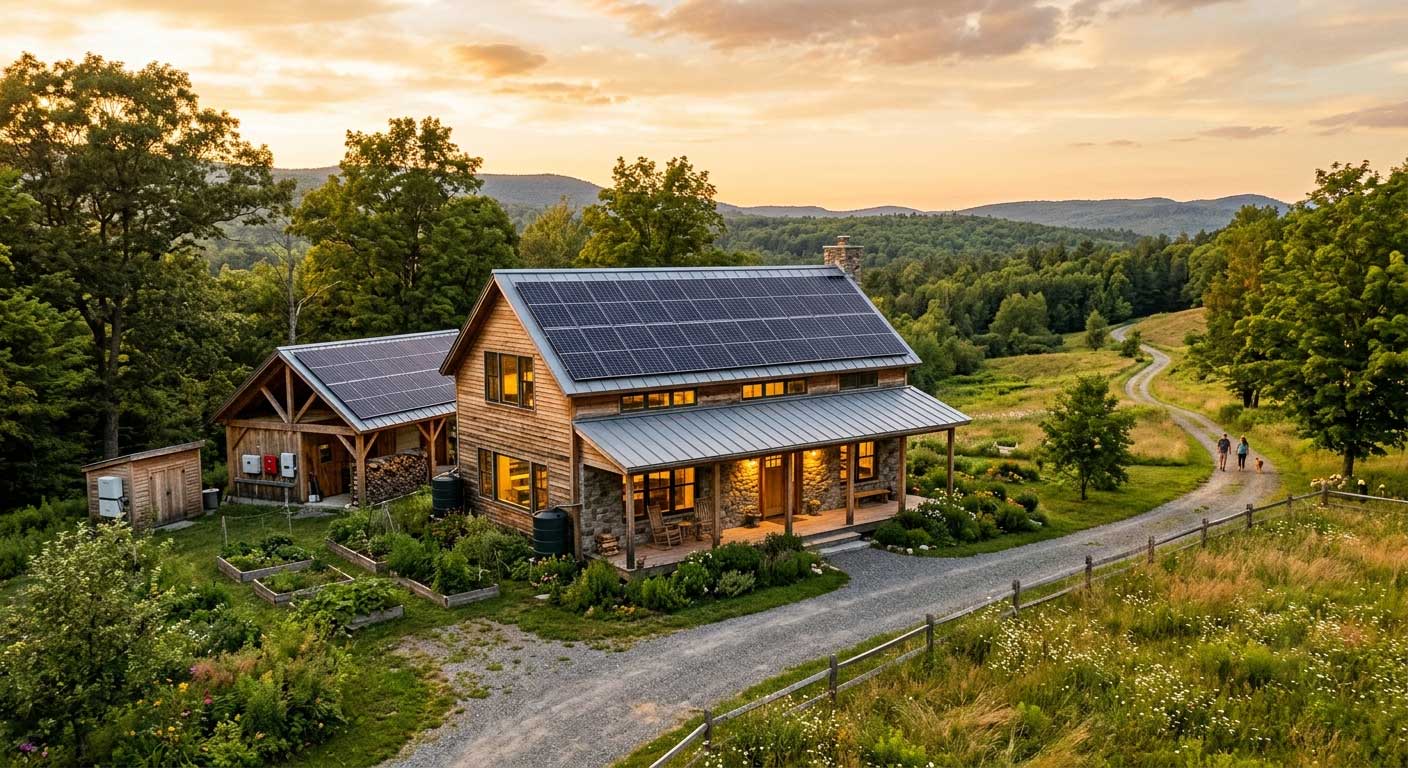
The rise of the 48V solar panel system reflects the changing needs of modern energy users. As battery storage becomes more affordable and energy demands continue growing, higher-voltage systems offer meaningful advantages.
Lower current, improved efficiency, reduced cable losses, and easier expansion make 48V architecture suitable for:
- Off-grid homes.
- Energy storage systems.
- Large RVs.
- Commercial applications.
- Remote buildings.
The strongest systems are not necessarily the largest. They are the ones where panels, batteries, controllers, and loads work together efficiently.
For many modern installations, 48V is no longer the future. It has already become the standard.
Related recommendations
-

Solar Roof Tile Solutions from Bright Solar for Modern Homes
312Solar Roof Tile from Bright Solar combines power generation and roofing in one, offering a discreet alternative to traditional solar panels while protecting your home and reducing electricity bills.
View details -
Flexible Amorphous Solar Panels: Uses, Efficiency and Buying Guide
138Flexible amorphous solar panels use thin-film amorphous silicon in lightweight, bendable modules for curved, lightweight, or unconventional surfaces.
View details -
Solar Panels for Battery Charging: How to Choose the Right System and Maximize Battery Performance
200Discover how solar panels for battery charging work, how to size the right system, avoid charging mistakes, and maximize battery life with Bright Solar solutions.
View details -
solar panel 100w flexible (Real Compact Off-Grid Guide from Bright Solar)
237solar panel 100w flexible explained with RV installation cases, real output data, mounting insights, and off-grid performance analysis for travel and camping use.
View details