140 Watt Folding Solar Panel: Output, Battery Charging and Camping Guide
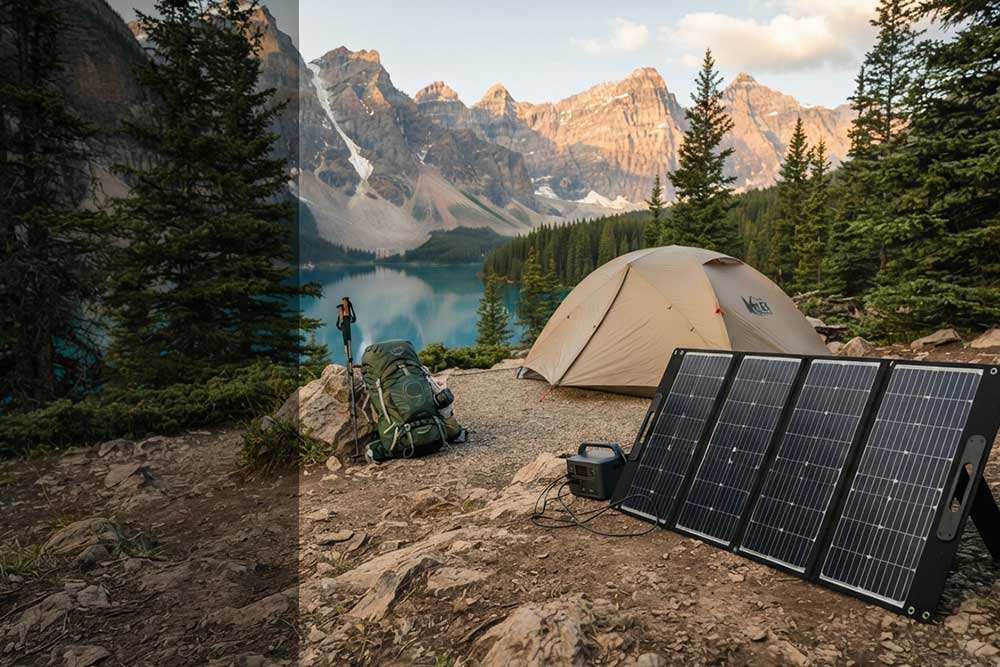
A 140 watt folding solar panel can provide portable power for camping, RV trips, and small off-grid systems. Under standard test conditions, it is rated to produce 140 watts; actual energy depends on sunlight, panel angle, temperature, shading, and charge-controller efficiency.
For buyers comparing portable panels, the important question is not simply whether 140 watts is enough. It is whether the panel can collect enough energy during the hours you have available, then deliver it safely to the battery or device you need to power.
What Can a 140 Watt Folding Solar Panel Power?
A 140W folding panel is best treated as a compact energy source for modest daily loads rather than a replacement for a large rooftop solar system. Its folding construction makes it easier to transport and reposition than a permanently mounted panel.
Typical applications include:
- Camping: charging phones, headlamps, GPS devices, cameras, and USB power banks.
- RV travel: replenishing a compatible leisure battery while parked in sunlight.
- Van life: supporting lights, small electronics, and selected low-power DC equipment.
- Emergency backup: providing daytime charging when grid power is unavailable.
- Remote work: extending the runtime of a portable power station for laptops and communication equipment.
Whether a specific appliance can run directly from the panel depends on its input requirements and the panel’s electrical output. Many devices need a regulated USB output, a suitable DC converter, a battery, or a portable power station.
A refrigerator, electric kettle, space heater, or other high-demand appliance may consume more energy than a 140W panel can reliably replace each day. The panel’s rated wattage alone cannot establish whether such equipment is practical.
Rated Power Is Not the Same as Daily Energy
Watts describe instantaneous power. Watt-hours describe energy collected over time.
A simple planning estimate is:
Daily energy (Wh) = panel rating (W) × equivalent peak-sun hours × system efficiency
For example, using an illustrative efficiency factor of 75–85%:
| Equivalent peak-sun hours | Estimated daily energy |
|---|---|
| 2 hours | 210–238 Wh |
| 4 hours | 420–476 Wh |
| 5 hours | 525–595 Wh |
| 6 hours | 630–714 Wh |
These are planning estimates, not guaranteed outputs or a performance claim for a particular Bright Solar product. Actual results can fall outside this range when conditions are unusually poor or favorable. The peak-sun-hour figure represents solar energy equivalent to full rated sunlight, not simply the number of hours between sunrise and sunset.
The U.S. Department of Energy explains the basic factors involved in photovoltaic system design, while NREL’s PVWatts calculator can help estimate solar production using location and system assumptions.
Sources:
- U.S. Department of Energy, Solar Photovoltaic System Design Basics
- National Renewable Energy Laboratory, PVWatts Calculator
How to Choose a 140W Folding Solar Panel for Camping
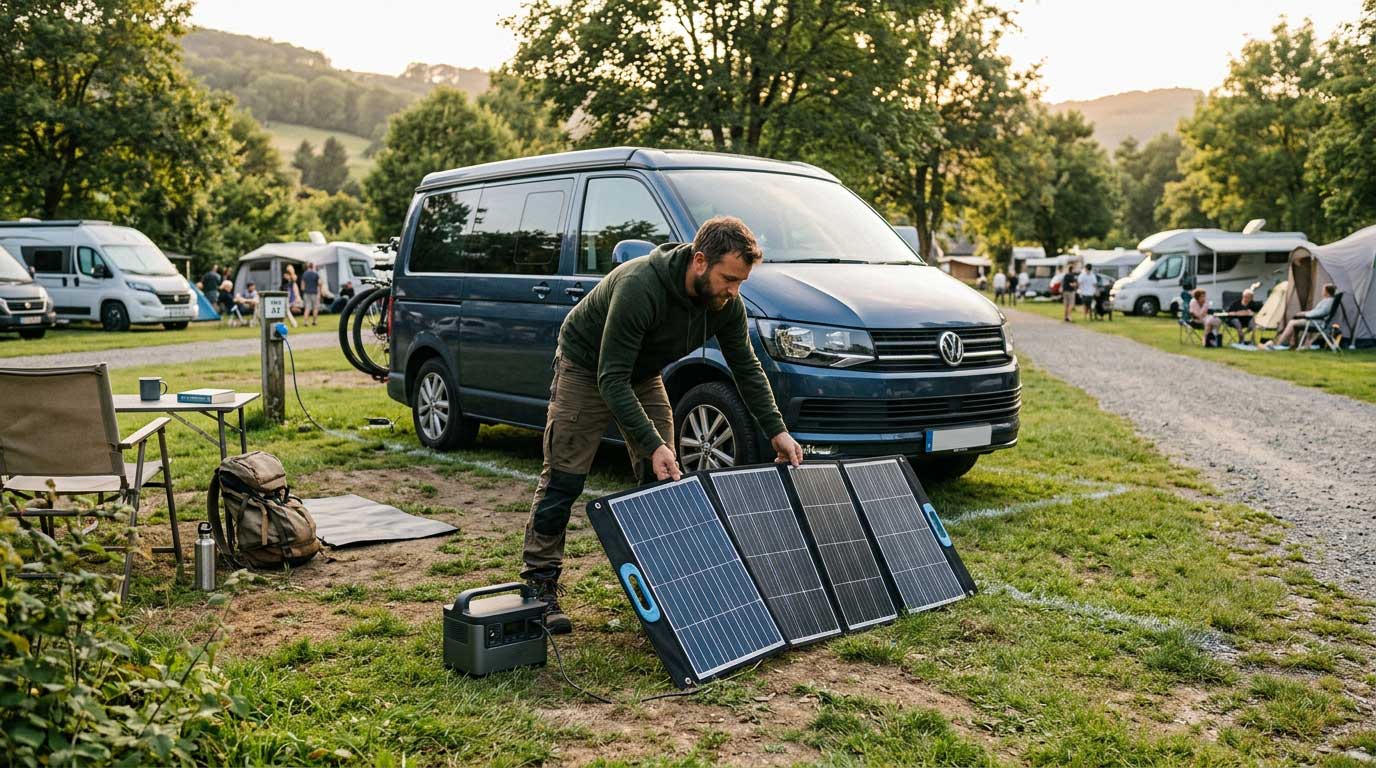
Two panels with the same advertised wattage can differ in portability, weather resistance, connector compatibility, and how easily they can be positioned. Those details become noticeable when you are setting up beside a campervan, moving around a campsite, or packing equipment away in changing weather.
Check the Folded Size and Carrying Weight
A folding solar panel should fit the way you travel. Before purchasing, compare its folded dimensions with the available storage space in your RV, car trunk, or camping gear compartment.
Look for:
- Folded dimensions and total panel weight.
- A carrying handle or bag, if included.
- Support legs or an adjustable stand, if included.
- Cable length and how the cables are stored.
- Whether the panel can be set up without leaning it against a vehicle or tree.
Do not assume that a folding design is automatically lightweight or suitable for hiking. Some Portable Solar Panels are intended to be carried from a vehicle to a nearby campsite, while others are designed for longer walks. Confirm the actual product specifications before making that distinction.
Compare the Electrical Specifications
The label “140 watt” tells you the rated power, but it does not tell you everything needed to connect the panel safely.
| Specification | Why it matters |
|---|---|
| Rated power | Indicates the panel’s nominal output under specified test conditions |
| Voltage at maximum power (Vmp) | Helps determine whether the panel matches the charging equipment |
| Current at maximum power (Imp) | Helps establish expected operating current |
| Open-circuit voltage (Voc) | Important when checking the controller’s maximum PV input voltage |
| Short-circuit current (Isc) | Helps verify current limits and suitable protection |
| Connector type | Determines whether a compatible cable or adapter is required |
| Controller compatibility | Establishes whether the panel can charge the intended battery safely |
| Warranty and weather rating | Helps clarify the product’s intended use and protection limits |
Ask the supplier for the complete electrical datasheet rather than relying on the wattage printed in a product title. The Vmp, Imp, Voc, and Isc values must come from the specific panel model; they should not be guessed from the rated power.
Decide Whether You Need a Controller
A folding panel may include a charge controller, offer one as an accessory, or require a separate controller. Check the exact configuration.
A compatible controller regulates the charging process and helps prevent a battery from being charged outside its permitted limits. For lithium batteries, the charging profile must match the battery manufacturer’s requirements. Lead-acid batteries also have chemistry-specific charging requirements.
A panel’s open-circuit voltage can be higher than its operating voltage. Therefore, matching a controller based only on a general “12V panel” label is not sufficient. Confirm the panel’s maximum voltage under the expected conditions and remain within the controller’s input rating.
How to Charge a Battery with a 140 Watt Folding Solar Panel
The setup is straightforward when each component is compatible. A typical system includes the folding panel, the correct cable, a solar charge controller when required, and a battery or power station that accepts the panel’s output.
Step 1 — Check the Battery and Charging Input
Start with the battery or power station manual. Confirm its nominal voltage, chemistry, maximum solar input voltage, maximum charging current, and connector requirements.
Some portable power stations accept solar input through a dedicated DC or proprietary connector. Others require a particular voltage range. A panel can be within its rated wattage and still be incompatible if its voltage or connector does not meet the station’s requirements.
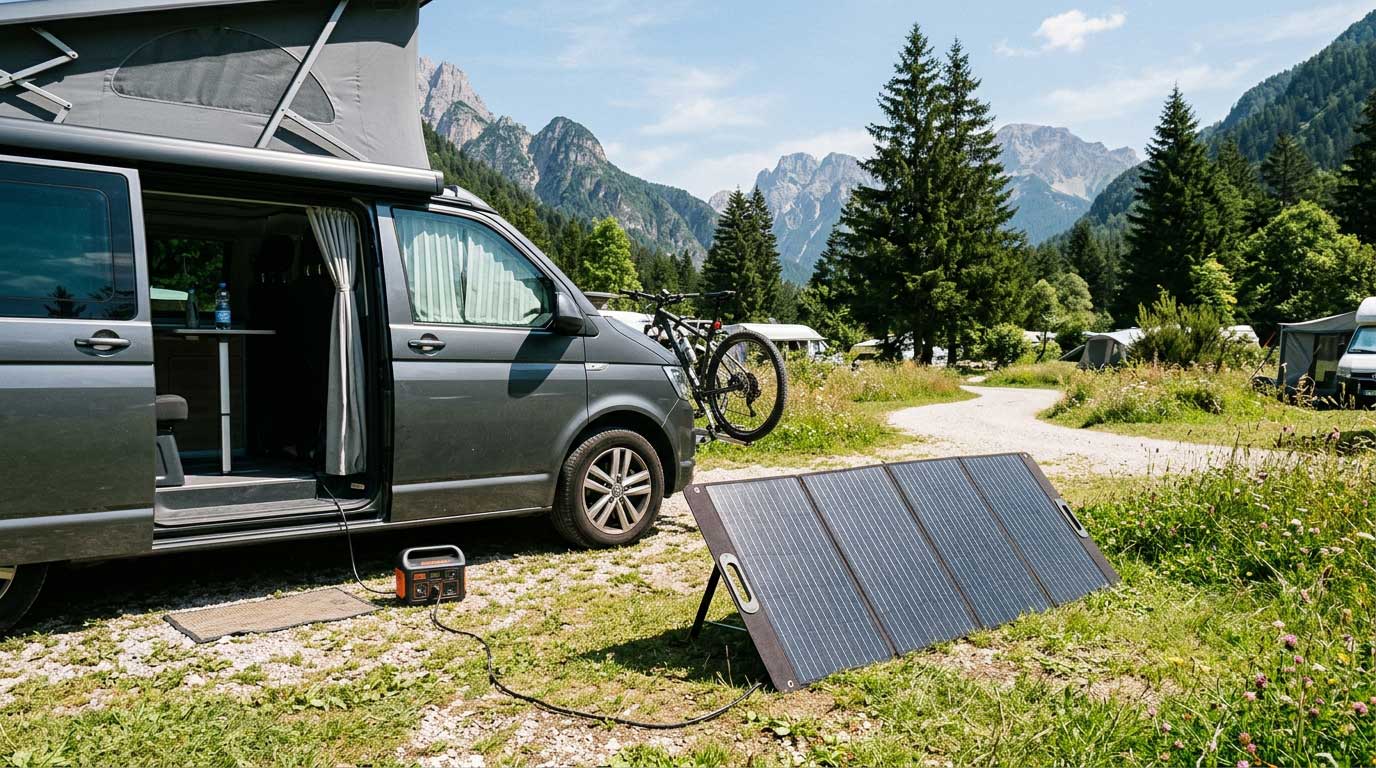
Step 2 — Position the Panel in Direct Sunlight
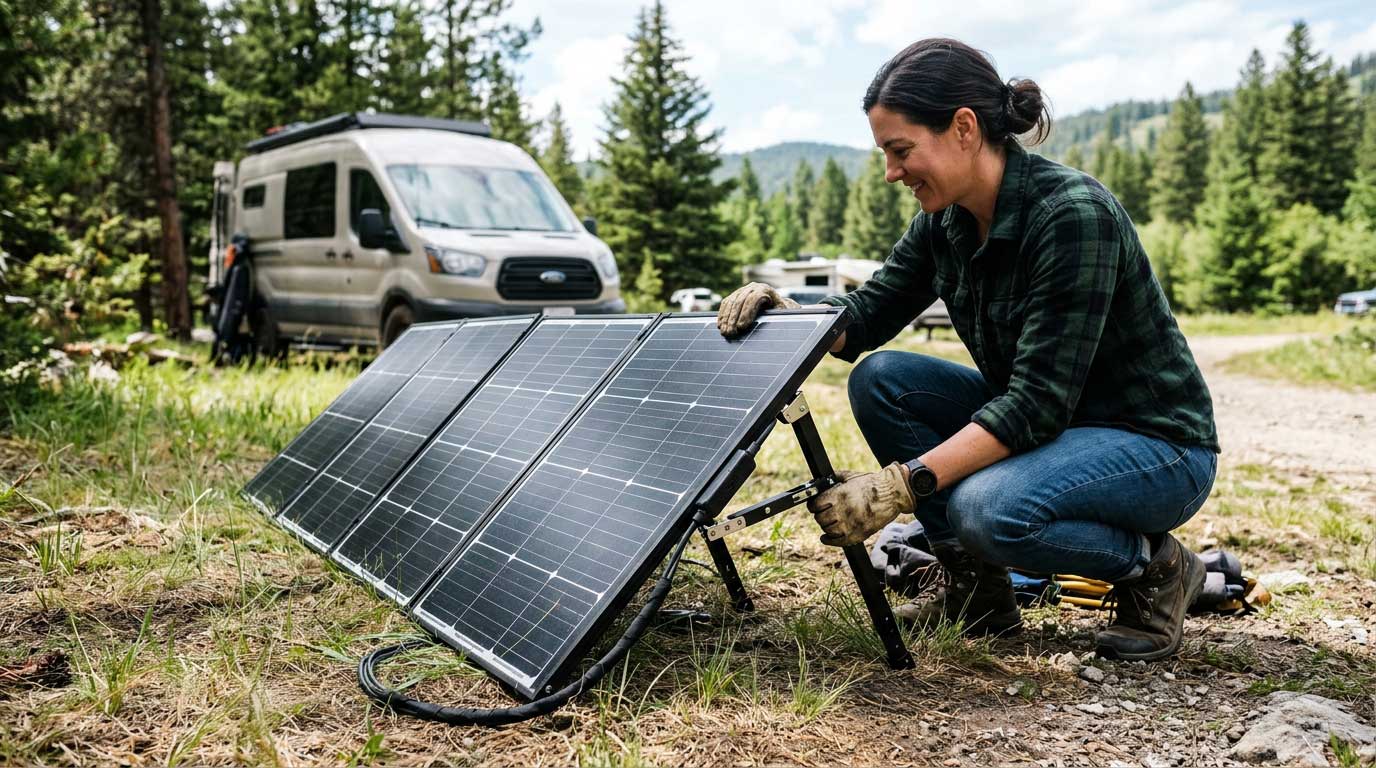
Open the panel fully and place it on stable ground. Point it toward the sun, following the manufacturer’s guidance for the location and season. Keep the active surface clear of shadows.
Small shadows can matter. A tent pole, roof rack, tree branch, or person standing close to the panel may shade part of the solar surface. The effect depends on the cell layout and electrical design, so do not assume that a panel will retain most of its output whenever only a small area is shaded.
Step 3 — Connect the Components in the Correct Order
Follow the panel, controller, battery, or power-station manufacturer’s instructions. For a separate controller and battery, the recommended connection sequence varies by equipment; many controllers require the battery to be connected before the solar input so the controller can identify system voltage. Other products may specify a different procedure.
A safe general checklist is:
- Place the panel where it cannot slide, tip over, or be driven over.
- Inspect the cables and connectors for damage or moisture.
- Confirm the controller’s voltage and current ratings.
- Connect the battery and panel in the sequence specified by the equipment manuals.
- Check the controller or power station display for charging status.
- Disconnect in the order specified by the manufacturer before packing away.
Never connect exposed conductors in a way that could short-circuit the panel. A panel can produce electricity whenever it is illuminated. Keep connectors dry unless the manufacturer specifically rates them for the conditions, and do not disconnect a live circuit contrary to the equipment instructions.
Step 4 — Monitor Charging Performance
Record the input power shown on the controller or power station after setup. A reading well below 140W does not automatically indicate a fault. Sun angle, clouds, cell temperature, battery charging limits, and the connected device’s input ceiling can all affect the reading.
Check again after repositioning the panel. If the output changes substantially, note the time, weather, panel angle, and any shading. These observations are more useful than a single measurement taken in unknown conditions.
How Much Battery Energy Can a 140 Watt Folding Solar Panel Replace?
The answer depends on the battery capacity, charging conditions, and energy consumed by your equipment. A worked example can show how to estimate the result without presenting it as a guaranteed outcome.
Imagine a camper uses a 12V battery rated at 100Ah. The nominal stored energy is:
12V × 100Ah = 1,200Wh (1.2kWh)
This is the nominal energy figure, not necessarily the usable energy. The battery chemistry, depth-of-discharge limits, temperature, age, and charging system affect how much energy can be used safely.
If the panel delivers an illustrative 450Wh of usable charging energy on a given day, that amount is equivalent to 37.5Ah at a nominal 12V before accounting for battery-side charging behavior and conversion losses:
450Wh ÷ 12V = 37.5Ah
The panel does not necessarily restore 37.5Ah to every 12V battery in every situation. Charging voltage is not always exactly 12V, and the controller and battery affect the final result. The calculation is a convenient first estimate for planning, not a substitute for a measured charge current.
Estimate Your Daily Loads
List the devices you expect to use and estimate their energy consumption. For equipment rated in watts, multiply its power by the hours it runs.
| Example load | Assumed power | Assumed daily use | Estimated energy |
|---|---|---|---|
| LED camp light | 5W | 4 hours | 20Wh |
| Phone charging | 10W | 2 hours | 20Wh |
| Small USB fan | 8W | 5 hours | 40Wh |
| Laptop charging | 45W | 2 hours | 90Wh |
| Total | — | — | 170Wh |
These are illustrative figures, not measured consumption for particular products. Actual device input varies by model, operating mode, battery level, and conversion losses.
In this example, the daily load totals 170Wh. A 140W panel could potentially cover that energy use under suitable sunlight, while leaving some energy available for battery charging. In cloudy weather or a shaded campsite, however, the available solar energy could be much lower. Plan for consecutive low-sun days if the equipment is important.
Real-World Factors That Reduce Solar Output
A portable panel’s rated power is measured under defined test conditions, not under every condition encountered outdoors. The U.S. Department of Energy’s overview of photovoltaic technology explains how solar cells convert light into electricity; the actual energy collected by a portable system still depends on the installation environment and system design.
Cloud Cover, Shade, and Panel Angle
Clouds reduce the sunlight reaching the panel. Diffuse light can still generate electricity, but output may fall well below the rated figure. Partial shading can also cause a disproportionate reduction depending on the panel’s internal cell connections and bypass-diode design.
Panel angle matters because the amount of sunlight captured changes as the sun moves. A panel lying flat on the ground may be convenient, but it may not receive sunlight as directly as a correctly angled panel. Reposition it when practical, and avoid placing it where people, awnings, or vehicle doors repeatedly cast shadows.
Heat, Dirt, and Poor Ventilation
Solar panels are often used on hot summer trips, yet higher cell temperatures can reduce photovoltaic voltage and power. Keep the panel on its intended support system and follow the manufacturer’s ventilation instructions. Do not cover the back of the panel with blankets or place it against a hot surface unless the product is specifically designed for that installation.
Dust, pollen, dried water marks, and bird droppings can reduce the light reaching the cells. If the manufacturer permits cleaning, use a soft cloth and suitable water, then allow the panel to dry before folding it away. Avoid abrasive materials that can scratch the surface or damage protective layers.
Keep a Simple Output Log
For a trip lasting several days, record the charging input at roughly the same time each day. Include weather conditions, panel angle, and whether any shadows crossed the panel.
This simple record helps distinguish a weather-related drop from a connector problem or an input limit imposed by the power station. If the panel is used for regular off-grid work, an energy log is more useful than relying on the rated wattage alone.
Using a 140 Watt Folding Solar Panel with a Portable Power Station
A portable power station can simplify the setup because the battery, charge control, and device outputs are housed in one unit. Compatibility still matters: the station’s solar input must accept the panel’s voltage and connector, and the panel’s output must stay within the station’s limits.
Before connecting, check three details in the power station manual:
- Solar input voltage range: the panel’s operating voltage must be suitable, and its open-circuit voltage must not exceed the maximum permitted input.
- Maximum solar input power and current: a station may limit how much power it can accept, even if the panel could theoretically produce more.
- Connector and polarity: use the correct cable and confirm the wiring arrangement before plugging in.
A station’s advertised battery capacity does not tell you how quickly it will charge. Charging time depends on the energy needed to refill the battery and the average power actually accepted during the charging period.
For a simplified estimate, if a power station needs 500Wh of additional energy and receives an average of 70W from the panel, the idealized time is:
500Wh ÷ 70W ≈ 7.1 hours
Real charging can take longer because the input varies with sunlight, conversion losses, temperature, and the station’s charging behavior. This calculation is an example, not a promise of charging time for a specific product.
What About Direct USB Charging?
Some folding solar panels have built-in USB outputs; others provide only panel leads and require a compatible controller or power station. Check the actual product configuration. If a device is sensitive to changes in input power, charging through a battery or regulated output may be more reliable than using an unregulated solar connection.
Do not assume that a panel includes USB-C Power Delivery, a charge controller, or a particular adapter simply because it is portable. Those are model-specific features that should be confirmed before purchase.
How to Store and Maintain a Folding Solar Panel
Portable equipment often gets damaged during packing rather than while it is generating power. Folding panels may have hinges, fabric sections, protective layers, connectors, and cables that need to be handled according to the product’s instructions.
Use this quick maintenance checklist:
- Let the panel cool and dry as directed before folding it.
- Remove loose dirt before closing the panel so grit is not trapped against the surface.
- Keep cables free from sharp bends, crushing, and tension at the connectors.
- Store the panel in its intended case or protective sleeve, if supplied.
- Avoid placing heavy camping equipment on top of the folded panel.
- Inspect connectors and cable insulation before the next use.
- Follow the manufacturer’s storage temperature and cleaning guidance.
Do not assume every folding panel is waterproof or safe to leave outdoors overnight. Look for the specific ingress-protection rating, if one is provided, and determine whether that rating applies to the panel, its connectors, or only selected components. Protect the equipment from rain and moisture whenever its documented rating and instructions do not clearly support exposure.
Is a 140 Watt Folding Solar Panel Right for You?
A 140W folding panel is worth considering when portability and moderate daily energy collection matter more than maximizing total solar capacity. It can suit campers who want to charge personal electronics, support a portable power station, or supplement an RV battery during sunny stops.
It may be less suitable if you need to run energy-intensive appliances every day, depend on reliable charging through several cloudy days, or want a fixed system that requires little setup. In those situations, compare a larger panel, multiple compatible panels, or a permanent installation. If adding panels in parallel or series, verify the controller’s voltage and current limits before connecting them.
For procurement teams and businesses sourcing panels for a product range, confirm the complete datasheet, folded dimensions, weight, connector options, controller configuration, warranty terms, and any relevant certifications. Bright Solar buyers should request model-specific documentation before using electrical values in product listings or system designs. The 140W label is a starting point—not a substitute for a verified specification sheet.
FAQ About a 140 Watt Folding Solar Panel
How much power does a 140 watt folding solar panel produce per day?
A 140W panel could produce around 420–476Wh over a day with four equivalent peak-sun hours and an illustrative 75–85% system-efficiency factor. Actual production varies with sunlight, shading, temperature, and equipment losses.
Can a 140W folding solar panel charge a 12V battery?
Yes, if the panel and charging equipment are compatible with the battery. Use a suitable charge controller when required, verify the panel’s voltage and current ratings, and follow the battery manufacturer’s charging instructions.
Can a 140 watt folding solar panel run a refrigerator?
It depends on the refrigerator’s energy consumption and the available sunlight. A small efficient 12V refrigerator may use a substantial share of the panel’s daily energy, so a battery and a careful energy budget are usually important. Check the refrigerator’s actual daily consumption rather than judging suitability by its startup wattage alone.
How long does it take to charge a portable power station?
Charging time depends on the station’s remaining capacity, its maximum solar input, and the average power received from the panel. Divide the energy required in watt-hours by the average accepted charging power for an initial estimate, then allow extra time for variable sunlight and charging losses.
Does a folding solar panel work on cloudy days?
Yes, photovoltaic panels can generate electricity from diffuse daylight, but output is generally lower than under strong direct sunlight. Heavy cloud cover can reduce production substantially, so avoid relying on the panel’s rated 140W output as a cloudy-day expectation.
Can I leave a folding solar panel outside overnight?
Only if the manufacturer explicitly permits the expected exposure. Check the panel’s weather-protection specifications and connector limitations. When the rating is unclear, bring the panel inside and store it dry rather than assuming it can withstand rain or overnight condensation.
What should I check before buying a 140 watt folding solar panel?
Compare rated power, Vmp, Imp, Voc, Isc, folded dimensions, weight, connector type, controller requirements, warranty, and weather-protection details. Also confirm whether a carrying case, support legs, controller, or USB outputs are included in the specific model.
Conclusion
A 140 watt folding solar panel can be a practical source of portable electricity for camping, RV travel, and modest off-grid charging. Its real value depends on the energy it collects over the day, how efficiently the system stores that energy, and whether the panel matches the connected battery or power station. Estimate your daily loads, check the electrical specifications, and plan for less productive weather before choosing a system. For Bright Solar buyers, verified model data and the intended application should guide the final selection.
Author and Technical References
Author: Bright Solar Technical Content Team
Editorial focus: Portable photovoltaic systems, solar panel specifications, battery-charging compatibility, and practical off-grid power planning.
This article uses illustrative energy calculations for planning purposes. It does not claim measured performance from a named customer installation or assign unverified electrical specifications to a Bright Solar product. For system design, consult the relevant equipment manuals and a qualified solar professional where necessary.
Authoritative references
- U.S. Department of Energy — Solar Photovoltaic System Design Basics
- U.S. Department of Energy — Solar Photovoltaic Cell Basics
- National Renewable Energy Laboratory — PVWatts Calculator
Related recommendations
-

300 w solar panels: Output, Sizing and Installation Guide
278300W solar panels provide 300W of rated DC power under STC, while actual daily energy depends on sunlight, temperature, shading, orientation, system losses, ...
View details -
High Efficiency Flexible Solar Panels: Advanced Lightweight Solar Power Solution
128Discover high efficiency flexible solar panels from Bright Solar. Learn how advanced materials improve solar output, flexibility, and performance for RV, marine, and off-grid applications.
View details -
Flexible 400 Watt Solar Panel: Output, Uses and Installation
150A flexible 400 watt solar panel can suit selected RV, marine, and off-grid systems, but actual energy output depends on sunlight, temperature, shading, orien...
View details -
Foldable Solar Panel for Camping: How to Choose and Use One
64A foldable solar panel for camping provides portable electricity for compatible devices and power stations. Choosing the right panel requires matching wattag...
View details