400w Solar Panel Flexible: High Power Solar Solution for RV and Off-Grid Applications
A 400w solar panel flexible is a high-power lightweight solar solution designed for users who need more electricity from limited installation space. It combines 400-watt energy output with flexible construction, making it suitable for RVs, boats, mobile systems, and off-grid applications.
When customers contact Bright Solar about flexible solar panels, the first question is usually not about wattage.
It is about installation reality.
“Can it fit my curved RV roof?”
“Can it handle marine conditions?”
“Can I get enough power without adding heavy equipment?”
Those questions are exactly why flexible solar technology continues growing.
A traditional rigid solar panel may deliver excellent performance on a flat rooftop.
However, real-world applications are often different.
A camper roof may have limited space.
A boat deck may have curved surfaces.
A remote monitoring system may need lightweight equipment.
In these situations, a 400w solar panel flexible provides a practical balance between power output and installation freedom.
At Bright Solar, we have spent years working with customers looking for customized solar solutions.
From RV manufacturers in Europe to outdoor equipment suppliers in North America, we have learned one thing:
Solar products need to solve practical problems, not only provide technical specifications.
What is a 400w solar panel flexible?
A 400w solar panel flexible is a photovoltaic module capable of producing up to 400 watts of electrical power while using a flexible structure instead of a traditional rigid glass frame.
Unlike conventional solar panels that usually rely on aluminum frames and thick glass layers, flexible solar panels use lightweight materials designed for easier integration.
The main components include:
| Component | Function |
|---|---|
| Monocrystalline solar cells | Convert sunlight into electricity |
| ETFE or protective surface layer | Improves durability and weather resistance |
| Encapsulation layer | Protects internal solar cells |
| Flexible substrate | Allows bending and lightweight installation |
| Junction box | Transfers electrical output |
Modern flexible solar panels commonly use monocrystalline cells because they provide higher efficiency compared with older photovoltaic technologies.
According to the U.S. Department of Energy Solar Energy Technologies Office, improvements in photovoltaic materials and manufacturing processes continue increasing solar module efficiency and reducing costs.
Source:
U.S. Department of Energy – Solar Energy Technologies Office
https://www.energy.gov/eere/solar
Why choose a 400w solar panel flexible?
The biggest advantage of a flexible 400W solar panel is combining strong energy production with installation flexibility.
Many customers do not need the largest solar system.
They need the right solar system for their environment.
A 400W flexible panel provides:
- High power output
- Reduced installation complexity
- Better space utilization
- Lower structural requirements
- Compatibility with curved surfaces
High power generation in limited areas
Space is one of the biggest challenges in mobile solar applications.
For example:
An RV roof may only provide a few square meters of usable area.
A boat owner may need to install solar without blocking:
- Walking areas
- Equipment access
- Navigation systems
A 400W output allows users to generate more electricity without installing many smaller modules.
Compared with multiple low-power panels, one higher-output flexible panel can simplify:
- Wiring
- Mounting
- Maintenance
Lightweight design for mobile applications
Weight matters significantly for vehicles and marine equipment.
Every additional kilogram affects:
- Fuel consumption
- Transportation
- Installation difficulty
Flexible solar panels remove some limitations of traditional rigid designs.
Common applications include:
| Application | Why Flexible Solar Works |
|---|---|
| RV roof | Lightweight and adaptable |
| Boat cabin | Fits curved surfaces |
| Portable energy systems | Easy transportation |
| Remote equipment | Simple installation |
Better integration with customized projects
Many solar projects are not standard.
Bright Solar frequently receives requests from customers who need panels for:
- Special vehicle designs
- Outdoor equipment
- Marine structures
- Industrial applications
A flexible 400W panel provides more design possibilities compared with traditional modules.
400w solar panel flexible applications
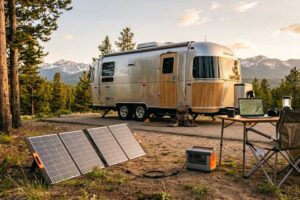
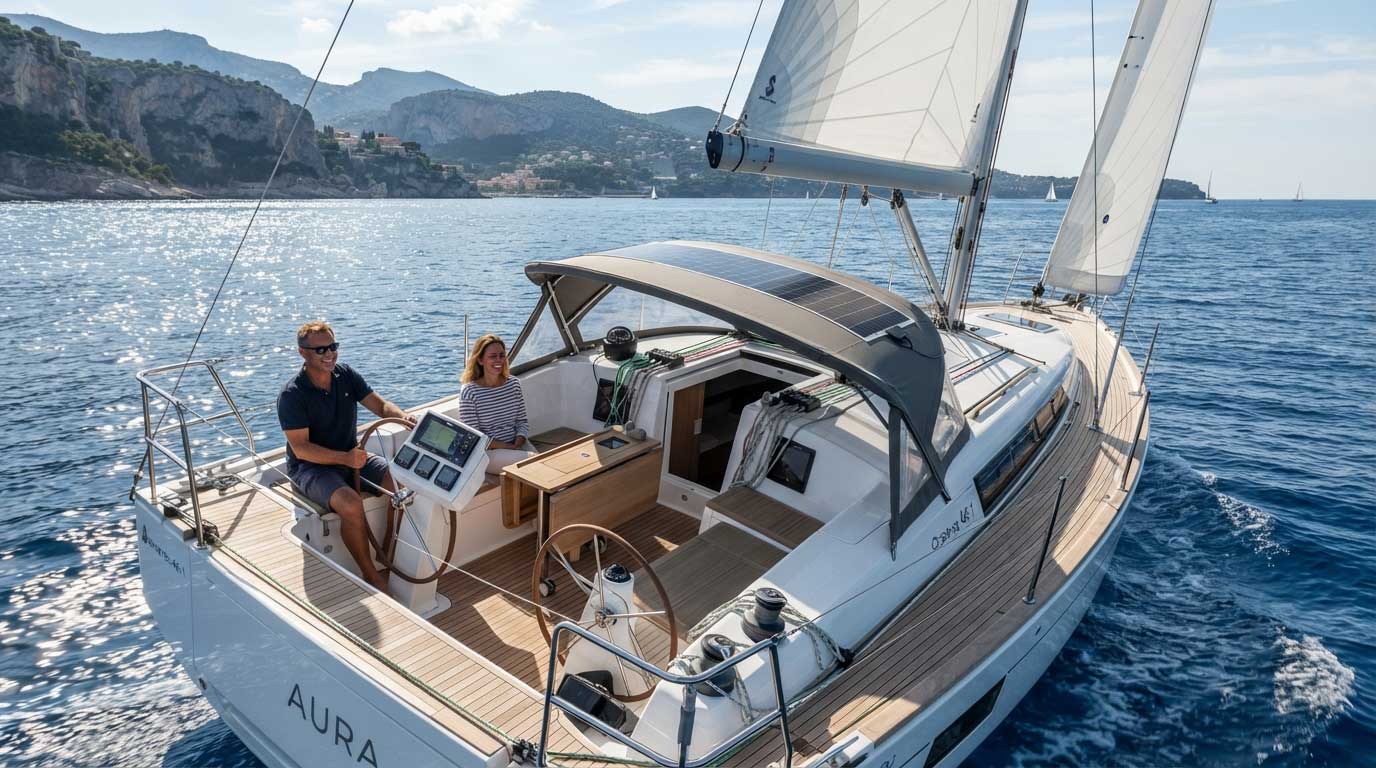
RV and camper solar systems
The RV market is one of the strongest applications for flexible solar panels.
Modern travelers increasingly want energy independence.
They need electricity for:
- Refrigerators
- Lighting
- Cameras
- Communication devices
- Portable electronics
A 400W flexible solar panel can become the main energy source for many medium-sized RV systems.
A real example from Bright Solar:
A European camper manufacturer contacted our team because their customers wanted longer off-grid travel capability.
Their original design used traditional rigid panels.
The problems were:
- Increased roof weight
- Difficult installation
- Limited roof layout options
After switching to flexible solar technology, the manufacturer achieved:
| Improvement | Result |
|---|---|
| Roof integration | Easier |
| System appearance | Cleaner |
| Installation process | Faster |
| Weight management | Improved |
The project showed that solar performance is not only about maximum output.
Installation efficiency matters too.
Marine solar applications
Boats create some of the most challenging solar installation environments.
Marine users face:
- Limited space
- Curved surfaces
- Salt exposure
- Weather changes
A flexible 400W solar panel can provide power for:
- Navigation electronics
- Battery charging
- Communication systems
- Marine equipment
Flexible construction allows the panel to follow certain curved surfaces where rigid modules cannot be installed easily.
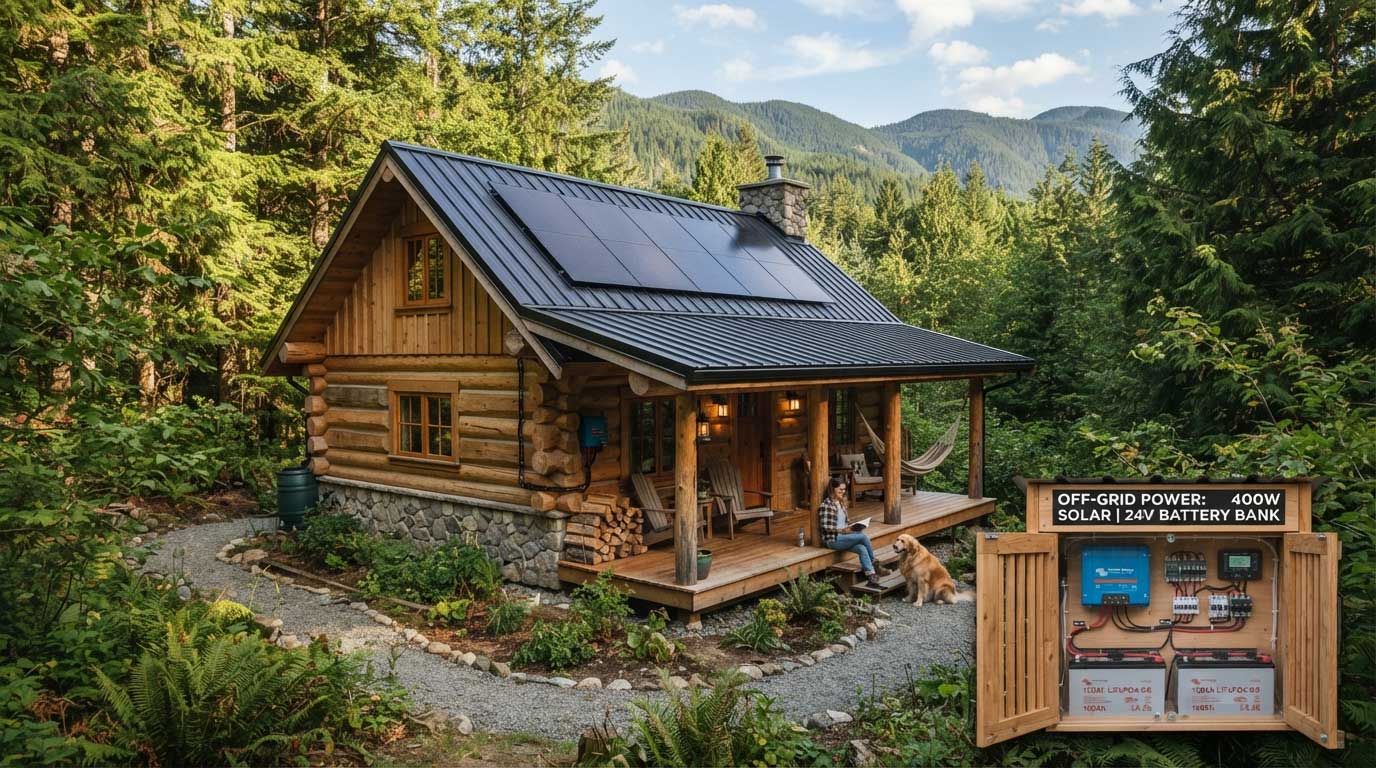
Off-grid energy systems
Remote locations often require independent power.
Examples include:
- Field monitoring stations
- Outdoor research equipment
- Emergency systems
A 400W flexible solar panel can work together with:
- Lithium batteries
- MPPT controllers
- Portable power stations
Creating a complete off-grid solution.

How much power can a 400w solar panel flexible produce?
A common misunderstanding about solar panels is assuming that a 400W panel will always produce exactly 400 watts.
In reality, the actual energy generation depends on several factors:
- Sunlight intensity
- Installation angle
- Temperature
- Shading conditions
- Solar controller efficiency
- Geographic location
The “400W” rating represents the maximum output under standard test conditions (STC), normally measured at:
- Irradiance: 1000 W/m²
- Cell temperature: 25°C
- Air mass: AM1.5
These testing conditions are defined by international photovoltaic testing standards.
According to the National Renewable Energy Laboratory (NREL), real-world photovoltaic output varies depending on environmental conditions and system design.
Source:
National Renewable Energy Laboratory (NREL)
https://www.nrel.gov/solar/
For example, a 400W flexible solar panel installed on an RV in Arizona may produce significantly more daily energy than the same panel installed in a cloudy northern climate.
A simple estimation:
Daily energy production = Solar panel wattage × Peak sun hours × System efficiency
Example:
400W × 5 peak sun hours × 80% efficiency
≈ 1,600Wh per day
That means one flexible 400W solar panel could generate approximately:
1.5–2kWh of electricity per sunny day under favorable conditions.
This can support many common off-grid needs:
| Device | Approximate Daily Consumption |
|---|---|
| LED lighting | 50–100Wh |
| Mobile devices | 20–50Wh |
| RV refrigerator | 500–1000Wh |
| Laptop usage | 100–300Wh |
| Small water pump | 100–400Wh |
Actual results depend on the complete solar system design.
How to install a 400w solar panel flexible?
Installing a flexible solar panel is different from installing a traditional framed module.
The process requires more attention to surface preparation, bonding materials, and electrical connections.
At Bright Solar, we usually recommend checking three things before installation:
- Surface condition
- Panel placement
- Electrical compatibility
Step 1: Check the installation surface
The mounting surface should be:
- Clean
- Dry
- Flat or smoothly curved
- Free from oil and dust
For RV applications, many installers clean the roof with an appropriate surface cleaner before applying adhesive.
Small contamination particles can create weak bonding areas.
A common mistake we have seen is installing panels immediately after washing the vehicle.
The surface may look clean but still contain moisture.
Waiting until the roof is completely dry improves long-term adhesion.
Step 2: Plan panel position
Before fixing the panel permanently, place it in the target location.
Check:
- Cable direction
- Shade from roof equipment
- Distance to charge controller
- Maintenance accessibility
Solar panels should avoid shadows whenever possible.
Even partial shading can reduce system performance because photovoltaic cells are electrically connected.
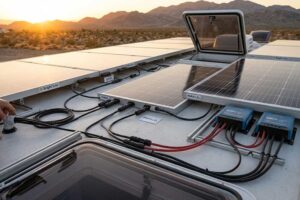
Step 3: Connect solar controller and battery system
A typical 400W flexible solar setup includes:
| Equipment | Purpose |
|---|---|
| Flexible solar panel | Generates electricity |
| MPPT charge controller | Optimizes charging efficiency |
| Battery bank | Stores energy |
| Inverter | Converts DC to AC power |
For mobile applications, lithium batteries are often selected because of their high energy density and longer cycle life.
400w solar panel flexible vs rigid solar panel
Many customers ask whether flexible solar panels are better than traditional rigid panels.
The answer depends on the application.
| Feature | Flexible Solar Panel | Rigid Solar Panel |
|---|---|---|
| Weight | Lower | Higher |
| Installation | Easier on curved surfaces | Requires mounting frames |
| Durability | Designed for mobile use | Strong glass protection |
| Efficiency | Competitive | Usually slightly higher |
| Best for | RV, boats, portable systems | Houses, fixed roofs |
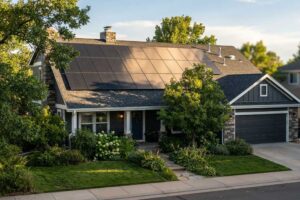
For residential rooftops, rigid panels remain popular because roof structures are designed for permanent installation.
However, for vehicles, marine projects, and customized applications, flexibility becomes a major advantage.
Choosing the right 400w solar panel flexible for your project
Not every 400W flexible panel is identical.
Before purchasing, evaluate these factors:
Solar cell technology
Monocrystalline cells are commonly used in high-performance flexible solar panels.
Advantages include:
- Better efficiency
- Higher output in limited space
- Improved low-light performance
Surface protection material
Outdoor solar panels need protection from:
- UV exposure
- Rain
- Temperature changes
- Physical wear
Bright Solar flexible panels use ETFE surface technology in selected product lines because ETFE provides strong transparency and weather resistance.
Operating environment
A panel designed for an RV trip across Europe may face different conditions from a marine installation.
Consider:
- Temperature range
- Humidity
- Salt exposure
- Mechanical stress
Bright Solar experience with flexible solar projects
At Bright Solar, our experience with flexible photovoltaic products comes from working with different industries, not only selling standard modules.
Over the years, we have supported:
- RV suppliers
- Marine equipment companies
- Outdoor product brands
- Off-grid system developers
One project involved an outdoor equipment company developing portable energy kits.
Their requirement was simple:
The product needed enough power output but could not become heavy.
The original design used multiple small rigid panels.
The problems appeared quickly:
- Too much packaging space
- Difficult transportation
- More connection points
After testing a flexible solar solution, the company reduced system complexity and created a cleaner portable design.
The lesson from this project was clear:
The best solar panel is not always the one with the highest specification on paper.
It is the one that fits the real environment.
FAQ About 400w Solar Panel Flexible
How much electricity can a 400w solar panel flexible generate?
A 400W flexible solar panel can typically generate around 1.5–2kWh per day in good sunlight conditions. Actual production depends on location, weather, installation angle, and system efficiency.
Can a 400w flexible solar panel be installed on an RV?
Yes. RVs are one of the most common applications. The lightweight design allows installation on curved roofs where traditional rigid panels may not fit.
Is a flexible 400W solar panel waterproof?
Quality flexible solar panels are designed for outdoor environments and normally include protective layers against moisture and weather exposure. Always check the product’s IP rating and manufacturer specifications.
How long does a flexible solar panel last?
The lifespan depends on materials, installation quality, and environmental conditions. High-quality flexible panels can provide many years of operation when properly installed and maintained.
Can I connect a 400W flexible solar panel to a battery?
Yes. A charge controller, preferably an MPPT controller, is normally used between the solar panel and battery to manage charging safely.
Is a flexible solar panel better than a rigid solar panel?
Neither option is universally better. Flexible panels are ideal for mobile, curved, and lightweight applications, while rigid panels are often preferred for permanent rooftop systems.
Why choose Bright Solar flexible solar panels?
Bright Solar focuses on flexible photovoltaic solutions with customized manufacturing capability, practical application experience, and support for different commercial solar projects.
Conclusion: Is a 400w solar panel flexible the right choice?
A 400w solar panel flexible offers a practical solution for users who need strong solar output without the limitations of heavy rigid modules.
For RV owners, boat operators, and off-grid users, the combination of lightweight construction, adaptable installation, and reliable power generation makes flexible solar technology increasingly valuable.
At Bright Solar, we believe solar products should be designed around real-world use.
A panel installed successfully on a moving vehicle, a boat, or a remote system is not only a photovoltaic product.
It is part of a complete energy solution.
Related recommendations
-

Solar Panels for Shade: How to Reduce Power Loss
214Solar panels can work in shade, but output decreases as sunlight falls. Proper site assessment, panel placement, bypass diodes, and module-level electronics ...
View details -
Solar Panels Series or Parallel: Which Wiring Method Works Better?
142Learn whether solar panels series or parallel wiring is better for RVs, boats, homes, and off-grid systems. Compare efficiency, shading, and performance.
View details -
Solar Camping Gear: A Practical Guide to Off-Grid Power
303Solar camping gear combines portable solar generation and battery storage for reliable off-grid power during camping, RV travel, boating, and outdoor work.
View details -
400 Watt Solar Panel: Real Performance, Efficiency, and Buying Guide
373400 watt solar panel systems deliver reliable off-grid and residential power. Learn efficiency, output, installation tips, and real-world performance.
View details