300w flexible solar panel for RV, Marine and Off-Grid Solar Applications
A 300w flexible solar panel is a lightweight photovoltaic solution designed for applications where traditional rigid solar modules are difficult to install. It can typically generate around 900Wh–1500Wh of electricity per day depending on sunlight conditions, making it suitable for RVs, boats, campers, and remote power systems.
At Bright Solar, we did not start developing flexible solar products because they looked different. We started because installers kept showing us the same problems.
A customer would have enough sunlight but no suitable mounting space.
An RV roof would have vents, curves, and weak load areas.
A boat owner would want solar power but did not want heavy glass panels changing the balance of the vessel.
Those conversations shaped our approach to flexible solar panel design.
A 300w flexible solar panel is not simply a smaller version of a traditional module. It is designed around real-world limitations.
What is a 300w flexible solar panel?
A 300W flexible solar panel is a photovoltaic module capable of producing up to 300 watts under standard test conditions while maintaining a lightweight and adaptable structure.
Unlike conventional glass solar panels, flexible modules usually combine:
| Component | Function |
|---|---|
| Monocrystalline solar cells | Provide efficient electricity generation |
| ETFE protective coating | Improves UV and weather resistance |
| Flexible composite layers | Allow installation on curved surfaces |
| Waterproof junction box | Protect electrical connections |
| Bypass diode system | Reduces losses caused by shading |
The rated power of 300W is measured under laboratory conditions, including:
- Solar irradiance: 1000W/m²
- Cell temperature: 25°C
- Air mass: AM1.5
However, actual outdoor performance depends on installation conditions.
This difference is something we explain frequently to customers. A panel specification tells you what the product can achieve. The installation environment determines what it actually delivers.
According to the U.S. Department of Energy, photovoltaic system output depends on several factors including solar resource availability, system orientation, shading, and installation design.
Source:
U.S. Department of Energy – Solar Photovoltaic System Design
https://www.energy.gov/energysaver/solar-photovoltaic-system-design
Why choose a 300w flexible solar panel instead of a rigid solar panel?
For many projects, the decision is not about choosing the highest efficiency panel.
It is about whether the panel can physically fit.
A rigid solar module works well on:
- Flat residential roofs
- Large commercial buildings
- Fixed ground installations
A flexible solar panel performs better in situations where installation conditions are more complicated:
- RV roofs
- Camper trailers
- Yacht decks
- Portable power systems
- Temporary structures
During one Bright Solar installation review in Germany, an RV manufacturer initially planned to install two rigid solar panels.
The problem appeared during measurement.
The available roof area was not actually a rectangle.
There were:
- Two ventilation openings
- A curved front section
- A roof rack area
- Limited weight capacity
After redesigning with flexible modules:
| Item | Before | After |
|---|---|---|
| Installation method | Aluminum brackets | Direct surface mounting |
| Installation time | About 2 days | Less than 1 day |
| Added roof weight | Higher | Reduced by approximately 10kg |
| Usable solar area | Limited | Increased coverage |
The installer told us the biggest improvement was not the energy output.
It was avoiding unnecessary roof modification.
300w flexible solar panel performance in real conditions
Many buyers ask:
“Can a 300W flexible solar panel really produce 300 watts?”
The answer is yes under standard test conditions, but outdoor production changes throughout the year.
A realistic calculation:
Daily energy output = Panel wattage × Peak sunlight hours × System efficiency
For example:
| Location | Average sunlight condition | Estimated daily output |
|---|---|---|
| California, USA | Strong solar resource | 1.3–1.5kWh/day |
| Germany | Moderate sunlight | 0.8–1.1kWh/day |
| Australia | High solar resource | 1.4–1.6kWh/day |
These numbers are estimates, not guarantees.
During Bright Solar field testing on a camper installation in Arizona, a 300W flexible module produced approximately:
- 1.45kWh on a clear summer day
- 0.95kWh during partial cloud conditions
- Around 0.7kWh during winter low-angle sunlight
The result changed mainly because of temperature and roof angle.
This is why experienced installers rarely judge a solar panel only by the datasheet.
The National Renewable Energy Laboratory (NREL) provides solar resource mapping tools showing how geographic location influences photovoltaic energy production.
Source:
National Renewable Energy Laboratory – Solar Resource Data
https://www.nrel.gov/gis/solar-resource-maps.html
Materials and durability of Bright Solar flexible panels
A flexible solar panel experiences different challenges compared with a rooftop solar module.
For example:
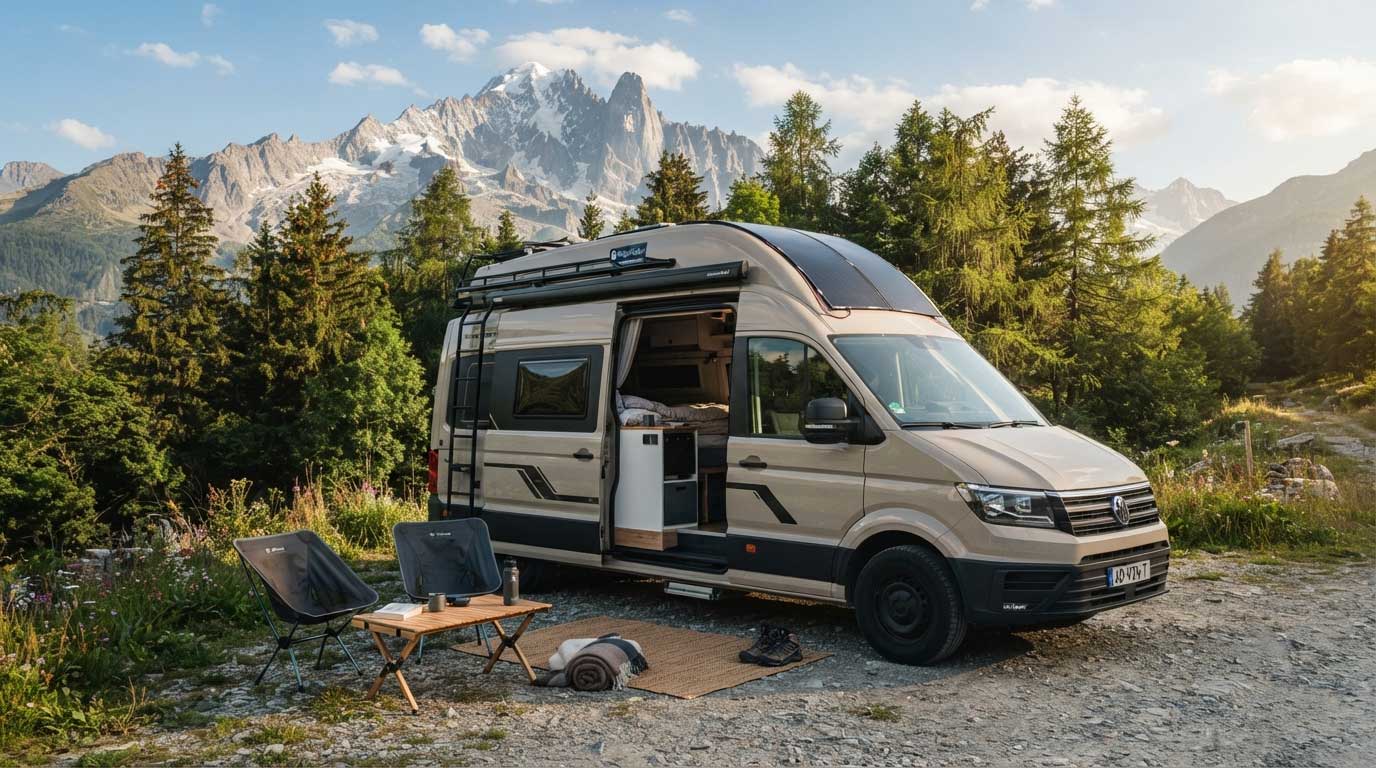
An RV panel experiences:
- Road vibration
- Temperature changes
- Dust accumulation
- Continuous UV exposure
A marine panel experiences:
- Salt spray
- Humidity
- Wind loading
- Water exposure
Because of this, Bright Solar focuses heavily on protective materials.
Our flexible solar panels commonly use ETFE surface technology because it provides:
- Better scratch resistance
- Improved UV protection
- Lower surface aging
- Easier cleaning
The International Energy Agency (IEA) notes that photovoltaic reliability and long-term performance depend heavily on module quality, environmental conditions, and installation practices.
Source:
International Energy Agency – Solar PV Tracking Report
https://www.iea.org/reports/solar-pv
How to install a 300w flexible solar panel correctly
One reason customers choose flexible solar modules is easier installation. However, “easy installation” does not mean the panel can simply be attached anywhere.
Over the years working with installers, we found that most performance issues do not come from the solar cells themselves. They usually come from installation decisions made before the panel is even connected.
A good installation starts with three checks:
- Surface condition
- Cable planning
- Solar exposure
Step 1: Prepare the mounting surface
Before installing a 300w flexible solar panel, the mounting area should be:
- Clean and dry
- Free from oil or wax residue
- Structurally stable
- Away from permanent shadows
For RV and marine applications, surface preparation is especially important because vibration can slowly weaken poor bonding.
During a Bright Solar installation review for a camper supplier in France, we found a previous flexible panel installation had started lifting at the edges after several months.
The problem was not the panel.
The adhesive surface had been cleaned only with water before installation.
After proper preparation:
- Surface cleaning was improved
- Edge sealing was added
- The installation remained stable during later inspections
Small installation details often decide long-term reliability.
Step 2: Plan cable routing before fixing the panel
A common mistake is installing the panel first and thinking about wiring afterward.
This creates unnecessary pressure on:
- Junction box
- Solar cables
- Waterproof connection points
Before fixing the panel permanently, installers should confirm:
- Cable direction
- Controller location
- Battery position
- Entry point protection
For RV systems, many installers combine a 300W flexible solar panel with:
- MPPT charge controllers
- Lithium batteries
- Portable power stations
The system design should match the energy requirement, not just the panel wattage.
Step 3: Avoid excessive bending
Flexible solar panels are designed to follow curved surfaces, but they are not designed to fold like fabric.
Every product has a recommended bending range.
Excessive bending may create stress on:
- Cell connections
- Conductive layers
- Internal circuits
At Bright Solar, we always recommend customers check the installation radius before mounting on highly curved surfaces.
A smooth curve is usually acceptable.
A sharp fold is not.
300w flexible solar panel applications in different industries
The strongest demand for flexible solar technology comes from applications where traditional solar panels create limitations.
RV and Camper Solar Systems
RV owners usually care about:
- Weight reduction
- Simple installation
- Independent electricity supply
A 300W flexible panel can support common travel equipment including:
| Device | Typical Usage |
|---|---|
| LED lighting | Night lighting |
| Portable refrigerator | Food storage |
| Water pump | Vehicle systems |
| Communication devices | Internet and navigation |
| Small electronics | Charging and daily use |
For many campers, the goal is not running every household appliance.
It is creating energy independence while traveling.
Marine Solar Applications
Boats face unique solar challenges.
Available installation space is often limited, and additional weight can affect performance.
Flexible solar panels are commonly used for:
- Sailing boats
- Fishing boats
- Catamarans
- Marine monitoring systems
Saltwater environments require careful material selection.
A marine solar panel needs protection against:
- Moisture
- UV radiation
- Corrosion
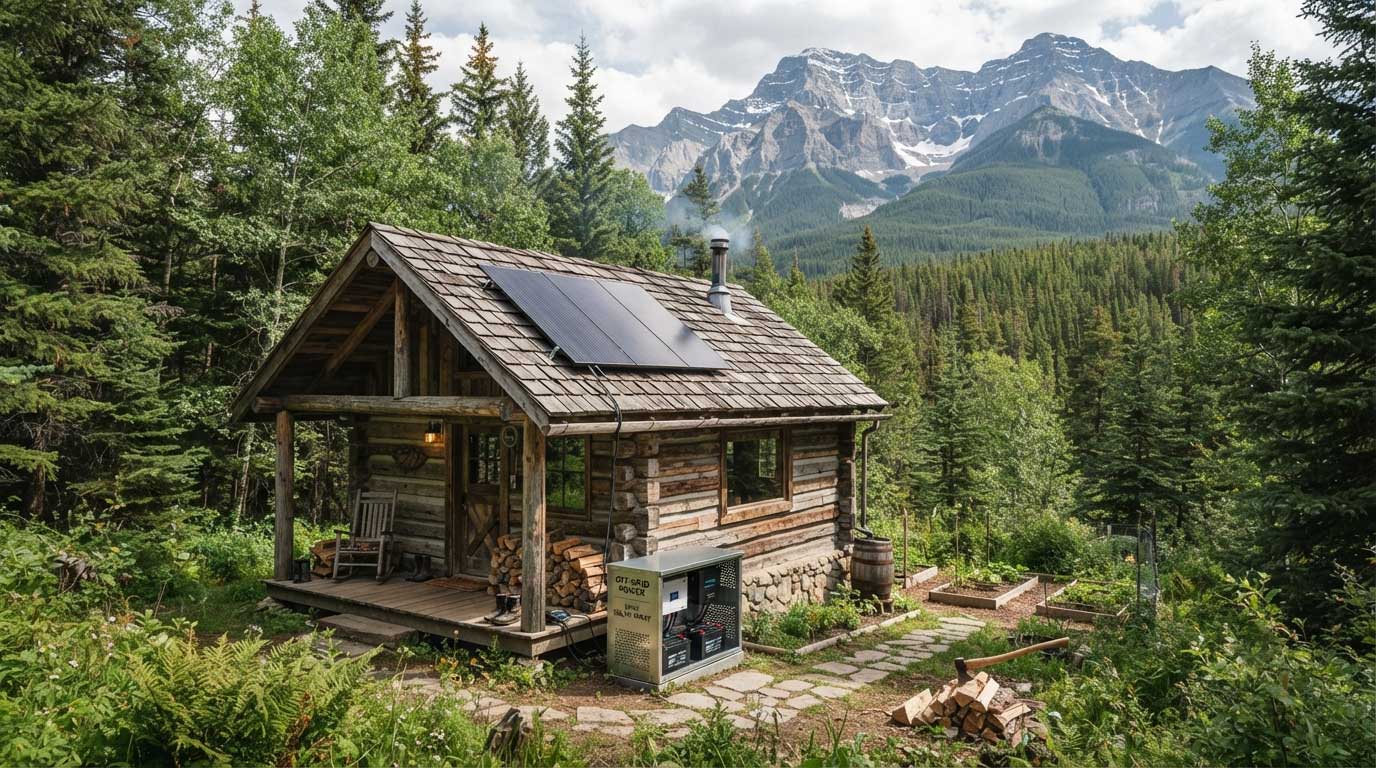
Off-Grid Power Systems
Remote locations often have limited access to electricity.
Flexible solar panels are used in:
- Remote cabins
- Emergency power systems
- Field equipment
- Outdoor communication stations
Because transportation can be difficult in remote areas, lightweight solar equipment offers practical advantages.
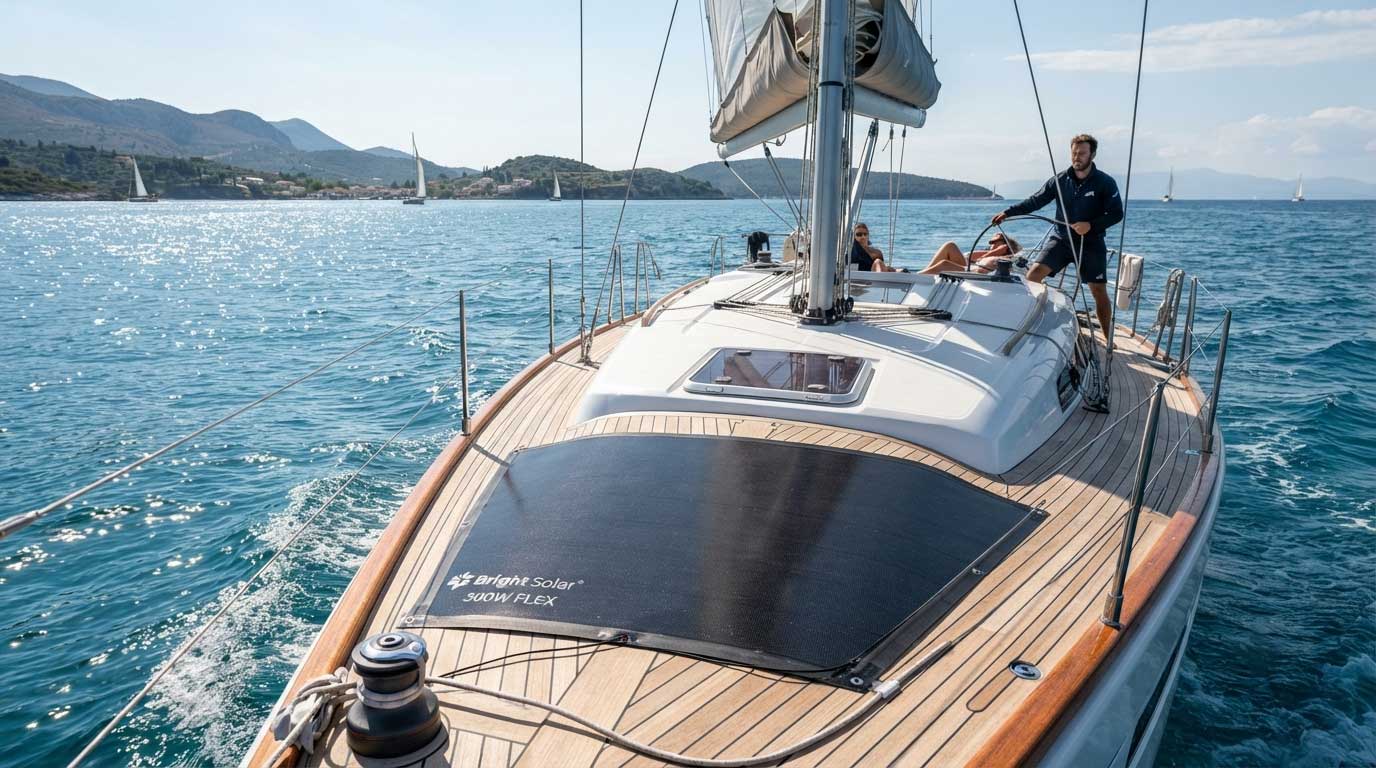
300w flexible solar panel vs traditional rigid solar panel
Choosing between flexible and rigid solar panels depends on the project environment.
There is no single technology that fits every application.
| Comparison | 300w Flexible Solar Panel | Traditional Rigid Solar Panel |
|---|---|---|
| Weight | Lightweight structure | Heavier glass module |
| Surface compatibility | Curved and irregular areas | Flat surfaces |
| Installation | Simple mounting options | Requires frames and rails |
| Mobility | Excellent for RV and marine | Limited |
| Durability requirements | Needs quality protective layers | Relies on glass protection |
| Best applications | Mobile and special projects | Residential and commercial roofs |
For a warehouse roof, rigid panels may remain the preferred option.
For a camper roof with limited space, flexibility often provides a better solution.
The correct choice depends on the environment.
How much does a 300w flexible solar panel cost?
The price of a 300w flexible solar panel depends on several factors:
- Solar cell quality
- Protective coating
- Manufacturing process
- Certification requirements
- Order quantity
Typical market pricing:
| Product Level | Approximate Price |
|---|---|
| Entry flexible panel | $250–$350 |
| ETFE premium flexible panel | $350–$550 |
| High-performance customized panel | $550+ |
Flexible panels generally cost more per watt than standard rigid modules because they require specialized materials and manufacturing methods.
However, installation cost should also be considered.
A lower-cost rigid panel may require:
- Aluminum mounting rails
- Additional brackets
- Roof modification
- More labor time
For mobile applications, the total project cost is often more important than the panel price alone.
Why choose Bright Solar 300w flexible solar panel solutions?
Bright Solar focuses on flexible solar products designed for real outdoor environments.
Our product development experience comes from working with:
- RV manufacturers
- Marine equipment suppliers
- Off-grid system integrators
- Solar distributors
The feedback from these industries influences product improvements.
Important design priorities include:
- Lightweight construction
- Outdoor durability
- Easy integration
- Reliable electrical performance
We believe solar products should solve installation problems, not create new ones.
FAQ About 300w Flexible Solar Panel
How much power does a 300w flexible solar panel produce?
A 300W flexible solar panel can produce approximately 900Wh to 1500Wh per day depending on sunlight conditions, installation angle, temperature, and system efficiency.
Can I install a 300w flexible solar panel on my RV roof?
Yes. RV roofs are one of the most common applications because flexible panels reduce weight and adapt better to curved surfaces.
Are flexible solar panels waterproof?
Quality flexible solar panels are designed for outdoor use with waterproof protection. However, cable connections and installation points must also be properly sealed.
How long does a 300W flexible solar panel last?
The service life depends on materials, environment, and installation quality. Premium flexible panels with proper protection can provide many years of outdoor operation.
Can flexible solar panels be used on boats?
Yes. Marine applications are one of the main markets because flexible panels reduce weight and fit curved surfaces.
Is a flexible solar panel better than a rigid solar panel?
It depends on the application. Flexible panels are usually better for mobile, curved, and lightweight installations, while rigid panels remain popular for large flat roofs.
Do 300W flexible solar panels work on cloudy days?
Yes. They can still generate electricity during cloudy weather, but output will decrease compared with direct sunlight conditions.
Final Thoughts
A 300w flexible solar panel is designed for situations where standard solar modules cannot provide a practical solution.
After years working with solar products, one thing has become clear: installation conditions often matter more than specifications on paper.
A camper traveling thousands of kilometers, a sailing boat exposed to saltwater, or a remote cabin far from the grid all require different solar solutions.
Bright Solar flexible solar panels are built around those real-world needs.
Lightweight design, adaptable installation, and reliable outdoor performance make them a practical choice for mobile and off-grid energy systems.
Related recommendations
-

3kW Solar System for Homes, Cabins and Off-Grid Energy Solutions
189Discover how a 3kW solar system powers homes, cabins, and off-grid applications. Learn costs, output, batteries, and installation tips from Bright Solar.
View details -
1000W Solar Panel Guide: What a 1000W Solar Panel Can Really Power
221Learn how a 1000W solar panel system works, what it can power, expected daily output, installation options, and whether it fits your RV, home, boat, or off-grid project.
View details -
Camper Flexible Solar Panels: Lightweight Solar Power Solution for RV Travel
107Camper flexible solar panels provide lightweight, low-profile solar power for RVs, camper vans, and mobile off-grid applications.
View details -
Enphase Energy Gains Ground in Germany’s Residential Solar-Plus-Storage Market
243Enphase Energy is seeing rising demand in Germany for its IQ microinverters and IQ Batteries as households react to high electricity prices. With partners like 1KOMMA5 and local installers, Enphase is combining safe LFP batteries, long-warranty mi...
View details