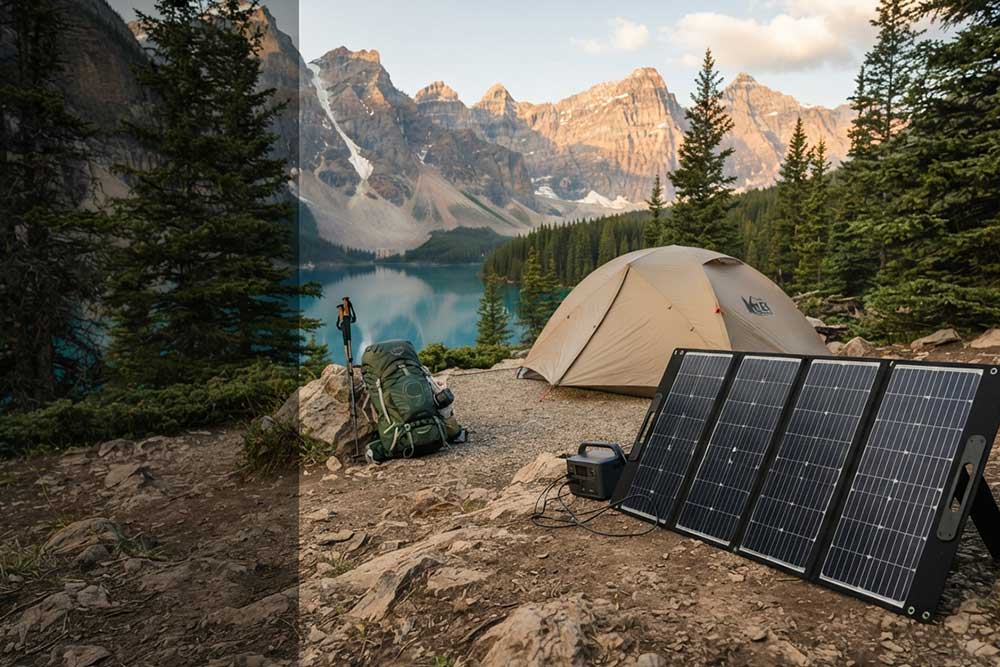
Solar Energy for Travel Trailers: A Practical Guide to Off-Grid Power
Solar energy for travel trailers provides a reliable, quiet, and cost-effective way to power appliances, charge batteries, and extend off-grid camping without relying heavily on generators or campground hookups. A properly designed solar system can significantly improve energy independence while reducing operating costs and maintenance.
The first time most travel trailer owners experience true off-grid camping, they discover something unexpected.
Electricity suddenly becomes visible.
Not literally, of course.
But every light turned on, every fan running overnight, every cup of coffee brewed in the morning starts to feel connected to a limited energy budget.
I’ve spent more than a decade working with mobile solar applications at Bright Solar, helping RV owners, overlanders, and travel trailer enthusiasts build practical solar systems. One pattern appears repeatedly: people initially buy solar panels for convenience, but they end up appreciating the freedom.
Freedom from hookups.
Freedom from generator noise.
Freedom from constantly checking battery levels.
That shift changes how people travel.
Why Solar Energy for Travel Trailers Has Become So Popular
Travel trailer ownership has evolved.
Modern campers now bring along:
- Refrigerators
- Laptops
- Starlink systems
- Smartphones
- LED lighting
- Ventilation fans
- Water pumps
- Entertainment systems
Energy consumption continues increasing.
At the same time, many travelers want to spend more time away from crowded campgrounds.
According to the U.S. Energy Information Administration (EIA), solar power remains one of the fastest-growing sources of renewable electricity worldwide.
Reference Source:
That trend extends far beyond residential rooftops.
Mobile solar systems are becoming standard equipment for serious travelers.
How a Travel Trailer Solar System Works
At its core, a solar-powered travel trailer uses sunlight to recharge batteries.
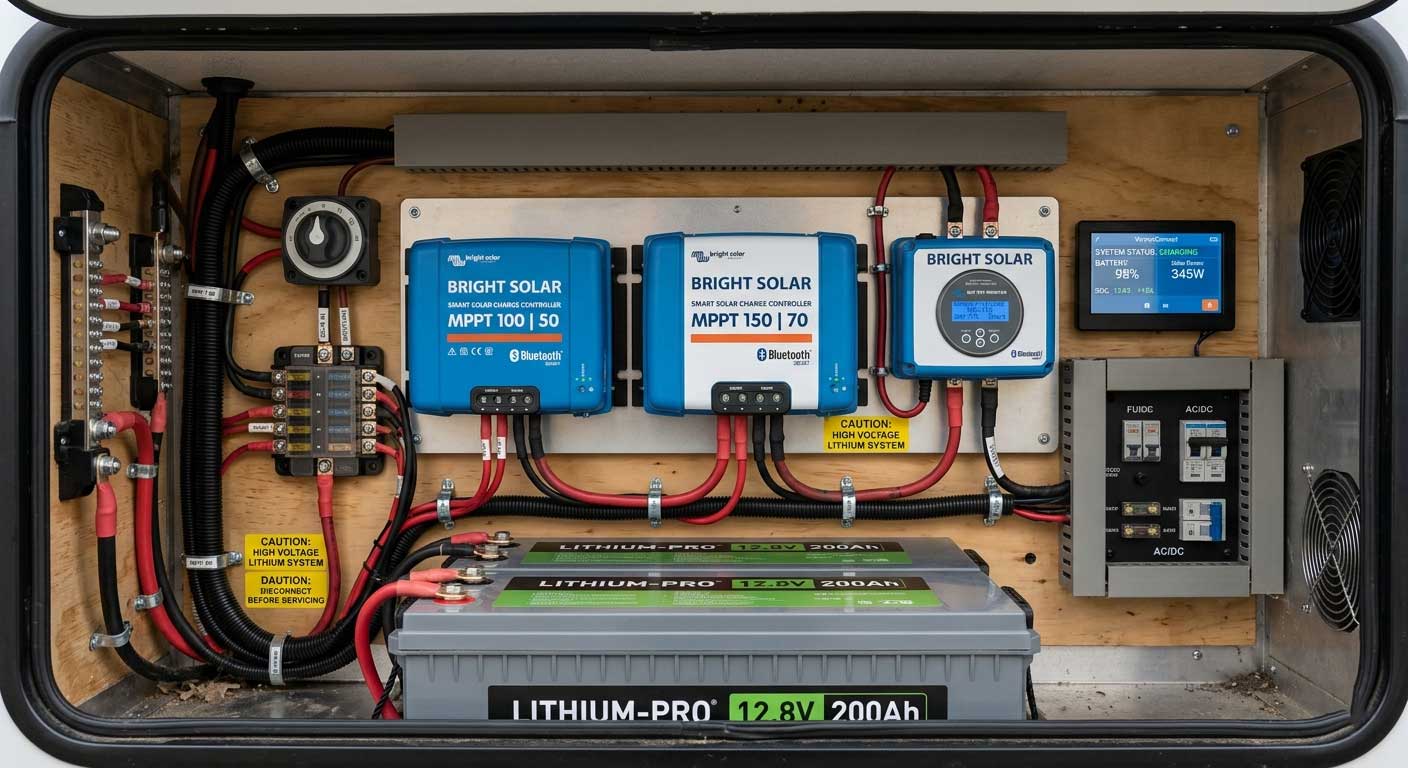
The system typically includes:
| Component | Purpose |
|---|---|
| Solar Panels | Generate electricity |
| Charge Controller | Regulates battery charging |
| Battery Bank | Stores energy |
| Inverter | Converts DC to AC power |
| Monitoring System | Tracks performance |
The process operates quietly in the background.
While you’re hiking, fishing, or relaxing at camp, the solar system continues generating energy.
Unlike generators, it doesn’t require fuel or daily attention.
What Can Solar Energy Power in a Travel Trailer?
This is often the first question buyers ask.
The answer depends on system size.
A modest solar setup can support:
- Interior lighting
- USB charging
- Water pumps
- Roof ventilation fans
Larger systems can power:
- Refrigerators
- Televisions
- Coffee makers
- Laptops
- Internet equipment
Very large systems paired with lithium batteries may even support air conditioning for limited periods.
The key is realistic energy planning.
Solar isn’t magic.
But modern systems are surprisingly capable.
Real-World Case Study: Family Travel Trailer Upgrade
A family from Colorado contacted Bright Solar before a summer trip through Utah, Arizona, and Nevada.
Their goal was simple:
Camp away from hookups for extended periods.
The trailer originally relied on:
- Shore power
- Generator charging
- Standard lead-acid batteries
The upgraded system included:
- 400W flexible solar array
- MPPT charge controller
- 200Ah lithium battery bank
Performance during a 21-day trip:
| Metric | Before Upgrade | After Upgrade |
|---|---|---|
| Generator Runtime | Daily | 1-2 Times Weekly |
| Average Battery State | Frequently Low | Consistently High |
| Off-Grid Stay Duration | 2 Days | 5-7 Days |
| Fuel Consumption | High | Significantly Reduced |
What impressed the family most wasn’t the solar production.
It was the silence.
Mornings became noticeably different without generator noise echoing across the campsite.
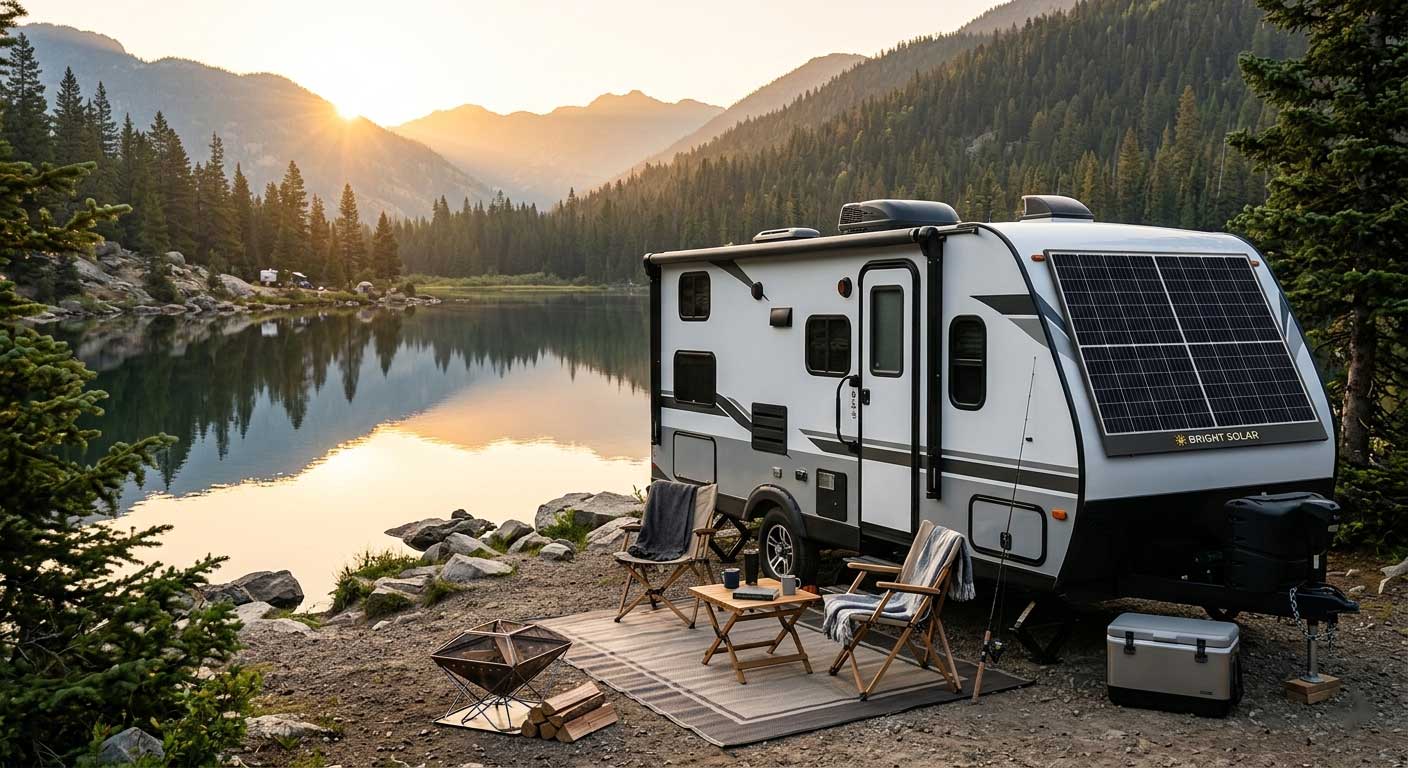
The Financial Side of Travel Trailer Solar
Most people begin by calculating equipment costs.
That makes sense.
But experienced RV owners often evaluate solar differently.
Consider recurring expenses:
- Generator fuel
- Campground electric fees
- Battery replacements
- Generator maintenance
Solar won’t eliminate all costs.
However, it can reduce them significantly over time.
For frequent travelers, those savings accumulate.
The value becomes even greater when flexibility is considered.
Being able to camp wherever conditions are best—not wherever power hookups exist—has its own worth.
Flexible Solar Panels vs Traditional RV Panels
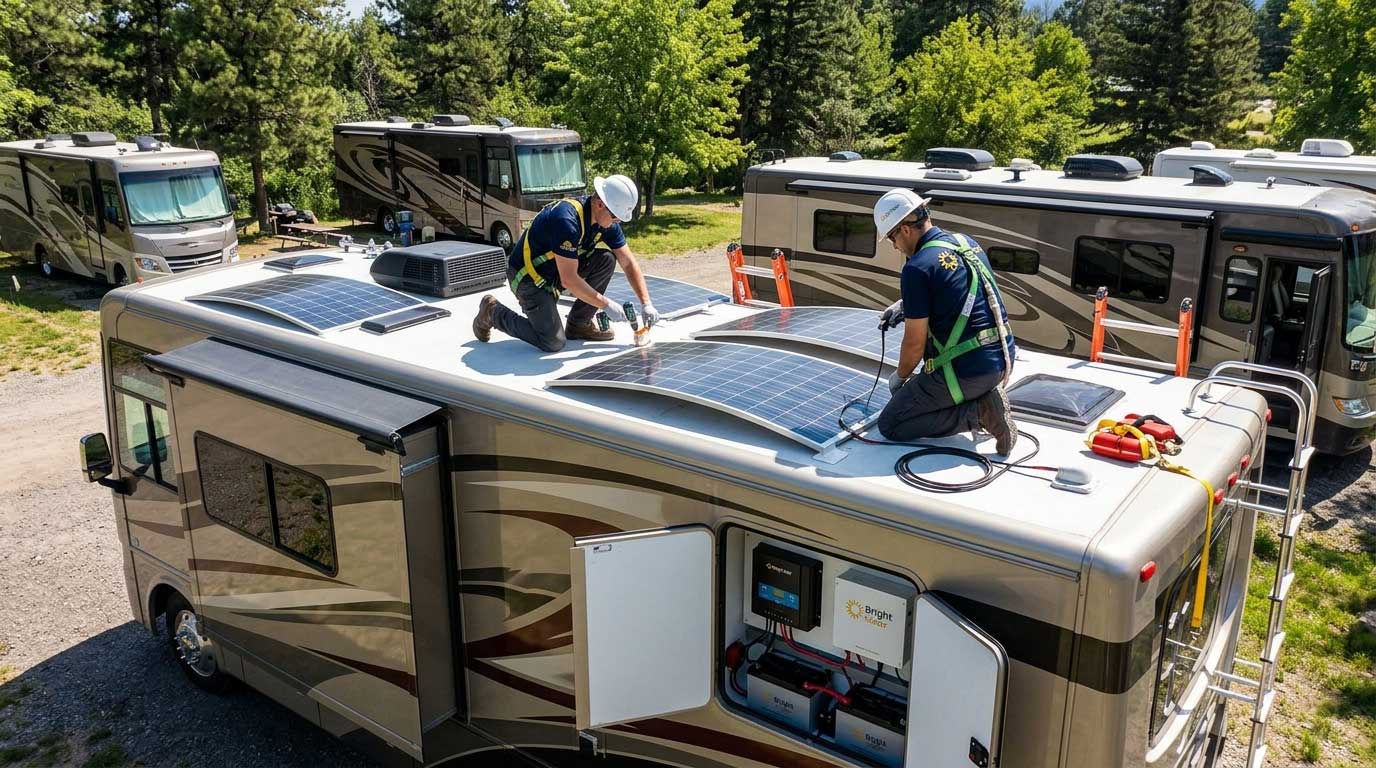
Travel trailers present unique installation challenges.
Roof space is often limited by:
- Air conditioners
- Roof vents
- Skylights
- Satellite antennas
Flexible panels offer several advantages.
| Feature | Flexible Panels | Rigid Panels |
|---|---|---|
| Weight | Excellent | Moderate |
| Roof Load | Low | Higher |
| Curved Surface Compatibility | Excellent | Limited |
| Installation Complexity | Lower | Moderate |
| Wind Profile | Lower | Higher |
For many travel trailer owners, weight savings alone justify flexible solar technology.
Every pound matters when towing.
Understanding Daily Energy Consumption
One mistake appears repeatedly among first-time solar buyers.
They choose panels before calculating energy demand.
The better approach:
Calculate consumption first.
Typical daily energy use:
| Device | Daily Consumption |
|---|---|
| LED Lighting | 50–150Wh |
| Water Pump | 50–100Wh |
| Refrigerator | 500–1,200Wh |
| Laptop Charging | 100–300Wh |
| Ventilation Fan | 100–250Wh |
Actual usage varies widely.
Lifestyle matters more than trailer size.
Some travelers consume less than 1kWh daily.
Others exceed 3kWh.
Why Lithium Batteries Are Changing RV Solar
Battery technology has evolved rapidly.
Traditional lead-acid batteries remain common.
However, lithium batteries offer advantages:
- Lower weight
- Faster charging
- Longer lifespan
- Greater usable capacity
According to the U.S. Department of Energy, advanced battery technologies continue improving energy storage performance across multiple industries.
Reference Source:
Many modern travel trailer solar systems are now designed around lithium battery banks from the start.
Weather, Shade, and Real-World Performance
Solar output rarely matches laboratory ratings.
Real-world factors include:
- Tree shade
- Cloud cover
- Seasonal sunlight
- Dust accumulation
- Panel angle
One of the most common surprises among new owners is how dramatically shade affects production.
A small shadow across part of a panel can reduce output far more than expected.
Experienced RV travelers learn to think about sunlight when choosing campsites.
Not just scenery.
Not just convenience.
Sun exposure becomes part of campsite selection.
Common Mistakes When Installing Solar Energy for Travel Trailers
After years of reviewing customer installations, several patterns emerge.
Undersized Charge Controllers
Controllers should accommodate future expansion.
Many owners eventually add additional panels.
Poor Cable Management
Voltage drop reduces system efficiency.
Proper cable sizing matters.
Ignoring Battery Capacity
Generating power is only half the equation.
Storage capacity matters equally.
Focusing Solely on Panel Wattage
System balance is more important than maximum solar capacity.
Solar panels alone cannot compensate for poor battery design.
FAQ About Solar Energy for Travel Trailers
Is solar energy enough to power a travel trailer full-time?
Yes, when the system is properly sized to match daily energy consumption and battery storage requirements.
How many solar panels does a travel trailer need?
Most travel trailers use between 200W and 800W of solar capacity, depending on energy usage and travel style.
Can solar run an RV air conditioner?
Large solar systems combined with lithium batteries can operate air conditioners for limited periods, though energy demand is significant.
Are flexible solar panels good for travel trailers?
Yes. Their lightweight construction and easy installation make them particularly suitable for RV roofs.
Do solar panels work on cloudy days?
Yes. Output decreases during cloudy weather, but quality solar panels continue producing electricity.
Final Thoughts on Solar Energy for Travel Trailers
Solar energy for travel trailers is no longer a niche upgrade.
It has become one of the most practical investments available for RV owners seeking flexibility and independence.
At Bright Solar, we’ve helped equip:
- Weekend campers
- Full-time RV travelers
- Overland explorers
- Family travel trailer owners
Their goals vary.
Their routes differ.
Yet the desired outcome remains remarkably consistent.
Reliable power.
Less generator dependence.
More freedom to camp wherever the road leads.
For travelers looking to spend more time off-grid and less time searching for hookups, solar energy for travel trailers remains one of the smartest upgrades available today.
Related recommendations
-

Flexible Solar Panels RV: The Smarter Solar Upgrade for Modern Campers
269Explore how flexible solar panels RV systems provide lightweight, durable off-grid power for campers, vans, and motorhomes with Bright Solar.
View details -
350 watt solar panels: Output, Size and Installation Guide
280350 watt solar panels provide 350W of rated DC power under STC, while actual daily output depends on sunlight, temperature, shading, orientation, wiring, and...
View details -
Durable Flexible Solar Panel: Built for Long-Term Solar Performance
204Explore durable flexible solar panel solutions designed for RV, marine and off-grid applications. Learn durability factors, materials, testing, and real installation experience from Bright Solar.
View details -
Foldable Solar Panel for Camping: How to Choose and Use One
64A foldable solar panel for camping provides portable electricity for compatible devices and power stations. Choosing the right panel requires matching wattag...
View details