10 Watt Foldable Solar Panel: Uses, Output, and Buying Guide
A 10 watt foldable solar panel is a compact solar charger for small electronics and low-power applications when sunlight is available. Its actual output depends on sunlight, panel positioning, and device compatibility, so it is best suited to modest charging needs.
A panel this small has a clear advantage: it is easy to carry, quick to deploy, and takes up little storage space. But 10 watts is a limited power rating. It is generally more suitable for topping up small battery-powered devices than for supplying continuous electricity to high-demand equipment.
For campers, hikers, emergency-kit owners, and outdoor equipment suppliers, the important question is not simply whether a 10W panel generates electricity. It is whether the energy collected during the available daylight hours matches the intended use.
Bright Solar provides solar panel solutions for B2B customers, including lightweight and flexible modules for selected outdoor and mobile applications. When evaluating a 10 watt foldable solar panel, distinguish a ready-to-use portable charger from a solar module intended for integration into a larger product. The design, connections, and electrical requirements may differ significantly.
What Is a 10 Watt Foldable Solar Panel?
A 10 watt foldable solar panel is a portable photovoltaic device with a nominal rated power of 10 watts under specified test conditions. Its folding construction allows the solar surface to collapse into a smaller package for carrying and storage.
When unfolded and exposed to sunlight, the solar cells convert light into direct-current electricity. Depending on the product design, the panel may provide regulated USB output, connect to a small battery pack, or supply power through a dedicated output cable.
Not every 10W panel supports all these functions. Some products have built-in voltage regulation, while others require an external controller or compatible charging device.
Typical uses include:
- Charging small USB devices when the output is compatible.
- Supplying supplemental energy to a small power bank.
- Maintaining selected low-power electronics during outdoor activities.
- Supporting portable emergency kits.
- Providing an educational demonstration of photovoltaic electricity generation.
A 10W panel should not be confused with a 10Wh battery. Watts measure power, whereas watt-hours measure energy. The panel’s 10W rating describes its nominal power under specified conditions, not the amount of energy it can collect in a day.
How Much Electricity Can a 10 Watt Foldable Solar Panel Generate?
The daily energy available from a 10 watt foldable solar panel depends on the equivalent peak sun hours at the location and the losses between the panel and the device being charged.
The U.S. Department of Energy explains that photovoltaic cells convert sunlight into electricity and that solar modules are rated under defined conditions.
Source: U.S. Department of Energy — Solar Photovoltaic Technology Basics.
Calculate Estimated Daily Energy
A useful starting formula is:
Estimated daily energy (Wh) = panel rated power (W) × equivalent peak sun hours × system derating factor
For example, assume a 10W panel receives four equivalent peak sun hours and use an illustrative derating factor of 0.75.
10W × 4 hours × 0.75 = 30Wh per day
The 0.75 factor is an example planning assumption, not a measured efficiency rating for a specific panel. Actual energy production can be lower or higher depending on conditions and system design.
| Planning scenario | Peak sun hours | Estimated energy at a 0.75 factor |
|---|---|---|
| Limited sunlight | 2 hours | 15Wh |
| Moderate sunlight | 4 hours | 30Wh |
| Longer strong-sun period | 6 hours | 45Wh |
These calculations assume the stated equivalent peak sun hours and a consistent planning factor. They are not guaranteed daily production figures.
For location-specific estimates, the National Renewable Energy Laboratory provides the PVWatts Calculator.
Source: NREL PVWatts Calculator.
What Does 30Wh Mean in Practice?
Thirty watt-hours represents a small amount of energy, but it can still be useful. It may help replenish a phone battery, support a small USB device, or contribute energy to a power bank, depending on conversion losses and the device’s charging requirements.
For example, suppose a device requires 10Wh to replace the energy used during a particular activity. An estimated 30Wh of panel energy does not automatically mean three complete charges. Energy is lost in voltage conversion, battery charging, and cables, and the device may draw power while charging.
The practical lesson is straightforward: a 10W panel can be useful for small, occasional loads, but it should not be selected on the assumption that it will deliver its rated power continuously.
What Can You Charge With a 10W Foldable Solar Panel?
A 10W panel works best when the connected device has modest power requirements and can tolerate changes in solar output.
Phones and Small USB Devices
Some 10W foldable solar panels include a regulated USB output that can charge compatible phones. However, charging may slow down or stop when clouds pass or the panel moves into shade.
Check the product’s USB output specifications before connecting a phone. A 10W panel’s total rated output does not guarantee 10W at the USB port, and it does not guarantee support for a phone’s fast-charging protocol.
For more consistent charging, a compatible power bank can store energy while the panel is in sunlight and charge the phone later. The power bank must itself support the panel’s output and the required charging input.
GPS Devices, Cameras, and Outdoor Electronics
Small electronics are often a more natural fit for a 10W panel than high-power appliances. Depending on their input requirements, compatible GPS devices, rechargeable accessories, and camera battery chargers may benefit from supplemental solar energy.
The key is to check the charging input, not just the battery capacity. A device that requires a specific regulated input may not work directly with a bare solar module.
Portable Power Banks
A power bank can make a small solar panel more useful by separating energy collection from energy consumption. The panel charges the bank when conditions are favorable, and the bank supplies electricity when sunlight weakens.
Not every power bank accepts solar charging directly. Some require a minimum input current or a stable USB supply that a small panel may not consistently provide. Verify compatibility before relying on this arrangement.
What a 10W Panel Is Not Designed to Do
A single 10W foldable panel is generally not a practical primary power source for:
- Electric kettles, heaters, or cooking appliances.
- Refrigerators requiring substantial daily energy.
- High-power laptop charging without a suitable intermediate system and sufficient energy.
- Running large electrical loads continuously.
- Replacing a complete RV or household solar installation.
These applications normally require a larger generation system, appropriate power electronics, and often battery storage.

How to Choose the Right 10 Watt Foldable Solar Panel
A suitable product should be easy to carry and electrically compatible with the devices you intend to use. Before buying, compare these details rather than relying on the rated wattage alone.
| Feature | What to check | Why it matters |
|---|---|---|
| Rated power | 10W nominal output | Establishes the panel’s rated power under specified conditions |
| Output ports | USB-A, USB-C, or dedicated DC output | Determines connection options |
| Voltage regulation | Built-in regulation or external controller requirements | Helps ensure suitable charging voltage |
| Folded dimensions | Actual packed measurements | Determines storage convenience |
| Weight | Panel and complete-kit weight | Matters for hiking and travel |
| Weather protection | Documented IP rating and operating instructions | Clarifies outdoor-use limitations |
| Cable and connector quality | Compatible plugs and secure connections | Reduces connection problems |
| Warranty | Written terms and exclusions | Clarifies product support |
Choose the Right Output Connection
A USB-equipped foldable panel may be convenient for phones and small electronics, while a panel with a DC connector may be intended for a different charging system.
Check the rated voltage and current for each output. If a panel has several ports, do not assume it can deliver its full rated output independently through every port at the same time. The manufacturer’s documentation should explain any shared power limits.
Consider Folded Size and Weight
For hiking, packed weight may matter more than maximum output. For a vehicle-based trip, a slightly larger panel may be acceptable if it is easier to position and provides more collection area.
Compare the complete package, including its carrying case, cables, and any supplied controller. Product listings sometimes describe panel-only weight, which can understate what the user actually carries.
Read the Weather-Protection Information
A foldable Solar Panel may be suitable for outdoor use without being waterproof in every condition. Hinges, seams, controllers, and connectors can have different protection levels.
Check the product’s specified operating conditions. Keep exposed connectors dry unless the manufacturer explicitly permits the intended exposure, and do not leave the panel outdoors in severe weather beyond its documented limits.
How to Use a 10 Watt Foldable Solar Panel Effectively
Small panels benefit from careful positioning because there is limited rated power available to begin with. A poorly placed 10W panel may collect considerably less energy than expected.
Step 1 — Unfold the Panel in an Unshaded Area
Choose a stable location with a clear view of the sky. Keep the panel away from shadows cast by trees, tent poles, backpacks, and vehicle doors.
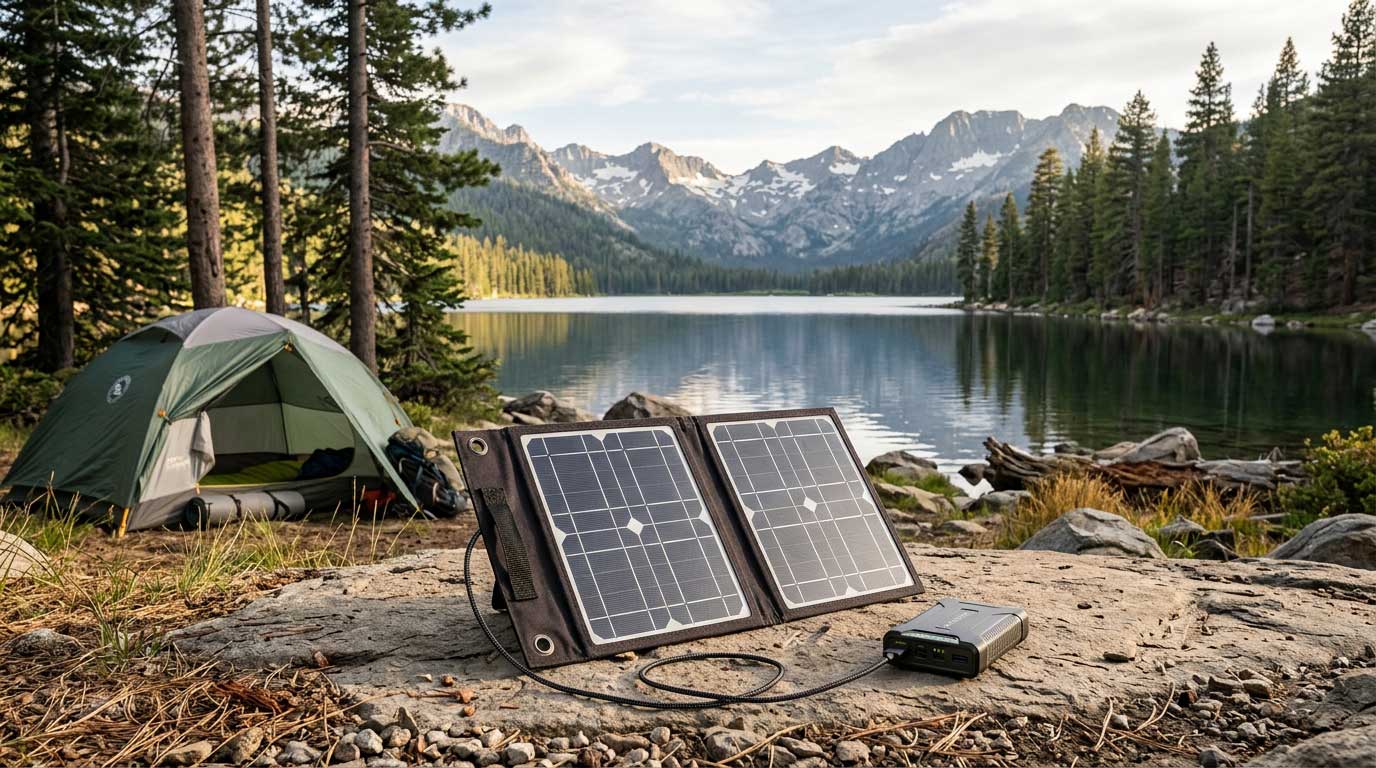
On a hiking trip, a sunny rock or open patch of ground may work well, provided the panel is stable and protected from being stepped on. Do not place it where wind could blow it down a slope.
Step 2 — Check the Device’s Input Requirements
Read the panel and device specifications before connecting them. Confirm the supported voltage, current, connector, and charging protocol.
If the panel requires a controller, use the specified controller. Never assume that a connector is safe simply because it fits the device.
Step 3 — Position the Panel Toward the Sun
Adjust the panel so its surface faces the sun as directly as practical. The best angle changes with location, season, and time of day.
If the charging indicator fluctuates, check for passing clouds and partial shade before assuming there is a fault. A small panel can respond noticeably to changes in available sunlight.
Step 4 — Store Energy When Possible
If your panel and power bank are compatible, collect energy during daylight and use the stored electricity later. This is usually more convenient than expecting a phone to charge continuously while sunlight changes.
Remember that the power bank introduces additional charging and conversion losses. Its capacity should be appropriate for your devices, and its input must support the panel’s output.
Step 5 — Pack It Carefully
Disconnect equipment according to the manufacturer’s instructions. Keep cables clear of the folding sections, avoid sharp bends in wires, and store the panel without pressure on its active surface.
Inspect the hinges and connections periodically. A portable product may be folded and unfolded many times, so careful handling is important for long-term reliability.
A Practical Example: Using a 10W Panel on a Weekend Hike
Consider a hypothetical hiker who carries a 10W foldable solar panel, a compatible power bank, a phone, and a GPS device. The panel is intended to provide supplemental energy during daylight rather than replace all the energy used on the trip.
Assume the panel receives four equivalent peak sun hours on a clear day and use the illustrative 0.75 derating factor described earlier.
| Item | Estimated value |
|---|---|
| Panel rated power | 10W |
| Equivalent peak sun hours | 4 hours |
| Assumed system derating factor | 0.75 |
| Estimated daily panel energy | 30Wh |
| Estimated energy over two similar days | 60Wh |
These values are calculated examples, not results from a real customer trial. They assume similar sunlight on both days and do not account for every possible system loss.
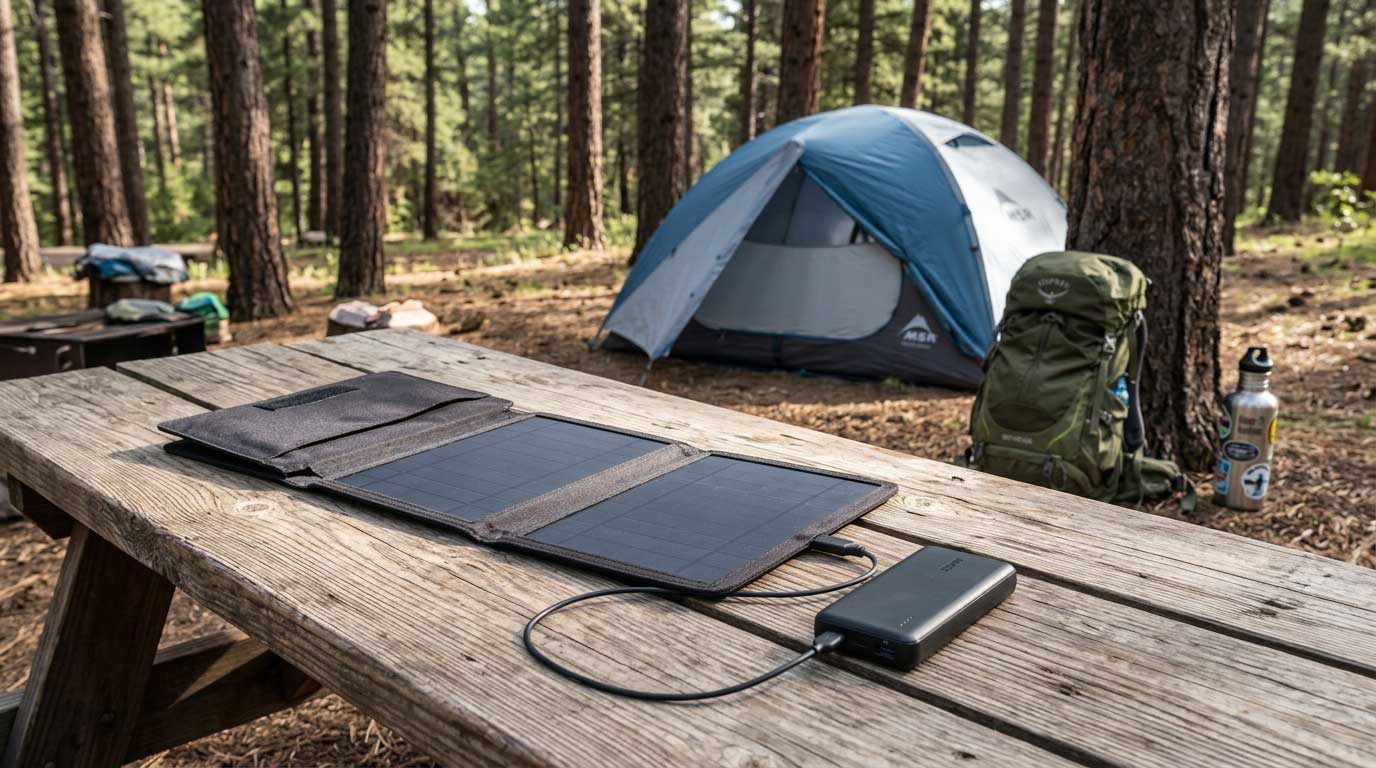
On the trail, the hiker unfolds the panel during a lunch stop in an open area and connects it to a compatible power bank. Later, the hiker stores the bank in the backpack and uses it to charge the phone.
That arrangement is more practical than leaving the phone connected directly to the panel while walking. It also allows the panel to remain stationary and face the sun.
If clouds cover the campsite for much of the afternoon, the energy collected may be well below the estimate. The hiker should therefore begin with a charged power bank and treat solar charging as supplemental rather than essential.
The useful insight is that a 10W panel’s value depends as much on how consistently it is positioned and used as on its rated power. For short trips with modest electronic loads, that can be enough. For a device with a large daily energy requirement, a higher-wattage panel is likely to be more suitable.
Is a 10W Panel Suitable for Every Outdoor Application?
No. Its compact size is useful, but the rated output limits how quickly it can supply energy.
A 10W panel may suit an occasional phone top-up, small electronics, or a power bank that accepts its output. It is less suitable when multiple devices must be recharged quickly, when sunlight is limited, or when equipment requires substantial energy every day.
For an RV owner who needs to replenish a larger battery, a higher-wattage panel or a larger solar array may be more appropriate. For a backpacker whose main concern is keeping a small device charged, carrying a much larger panel may be unnecessary.
Bright Solar focuses on flexible solar panel solutions for B2B applications, including RVs, campers, outdoor power, and selected marine uses. Its L Series is designed for applications that benefit from a thin, lightweight, bendable solar module, with a stated maximum bending capacity of up to 30%. That specification relates to the particular series and should not be interpreted as a universal folding capability or permission to bend a panel beyond its prescribed limits.
For OEM buyers, a small foldable charger and a flexible solar module represent different product approaches. The right option depends on the intended end use, required output, installation method, and the exact electrical specifications.
FAQ About 10 Watt Foldable Solar Panels
What can a 10 watt foldable solar panel charge?
A 10W foldable solar panel can supply energy to compatible small electronics, USB devices, and power banks. Its suitability depends on the output connection, charging requirements, sunlight conditions, and the energy needed by the device.
How much energy does a 10W solar panel generate per day?
With four equivalent peak sun hours and an illustrative 0.75 system derating factor, a 10W panel would generate an estimated 30Wh per day. Actual production depends on location, weather, orientation, shading, and electrical losses.
Can a 10W foldable solar panel charge a phone?
Yes, if it provides a compatible regulated output and supports the phone’s charging requirements. Charging may fluctuate in changing sunlight. A compatible power bank can store collected energy and provide a more convenient charging source later.
Is a 10W foldable solar panel suitable for camping?
Yes. It can be useful for small electronic devices and supplemental battery charging during camping trips. It is less suitable for large loads or situations where substantial energy must be collected in a short period.
Can a 10W solar panel charge a portable power station?
Only if the power station accepts the panel’s electrical output and the connection is compatible. Check the station’s minimum and maximum solar input voltage, connector requirements, and charging specifications. Some power stations may not accept such a low-power panel.
Does a 10W foldable solar panel work on cloudy days?
Yes, photovoltaic cells can generate electricity in cloudy conditions, but output generally decreases when less sunlight reaches the panel. Keep the panel unshaded and avoid relying on a specific daily energy yield during poor weather.
How do I maintain a 10W foldable solar panel?
Follow the manufacturer’s cleaning and storage instructions. Keep the surface clean, inspect cables and hinges for damage, protect the panel from impacts, and fold it only along its intended joints. Observe the product’s documented weather-protection limits.
Conclusion: Is a 10 Watt Foldable Solar Panel Right for You?
A 10 watt foldable solar panel is a practical option when portability matters more than high power output. It can provide supplemental energy for compatible phones, GPS devices, small electronics, and power banks, particularly on camping and hiking trips where access to conventional electricity is limited.
Before buying, compare the panel’s output connections, packed weight, folded dimensions, and voltage specifications. Estimate daily energy using realistic sunlight assumptions, and consider a compatible power bank if you want to store electricity for later use.
For larger energy requirements, a higher-wattage panel or a more substantial solar system may be a better fit. Bright Solar’s flexible solar panel solutions are also worth considering for B2B applications that require a lightweight solar module integrated into an RV, outdoor product, or selected marine system.
The best choice is the panel that matches the intended load, available sunlight, and real transport constraints—not simply the smallest product or the highest advertised specification.
Technical References and Editorial Information
The technical principles and illustrative energy calculations in this article are supported by these public resources:
- U.S. Department of Energy — Solar Photovoltaic Technology Basics: Explains how photovoltaic cells convert sunlight into electricity. Read the DOE guide.
- National Renewable Energy Laboratory — PVWatts Calculator: Estimates photovoltaic energy production using location and system inputs. Explore PVWatts.
Editorial note: Prepared for Bright Solar by its solar-content team. The article draws on published technical references and clearly labeled illustrative calculations. The hiking example is hypothetical, not a claimed customer case study or measured field test. Confirm model-specific output, weight, dimensions, electrical compatibility, weather protection, and warranty terms against the manufacturer’s current datasheet.
Related recommendations
-

Solar Panel for Electric Fence: How to Choose the Right System
255Learn how to choose a solar panel for electric fence systems, size the battery and panel correctly, reduce downtime, and keep remote livestock fencing reliable.
View details -
Flexible Foldable Solar Panels: Portable Power Guide
98Flexible foldable solar panels provide portable solar power by combining lightweight PV modules with folding sections for compact transport and deployment.
View details -
12 V Solar Panel: Complete Guide for RV, Marine & Off-Grid Systems
229Learn how a 12 v solar panel works, how to charge a 12V battery, choose the right wattage, wire panels, and build reliable RV, marine, and off-grid systems.
View details -
Flexible RV Solar Panels for Reliable Off-Grid Power
180Flexible RV solar panels deliver lightweight off-grid energy for campers, vans, and motorhomes. Discover durable ETFE solar solutions from Bright Solar.
View details