High Efficiency Flexible Solar Panels: Advanced Lightweight Solar Power Solution
High efficiency flexible solar panels combine advanced photovoltaic technology with lightweight flexible designs to deliver more energy from limited spaces. They are ideal for RVs, boats, portable systems, and off-grid applications where power output and installation flexibility are equally important.
When customers compare flexible solar products, one question appears repeatedly:
“Can a flexible solar panel really provide the same performance as a traditional module?”
The answer depends on the technology behind the panel.
A flexible solar panel is not simply a thinner version of a rigid module.
The real difference comes from:
- Solar cell technology
- Material selection
- Surface protection
- Manufacturing process
- Installation environment
At Bright Solar, our team has worked with flexible solar applications where available space was limited but energy demand remained high.
A marine customer needed additional power on a curved yacht surface.
An RV manufacturer wanted higher output without increasing roof weight.
A portable energy company needed lightweight solar modules that could survive outdoor conditions.
Those projects changed how we evaluate solar performance.
The highest wattage panel is not always the best choice.
The best solution is the panel that delivers reliable energy where traditional solar technology cannot easily operate.
What are high efficiency flexible solar panels?
High efficiency flexible solar panels are photovoltaic modules designed to achieve strong energy conversion performance while maintaining a lightweight and bendable structure.
Traditional solar panels usually rely on:
- Glass layers
- Aluminum frames
- Rigid mounting structures
Flexible solar panels use different construction methods:
- Thin photovoltaic cells
- Flexible substrates
- Advanced encapsulation
- Lightweight protective coatings
The goal is to achieve:
- Higher power output per square meter
- Lower installation weight
- Better adaptability to curved surfaces
These characteristics make them suitable for:
| Application | Benefit |
|---|---|
| RV roofs | More energy without heavy structures |
| Boats | Installation on curved surfaces |
| Portable systems | Easier transportation |
| Remote locations | Independent power generation |
| Electric vehicles | Lightweight energy support |
Why efficiency matters in flexible solar technology
Efficiency determines how effectively a solar panel converts sunlight into electricity.
The formula is:
Solar Efficiency = Electrical Output ÷ Solar Energy Received × 100%
For limited spaces, efficiency becomes especially important.
A large rooftop system can simply add more panels.
A vehicle roof or boat deck cannot.
For example:
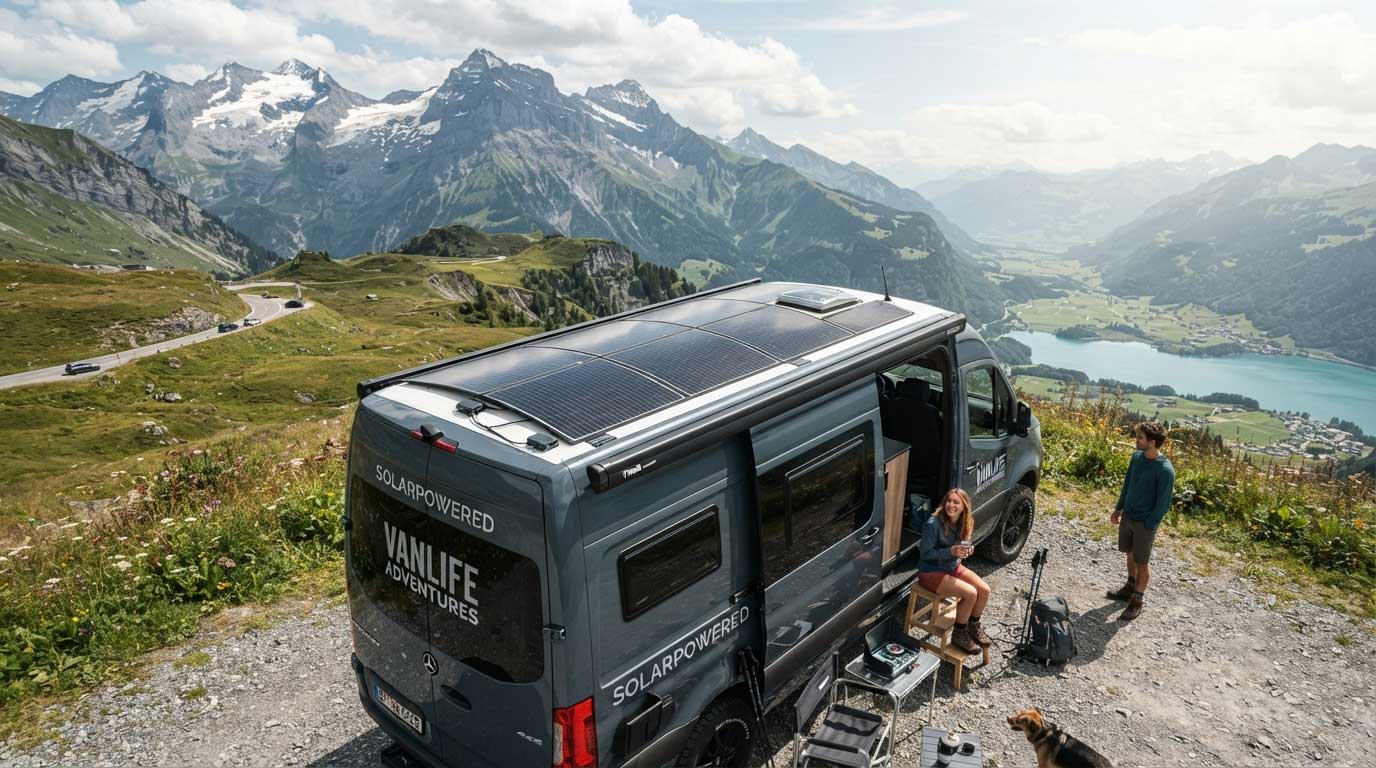
A camper van may only have 3 square meters of usable roof area.
A low-efficiency panel may produce insufficient power.
A high-efficiency flexible solar panel can generate more electricity from the same installation area.
This is why efficiency is often more valuable than just panel size in mobile applications.
Technology behind high efficiency flexible solar panels
Several technologies influence flexible solar panel performance.
High-performance solar cells
Solar cells are the core component determining energy conversion.
Modern flexible solar products commonly use:
- Monocrystalline silicon cells
- High-grade photovoltaic materials
- Advanced cell interconnection technology
Monocrystalline cells are popular because they provide:
- Higher efficiency
- Better space utilization
- Stable long-term performance
According to the National Renewable Energy Laboratory (NREL), laboratory photovoltaic technologies continue to achieve increasing efficiency levels through improvements in cell structures and materials.
Source:
National Renewable Energy Laboratory – Best Research-Cell Efficiency Chart
https://www.nrel.gov/pv/cell-efficiency.html
Lightweight composite materials
A high-efficiency flexible solar panel must balance power and weight.
Too much protective material increases weight.
Too little protection reduces durability.
Modern flexible panels use:
- Composite backing layers
- Polymer protection films
- Lightweight encapsulation
This allows installation on:
- Vehicle roofs
- Marine surfaces
- Portable equipment
without requiring heavy support structures.
ETFE protective coating
Many premium flexible solar panels use ETFE surface protection.
Advantages include:
- Excellent UV resistance
- Scratch resistance
- Lower weight compared with glass
- Improved outdoor durability
For outdoor solar applications, surface protection directly affects product lifespan.
A panel installed on an RV roof may experience:
- Direct sunlight
- Rain
- Dust
- Temperature changes
every day.
High efficiency flexible solar panels vs traditional solar panels
The choice depends on the application.
| Feature | Flexible Solar Panels | Traditional Solar Panels |
|---|---|---|
| Weight | Lightweight | Heavy |
| Surface compatibility | Curved surfaces | Flat surfaces |
| Installation | Simple | More complex |
| Transportation | Easier | More difficult |
| Best application | Mobile systems | Fixed installations |
Traditional panels still have advantages for:
- Large rooftops
- Ground-mounted solar farms
- Permanent structures
However, flexible panels solve problems where weight and shape limitations exist.
Real Bright Solar experience with high efficiency flexible solar panels
At Bright Solar, we have seen that customers rarely choose flexible solar panels only because of appearance.
They choose them because of practical limitations.
One project involved an RV manufacturer in Europe.
The company was developing premium camper vehicles for long-distance travelers.
Their challenge:
The roof area was limited.
Customers wanted more off-grid capability.
Heavy solar modules affected vehicle design.
The original plan used traditional framed panels.
During testing, the team identified several issues:
- Added roof weight
- Complex mounting brackets
- Higher installation labor
After switching to a high-efficiency flexible solar solution:
| Project Factor | Result |
|---|---|
| Installation weight | Reduced |
| Roof integration | Improved |
| Available solar area | Increased |
| Vehicle appearance | Maintained |
The most valuable feedback from the customer was not about the panel specifications.
It was about usability.
Travelers could generate more energy without changing how they used their vehicles.
Applications of high efficiency flexible solar panels
High-efficiency flexible solar technology is expanding into many industries.
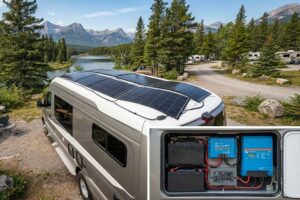
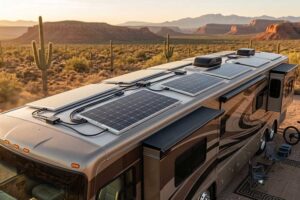
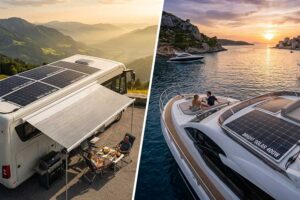
RV and camper solar systems
RV owners often need reliable power without adding unnecessary weight.
Applications include:
- Refrigerators
- Lighting
- Fans
- Mobile electronics
- Battery charging
A higher-efficiency panel allows more energy generation from limited roof space.
Marine solar applications
Boats present unique installation challenges.
Surfaces are often:
- Curved
- Limited
- Exposed to weather
Flexible solar panels can fit areas where rigid modules cannot.
Common uses:
- Sailing boats
- Fishing boats
- Small yachts
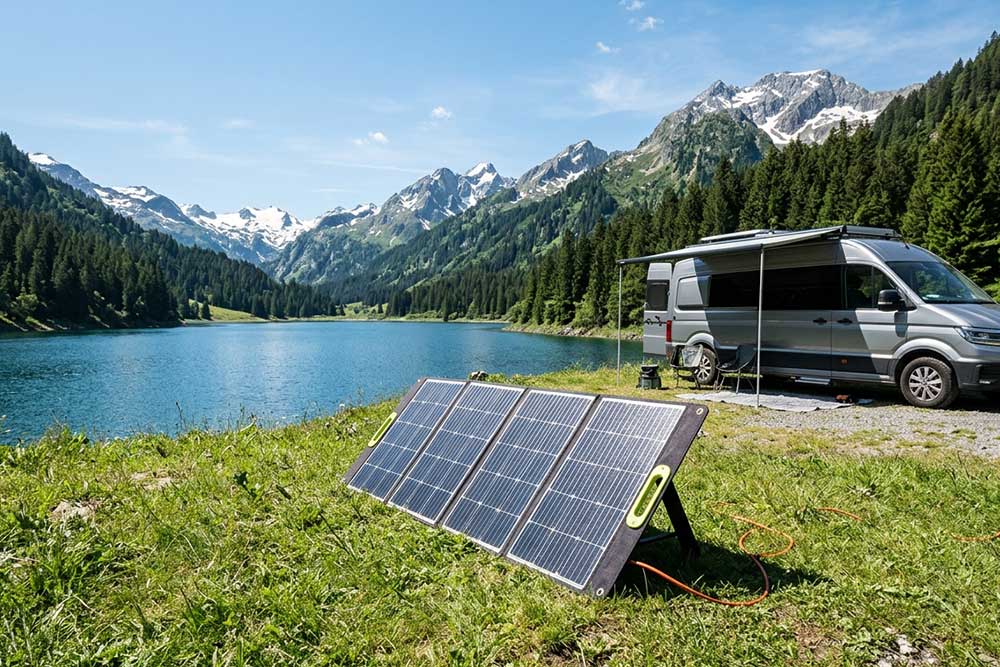
Portable and off-grid power systems
Remote users need solar systems that are easy to transport.
Examples:
- Camping power systems
- Emergency energy solutions
- Remote monitoring equipment
Lightweight flexible panels make transportation easier.
How to choose high efficiency flexible solar panels?
Selecting high efficiency flexible solar panels requires more than looking at the wattage number printed on the label.
In real-world projects, we evaluate several factors together:
- Energy requirements
- Available installation area
- Environmental conditions
- Weight limitations
- Expected service life
A 200W panel with better efficiency and durability may perform better than a larger but lower-quality product in a limited space.
Before purchasing, consider the following:
| Evaluation Factor | Why It Matters |
|---|---|
| Solar cell efficiency | Determines energy generation ability |
| Panel weight | Important for vehicles and portable systems |
| Surface protection | Affects outdoor durability |
| Temperature performance | Impacts long-term output |
| Warranty support | Indicates product confidence |
Check power output per square meter
For mobile applications, installation area is usually the biggest limitation.
A boat deck or RV roof cannot expand when more electricity is needed.
This makes power density important.
Power density means:
How much electricity can be generated from a specific area.
High-efficiency flexible panels provide advantages because they can produce more power without increasing the installation footprint.
Example:
A camper owner has a limited roof area of approximately 2.5 square meters.
A lower-efficiency module may not provide enough energy for:
- Refrigeration
- Lighting
- Communication equipment
A higher-efficiency flexible panel can maximize the available surface.
Consider real outdoor conditions
Laboratory ratings provide useful comparisons, but outdoor performance depends on actual conditions.
Important environmental factors include:
- Temperature
- Sun angle
- Dust
- Humidity
- Shading
The National Renewable Energy Laboratory (NREL) explains that photovoltaic module performance changes depending on environmental conditions, including temperature and solar irradiance.
Source:
National Renewable Energy Laboratory
https://www.nrel.gov/
A good flexible solar panel is designed not only for peak testing conditions but also for daily outdoor use.
Installation guide for high efficiency flexible solar panels
Flexible solar installation is generally straightforward, but professional results require attention to detail.
At Bright Solar, we usually recommend four installation stages.
Step 1: Analyze the installation location
Before attaching the panel, inspect:
- Available space
- Sun exposure
- Surface condition
- Cable routing
Avoid installing near:
- Permanent shade areas
- Exhaust outlets
- High-temperature equipment
Even a small shaded section can affect system performance.
Step 2: Prepare the surface
A clean surface improves installation reliability.
Recommended preparation:
- Remove dust and dirt
- Clean oil or grease
- Dry the surface completely
- Confirm mounting position
For RV and marine installations, surface preparation is especially important because vibration and weather exposure are constant.
Step 3: Install electrical components
A complete flexible solar system normally includes:
| Component | Function |
|---|---|
| Flexible solar panel | Converts sunlight into electricity |
| Charge controller | Controls battery charging |
| Battery | Stores generated power |
| Inverter | Supplies AC devices |
| Monitoring system | Tracks performance |
For high-efficiency systems, MPPT charge controllers are commonly preferred because they can optimize energy harvesting under changing sunlight conditions.
Step 4: Test and monitor performance
After installation, check:
- Voltage output
- Charging current
- Battery status
- Controller operation
Keep records of:
- Installation date
- Panel model
- Initial output data
This helps identify future performance changes.
Durability of high efficiency flexible solar panels
A flexible solar panel installed outdoors must survive years of exposure.
Typical challenges include:
- Strong sunlight
- Rain
- Wind
- Saltwater environments
- Temperature cycles
UV resistance
Continuous sunlight exposure can degrade materials over time.
High-quality flexible panels use protective layers designed to reduce:
- UV damage
- Surface aging
- Material breakdown
This is especially important for:
- Boats
- RVs
- Outdoor equipment
Mechanical flexibility
The main advantage of flexible solar technology is adaptability.
The panel can better match:
- Curved roofs
- Uneven surfaces
- Lightweight structures
However, flexibility does not mean unlimited bending.
Correct installation should always follow manufacturer specifications.
Marine environment performance
Marine applications are among the most demanding solar environments.
Saltwater exposure can affect:
- Electrical connectors
- Surface materials
- Metal components
For boat installations, important features include:
- Corrosion-resistant materials
- Waterproof connectors
- Protective coatings
Cost analysis of high efficiency flexible solar panels
The price of high efficiency flexible solar panels depends on:
- Cell technology
- Wattage
- Materials
- Protection level
- Manufacturing quality
Typical market ranges:
| Panel Type | Estimated Price |
|---|---|
| Small flexible panel (50W–100W) | $100–$250 |
| Medium flexible panel (150W–200W) | $250–$500 |
| High output flexible panel (300W+) | $500–$900+ |
A complete system cost may include:
- Solar panel
- Controller
- Battery
- Wiring
- Installation accessories
For professional applications, selecting based only on initial price can create problems later.
A lower-cost panel may require:
- Earlier replacement
- More maintenance
- Lower energy output
Bright Solar high efficiency flexible solar panel advantages
Bright Solar focuses on developing flexible solar solutions for practical applications.
Our product design priorities include:
1. Lightweight construction
Suitable for:
- RVs
- Boats
- Portable systems
2. Reliable outdoor performance
Designed for environments involving:
- Sun exposure
- Rain
- Temperature changes
3. Flexible installation options
Suitable for surfaces where rigid modules are difficult to use.
4. Balanced performance
The goal is not only higher laboratory efficiency.
The goal is dependable energy production in real conditions.
Maintenance tips for high efficiency flexible solar panels
Flexible solar panels require minimal maintenance, but simple care can extend performance.
Clean regularly
Remove:
- Dust
- Leaves
- Bird contamination
- Salt deposits
Recommended:
- Clean water
- Soft cloth
- Non-abrasive cleaning methods
Inspect connections
Check:
- Cable condition
- Junction box
- Connectors
- Mounting points
For vehicles and boats, vibration inspection is especially important.
Monitor energy output
Track:
- Daily generation
- Battery charging
- Seasonal performance
A sudden reduction may indicate:
- Dirt accumulation
- Partial shading
- Electrical connection issues
FAQ About High Efficiency Flexible Solar Panels
What makes high efficiency flexible solar panels different?
They combine advanced solar cells with lightweight flexible materials, allowing higher energy generation in applications where installation space and weight are limited.
Are high efficiency flexible solar panels better than rigid panels?
They are better for specific applications such as RVs, boats, and portable systems. Rigid panels may still be preferred for large permanent installations.
How efficient are flexible solar panels?
Efficiency varies depending on solar cell technology and product design. Premium flexible panels using advanced monocrystalline cells can achieve strong performance comparable to many rigid modules.
Can flexible solar panels power an RV?
Yes. Properly sized systems can support RV appliances, lighting, electronics, and battery charging.
Are flexible solar panels waterproof?
Many outdoor flexible solar panels are designed for weather resistance, but waterproof performance depends on construction quality and installation methods.
How long do high efficiency flexible solar panels last?
Lifespan depends on materials, usage environment, and maintenance. Premium products are designed for long-term outdoor operation.
Where are high efficiency flexible solar panels commonly used?
Common applications include RVs, boats, camper vans, portable power systems, electric vehicles, and remote energy projects.
Conclusion: Choosing High Efficiency Flexible Solar Panels for Real Applications
High efficiency flexible solar panels provide a practical solution for users who need more energy from limited installation space.
Their main advantages include:
- High power density
- Lightweight structure
- Flexible installation
- Better adaptability
From RV roofs to marine surfaces, flexible solar technology allows renewable energy to reach applications where traditional panels are difficult to install.
At Bright Solar, our experience has shown that successful solar projects are not only about selecting the highest-rated product.
They are about understanding the environment, the user’s needs, and the challenges of real-world operation.
A solar panel that performs well on a test platform must also perform well on a moving vehicle, a boat deck, or an outdoor system exposed to changing weather.
That is where high-efficiency flexible solar technology creates real value.
Related recommendations
-

12V Solar Panel Folding: Output, Battery Charging and Setup Guide
25A 12V folding solar panel provides portable power for RVs, camping, and off-grid battery systems. Actual output depends on sunlight, panel wattage, and syste...
View details -
1000W Solar Panel: Complete Guide to Size, Power Output, Cost, and System Setup
311Explore 1000w solar panel size, cost, power output, and system setup. Learn how to choose the right 1000 watt solar solution for RV, off-grid, and backup energy needs with Bright Solar.
View details -
Wiring Solar Panels in Series: When It Works Best and When It Doesn’t
157Learn wiring solar panels in series correctly for RVs, boats, mobile homes, and off-grid systems. Discover voltage benefits, sizing tips, real-world examples, and installation best practices.
View details -
400W Flexible Solar Panels for RV, Marine & Off-Grid Systems
208400W flexible solar panels deliver lightweight, high-efficiency off-grid power for RVs, boats, cabins, and mobile solar systems. Explore expert insights from Bright Solar.
View details