10 Watt Flexible Solar Panel: Uses, Output and Installation Guide
A 10 watt flexible solar panel is designed for small, low-power applications where limited weight, curved mounting surfaces, and simple installation matter more than high energy production. It can support small batteries, sensors, lights, ventilation fans, GPS equipment, and other low-consumption DC loads when properly matched to the battery and charge controller.
A 10W rating does not mean the panel continuously produces 10 watts outdoors. The rated figure is measured under defined test conditions. NREL identifies Standard Test Conditions (STC) as 1,000 W/m² irradiance, AM1.5 spectrum, and a 25°C PV cell temperature. Actual output changes with sunlight, temperature, orientation, shading, wiring, and the electrical load.
What Is a 10 Watt Flexible Solar Panel?
A 10 watt flexible solar panel is a compact photovoltaic module designed to generate up to approximately 10 watts under its rated test conditions. Unlike conventional rigid glass modules, flexible panels are built around a lighter construction that can accommodate applications where a rigid panel is inconvenient.
That difference becomes useful when the mounting surface is not perfectly flat.
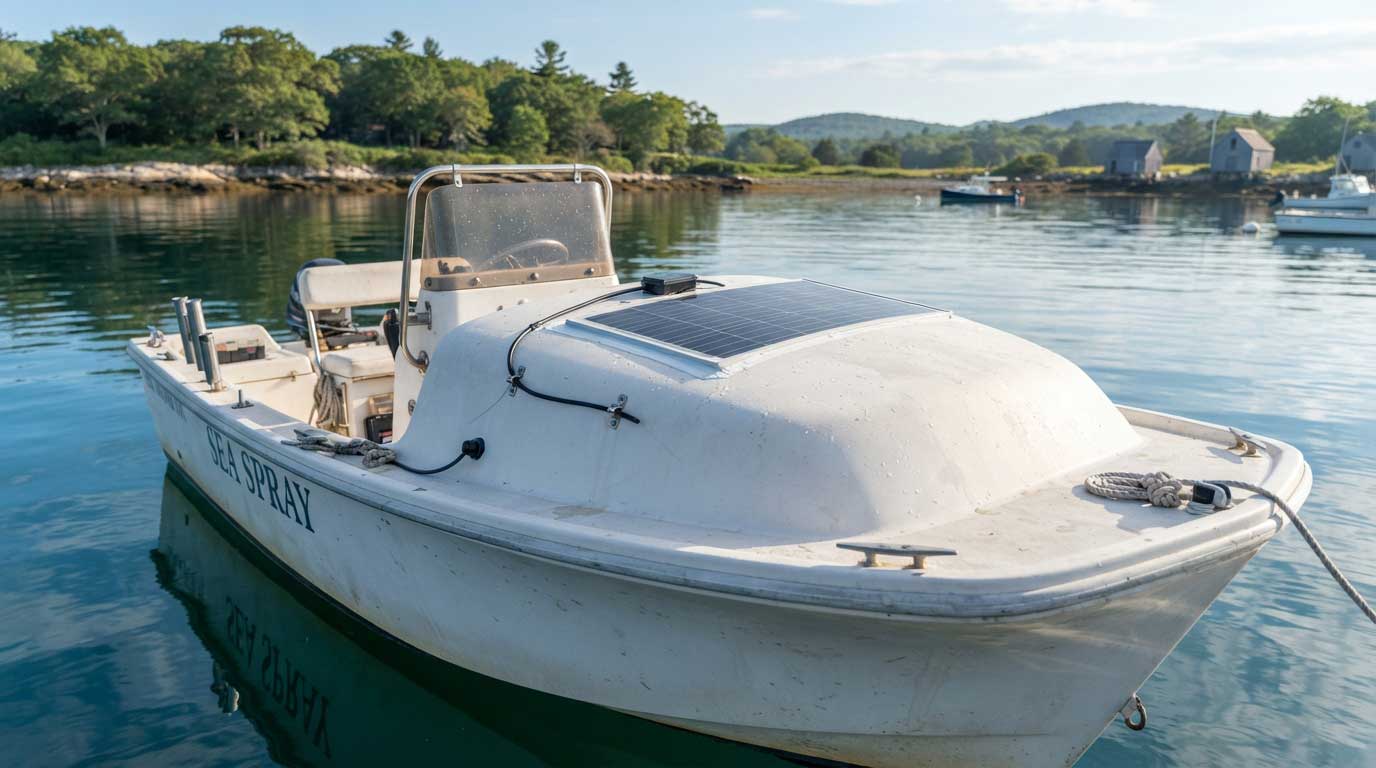
A rigid 10W module may be easy to place on a flat board, but it becomes awkward on a curved equipment housing, small boat surface, rounded roof section, or portable structure. A flexible module can conform to a modest curve within its specified bending limits.
The word flexible, however, should not be interpreted as “bend it in any direction.”
Module construction, cell technology, substrate, encapsulation and electrical interconnections all affect allowable bending. IEC 61215:2021 includes specific test methods for flexible PV modules, including a bending test.
For a manufacturer or system designer, that distinction matters. A panel can look extremely thin and flexible while still having a defined minimum bend radius that should not be exceeded.
Typical applications
A 10W flexible module is most useful when the electrical demand is modest and available mounting space is limited.
Common applications include:
- Small 12V battery maintenance
- Outdoor sensors
- GPS tracking equipment
- Small security or monitoring systems
- Low-power LED lighting
- Small ventilation fans
- Camping accessories
- Marine electronics with low standby consumption
- Small electric fence or monitoring equipment
- Remote IoT devices
- Portable power projects
- Small RV auxiliary systems
It is generally not the right starting point for running a refrigerator, air conditioner, microwave, induction cooker, or other high-power appliance.
That sounds obvious, but it is one of the most common sizing mistakes with small solar panels: looking at the panel’s physical size instead of the daily energy requirement.
How Much Power Can a 10 Watt Flexible Solar Panel Produce?
The theoretical maximum is straightforward:
10 watts × 1 hour = 10 watt-hours
But sunlight is not available at the rated intensity for every hour of the day.
For example, a simplified calculation using 4 equivalent peak-sun-hours would give:
10W × 4h = 40Wh/day
That is a planning calculation, not a guaranteed production figure.
A real installation can produce less because of temperature, clouds, shading, orientation, dirt, cable losses and charge-controller behavior. The U.S. Department of Energy notes that PV performance is affected by factors including wavelength, reflection and temperature, with higher temperatures generally reducing PV voltage.
For this reason, I would not size a battery system by multiplying 10W by the number of daylight hours shown on a clock.
A better approach is to start with the load.
| Application | Approximate daily energy example | 10W panel suitability |
|---|---|---|
| Small sensor | 2–10Wh | Excellent |
| GPS/monitoring device | 5–20Wh | Good |
| Small LED light | 10–30Wh | Possible |
| Small fan | 20–50Wh | Depends on runtime |
| Phone charging | 15–30Wh | Possible |
| Small refrigerator | 300Wh+ | Generally unsuitable |
| RV air conditioner | 1,000Wh+ | Not suitable |
These are planning examples rather than universal consumption values. The actual load should be measured or taken from the equipment manufacturer’s specifications.
A useful way to think about 10W
A 10W panel is less about “generating a lot of electricity” and more about providing a small, steady source of energy without adding much bulk.
That makes it particularly interesting for equipment that spends most of its time consuming very little power.
For example, if a remote sensor averages 0.5W continuously:
0.5W × 24 hours = 12Wh/day.
A 10W solar module could potentially be appropriate for such a system, but only after accounting for the site’s actual solar resource, battery losses, controller efficiency and periods of poor weather.
That is where small-panel system design becomes more interesting than simply reading the wattage printed on the label.
10 Watt Flexible Solar Panel for RV Applications
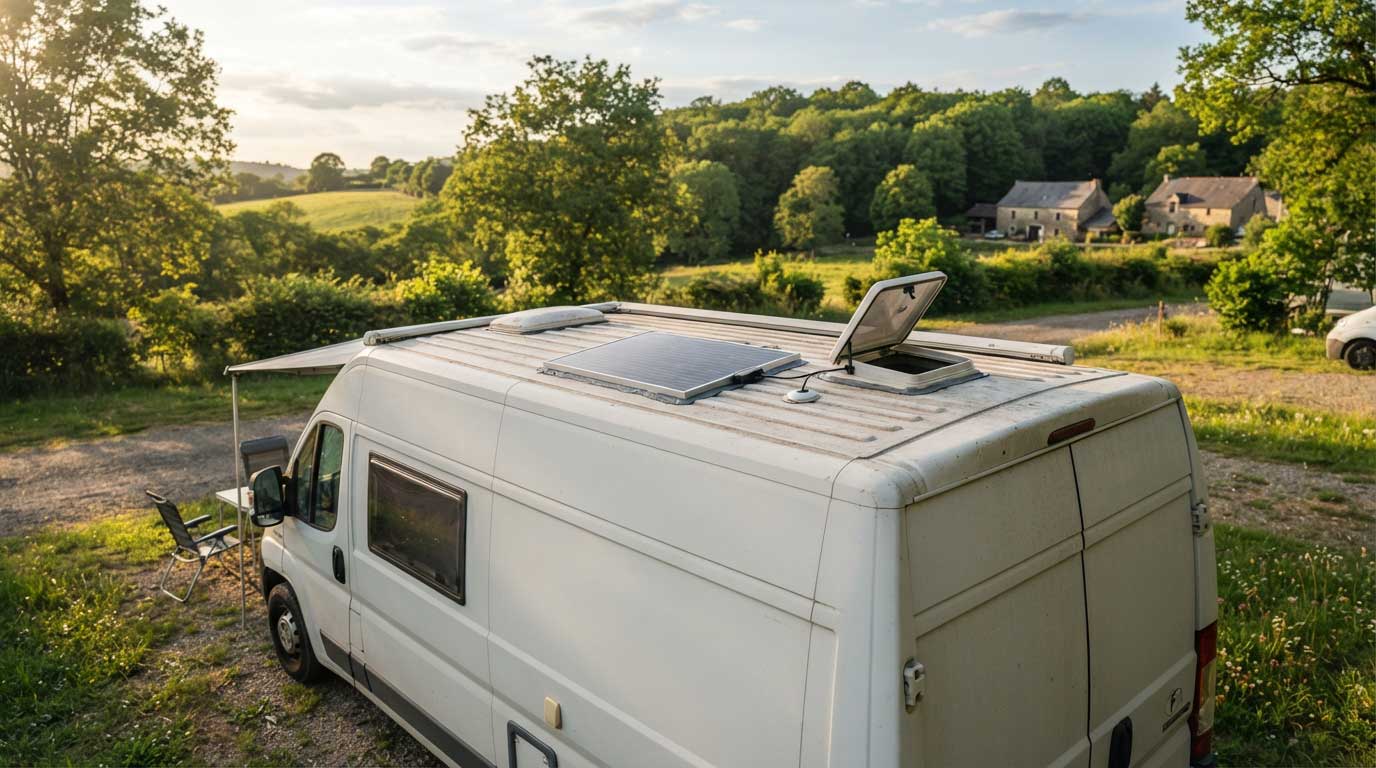
A 10 watt solar panel for RV use is usually an auxiliary module rather than the primary RV power source.
For example, an RV owner may already have a large solar array but want a separate small panel for maintaining a small auxiliary battery or powering a dedicated monitoring device.
There is also a practical installation advantage.
An RV roof contains vents, antennas, air-conditioning equipment, skylights and curved or irregular sections. A small flexible module can sometimes fit into a space that would be unusable for a conventional rigid module.
But do not treat every unused roof area as usable solar space.
Before installation, check:
- The panel dimensions.
- The allowable bending radius.
- The roof material.
- Cable routing.
- Drainage paths.
- Areas exposed to foot traffic.
- Nearby objects that may cast shadows.
- The manufacturer’s mounting method.
- Junction-box and connector protection.
- Charge-controller compatibility.
For a small panel, even partial shading can become disproportionately important. A chimney, roof vent or antenna positioned directly across the active cell area can reduce useful production.
How to Connect a 10 Watt Flexible Solar Panel
The electrical connection is simple in principle, but the correct components depend on the battery voltage and the panel’s actual electrical specifications.
A common small system looks like this:
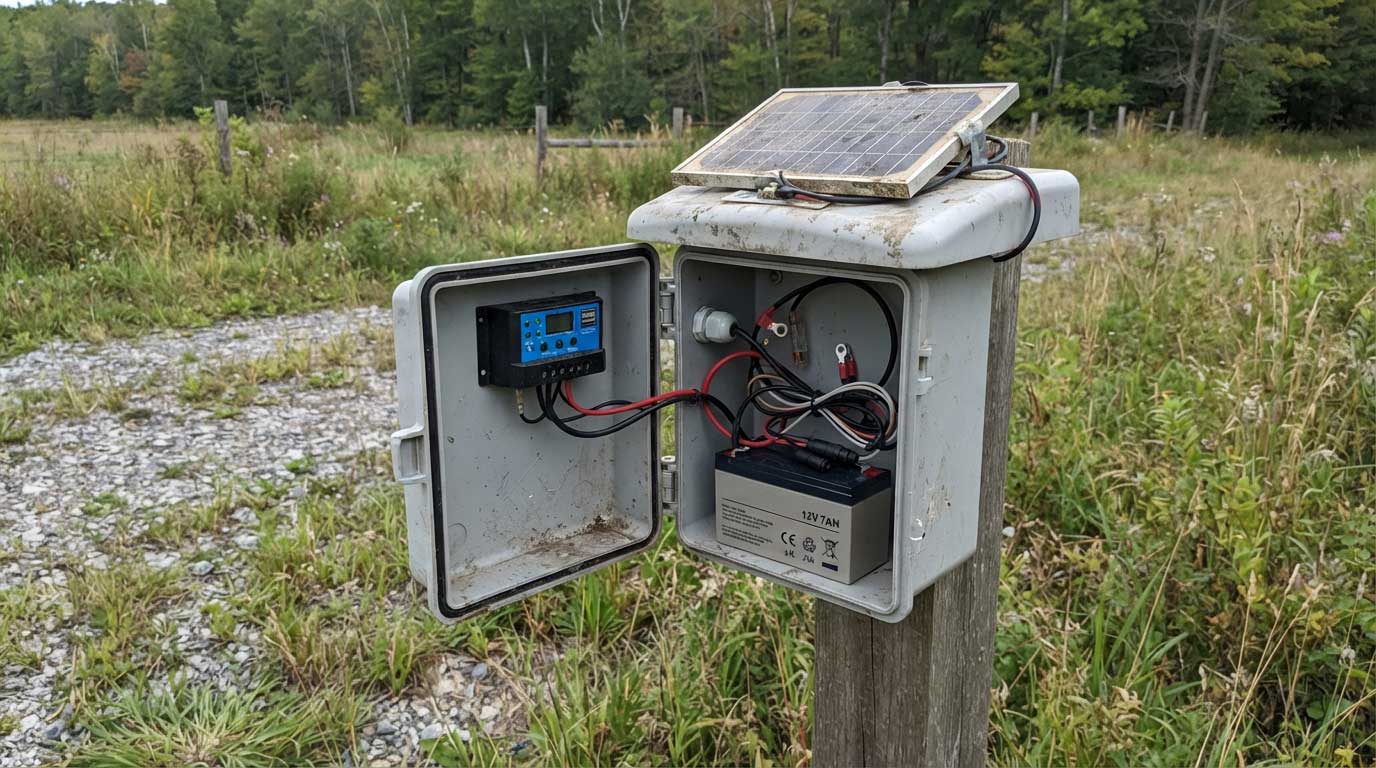
10W flexible solar panel → charge controller → battery → DC load
Do not connect the panel directly to a lithium battery simply because the panel is only 10W.
The charge controller manages the charging process and provides a controlled interface between the PV module and battery.
Step 1: Check the panel specifications
Before choosing a controller, check:
- Maximum power: 10W
- Voltage at maximum power: Vmp
- Current at maximum power: Imp
- Open-circuit voltage: Voc
- Short-circuit current: Isc
- Maximum system voltage
- Connector type
- Polarity
- Operating temperature range
The 10W label alone is not enough to select electrical components.
For example, two different 10W modules can have different voltage and current characteristics depending on their cell configuration.
Step 2: Match the controller to the battery
For a small 12V battery system, a compact solar charge controller may be appropriate, provided its input range and charging profile match the panel and battery.
For lithium batteries, use a controller with a charging profile approved for the specific battery chemistry.
For lead-acid batteries, charging behavior is different.
This is one place where saving a few dollars on an unsuitable controller can create more problems than it solves.
Step 3: Keep the wiring short
Small panels produce relatively little current, so unnecessary cable resistance can still become noticeable in low-power systems.
Keep cable runs reasonably short and use suitable outdoor-rated cable and connectors.
For outdoor installations, protect connection points from water ingress rather than assuming that a connector is waterproof simply because it is advertised for outdoor use.
10W Flexible Solar Panel for Small Batteries
A flexible solar panel for small battery systems can be useful when the objective is battery maintenance rather than rapid charging.
Consider an illustrative setup using a 12V, 20Ah battery.
Its nominal stored energy is:
12V × 20Ah = 240Wh
A 10W panel is small compared with a 240Wh battery. Even before charging losses, it would require substantial sunlight hours to replace a large percentage of a deeply discharged battery.
That does not make the panel useless.
It means the application should be framed correctly.
A 10W module is much more attractive for:
- Maintaining a lightly used battery
- Replacing small standby consumption
- Supporting a low-power monitoring system
- Reducing battery self-discharge impact
- Providing supplemental energy
It is much less appropriate when the battery is repeatedly discharged by large loads.
Illustrative field scenario
Consider a small remote equipment box used in a rural property.
Inside are a low-power environmental sensor, a communication module and a small indicator light. The electronics consume relatively little energy, but the system must operate continuously without a grid connection.
The designer has limited surface area on the enclosure.
A rigid module would require a separate bracket. A flexible 10W module can be mounted directly to a suitable curved surface, keeping the installation low-profile.
The engineering decision is not “10W is enough because the panel says 10W.”
The decision is based on measured daily consumption, battery capacity, local solar conditions and the amount of energy the panel can realistically deliver.
That distinction is important in professional PV design.
What Makes a Good 10 Watt Flexible Solar Panel?
Power rating is only one specification worth looking at.
For a small flexible module, I would pay particular attention to five areas.
1. Cell and electrical design
The cell arrangement determines the module’s voltage and current characteristics. Make sure the electrical output fits the intended controller and battery system.
2. Encapsulation
A flexible panel may experience repeated thermal expansion and contraction outdoors. Encapsulation quality and material selection matter because the module is expected to operate in changing weather conditions.
3. Bending capability
Never assume that thinner means unlimited flexibility.
IEC 61215 includes testing methods specifically addressing flexible PV modules, including bending-related requirements.
4. Outdoor durability
The module’s environment matters.
Salt spray near the coast, UV exposure, high temperatures, standing water and repeated mechanical stress can all influence long-term performance.
IEC 61215 is designed around qualification and testing of PV modules for prolonged outdoor exposure; importantly, qualification testing should not be interpreted as a guaranteed quantitative lifetime prediction for every installation.
5. Actual installation method
Adhesive mounting, mechanical fastening and framed mounting each have different implications.
For flexible modules, installation is part of the product’s performance story. Poorly supported areas can create unnecessary mechanical stress.
10 Watt Flexible Solar Panel vs. Rigid 10W Solar Panel
| Feature | Flexible 10W Panel | Rigid 10W Panel |
|---|---|---|
| Weight | Usually lower | Usually higher |
| Curved surface | Better suited | Limited |
| Installation profile | Very low | Higher |
| Mounting | Adhesive or lightweight mounting | Bracket/frame common |
| Walkable surface | Usually unsuitable | Usually unsuitable |
| Small irregular spaces | Advantage | Less convenient |
| Mechanical protection | Depends on construction | Generally robust |
| Portable applications | Very useful | Bulkier |
| Flat mounting | Good | Excellent |
The choice should follow the installation, not fashion.
If the panel is going onto a flat, exposed platform where weight is irrelevant, rigid construction may be the simpler choice.
If the mounting surface is curved and weight matters, flexibility becomes much more valuable.
How to Improve 10W Solar Panel Performance
The easiest performance gains usually come from installation rather than trying to force more power from the module.
Keep the active surface clear
Dust, leaves, bird droppings and other contamination reduce the light reaching the cells.
Avoid unnecessary shading
A small shadow from a nearby object can have a much larger practical impact than expected, especially when it covers active cell areas.
Give the panel appropriate exposure
Orientation and tilt influence the available solar resource. DOE notes that roof shape, slope, orientation and shading are important when assessing PV potential.
Watch operating temperature
PV modules generally perform better at lower cell temperatures. DOE specifically identifies temperature as a factor affecting PV performance and notes that increasing temperature can cause a significant voltage reduction.
This matters for thin flexible panels mounted directly against a surface. The installation should follow the manufacturer’s thermal and mounting requirements rather than assuming that every roof surface behaves the same way.
How Long Does a 10W Flexible Solar Panel Last?
There is no honest single number that applies to every flexible solar module.
Service life depends on construction, encapsulation, cell technology, mounting, UV exposure, thermal cycling, moisture and mechanical stress.
IEC explains that qualification testing evaluates whether a module can withstand defined environmental stresses, but test results should not be treated as a quantitative prediction of actual service life in every environment.
For buyers, the better questions are:
- What materials are used?
- What outdoor tests have been completed?
- What bending limits apply?
- What warranty is offered?
- What connectors are supplied?
- What environmental conditions is the module designed for?
- Is the product intended for permanent outdoor installation?
These questions tell you much more than the “10W” number printed on the front.
10 Watt Flexible Solar Panel Buying Checklist
Before purchasing a module, check the following:
- Confirm the exact 10W rated output.
- Check Vmp and Imp.
- Check Voc and Isc.
- Confirm battery voltage.
- Confirm charge-controller compatibility.
- Measure the available mounting surface.
- Check the minimum bend radius.
- Consider shade throughout the day.
- Check cable and connector specifications.
- Verify outdoor durability requirements.
- Consider heat exposure.
- Confirm the intended installation method.
- Compare warranty terms.
- Ask for electrical test data when buying in bulk.
For OEM and B2B buyers, I would also request the module datasheet and installation instructions before approving a production order. Small modules still need proper electrical documentation.
FAQ: 10 Watt Flexible Solar Panel
What can a 10 watt flexible solar panel power?
A 10W flexible solar panel is suitable for low-power applications such as sensors, small lights, monitoring equipment, GPS devices, battery maintenance and other small DC loads. It is not designed to directly operate high-power appliances.
Can a 10 watt flexible solar panel charge a 12V battery?
Yes, provided the panel’s electrical characteristics are compatible with an appropriate solar charge controller and the controller supports the battery chemistry. The panel should not normally be connected directly to the battery without proper charge regulation.
How much electricity does a 10W solar panel generate per day?
A simple planning example is 10W multiplied by four equivalent peak-sun-hours, producing 40Wh before system losses. Actual daily production varies with solar irradiance, temperature, orientation, shading, wiring and controller efficiency. NREL’s STC rating is based on 1,000 W/m² irradiance and a 25°C cell temperature, not ordinary all-day outdoor conditions.
Is a 10W flexible solar panel good for an RV?
Yes, for small auxiliary applications. It can be useful for battery maintenance, sensors, monitoring equipment or other low-power loads. For refrigerators, large inverters or air conditioning, a substantially larger solar system is normally required.
Can flexible solar panels bend?
Yes, but only within the manufacturer’s specified bending limits. Flexible PV modules are not designed to be repeatedly folded like fabric. IEC 61215 includes bending test methods for flexible PV modules.
Is a flexible 10W panel better than a rigid 10W panel?
Neither is universally better. Flexible construction is advantageous where weight, thickness and curved surfaces matter. Rigid construction can be preferable where mechanical protection, flat mounting and conventional framing are priorities.
How do I choose a 10 watt flexible solar panel?
Start with the application’s daily energy consumption, then check panel voltage, current, battery chemistry, controller compatibility, dimensions, bend radius, environmental requirements and mounting method. The 10W rating alone is not enough to determine whether a module is suitable.
Technical Reference
The performance figures and engineering principles in this guide should be interpreted using recognized PV testing and performance standards rather than treating the nominal wattage as guaranteed daily production.
The U.S. Department of Energy explains the main factors affecting PV conversion and performance, including temperature, reflection and the relationship between voltage and current.
NREL defines STC as 1,000 W/m² irradiance, AM1.5 spectral conditions and a 25°C PV cell temperature.
IEC 61215:2021 establishes PV module design-qualification and testing requirements and incorporates test methods relevant to flexible modules, including bending tests.
Final Takeaway
A 10 watt flexible solar panel makes sense when the application needs modest energy from a lightweight, low-profile module and the installation surface is too small, curved or awkward for a conventional rigid panel. Its value is not simply the 10W rating. The real engineering question is whether its electrical output, physical construction and installation conditions match the load.
For Bright Solar applications, the most useful starting point is therefore not “How many watts do I need?” but what does the equipment consume each day, where will the panel be installed, and how much usable solar energy is available there?
Related recommendations
-

300w flexible solar panel for RV, Marine and Off-Grid Solar Applications
274Explore 300w flexible solar panel technology from Bright Solar for RV, marine, and off-grid applications. Learn output, installation methods, materials, and real project experience.
View details -
12 Volt DC Solar Panel Guide for RVs, Boats, Mobile Homes and Off-Grid Power
250Discover how a 12 volt DC solar panel powers RVs, boats, mobile homes, and off-grid systems. Learn sizing, wiring, battery charging, and real-world performance insights.
View details -
300 w solar panels: Output, Sizing and Installation Guide
278300W solar panels provide 300W of rated DC power under STC, while actual daily energy depends on sunlight, temperature, shading, orientation, system losses, ...
View details -
Solar Bus Station Solutions from Bright Solar
298Solar Bus Station solutions from Bright Solar use pole-mounted solar power systems to light bus stops and shelters all night or on demand, offering reliable, off-grid lighting for transit routes in sunny locations.
View details