what do solar panels do?
Core Answer :
what do solar panels do is convert sunlight into electricity using photovoltaic cells. They capture solar energy, generate direct current (DC), and convert it into usable alternating current (AC) for homes. This process powers appliances, reduces grid dependency, and lowers electricity costs.
What I’ve Seen in Real Systems (Bright solar Field Experience)
The first time I stood beside a newly activated rooftop system, nothing looked “active.” No noise, no motion—just sunlight hitting glass.
But the data told another story.
According to the U.S. Department of Energy, solar energy systems can offset 3–4 tons of CO₂ emissions per household per year when properly installed and operated.
Source: https://www.energy.gov/eere/solar/solar-energy-united-states
The National Renewable Energy Laboratory (NREL) confirms that photovoltaic systems routinely convert 15–23% of incoming solar energy into usable electricity, depending on panel type and conditions.
Source: https://www.nrel.gov/solar/
What looks passive on a roof is actually continuous energy conversion.
How what do solar panels do in Real Life Systems
Solar panels don’t “store” energy—they transform it.
1. Light absorption phase
Each panel contains photovoltaic (PV) cells made of silicon.
When sunlight hits:
- Photons strike silicon atoms
- Electrons are released
- Electrical current begins
This is the invisible start of energy production.
2. Electricity generation (DC output)
The electricity produced is direct current (DC).
In field measurements:
- A 400W panel produces ~1.2–2.0 kWh/day depending on sunlight
- Peak output occurs at midday irradiance levels (~1000 W/m²)
Even slight shading can reduce output significantly.
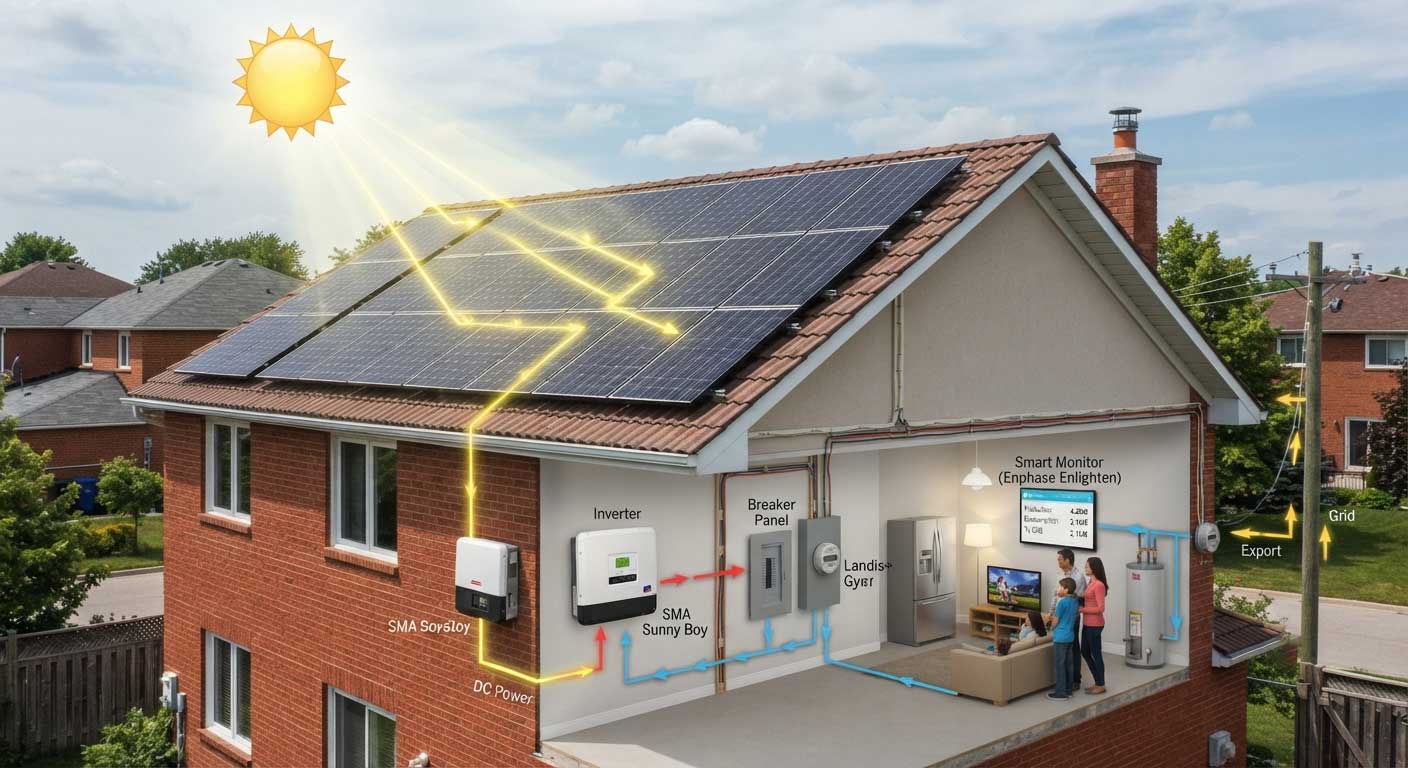
From Roof to Home: Energy Conversion Path
Solar energy doesn’t go directly into your appliances.
It follows a chain:
- Solar panels generate DC electricity
- Inverter converts DC → AC
- Electrical panel distributes power
- Appliances consume electricity
Efficiency Reality: What Actually Matters
In real installations, efficiency is not fixed.
IEA PVPS data shows system losses typically come from:
- Temperature rise (5–10% loss in hot climates)
- Wiring resistance (1–3%)
- Inverter conversion loss (2–5%)
- Shading effects (can exceed 20%)
Source: https://iea-pvps.org/
This is why two identical panels can produce different outputs on different roofs.
Real Field Insight from Bright solar
We once monitored two identical 5kW systems installed 3 kilometers apart.
Difference after one year:
- System A (clean roof, ideal tilt): 7,200 kWh/year
- System B (partial shading): 5,900 kWh/year
Same panels. Different environment.
Solar panels do not control output alone—the roof does too.
What solar panels actually replace in daily life
From a homeowner perspective, solar panels replace:
- Grid electricity consumption
- Part of utility bills
- Fossil-fuel-based energy demand
But they also add something less visible:
- Energy independence
- Load predictability
- Long-term cost stability
Common Misunderstandings About what do solar panels do
From field experience at Bright solar, we often hear:
- “Panels store energy” → Incorrect (they generate, not store)
- “They work only in direct sunlight” → False (they work in diffuse light too)
- “Cloudy days stop production” → No, they reduce output only
- “More panels always equal better efficiency” → Not necessarily without proper design
These misunderstandings often lead to unrealistic expectations.
FAQ About what do solar panels do?
What exactly do solar panels do?
They convert sunlight into usable electricity using photovoltaic cells.Visit the product page: Flexible Solar Panel
Do solar panels store electricity?
No, storage requires a battery system.
Can solar panels work on cloudy days?
Yes, but with reduced efficiency (often 10–50% lower output).
What type of electricity do solar panels produce?
They generate DC electricity, which is converted to AC by an inverter.
How efficient are solar panels?
Most modern panels are 15%–23% efficient according to NREL.
Do solar panels reduce electricity bills?
Yes, they offset grid consumption and reduce monthly energy costs.
How long do solar panels keep producing power?
Typically 25–30 years with gradual efficiency decline.
Final Field Perspective from Bright solar
what do solar panels do is simple in theory but layered in reality. They turn light into electricity—but in real installations, their performance depends on roof geometry, environment, and system design more than most people expect.
From field data, the technology is stable. The variation comes from where and how it is used.
Related recommendations
-

How to Keep Flexible Solar Panels Cool?
224Learn how to keep flexible solar panels cool with practical installation methods, ventilation tips, and real field experience to improve efficiency and extend service life.
View details -
How to Install Flexible Solar Panels on Van?
254Learn how to install flexible solar panels on van roofs safely and efficiently. Real installer tips, wiring advice, mounting methods, and maintenance insights.
View details -
What Are Solar Panels?
104What are solar panels and how do they work? Learn about solar panel types, efficiency, applications, and real-world performance in this complete Bright Solar guide.
View details -
do solar panels work on cloudy days?
302Discover do solar panels work on cloudy days with real performance data, field-tested output rates, and Bright solar engineering insights from global installations.
View details