How Flexible Monocrystalline Solar Panels Work?
How Flexible Monocrystalline Solar Panels Work?
Flexible monocrystalline solar panels work by using high-efficiency monocrystalline silicon cells laminated between lightweight polymer layers instead of glass and aluminum frames. This design allows the panel to generate electricity like a traditional solar panel while conforming to curved surfaces such as RV roofs, boats, and camper vans.
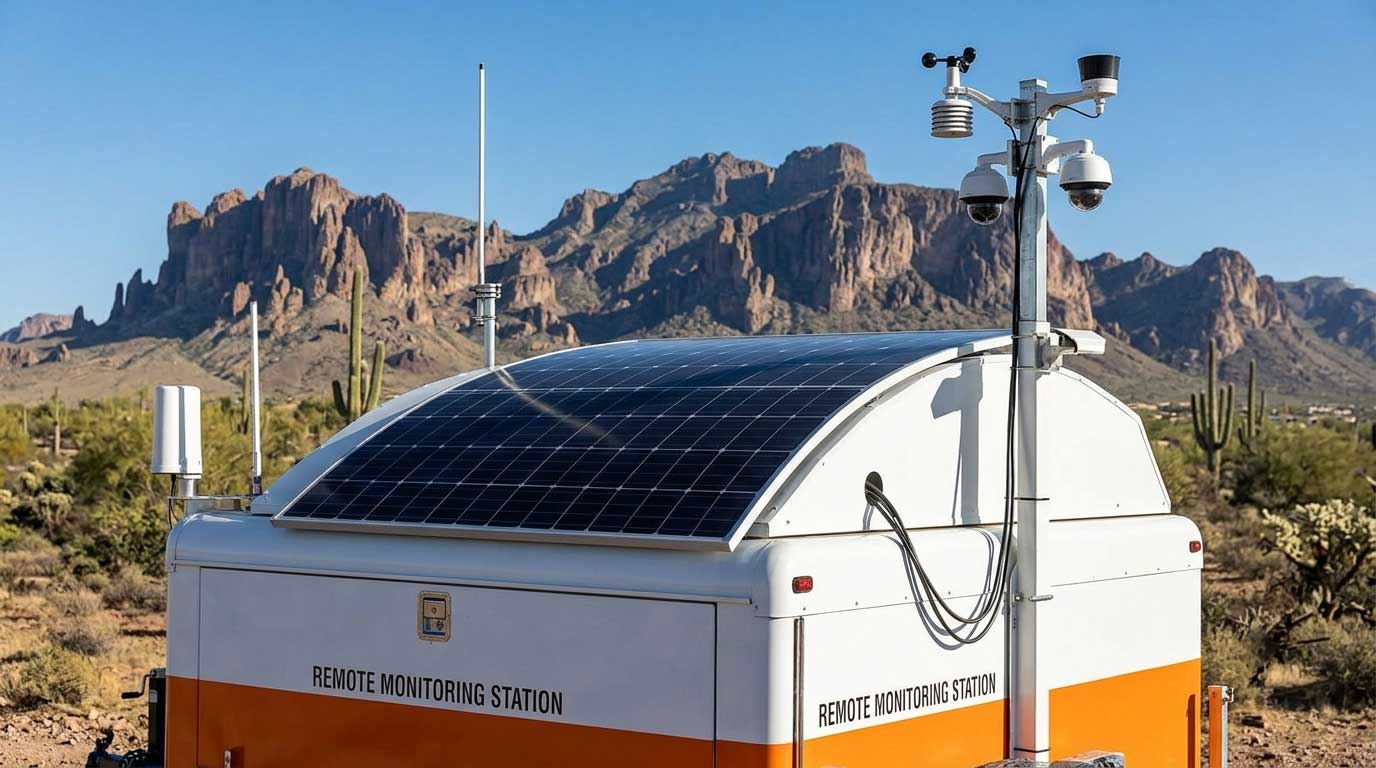
A few months ago, I was inspecting a mobile monitoring trailer used at a remote construction site in Nevada. The owner had originally planned to install standard rigid solar panels but quickly realized the trailer roof was cluttered with antennas, vents, and equipment housings.
Traditional panels simply didn’t fit.
Flexible monocrystalline panels did.
What surprised him wasn’t the flexibility.
It was the power output.
Despite weighing a fraction of conventional modules, the system consistently powered cameras, wireless communication equipment, and battery storage throughout the project.
That experience reflects why flexible monocrystalline solar panels have become increasingly popular in applications where weight, space, and installation challenges matter just as much as energy production.
Understanding the Core Technology Behind Flexible Monocrystalline Solar Panels
Many people assume flexible solar panels use completely different solar technology.
They don’t.
The electricity generation process is fundamentally the same.
Sunlight strikes silicon cells.
Photons excite electrons.
Electric current begins flowing.
The difference lies in the construction.
Instead of placing monocrystalline cells beneath thick tempered glass, manufacturers laminate thin solar cells within lightweight composite materials.
This dramatically changes how the finished panel behaves.
| Component | Traditional Solar Panel | Flexible Monocrystalline Panel |
|---|---|---|
| Front Surface | Tempered Glass | ETFE or Polymer Layer |
| Frame | Aluminum | Frameless |
| Weight | Higher | Significantly Lower |
| Flexibility | None | Moderate |
| Installation | Racks Required | Multiple Mounting Options |
According to the U.S. Department of Energy’s National Renewable Energy Laboratory (NREL), reducing module weight opens opportunities for transportation, portable power, and specialized solar applications where conventional modules are impractical.
Source:
https://www.nrel.gov
Why Monocrystalline Cells Are Used in Flexible Panels
Not all solar cells perform equally.
When manufacturers first introduced flexible panels years ago, many relied on lower-efficiency technologies.
That changed quickly.
Today, most premium flexible panels use monocrystalline cells because they produce more electricity from limited surface area.
This matters tremendously on boats and RVs.
Roof space is always limited.
You cannot simply add another ten square meters when space runs out.
Monocrystalline technology helps maximize every available inch.
According to the U.S. Department of Energy, modern monocrystalline solar cells typically achieve higher efficiency levels than most alternative silicon technologies.
Source:
https://www.energy.gov
In practical terms, higher efficiency means:
- More energy from the same roof area
- Better performance in limited spaces
- Reduced installation footprint
- Improved energy production per pound of panel weight

What Makes a Monocrystalline Solar Panel Flexible?
This is where many buyers get confused.
Monocrystalline silicon itself isn’t flexible.
In fact, silicon is relatively brittle.
The flexibility comes from engineering.
Manufacturers cut solar cells thinner than traditional cells and embed them within flexible protective materials.
The panel can then follow gentle curves without requiring a rigid frame.
Think of it this way.
A ceramic tile cannot bend.
But thin ceramic pieces embedded in a flexible backing can adapt to slight movement without breaking.
The same principle applies here.
The cells remain efficient.
The surrounding materials provide flexibility.
That balance is what makes modern flexible monocrystalline panels possible.
Real-World Performance on RVs and Boats
The first thing most customers notice is weight reduction.
The second is installation simplicity.
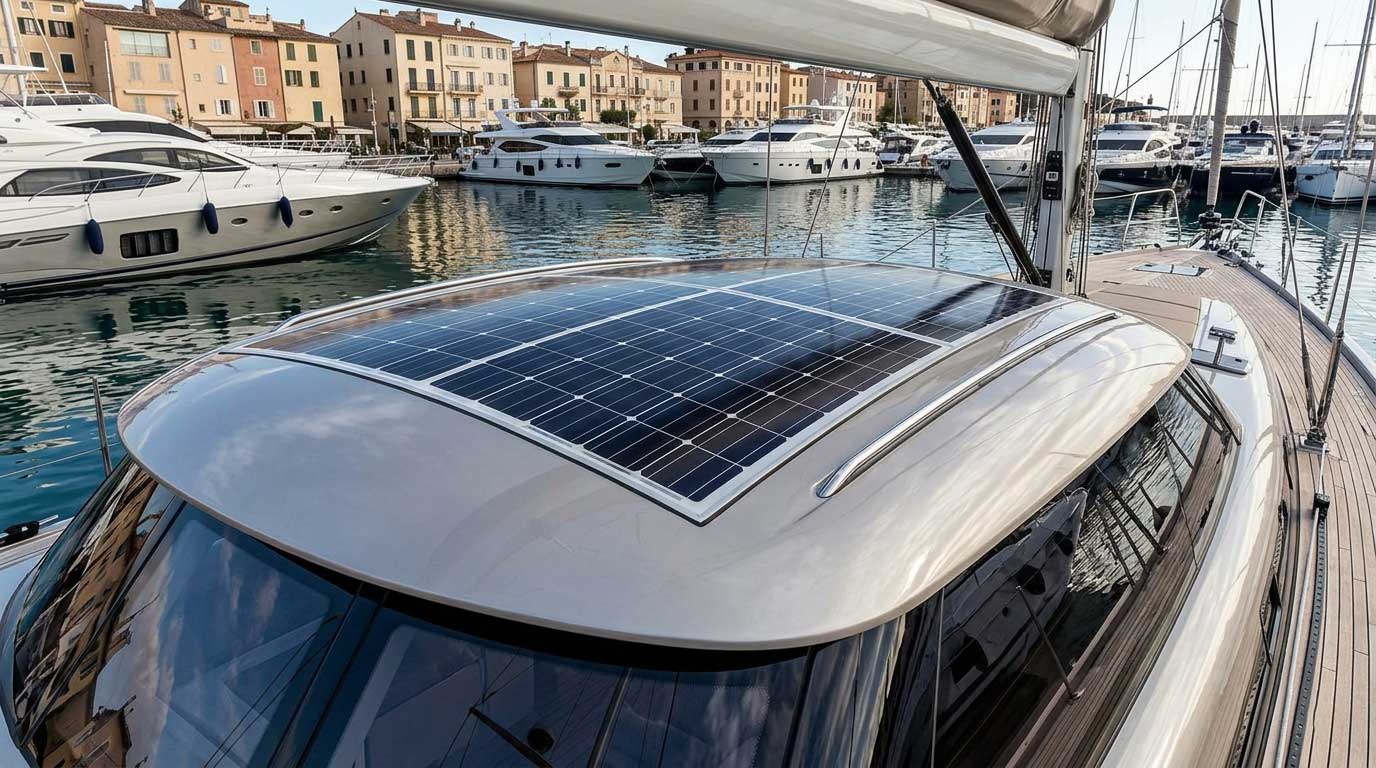
One marine installer we worked with estimated that flexible monocrystalline panels reduced installation time by nearly 40% compared with framed modules on certain yacht projects.
That isn’t because the panels generate more electricity.
It’s because mounting becomes significantly easier.
Common applications include:
- Motorhomes
- Camper vans
- Sailboats
- Fishing boats
- Portable power stations
- Remote monitoring systems
In marine environments particularly, eliminating heavy aluminum framing can simplify installation while reducing wind resistance and improving aesthetics.
Do Flexible Monocrystalline Panels Produce Less Power?
Not necessarily.
This is one of the biggest misconceptions in the market.
People often associate flexibility with lower performance.
The reality is more nuanced.
Power output depends primarily on:
- Cell efficiency
- Solar irradiance
- Temperature
- Shading
- Manufacturing quality
The challenge isn’t flexibility.
It’s heat.
Because flexible panels often sit directly against mounting surfaces, airflow underneath may be limited.
Higher operating temperatures can reduce efficiency.
The International Energy Agency (IEA) notes that photovoltaic output decreases as cell temperature rises above standard testing conditions.
Source:
https://www.iea.org
This is why installation quality often matters more than panel flexibility.
ETFE vs PET: Why Surface Materials Matter
Several years ago, the flexible solar panel industry faced criticism due to premature aging of some low-cost products.
Many used PET surface materials.
Some performed well.
Others suffered from yellowing, reduced light transmission, and accelerated weathering.
Today, premium flexible monocrystalline panels typically use ETFE.
Benefits include:
- Better UV resistance
- Improved scratch resistance
- Higher durability
- Enhanced weather performance
- Better saltwater resistance
According to material performance data published by ETFE manufacturers, ETFE films can maintain high optical transparency after prolonged outdoor exposure.
Source:
https://www.dupont.com
The difference becomes especially noticeable in harsh marine and desert environments.
Lessons Learned After Years of Installations
After reviewing hundreds of customer projects at Bright Solar, I’ve noticed something interesting.
The most successful systems rarely focus on maximum flexibility.
Instead, they focus on matching the right panel to the right application.
A customer installing solar on a sailboat has different priorities than someone powering a remote security trailer.
An RV owner cares about roof space.
A marine operator cares about saltwater resistance.
A mobile workstation values low weight.
Flexible monocrystalline technology works well because it addresses all three challenges reasonably well at the same time.
That’s why its popularity continues growing.
Not because it’s flexible.
Because it’s practical.
FAQ:How Flexible Monocrystalline Solar Panels Work?
How flexible monocrystalline solar panels work compared to traditional panels?
They use the same monocrystalline silicon technology but replace heavy glass and aluminum framing with lightweight flexible materials, allowing installation on curved surfaces.
Are flexible monocrystalline solar panels efficient?
Yes. Modern monocrystalline flexible panels often deliver efficiency levels significantly higher than older flexible solar technologies.
Can flexible monocrystalline panels be installed on RV roofs?
Yes. They are commonly used on RVs because they adapt well to curved surfaces while minimizing weight.
Are flexible monocrystalline panels suitable for boats?
Yes. Marine applications are one of the fastest-growing uses due to curved surfaces and limited installation space.
How long do flexible monocrystalline solar panels last?
High-quality ETFE flexible monocrystalline panels commonly provide reliable service for 10–20 years when properly installed and maintained.
Final Thoughts
So, how flexible monocrystalline solar panels work is actually simpler than many people assume. They generate electricity using the same highly efficient monocrystalline silicon cells found in traditional solar modules while replacing rigid construction materials with lightweight flexible layers. The result is a solar panel that combines strong energy production with the ability to fit surfaces where conventional panels often cannot.
Related recommendations
-

How Does Solar Power Make Electricity?
259How does solar power make electricity? Learn how sunlight becomes usable energy through photovoltaic cells, solar technology, and expert insights from Bright Solar.
View details -
How to Install Flexible Solar Panels?
259Learn how to install flexible solar panels correctly on RVs, boats, vans, and roofs. Practical tips, mounting methods, wiring advice, and maintenance insights from Bright Solar.
View details -
how much is solar panel installation?
249Discover how much is solar panel installation, including average costs, key pricing factors, incentives, and expert advice for planning your solar investment with Bright Solar.
View details -
How Solar Energy Is Converted Into Electricity?
256How solar energy is converted into electricity? Learn how solar cells generate power, the photovoltaic process, and expert solar insights from Bright Solar.
View details