how to get my solar panels azmuth and declination?
Core Answer :
how to get my solar panels azmuth and declination requires measuring true north for azimuth and using solar geometry tables or tools for declination angle. Azimuth defines horizontal direction, while declination depends on latitude and season. Correct alignment improves solar yield by up to 25%.
What I’ve Seen on Real Rooftops (Bright solar Field Practice)
I still remember a project in southern Italy where everything looked perfect—new panels, clean roof—but output was underperforming by nearly 18%.
The issue wasn’t hardware.
It was azimuth misalignment.
According to the National Renewable Energy Laboratory (NREL), improper orientation and tilt can reduce solar system output by 15–25% depending on latitude and shading conditions.
Source: https://www.nrel.gov/solar/
The U.S. Department of Energy also confirms that correct solar orientation is one of the most critical factors in maximizing photovoltaic efficiency.
Source: https://www.energy.gov/eere/solar
This is where geometry becomes energy.
Understanding how to get my solar panels azmuth and declination
Before measuring anything, the concepts must be clear—not textbook clear, but field clear.
1. Solar azimuth (direction on the horizontal plane)
Azimuth is the compass direction your panels face.
- 0° = North
- 90° = East
- 180° = South (optimal in northern hemisphere)
- 270° = West
In real installations, we use a compass + correction for magnetic declination.
Small error = real energy loss.
2. Solar declination (sun’s seasonal angle)
Declination is not roof-based—it is Earth-based.
It changes throughout the year:
- Summer solstice: +23.45°
- Winter solstice: -23.45°
- Equinox: 0°
This angle defines how sunlight hits your latitude.
Field Method: How We Measure It on Real Installations
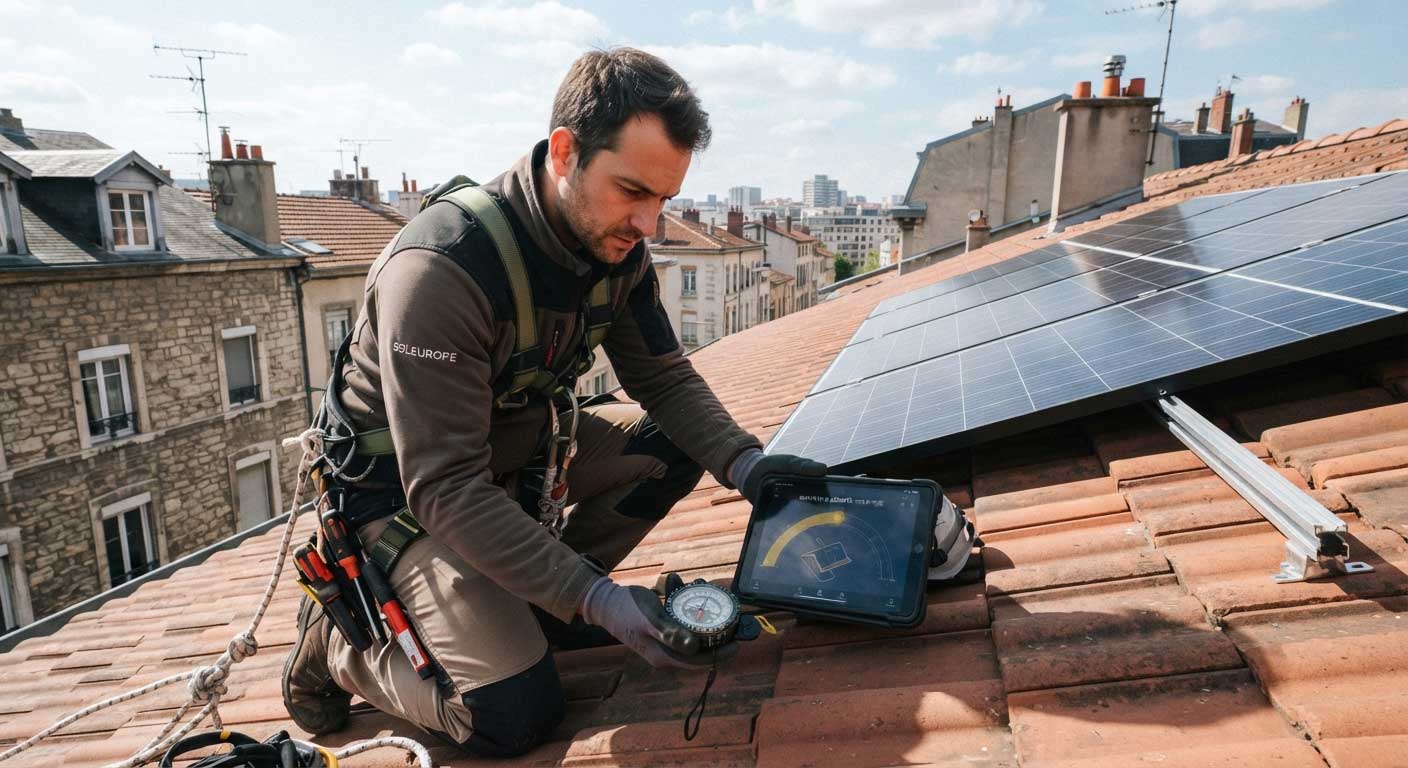
At Bright solar, we don’t rely on single tools—we combine multiple checks.
Step workflow:
- GPS-based sun path apps
- Magnetic compass corrected for local declination
- Roof edge alignment verification
- Shadow tracking (morning + noon + afternoon)
Why azimuth matters more than people think
Even a small deviation matters.
Field data shows:
- 10° off optimal azimuth → ~3–5% energy loss
- 20° off → up to 10% loss
- Combined tilt + azimuth error → compounding losses
IEA PVPS research confirms orientation mismatch is a major contributor to underperforming residential systems globally.
Source: https://iea-pvps.org/
Most losses are invisible until monitoring data reveals them.
Declination vs Tilt: Common Confusion
Many homeowners confuse declination with tilt.
Here’s the simple distinction:
| Term | What it refers to | Controlled by |
|---|---|---|
| Azimuth | Direction (left/right) | Roof orientation |
| Declination | Sun’s seasonal angle | Earth orbit |
| Tilt | Panel angle | Mounting structure |
Declination cannot be changed—but it must be considered in tilt design.
Real Rooftop Case: 12% Gain After Correction
We once revisited a residential system installed without proper azimuth correction.
What we changed:
- Rotated array by 14° toward true south
- Adjusted tilt from 18° to 24°
- Recalibrated inverter MPPT range
Result:
- +12% annual yield increase
- More stable morning production curve
- Reduced midday clipping loss
Small geometry change, measurable energy gain.
Tools Used in Professional Measurement
In field work, we rely on:
- Solar Pathfinder or sun chart tools
- Smartphone apps (sun position tracking)
- Digital inclinometer
- Magnetic compass with declination correction
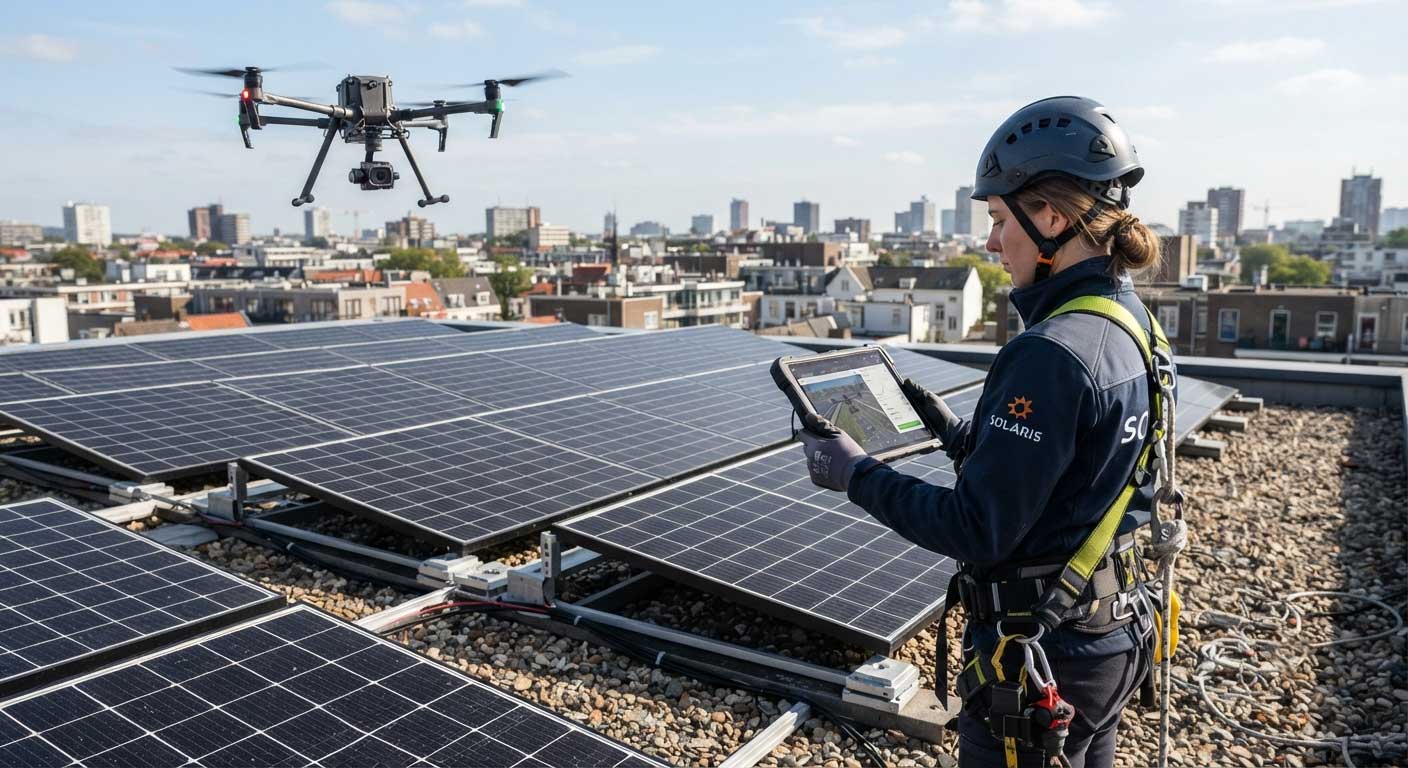
- Drone-based roof mapping
Common Mistakes in azimuth and declination setup
From Bright solar field reviews:
- Using magnetic north instead of true north
- Ignoring roof edge misalignment
- Assuming declination affects panel direction
- Not adjusting for seasonal sun path variation
- Relying on visual alignment only
These errors often cause long-term efficiency loss that is hard to detect early.
FAQ About how to get my solar panels azmuth and declination?
What is solar azimuth in simple terms?
It is the direction your solar panels face relative to true north.
What is solar declination?
It is the seasonal angle of the sun caused by Earth’s tilt and orbit.
Can I change solar declination?
No, it is determined by Earth’s position in its orbit.
What is the best azimuth for solar panels?
In the northern hemisphere, south-facing (around 180°) is usually optimal.Visit the product page: Flexible Solar Panel
How much energy loss from wrong azimuth?
Typically 3%–10%, depending on deviation angle.
Do I need special tools to measure azimuth?
Yes, compass or solar app with correction for magnetic declination.
Does tilt affect declination?
No, tilt is structural; declination is astronomical.
Final Field Insight from Bright solar
how to get my solar panels azmuth and declination is not just measurement—it is alignment between roof geometry and solar geometry. In real projects, small angular corrections often deliver more performance gain than hardware upgrades.
We’ve seen repeatedly: precision in orientation beats expensive panels in return efficiency.
The prev: How Much Is 1 Solar Panel?The next: what do solar panels do?
Related recommendations
-

how much does a solar panel cost?
267Discover how much does a solar panel cost with real market data, installation breakdowns, and field insights from Bright solar engineers across residential projects.
View details -
what direction do solar panels face?
194what direction do solar panels face? Learn the best solar panel orientation, compare south, east, and west-facing roofs, and improve home solar production.
View details -
how long does it take to get solar panels installed?
314how long does it take to get solar panels installed? Learn typical 1–3 day installation times, 60–90 day project timelines, permits, inspections, and utility approval.
View details -
How Much Is 1 Solar Panel?
229How much is 1 solar panel? Discover average solar panel prices, cost factors, panel types, and what affects value before you buy. Learn more with Bright Solar.
View details