Tiny Home Solar Panels: Complete Guide to Solar Power Systems
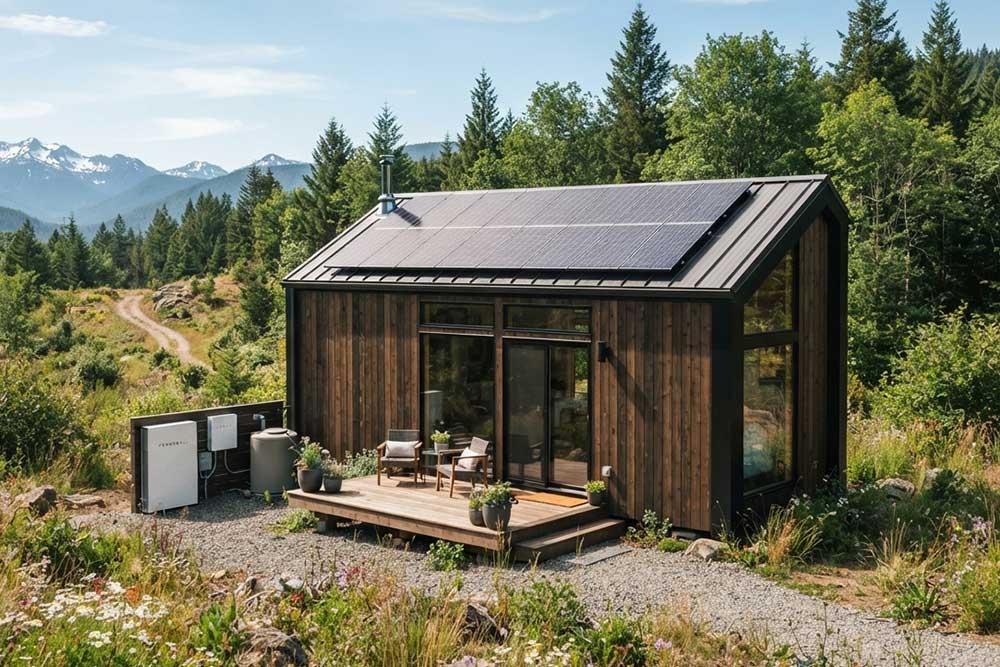
Tiny home solar panels provide a practical way to generate clean electricity, reduce energy costs, and achieve greater energy independence. The right solar system depends on your daily power consumption, available installation space, sunlight conditions, and whether your tiny home is connected to the grid or designed for off-grid living.
Unlike traditional homes, tiny homes have smaller energy requirements, making solar power an efficient and flexible solution. With proper planning, a well-designed solar system can support essential appliances, store extra energy in batteries, and provide reliable electricity even in remote locations.
Bright Solar develops flexible solar panel solutions for compact energy applications, helping tiny home owners, RV users, and off-grid builders integrate renewable power into limited spaces without adding unnecessary weight.
What Are Tiny Home Solar Panels?
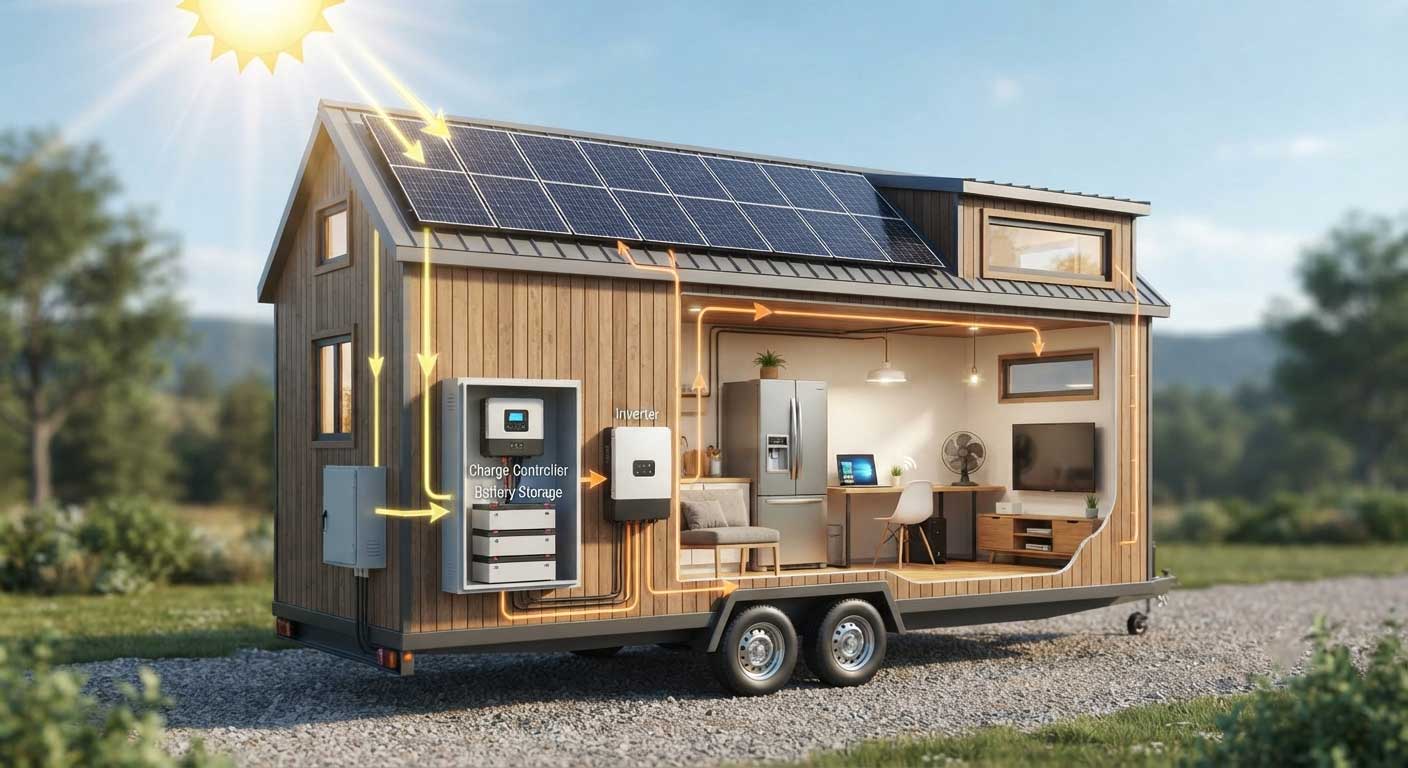
Tiny home solar panels are photovoltaic modules designed to generate electricity for small residential spaces with limited energy needs. They convert sunlight into direct current (DC) electricity, which can then be used immediately or stored in batteries for later use.
Because tiny homes focus on efficiency and reduced consumption, solar panels can often provide a significant percentage of their daily electricity needs with a relatively small system.
A complete tiny home solar power system usually includes:
- Solar panels
- Charge controller
- Battery storage
- Solar inverter
- Monitoring system
- Electrical wiring and protection equipment
The solar panels produce electricity during daylight hours, while batteries store excess energy for use at night or during periods of low sunlight.
How Do Solar Panels Work in a Tiny Home?
The working process of a tiny home solar system is simple:
Solar Panels → Charge Controller → Battery → Inverter → Home Appliances
1. Solar Energy Generation
Solar panels capture sunlight through photovoltaic cells and convert it into electrical energy.
2. Power Regulation
The charge controller manages the electricity flow and protects batteries from overcharging or excessive discharge.
3. Energy Storage
Batteries store unused solar energy so the tiny home can continue operating when sunlight is unavailable.
4. Electricity Conversion
The inverter converts stored DC electricity into AC electricity used by common household appliances.
This system design allows tiny homes to use renewable energy efficiently without relying entirely on traditional power sources.
Why Tiny Homes Benefit From Solar Energy
Tiny homes are naturally suited for solar power because they generally consume less electricity than conventional houses.
Main advantages include:
Lower Energy Requirements
A smaller living space usually means:
- Fewer lights
- Smaller appliances
- Lower heating and cooling demand
This allows homeowners to install a smaller and more affordable solar system.
Easier Off-Grid Living
Many tiny homeowners choose locations away from traditional utilities.
Solar panels make it possible to create independent energy systems for:
- Remote cabins
- Rural homes
- Mobile tiny houses
- Eco-friendly living spaces
Reduced Electricity Costs
Solar energy can lower dependence on utility companies and protect homeowners from rising electricity prices.
Over time, a properly sized solar system can provide significant long-term savings.
Can a Tiny Home Run Completely on Solar Power?
Yes, a tiny home can run completely on solar power when the system is properly designed according to energy consumption, climate conditions, and battery capacity.
However, achieving full energy independence requires more than installing solar panels. The entire system must be balanced, including solar generation, storage capacity, and daily electricity usage.
Factors That Determine Solar Independence
Several factors affect whether a tiny home can operate fully on solar energy.
Location and Sunlight Availability
Solar production depends on how much sunlight reaches the panels.
Important factors include:
- Average sunlight hours
- Seasonal weather changes
- Panel orientation
- Installation angle
- Nearby shading
A tiny home in a sunny region may generate significantly more electricity than one located in an area with frequent cloudy weather.
Energy Consumption Habits
Electricity usage is one of the most important factors when designing a solar system.
Low-energy tiny homes may only require power for:
- LED lighting
- Refrigerators
- Computers
- Mobile devices
- Small kitchen appliances
Homes using:
- Air conditioning
- Electric heating
- Large appliances
- Workshop equipment
will require a larger solar array and battery system.
Battery Storage Capacity
Solar panels only produce electricity during daylight hours.
Battery storage allows tiny homes to use solar power during:
- Nighttime
- Rainy weather
- Low sunlight periods
For off-grid tiny homes, battery capacity is a critical part of achieving reliable energy independence.
Grid-Tied vs Off-Grid Tiny Home Solar Systems
Before choosing tiny home solar panels, homeowners should decide whether they need a grid-connected system or a completely independent off-grid solution.
The best option depends on location, lifestyle, and energy goals.
Grid-Tied Tiny Home Solar Systems
A grid-tied system connects the tiny home to the local electricity network.
During sunny periods:
- Solar panels generate electricity
- The home uses solar power first
- Extra electricity may be sent back to the grid
Advantages:
- Lower initial cost
- Less battery storage required
- Reliable backup electricity
- Easier system design
Grid-tied systems are suitable for tiny homes located near existing electrical infrastructure.
Off-Grid Tiny Home Solar Systems
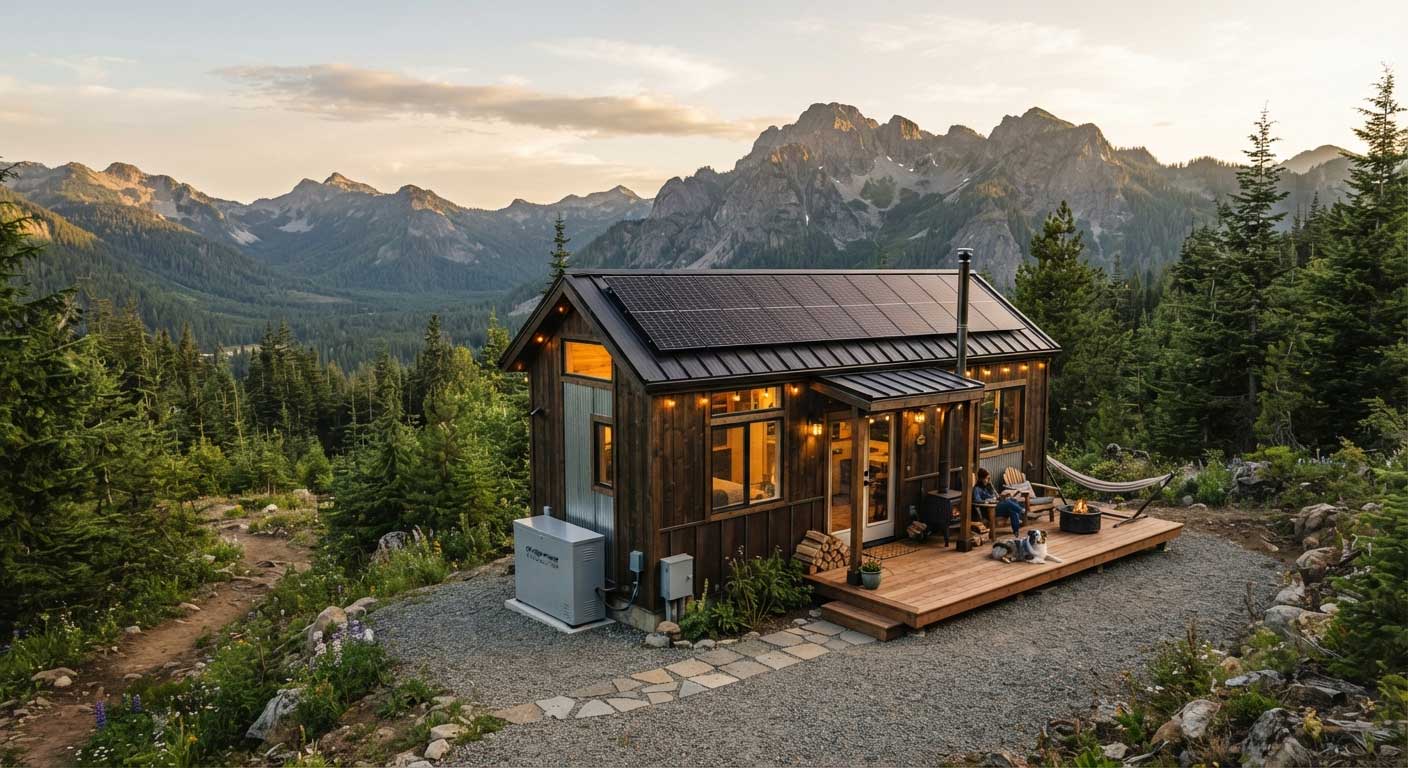
An off-grid system allows a tiny home to operate without connection to the utility grid.
A typical off-grid system includes:
- Solar panels
- Battery bank
- Charge controller
- Inverter
- Energy monitoring equipment
Advantages:
- Complete energy independence
- Suitable for remote locations
- No monthly electricity bills
- Flexible installation options
Off-grid solar is commonly used for:
- Remote tiny homes
- Mountain cabins
- Mobile houses
- Sustainable living projects
Grid-Tied vs Off-Grid Comparison
| Feature | Grid-Tied Solar | Off-Grid Solar |
|---|---|---|
| Utility connection | Required | Not required |
| Battery storage | Optional | Required |
| Installation complexity | Lower | Higher |
| Energy independence | Medium | High |
| Best for | Connected homes | Remote locations |
How Many Tiny Home Solar Panels Do You Need?
The number of tiny home solar panels required depends on electricity usage, panel wattage, sunlight conditions, and whether batteries are included.
Most tiny homes require between 1kW and 5kW of solar capacity, depending on lifestyle and appliance usage.
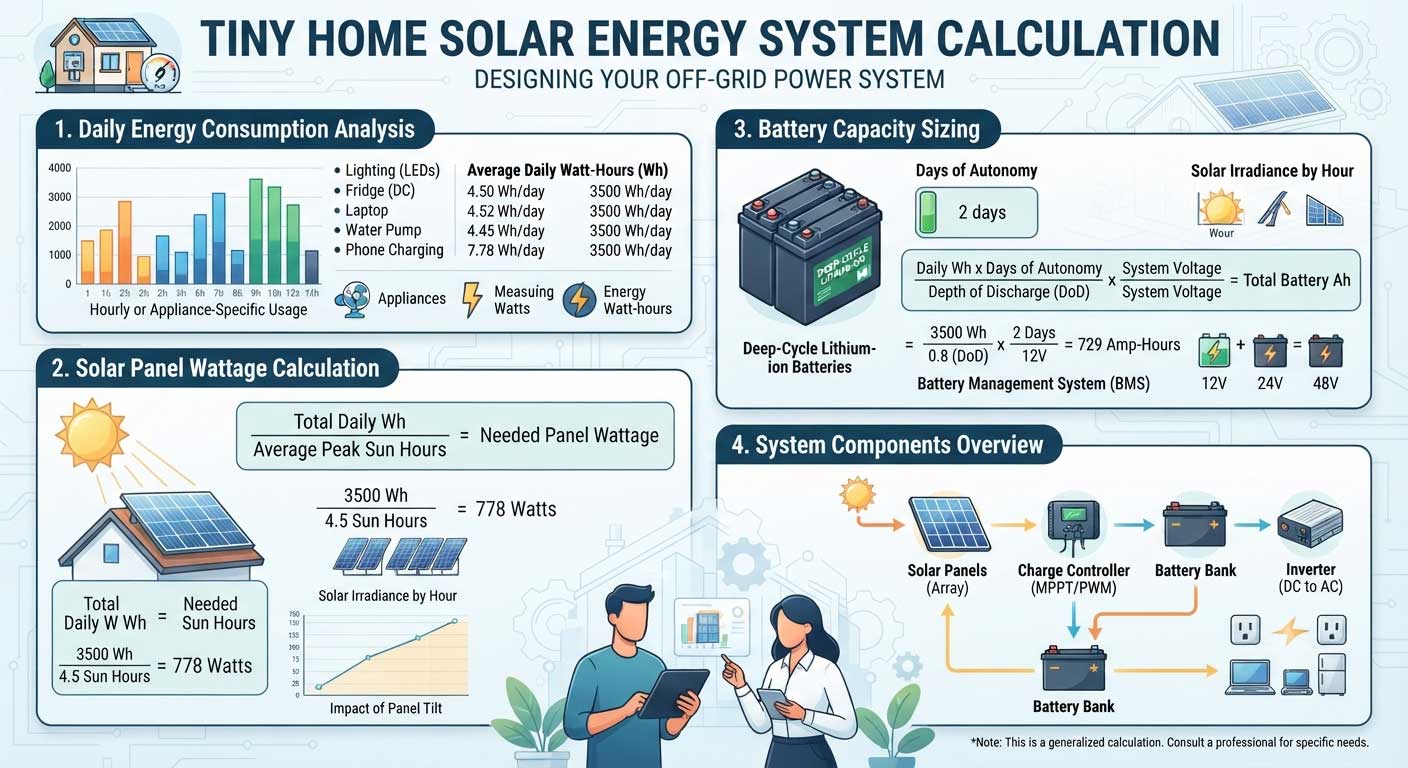
Calculate Your Tiny Home Energy Consumption
Before purchasing solar panels, calculate your daily electricity requirements.
Example:
| Appliance | Approximate Daily Usage |
|---|---|
| LED lighting | 0.1–0.3 kWh |
| Refrigerator | 1–2 kWh |
| Laptop | 0.2–0.5 kWh |
| Water pump | 0.1–0.3 kWh |
| Small appliances | 0.5–1 kWh |
A basic tiny home may consume:
3–5 kWh per day
A more comfortable full-time tiny home may consume:
5–10 kWh per day
Solar Panel Output Calculation
A simple calculation method is:
Daily Energy Requirement ÷ Solar Production = Required Solar Capacity
Example:
A tiny home uses:
5 kWh/day
A 400W solar panel may produce:
Approximately 1.5–2 kWh/day
Required system:
Around 3–4 × 400W solar panels
Actual performance depends on:
- Weather conditions
- Panel efficiency
- Installation angle
- Location
Common Tiny Home Solar System Sizes
Small System: 1–2kW
Suitable for:
- Basic lighting
- Charging devices
- Minimal appliances
Medium System: 3–5kW
Suitable for:
- Full-time tiny homes
- Refrigerators
- Computers
- Daily household appliances
Large System: 5kW+
Suitable for:
- Complete off-grid living
- Higher electricity demand
- Multiple appliances
Types of Tiny Home Solar Panels
Choosing the right solar panel type is one of the most important decisions when designing a tiny home solar system. Unlike traditional houses, tiny homes often have limited roof space, weight restrictions, and unique designs. The best solar panel depends on your energy needs, installation location, and mobility requirements.
The three most common options for tiny homes are:
- Rigid solar panels
- Flexible solar panels
- Portable solar panels
Each type has different advantages depending on the application.
Rigid Solar Panels for Tiny Homes
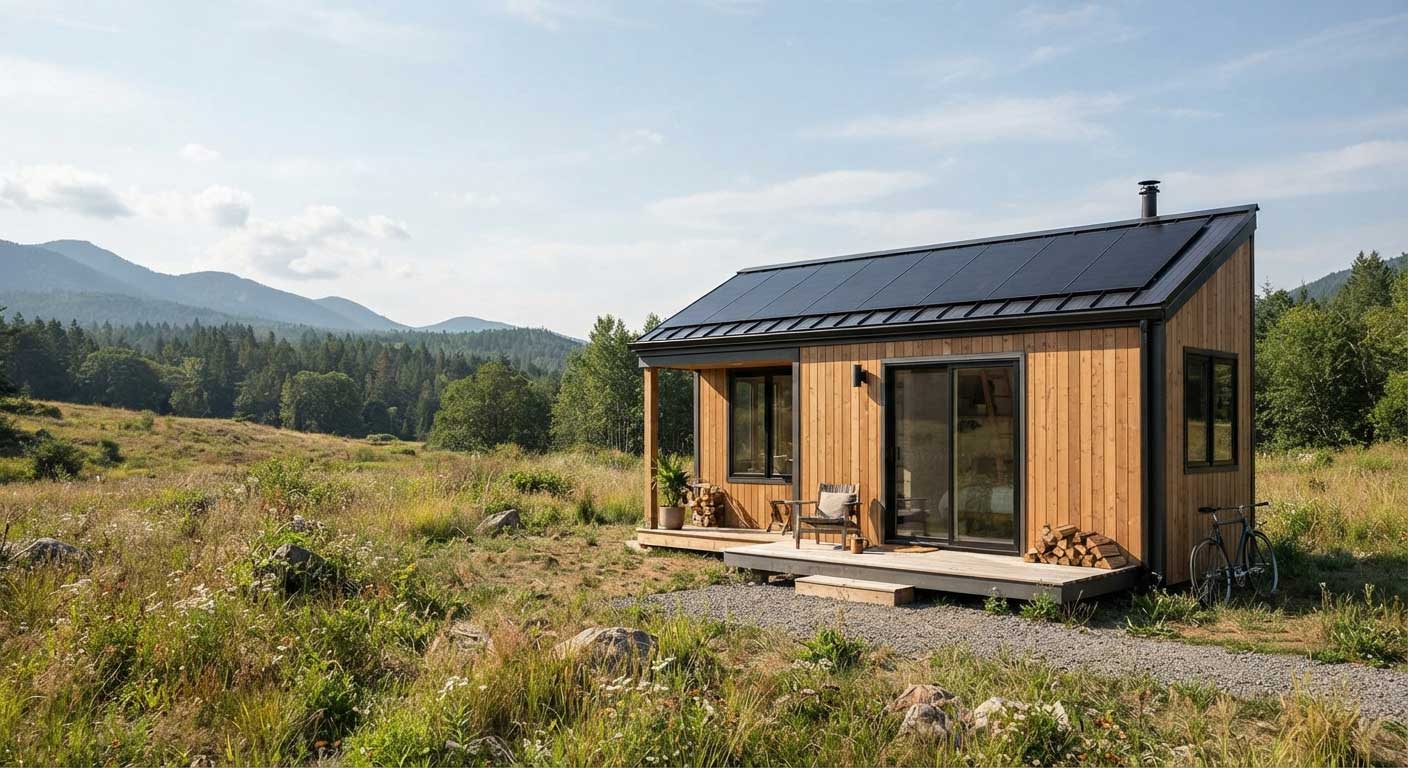
Rigid solar panels are the most traditional type of photovoltaic modules. They usually feature glass surfaces, aluminum frames, and protective layers designed for long-term outdoor performance.
They are commonly installed on:
- Permanent tiny homes
- Stationary cabins
- Off-grid houses
Advantages of Rigid Solar Panels
High Durability
Rigid panels are designed to withstand:
- Strong wind
- Heavy rain
- Outdoor exposure
- Temperature changes
Their solid construction provides excellent long-term reliability.
Higher Mechanical Protection
The glass surface protects photovoltaic cells from physical damage and environmental conditions.
Long Service Life
Quality rigid solar panels can typically provide reliable performance for 25 years or more with proper installation and maintenance.
Limitations of Rigid Solar Panels
Although rigid panels are durable, they also have some disadvantages for tiny homes.
They may:
- Add more weight to the roof
- Require mounting brackets
- Need more installation space
- Be less suitable for curved surfaces
For fixed tiny homes with strong roofs, rigid panels remain a reliable choice.
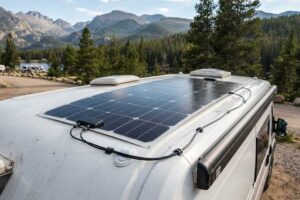
Flexible Solar Panels for Tiny Homes
Flexible solar panels are lightweight photovoltaic modules designed for applications where traditional framed panels may not be suitable.
They are especially useful for:
- Lightweight tiny homes
- Mobile tiny houses
- Curved roof designs
- Limited-space installations
Unlike rigid panels, flexible solar panels can adapt to different surfaces and reduce structural load.
Advantages of Flexible Solar Panels
Lightweight Design
Tiny homes are built around efficiency, and reducing unnecessary weight is important.
Flexible solar panels typically have:
- Slim profiles
- Lightweight materials
- Easier transportation
This makes them suitable for mobile or compact living solutions.
Easier Installation
Flexible solar panels often require fewer mounting components compared with traditional framed panels.
Depending on the application, installation options may include:
- Adhesive mounting
- Low-profile brackets
- Custom mounting solutions
This can simplify installation on unique tiny home designs.
Better Design Integration
Some tiny homes have:
- Curved roofs
- Unusual structures
- Limited mounting areas
Flexible solar panels can follow these designs more easily than rigid alternatives.
Bright Solar Flexible Solar Panels for Tiny Home Applications
Bright Solar develops flexible solar panel solutions designed for compact and lightweight renewable energy applications.
For tiny home owners, flexible solar panels can provide benefits such as:
- Reduced installation weight
- Space-efficient energy generation
- Adaptable mounting options
- Suitable performance for off-grid applications
Bright Solar flexible solar panels are designed for projects where traditional solar panels may create unnecessary structural challenges.
Portable Solar Panels for Tiny Homes
Portable solar panels provide another option for tiny home owners who need temporary or flexible power solutions.
They are commonly used with:
- Portable power stations
- Backup energy systems
- Camping equipment
- Mobile tiny homes
Advantages of Portable Solar Panels
Portable systems provide:
- Easy setup
- Simple transportation
- Flexible usage locations
- Emergency backup power
They are ideal for users who do not need a permanent rooftop installation.
Limitations of Portable Solar Panels
Compared with permanent solar systems, portable panels usually have:
- Lower power capacity
- Less efficient installation positioning
- Limited expansion capability
For full-time tiny homes, a dedicated solar installation is usually more suitable.
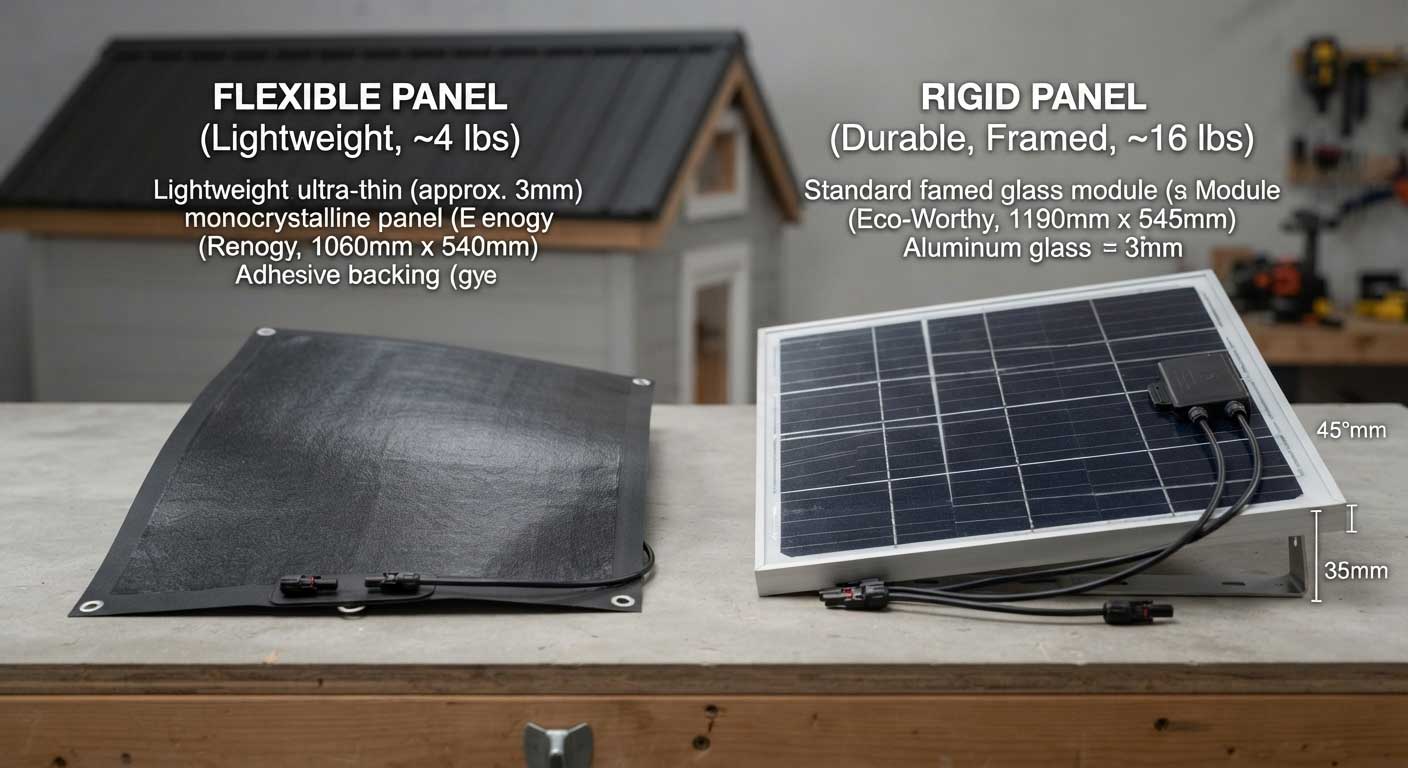
Flexible vs Rigid Solar Panels for Tiny Homes
Many tiny home owners compare flexible and rigid solar panels before making a purchase.
The right choice depends on your priorities.
| Feature | Flexible Solar Panels | Rigid Solar Panels |
|---|---|---|
| Weight | Lower | Higher |
| Installation | Easier | More complex |
| Roof requirements | Flexible | Requires stronger structure |
| Durability | Good | Excellent |
| Design flexibility | High | Limited |
| Best application | Tiny homes, RVs, mobile structures | Permanent homes |
Which Solar Panel Type Is Best for a Tiny Home?
There is no single best solar panel for every tiny home.
Choose rigid panels when you need:
- Maximum durability
- Long-term stationary installation
- Higher mechanical protection
Choose flexible panels when you need:
- Lightweight construction
- Easier installation
- Unique roof compatibility
- Mobile applications
For many modern tiny homes, flexible solar panels offer an excellent balance between performance and installation flexibility.
How to Install Tiny Home Solar Panels
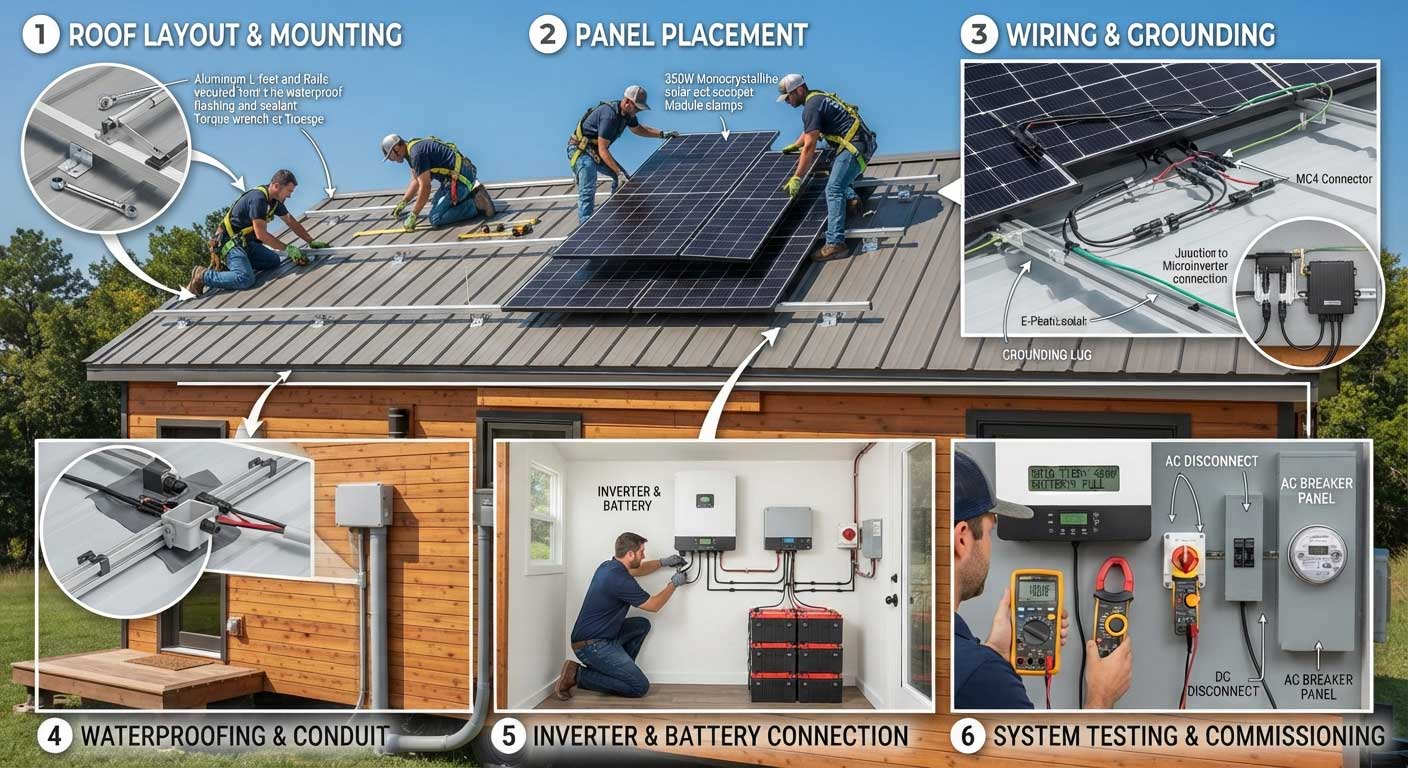
Installing solar panels on a tiny home requires careful planning. A successful installation is not only about attaching panels to the roof; it also involves system sizing, electrical connections, waterproofing, and safety considerations.
A typical tiny home solar installation includes:
- Planning energy requirements
- Choosing solar panels
- Installing mounting systems
- Connecting electrical components
- Testing system performance
Step 1: Evaluate Tiny Home Roof Space
Before installation, inspect the available roof area.
Consider:
- Roof size
- Roof material
- Sun exposure
- Shading from trees or buildings
- Roof strength
Solar panels should be placed where they receive maximum sunlight throughout the day.
Step 2: Select the Installation Method
The mounting method depends on the solar panel type.
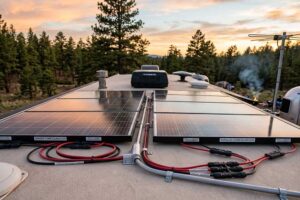
Rigid Solar Panel Installation
Usually requires:
- Aluminum mounting rails
- Roof brackets
- Bolts or fasteners
- Waterproof seals
This method provides strong mechanical support.
Flexible Solar Panel Installation
Flexible panels may use:
- Adhesive bonding
- Low-profile mounting
- Custom attachment methods
Before installation, ensure:
- The surface is clean
- The roof material is compatible
- Waterproofing is properly completed
Step 3: Connect Solar Electrical Components
A complete tiny home solar system usually follows this connection sequence:
Solar Panels
↓
Charge Controller
↓
Battery Storage
↓
Inverter
↓
Household Appliances
Important installation considerations include:
- Correct cable sizing
- Proper electrical protection
- Secure connections
- Battery ventilation requirements
Step 4: Test and Monitor the Solar System
After installation, check:
- Solar output
- Battery charging performance
- Inverter operation
- Energy consumption
A monitoring system helps identify problems early and improves long-term efficiency.
Common Tiny Home Solar Installation Mistakes
Even a high-quality solar system can perform poorly if installation mistakes occur.
Choosing an Undersized Solar System
One of the most common mistakes is installing too little solar capacity.
A system that is too small may cause:
- Battery shortages
- Limited appliance usage
- Poor off-grid performance
Always calculate energy consumption before selecting solar panels.
Ignoring Battery Requirements
Solar panels generate electricity only when sunlight is available.
Without enough battery storage, your tiny home may experience power shortages at night or during cloudy weather.
Installing Panels in Shaded Areas
Even partial shading can reduce solar production.
Avoid placing panels near:
- Trees
- Tall buildings
- Roof structures
Poor Waterproofing
Roof penetration points must be properly sealed.
Water leakage can damage:
- Roof structures
- Electrical wiring
- Interior spaces
Proper installation protects both the solar system and the tiny home.
Battery Storage for Tiny Home Solar Systems
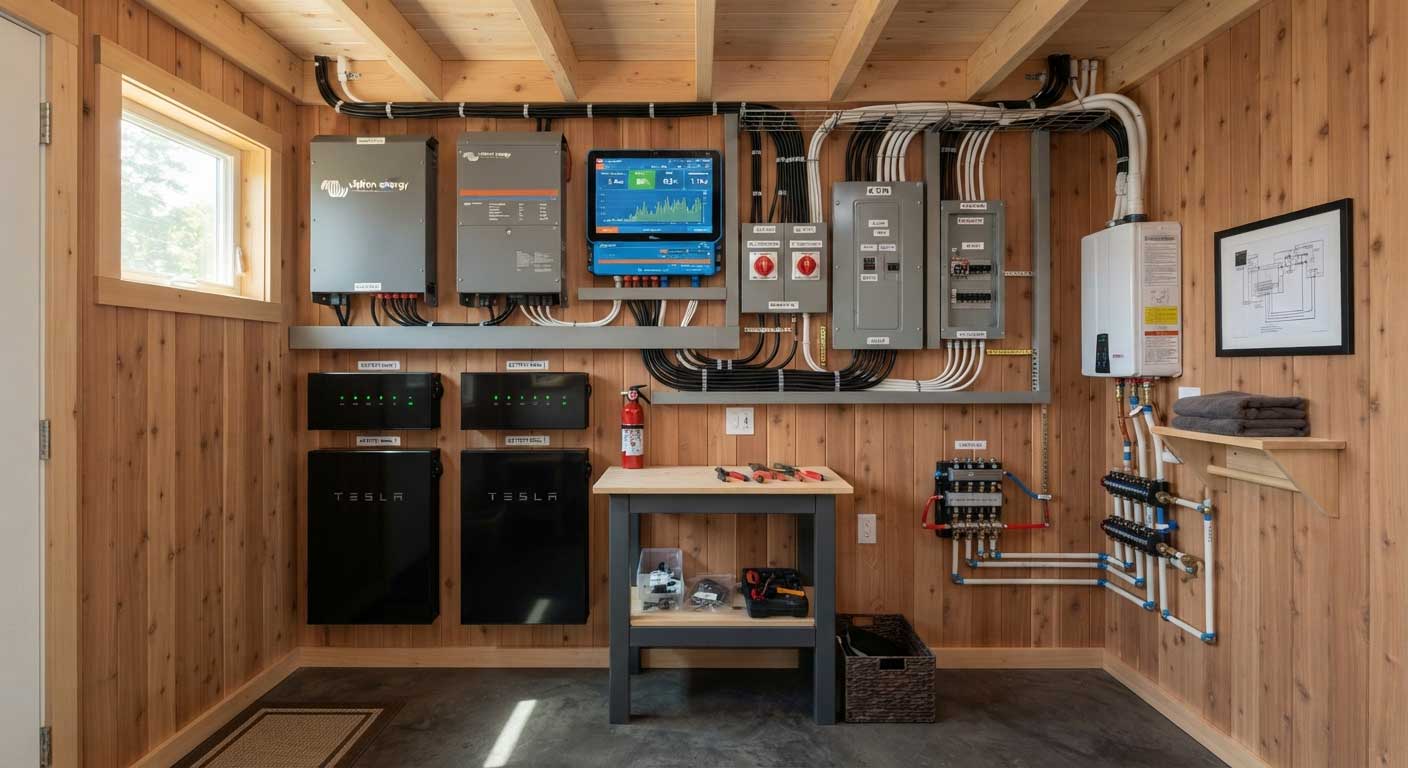
Battery storage is one of the most important components of a tiny home solar system, especially for homeowners who want reliable electricity without depending on the grid.
Solar panels produce energy during daylight hours, but tiny homes still need electricity at night, during cloudy weather, or when solar production is low. A properly sized battery system stores excess solar energy and makes it available whenever it is needed.
For off-grid tiny homes, battery storage is not an optional upgrade — it is a key part of achieving energy independence.
Why Do Tiny Homes Need Solar Batteries?
Solar batteries help tiny homes maintain a stable electricity supply by storing extra power generated during the day.
Main benefits include:
Power Availability at Night
Solar panels stop producing electricity after sunset. Batteries allow tiny homes to continue running essential appliances such as:
- Lighting
- Refrigerators
- Internet devices
- Security systems
Backup During Poor Weather
Solar production can decrease during:
- Cloudy days
- Rainy periods
- Winter months
Battery storage provides additional energy security when sunlight is limited.
Better Off-Grid Performance
For remote tiny homes without utility connections, batteries make it possible to operate independently.
A complete off-grid system usually combines:
- Solar panels
- Battery storage
- Solar inverter
- Energy management system
Lithium vs Lead-Acid Batteries for Tiny Home Solar
The battery type directly affects system performance, lifespan, and maintenance requirements.
The two common choices are lithium batteries and lead-acid batteries.
| Feature | Lithium Battery | Lead-Acid Battery |
|---|---|---|
| Lifespan | Longer | Shorter |
| Energy efficiency | Higher | Lower |
| Weight | Lightweight | Heavier |
| Maintenance | Low | Higher |
| Usable capacity | Higher | Lower |
| Initial cost | Higher | Lower |
Lithium Batteries
Lithium batteries are becoming the preferred choice for many tiny home solar systems because they offer:
- Higher energy density
- Longer operating life
- Faster charging
- Lower maintenance
They are especially suitable for:
- Off-grid tiny homes
- Mobile tiny houses
- Compact solar systems
Lead-Acid Batteries
Lead-acid batteries have been used in solar applications for many years.
Advantages include:
- Lower upfront cost
- Wide availability
However, they typically require:
- More maintenance
- Larger installation space
- More frequent replacement
How to Size a Battery System for a Tiny Home
Battery size depends on:
- Daily electricity consumption
- Solar production
- Backup requirements
- Climate conditions
A simple calculation method:
Daily Energy Usage × Backup Days = Required Battery Capacity
Example:
If a tiny home uses:
5 kWh per day
And requires:
2 days of backup
The battery system should provide approximately:
10 kWh of usable storage
Actual requirements vary depending on battery depth of discharge and system efficiency.
How Much Do Tiny Home Solar Panels Cost?
The cost of tiny home solar panels depends on the system size, panel type, battery capacity, installation method, and equipment quality.
A small solar setup may cost a few thousand dollars, while a complete off-grid system with batteries can require a larger investment.
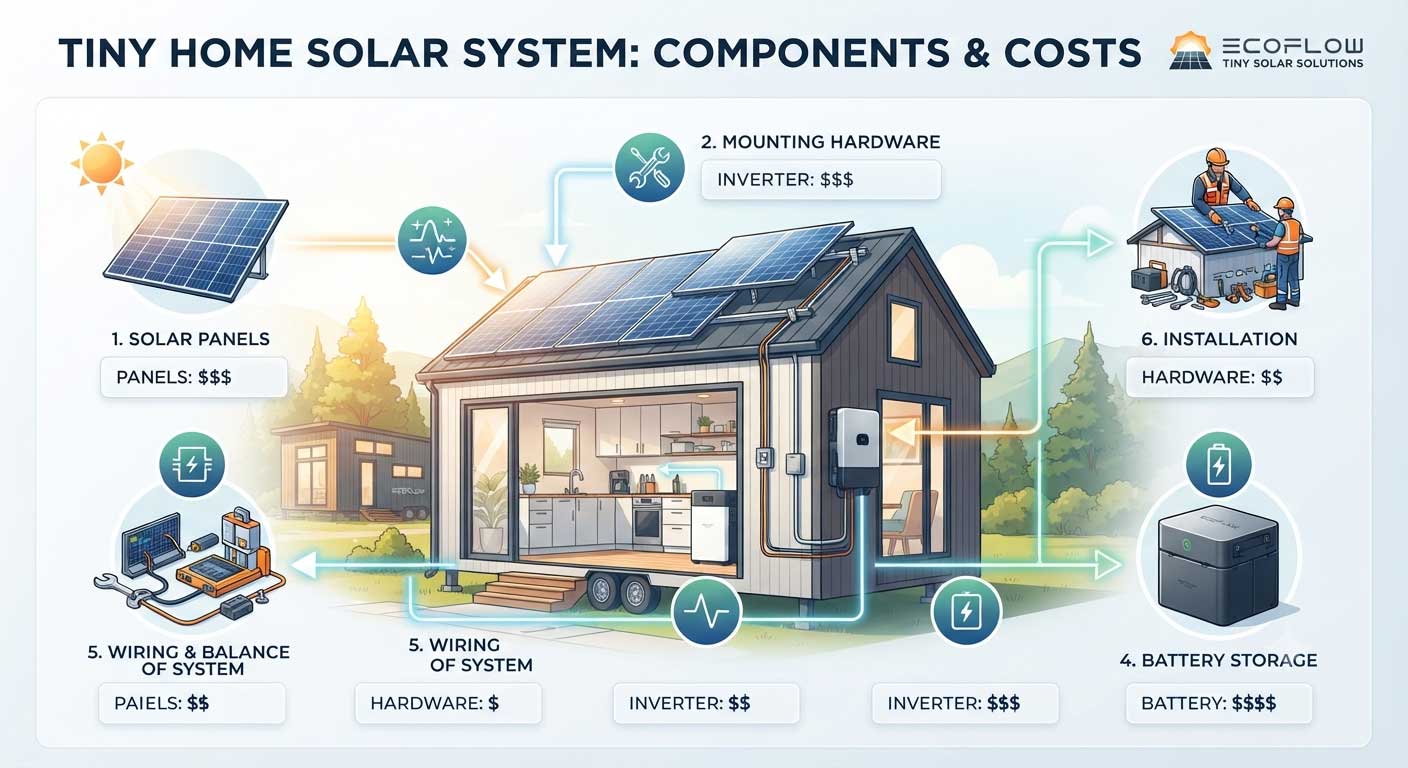
The total cost usually includes:
- Solar panels
- Inverter
- Battery storage
- Charge controller
- Mounting hardware
- Wiring
- Installation labor
Solar Panel Cost for Tiny Homes
Solar panel prices mainly depend on:
- Wattage
- Technology
- Efficiency
- Brand quality
Typical panel options include:
Rigid Solar Panels
Usually more affordable per watt.
Suitable for:
- Permanent tiny homes
- Larger roof areas
Flexible Solar Panels
Generally have a higher cost per watt because of their lightweight construction and special materials.
Suitable for:
- Lightweight tiny homes
- Mobile applications
- Unique roof designs
Bright Solar flexible solar panels are designed for users who need lightweight solar solutions where installation flexibility is a priority.
Tiny Home Solar System Cost by Size
Approximate system ranges:
| Solar System Size | Typical Application | Estimated Cost |
|---|---|---|
| 1–2 kW | Basic tiny home electricity | $2,000–$5,000 |
| 3–5 kW | Full-time tiny home living | $5,000–$10,000 |
| 5 kW+ | Complete off-grid system | $10,000+ |
These costs can vary depending on:
- Battery capacity
- Installation complexity
- Equipment selection
- Local labor rates
Cost Breakdown of a Tiny Home Solar System
A complete system investment usually includes several parts.
Example breakdown:
| Component | Approximate Percentage |
|---|---|
| Solar panels | 20–30% |
| Battery storage | 25–40% |
| Inverter | 10–15% |
| Mounting hardware | 5–10% |
| Installation | 15–30% |
For off-grid systems, batteries often represent one of the largest expenses.
Are Tiny Home Solar Panels Worth the Investment?
For many tiny homeowners, solar panels provide long-term value because they offer:
- Lower electricity dependence
- Energy independence
- Reduced operating costs
- Greater location flexibility
Solar is especially valuable for people who want:
- Remote living
- Sustainable housing
- Mobile lifestyles
- Reduced environmental impact
The return on investment depends on electricity prices, system size, and how much solar energy is used.
How to Choose the Best Tiny Home Solar Panels
Selecting the right solar panels requires more than comparing prices.
A suitable system should match your:
- Energy requirements
- Roof design
- Location
- Lifestyle
- Future expansion plans
Calculate Your Energy Requirements First
Before purchasing solar panels, create a list of appliances you plan to use.
Consider:
- Refrigerator
- Lighting
- Heating and cooling
- Cooking equipment
- Electronics
- Water pumps
Calculate:
Daily energy consumption (kWh) = Appliance power × Usage time
This helps determine the correct solar system size.
Consider Your Tiny Home Design
Tiny homes are not all built the same.
Important considerations include:
Roof Space
Limited roof area may require:
- Higher efficiency panels
- Flexible designs
- Better space utilization
Roof Weight Capacity
Lightweight structures may benefit from:
- Flexible solar panels
- Low-profile installation methods
Mobility Requirements
For tiny homes built on trailers, weight and vibration resistance are important factors.
Choose the Right Solar Panel Technology
Different solar technologies suit different applications.
Monocrystalline Solar Panels
Advantages:
- High efficiency
- Good performance in limited space
Suitable for:
- Small roofs
- High-power systems
Flexible Solar Panels
Advantages:
- Lightweight
- Easy installation
- Adaptable design
Suitable for:
- Tiny homes
- RVs
- Mobile structures
Portable Solar Panels
Advantages:
- Easy setup
- Flexible usage
Suitable for:
- Temporary power needs
- Backup energy
Plan for Future Energy Expansion
Many tiny homeowners increase electricity usage over time.
Future needs may include:
- Larger refrigerators
- More electronics
- Air conditioning
- Electric appliances
A good solar design should allow expansion through:
- Additional solar panels
- Larger batteries
- Higher-capacity inverter
Bright Solar Solutions for Tiny Home Applications
Tiny homes require energy solutions that balance efficiency, weight, and installation flexibility.
Bright Solar provides flexible solar panel solutions designed for compact living spaces, mobile applications, and off-grid energy projects.
Unlike traditional residential solar installations, tiny homes often face unique challenges:
- Limited roof space
- Lightweight construction
- Unusual roof designs
- Remote installation locations
Flexible solar technology helps overcome these challenges by providing efficient power generation with a lightweight structure.
Lightweight Solar Panels for Compact Living
Bright Solar flexible solar panels are designed for applications where reducing weight matters.
Benefits include:
- Lightweight construction
- Lower roof load requirements
- Easier transportation
- Flexible installation possibilities
These advantages make them suitable for:
- Tiny homes
- RVs
- Camper vans
- Remote cabins
Flexible Installation for Unique Tiny Home Designs
Traditional solar panels may not fit every tiny home design.
Flexible solar panels provide additional installation options for:
- Curved surfaces
- Limited roof areas
- Custom structures
This flexibility allows homeowners to integrate renewable energy without changing the original design of their tiny home.
FAQ About Tiny Home Solar Panels
Choosing the right solar system for a tiny home often raises questions about installation, cost, performance, and long-term reliability. The following answers cover the most common concerns from tiny home owners planning to use renewable energy.
How many solar panels does a tiny home need?
The number of solar panels a tiny home needs depends on daily electricity usage, sunlight conditions, panel wattage, and battery requirements.
Most tiny homes typically need:
- 3–6 solar panels for basic electricity needs
- 6–12 solar panels for higher energy consumption or full-time off-grid living
For example, using 400W solar panels:
A 2kW system requires approximately:
5 × 400W solar panels
A 4kW system requires approximately:
10 × 400W solar panels
The exact number should be calculated based on actual energy consumption rather than home size alone.
Can a tiny home run completely on solar power?
Yes, a tiny home can operate completely on solar power when the system is properly designed.
A fully off-grid solar system usually requires:
- Enough solar panel capacity
- Adequate battery storage
- Efficient appliances
- Proper energy management
Homes with lower electricity demand are easier to power entirely with solar energy.
However, locations with limited sunlight or high energy usage may require:
- Larger solar arrays
- Additional batteries
- Backup power options
What are the best solar panels for tiny homes?
The best solar panels depend on the tiny home’s design and energy requirements.
Rigid solar panels are best for:
- Permanent tiny homes
- Large roof spaces
- Maximum durability
Flexible solar panels are best for:
- Lightweight structures
- Mobile tiny homes
- Curved roofs
- Limited installation areas
For many compact living applications, flexible solar panels provide a practical balance between performance, weight, and installation convenience.
Are flexible solar panels suitable for tiny homes?
Yes, flexible solar panels are suitable for many tiny home applications, especially when weight and installation flexibility are important.
Advantages include:
- Lightweight design
- Low-profile appearance
- Easier transportation
- Compatibility with unique roof designs
They are commonly used for:
- Tiny homes
- RVs
- Camper vans
- Off-grid cabins
Bright Solar flexible solar panels are developed for applications where traditional rigid panels may create installation limitations.
How long do tiny home solar panels last?
High-quality solar panels can typically provide reliable electricity for 25 years or more.
The actual lifespan depends on:
- Solar panel quality
- Installation method
- Weather conditions
- Maintenance practices
To extend system life:
- Keep panels clean
- Check electrical connections regularly
- Protect cables from moisture
- Monitor system performance
A properly maintained solar system can provide dependable renewable energy for decades.
Do tiny homes need batteries with solar panels?
Batteries are not always required for grid-connected tiny homes, but they are essential for most off-grid systems.
Battery storage allows tiny homes to use solar energy when:
- The sun is not available
- Electricity demand increases
- Grid power is unavailable
For off-grid living, batteries provide energy security and improve overall system reliability.
Can solar panels work during winter?
Yes, solar panels can still generate electricity during winter.
However, production may decrease because of:
- Shorter daylight hours
- Snow coverage
- Cloudy weather
- Lower sun angle
To improve winter performance:
- Install enough solar capacity
- Optimize panel orientation
- Use sufficient battery storage
- Keep panels clean
A properly designed system can continue providing power throughout the year.
Final Checklist Before Installing Tiny Home Solar Panels
Before purchasing and installing a solar system, review the following checklist.
Energy Planning Checklist
✓ Calculate daily electricity usage
✓ Identify essential appliances
✓ Estimate future power requirements
✓ Decide between grid-tied and off-grid systems
Solar Panel Selection Checklist
✓ Choose the correct panel type
✓ Compare rigid and flexible solar panels
✓ Check available installation space
✓ Confirm required solar capacity
Battery System Checklist
✓ Select suitable battery capacity
✓ Match battery size with solar output
✓ Choose an efficient inverter
✓ Consider backup power requirements
Installation Checklist
✓ Inspect roof condition
✓ Check sunlight exposure
✓ Use proper mounting methods
✓ Ensure waterproof connections
✓ Test system performance after installation
Common Mistakes to Avoid When Choosing Tiny Home Solar Panels
Many solar problems happen because of poor planning rather than equipment failure.
Avoid these common mistakes:
Installing Too Few Solar Panels
A small solar system may not provide enough electricity for daily needs.
Always calculate energy consumption before purchasing equipment.
Choosing Panels Based Only on Price
The cheapest option is not always the best choice.
Consider:
- Efficiency
- Durability
- Warranty
- Installation requirements
A reliable solar system provides better long-term value.
Ignoring Battery Storage
Many off-grid users underestimate battery requirements.
Insufficient storage can result in:
- Power interruptions
- Reduced appliance usage
- Poor energy independence
Poor Installation Planning
Incorrect installation can reduce solar performance.
Common issues include:
- Panel shading
- Weak mounting
- Poor waterproofing
- Incorrect wiring
Proper planning improves system safety and efficiency.
Conclusion: Choosing the Right Tiny Home Solar Panels
Tiny home solar panels provide an efficient way to create clean, reliable, and independent energy solutions for compact living spaces.
The best solar system depends on several factors:
- Daily electricity consumption
- Roof design
- Location
- Battery requirements
- Lifestyle goals
Rigid solar panels remain a strong choice for permanent tiny homes that prioritize durability.
Flexible solar panels offer additional advantages for lightweight structures, mobile tiny homes, and projects where installation flexibility is important.
A successful tiny home solar system requires proper planning, accurate sizing, and reliable components.
Bright Solar flexible solar panels provide lightweight and adaptable solar solutions designed for tiny homes, RVs, cabins, and off-grid applications.
By choosing the right solar technology and designing the system around actual energy needs, tiny homeowners can enjoy cleaner power, lower operating costs, and greater energy independence.
Related recommendations
-

100W Flexible Solar Panel – RV & Off-Grid
178Bright Solar’s 100W flexible solar panel combines 100W peak power with a lightweight, 2.8 mm-thick design for RV, marine, and off-grid applications.
View details -
150 Watt Flexible Solar Panel: Lightweight Solar Power Solution for RV and Off-Grid Applications
109Discover the 150 watt flexible solar panel from Bright Solar for RV, marine, and off-grid applications. Learn efficiency, installation, output, and real-world uses.
View details -
Solar Battery Charger for Boat: Reliable Marine Battery Charging Anywhere
101Discover the best solar battery charger for boat applications. Keep marine batteries charged with efficient, waterproof solar charging systems for yachts and fishing boats.
View details -
Solar Panels Serial or Parallel: Which Wiring Method Is Better?
218Learn whether solar panels serial or parallel wiring is better for RVs, boats, off-grid systems, and home solar setups with real-world examples.
View details