flexible solar panels for sailboats: Lightweight Marine Solar Power Solution
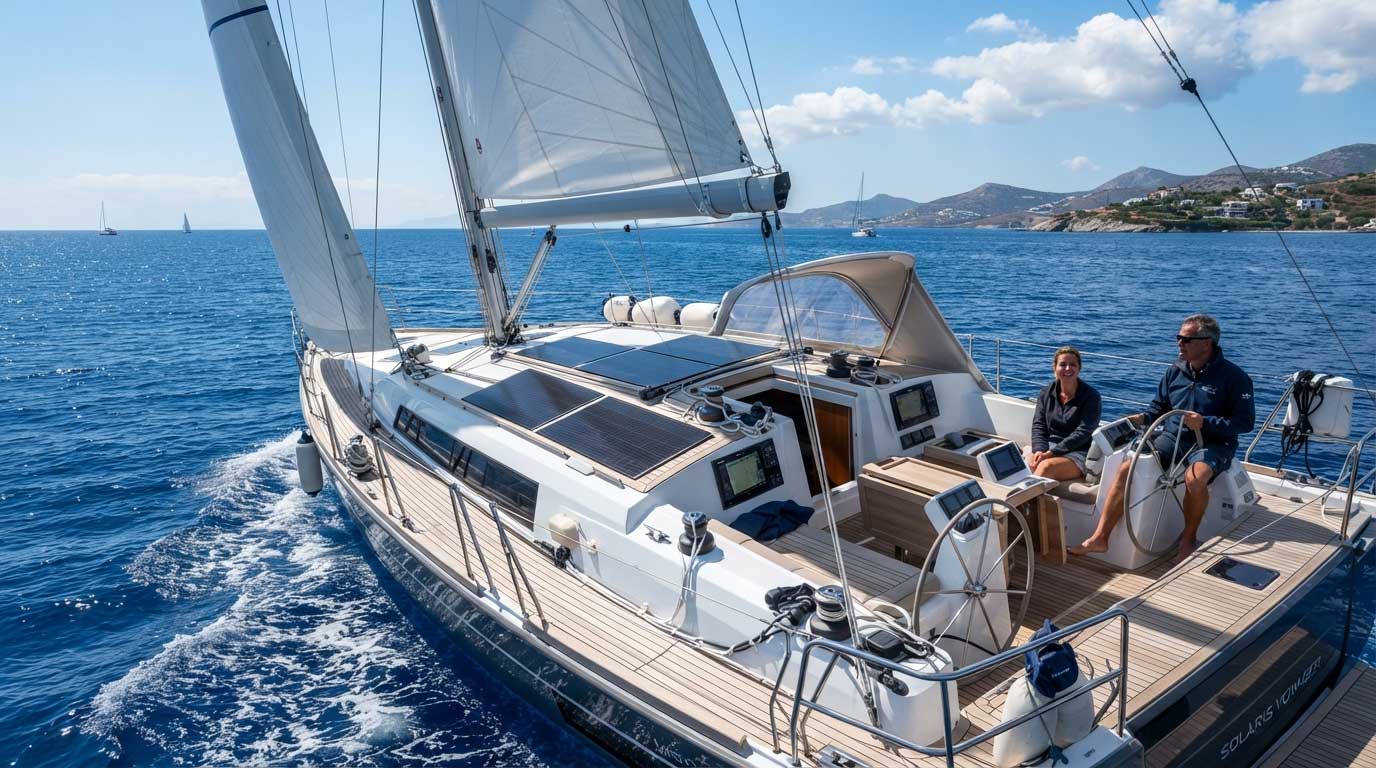
Flexible solar panels for sailboats provide reliable renewable energy for marine environments where space, weight, and installation flexibility are critical. They are designed for cruising boats, yachts, and offshore vessels that need independent power without bulky rigid solar systems.
At Bright Solar, we have developed flexible photovoltaic solutions for customers who require solar energy in challenging outdoor environments. Marine applications are among the most demanding because a solar panel installed on a sailboat must handle saltwater exposure, strong sunlight, wind movement, vibration, and limited installation space at the same time.
During a marine solar project review, one sailing customer explained the challenge clearly: “The ocean gives me unlimited sunlight, but my boat does not give me unlimited space.”
That is exactly where flexible solar technology becomes valuable.
For sailboat owners, the goal is not simply installing the largest possible solar panel. The goal is creating a reliable energy system that works with the boat design.
What are flexible solar panels for sailboats?
Flexible solar panels for sailboats are lightweight photovoltaic modules designed specifically for marine applications where traditional rigid solar panels may be difficult to install.
Unlike conventional framed solar modules, flexible solar panels use lightweight materials and thinner structures, allowing them to adapt to curved or irregular boat surfaces.
They are commonly installed on:
- Sailboat decks
- Cabin roofs
- Bimini tops
- Cockpit covers
- Yacht surfaces
- Marine equipment platforms
A typical marine flexible solar panel structure includes:
| Component | Function |
|---|---|
| Monocrystalline solar cells | Convert sunlight into electrical energy |
| ETFE protective layer | Protects against UV radiation and weather exposure |
| Flexible backing layer | Allows installation on curved surfaces |
| Encapsulation material | Protects internal solar components |
| Waterproof junction box | Provides secure electrical connection |
According to the National Renewable Energy Laboratory (NREL), photovoltaic system performance depends on solar radiation, temperature, module characteristics, and installation conditions.
For sailboats, installation conditions are especially important because the panel is constantly exposed to a moving environment.
A solar panel on land usually stays fixed.
A sailboat solar panel experiences:
- Changing angles toward the sun
- Salt spray
- Ocean wind
- Continuous vibration
- Mechanical movement
Why choose flexible solar panels for sailboats?
Marine solar systems have different requirements from residential solar installations.
A house roof normally provides:
- Large flat surface
- Stable structure
- Easy maintenance access
A sailboat has:
- Limited deck area
- Curved surfaces
- Weight restrictions
- Constant movement
This makes flexible solar technology a natural choice.
Lightweight design for sailing performance
Weight is one of the most important considerations on a sailboat.
Additional weight affects:
- Fuel consumption for motorboats
- Sailing performance
- Balance of the vessel
- Storage capacity
Traditional solar panels usually include:
- Glass layers
- Aluminum frames
- Heavy mounting structures
For marine use, these components can create unnecessary load.
Flexible solar panels reduce weight by using:
- Polymer materials
- Thin protective layers
- Frameless construction
This allows boat owners to add solar power without significantly changing vessel characteristics.
Flexible installation on curved boat surfaces
Sailboats rarely provide large flat areas designed specifically for solar installation.
Common installation challenges include:
- Curved cabin roofs
- Limited deck sections
- Moving canvas structures
- Equipment placement
Flexible solar panels can adapt better to these environments.
Typical installation locations:
| Boat Area | Solar Application |
|---|---|
| Cabin roof | Permanent charging system |
| Bimini top | Lightweight energy generation |
| Deck area | Auxiliary power |
| Cockpit cover | Portable charging |
This installation freedom is one of the main reasons sailors choose flexible solar technology.
Marine challenges solved by flexible solar panels for sailboats
The marine environment is beautiful but technically demanding.
A solar panel used offshore must survive conditions that are rarely experienced on land.
Saltwater corrosion resistance
Saltwater is one of the biggest challenges for marine electronics.
Continuous exposure to salt spray can affect:
- Metal components
- Electrical connectors
- Mounting hardware
A marine solar solution requires:
- Corrosion-resistant materials
- Protected electrical connections
- Reliable encapsulation
Bright Solar focuses on selecting materials suitable for outdoor environments where moisture and salt exposure are unavoidable.
UV exposure and temperature changes
Sailboats often spend many hours under direct sunlight.
The solar panel surface must withstand:
- Strong UV radiation
- High deck temperatures
- Temperature changes between day and night
ETFE surface protection is commonly used in premium flexible solar products because it provides:
- UV resistance
- High light transmission
- Scratch protection
- Outdoor durability
Wind and vibration resistance
A sailing vessel is constantly moving.
Solar panels experience:
- Wave impact
- Wind pressure
- Mechanical vibration
This means marine solar panels require more than good photovoltaic efficiency.
They need reliable physical construction.
How much power can flexible solar panels for sailboats generate?
The energy production of a sailboat solar system depends on:
- Panel wattage
- Available installation area
- Geographic location
- Weather conditions
- System efficiency
The calculation is:
Daily Energy Output = Solar Panel Capacity × Peak Sun Hours × System Efficiency
Example:
A 200W flexible solar system:
200W × 5 peak sun hours × 80% efficiency
≈ 800Wh per day
This amount of energy can support:
- Navigation equipment
- GPS systems
- LED lighting
- Communication devices
- Battery maintenance
The U.S. Department of Energy Solar Energy Technologies Office explains that photovoltaic output depends on solar resource availability, location, orientation, and system conditions.
For sailors, solar sizing should be based on actual onboard electricity consumption.
Technical advantages of Bright Solar flexible solar panels for sailboats
At Bright Solar, marine solar development focuses on balancing three requirements:
- Energy output
- Marine durability
- Installation flexibility
A sailboat solar panel must perform reliably while remaining lightweight.
High-efficiency monocrystalline cells
Boat surfaces are limited.
A sailboat owner may have only a few available areas for solar installation after considering:
- Mast shadows
- Antennas
- Navigation equipment
- Deck layout
High-efficiency monocrystalline cells help maximize power generation from limited space.
Advantages:
- Higher energy output per area
- Compact solar design
- Better use of available surfaces
ETFE coating for marine environments
Marine solar panels require stronger protection than many indoor or stationary applications.
ETFE coating helps protect against:
- UV exposure
- Water contact
- Surface scratches
- Outdoor aging
This makes flexible solar panels more suitable for long-term marine operation.
Waterproof electrical design
Electrical connections are critical on boats.
A reliable marine solar system requires:
- Waterproof junction boxes
- Protected cable connections
- Proper sealing methods
A solar panel may generate excellent power, but poor electrical protection can reduce system reliability.
Real application case: Flexible solar panels for sailboats in European cruising project
Bright Solar worked with a European sailing equipment company developing a lightweight energy solution for coastal cruising boats.
The customer wanted to improve onboard energy independence but faced several limitations:
- Limited deck space
- Strict weight requirements
- Need for clean appearance
The original design used rigid solar modules.
During testing, problems appeared:
| Issue | Result |
|---|---|
| Heavy mounting structure | Increased installation complexity |
| Fixed shape | Poor fit on curved surfaces |
| Large visual impact | Reduced boat aesthetics |
The flexible solar solution provided better integration.
After redesigning the system:
- More usable surface area was available
- Installation became simpler
- The boat appearance remained cleaner
The customer feedback highlighted an important insight:
Marine solar success depends less on maximum panel size and more on how naturally the technology integrates with the vessel.
Applications of flexible solar panels for sailboats
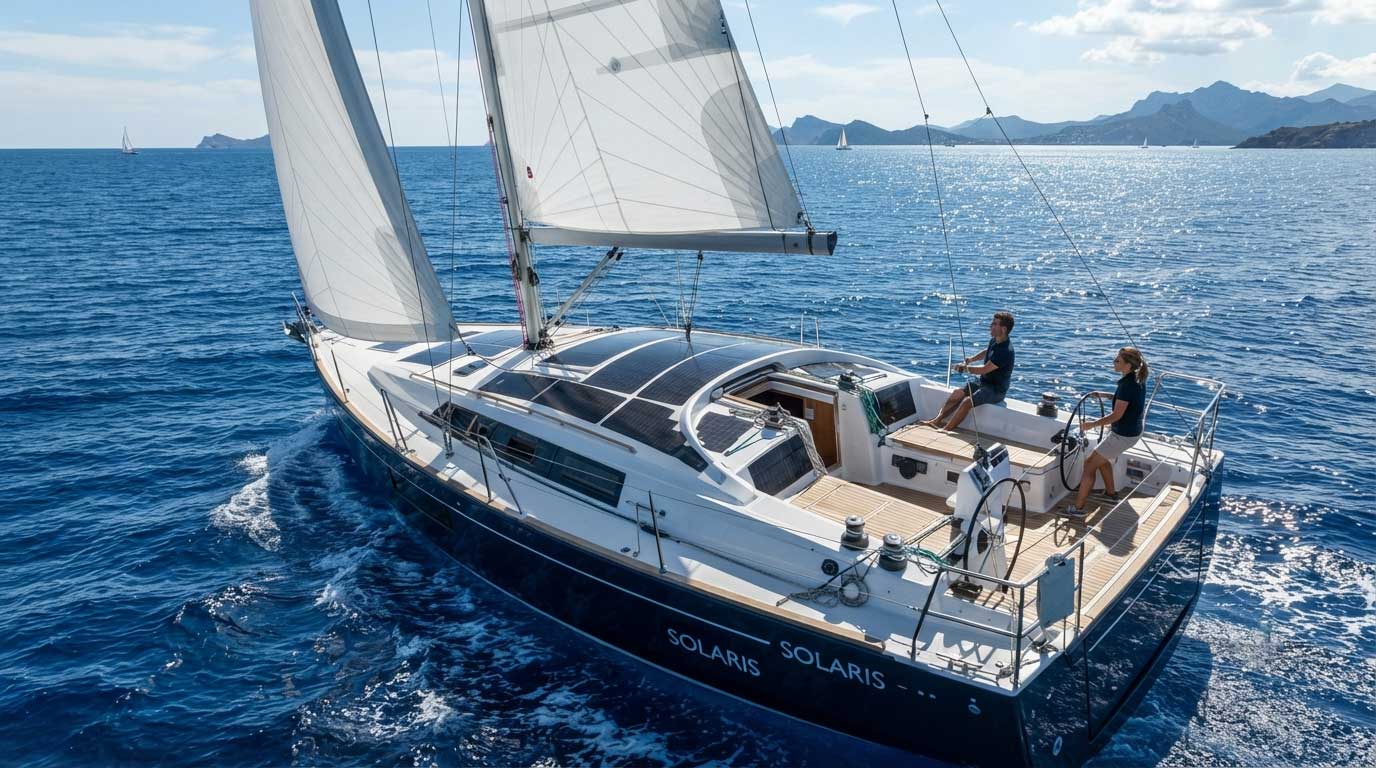
Long-distance cruising
Cruising sailors often need independent energy sources.
Solar power helps maintain:
- Navigation systems
- Batteries
- Communication devices
- Lighting
This reduces dependence on shore power.
Offshore sailing
For offshore sailors, reliability matters.
Solar systems provide silent energy generation without:
- Fuel consumption
- Engine noise
- Additional maintenance
Small yachts and sailing boats
Smaller vessels often have limited space.
Flexible solar panels provide a practical solution because they can use areas that rigid panels cannot.
How to install flexible solar panels for sailboats?
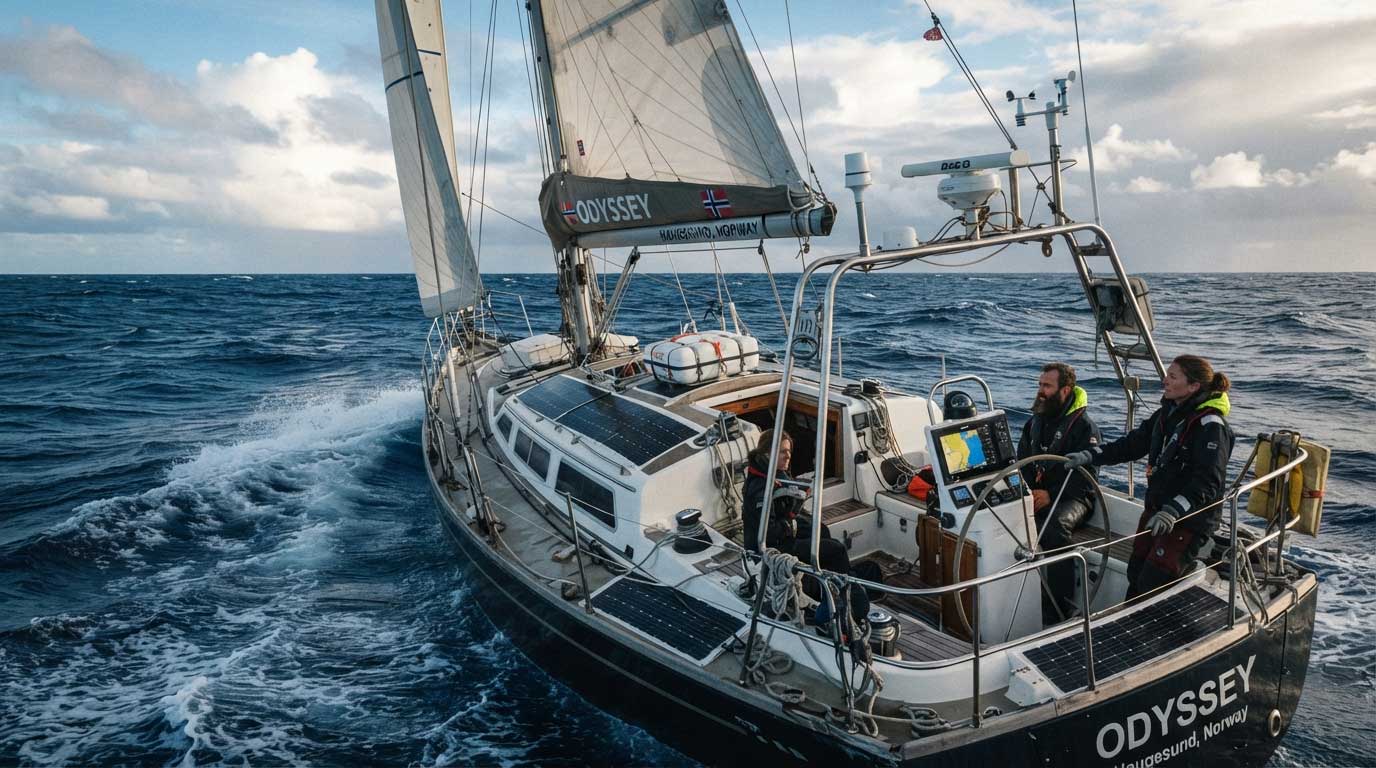
Installing flexible solar panels for sailboats requires careful planning because marine environments are very different from land-based installations.
A sailboat is exposed to:
- Saltwater spray
- Continuous vibration
- Strong sunlight
- Wind pressure
- Changing weather conditions
At Bright Solar, we recommend designing marine solar systems around the boat’s actual usage instead of simply installing the largest possible panel area.
A successful installation normally includes:
- Solar location assessment
- Surface preparation
- Panel attachment
- Electrical protection
- System testing
Step 1: Select the correct solar installation location
The first step is identifying where solar panels will receive the most sunlight.
Common installation locations include:
| Installation Area | Advantages | Considerations |
|---|---|---|
| Cabin roof | Stable and permanent | Possible mast shading |
| Bimini top | Large sunlight exposure | Requires flexible structure |
| Deck surface | Easy access | Must avoid walking areas |
| Cockpit cover | Convenient wiring | Limited space |
Before installation, check:
- Shadow from the mast
- Radar equipment
- Antennas
- Sails
- Other deck structures
Even a small shaded area can reduce overall solar performance.
A common mistake among first-time boat owners is choosing the largest available space rather than the best solar location.
Step 2: Prepare the mounting surface
A clean and stable surface is essential for marine solar installation.
Preparation steps:
Surface cleaning
Remove:
- Salt residue
- Dust
- Oil
- Moisture
Surface inspection
Check for:
- Damaged fiberglass
- Uneven areas
- Loose coatings
For permanent installations, adhesive mounting is widely used because it avoids drilling holes into the vessel.
Benefits include:
- Reduced leakage risk
- Lower installation weight
- Cleaner appearance
However, marine-grade adhesive should be selected carefully because the installation must withstand:
- Heat expansion
- Ocean humidity
- Mechanical vibration
Step 3: Connect the marine solar electrical system
A typical sailboat solar system includes:
Flexible Solar Panel → Solar Charge Controller → Battery Bank → Marine Equipment
Important components:
| Component | Function |
|---|---|
| Solar panel | Generates electricity |
| MPPT controller | Improves charging efficiency |
| Battery bank | Stores energy |
| Fuse protection | Protects electrical circuits |
| Marine connectors | Prevent moisture problems |
For offshore applications, electrical protection is especially important.
A waterproof solar panel connection is only one part of reliability.
The complete system should also include:
- Protected wiring routes
- Proper cable sizing
- Corrosion-resistant connectors
Adhesive mounting vs bracket mounting for sailboat solar panels
Choosing the correct mounting method depends on the boat design.
Adhesive installation
Many sailboat owners prefer adhesive mounting for flexible solar panels.
Advantages:
- No drilling required
- Lower weight
- Better appearance
- Lower wind resistance
Suitable for:
- Cabin roofs
- Fiberglass surfaces
- Smooth deck areas
Potential challenges:
- More difficult removal
- Requires correct surface preparation
Bracket installation
Mechanical mounting uses brackets or support structures.
Advantages:
- Easier replacement
- Adjustable positioning
- Better for larger solar systems
Potential disadvantages:
- Additional weight
- More installation components
- Possible structural modifications
For smaller and medium-sized sailboats, flexible adhesive-mounted solar panels are often preferred because they integrate better with the vessel design.
How to size flexible solar panels for sailboats?
Selecting solar capacity depends on onboard electricity consumption.
Typical sailboat energy usage:
| Equipment | Daily Energy Consumption |
|---|---|
| GPS system | 20–50Wh |
| LED lighting | 30–100Wh |
| Communication devices | 20–80Wh |
| Refrigerator | 300–600Wh |
| Navigation equipment | 50–150Wh |
Example:
A cruising sailboat uses approximately:
- Refrigerator: 400Wh/day
- Navigation: 100Wh/day
- Lighting: 80Wh/day
- Electronics: 100Wh/day
Total:
≈680Wh/day
A solar system with approximately 200W–300W capacity may provide meaningful daily support depending on sunlight conditions.
The correct system size depends on:
- Sailing route
- Climate
- Battery capacity
- Energy habits
How much do flexible solar panels for sailboats cost?
The price of flexible solar panels for sailboats depends on:
- Solar output
- Cell efficiency
- Marine protection level
- Material quality
- Custom design requirements
Typical market pricing:
| Solar Panel Type | Approximate Cost |
|---|---|
| 100W flexible marine panel | $120–$250 |
| 200W flexible marine panel | $250–$450 |
| Custom marine solar system | Depends on design |
Marine flexible solar panels generally cost more than basic portable panels because they require:
- Waterproof construction
- Better encapsulation
- Outdoor durability
- Marine-compatible materials
According to the International Energy Agency (IEA), solar manufacturing costs have continued declining due to technological improvements and production scale. However, specialized applications still require additional engineering investment.
For boat owners, reliability is usually more important than the lowest initial price.
How Bright Solar develops marine flexible solar solutions
At Bright Solar, flexible solar products are developed based on real application environments.
Marine customers usually have different requirements from land-based solar users.
A boat owner may prioritize:
- Weight reduction
- Waterproof performance
- Space efficiency
- Long service life
Our product development considers:
- Cell selection
- Protective materials
- Electrical design
- Installation methods
Marine environment testing considerations
Flexible solar panels for sailboats must handle:
UV exposure
Long periods under sunlight require:
- UV-resistant surfaces
- Stable materials
- Durable encapsulation
Moisture exposure
Marine products need:
- Waterproof connections
- Protected circuits
- Reliable sealing
Mechanical movement
Sailing creates continuous movement.
Panels must tolerate:
- Vibration
- Flexing stress
- Temperature changes
Customized flexible solar solutions for boat manufacturers
Bright Solar provides customized solutions for:
- Yacht manufacturers
- Sailing equipment companies
- Marine electronics suppliers
- Offshore energy projects
Customization options include:
- Panel dimensions
- Cable length
- Connector type
- Power output
- Branding
This allows solar systems to become part of the boat design rather than an external accessory.
How to choose the best flexible solar panels for sailboats?
Before purchasing, consider these factors.
1. Check marine durability
A suitable marine solar panel should have:
- UV-resistant surface
- Waterproof design
- Strong encapsulation
- Reliable connectors
A product designed only for occasional outdoor use may not perform well offshore.
2. Match panel size with boat energy demand
Avoid selecting panels only by available deck space.
Consider:
- Battery capacity
- Daily consumption
- Sailing duration
- Weather conditions
A smaller but well-designed solar system can outperform an oversized system installed in a poor location.
3. Consider installation environment
Ask:
- Is the surface curved?
- Is drilling acceptable?
- Will people walk on the area?
- Is the panel exposed to salt spray?
The correct choice depends on the boat, not just the panel specification.
FAQ About flexible solar panels for sailboats
Are flexible solar panels suitable for sailboats?
Yes. Flexible solar panels are highly suitable for sailboats because they are lightweight, adaptable, and easier to install on curved marine surfaces.
Can flexible solar panels withstand saltwater environments?
High-quality marine flexible solar panels are designed with protective materials to handle outdoor exposure, including UV radiation and moisture. Proper installation is also important.
How much power can sailboat solar panels generate?
Power output depends on panel size, sunlight conditions, and system efficiency. A properly designed marine solar system can provide daily support for navigation, lighting, and onboard electronics.
Can flexible solar panels be installed on a bimini top?
Yes. Flexible panels are commonly used on bimini tops because they are lightweight and can adapt to flexible structures.
Do flexible solar panels affect sailing performance?
Their lightweight design minimizes additional weight compared with traditional framed panels, making them suitable for many sailing applications.
How long do flexible solar panels for sailboats last?
Lifespan depends on material quality, environmental exposure, and maintenance. Premium marine solar panels are designed for long-term outdoor use.
Can flexible solar panels charge boat batteries?
Yes. When connected through an appropriate solar charge controller, flexible solar panels can charge marine battery systems.
Conclusion: Why choose flexible solar panels for sailboats?
Flexible solar panels for sailboats offer a lightweight, durable, and adaptable way to generate clean energy on the water.
For sailors who need reliable power without sacrificing deck space or adding heavy structures, flexible solar technology provides a practical solution.
Bright Solar focuses on developing marine solar products that combine:
- Lightweight construction
- Weather resistance
- Flexible installation
- Reliable energy output
Whether used for coastal cruising, offshore sailing, or yacht applications, flexible solar panels help sailors move toward greater energy independence.
The ocean provides the sunlight. The right solar system helps turn that sunlight into usable power.
Related recommendations
-

300 Watt Flexible Solar Panel: Serious Off-Grid Power Without Heavy Roof Loads
295Discover how a 300 watt flexible solar panel delivers lightweight, reliable off-grid energy for RVs, boats, vans, and mobile solar systems.
View details -
solar panel 100w flexible (Real Compact Off-Grid Guide from Bright Solar)
237solar panel 100w flexible explained with RV installation cases, real output data, mounting insights, and off-grid performance analysis for travel and camping use.
View details -
Flexible Bifacial Solar Panels: Design, Output and Uses
127Flexible bifacial solar panels generate power from both sides when rear-side irradiance is available, making installation geometry critical to their performa...
View details -
Black Flexible Solar Panel: Design, Performance, and Applications
108A black flexible solar panel combines a dark photovoltaic surface with lightweight construction for controlled curved-surface installations. Selection should...
View details