Solar Panels for Mobile Homes: A Practical Guide Based on Real Installations
Solar panels for mobile homes can significantly reduce utility bills, increase energy independence, and provide reliable long-term power. For most mobile homeowners, a properly designed solar system sized between 3kW and 8kW can offset a substantial portion of annual electricity consumption while delivering decades of clean energy production.
A customer in southern Arizona once told me something I still remember.
He wasn’t interested in becoming environmentally conscious.
He wasn’t trying to impress neighbors.
He simply wanted his electricity bill to stop surprising him every summer.
His double-wide mobile home sat under relentless desert sun nearly 300 days each year. Every June, July, and August, air-conditioning costs climbed faster than expected. By September, frustration always followed.
Solar wasn’t originally his first choice.
After running the numbers together, it became obvious that the roof above his home was generating nothing while the utility meter kept spinning.
Three years later, his annual power costs look dramatically different.
That experience reflects what many mobile homeowners discover after exploring solar energy seriously.
The question isn’t whether solar works.
The question is whether the system is designed correctly.
At Bright Solar, our engineering team has worked with homeowners, RV owners, marine operators, agricultural facilities, and off-grid installations for more than a decade. One pattern appears repeatedly: solar success depends far more on system design than panel count alone.
Why More Mobile Home Owners Are Choosing Solar
Mobile homes occupy an interesting position in the residential energy market.
They are often:
- Smaller than conventional homes
- Easier to power efficiently
- Located in regions with strong solar exposure
- Occupied by homeowners seeking predictable utility costs
According to the U.S. Energy Information Administration (EIA), residential electricity prices have steadily increased across many parts of the United States over the past decade.
Source:
https://www.eia.gov
While exact rates vary by state, the trend remains consistent.
Energy costs rarely move downward for long.
Solar changes the relationship between homeowners and utility companies.
Instead of purchasing every kilowatt-hour from the grid, homeowners begin generating part of their own electricity.
For mobile homes, this can be particularly attractive because energy consumption is often lower than larger traditional houses.
Understanding How Much Electricity a Mobile Home Actually Uses
One of the biggest misconceptions I encounter involves energy consumption estimates.
Many online articles make assumptions that don’t reflect reality.
A mobile home in Florida behaves differently than one in Montana.
A retired couple uses electricity differently than a family of five.
Before recommending any solar system, I usually start with utility bills rather than panel catalogs.
A typical mobile home may consume:
| Mobile Home Type | Monthly Usage |
|---|---|
| Small Single-Wide | 500–800 kWh |
| Average Single-Wide | 700–1,000 kWh |
| Double-Wide | 900–1,500 kWh |
| Large Double-Wide | 1,200–2,000+ kWh |
The largest energy consumers are usually:
- Air conditioning
- Electric water heaters
- Refrigerators
- Clothes dryers
- Electric heating systems
Notice what isn’t on that list.
Televisions.
Computers.
Phone chargers.
Most homeowners focus on small appliances while overlooking the major loads responsible for most of the monthly bill.
A Lesson From a Texas Installation
Several years ago, a homeowner near San Antonio requested a system capable of eliminating his electric bill entirely.
When we reviewed twelve months of utility records, the numbers told a different story.
His summer consumption exceeded winter usage by almost three times.
The reason wasn’t mysterious.
An aging air-conditioning unit was consuming enormous amounts of electricity.
Replacing that unit reduced annual energy demand before a single solar panel was installed.
The result?
A smaller solar system.
Lower installation cost.
Faster return on investment.
Sometimes efficiency improvements create greater value than simply adding more solar capacity.
Choosing the Right Solar System Size for a Mobile Home
The phrase “How many solar panels do I need?” sounds simple.
It rarely is.
Several variables influence system sizing:
- Daily energy consumption
- Geographic location
- Sunlight availability
- Roof orientation
- Shading conditions
- Utility rates
- Future energy needs
For example:
A homeowner in Arizona may generate substantially more electricity from the same array than a homeowner in Washington State.
According to the National Renewable Energy Laboratory (NREL), solar resource levels vary significantly across regions of North America.
Source:
https://www.nrel.gov
As a rough guideline:
| System Size | Estimated Annual Production Range |
| 3kW | 3,500–5,000 kWh |
| 5kW | 6,000–8,500 kWh |
| 8kW | 10,000–13,500 kWh |
| 10kW | 12,000–17,000 kWh |
Actual production depends heavily on location.
This is why professional site assessment matters.
Roof Challenges Unique to Mobile Homes
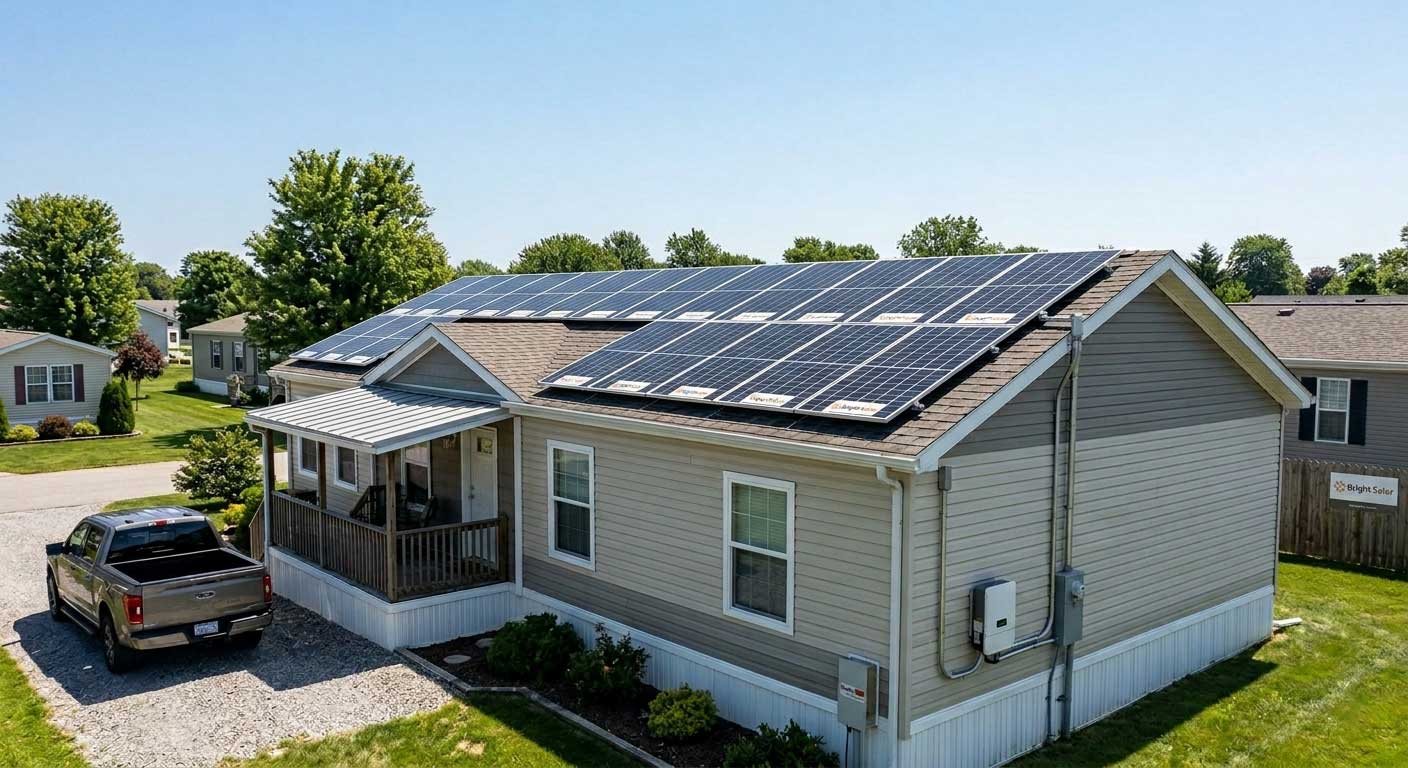
Mobile homes present installation challenges that many standard residential solar articles never discuss.
Some roofs are ideal.
Others require careful engineering review.
Important considerations include:
- Roof age
- Structural capacity
- Roof material
- Fastening methods
- Wind loads
- Local permitting requirements
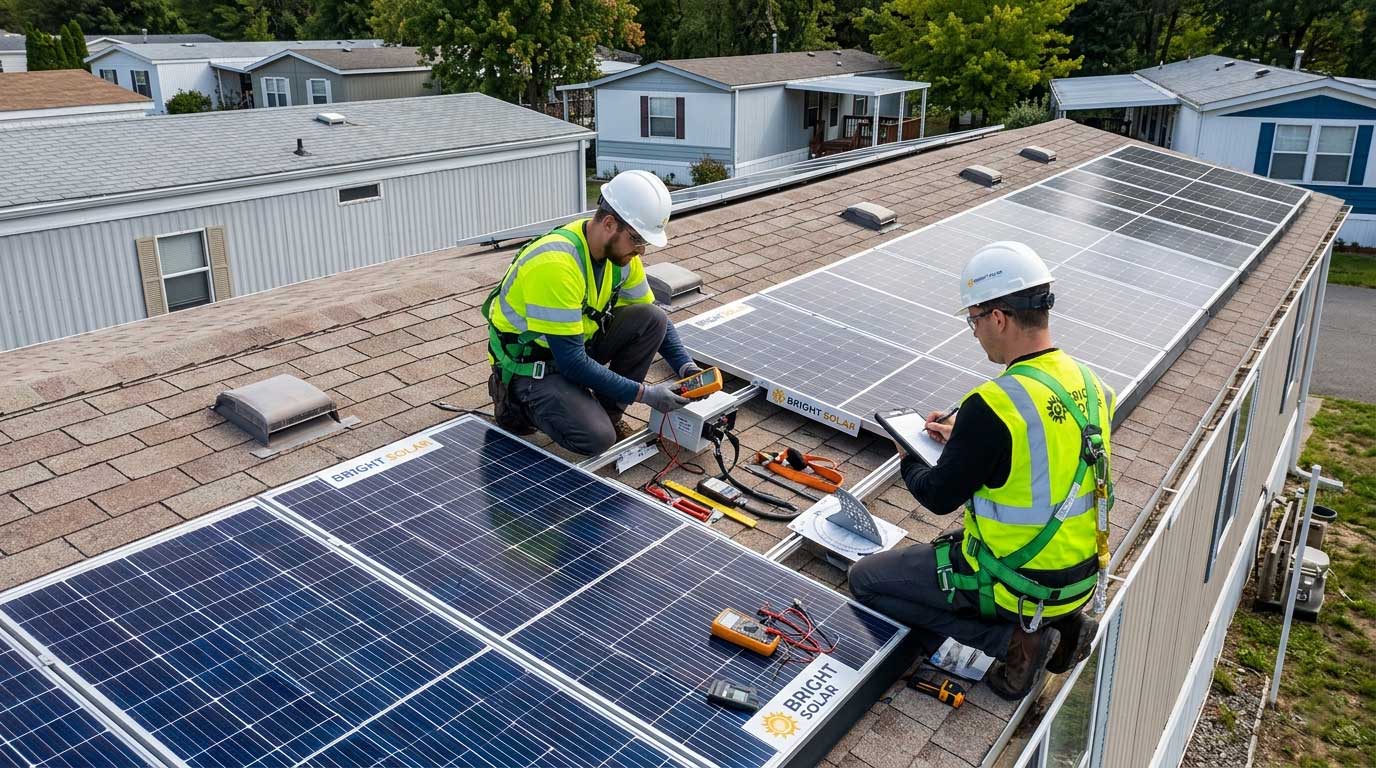
One project in Oklahoma looked perfect from the ground.
Once we performed a structural review, we discovered previous roof repairs had weakened several mounting locations.
Had the installation proceeded without inspection, long-term reliability would have suffered.
Solar panels can remain operational for 25 years or more.
The roof underneath must be prepared to do the same.
According to the Solar Energy Industries Association (SEIA), proper structural evaluation remains a critical part of residential solar design.
Source:
https://www.seia.org
Many homeowners focus exclusively on panel specifications.
Professional installers spend just as much time evaluating the structure supporting them.
Are Flexible Solar Panels a Better Option?
For some mobile homes, flexible solar panels deserve consideration.
Advantages may include:
- Lower weight
- Easier installation
- Reduced mounting complexity
- Better compatibility with curved surfaces
However, flexibility is not automatically an advantage.
Rigid panels often provide:
- Longer service life
- Higher efficiency
- Better heat dissipation
- Improved durability
Choosing between flexible and rigid panels should depend on the installation environment rather than marketing claims.
The Economics of Solar Panels for Mobile Homes
When homeowners ask about solar costs, they are usually asking a different question.
They want to know:
“When will this investment pay for itself?”
That answer depends on:
- Electricity prices
- Local incentives
- Installation costs
- Solar production
- Financing structure
The math is rarely identical between projects.
What matters is not simply installation cost.
What matters is lifetime energy production.
A lower-cost system that produces less electricity may ultimately provide less value than a higher-quality system designed for long-term performance.
One homeowner in Nevada focused heavily on reducing installation expenses.
Another prioritized premium equipment and production guarantees.
Ten years later, the second system has generated substantially greater total value despite higher upfront cost.
That outcome isn’t unusual.
The cheapest system rarely becomes the cheapest system over twenty-five years.
Real Mobile Home Solar Case Studies From the Field
The most useful lessons rarely come from product brochures.
They come from real roofs, real homeowners, and real utility bills.
Over the years, our Bright Solar team has reviewed installations across the Southwest, Southeast, Midwest, and coastal regions. Every project looked different. The common thread was that homeowners wanted more predictable energy costs.
Arizona Double-Wide Mobile Home Project
Location: Tucson, Arizona
Home Type: Double-Wide Mobile Home
System Size: 6.4kW
Battery Storage: None
Annual Sunlight Conditions: Excellent
The homeowner’s primary concern was summer cooling costs.
Twelve months of utility records showed annual consumption averaging approximately 11,000 kWh.
The roof offered nearly ideal solar exposure with minimal shading.
After installation, first-year production exceeded initial estimates due to favorable weather conditions.
The most interesting observation wasn’t energy production.
It was behavior.
The homeowner became more aware of major electrical loads and adjusted air-conditioning schedules during peak production hours.
Solar panels reduced utility costs.
Awareness reduced them further.
That’s something calculators rarely capture.
Florida Mobile Home Community Installation
Location: Central Florida
Home Type: Single-Wide Mobile Home
System Size: 4.8kW
Challenge: Afternoon Cloud Cover
Florida presents a unique situation.
Many homeowners assume abundant sunshine automatically guarantees maximum solar production.
The reality is more complicated.
Summer thunderstorms arrive regularly.
Cloud movement changes rapidly.
Humidity affects operating temperatures.
In this installation, panel placement became more important than panel quantity.
The homeowner originally planned to cover nearly every available roof section.
After a shading analysis, several areas were excluded.
Fewer panels.
Better performance.
Sometimes solar design is about what not to install.
Rural Texas Mobile Home With Battery Backup
Location: West Texas
Home Type: Manufactured Home
System Size: 8kW
Battery Storage: Lithium Battery Bank
The property experienced periodic utility outages.
The homeowner wasn’t primarily motivated by electricity savings.
Reliability was the goal.
A hybrid solar-plus-storage system provided backup power for:
- Refrigeration
- Lighting
- Internet equipment
- Medical devices
- Water pump operation
During a summer outage, the system maintained critical loads without interruption.
That event reinforced something I often tell customers:
The value of solar isn’t always measured by monthly savings.
Sometimes it’s measured by what continues working when the grid doesn’t.
What Does a Mobile Home Solar System Actually Cost?
This question appears in nearly every consultation.
The answer depends on equipment quality, installation complexity, local labor rates, permitting requirements, and battery storage choices.
General market ranges in the United States often look something like this:
| System Size | Typical Home Type | Approximate Range |
|---|---|---|
| 3kW | Small Single-Wide | $7,000–$11,000 |
| 5kW | Average Mobile Home | $11,000–$18,000 |
| 8kW | Large Double-Wide | $17,000–$28,000 |
| 10kW+ | High Consumption Homes | $22,000–$40,000+ |
Actual pricing varies significantly by location and equipment specifications.
According to EnergySage, residential solar costs continue to decline compared with historical installation pricing while equipment efficiency continues improving.
Source:
https://www.energysage.com
A decade ago, many homeowners couldn’t justify solar financially.
Today, the conversation is very different.
Understanding Return on Investment
Many online articles calculate ROI using unrealistically simple assumptions.
Real life doesn’t work that way.
Electricity prices change.
Weather changes.
Consumption habits change.
Equipment improves.
Instead of asking:
“When will solar pay for itself?”
I often encourage homeowners to ask:
“How much electricity will I avoid purchasing over the next 25 years?”
That framing produces a more realistic discussion.
For example:
If a mobile home consumes approximately 10,000 kWh annually and local utility rates continue rising gradually over time, the lifetime value of solar generation can become substantial.
The exact figure depends on many variables.
The broader principle remains consistent.
Every kilowatt-hour generated by the solar array is one less kilowatt-hour purchased from the utility company.
Common Mistakes Mobile Home Owners Make When Buying Solar
I’ve seen some expensive mistakes.
Not because people lacked intelligence.
Because they received incomplete advice.
Mistake #1: Buying Based on Panel Wattage Alone
Many buyers focus exclusively on panel ratings.
More watts sound better.
But system performance depends on:
- Roof orientation
- Inverter efficiency
- Shading
- Wiring design
- Charge controller quality
A poorly designed 8kW system can underperform a properly designed 6kW system.
Mistake #2: Ignoring Roof Condition
Solar panels often last 25 years or longer.
If the roof needs replacement within five years, installation timing should be reconsidered.
Removing and reinstalling a solar system later creates unnecessary costs.
Mistake #3: Underestimating Future Energy Needs
Electricity consumption rarely stays constant.
Future additions may include:
- Heat pumps
- Electric vehicles
- Home offices
- Additional refrigeration
- Battery storage
A little planning today can prevent expensive upgrades later.
Mistake #4: Choosing the Cheapest Proposal
The lowest quote isn’t always the lowest cost.
Inferior mounting hardware, low-quality electrical components, and weak warranty support can create problems years later.
Solar should be evaluated like a long-term infrastructure investment.
Because that’s exactly what it is.
Grid-Tied vs Off-Grid Solar Panels for Mobile Homes
Not every mobile home solar project has the same objective.
Some homeowners want lower utility bills.
Others want independence.
The distinction matters.
| Feature | Grid-Tied | Off-Grid |
|---|---|---|
| Utility Connection | Yes | No |
| Battery Required | Optional | Yes |
| Lower Upfront Cost | Yes | No |
| Energy Independence | Limited | High |
| Backup During Outages | Usually No | Yes |
| Maintenance Complexity | Lower | Higher |
For most mobile homes located within established utility service areas, grid-tied systems often provide the strongest financial return.
Off-grid systems make sense when grid access is unavailable, unreliable, or prohibitively expensive.
Battery Storage: Is It Worth It?
Battery discussions have changed dramatically during the last several years.
Lithium technology continues improving.
Costs continue evolving.
Consumer interest keeps growing.
The question isn’t whether batteries work.
They clearly do.
The question is whether batteries solve a problem the homeowner actually has.
Batteries may provide value when:
- Utility outages occur frequently
- Time-of-use utility rates are high
- Energy independence is a priority
- Critical loads require backup power
They may provide less value when:
- Grid reliability is excellent
- Net metering is favorable
- Backup power isn’t necessary
Every project deserves its own analysis.
Why Mobile Homes Are Surprisingly Good Candidates for Solar
Some homeowners assume solar works best only on large suburban houses.
My experience suggests otherwise.
Mobile homes often offer several advantages:
- Lower total energy demand
- Simpler roof layouts
- Faster payback potential
- Strong suitability for energy-efficiency upgrades
The combination can be powerful.
In fact, some of the best-performing residential solar projects I’ve seen weren’t installed on luxury homes.
They were installed on practical homes owned by people focused on controlling long-term expenses.
FAQ About Solar Panels for Mobile Homes
Can solar panels be installed on a mobile home?
Yes. Most mobile homes can support solar installations when the roof structure is properly evaluated and the system is designed appropriately.
How many solar panels does a mobile home need?
The answer depends on electricity consumption, location, and system goals. Many mobile homes use systems ranging from 3kW to 8kW.
Are solar panels worth it for mobile homes?
In many cases, yes. Homeowners with suitable roof conditions and sufficient sunlight often achieve meaningful long-term energy savings.
Can a mobile home run entirely on solar power?
Yes, but doing so typically requires battery storage, careful energy management, and a properly engineered off-grid system.
Do solar panels increase mobile home value?
The effect varies by market, but lower operating costs and energy independence can make a property more attractive to potential buyers.
What type of solar panels work best for mobile homes?
High-efficiency monocrystalline panels are commonly recommended because they maximize production within limited roof space.
Are flexible solar panels suitable for mobile homes?
They can be useful in certain situations, especially where weight or mounting limitations exist. However, rigid panels often offer longer service life and higher efficiency.
How long do solar panels last?
Most modern solar panels carry performance warranties extending 25 years or more.
Final Thoughts on Solar Panels for Mobile Homes
The conversation around solar panels for mobile homes often starts with equipment.
Panels.
Inverters.
Batteries.
Mounting systems.
Those components matter.
But after years of evaluating real installations, I’ve learned that successful projects usually begin somewhere else.
They begin with understanding how the homeowner actually lives.
How much electricity is used.
When it is used.
What problems need solving.
The most effective solar systems are not necessarily the largest.
They’re the systems designed around real-world conditions.
At Bright Solar, we’ve worked with homeowners seeking lower utility bills, greater energy independence, improved reliability, and long-term financial stability. The projects that consistently perform best are the ones built around practical goals rather than marketing promises.
For many homeowners, the roof above their mobile home receives thousands of hours of sunlight every year.
The question isn’t whether that sunlight has value.
The question is whether it’s being used.
And that’s ultimately what solar panels for mobile homes are designed to do.
Related recommendations
-

flexible solar panels for rv roof: Lightweight Solar Power Solution for RV Travel
187Discover flexible solar panels for rv roof with lightweight design, easy installation, and reliable power output. Bright Solar provides durable solar solutions for modern RV travel.
View details -
Small Flexible Solar Panels: Lightweight Solar Power for Compact Spaces
144Discover how small flexible solar panels deliver lightweight, efficient power for RVs, boats, camping, and off-grid devices. Explore real-world applications.
View details -
Bifacial Flexible Solar Panel: Design, Performance, and Applications
198A bifacial flexible solar panel generates power from both sides when rear-side light is available. Its value depends on clearance, reflectivity, curvature, t...
View details -
Flexible Amorphous Solar Panels: Uses, Efficiency and Buying Guide
138Flexible amorphous solar panels use thin-film amorphous silicon in lightweight, bendable modules for curved, lightweight, or unconventional surfaces.
View details