400W Flexible Solar Panels for RV, Marine & Off-Grid Systems
400W flexible solar panels provide lightweight, durable solar power for curved roofs, RVs, boats, vans, and off-grid systems where traditional rigid panels are difficult to install. Modern high-efficiency flexible modules now deliver reliable daily output while reducing mounting weight and improving installation flexibility.
People often assume flexible solar panels are only “portable camping accessories.” That used to be partially true years ago. It isn’t true anymore.
I learned that firsthand during a coastal retrofit project near San Diego. The client originally installed rigid glass panels on a fiberglass yacht roof. After less than two seasons, vibration fatigue started creating mounting stress fractures around the aluminum brackets. Salt spray accelerated corrosion around the fasteners. Eventually, the owner switched to lightweight 400W flexible solar panels, not because they looked modern, but because the structure itself simply handled them better.
That project changed how I evaluate mobile solar systems.
Why 400W Flexible Solar Panels Are Growing So Fast
The demand for lightweight solar systems has increased sharply as RV ownership, marine electrification, and off-grid travel continue expanding globally.
According to the International Energy Agency (IEA), solar PV remains the fastest-growing renewable energy technology worldwide, with distributed energy systems seeing major growth in mobile and residential applications.
At the same time, RV Industry Association data shows North American RV usage remains historically high, creating stronger demand for:
- Flexible solar panels for RV roofs
- Marine solar charging systems
- Lightweight off-grid solar kits
- Van life power systems
- Portable emergency energy systems
Traditional rigid modules still dominate rooftop installations on homes and factories. But mobile environments create completely different engineering problems.
Movement changes everything.
What Makes 400W Flexible Solar Panels Different?
Weight Reduction Matters More Than Most Buyers Expect
A standard rigid 400W glass solar panel commonly weighs between 45–60 lbs (20–27 kg).
A modern 400W flexible solar panel can reduce that weight dramatically.
That matters in real-world installations because excessive roof weight affects:
- Vehicle fuel efficiency
- Roof structural stress
- Marine balance
- Wind resistance
- Mounting complexity
On boats especially, every kilogram matters.
During one marina inspection in Florida, I noticed two nearly identical vessels using different solar systems. The boat running flexible solar panels showed noticeably less mounting fatigue around the roof reinforcement points after years of wave impact exposure.
The owner hadn’t switched for aesthetics.
He switched because fiberglass repairs became more expensive than upgrading the solar system.
Efficiency Improvements Changed the Industry
Early flexible solar panels had a bad reputation.
Many older thin-film products suffered from:
- Poor heat resistance
- Low conversion efficiency
- Delamination
- Rapid UV degradation
- Weak adhesive backing
That reputation still follows the industry today.
But modern monocrystalline flexible panels are very different.
Premium 400W flexible solar panels now commonly achieve:
| Panel Type | Typical Efficiency |
|---|---|
| Older thin-film flexible panels | 10–14% |
| Modern monocrystalline flexible panels | 20–23% |
| High-end rigid residential panels | 21–24% |
The efficiency gap is far smaller than most buyers realize.
Bright Solar flexible modules are engineered using advanced monocrystalline cell structures optimized for lightweight mobile energy systems.
Flexible Solar Panels Perform Better on Curved Surfaces
Rigid panels require flat mounting surfaces.
Flexible panels do not.
That changes installation possibilities completely.
Common Flexible Solar Applications
| Application | Why Flexible Panels Work Well |
|---|---|
| RV roofs | Lower weight and curved mounting |
| Sailboats | Reduced wind resistance |
| Camper vans | Easier low-profile installation |
| Portable power systems | Improved transportability |
| Off-grid cabins | Lightweight rooftop mounting |
| Emergency backup systems | Quick deployment |
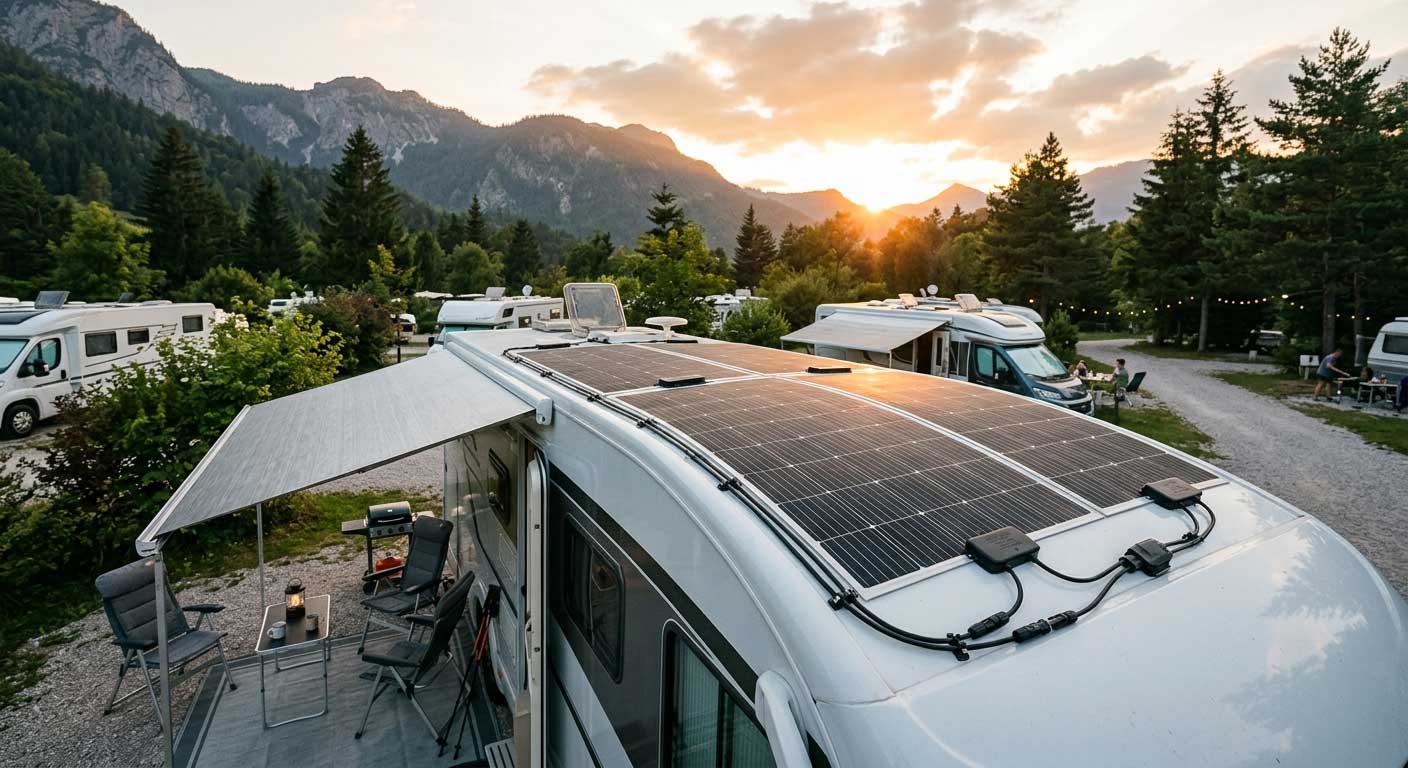
One thing buyers rarely notice at first: aerodynamic drag.
Low-profile flexible panels sit closer to the roof surface, which often reduces highway wind noise compared to framed rigid modules.
That becomes surprisingly noticeable after several hundred miles of driving.
Heat Is Still the Biggest Long-Term Enemy
Flexible solar panels face one challenge more than any other:
Heat buildup.
Because flexible modules mount close to surfaces, airflow underneath becomes limited.
Higher temperatures reduce efficiency and accelerate aging.
According to the U.S. Department of Energy, solar panel efficiency drops as operating temperature rises. Poor thermal management shortens lifespan significantly in hot climates.
That’s why quality manufacturing matters.
Cheap flexible panels often fail because manufacturers prioritize thinness instead of thermal stability.
What Quality Flexible Panels Usually Include
- UV-resistant ETFE coating
- Reinforced junction boxes
- Multi-layer encapsulation
- Salt-mist resistance
- Heat-resistant adhesives
- Waterproof MC4 connectors
Without those protections, long-term durability becomes unpredictable.
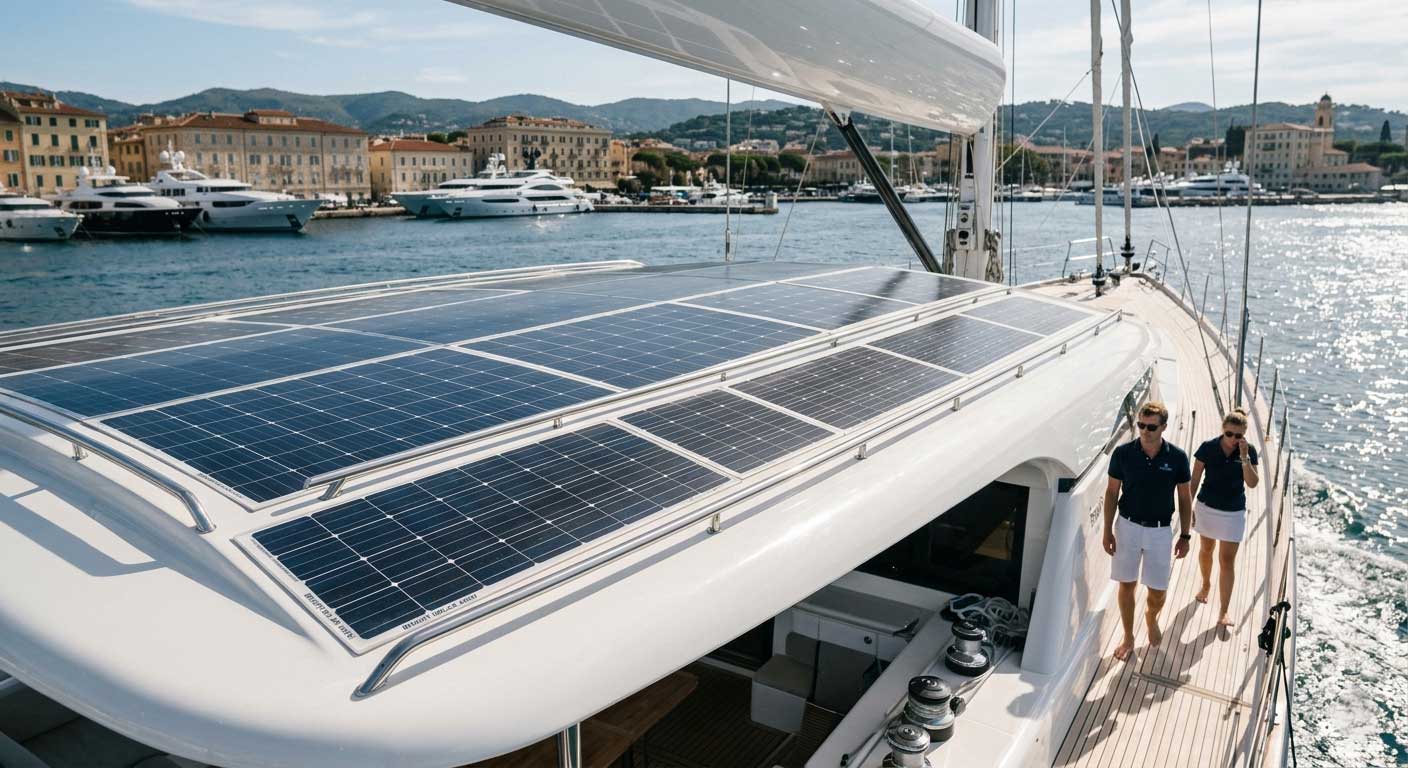
Marine Flexible Solar Panels Face Extreme Conditions
Marine installations are far harsher than RV systems.
Salt spray alone destroys many poorly designed products.
I’ve personally inspected flexible panels that looked fine electrically but had severe corrosion inside cable entry points after only 18 months offshore.
The problem wasn’t the solar cells.
It was poor sealing.
Marine Environments Create Multiple Stress Factors
- UV exposure
- Salt corrosion
- Humidity cycling
- Constant vibration
- Temperature swings
- Mechanical flexing
That combination exposes weak manufacturing very quickly.
Bright Solar marine flexible solar panels are commonly designed with corrosion-resistant materials and reinforced sealing systems suitable for harsh outdoor environments.
Off-Grid Buyers Usually Care About One Thing
Runtime.
Not theoretical wattage.
Real-world output depends on:
- Sun angle
- Temperature
- Wiring losses
- Battery efficiency
- Controller quality
- Installation angle
A 400W flexible solar panel system typically generates roughly:
| Sunlight Condition | Daily Energy Output |
|---|---|
| Excellent sunlight | 1.6–2.2 kWh/day |
| Moderate sunlight | 1.2–1.6 kWh/day |
| Cloudy conditions | Lower variable output |
That is usually enough for:
- RV refrigerators
- Lighting systems
- Portable electronics
- Fans
- Communication equipment
- Small appliances
But buyers expecting residential-scale whole-home backup from a single 400W module often misunderstand system sizing completely.
Flexible vs Rigid Solar Panels
Side-by-Side Comparison
| Feature | Flexible Panels | Rigid Panels |
|---|---|---|
| Weight | Very light | Heavier |
| Curved Surface Installation | Excellent | Poor |
| Durability | Moderate to high | Very high |
| Heat Dissipation | Lower | Better |
| Wind Resistance | Lower profile | Higher profile |
| Installation Simplicity | Easier | More structural mounting |
| Portability | Excellent | Limited |
Rigid panels still dominate permanent residential systems.
Flexible panels dominate mobility-focused systems.
Different tools for different environments.
Real Buyer Mistakes I See Constantly
Mistake 1 — Buying Based Only on Wattage
Wattage alone means very little without considering:
- Cell efficiency
- Surface temperature
- Encapsulation quality
- Cable sealing
- Mechanical flexibility
Some “400W” panels degrade dramatically after prolonged heat exposure.
Mistake 2 — Ignoring Surface Preparation
Adhesive-backed flexible panels fail early if installed on dirty or unstable surfaces.
Proper preparation matters more than most installation videos admit.
Mistake 3 — Expecting Permanent Roof Lifespan
Flexible panels are improving rapidly, but they still typically experience more thermal stress than ventilated rigid systems.
That’s simply physics.
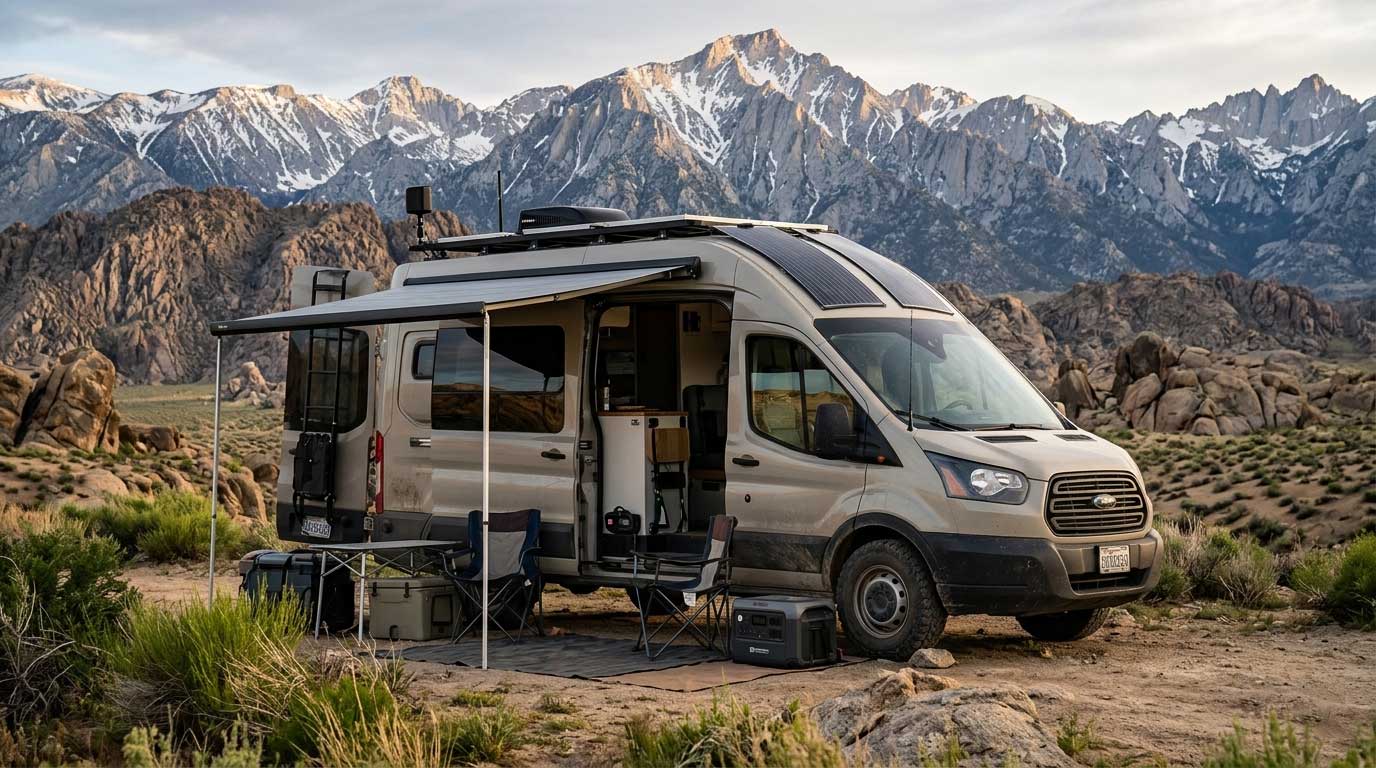
Why Flexible Solar Systems Work So Well for RV Travel
The RV market helped push flexible solar into mainstream use.
Modern RV owners increasingly prefer:
- Silent power systems
- Generator-free camping
- Lightweight rooftop systems
- Lower fuel consumption
- Minimal roof penetration
A properly installed flexible solar system solves many of those issues simultaneously.
I remember standing inside an Arizona desert campsite at dawn where nearly every newer overlanding vehicle used some form of flexible rooftop solar.
Five years ago, that was uncommon.
Now it’s becoming normal.
FAQ — 400W Flexible Solar Panels
Are 400W flexible solar panels durable?
High-quality models can last many years when properly installed, though lifespan varies depending on heat exposure, installation quality, and environmental conditions.
Can flexible solar panels power an RV?
Yes. A 400W flexible solar panel system commonly supports lighting, refrigeration, electronics, and small appliances in RV applications.
Are flexible panels waterproof?
Most premium flexible panels are designed for outdoor weather exposure, but waterproof ratings and connector quality vary between manufacturers.
Do flexible solar panels work on boats?
Yes. Marine flexible solar panels are widely used because of their low weight and ability to conform to curved surfaces.
Are flexible solar panels less efficient than rigid panels?
Modern monocrystalline flexible panels now approach the efficiency levels of many rigid modules.
Why Bright Solar Flexible Panels Are Used in Mobile Energy Projects
Bright Solar develops lightweight solar systems for:
- RV energy systems
- Marine applications
- Off-grid cabins
- Portable emergency power
- Mobile commercial installations
Key features commonly include:
- High-efficiency monocrystalline cells
- Lightweight flexible construction
- UV-resistant ETFE surface
- Salt-mist resistance
- Low-profile aerodynamic design
- Durable outdoor sealing systems
These systems are engineered for real outdoor conditions — not just laboratory specifications.
About the Author
Author: JED
Brand: Bright Solar
JED has worked with mobile solar systems, flexible photovoltaic installations, RV energy retrofits, and marine solar integration projects across North America. His field experience includes off-grid energy consulting, coastal solar durability evaluation, and lightweight photovoltaic system optimization for mobile environments.
Over the last decade, he has participated in solar retrofit inspections involving RV fleets, marine vessels, portable emergency systems, and remote off-grid installations where weight, vibration resistance, and long-term reliability directly affected system performance.
Related recommendations
-

Thin Film Flexible Solar Panel: Lightweight Solar Solutions for Modern Applications
139Discover thin film flexible solar panel technology for RV, marine and off-grid applications. Learn benefits, performance, installation tips and real project insights.
View details -
300 Watt Flexible Solar Panel: Serious Off-Grid Power Without Heavy Roof Loads
219Discover how a 300 watt flexible solar panel delivers lightweight, reliable off-grid energy for RVs, boats, vans, and mobile solar systems.
View details -
Solar Panel Wiring Series vs Parallel: Which Is Better?
135Solar panel wiring series vs parallel depends on voltage, current, controller limits, cable distance, and shading conditions.
View details -
12 Volt Solar Panels for Reliable Off-Grid and Mobile Power
156Discover how 12 volt solar panels power RVs, boats, cabins, and off-grid systems. Learn sizing, performance, installation tips, and expert insights from Bright Solar.
View details