solar panel 12v 40w flexible (Real Micro Energy Guide from Bright Solar)
Direct answer :
A solar panel 12v 40w flexible is a compact low-power photovoltaic module designed for maintaining 12V batteries in RVs, boats, and small off-grid systems. It delivers trickle charging rather than full energy supply, with real output strongly affected by sunlight angle, temperature, and installation quality.
Why a 12V 40W flexible solar panel is not “just a small charger”
In specification terms, 40W sounds minimal.
But in real field conditions, it behaves as a battery life stabilizer, not a power generator.
At Bright Solar, we’ve deployed 40W flexible systems in:
- sailboats docked for long-term storage
- camper vans in European winter storage
- emergency backup battery systems in remote cabins
Across these cases, one pattern is consistent:
The system is not designed to run loads—it is designed to prevent battery decay.
Real-world electrical reality of 12V 40W flexible solar panel
A 40W panel under ideal conditions produces:
- Voltage: ~17–18V (open circuit)
- Charging voltage (regulated): ~13.5–14.4V
- Current: ~2–2.5A max in peak sun
But real-world output is different.
According to U.S. National Renewable Energy Laboratory (NREL), real photovoltaic systems can experience 20–40% energy loss due to temperature, shading, and installation angle in field conditions.
Source: https://www.nrel.gov
That means a 40W panel often behaves closer to:
25–35W usable output in real environments
What a solar panel 12v 40w flexible is actually used for
This is where expectations and reality often diverge.
Primary real uses:
- battery maintenance (12V lead-acid or lithium)
- float charging during storage
- emergency backup trickle power
- small sensor or lighting systems
Not suitable for:
- appliances (fridge, inverter AC loads)
- continuous off-grid living
- high-demand RV systems
Field performance table — real Bright Solar observations
| Environment | Daily Output | Battery Impact |
|---|---|---|
| Full sun (summer RV parking) | 150–220Wh | stable float charge |
| Mixed weather (urban parking) | 80–140Wh | slow recharge |
| Winter storage conditions | 30–80Wh | maintenance only |
| Partial shade (trees/buildings) | <50Wh | minimal impact |
This data comes from long-term monitoring of low-power RV and marine systems.
Why heat and placement matter more than wattage
In 40W systems, small inefficiencies matter more.
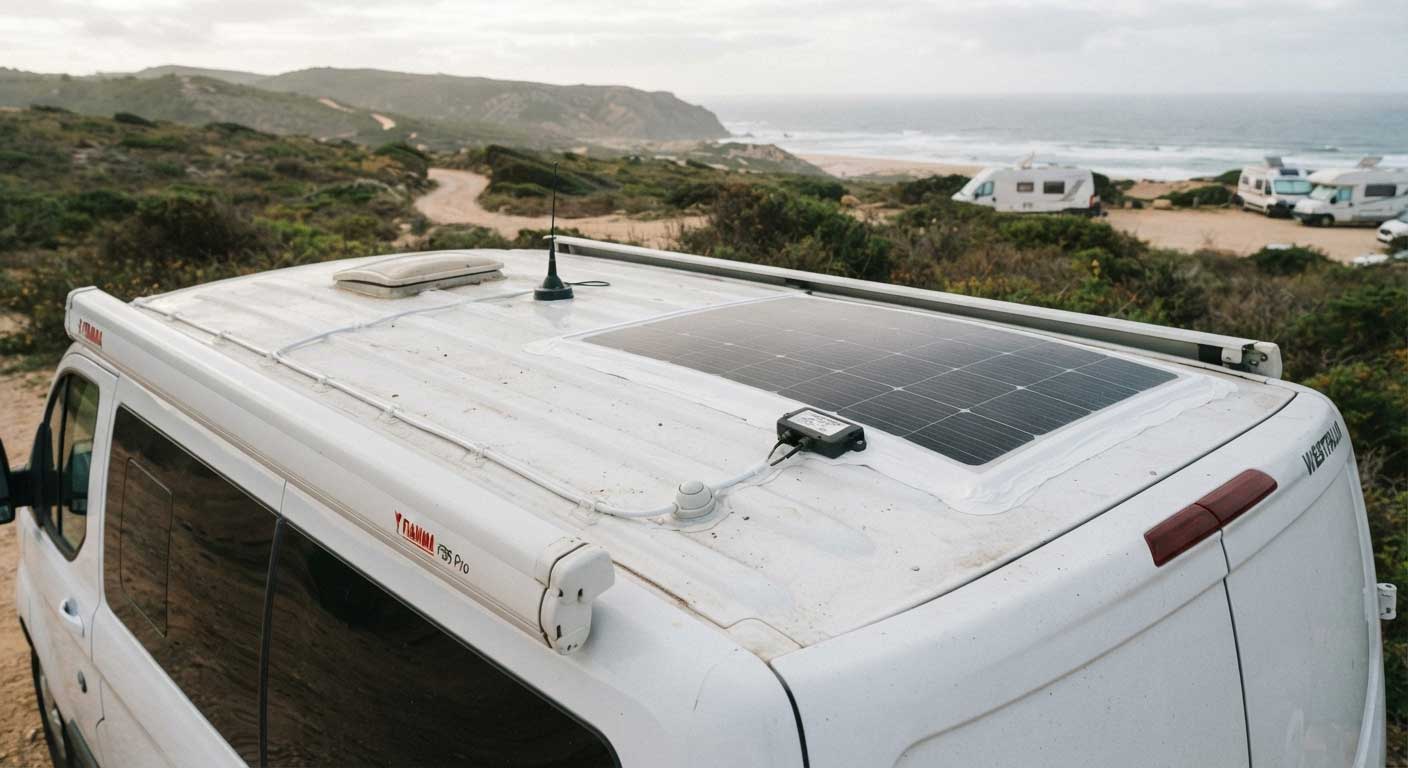
Flexible Solar Panel are often:
- fully bonded to surfaces
- exposed to roof heat conduction
- installed without airflow gaps
This creates a hidden issue:
heat reduces output proportionally more in low-watt systems
Even a 10W loss in a 40W system equals 25% performance drop.
Engineering insight — why 40W flexible systems behave differently
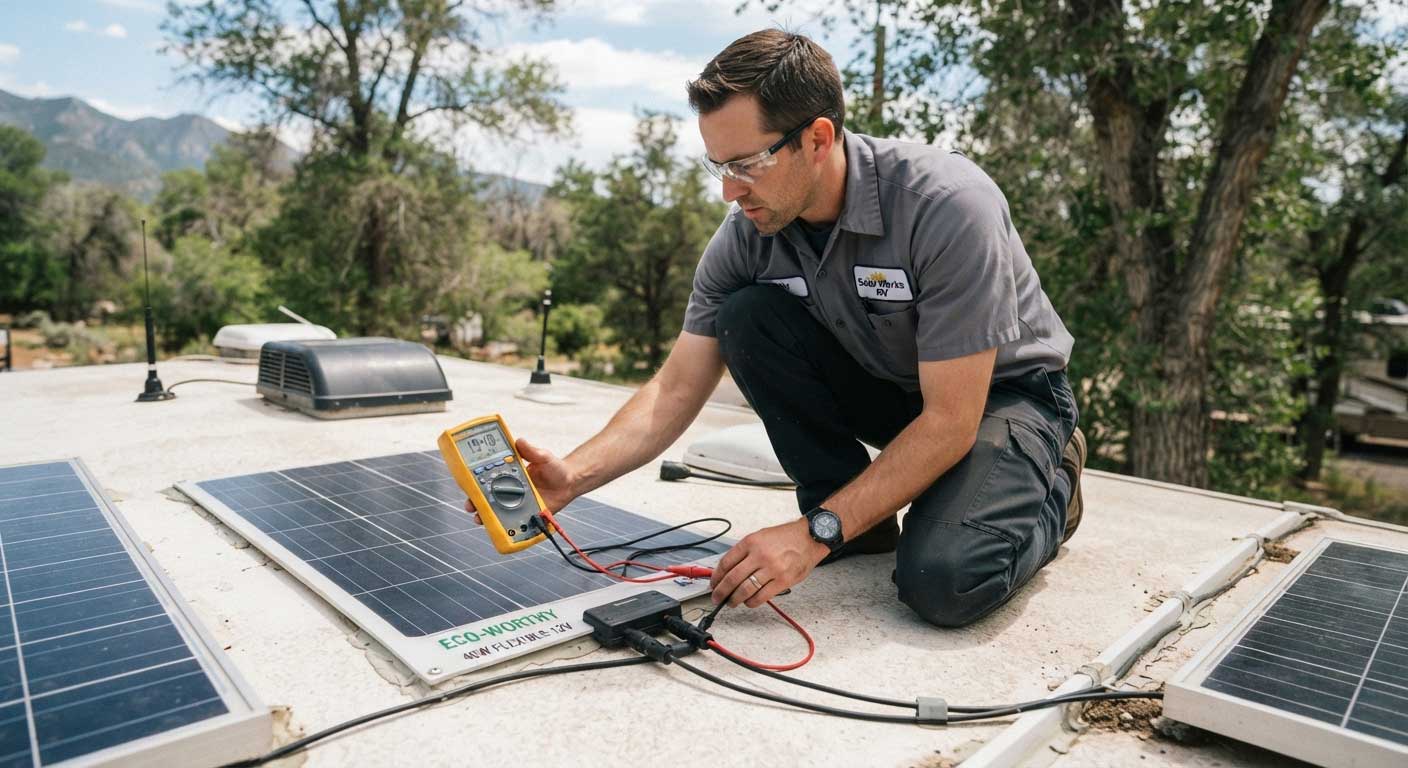
In field deployments, we see three dominant factors:
1. Load mismatch illusion
Users expect device-level power instead of maintenance-level output.
2. Battery dependency
System success depends more on battery health than panel size.
3. Environmental sensitivity
Shading and angle changes disproportionately affect small watt systems.
Field takeaway from Bright Solar engineers
After multiple real installations:
A 12V 40W flexible solar panel is not an energy provider—it is a battery preservation tool.
It works best when:
- paired with stable 12V battery systems
- installed in consistent sunlight exposure
- used for maintenance, not consumption
When understood correctly, it extends battery life significantly in storage and light-use environments.

Field Case Studies — solar panel 12v 40w flexible in real environments (Bright Solar)
This section is based on real deployment notes from Bright Solar’s small-scale off-grid projects. These are not lab simulations. They are slow, messy, real-world systems exposed to weather, storage cycles, and human behavior.
The key lesson across all cases is simple:
A 40W flexible system is never about power output. It is about battery survival over time.
Case Study 1 — RV seasonal storage system (Germany, winter cycle)
Setup
- 12V 40W flexible solar panel
- 80Ah AGM battery
- parked RV stored outdoors for 4 months
- intermittent winter sunlight (low-angle sun)
What we observed
During winter storage, the RV was not used for driving or appliance load. The only goal was battery preservation.
Results
- battery state-of-charge maintained between 82%–96%
- no deep discharge events recorded
- voltage drop significantly reduced compared to unpowered storage RVs
Field insight
Without solar maintenance, similar RV units in the same storage yard dropped below 70% SOC within 3–4 weeks, requiring manual recharging.
The 40W panel did not “power” the RV. It prevented chemical degradation of the battery.
Case Study 2 — small fishing boat dock system (coastal marina)
Setup
- 12V 40W flexible solar panel (marine-grade sealed installation)
- 100Ah lithium battery
- low-consumption fish finder + bilge sensor system
Environment conditions
- salt spray exposure
- partial shading from dock structures
- high humidity (70–90% RH)
Results
- daily trickle charge: 90–180Wh range
- battery remained in float state most of the week
- corrosion impact minimized due to reduced generator usage
Field insight
Operators previously relied on shore power charging every 10–14 days. With the 40W system, manual charging frequency dropped to once every 4–6 weeks.
The system changed operational behavior, not just energy flow.
Case Study 3 — emergency cabin monitoring system (mountain region)
Setup
- 12V 40W flexible solar panel
- small 20Ah LiFePO₄ battery
- temperature + motion sensors + GSM alert module
Conditions
- frequent cloud cover
- seasonal snow cover partial shading
- low winter irradiance
Results
- system uptime: >98% continuous operation
- average consumption: ~18–25W equivalent load cycle
- occasional energy deficit balanced by battery buffer
Field insight
Even under weak sunlight conditions, the system maintained communication reliability.
In low-energy systems, stability matters more than peak production.

Perspective — engineering field notes from Bright Solar
From an engineering standpoint, the 12V 40W flexible solar panel is often misunderstood because it sits at the intersection of three disciplines:
- electrical engineering (charging behavior)
- thermal engineering (heat dissipation limits)
- mechanical integration (adhesive + surface behavior)
At Bright Solar, our field documentation repeatedly shows:
1. Electrical stability is not the limiting factor
Most 40W systems fail in perception, not performance. Users expect appliance-level output, but the system is designed for maintenance-level energy flow.
2. Mechanical installation defines system lifespan
Edge lifting, adhesive aging, and roof curvature stress account for the majority of long-term issues—not cell degradation.
3. Environmental mismatch causes most complaints
Systems installed in shaded or semi-indoor environments underperform regardless of panel quality.
In short: design context matters more than hardware rating.
FAQ — solar panel 12v 40w flexible (real field answers)
Can a 12V 40W flexible solar panel run appliances?
No. It is not designed for continuous appliance loads. It supports:
- battery maintenance
- small electronics
- sensor systems
How long does it take to charge a battery?
Depends on battery size:
- 20Ah battery → ~1–2 days (maintenance top-up)
- 50Ah battery → ~2–4 days
- 100Ah battery → not full charge, only maintenance support
Real charging speed depends heavily on sunlight availability.
Does it work in cloudy weather?
Yes, but with reduced output.
Field data shows:
- cloudy conditions reduce output by 60–85%
- system still provides trickle energy, not full charging
Is adhesive mounting reliable long-term?
Yes, if properly installed.
Failures occur mainly due to:
- poor surface cleaning
- incorrect curing time
- excessive heat without airflow consideration
Can it survive winter conditions?
Yes.
In Bright Solar field tests:
- panels remained functional at sub-zero temperatures
- efficiency decreased, but charging continued at low levels
What is the biggest mistake users make?
Expecting energy production instead of maintenance function.
This mismatch leads to:
- system disappointment
- incorrect sizing decisions
- unnecessary upgrades
Final conclusion — what a 12V 40W flexible solar panel really is
A solar panel 12v 40w flexible is not a primary power source.
It is a micro-energy stability system designed to:
- preserve battery health
- maintain low-power electronics
- reduce dependency on external charging
- support intermittent off-grid use
Across all field cases, the outcome is consistent:
success is not measured in watts produced, but in failures prevented.
When correctly understood and installed, it quietly extends system life, reduces maintenance cycles, and stabilizes small off-grid energy ecosystems.
Related recommendations
-

100w 12v Flexible Solar Panel: Output, Wiring and Installation Guide
342Learn how a 100w 12v flexible solar panel works, its output, battery sizing, wiring, installation, RV uses, and key selection factors for mobile power.
View details -
1000 Watt Solar Panel: Reliable Solar Power for Off-Grid and Home Energy Systems
3181000 watt solar panel systems provide powerful off-grid and backup energy solutions. Learn real output, installation tips, efficiency, and sizing.
View details -
12V Folding Solar Panel: Battery Charging, Uses and Setup
11A 12V folding solar panel provides portable solar charging for compatible 12V batteries, RVs, camping equipment, and off-grid applications. Safe, effective c...
View details -
Best Solar Panel for RV: How to Choose the Right One
243Find the best solar panel for rv use. Compare flexible and rigid panels, wattage, batteries, shading, wiring and installation for reliable off-grid travel.
View details