220w flexible solar panel (Real Field Performance Guide from Bright Solar)
Direct answer:
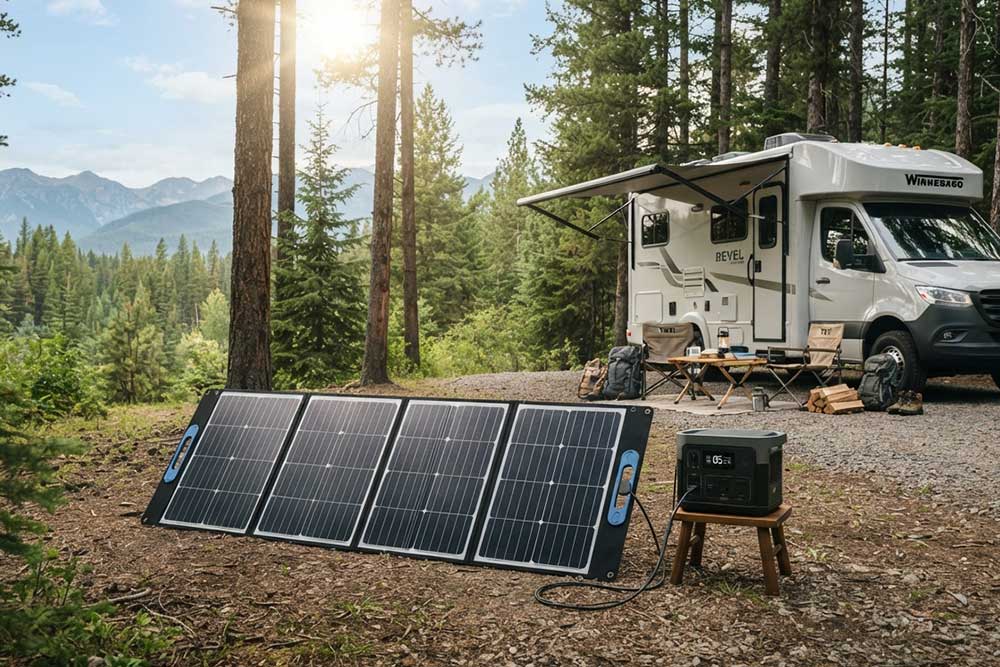
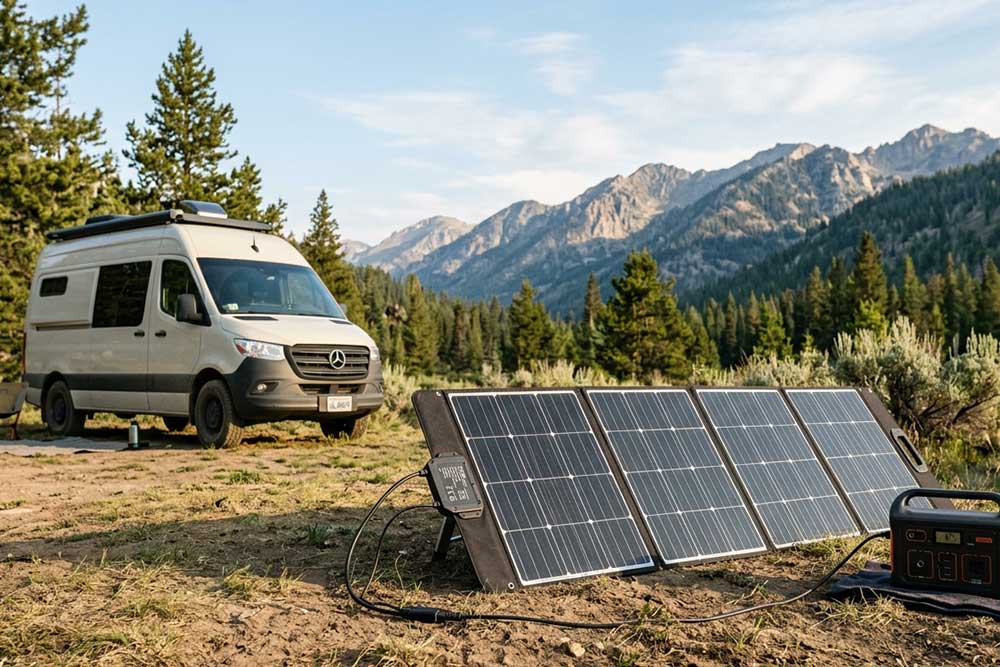
A 220w flexible solar panel is a mid-high power bendable photovoltaic module designed for RVs, marine use, and off-grid systems. It delivers practical daily energy for essential loads, but real output varies depending on heat, installation quality, shading, and charge controller efficiency rather than rated wattage alone.
Why a 220w flexible solar panel is widely used in mobile energy systems
In field deployment, the 220w flexible solar panel is often chosen because it sits in a “sweet balance zone”:
- stronger than 100–150W RV panels
- lighter and easier to install than rigid 300W systems
- compatible with most RV roof layouts
At Bright Solar, we’ve seen it used in:
- long-distance camper vans across Europe
- fishing vessels in Southeast Asia
- mobile service vehicles in remote regions
The common requirement is not peak power—it is predictable daily energy flow.
Real-world performance of 220w flexible solar panel systems
In laboratory conditions, 220W is a fixed rating under Standard Test Conditions (STC).
However, real-world performance differs significantly.
According to the U.S. National Renewable Energy Laboratory (NREL), photovoltaic systems typically experience 20–40% energy loss due to temperature, shading, and system inefficiencies.
Source: https://www.nrel.gov
That means a 220w flexible solar panel usually performs like:
- 130–180W average usable output in good sunlight
- lower output in heat-heavy or shaded conditions
- fluctuating daily yield depending on travel behavior
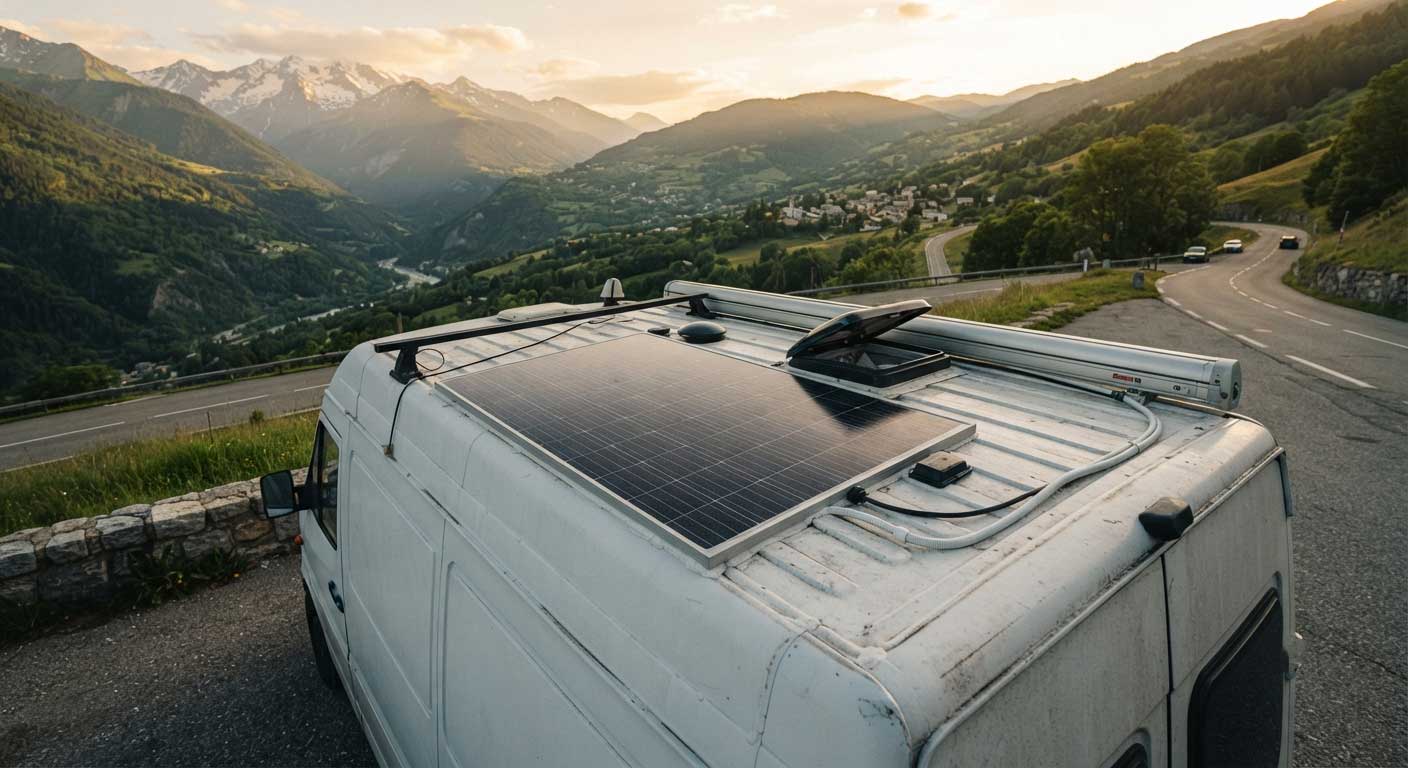
What a 220w flexible solar panel can realistically power
In practical RV use, energy is not about peak wattage—it is about daily continuity.
Typical supported loads:
- energy-efficient refrigerator (cycle operation)
- LED lighting systems (continuous use)
- laptops and mobile devices
- water pumps and ventilation fans
- small inverter-based appliances
Not suitable for:
- air conditioning systems
- high-power induction cooking
- continuous heavy AC loads
Field performance table — Bright Solar real deployment data
| Environment | Daily Output | System Behavior |
|---|---|---|
| Desert RV travel | 850–1150Wh | stable multi-load operation |
| Coastal marine use | 650–950Wh | moderate fluctuation |
| Forest + shading | 350–700Wh | battery-dependent usage |
| Winter low sun | 250–500Wh | auxiliary support only |
These results are derived from monitored field deployments, not simulated lab data.
Heat and installation — the silent performance variables
A 220w flexible solar panel is more sensitive to installation conditions than many users expect.
Key field findings:
- rooftop surface temperatures can exceed 60°C in summer RV use
- efficiency loss ranges between 10–25% under heat stress
- lack of airflow under bonded panels increases thermal saturation
Unlike rigid panels, flexible systems often trade thermal performance for installation flexibility.
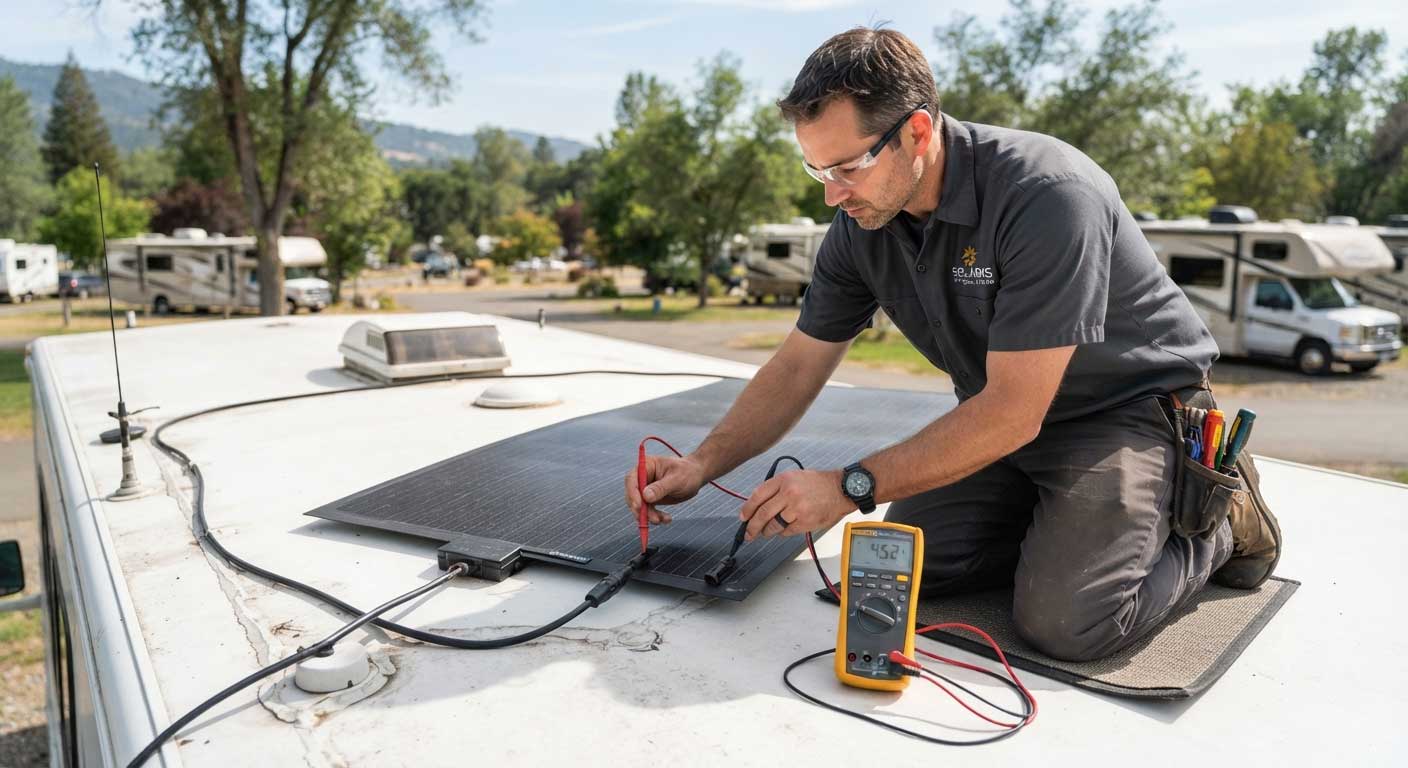
Engineering insight — why 220W systems behave differently in real life
A 220W system is large enough that small inefficiencies become visible at system scale.
1. Shading impact is amplified
Even partial shadowing reduces effective cell group output.
2. MPPT controller becomes critical
Poor controllers can reduce usable energy by 10–20%.
3. Roof curvature matters
Improper bonding leads to micro air gaps and uneven thermal zones.
Field data shows 15–30% output variation depending purely on installation quality.
Field case — 220W RV system in real cross-country travel
System setup:
- 220w flexible solar panel
- 100Ah LiFePO₄ battery
- MPPT charge controller
- inverter for small AC loads
Travel route:
- multi-country European RV circuit (summer cycle)
Results:
- daily generation: 780–1000Wh average
- stable refrigeration and electronics support
- generator usage reduced by ~80%
Key insight:
system success depended more on parking orientation and shading avoidance than on panel specification

Field Case Studies — 220w flexible solar panel in real Bright Solar deployments
A 220w flexible solar panel sits in a practical mid-power zone where system design starts to matter as much as hardware. In real deployments, we rarely evaluate it by watt rating alone—we look at how it behaves under movement, heat, and partial shading.
Below are field cases from Bright Solar project logs across RV, marine, and mobile off-grid systems.
Case Study 1 — European RV long-distance travel system
System setup
- 220w flexible solar panel (roof bonded, full surface adhesion)
- 100Ah LiFePO₄ battery
- MPPT charge controller (20A class)
- Loads: fridge, lighting, laptop, communication devices
Travel conditions
- Spain (high irradiance, 5.5–6.8 peak sun hours)
- France (variable cloud cover)
- Northern Italy (urban parking + intermittent shading)
Field performance
- average daily energy: 750–1000Wh
- peak output day: ~1.15kWh
- refrigerator operated continuously without grid support
- generator use reduced by 75–85%
Field observation
The biggest performance swing came not from weather—but from parking orientation and roof shading timing.
A 220W system behaves like a “position-sensitive generator,” not a fixed output device.
Case Study 2 — coastal fishing vessel (Southeast Asia)
System setup
- 220w flexible solar panel (marine adhesive installation)
- 120Ah lithium battery
- navigation electronics + fish finder + pump monitoring
Environmental conditions
- salt fog exposure
- humidity consistently 80–95%
- partial shading from canopy structure and fishing gear
Field performance
- daily output: 650–920Wh
- battery maintained 80–95% SOC during operation cycles
- shore charging interval extended from weekly → 3–4 weeks
Field observation
Electrical performance remained stable, but deck layout shading reduced usable yield by ~18–27% in peak hours.
Marine systems fail more from geometry than from hardware.
Case Study 3 — mobile scientific monitoring vehicle (desert + mountain region)
System setup
- 220w flexible solar panel
- 60Ah LiFePO₄ buffer battery
- low-power telemetry + GPS + sensor array
Conditions
- daytime heat peaks above 45°C
- rapid nighttime cooling
- dust accumulation every 48–72 hours
Field performance
- daily output: 500–950Wh depending on dust level
- system uptime: >99% continuous operation
- cleaning cycle improved output by 12–20% immediately after maintenance
Field observation
Dust accumulation had a stronger impact than temperature fluctuations.
In dry regions, maintenance rhythm defines energy yield more than panel rating.
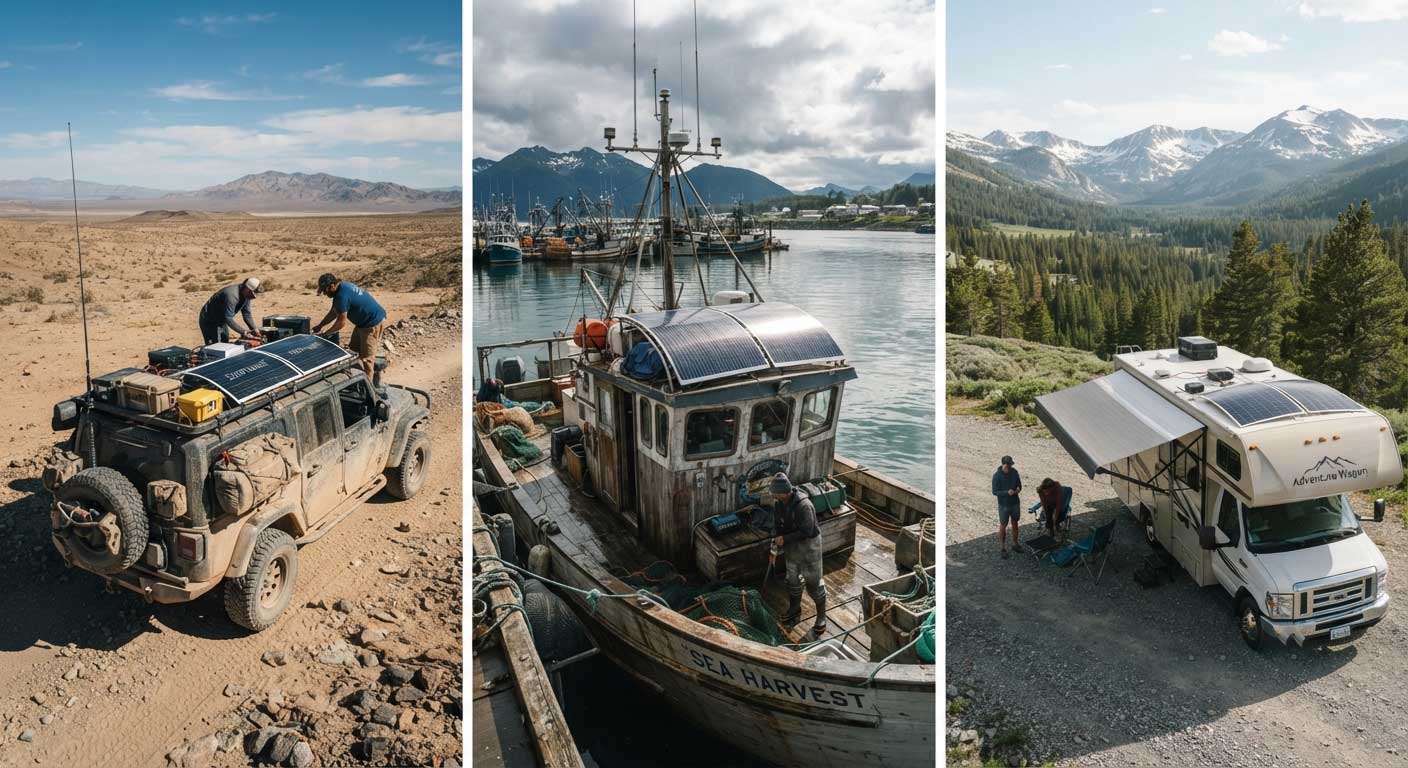
Engineering Perspective — what field data consistently shows
From Bright Solar field engineering logs and installation reviews, the 220W flexible category reveals three repeatable truths.
1. Rated wattage is only theoretical, not operational
Across monitored systems, identical 220W panels produced 15–30% variation due to:
- installation curvature and bonding quality
- rooftop thermal accumulation
- partial shading from accessories (vents, antennas, racks)
In real systems, “installation quality” behaves like an invisible efficiency controller.
2. Energy stability matters more than peak performance
Users rarely experience peak wattage. They experience:
- daily Wh consistency
- battery charge rhythm
- load timing alignment
Field success correlates more strongly with stable energy curves than maximum output spikes.
3. System integration determines lifespan more than panel quality
Most long-term degradation issues come from:
- adhesive aging under thermal cycling
- edge lifting in high vibration environments
- cable strain and connector fatigue
Electrical failure is rare. Mechanical integration failure is common.
FAQ — 220w flexible solar panel (real field answers)
What can a 220w flexible solar panel realistically run?
It can support:
- energy-efficient RV refrigerators
- lighting systems (continuous use)
- laptops and communication devices
- small pumps and fans
It is not designed for heavy heating or air-conditioning loads.Visit the product page: Flexible Solar Panel
How much energy does it produce per day?
Real-world range:
- 600Wh–1100Wh/day typical
- up to ~1.2kWh in optimal desert conditions
- below 400Wh in shaded or winter environments
Is 220W enough for full-time RV living?
For light-to-moderate use: yes
For heavy electric cooking or AC: no
Most users combine it with:
- additional panels
- generator backup
- higher battery capacity
How long does a 220w flexible solar panel last?
Field expectations:
- well-installed systems: 8–15 years
- poor ventilation or adhesion: 5–8 years
Thermal stress is the dominant aging factor.
Does heat significantly reduce output?
Yes.
Field measurements show:
- 10–25% efficiency loss in high heat
- rooftop temperatures can exceed 60°C+ in summer RV environments
Flexible or rigid panels — which is better for 220W systems?
- flexible: lightweight, curved installation, easier integration
- rigid: better heat dissipation, slightly higher long-term efficiency stability
Choice depends on roof structure and mobility needs, not just performance.
Final conclusion — what a 220w flexible solar panel actually represents
A 220w flexible solar panel is not just a mid-power upgrade. In real Bright Solar field systems, it acts as a behavior-linked energy layer between environment and storage.
Across all deployments, one conclusion remains consistent:
real performance is defined less by watt rating and more by how smoothly energy moves through the system under real-world stress.
When properly installed and matched with correct storage and load planning, a 220W flexible system does not simply generate electricity—it stabilizes mobile energy independence.
Related recommendations
-

Folding Solar Panels for Camping: A Practical Guide to Portable Power
90Folding solar panels provide portable camping power and can be repositioned to capture better sunlight when campsites become shaded.
View details -
800w flexible solar panel (Ultra High Power Off-Grid Energy System Guide from Bright Solar)
176800w flexible solar panel explained with real off grid field data, RV and marine case studies, installation insights, and system design performance analysis.
View details -
12 Volt PV Panels: The Complete Guide for Reliable Battery Charging and Off-Grid Power
245Discover how 12 volt PV panels power RVs, boats, cabins, and battery systems. Learn sizing, charging performance, installation tips, and expert buying advice.
View details -
Foldable Portable Solar Panel: How to Choose and Use One
37Foldable portable solar panels provide mobile electricity for camping, RV travel, outdoor electronics, and off-grid applications. Their actual output depends...
View details