
Flexible Solar Panels 200W: Lightweight Solar Power for RV, Marine and Off-Grid Applications
Flexible solar panels 200w are designed to provide reliable solar energy in a lightweight and adaptable format, producing around 800–1000Wh of daily energy under good sunlight conditions. They are ideal for RVs, boats, vans, and off-grid systems where traditional rigid panels are difficult to install.
When customers ask us whether a 200W flexible solar panel is powerful enough for their project, my answer usually depends on one detail: how they plan to use the energy.
During the past years working with Bright Solar flexible photovoltaic products, I have tested 200W modules on camper roofs, marine equipment, portable energy systems, and remote monitoring projects. The biggest lesson is that wattage is only part of the decision. Installation space, sunlight conditions, temperature, and battery storage determine whether a solar system performs well.
A 200W flexible solar panel is not designed to replace every traditional rooftop solar module. Its real advantage appears when weight, mobility, and installation flexibility become critical.
What Are Flexible Solar Panels 200W?
Flexible solar panels 200w are photovoltaic modules capable of generating up to 200 watts of electrical power while maintaining a lightweight and bendable structure.
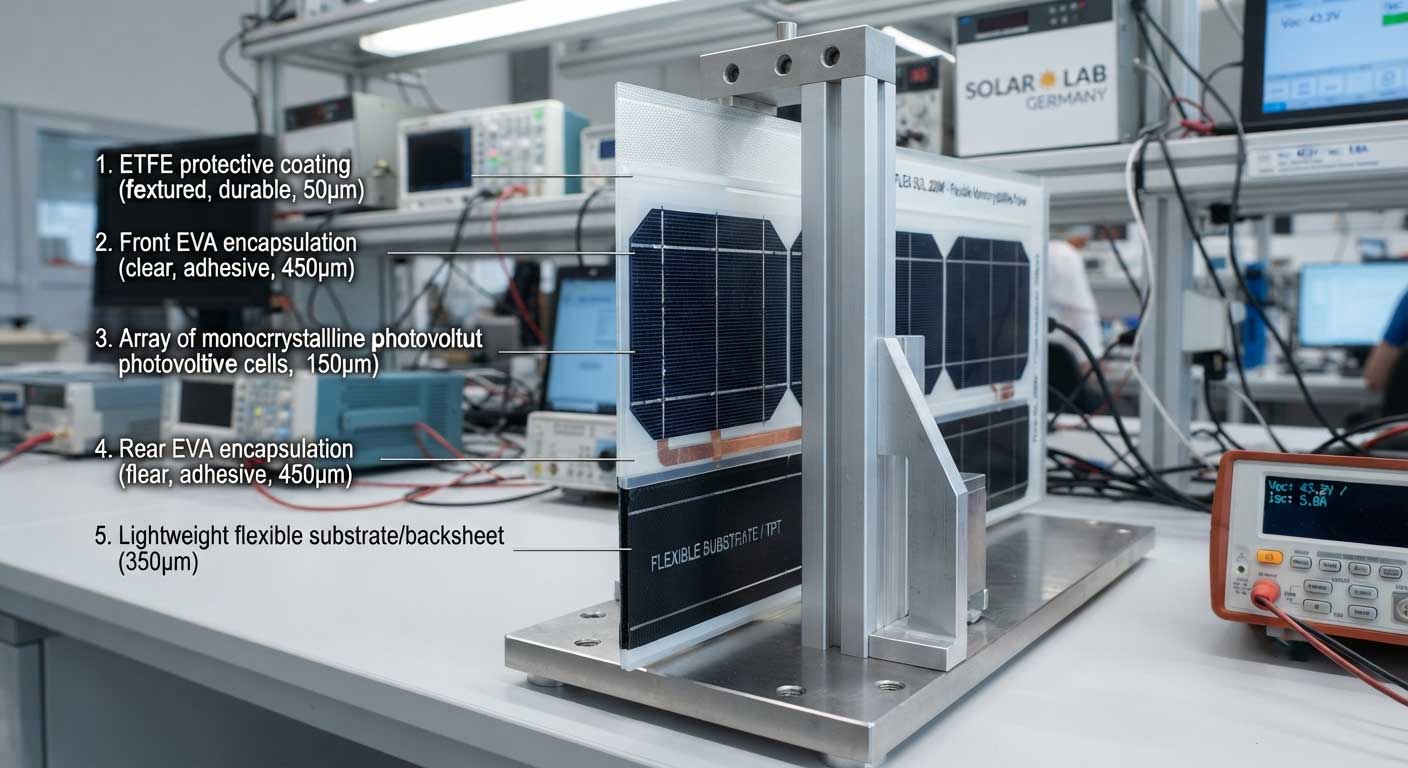
Unlike conventional glass solar panels, flexible modules remove the heavy aluminum frame and tempered glass construction. Instead, they use advanced materials such as:
- Monocrystalline solar cells
- ETFE protective coating
- Flexible composite substrates
- Lightweight encapsulation layers
This construction allows the panel to follow curved surfaces, making it suitable for applications where rigid panels cannot be mounted effectively.
At Bright Solar, our 200W flexible solar panels are developed mainly for mobile and specialized solar applications. The design focus is not only reducing weight but also maintaining long-term outdoor reliability.
How Much Power Can a 200W Flexible Solar Panel Produce?
A 200W solar panel does not produce 200 watts continuously throughout the day. The actual energy output depends on sunlight hours, installation angle, weather, temperature, and system losses.
A simple calculation:
Daily Energy Production = Solar Panel Wattage × Peak Sun Hours × System Efficiency
For example:
| Condition | Calculation | Estimated Output |
|---|---|---|
| 5 peak sun hours | 200W × 5 hours | 1000Wh |
| 4 peak sun hours | 200W × 4 hours | 800Wh |
| Cloudy conditions | Reduced sunlight | Lower output |
In real installations, we usually estimate approximately 70–85% system efficiency after considering:
- Charge controller losses
- Cable resistance
- Temperature effects
- Battery charging efficiency
According to the National Renewable Energy Laboratory (NREL), solar photovoltaic performance varies significantly depending on geographic location, system design, and operating conditions.
Source:
National Renewable Energy Laboratory (NREL) Solar Research
https://www.nrel.gov/solar/
For a properly installed 200W flexible solar panel, producing around 0.8–1kWh per day in suitable sunlight is a realistic expectation.
Why Choose a 200W Flexible Solar Panel Instead of a Rigid Panel?
The decision usually comes down to installation conditions.
A rigid 200W panel may offer excellent efficiency, but it requires:
- Flat mounting space
- Strong support structure
- More installation hardware
- Additional weight capacity
Flexible solar panels 200w solve different problems.
They are especially useful when the installation surface is:
- Curved
- Lightweight
- Mobile
- Difficult to access
During one RV project in France, a customer originally planned to install two traditional framed panels on a camper roof. The problem appeared during the design stage: the roof structure required additional reinforcement, increasing both cost and installation time.
After switching to Bright Solar 200W flexible modules:
- Additional roof reinforcement was avoided
- Installation height was reduced
- The vehicle maintained more available payload capacity
The customer mainly used the system for:
- Refrigerator operation
- LED lighting
- Mobile devices
- Battery charging
The project confirmed something we often see in the field: the best solar panel is not always the one with the highest laboratory efficiency. It is the one that fits the real environment.
Technical Structure of Flexible Solar Panels 200W
Monocrystalline Solar Cells
Most premium 200W flexible solar panels use monocrystalline photovoltaic cells because they provide higher efficiency compared with older polycrystalline technology.
Monocrystalline cells are manufactured from single-crystal silicon structures, allowing better electron movement and improved energy conversion.
For limited installation areas, this matters.
An RV roof, boat deck, or portable power system usually cannot increase physical size easily. Higher-performing cells help maximize electricity generation within the available area.
ETFE Surface Protection
Outdoor solar panels face harsh conditions:
- UV radiation
- Rain
- Dust
- Temperature changes
- Salt exposure
Bright Solar flexible modules use ETFE coating technology because it provides strong environmental resistance while maintaining lightweight characteristics.
Compared with ordinary plastic surfaces, ETFE offers:
- Better UV stability
- Improved scratch resistance
- Longer outdoor durability
- Higher transparency
This is particularly important for marine and mobile applications where replacement is inconvenient.
Flexible Composite Back Layer
The backing structure determines how well the panel handles movement.
A good flexible solar panel needs to balance:
- Bend capability
- Mechanical strength
- Heat resistance
- Electrical protection
Too much flexibility can weaken durability. Too much rigidity removes the main advantage of flexible solar technology.
Engineering design is always a balance between these factors.
Real Application Case: 200W Flexible Solar Panels for Camper Vans
One of the most common applications we see is camper van solar conversion.
A typical camper user does not need to power an entire household. They usually need dependable electricity for daily travel.
A 200W flexible solar panel system can support:
| Device | Typical Usage |
|---|---|
| LED lighting | Low daily consumption |
| Mobile phones and laptops | Regular charging |
| Small refrigerator | Energy management required |
| Water pump | Short operating periods |
| Communication devices | Remote travel support |
In a 2025 Bright Solar field test with a European camper conversion company, engineers installed 200W flexible solar modules on curved vehicle roofs.
Testing conditions included:
- Summer outdoor temperatures above 35°C
- Highway vibration
- Extended outdoor exposure
- Daily charging cycles
The system maintained stable charging performance during the evaluation period.
The project also revealed an important installation detail: surface preparation had a greater impact than expected. Cleaning the roof properly before installation improved bonding reliability and reduced long-term maintenance concerns.

How to Install Flexible Solar Panels 200W: Practical Field Experience
Installing flexible solar panels 200w is usually easier than installing traditional framed modules, but professional results still depend on careful preparation.
Over the years working with Bright Solar customers, we have noticed that most installation problems do not come from the photovoltaic cells. They usually come from incorrect surface preparation, poor cable management, or unsuitable mounting methods.
A flexible solar panel is lightweight, but it is still a precision electrical product. The installation process affects long-term energy output.
Step 1: Evaluate the Installation Surface
Before mounting a 200W flexible solar panel, check the surface condition carefully.
The ideal surface should be:
- Clean and dry
- Structurally stable
- Free from oil, dust, and wax
- Suitable for outdoor exposure
For RV installations, the roof should be inspected for:
- Existing cracks
- Water leakage points
- Old adhesive residue
For marine applications, salt deposits and surface coatings must be removed before installation.
During a boat solar project in Italy, our installation partner initially experienced weak adhesion because the deck surface still contained a protective wax layer. After removing the coating and repeating the preparation process, the mounting performance improved significantly.
The lesson was simple: the quality of preparation determines the quality of installation.
Step 2: Plan the Electrical System Before Installation
A common mistake is installing the panel first and considering electrical connections afterward.
Before fixing the flexible solar panel permanently, installers should determine:
- Cable route
- Charge controller location
- Battery position
- Waterproof entry points
A typical 200W flexible solar system includes:
| Component | Purpose |
|---|---|
| 200W Flexible Solar Panel | Generates electricity |
| Solar Charge Controller | Regulates charging |
| Battery Bank | Stores energy |
| Inverter (optional) | Converts DC power to AC |
For RV and off-grid systems, proper system design is just as important as selecting the panel.
Step 3: Secure the Panel Correctly
Flexible solar panels 200w can be installed using different approaches depending on the application.
Common methods include:
- Industrial adhesive bonding
- Mounting tapes
- Mechanical fixing systems
- Custom brackets
For permanent installations, the mounting method should consider:
- Temperature expansion
- Wind pressure
- Surface movement
- Maintenance requirements
Flexible does not mean the panel should move freely after installation.
A stable connection protects internal electrical structures and improves lifespan.
Flexible Solar Panels 200W for Marine and Off-Grid Applications
Although RV systems represent a major market, 200W flexible solar panels are also widely used in marine and remote energy projects.
These environments share one common challenge:
Traditional solar panels are often too heavy, too rigid, or difficult to install.
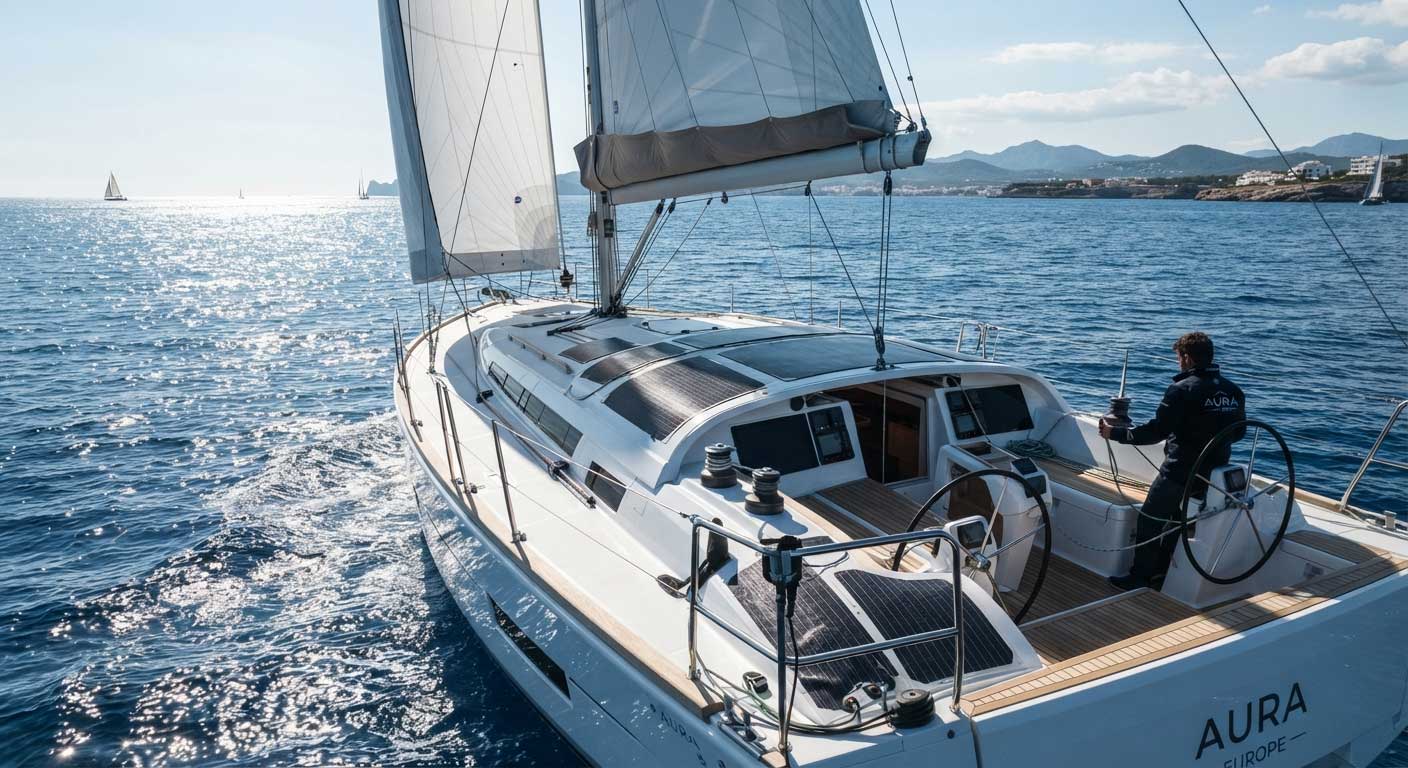
Marine Solar Applications
Boats have limited usable space.
The available installation area may include:
- Curved cabin roofs
- Deck surfaces
- Bimini tops
- Emergency equipment areas
A flexible solar panel allows designers to use areas that were previously unsuitable for solar generation.
Bright Solar marine customers typically use 200W modules for:
- Battery maintenance
- Navigation electronics
- Communication equipment
- Lighting systems
One yacht project in Southern Europe used flexible solar modules because the owner wanted additional energy capacity without changing the vessel appearance.
The installation maintained the original deck design while adding renewable charging capability.
Off-Grid Power Systems
Remote locations often require solar equipment that can be transported easily.
Examples include:
- Remote cabins
- Field monitoring stations
- Emergency power systems
- Outdoor research equipment
A 200W flexible solar panel provides a practical balance between portability and output.
Compared with smaller portable panels, it offers more charging capacity. Compared with large rigid modules, it is easier to transport and deploy.
Flexible Solar Panels 200W vs Other Solar Panel Sizes
Choosing the correct solar panel wattage depends on energy requirements and available installation space.
A 200W flexible solar panel is often considered a middle-range solution.
| Solar Panel Size | Suitable Applications | Main Advantage |
|---|---|---|
| 100W Flexible Solar Panel | Small devices, compact setups | Easy portability |
| 200W Flexible Solar Panel | RV, marine, moderate off-grid systems | Balanced output and size |
| 300W Flexible Solar Panel | Larger energy requirements | Higher power generation |
A 200W system is popular because it avoids the limitations of smaller panels while remaining easier to install than larger modules.
For example:
- A weekend camper may find 100W sufficient.
- A full-time traveler may prefer 200W–400W.
- A large off-grid cabin may require multiple panels.
The correct choice depends on actual energy consumption rather than simply selecting the highest wattage available.
How to Choose the Best Flexible Solar Panels 200W
Not all 200W flexible solar panels are manufactured the same way.
Before purchasing, evaluate these factors:
1. Solar Cell Quality
Higher-quality cells provide:
- Better energy conversion
- More consistent output
- Improved performance in limited sunlight
Monocrystalline cells remain one of the preferred options for compact solar systems.
2. Protective Materials
Outdoor solar products need strong protection.
Look for:
- ETFE surface coating
- UV resistance
- Waterproof encapsulation
- Scratch protection
Cheap surface materials may reduce initial cost but often affect long-term reliability.
3. Manufacturer Experience
Solar panel performance depends heavily on manufacturing quality.
A reliable supplier should provide:
- Product specifications
- Testing information
- Warranty support
- Technical guidance
Bright Solar focuses on flexible solar solutions because different applications require different engineering approaches.
A marine panel, RV panel, and portable panel may have similar wattage but completely different design requirements.
Why Bright Solar Flexible Panels 200W?
Bright Solar develops flexible photovoltaic products for customers who need solar energy beyond traditional rooftop installations.
Our engineering approach focuses on:
- Lightweight design
- Reliable outdoor performance
- Flexible installation options
- Application-based solutions
Instead of designing only around laboratory specifications, we evaluate how products perform in real environments.
Field conditions reveal problems that laboratory testing cannot always show:
- Heat accumulation
- Surface movement
- Transportation vibration
- Long-term weather exposure
This practical experience helps us improve product design.
FAQ About Flexible Solar Panels 200W
How much power can flexible solar panels 200w generate?
A 200W flexible solar panel can typically generate around 800–1000Wh per day under good sunlight conditions. Actual output depends on location, weather, installation angle, and system efficiency.
Are flexible solar panels 200w good for RVs?
Yes. A 200W flexible solar panel is one of the most popular choices for RV applications because it provides useful power output while reducing roof weight.
Can a 200W flexible solar panel charge a battery?
Yes. When connected with a suitable solar charge controller, a 200W flexible solar panel can charge batteries for RV, marine, and off-grid systems.
Are flexible solar panels less durable than rigid panels?
Durability depends on manufacturing quality and materials. Premium flexible panels with ETFE protection can provide strong outdoor resistance when properly installed.
Can flexible solar panels 200w be installed on curved surfaces?
Yes. Their flexible structure allows installation on surfaces such as RV roofs, boat decks, and other curved areas.
What can a 200W flexible solar panel power?
Depending on system design, it can support devices such as LED lighting, communication equipment, mobile electronics, small refrigerators, and battery charging systems.
How do I maintain a flexible 200W solar panel?
Maintenance usually includes cleaning dust and debris, checking cable connections, and inspecting the surface condition periodically.
Final Thoughts: Are Flexible Solar Panels 200W Worth Choosing?
Flexible solar panels 200w provide a practical solution for users who need solar power without the weight and installation restrictions of traditional modules.
They are especially valuable for:
- RV travelers
- Boat owners
- Remote workers
- Off-grid users
- Mobile energy applications
Through Bright Solar projects, we have learned that successful solar installations are not only about producing electricity. They are about matching technology with the environment where it will operate.
A 200W flexible solar panel offers a balance between portability, power generation, and installation freedom.
For applications where every kilogram matters, that balance can make the difference between a difficult solar installation and a successful one.
Related recommendations
-

200W Flexible Solar Panels: Lightweight Off-Grid Power for RVs, Boats, and Van Life
165Explore how 200W flexible solar panels provide lightweight, reliable off-grid energy for RVs, boats, vans, and portable solar systems.
View details -
Motorhome Solar Kit: Reliable Off-Grid Power for Modern RV Travel
104Compare series vs parallel solar panels for RVs, homes, and off-grid systems. Bright Solar explains voltage, current, shading, and wiring efficiency.
View details -
1000 Watt Solar Panel Kit: Complete Sizing and Setup Guide
274A 1000 watt solar panel kit provides about 1,000W of rated PV capacity, but actual energy production depends on sunlight, battery capacity, MPPT sizing, wiri...
View details -
Best Flexible Solar Panels for Van: How to Choose the Right One
195The best flexible solar panels for vans are lightweight, low-profile modules matched to roof curvature, space, power needs, and electrical requirements.
View details