300 W Solar Panel Performance Guide for RV, Battery and Off-Grid Systems
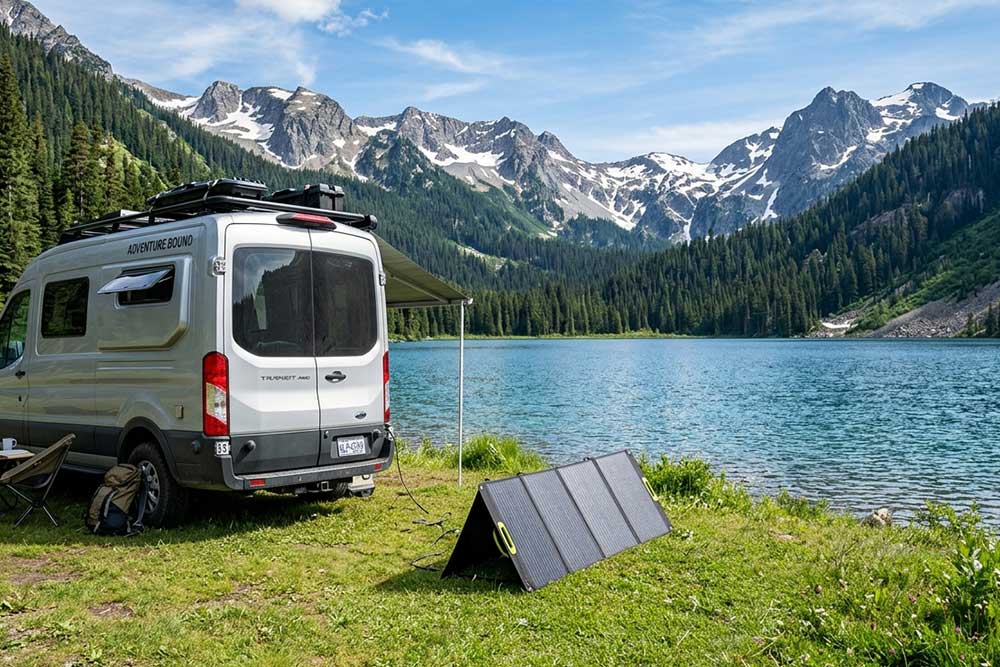
A 300 w solar panel can generate approximately 1.2 to 1.8 kWh of electricity per day depending on sunlight conditions, making it suitable for RVs, boats, battery charging, mobile homes, and small off-grid applications. Proper system design, battery capacity, and installation conditions determine actual performance.
Several years ago, during an RV exhibition in Germany, a visitor stood in front of one of our demonstration systems and asked a surprisingly simple question.
“Can one 300-watt panel actually do anything useful?”
He had spent months reading specifications online. Wattage numbers looked impressive, yet nobody seemed willing to explain what 300 watts actually meant in daily life.
That conversation stayed with me because the 300 w solar panel sits in an unusual position within the solar market. It is neither a small trickle charger nor a large residential module. It occupies the middle ground where portability, affordability, and practical energy production intersect.
At Bright Solar, our engineering team has worked with lightweight flexible modules on RV roofs, marine installations, camping trailers, mobile offices, and battery charging systems. The 300-watt category repeatedly appears because it delivers enough energy to solve real problems without requiring a large installation budget.
What Does a 300 W Solar Panel Actually Produce?
Manufacturers often advertise maximum output, but daily energy production matters far more.
Under Standard Test Conditions (STC):
- Solar irradiance: 1000W/m²
- Cell temperature: 25°C
- Air mass: 1.5
Real rooftops rarely experience these laboratory conditions.
A typical 300 w solar panel may produce:
| Sun Hours | Daily Energy |
|---|---|
| 3 hours | 900 Wh |
| 4 hours | 1200 Wh |
| 5 hours | 1500 Wh |
| 6 hours | 1800 Wh |
According to the National Renewable Energy Laboratory (NREL), average solar production depends heavily on geographic location and solar irradiance.
Reference:
Arizona, Nevada, and southern Spain often exceed five peak sun hours. Northern Europe may experience half that during winter.
What Can a 300 W Solar Panel Run?
This question appears in nearly every customer conversation.
The answer depends on operating time.
Example Daily Loads
| Appliance | Power | Runtime | Energy |
|---|---|---|---|
| LED lighting | 50W | 5 h | 250Wh |
| Laptop | 80W | 4 h | 320Wh |
| Refrigerator | 70W average | 10 h | 700Wh |
| Router | 10W | 24 h | 240Wh |
| TV | 100W | 3 h | 300Wh |
A single panel can often support:
- Small refrigerators.
- Battery charging systems.
- RV lighting.
- Camping equipment.
- Communication devices.
- Small water pumps.
- Portable power stations.
Air conditioners, electric heaters, and large appliances usually require multiple panels.
Why 300 Watts Has Become Popular
The growth of RV travel and mobile power systems has changed customer expectations.
Ten years ago many users installed:
- 50W panels.
- 100W panels.
- 150W panels.
Today energy consumption has increased.
People travel with:
- Laptops.
- Coffee machines.
- Starlink systems.
- Refrigerators.
- Fans.
- Battery stations.
A 300 w solar panel often provides enough production to support modern mobile lifestyles.
The Solar Energy Industries Association reports continued growth in distributed solar applications across residential and mobile sectors.
Reference:
Flexible Versus Rigid 300 W Solar Panel Designs
At trade shows, customers often focus only on efficiency.
Weight is equally important.
| Factor | Flexible | Rigid |
|---|---|---|
| Weight | Low | Higher |
| Curved roofs | Yes | No |
| RV roofs | Excellent | Good |
| Marine use | Excellent | Moderate |
| Installation | Easy | Moderate |
| Ventilation | Lower | Higher |
During a van conversion project in Colorado, the owner originally planned two rigid modules.
The roof rails could not support the additional weight.
Switching to lightweight flexible modules reduced installation weight substantially and simplified mounting.
Sometimes the lighter solution is not simply more convenient.
It is the only practical option.
Visit product page:300 W Flexible Solar Panel
Real-World Energy Production
Laboratory numbers rarely survive real weather conditions.
Several factors reduce output:
- Dirt accumulation.
- Partial shading.
- High temperatures.
- Cable losses.
- Controller losses.
- Battery inefficiency.
The U.S. Department of Energy notes that elevated temperatures can reduce solar module efficiency.
Reference:
In southern California, we measured rooftop temperatures above 70°C on dark RV roofs.
Panel output dropped noticeably during the hottest part of the day.
Ironically, the brightest days are not always the most efficient.
Battery Charging with a 300 W Solar Panel
One of the most common applications involves battery charging.
12V Battery Example
300W ÷ 14V = approximately 21A.
Under good sunlight:
- 100Ah battery: 5-6 hours.
- 200Ah battery: 10-12 hours.
24V Battery Example
Charging current:
Approximately 10A.
Applications include:
- Boats.
- RV systems.
- Portable power stations.
- Off-grid lighting.
- Emergency backup systems.
Lithium batteries generally charge faster than lead-acid batteries and allow deeper discharge.
Installation Considerations
Several installation mistakes repeatedly appear.
Flat Installation
Flat mounting reduces airflow.
Higher temperatures reduce efficiency.
Partial Shading
Even small shadows may affect output.
Air conditioner vents, antennas, and roof racks often create problems.
Incorrect Controller Selection
PWM controllers waste energy with larger panels.
MPPT controllers usually improve production.
The U.S. Environmental Protection Agency recommends maximizing solar access and minimizing shading wherever possible.
Reference:
Case Study: Mobile Office Project
In 2024, a temporary construction office in southern Spain required:
- Laptop charging.
- LED lighting.
- WiFi router.
- Ventilation fans.
The system included:
- One 300W solar panel.
- 100Ah lithium battery.
- MPPT controller.
Average daily production:
Approximately 1.4 kWh.
The office operated independently for most of the week.
Interestingly, the users became more energy conscious once they could observe battery levels directly.
The technology changed behavior.
The equipment alone was not the entire solution.
Is One 300 W Solar Panel Enough?
The answer depends on expectations.
One panel may be enough for:
- Weekend camping.
- Battery charging.
- Small cabins.
- Marine electronics.
- Lighting systems.
- Portable power stations.
One panel is generally insufficient for:
- Residential air conditioning.
- Electric cooking.
- Whole-home systems.
- Electric heating.
Understanding energy consumption first usually saves far more money than purchasing additional panels later.
\Designing a Complete 300 W Solar Panel System
A panel by itself does very little. The surrounding equipment determines whether the system becomes useful or frustrating.
During a mobile trailer project in northern Italy, the solar module performed exactly as expected. The problem was the battery. The owner installed a 40Ah lead-acid battery because it was inexpensive. By midnight the battery was empty even though the panel generated sufficient energy during the day.
The lesson was simple: energy production and energy storage must be balanced.
Typical 12V System
- 300W solar panel
- 30A MPPT controller
- 100Ah lithium battery
- 1000W pure sine inverter
Typical 24V System
- 300W solar panel
- 20A MPPT controller
- 100Ah lithium battery
- 1500W inverter
12V vs 24V Applications
| Item | 12V System | 24V System |
|---|---|---|
| RV use | Excellent | Good |
| Small cabins | Good | Excellent |
| Cable size | Larger | Smaller |
| Efficiency | Moderate | Higher |
| Installation | Simple | Moderate |
| Inverter cost | Lower | Higher |
Many RV owners still prefer 12V systems because of compatibility.
Off-grid cabins increasingly move toward 24V or 48V designs because lower current reduces cable losses.
According to the National Renewable Energy Laboratory, system voltage selection can influence overall efficiency and installation cost.
Reference:
Real Output in Different Locations
A 300 w solar panel installed in Arizona behaves differently than the same panel installed in northern Germany.
| Location | Average Peak Sun Hours | Estimated Daily Production |
|---|---|---|
| Arizona | 6.0 | 1.8 kWh |
| Texas | 5.5 | 1.65 kWh |
| Florida | 5.0 | 1.5 kWh |
| Germany | 3.5 | 1.05 kWh |
| United Kingdom | 2.8 | 0.84 kWh |
The U.S. Department of Energy publishes solar resource information showing substantial regional differences.
Reference:
Customers often compare systems online without considering geography.
Location matters more than brand specifications.
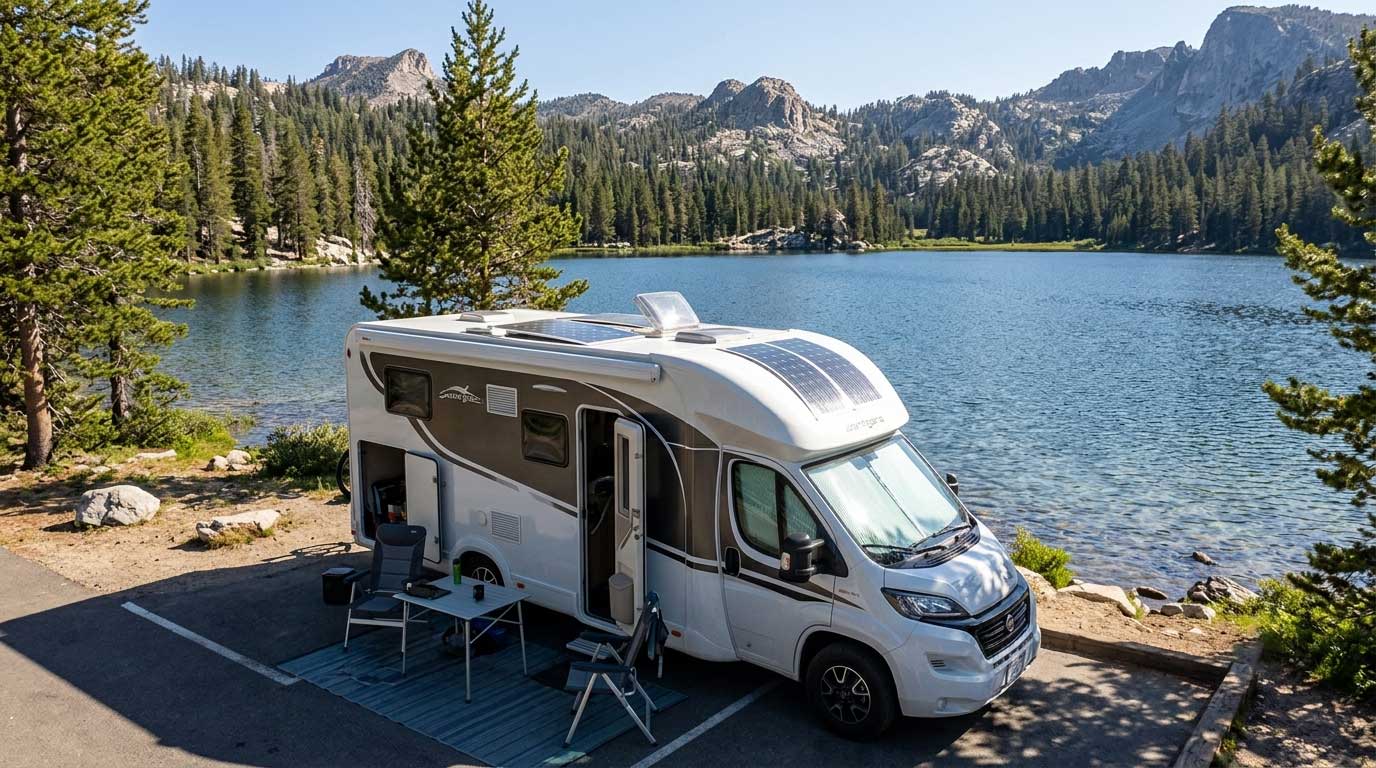
Using a 300 W Solar Panel for RV Applications
The RV market remains one of the strongest applications.
Typical loads include:
- Roof vent fans.
- Refrigerators.
- Interior lighting.
- Water pumps.
- Phones and laptops.
- Starlink terminals.
- Small inverters.
One customer in Utah installed a single flexible 300-watt panel on a compact travel trailer.
His average daily consumption:
- Refrigerator: 500Wh
- Lighting: 150Wh
- Electronics: 300Wh
- Water pump: 50Wh
Total:
Approximately 1kWh.
The system maintained battery charge throughout a week-long trip.
The interesting part was not the electrical performance.
He stopped searching for campgrounds with hookups.
The solar panel changed where he could travel.

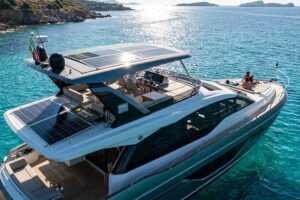
Marine Applications
Marine environments create unique challenges:
- Saltwater corrosion.
- Limited mounting space.
- Curved surfaces.
- Constant vibration.
Flexible panels often perform well because they conform to deck surfaces.
Typical uses include:
- Navigation equipment.
- Battery maintenance.
- Refrigeration.
- Cabin lighting.
- Communication equipment.
Corrosion resistance becomes just as important as efficiency.
Economic Analysis
Approximate system costs:
| Component | Estimated Cost |
|---|---|
| 300W panel | $180–350 |
| MPPT controller | $80–200 |
| Lithium battery | $400–900 |
| Inverter | $150–500 |
| Installation materials | $100–300 |
Complete systems often range from:
$800 to $2,000.
According to the Solar Energy Industries Association, declining solar costs continue to improve return on investment.
Reference:
Installation Steps
Step 1: Choose the Location
Avoid:
- Roof vents.
- Air conditioners.
- Antennas.
- Shade sources.
Step 2: Install Mounting Hardware
Secure mounting prevents vibration damage.
Step 3: Connect MPPT Controller
This improves charging efficiency.
Step 4: Connect Batteries
Proper fuse protection is essential.
Step 5: Test System Performance
Measure:
- Solar voltage.
- Charging current.
- Battery condition.
- Daily production.
Small mistakes during installation often produce larger performance losses than differences between panel brands.
Common Buyer Mistakes
Buying Based Only on Wattage
Efficiency, durability, and weight matter.
Ignoring Battery Size
Insufficient storage creates poor user experiences.
Choosing Cheap Controllers
Low-cost PWM controllers often reduce energy harvest.
Underestimating Shade
Even partial shading can significantly reduce production.
Expecting Laboratory Performance
Real environments differ from test conditions.
FAQ About 300 W Solar Panel
Can a 300 w solar panel charge a 12V battery?
Yes. Under good sunlight, it can provide approximately 20 amps of charging current.
Can one panel run a refrigerator?
Many efficient RV refrigerators can operate successfully with proper battery storage.
Is 300 watts enough for camping?
For many campers, yes.
Can I connect two 300W panels together?
Yes. Series or parallel wiring depends on system voltage and controller specifications.
How long will a 300W panel last?
Many quality modules provide service lives exceeding 25 years.
The U.S. Department of Energy notes that modern solar panels typically experience gradual annual degradation.
Reference:
Final Thoughts
A 300 w solar panel occupies a practical middle ground in today’s solar market. It produces enough energy for battery charging, RV travel, marine systems, and small off-grid applications without requiring large installations.
The most successful projects are rarely built around the highest wattage numbers. They are built around realistic energy consumption, proper storage capacity, and careful installation.
For many users, a single 300 w solar panel becomes the first step toward energy independence. Once daily electricity begins arriving quietly from sunlight, the numbers on the specification sheet become far less important than the freedom the system provides.
Related recommendations
-

Solar Battery Charger for Boat: Reliable Marine Battery Charging Anywhere
121Discover the best solar battery charger for boat applications. Keep marine batteries charged with efficient, waterproof solar charging systems for yachts and fishing boats.
View details -
300 Watt Solar Panels for RV, Marine and Off-Grid Power Systems
264Discover how 300 watt solar panels power RVs, boats, cabins, and off-grid systems. Learn real performance, battery charging, and installation tips from Bright Solar.
View details -
120W Folding Solar Panel: Output, Uses and Buying Guide
5A 120W folding solar panel provides portable power for camping, RV travel, boating, and off-grid activities. Actual energy output depends on sunlight, shadin...
View details -
Portable Solar Panels with Battery Storage: Complete Guide
171Portable solar panels with battery storage generate electricity during daylight and store it for later use in RVs, camping, boats, work sites, and emergency ...
View details