100W Flexible Solar Panel: Lightweight Solar Power That Makes Sense Off-Grid
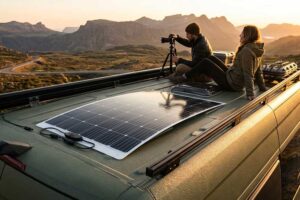
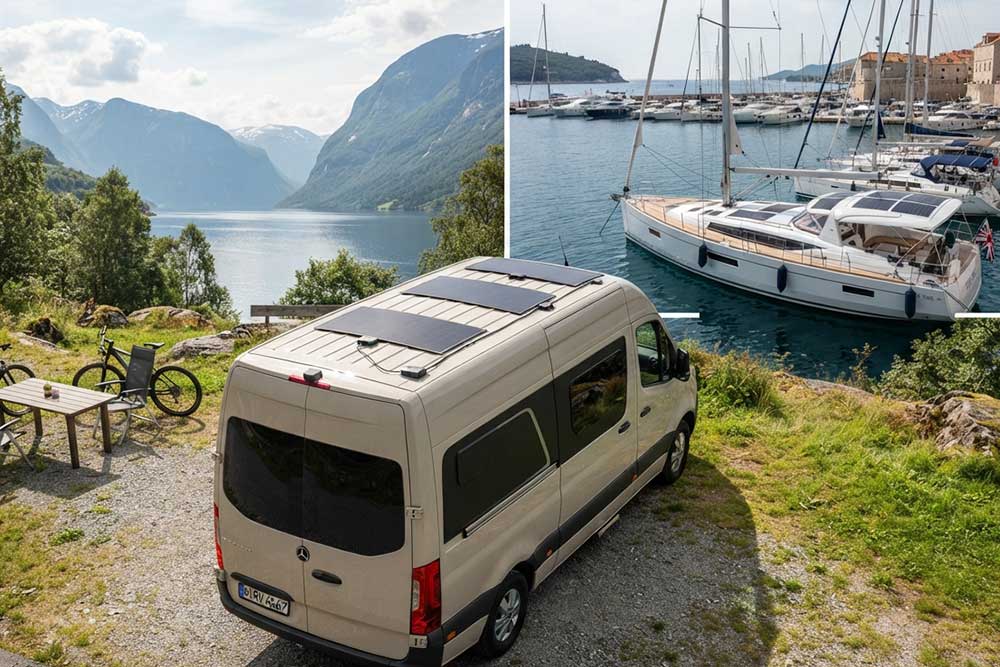
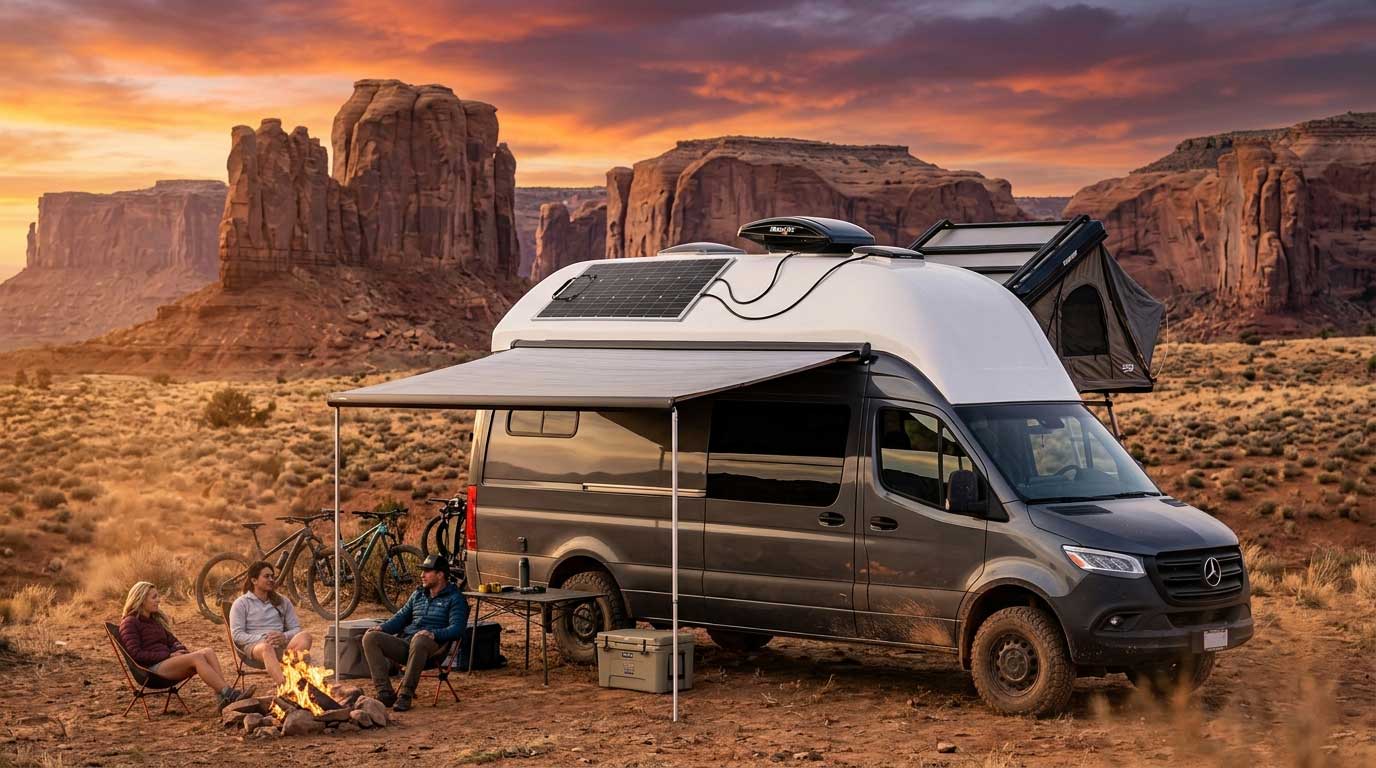
A 100W flexible solar panel is one of the most efficient lightweight solutions for off-grid charging on RVs, boats, vans, and portable battery systems. It delivers dependable solar power without the heavy aluminum frames, bulky brackets, or roof stress associated with traditional rigid panels.
I stopped underestimating 100W solar systems after a windy afternoon outside Page, Arizona.
A large Class C motorhome parked beside us had four rigid rooftop panels mounted on tall rails. Every gust rolling across the canyon created a low metallic vibration overhead. You could hear the mounting system flexing before sunset even arrived.
Across the campground, a compact camper van with two low-profile flexible panels sat almost completely silent.
No rattling.
No visible bracket movement.
No oversized roof structure.
That difference mattered more than most online wattage debates ever will.
Real-world off-grid travel changes how you think about solar. Weight becomes important. Wind resistance matters. Roof integrity matters. Simplicity suddenly feels underrated.
And that is exactly why the 100W flexible solar panel market keeps growing.
Why 100W Flexible Solar Panels Became Popular
The shift toward lightweight mobile solar did not happen by accident.
RV ownership expanded rapidly.
Portable lithium batteries became mainstream.
Remote work pushed more travelers toward off-grid camping.
Marine solar installations increased dramatically.
According to the RV Industry Association, millions of RV-owning households now prioritize energy independence and off-grid capability when upgrading their vehicles.
Source: RV Industry Association
https://www.rvia.org
At the same time, improvements in monocrystalline solar efficiency made smaller panels more practical than they used to be.
A modern 100W flexible solar panel now delivers enough daily charging capacity for:
- Portable refrigerators
- LED lighting
- Battery maintenance
- Smartphones and tablets
- Laptop charging
- GPS and marine electronics
Without adding significant roof weight.
How Much Electricity Does a 100W Flexible Solar Panel Produce?
This is where unrealistic marketing claims usually appear.
A 100W flexible solar panel does not continuously output 100 watts every hour of the day.
Actual performance depends on:
- Sunlight intensity
- Temperature
- Panel angle
- Weather
- Shading
- Charge controller efficiency
Under realistic field conditions, most quality 100W panels generate:
- Approximately 300Wh to 600Wh daily
Assuming:
- 4–6 peak sunlight hours
- Proper MPPT charging
- Minimal shading
The U.S. Department of Energy notes that high temperatures and partial shading can significantly reduce photovoltaic efficiency.
Source: U.S. Department of Energy
https://www.energy.gov/eere/solar
That becomes especially noticeable during summer travel.
Flexible panels mounted directly against dark roofs can run surprisingly hot by mid-afternoon.
I once measured over 78°C on a black camper roof outside Las Vegas using an infrared thermometer. The panel still worked, but the charging curve dropped noticeably during peak heat.
Temperature changes everything.
What Can a 100W Flexible Solar Panel Run?
| Device | Typical Usage Support |
|---|---|
| LED lights | Multiple nights |
| Laptop | Daily charging |
| Portable fridge | Partial daily support |
| Smartphones | Several charges |
| Fans | Overnight operation |
| Camera batteries | Continuous charging |
One properly configured 100W system will not run rooftop air conditioning.
But most travelers are not trying to power an entire house.
They are trying to stay off-grid longer without constantly running a noisy generator.
That distinction matters.
Why Flexible Solar Panels Work Well for RVs and Boats
Rigid panels still dominate residential rooftops because long-term lifespan matters more than weight.
Mobile installations are different.
Road vibration, roof flexing, and wind resistance become much bigger concerns.
Weight Reduction Is a Bigger Deal Than People Think
A traditional framed 100W rigid panel often weighs three to four times more than a comparable flexible panel once brackets and rails are included.
Many flexible 100W panels weigh under 5 pounds.
That matters on:
- Fiberglass camper roofs
- Pop-top vans
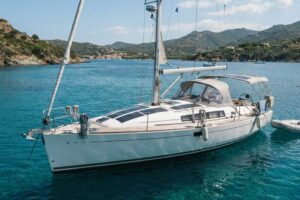
- Sailboats
- Lightweight trailers
Especially after years of movement and thermal expansion.
I inspected an older RV roof in New Mexico where repeated vibration had slowly stressed the mounting points of elevated rigid panels until tiny cracks formed around the screws.
The owner blamed poor sealant.
The bigger issue was years of dynamic movement from heavy raised hardware.
Flexible systems reduce much of that stress simply by staying low-profile and lightweight.
Low-Profile Solar Improves Highway Aerodynamics
This part rarely gets discussed honestly.
Raised rigid panels catch airflow at interstate speeds.
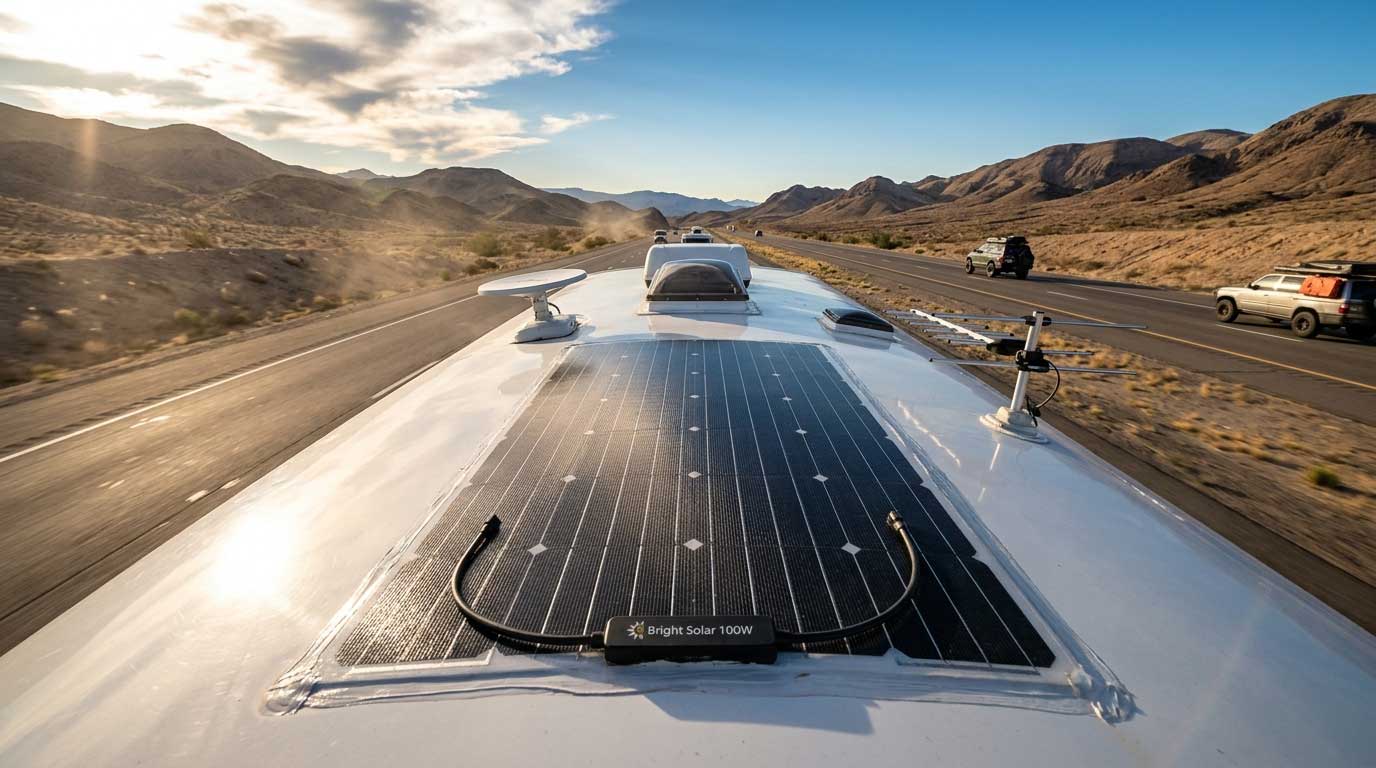
Flexible panels mounted nearly flush against the roof create:
- Less drag
- Lower vibration
- Reduced wind noise
- Cleaner rooflines
One Bright Solar customer tracked fuel consumption over roughly 6,500 travel miles after switching from rigid aluminum-framed panels to flexible roof-mounted panels. Fuel efficiency improved modestly — around 3% — but consistently enough to notice during extended highway travel.
At 70 mph, airflow becomes surprisingly expensive.
Where Cheap Flexible Solar Panels Usually Fail
Most failures are predictable.
And most happen because manufacturers cut corners in materials.
1. Weak Surface Coatings
Low-cost PET coatings degrade faster under UV exposure.
ETFE surfaces perform far better outdoors.
According to DuPont material testing, ETFE demonstrates stronger resistance to UV radiation and environmental degradation compared with many conventional outdoor plastics.
Source: DuPont
https://www.dupont.com
That matters enormously in desert climates and marine environments.
2. Heat Buildup
Flexible panels mounted directly against dark surfaces trap heat aggressively.
Excessive heat accelerates:
- Adhesive failure
- Cell degradation
- Output reduction
- Surface warping
Small ventilation gaps often improve longevity considerably.
3. Poor Waterproofing
Marine and RV environments expose solar wiring to:
- Rain
- Condensation
- Salt air
- Temperature swings
A proper 100W flexible solar panel should include:
- IP67 or IP68 junction boxes
- UV-resistant cables
- Tinned copper wiring
- Waterproof MC4 connectors
Cheap connectors fail far more often than solar cells themselves.
Best Uses for a 100W Flexible Solar Panel
One of the biggest mistakes beginners make is oversizing systems unnecessarily.
Large solar arrays are not always better.
Simple systems often survive longer because there are fewer components to fail.
Ideal Applications
| Application | Why It Works |
|---|---|
| Camper vans | Lightweight roof charging |
| Boats | Curved surface compatibility |
| Weekend camping | Portable power support |
| Battery maintenance | Reliable trickle charging |
| Emergency backup | Compact energy storage |
One of the cleanest van setups I ever saw used only two 100W flexible panels paired with lithium batteries and a compact MPPT controller.
No oversized roof rack.
No giant brackets.
No complicated installation.
Just quiet, stable off-grid charging for refrigeration, lighting, and remote work equipment.
Sometimes restraint creates better systems.
Choosing the Right 100W Flexible Solar Panel
The important differences are usually hidden beneath the surface.
A quality panel depends heavily on:
- Cell efficiency
- Encapsulation quality
- Waterproofing
- Cable durability
- UV resistance
- Heat tolerance
At Bright Solar, flexible solar systems are engineered specifically for:
- RV travel
- Marine environments
- Lightweight roof installations
- Long-distance vibration resistance
- Harsh outdoor exposure
Because laboratory numbers do not fully prepare equipment for real travel conditions.
Dust.
Road shock.
Salt air.
Extreme heat.
Tree debris.
Sudden weather shifts.
Those conditions expose weak solar systems quickly.
FAQ: 100W Flexible Solar Panel
How much power does a 100W flexible solar panel generate?
Most 100W flexible solar panels produce approximately 300Wh to 600Wh daily depending on sunlight conditions and system efficiency.
Can a 100W flexible solar panel charge lithium batteries?
Yes. A 100W flexible solar panel commonly charges lithium battery systems when paired with a compatible MPPT controller.
Are flexible solar panels waterproof?
High-quality flexible solar panels typically include waterproof junction boxes and weather-resistant ETFE surfaces designed for outdoor use.
How long do flexible solar panels last?
Premium flexible solar panels generally last between 5 and 15 years depending on installation quality, environmental conditions, and heat exposure.
Can flexible solar panels bend?
Yes. Flexible panels are designed to conform slightly to curved surfaces, making them ideal for RVs, boats, and mobile installations.
Final Thoughts
A 100W flexible solar panel is not designed to power an entire off-grid house.
It is designed for mobility.
Quiet charging.
Lightweight installation.
Curved roofs.
Marine decks.
Portable energy independence.
And after enough highway miles listening to elevated aluminum panel racks vibrate in crosswinds somewhere between Nevada and Utah, low-profile solar starts making a lot more sense.
Related recommendations
-

200 Watt Flexible Solar Panel for RV, Marine, and Off-Grid Applications
206200 watt flexible solar panel solutions provide lightweight, durable off-grid energy for RVs, boats, cabins, and mobile systems with reliable solar efficiency.
View details -
ECO WORTHY 130W Flexible Solar Panel: Features, Uses and Buying Guide
242The ECO WORTHY 130W flexible solar panel is designed for space-conscious applications such as RVs, boats, and irregular surfaces. Buyers should verify its ex...
View details -
Solar Panel Wiring Series vs Parallel: Which Is Better?
183Solar panel wiring series vs parallel depends on voltage, current, controller limits, cable distance, and shading conditions.
View details -
Solar Powered Battery Charger for Boat: Complete Marine Guide
228A solar powered battery charger for boat use combines solar panels, a matched charge controller, battery storage, marine-grade wiring, and protection to rech...
View details