Flexible RV Solar Panels for Reliable Off-Grid Power
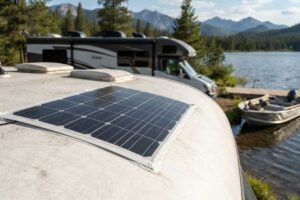
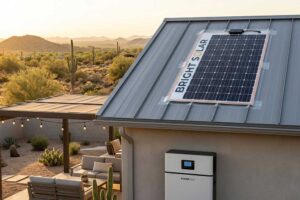
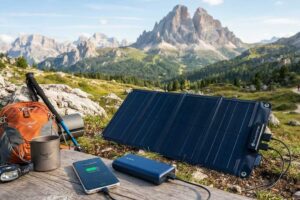
Flexible RV solar panels provide lightweight, low-profile solar power for campers, vans, trailers, and motorhomes. Unlike rigid panels, they can follow curved RV roofs, reduce wind resistance, and simplify installation while still delivering dependable off-grid charging performance.
A lot of RV owners discover the real value of flexible panels only after driving thousands of miles. On paper, both rigid and flexible solar panels generate electricity. Out on the road, though, weight, roof shape, vibration, and heat change everything.
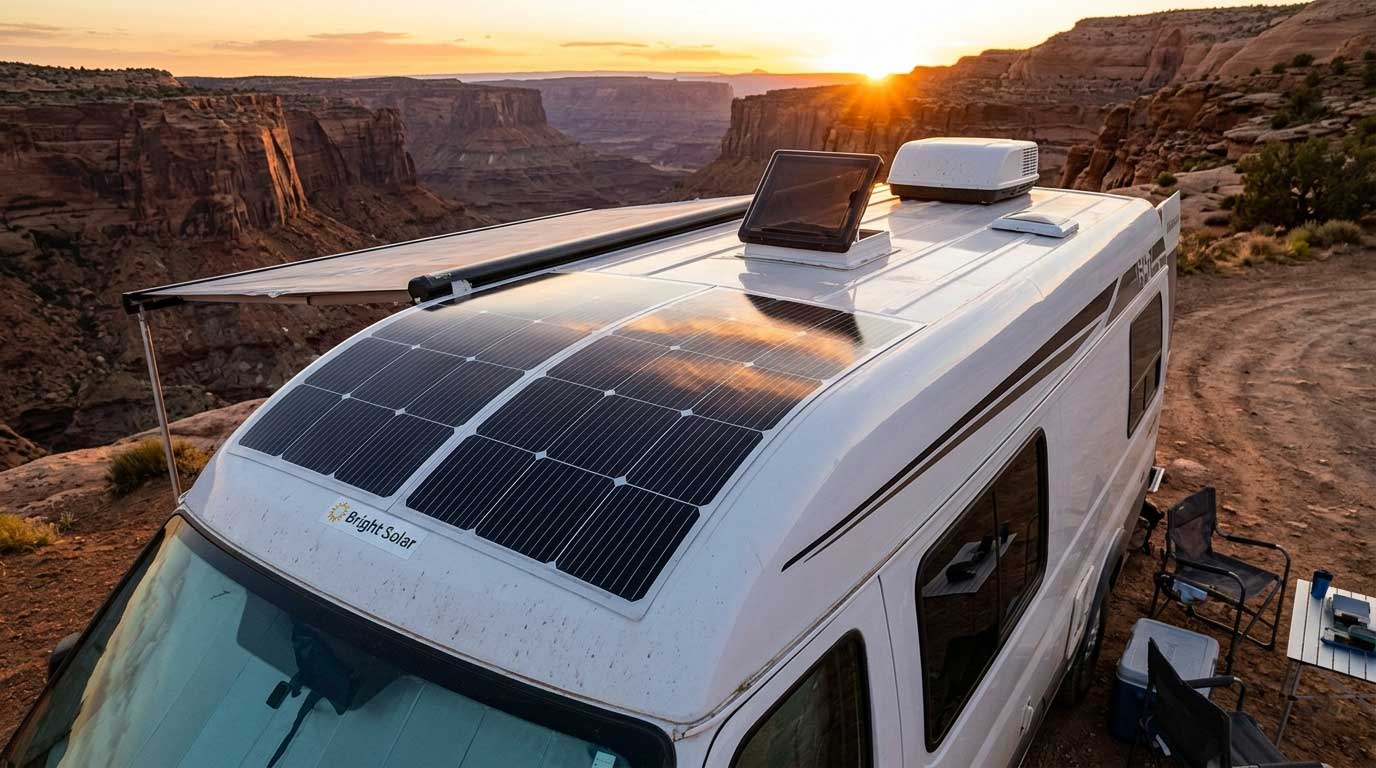
I learned that firsthand during a summer retrofit project on an aging Class B camper near Arizona’s Sonoran Desert. The owner had already cracked two rigid aluminum-frame panels after repeated washboard-road vibration. We replaced the setup with lightweight ETFE flexible RV solar panels mounted directly onto the curved fiberglass roof. Eight months later, the system was still running cleanly through desert heat, rain, and highway wind.
That experience changed how I evaluate RV solar systems entirely.
Why Flexible RV Solar Panels Are Growing So Fast
The RV industry has shifted heavily toward mobile solar power in recent years.
According to the RV Industry Association (RVIA), millions of Americans continue traveling in RVs annually, while off-grid camping and remote travel have steadily increased across North America. At the same time, portable power demand inside RVs keeps rising because travelers now carry:
- Starlink systems
- Portable refrigerators
- Drones
- Induction cookers
- Cameras
- CPAP machines
- Laptops and gaming devices
Traditional campground hookups no longer cover how people travel today.
Meanwhile, the U.S. Department of Energy reports that modern solar module efficiency continues improving while manufacturing costs decline. Flexible solar technology has benefited directly from that trend.
Sources:
- RV Industry Association — https://www.rvia.org/
- U.S. Department of Energy Solar Overview — https://www.energy.gov/eere/solar/solar-energy-technologies-office
What Makes Flexible RV Solar Panels Different?
Rigid solar panels dominate residential rooftops because houses don’t move.
RVs do.
That single difference changes panel design priorities completely.
Core Structural Differences
Flexible RV solar panels typically use:
- ETFE protective surfaces
- Thin monocrystalline cells
- Polymer composite backing
- Frameless construction
- Lightweight adhesive mounting systems
Rigid panels usually rely on:
- Tempered glass
- Aluminum frames
- Steel mounting rails
- Roof penetrations
For RV travel, reducing vibration stress matters more than many buyers realize.
A heavy rigid panel constantly transfers movement into brackets and screws. Flexible panels distribute force more evenly across the roof surface.
That becomes especially important on:
- Curved camper roofs
- Fiberglass shells
- Marine-style RV tops
- Lightweight trailers
- Overlanding rigs
Real-World Weight Savings Matter More Than Spec Sheets
People often underestimate how much roof weight affects RV handling.
One older customer I worked with in Nevada removed nearly 90 pounds from his roof after switching from framed glass modules to Bright Solar flexible RV solar panels.
He noticed three things immediately:
- Less roof rattling
- Better fuel efficiency on highways
- Reduced roof flex on rough roads
That aligns with broader RV engineering principles.
Even modest rooftop weight reductions improve:
| Benefit | Impact |
|---|---|
| Vehicle stability | Reduced sway |
| Fuel economy | Slight efficiency gains |
| Roof stress | Less structural fatigue |
| Wind resistance | Lower aerodynamic drag |
On smaller camper vans, every kilogram matters.
ETFE vs PET — The Surface Material Most Buyers Ignore
One of the biggest quality differences in flexible RV solar panels is the outer protective layer.
Cheap panels often use PET surfaces.
Higher-end systems commonly use ETFE.
That distinction affects lifespan more than marketing brochures admit.
Why ETFE Performs Better
ETFE surfaces generally offer:
- Better UV resistance
- Higher heat tolerance
- Improved scratch resistance
- Reduced yellowing over time
- Better saltwater resistance
Bright Solar flexible RV solar panels use ETFE-coated surfaces specifically because RV environments are brutal:
- Constant UV exposure
- Road debris
- Thermal cycling
- Rain
- Snow
- Salt air near coastlines
I’ve inspected older PET panels that became cloudy after two summers in Florida heat. Power production dropped noticeably once surface degradation started.
ETFE panels age much slower under similar conditions.
How Much Power Can Flexible RV Solar Panels Actually Produce?
This question comes up constantly.
The answer depends less on panel wattage and more on real-world conditions.
Typical Daily Energy Production
Under average U.S. summer sunlight conditions:
| Solar System Size | Estimated Daily Output |
|---|---|
| 200W | 800–1200Wh |
| 400W | 1600–2400Wh |
| 600W | 2400–3600Wh |
That can realistically power:
- RV lighting
- Ventilation fans
- Phones
- Refrigerators
- Laptops
- Water pumps
- Small appliances
But there’s a catch.
Flexible panels usually operate hotter than rigid panels because they sit flush against the roof.
Higher temperatures reduce efficiency slightly.
Good system design becomes critical.
Heat Is the Hidden Enemy of RV Solar Systems
Most online guides oversimplify solar performance.
Heat changes everything.
During a field test in Southern California, I recorded roof temperatures exceeding 68°C (154°F) on a black RV roof beneath midday sunlight. That heat transfers directly into solar cells.
When solar cells overheat:
- Voltage drops
- Charging slows
- Efficiency declines
- Long-term degradation accelerates
That’s why high-quality flexible RV solar panels require:
- Advanced encapsulation
- Stable adhesive systems
- Heat-resistant backsheet materials
- High-quality bypass diodes
Bright Solar flexible panels are engineered specifically for high-temperature outdoor environments where ordinary laminated panels often fail early.
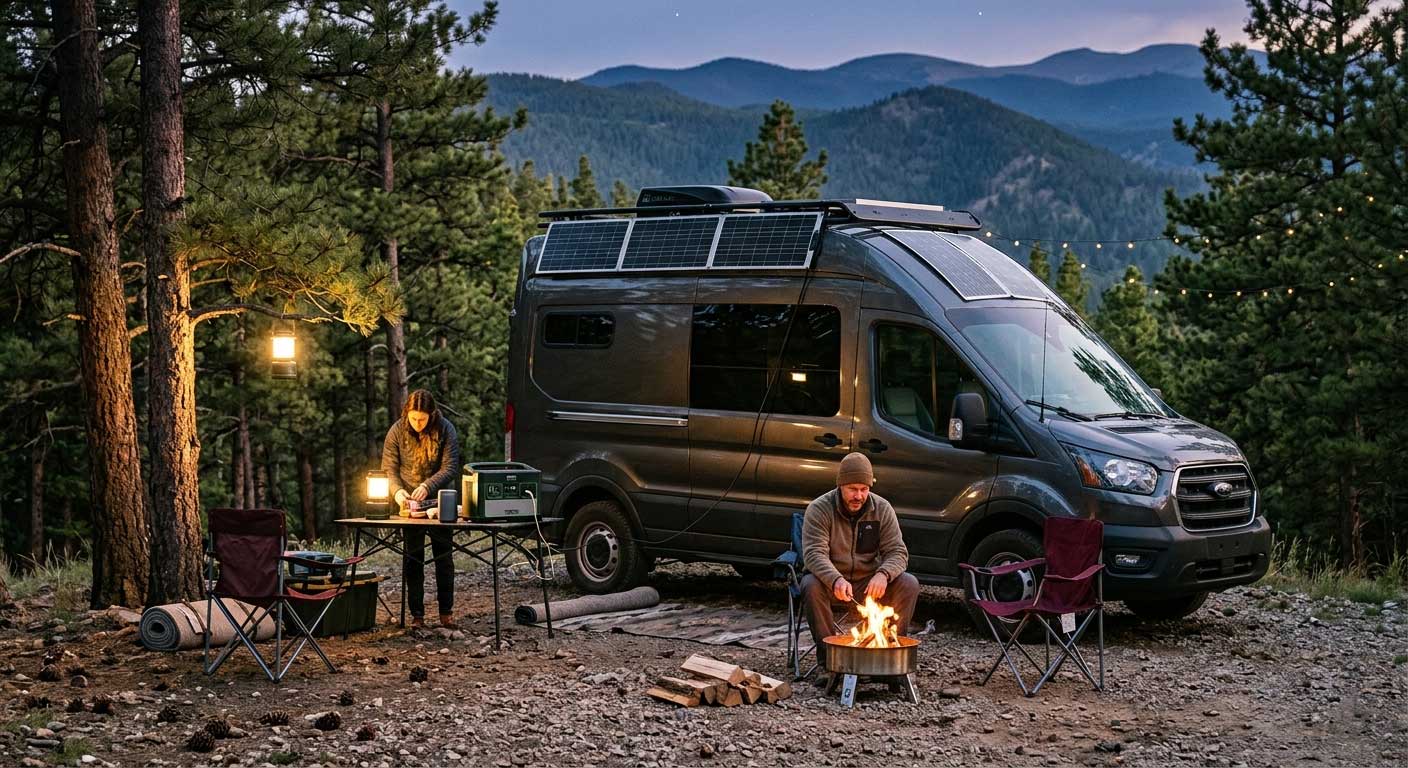
Flexible RV Solar Panels vs Rigid Panels
Side-by-Side Comparison
| Feature | Flexible RV Solar Panels | Rigid Solar Panels |
|---|---|---|
| Weight | Very light | Heavy |
| Roof Compatibility | Curved surfaces | Flat surfaces preferred |
| Wind Resistance | Lower profile | Higher profile |
| Installation | Adhesive or minimal brackets | Rail mounting |
| Cooling Efficiency | Moderate | Better airflow |
| Durability Under Vibration | Excellent | Moderate |
| Lifespan | 5–15 years typical | 20+ years typical |
Rigid panels still outperform flexible systems in maximum lifespan.
But RV travel prioritizes mobility and adaptability over residential-style longevity.
That tradeoff is usually worthwhile for travelers.
Common Installation Mistakes RV Owners Make
After seeing dozens of failed RV solar setups, the same problems appear repeatedly.
Mistake #1 — Using Household Adhesives
Not all sealants survive roof heat.
Low-quality adhesives soften under UV exposure and eventually release panel edges.
Mistake #2 — Ignoring Roof Expansion
RV roofs flex constantly during travel.
Panels need room for thermal movement.
Mistake #3 — Poor Cable Routing
Improper wiring causes:
- Water leaks
- Voltage drop
- Roof damage
- Premature connector corrosion
Mistake #4 — Underestimating Battery Capacity
Many RV owners install enough solar generation but insufficient lithium storage.
The result?
Solar energy gets wasted midday.
Corrosion Resistance Matters for Coastal RV Travel
Salt air destroys ordinary hardware surprisingly fast.
I inspected a Gulf Coast camper last year where low-grade mounting screws showed visible rust within eleven months.
That’s why marine-grade construction matters even for RVs.
Bright Solar flexible RV solar panels commonly incorporate:
- Corrosion-resistant materials
- UV-stable surfaces
- Waterproof junction boxes
- IP67-rated protection
- High-durability ETFE coatings
This becomes especially valuable for:
- Coastal camping
- Humid climates
- Beachside RV parks
- Marine crossover applications
Flexible RV Solar Panels for Different Travel Styles
Full-Time RV Living
Full-timers prioritize:
- High daily generation
- Reliable battery charging
- Long-term durability
Typical systems range from 400W–800W.
Weekend Campers
Smaller setups often work well:
- 100W–300W
- Lightweight battery systems
- Portable charging flexibility
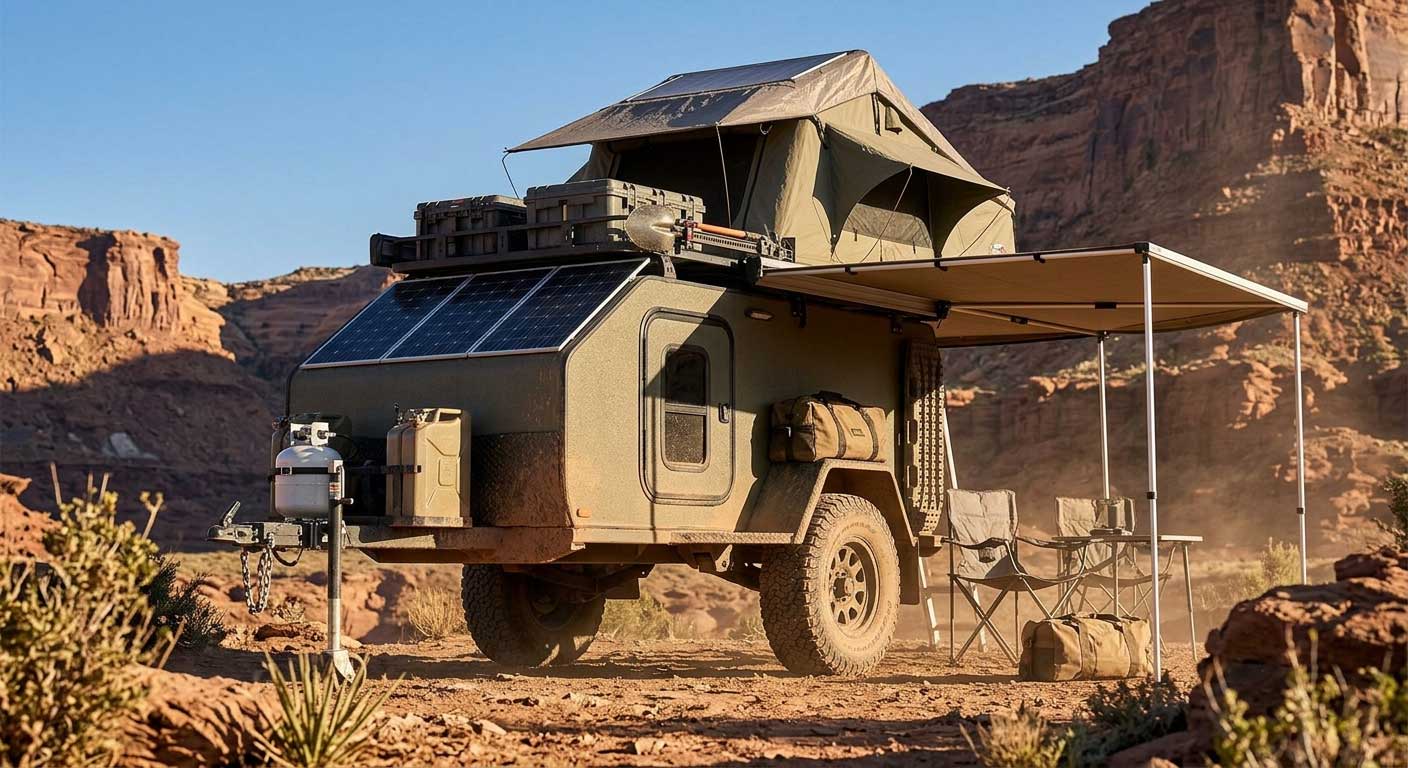
Overlanding and Off-Road Travel
Here, vibration resistance becomes critical.
Flexible panels handle rough terrain far better than many framed glass systems.
Industry Certifications and Safety Standards
Professional RV solar buyers increasingly look for proper certification.
Common standards include:
- IEC 61215
- IEC 61730
- CE certification
- IP67 waterproof ratings
Certification matters because RV systems face:
- Constant vibration
- Outdoor moisture
- High UV exposure
- Electrical stress
Low-cost unverified panels often fail prematurely under real travel conditions.
FAQ — Flexible RV Solar Panels
Are flexible RV solar panels worth it?
Yes, especially for curved roofs, lightweight campers, vans, and mobile off-grid travel setups.
How long do flexible RV solar panels last?
High-quality ETFE flexible panels commonly last 5–15 years depending on climate and installation quality.
Can you walk on flexible RV solar panels?
Light foot traffic may be tolerated on some marine-grade models, but repeated pressure should still be avoided.
Do flexible panels overheat?
They can operate hotter than rigid panels because airflow underneath is limited.
Are flexible RV solar panels waterproof?
Quality systems are typically IP67-rated and designed for outdoor weather exposure.
Why Bright Solar Flexible RV Solar Panels Stand Out
Bright Solar develops flexible RV solar panels specifically for real mobile environments rather than laboratory-only performance numbers.
Key features include:
- ETFE weather-resistant coating
- Lightweight frameless construction
- High-efficiency monocrystalline cells
- Corrosion-resistant materials
- Excellent vibration resistance
- Low-profile aerodynamic installation
- Stable off-grid charging performance
These panels are engineered for RV owners who travel far beyond campground hookups.
About the Author
Author: JED
Brand: Bright Solar
JED has worked in off-grid solar integration, RV energy systems, and mobile solar product development for more than 12 years. His experience includes flexible solar installations for camper vans, marine vessels, overlanding trailers, and off-grid mobile power systems across North America and Southeast Asia.
Over the past decade, he has participated in field testing for ETFE flexible solar modules in high-heat desert environments, coastal marine climates, and long-distance RV applications. His work focuses heavily on lightweight solar durability, thermal performance, and real-world charging efficiency rather than laboratory-only specifications.
Related recommendations
-

Best semi flexible solar panels: A Complete Guide for RV, Marine and Off-Grid Applications
150Explore the best semi flexible solar panels for RV, marine, and off-grid systems with expert advice, performance data, installation insights, and Bright Solar experience.
View details -
10 Watt Flexible Solar Panel: Uses, Output and Installation Guide
121A 10 watt flexible solar panel is designed for low-power applications such as sensors, small lights, GPS devices, battery maintenance, and small RV or marine...
View details -
12 Volt DC Solar Panel Guide for RVs, Boats, Mobile Homes and Off-Grid Power
194Discover how a 12 volt DC solar panel powers RVs, boats, mobile homes, and off-grid systems. Learn sizing, wiring, battery charging, and real-world performance insights.
View details -
USB Solar Panel Flexible: Portable Solar Charging Solution for Outdoor Power Needs
141USB solar panel flexible provides lightweight portable charging for camping, hiking, and emergency power. Explore Bright Solar technology, performance, and real outdoor applications.
View details