Pergola for Solar Panels: A Smart Way to Create Shade and Generate Power
A pergola for solar panels transforms unused outdoor space into a dual-purpose structure that provides shade while generating renewable electricity. For homeowners with limited roof space or architectural restrictions, solar pergolas often deliver one of the most practical and visually attractive solar solutions available.
Three summers ago, I visited a homeowner outside Phoenix who had a problem I encounter more often than most people realize.
His roof had plenty of sunlight.
His homeowners association hated the idea of visible rooftop panels.
The project stalled for months.
Then someone suggested building a pergola over the backyard patio.
Six months later the family had a shaded outdoor living area, lower summer electricity bills, and a solar system that wasn’t visible from the street.
That project changed the way I look at residential solar design.
A solar installation doesn’t always belong on a roof.
Sometimes the better answer is sitting in the backyard.
Why a Pergola for Solar Panels Is Becoming More Popular
Residential solar adoption continues to grow across North America.
According to the U.S. Energy Information Administration (EIA), residential solar installations have expanded significantly over the past decade as homeowners seek energy independence and protection from rising utility costs.
Yet roof space is not always available.
Common obstacles include:
- Complex roof geometry
- Excessive shading
- Historic property restrictions
- HOA regulations
- Aging roof materials
- Limited usable surface area
That’s where solar pergolas become interesting.
Instead of competing for roof space, they create entirely new solar real estate.
A backyard patio.
A poolside seating area.
A driveway canopy.
A garden structure.
All become potential power-generation platforms.
What Is a Solar Pergola?
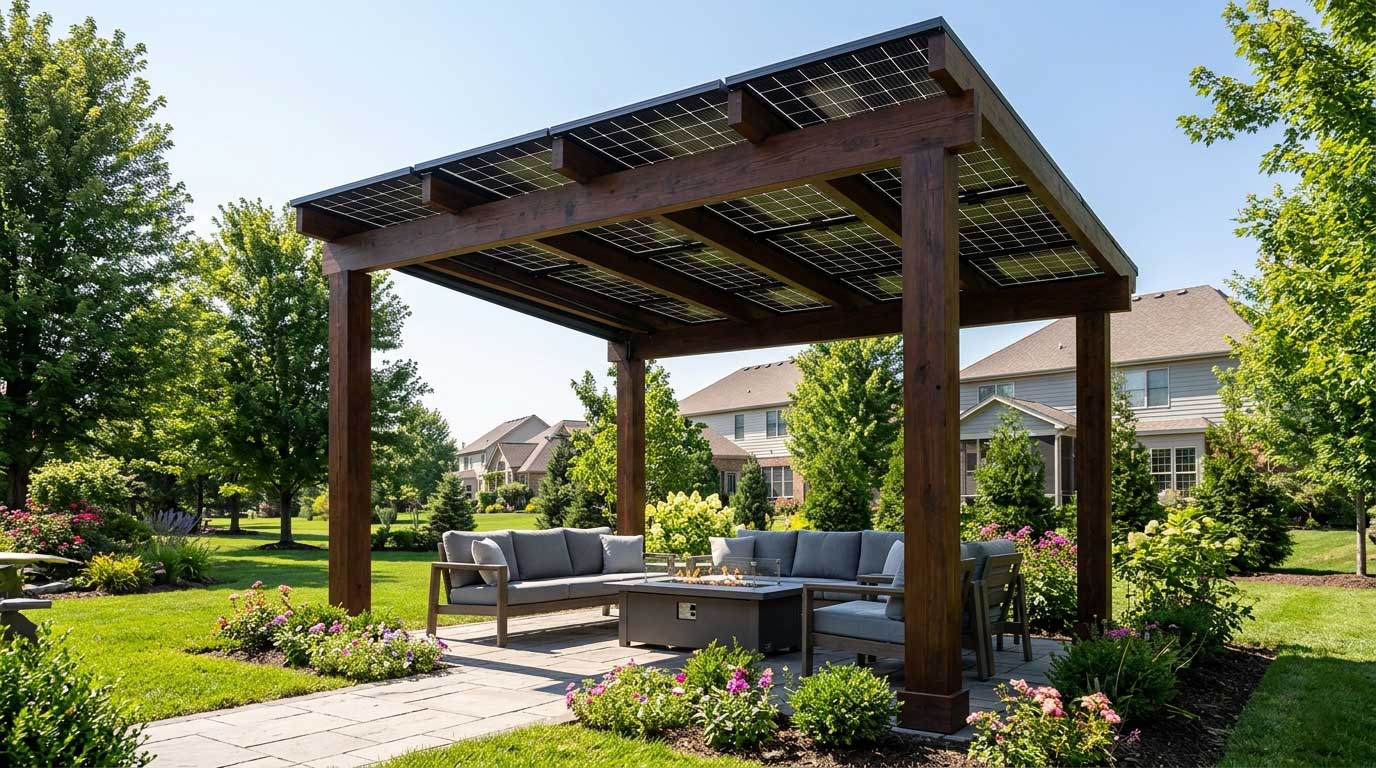
A solar pergola is a freestanding or attached outdoor structure designed to support photovoltaic panels while simultaneously providing shade.
Unlike traditional pergolas that use wooden slats or decorative beams, the roof surface incorporates solar modules.
The result serves two purposes:
Function One: Outdoor Living Space
The structure creates:
- Shade
- Weather protection
- Comfortable gathering areas
- Extended outdoor usability
Function Two: Electricity Production
The solar array generates power for:
- Home consumption
- Battery storage
- EV charging
- Pool equipment
- Outdoor lighting
Instead of building two separate systems, homeowners combine both into a single investment.
The Hidden Advantage Most Homeowners Miss
The obvious benefit is power generation.
The less obvious benefit is thermal comfort.
I noticed this during a California installation several years ago.
Before construction, the homeowner avoided the patio during afternoons.
Surface temperatures were brutal.
After the pergola installation, the difference was immediate.
The solar panels acted as a thermal barrier.
Direct solar radiation no longer reached the patio floor.
Temperatures underneath the structure felt noticeably lower.
The family began using the outdoor space every evening.
Their electricity production became almost secondary.
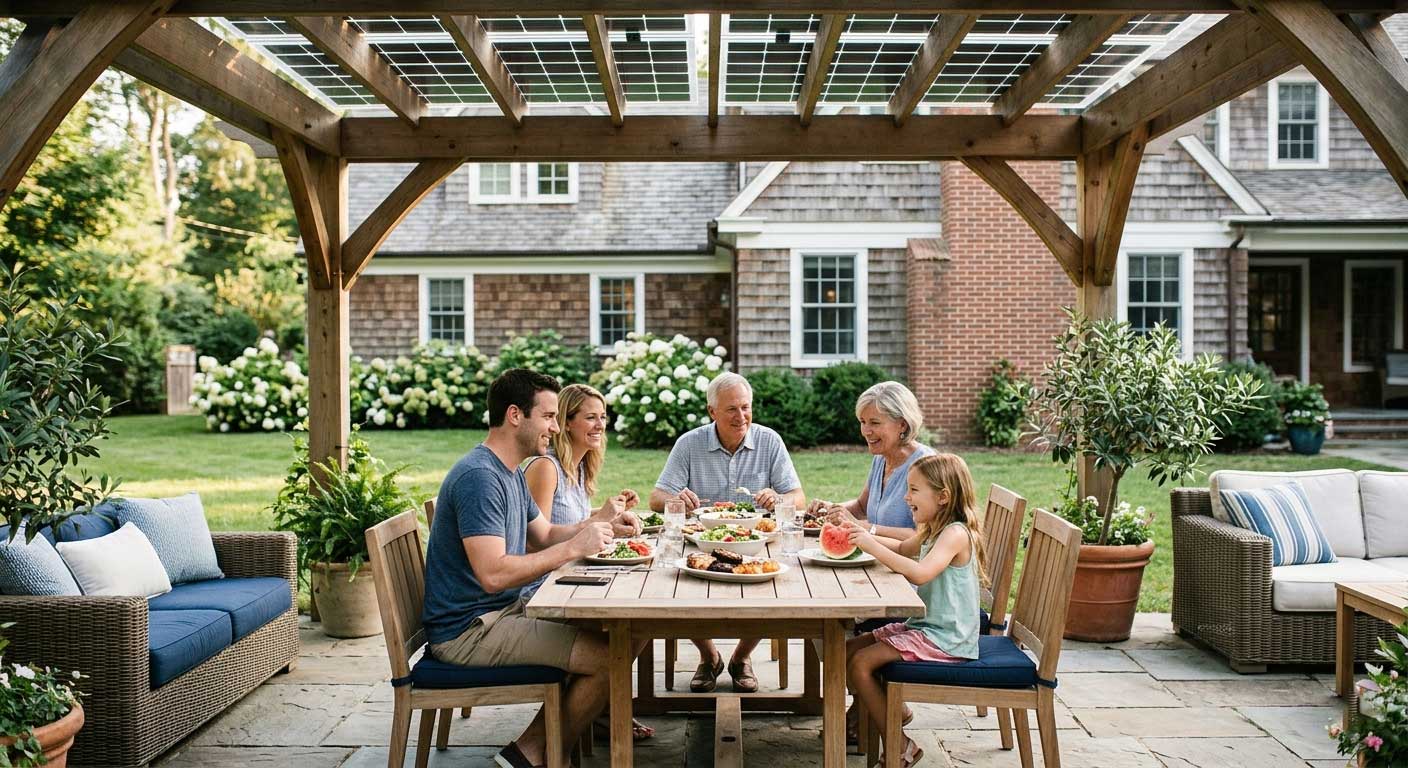
How Much Electricity Can a Pergola for Solar Panels Produce?
The answer depends on available surface area.
Most residential pergolas range from:
| Pergola Size | Approximate Solar Capacity |
|---|---|
| 10 ft × 10 ft | 1.5 – 2.5 kW |
| 12 ft × 16 ft | 2.5 – 4 kW |
| 16 ft × 20 ft | 4 – 6 kW |
| 20 ft × 20 ft | 5 – 8 kW |
Under favorable conditions, a 5 kW solar pergola can generate thousands of kilowatt-hours annually.
The exact output depends on:
- Geographic location
- Roof angle
- Panel efficiency
- Shading conditions
- Weather patterns
According to the National Renewable Energy Laboratory (NREL), solar production varies significantly by region, with Southwestern states generally delivering the highest annual yields.
Pergola for Solar Panels vs Rooftop Solar
This isn’t always an either-or decision.
Many homeowners eventually install both.
Still, the comparison is worth examining.
| Factor | Rooftop Solar | Solar Pergola |
|---|---|---|
| Uses Existing Space | Yes | No |
| Creates Shade | No | Yes |
| Easier Maintenance Access | No | Yes |
| Architectural Feature | Limited | Strong |
| HOA Visibility Issues | Possible | Often Lower |
| Outdoor Living Benefits | None | Significant |
The biggest surprise?
Maintenance.
Cleaning a pergola-mounted solar array is dramatically easier than climbing onto a steep roof.
Several homeowners I’ve worked with specifically cited accessibility as a major advantage.
Designing a Pergola for Solar Panels Correctly
This is where many projects succeed—or fail.
A solar pergola isn’t simply a patio structure with panels attached afterward.
The best designs begin with the solar array itself.
Start With Panel Dimensions
The structure should be engineered around module dimensions.
Trying to force panels into an existing pergola often creates:
- Wasted space
- Awkward gaps
- Reduced production
Consider Sun Orientation
In North America, southern exposure generally maximizes annual production.
However, site-specific factors matter.
Trees.
Neighboring buildings.
Seasonal shadows.
These can dramatically influence results.
Account for Structural Loads
Solar panels add weight.
Wind loads increase significantly.
Professional structural evaluation remains essential.
Especially in:
- Coastal regions
- Snow-prone areas
- Hurricane zones
Real Installation Example: Backyard Transformation Project
One project in Texas remains memorable.
The homeowner originally requested a standard patio cover.
The conversation shifted when utility rates increased during the planning phase.
Instead of building a conventional structure, they upgraded to a solar pergola.
Final system specifications:
| Item | Value |
|---|---|
| Pergola Size | 18 × 20 ft |
| Solar Capacity | 5.4 kW |
| Panel Count | 12 Modules |
| Primary Use | Patio + Energy Production |
| Utility Offset | Partial Household Load |
The family gained:
- Shaded entertaining space
- Solar generation
- Increased backyard functionality
Interestingly, the outdoor living improvement became the feature discussed most often—not the electricity savings.
Solar Pergolas and Modern Home Design
Architects increasingly view solar pergolas differently than rooftop systems.
A roof installation is often hidden.
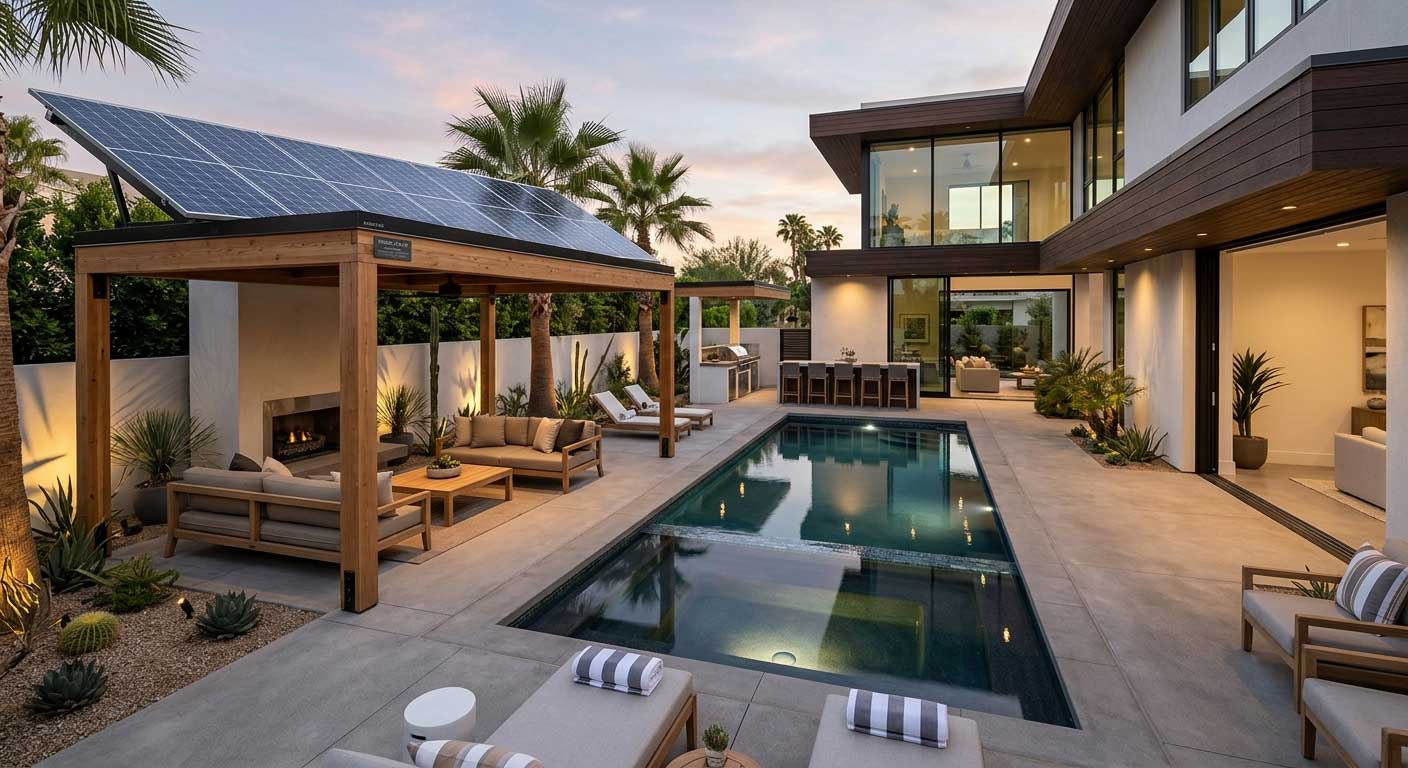
A pergola becomes part of the landscape design.
The best projects integrate:
- Outdoor kitchens
- Fire pits
- Swimming pools
- Garden pathways
- Entertainment spaces
In these settings, the structure feels intentional rather than purely functional.
That’s one reason luxury residential developments have begun incorporating solar pergolas into outdoor master plans.
Are Solar Pergolas Worth the Investment?
The answer depends on what you’re measuring.
If you’re evaluating only dollars per watt, rooftop systems often win.
If you’re evaluating total property value, outdoor usability, shade creation, aesthetics, and electricity production together, the calculation changes considerably.
A well-designed pergola for solar panels doesn’t just produce energy.
It creates usable space.
And in residential projects, usable space often has value beyond the utility bill.
How Much Does a Pergola for Solar Panels Cost?
This is usually the point where excitement meets reality.
A solar pergola is not simply a solar project.
It is also a construction project.
That distinction matters.
Many homeowners compare a solar pergola directly against rooftop solar and immediately notice the price difference.
They’re not wrong.
But they’re often comparing two completely different outcomes.
One creates electricity.
The other creates electricity and a new outdoor structure.
Based on projects I’ve reviewed across California, Arizona, Texas, and Florida, a residential solar pergola commonly falls into the following range:
| System Type | Typical Cost Range |
|---|---|
| Small Solar Pergola (2–3 kW) | $8,000–$15,000 |
| Medium Solar Pergola (4–6 kW) | $15,000–$30,000 |
| Premium Custom Pergola (6–10 kW) | $30,000–$60,000+ |
Variables affecting cost include:
- Structural material
- Foundation requirements
- Solar panel type
- Electrical upgrades
- Local labor rates
- Permit requirements
- Architectural complexity
The biggest mistake I see?
People focus only on solar payback.
They ignore the value of the outdoor structure itself.
If the homeowner planned to build a pergola anyway, part of the construction budget already exists regardless of solar.
That changes the economics considerably.
Freestanding vs Attached Solar Pergolas
Not all pergolas serve the same purpose.
I’ve worked on both styles, and each has advantages.
Freestanding Solar Pergolas
These are installed independently of the house.
Common locations:
- Gardens
- Pool areas
- Open yards
- Outdoor entertainment spaces
Advantages:
- Greater design flexibility
- Better solar orientation options
- Easier future expansion
Disadvantages:
- Higher structural cost
- Additional foundation work
Attached Solar Pergolas
Attached systems connect directly to the home.
Common locations:
- Rear patios
- Outdoor kitchens
- Deck extensions
Advantages:
- Lower material usage
- More integrated appearance
- Convenient electrical connection
Disadvantages:
- Orientation limited by home layout
- Potential architectural restrictions
In my experience, attached systems are often chosen for suburban properties, while freestanding structures dominate larger lots.
Why Flexible Solar Panels Are Changing Pergola Design
This is where things become particularly interesting for Bright Solar customers.
Traditional glass panels remain the standard solution.
However, architects increasingly explore lightweight alternatives.
Especially when aesthetics matter.
Especially when structural loads are limited.
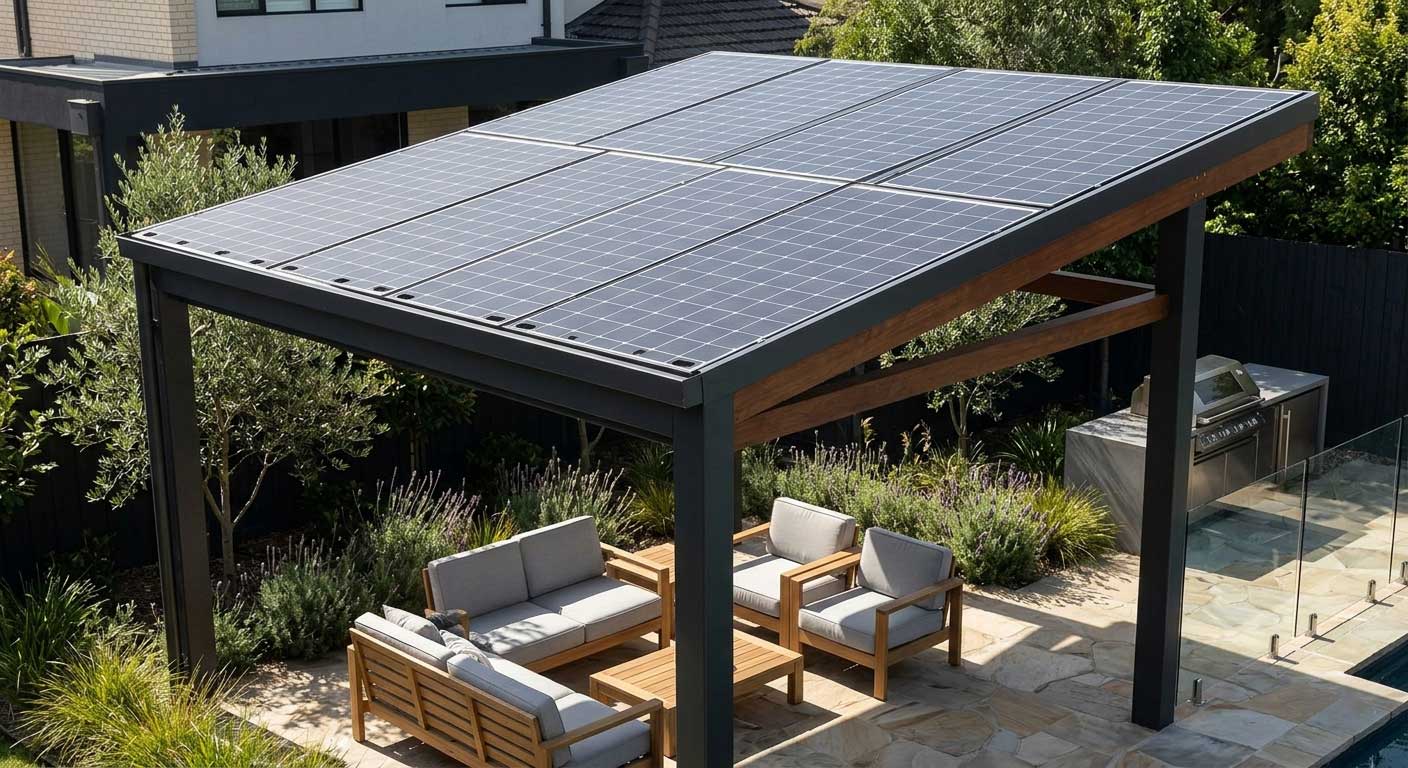
Especially when pergolas feature curved or unconventional roof designs.
A conventional solar panel may weigh 18–25 kg (40–55 lbs).
A modern flexible panel can weigh dramatically less.
That difference may not matter on a reinforced roof.
It can matter significantly on decorative outdoor structures.
I’ve seen designers reject solar entirely because structural reinforcement costs became excessive.
A lightweight flexible system often reopens the conversation.
Common Solar Pergola Design Mistakes
Most solar pergola failures don’t result from poor solar panels.
They result from poor planning.
Mistake #1: Designing the Pergola Before the Solar Layout
This happens constantly.
The pergola is built first.
The installer arrives later.
Panels don’t fit efficiently.
Production suffers.
The best projects start with module dimensions.
Then the structure is engineered around them.
Mistake #2: Ignoring Seasonal Sun Angles
Summer performance looks fantastic.
Winter production collapses.
Why?
The original design ignored lower winter sun positions.
I visited a project where a nearby tree created almost no summer shading.
In December, half the array sat in shadow for hours.
Proper solar modeling would have caught the issue immediately.
Mistake #3: Prioritizing Appearance Over Drainage
Many homeowners want a perfectly flat pergola roof.
Unfortunately, water rarely cooperates with design preferences.
Drainage planning matters.
Especially in:
- Florida
- Pacific Northwest
- Coastal climates
Ignoring water management creates maintenance headaches that last for years.
Mistake #4: Underestimating Wind Loads
Solar panels act like sails.
A structure that appears strong enough visually may not satisfy engineering requirements.
Wind uplift calculations should never be an afterthought.
Particularly in:
- Coastal regions
- Hurricane zones
- Open rural properties
Solar Pergolas as EV Charging Stations
A trend that barely existed five years ago is now becoming common.
Homeowners increasingly pair:
- Solar pergolas
- Battery storage
- Electric vehicles
The concept is simple.
Park beneath the structure.
Generate power overhead.
Charge below.
Several manufacturers now market dedicated solar carports for exactly this purpose.
A pergola for solar panels can serve the same function while maintaining a more residential appearance.
For homeowners unwilling to place large arrays on their roofs, this creates an attractive alternative.
Original Industry Insight: The Future of Residential Solar Is Moving Into Outdoor Living Spaces
After years of visiting solar installations, I believe we’re witnessing a subtle shift.
The first generation of residential solar focused on rooftops.
The next generation is becoming more integrated into everyday living environments.
Not hidden.
Not separate.
Integrated.
Pergolas.
Patio covers.
Carports.
Garden structures.
Poolside pavilions.
The homeowner isn’t choosing between energy production and outdoor comfort.
They’re expecting both.
That’s why solar pergolas continue gaining attention from architects, builders, and landscape designers.
The technology isn’t new.
The way people think about it is.
FAQs About Pergola for Solar Panels
Is a pergola for solar panels better than rooftop solar?
Not necessarily better—just different.
A solar pergola creates usable outdoor space while generating electricity. Rooftop systems generally maximize energy production using existing surfaces.
Can flexible solar panels be used on a pergola?
Yes.
Many lightweight flexible solar panels are suitable for pergola applications, particularly where structural weight reduction is important.
How many solar panels fit on a pergola?
It depends on structure size and panel dimensions.
A typical residential pergola may accommodate anywhere from 4 to 20+ solar panels.
Do solar pergolas qualify for solar incentives?
In many jurisdictions, solar equipment may qualify for available incentives if installed according to local regulations.
Always verify eligibility with local authorities or tax professionals.
Can a solar pergola power an electric vehicle?
Yes.
A properly sized solar pergola can contribute energy for EV charging, particularly when paired with battery storage systems.
What is the lifespan of a solar pergola?
The solar modules often carry performance warranties up to 25 years.
Structural lifespan depends on:
- Material quality
- Climate exposure
- Maintenance practices
- Engineering standards
Many well-built pergolas remain functional for decades.
Why Bright Solar Panels Are Well Suited for Pergola Projects
Pergola installations often prioritize more than power output.
Designers also consider:
- Structural loading
- Appearance
- Integration flexibility
- Long-term durability
Bright Solar flexible solar panels offer advantages in applications where traditional heavy glass modules may create design limitations.Learn more:Flexible Solar Panel
Common pergola applications include:
- Backyard entertainment areas
- Poolside structures
- RV patio covers
- Tiny home outdoor spaces
- Garden seating zones
- Residential EV charging canopies
For homeowners seeking both energy generation and architectural appeal, lightweight solar technology opens possibilities that conventional installations sometimes cannot.
Final Thoughts
A pergola for solar panels is no longer a niche architectural experiment.
It’s becoming one of the most practical ways to combine outdoor living and renewable energy.
Some homeowners choose it because their roof isn’t ideal.
Others choose it because they want additional shade.
Many simply like the idea of generating power from a structure they already planned to build.
After visiting projects across residential neighborhoods, lakefront properties, desert communities, and coastal homes, one pattern appears repeatedly.
People use the space.
Every day.
The electricity matters.
The utility savings matter.
But what homeowners often mention first is surprisingly simple:
They enjoy spending time under it.
And that’s something a rooftop solar system can never provide.
References
U.S. Energy Information Administration (EIA)
https://www.eia.gov
National Renewable Energy Laboratory (NREL)
https://www.nrel.gov
U.S. Department of Energy Solar Energy Technologies Office
https://www.energy.gov/eere/solar
Related recommendations
-

Solar Panels on RV Roof: Complete Guide for Off-Grid RV Power
167Solar panels on RV roofs provide off-grid electricity by combining solar generation, battery storage, charge control, and proper roof planning to meet real t...
View details -
Renewed strategic cooperation between CLP and Munich Re
125Zonergy Corporation presents advanced energy storage solutions and smart microgrid technologies at EES Europe. The company offers residential, commercial, and large-scale photovoltaic and storage products, driving the growth of renewable energy in...
View details -
Solar Panel Series Parallel: How to Wire Panels Correctly
187Solar panel series parallel wiring combines series and parallel connections to increase both PV voltage and current while staying within equipment limits.
View details -
USB Solar Panel Flexible: Portable Solar Charging Solution for Outdoor Power Needs
142USB solar panel flexible provides lightweight portable charging for camping, hiking, and emergency power. Explore Bright Solar technology, performance, and real outdoor applications.
View details