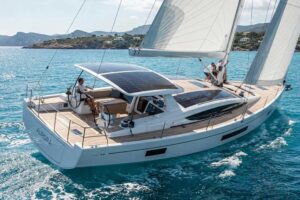
Motorhome Solar Kit: Reliable Off-Grid Power for Modern RV Travel
A motorhome solar kit is a complete off-grid power system that uses solar panels, batteries, controllers, and inverters to generate and store electricity for RV living. A properly sized system can run lights, refrigerators, water pumps, laptops, and even air conditioners without relying heavily on campground hookups.
For many RV owners, the difference becomes obvious after the first long trip. Once you stop chasing electrical hookups every night, travel changes completely. You stay longer in remote areas. You stop worrying about battery levels every morning. And you finally understand why experienced overlanders invest in a serious motorhome solar kit instead of portable emergency panels.
At Bright Solar, we have worked with RV installers, campervan conversion teams, and long-distance travelers across North America and Europe. Some customers prioritize lightweight flexible panels for curved roofs. Others need large lithium systems capable of running induction cooktops and rooftop AC units. The real challenge is never “how many watts.” The challenge is matching actual travel behavior to realistic daily energy production.
Why More RV Owners Are Switching to Solar Power
Ten years ago, most motorhome owners depended heavily on generators. Today, that situation is changing fast.
According to the RV Industry Association, millions of RV trips are now focused on dispersed camping and off-grid travel instead of traditional RV parks. At the same time, lithium battery prices have gradually fallen while solar panel efficiency has improved significantly.
The result is simple: solar systems now make economic and practical sense for full-time travelers.
Real-world benefits include:
- Silent off-grid electricity
- Reduced generator fuel consumption
- Longer battery autonomy
- Lower campground dependency
- Cleaner energy production
- Better battery maintenance
- Increased resale value for modern motorhomes
The U.S. Department of Energy also notes that modern photovoltaic systems have become substantially more efficient over the last decade.
Reference Sources:
https://www.rvia.org/
https://www.energy.gov/eere/solar/solar-energy-technologies-office
What Is Included in a Complete Motorhome Solar Kit
Many first-time buyers assume the solar panels are the most important part. In reality, battery storage and charge management determine long-term reliability far more than panel wattage alone.
A complete motorhome solar kit usually contains:
Solar Panels
These convert sunlight into electricity.
Common RV panel types include:
| Panel Type | Advantages | Limitations |
|---|---|---|
| Monocrystalline | High efficiency, compact size | Higher cost |
| Flexible Panels | Lightweight, curved surface installation | Slightly shorter lifespan |
| Rigid Glass Panels | Durable, better airflow cooling | Heavier |
In real field installations, rigid panels usually deliver more stable long-term output, especially in high-temperature desert environments. Flexible panels remain popular for European campervan roofs where height clearance matters.
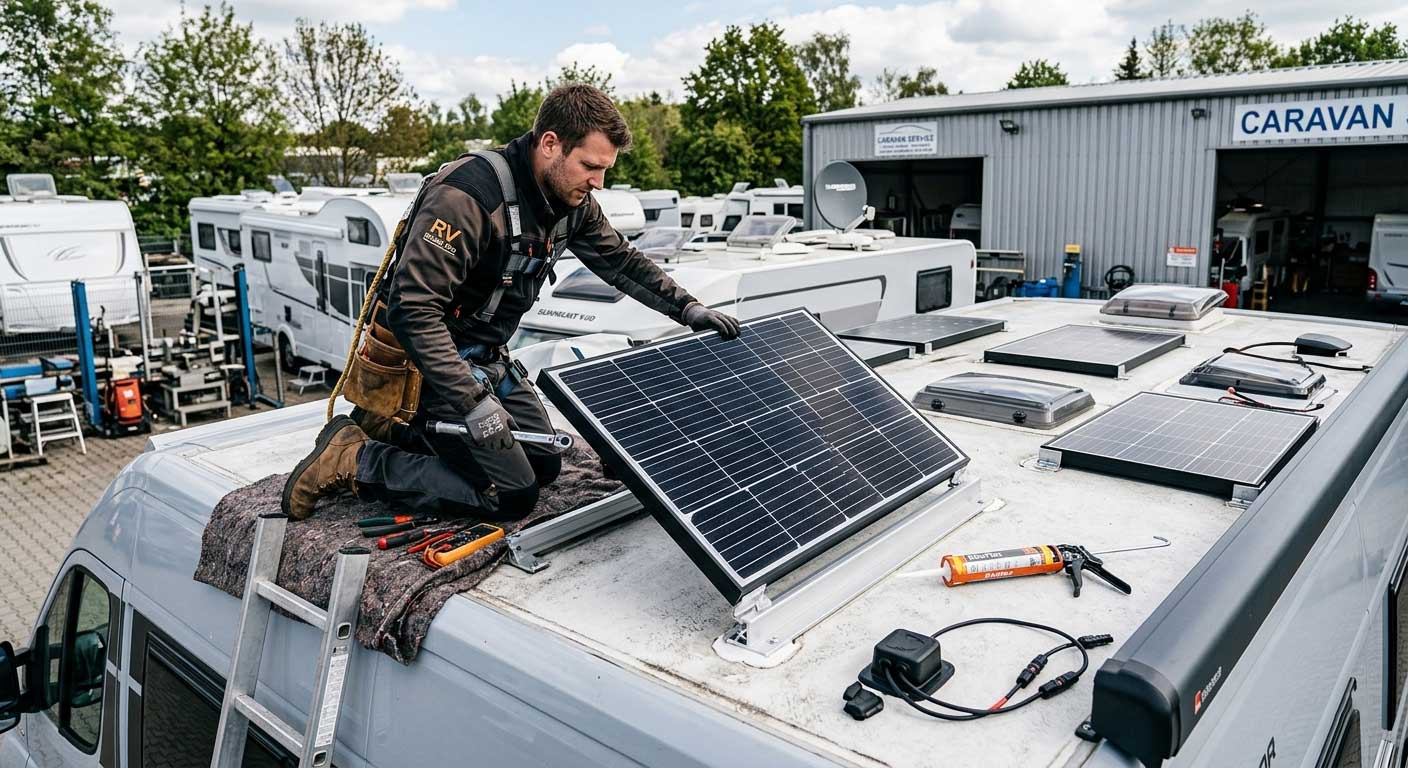
MPPT Solar Charge Controller
The controller regulates power flowing into batteries.
MPPT controllers are strongly recommended because they improve energy harvest efficiency, especially during cloudy conditions and partial shading.
The National Renewable Energy Laboratory (NREL) has published studies showing that MPPT systems can improve energy collection compared to PWM controllers under varying environmental conditions.
Reference Source:
https://www.nrel.gov/
Lithium Battery Storage
Battery chemistry dramatically changes RV usability.
AGM batteries still exist in budget systems, but serious off-grid travelers increasingly choose LiFePO4 lithium batteries because they offer:
- Deeper discharge cycles
- Faster charging
- Longer lifespan
- Lower overall weight
- More stable voltage output
One installation we reviewed in Arizona replaced two AGM batteries with a 300Ah lithium bank. The owner reduced system weight by nearly 40 kg while doubling usable energy capacity.
Pure Sine Wave Inverter
The inverter converts DC battery power into household AC electricity.
Without a pure sine wave inverter, sensitive electronics like laptops, coffee machines, and induction appliances may not operate correctly.
How Much Solar Power Does a Motorhome Actually Need?
This is where online calculators often become misleading.
Most RV owners underestimate energy consumption and overestimate solar production.
A realistic daily consumption example:
| Appliance | Daily Usage | Estimated Consumption |
|---|---|---|
| LED Lighting | 5 hrs | 80Wh |
| Refrigerator | 24 hrs | 800Wh |
| Water Pump | 20 mins | 60Wh |
| Laptop Charging | 4 hrs | 240Wh |
| Starlink Internet | 8 hrs | 500Wh |
| Ventilation Fan | 6 hrs | 180Wh |
Total daily consumption: approximately 1,860Wh
In practical terms, this traveler would usually require:
- 400W–600W solar panels
- 200Ah–300Ah lithium battery bank
- MPPT controller
- 2000W inverter
But weather matters more than marketing brochures suggest.
In northern Scotland during autumn, one customer reported solar harvest dropping below 25% of summer production for nearly a week. Meanwhile, users in southern Spain regularly exceeded rated production during peak summer sun.
That variability is why experienced RV installers focus heavily on battery reserve capacity instead of relying purely on daytime charging.
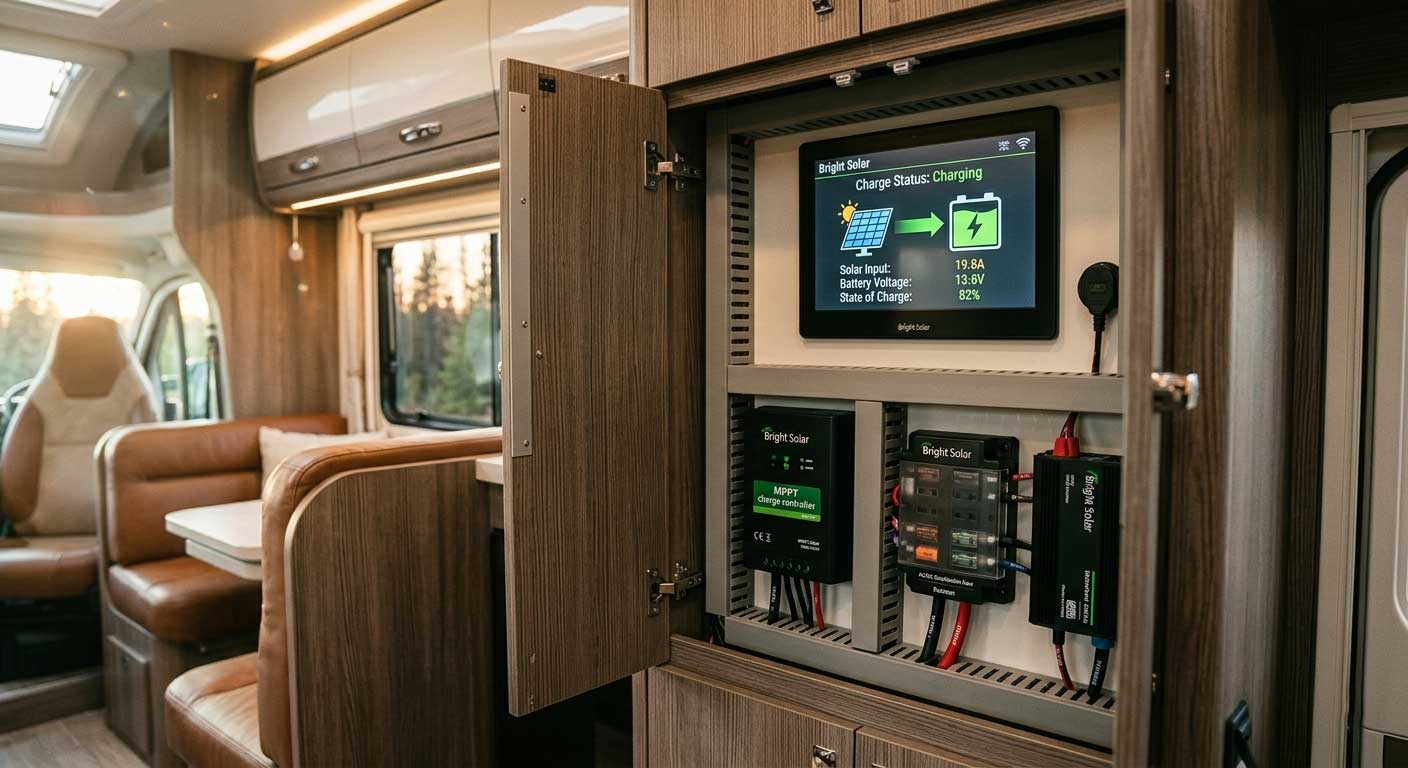
Real Installation Experience from Long-Distance RV Travel
A customer from Colorado installed a 720W Bright Solar motorhome solar kit on a Class C motorhome used for multi-week mountain travel.
Initial concerns included:
- Roof weight
- Snow exposure
- Vibration durability
- Partial shading from roof accessories
Instead of using a fully symmetrical layout, the installer intentionally staggered panel positioning to reduce shading overlap from the air conditioning unit during morning sun angles.
That small adjustment improved winter charging noticeably.
During testing:
- Average summer generation reached 2.6kWh/day
- Battery reserve supported 3 days without sunlight
- Generator runtime dropped by over 80%
- Refrigerator voltage fluctuations disappeared entirely
The owner later commented that the biggest improvement was psychological, not technical:
“You stop planning around power outlets. That changes how you travel.”
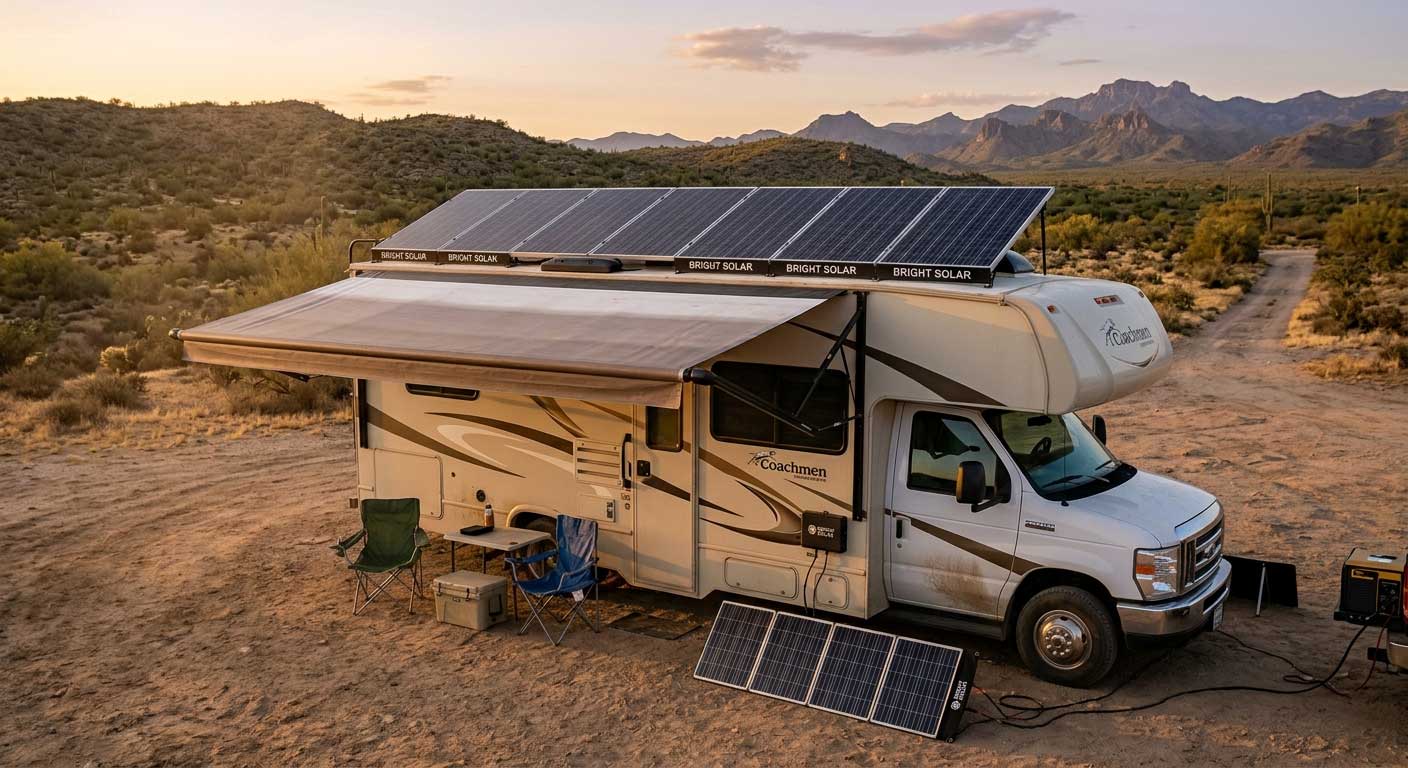
Choosing Between Flexible and Rigid Panels
This topic creates endless debate in RV communities.
The reality is more nuanced than internet forums suggest.
Flexible Solar Panels
Best for:
- Curved roofs
- Lightweight campervans
- Height-restricted vehicles
- Aerodynamic installations
Limitations:
- Higher operating temperatures
- Slightly lower lifespan
- More difficult heat dissipation
Rigid Solar Panels
Best for:
- Long-term full-time RV living
- Maximum efficiency
- Better airflow cooling
- Harsh environmental exposure
Limitations:
- Heavier mounting systems
- Higher roof profile
In practical field conditions, rigid panels generally outperform flexible panels in hot climates because airflow underneath reduces thermal efficiency losses.
However, flexible panels remain extremely valuable for compact European motorhomes where every centimeter matters.
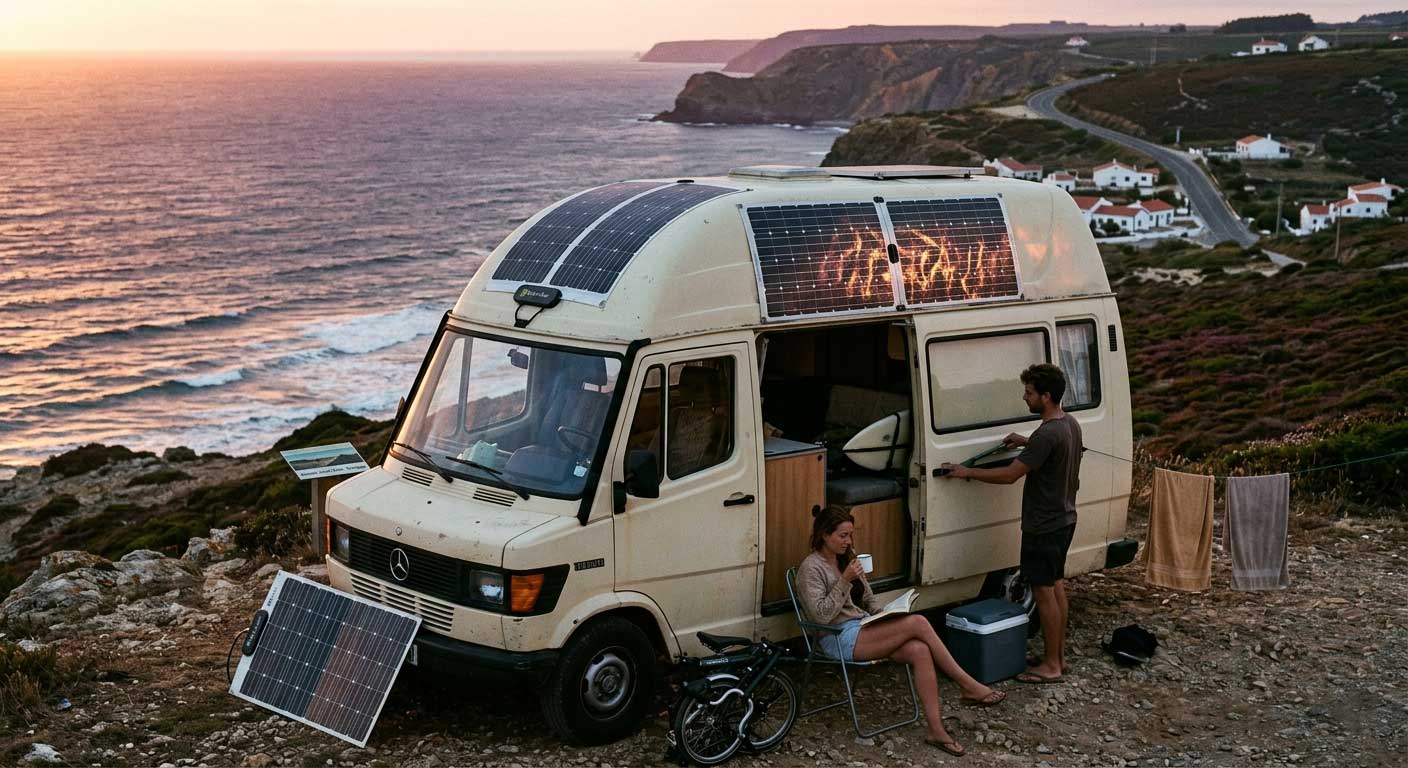
Common Mistakes When Buying a Motorhome Solar Kit
Oversizing Panels While Undersizing Batteries
This happens constantly.
A large panel array without enough battery storage wastes daytime production.
Ignoring Roof Shadows
Satellite domes, vents, roof racks, and air conditioners can reduce charging dramatically.
Even partial shading can affect overall string performance.
Buying Cheap Inverters
Low-quality inverters often create unstable voltage output and poor efficiency.
This becomes obvious during extended travel.
Underestimating Weather Variability
Cloudy weeks happen.
Solar systems should be designed around worst-case realistic conditions, not perfect summer sunlight.
Best Motorhome Solar Kit Configurations
| Travel Style | Recommended Solar | Battery Capacity |
|---|---|---|
| Weekend Camping | 200W | 100Ah Lithium |
| Remote Boondocking | 400W–600W | 200Ah Lithium |
| Full-Time RV Living | 800W–1200W | 400Ah+ Lithium |
| High-Power Appliances | 1200W+ | 600Ah+ Lithium |
Installation Tips from Experienced RV Technicians
Several installation details rarely appear in marketing materials but matter enormously in practice.
Cable Routing Matters
Improper cable routing causes vibration wear over time.
Marine-grade cable protection significantly improves durability.
Airflow Improves Panel Efficiency
Panels installed flush against hot roofs often lose performance in summer.
Even small airflow gaps help reduce temperature buildup.
Waterproofing Should Never Be Rushed
Many long-term RV roof leaks originate from rushed sealant work around mounting hardware.
Professional installers often spend more time sealing than mounting.
ROI: Is a Motorhome Solar Kit Worth the Investment?
For occasional campers, payback may be slow.
For full-time RV travelers, the economics improve rapidly.
Savings can include:
- Reduced campground fees
- Lower generator fuel costs
- Reduced maintenance
- Longer battery lifespan
- Improved travel flexibility
More importantly, solar changes behavior.
People travel differently when electricity becomes predictable and silent.
That is the real reason experienced RV travelers rarely return to generator-only setups.
FAQ About Motorhome Solar Kit Systems
Can a motorhome solar kit run an air conditioner?
Yes, but only with sufficiently large lithium battery banks and high-capacity inverters. Most rooftop AC systems require at least 800W–1200W solar arrays plus substantial battery storage.
How long do RV solar panels last?
Most high-quality monocrystalline panels maintain usable output for 20–25 years. Flexible panels may have shorter operational lifespans depending on heat exposure and installation conditions.
Is lithium better than AGM for motorhomes?
For most serious off-grid applications, yes. Lithium batteries provide more usable capacity, lower weight, faster charging, and longer cycle life.
Do solar panels charge while driving?
Yes, if connected through appropriate charging systems. Many RV owners combine alternator charging with solar charging for maximum efficiency.
What size inverter is best for a motorhome?
It depends on appliance demand. Many modern RV systems use 2000W pure sine wave inverters as a balanced solution for common household electronics.
Final Thoughts on Building a Reliable Motorhome Solar Kit
The best motorhome solar kit is not necessarily the largest system. It is the system designed honestly around how people actually travel.
A weekend camper parked under forest shade has completely different requirements from a full-time desert traveler running Starlink, refrigeration, and induction cooking every day.
At Bright Solar, we have consistently seen one pattern repeat: properly designed systems reduce stress far more than they reduce electricity costs.
That becomes obvious somewhere around the third night parked beside a remote lake, when neighboring generators shut down and your lights remain quietly on.
Related recommendations
-

Marine Flexible Solar Panels: Lightweight Solar Power Solutions for Boats and Yachts
217Marine flexible solar panels provide lightweight solar power for boats, yachts, and offshore systems. Explore installation methods, durability, and real marine applications.
View details -
High Efficiency Flexible Solar Panels: Advanced Lightweight Solar Power Solution
109Discover high efficiency flexible solar panels from Bright Solar. Learn how advanced materials improve solar output, flexibility, and performance for RV, marine, and off-grid applications.
View details -
flexible solar panels for rv (Real Field Engineering Guide from Bright Solar)
107flexible solar panels for rv explained with real installation cases, durability insights, RV roof design tips, and off-grid performance data for travelers.
View details -
flexible solar panels for rv roof: Lightweight Solar Power Solution for RV Travel
141Discover flexible solar panels for rv roof with lightweight design, easy installation, and reliable power output. Bright Solar provides durable solar solutions for modern RV travel.
View details