How many watts does a solar panel generate?
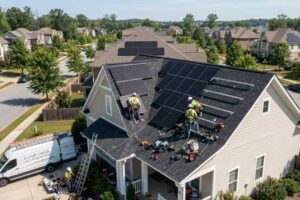
A typical solar panel generates 100 to 550 watts of rated power, depending on its size, cell technology, and design. Actual output changes with sunlight conditions, temperature, installation angle, and system losses.
How many watts does a solar panel generate in real-world conditions?
The answer depends on the panel’s rated wattage under standard test conditions (STC). A solar panel marked 400W can produce up to 400 watts of power at 1,000 W/m² solar irradiance, a 25°C cell temperature, and controlled laboratory conditions.
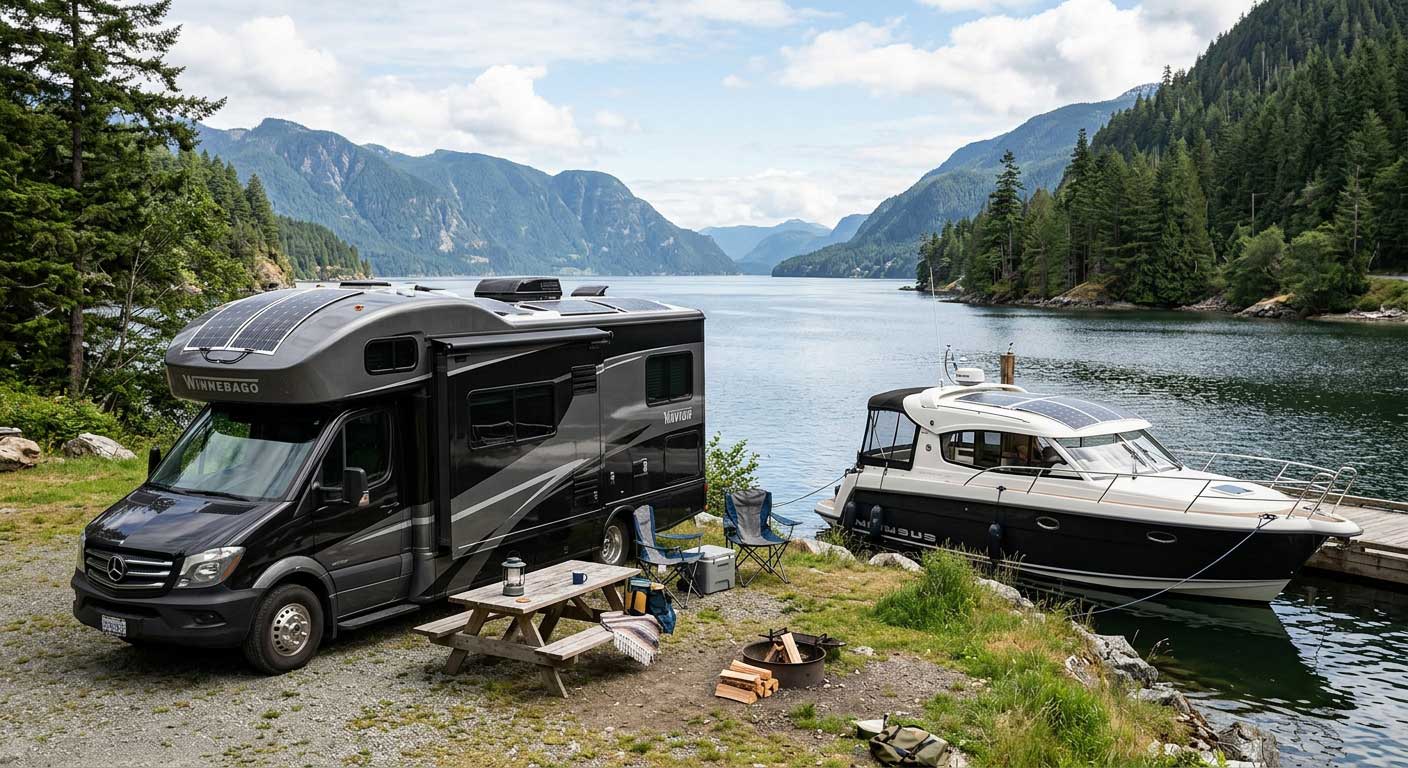
In real installations, output is usually lower because the environment is not a laboratory. During Bright Solar’s flexible solar panel application testing, we measure differences between rooftop, RV, marine, and portable setups. A 100W flexible solar panel installed on an RV roof does not behave exactly like the same panel mounted in an open test field.
According to the U.S. Department of Energy, solar photovoltaic system production depends on location, orientation, shading, and system design. The National Renewable Energy Laboratory (NREL) also provides PVWatts modeling tools to estimate real-world energy production based on local conditions.
For example:
| Solar Panel Rating | Typical Application | Approximate Daily Energy Output* |
|---|---|---|
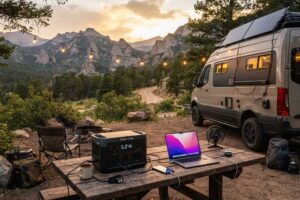
| 100W panel | Camping, RV, portable power | 0.3–0.6 kWh/day |
| 200W panel | Small off-grid systems | 0.6–1.2 kWh/day |
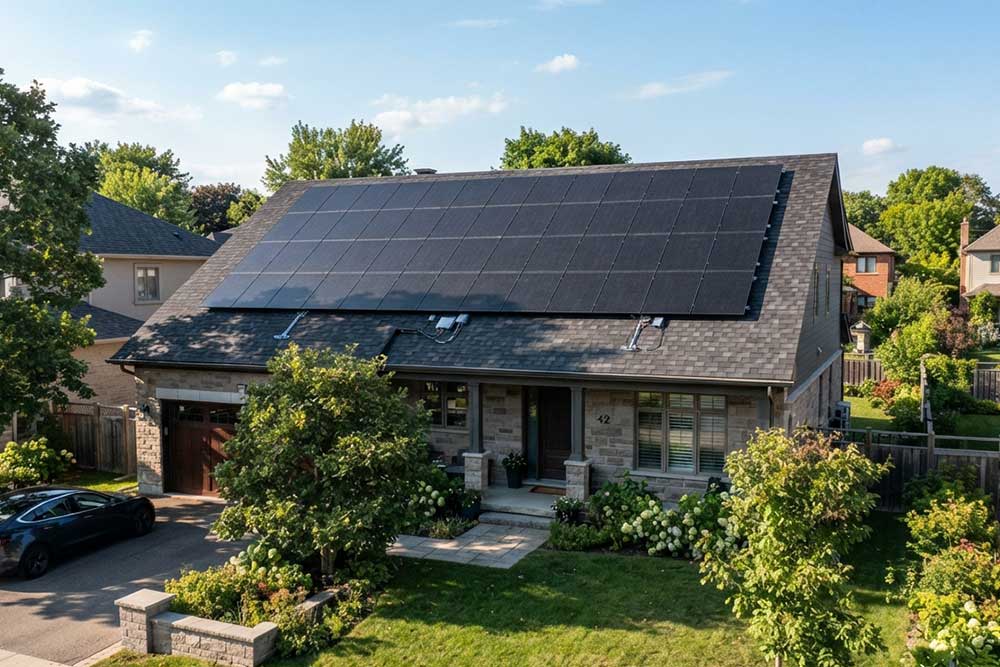
| 400W panel | Residential rooftop systems | 1.2–2.4 kWh/day |
| 500W+ panel | Commercial solar projects | 1.5–3 kWh/day |
*Actual output depends on peak sun hours, weather, shading, and system efficiency.
What determines solar panel watt output?
A solar panel’s watt generation is influenced by several practical factors. The number printed on the product label is only the starting point.
Solar panel size and cell technology
Larger panels generally contain more photovoltaic cells and can generate higher wattage. Modern monocrystalline panels commonly achieve higher power density compared with older technologies.
Bright Solar flexible panels are designed for applications where traditional Rigid Solar Panels are difficult to install, such as curved RV roofs, boats, and portable energy systems. The flexible structure allows more installation possibilities without changing the basic relationship between sunlight and power generation.
Sunlight conditions and peak sun hours
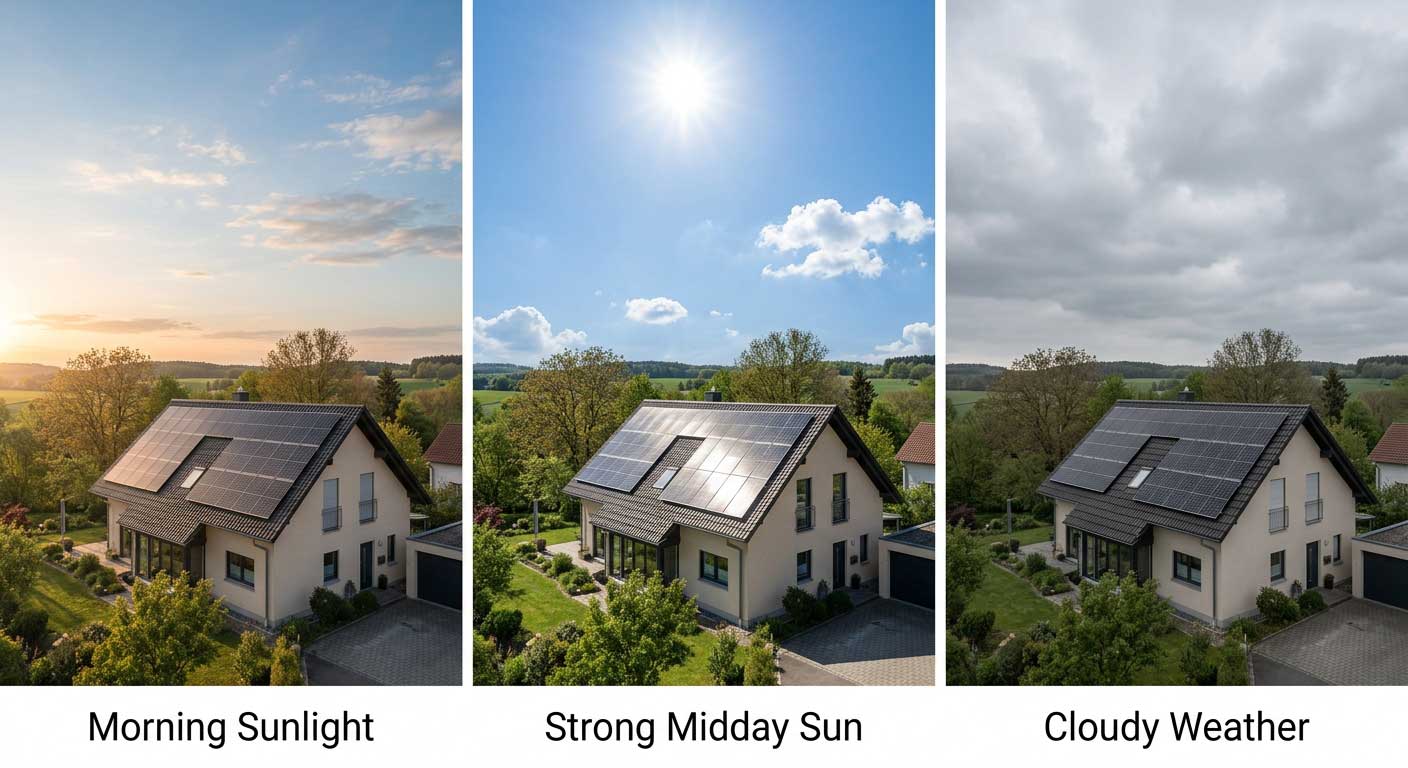
Solar panels generate electricity only when sunlight reaches the photovoltaic cells. A panel operating in Arizona at noon will produce more power than the same panel installed under cloudy northern conditions.
The National Renewable Energy Laboratory explains that solar resource availability varies significantly by geographic location. Peak sun hours are commonly used to estimate daily solar production.
Example:
- 400W solar panel × 5 peak sun hours = approximately 2,000Wh (2kWh) theoretical daily energy
- After normal system losses, usable energy will be lower
How many watts does a solar panel produce per day?
Many readers confuse watts with watt-hours. Watts describe the power output at a specific moment, while watt-hours describe total energy generated over time.
A 300W solar panel does not continuously produce 300 watts all day. If it receives four hours of strong sunlight, the calculation is:
300W × 4 hours = 1,200Wh or 1.2kWh per day
Real-world production may be reduced by:
- Heat losses
- Dust on the panel surface
- Cable resistance
- Charge controller efficiency
- Battery charging losses
- Partial shading
At Bright Solar, field evaluations of flexible solar panels often focus on the gap between rated output and installed performance. This difference matters for RV owners, marine operators, and off-grid users because available roof space is limited. A higher watt-per-area design can directly affect system reliability.
Solar panel watt output comparison by application
Different users need different power levels. A camping setup may only require a compact 100W flexible panel, while a home backup system may need multiple high-wattage modules.
| Application | Common Panel Wattage | Typical Purpose |
|---|---|---|
| Portable charging | 50W–200W | Phones, batteries, small devices |
| RV solar system | 100W–400W | Lights, refrigerators, electronics |
| Marine solar | 100W–500W | Navigation equipment, onboard power |
| Residential solar | 350W–550W | Household electricity generation |
| Commercial solar | 500W+ | Large-scale energy projects |
Choosing the correct panel is not only about maximum watts. Installation space, weight limits, flexibility requirements, and operating environment often determine the better solution.
FAQ About Solar Panel Watt Generation
How many watts does a 100W solar panel generate?
A 100W solar panel can generate up to 100 watts under standard test conditions. Daily energy production depends on sunlight hours and installation conditions.
How many watts does a 400W solar panel generate?
A 400W solar panel can produce 400 watts at peak conditions. In practical use, daily output depends on location, weather, orientation, and system efficiency.
Does a solar panel always produce its rated watts?
No. The rated watt value represents laboratory testing conditions. Outdoor performance varies because sunlight intensity and temperature constantly change.
Are higher watt solar panels always better?
Not always. Higher wattage is useful when installation space is limited, but weight, flexibility, cost, and application requirements must also be considered.
How many watts does a solar panel generate on a cloudy day?
Solar panels still produce electricity on cloudy days, but output is reduced because less sunlight reaches the photovoltaic cells.
Can flexible solar panels generate the same watts as rigid panels?
Yes, flexible solar panels can provide similar rated watt options when using comparable photovoltaic technology. The main difference is installation flexibility and application suitability.
How can I calculate my solar panel power needs?
Estimate daily electricity consumption in watt-hours, then consider available sunlight hours, system losses, and required battery capacity before selecting panel wattage.
Final Answer: How many watts does a solar panel generate?
The exact answer to how many watts does a solar panel generate depends on the panel rating and operating environment. Modern solar panels commonly range from 100W portable models to more than 550W commercial modules. Understanding real output instead of only rated watts helps users select the right solar solution for RV, marine, home, and off-grid applications.
Bright Solar focuses on flexible and customized solar panel solutions, helping businesses select suitable power ratings based on installation space, application requirements, and long-term reliability.
Related recommendations
-

How Many kWh Does a Solar Panel Generate?
215How many kWh does a solar panel generate explained with real output data, factors affecting production, and expert solar insights from Bright Solar.
View details -
How Long Does It Take to Install Solar Panels?
244How long does it take to install solar panels? Learn the complete installation timeline, from site assessment and permits to rooftop installation and grid connection with Bright Solar.
View details -
how many kwh can a solar panel produce?
82how many kwh can a solar panel produce? Explore realistic daily and yearly energy examples, panel wattage calculations, and the sunlight, heat, and system losses that affect output.
View details -
What can i run on a 100 watt solar panel?
257What can i run on a 100 watt solar panel? Explore real power examples, device compatibility, energy calculations, and practical off-grid uses with Bright Solar.
View details