Do I Need to Clean My Solar Panels?
Yes, solar panels sometimes need cleaning, but frequent washing is rarely necessary. Rain can remove loose dust, while pollen, bird droppings, leaves, and stubborn grime may remain and reduce light reaching the cells. Check your panels periodically, clean them when buildup is noticeable or output changes unexpectedly, and always follow the manufacturer’s safety and maintenance instructions.
Why Solar Panels Sometimes Need Cleaning
Solar panels generate electricity when sunlight reaches their photovoltaic cells. When dust, pollen, bird droppings, or other deposits cover the surface, less light may reach the cells. This buildup is commonly called soiling.
How much it matters depends on the installation. A panel in a rainy, leafy neighborhood may stay relatively clean for long periods, while one near a dusty road, construction site, farm, or dry landscape can accumulate deposits much faster.
Research from the U.S. Department of Energy’s National Renewable Energy Laboratory (NREL) demonstrates why rainfall is not always enough. In a study of five utility-scale solar plants in North Carolina, researchers found that peak pollen-season performance losses reached as much as 15%. Cleaning with wet mechanical brushes subsequently increased performance by 5% to 11% at the studied sites. These are results from specific plants—not a universal estimate for every rooftop system.
The practical takeaway: don’t clean panels simply because a calendar says it is time. Look at the environment, the visible buildup, and the system’s performance.
Signs Your Solar Panels May Need Cleaning
Consider inspecting the panels if you notice:
- A visible layer of dust, pollen, or grime.
- Bird droppings or leaves that remain after rainfall.
- Persistent dirt along the lower edges of tilted panels.
- A localized patch of buildup that does not wash away.
- A sustained drop in energy production that cannot be explained by weather, shading, equipment issues, or seasonal changes.
A dirty-looking panel does not automatically mean a major loss of electricity. Equally, a panel that looks reasonably clear may still have a thin film of pollen or other material on its surface.
How Often Should You Clean Solar Panels?
There is no single cleaning schedule that suits every installation. Some systems receive enough rain to remove loose dirt, while others need occasional manual cleaning because of local conditions.
| Installation conditions | Practical approach |
|---|---|
| Frequent rain and little nearby dust | Inspect periodically; clean only if deposits remain or performance suggests a problem. |
| Heavy pollen season | Check the array after the season, especially if a visible film remains. |
| Dry, dusty, or agricultural location | Inspect more frequently and assess whether cleaning is improving output enough to justify the effort. |
| Nearby trees or frequent bird activity | Look for droppings, leaves, and localized deposits that rainfall may not remove. |
| Solar panels on an RV or boat | Inspect after travel, storage, or exposure to road grime, salt spray, and other environmental deposits. Follow the panel maker’s care instructions. |
NREL has highlighted that soiling losses vary with local conditions. Its research also explains that cleaning has a cost, so maintenance decisions should weigh potential energy recovery against labor, water, equipment, and access expenses.
For a home system, reviewing production data can help. Compare similar periods and account for cloud cover, seasonal sunlight, shading, and any equipment changes before assuming dirt is the cause of lower output.
How to Clean Solar Panels Safely
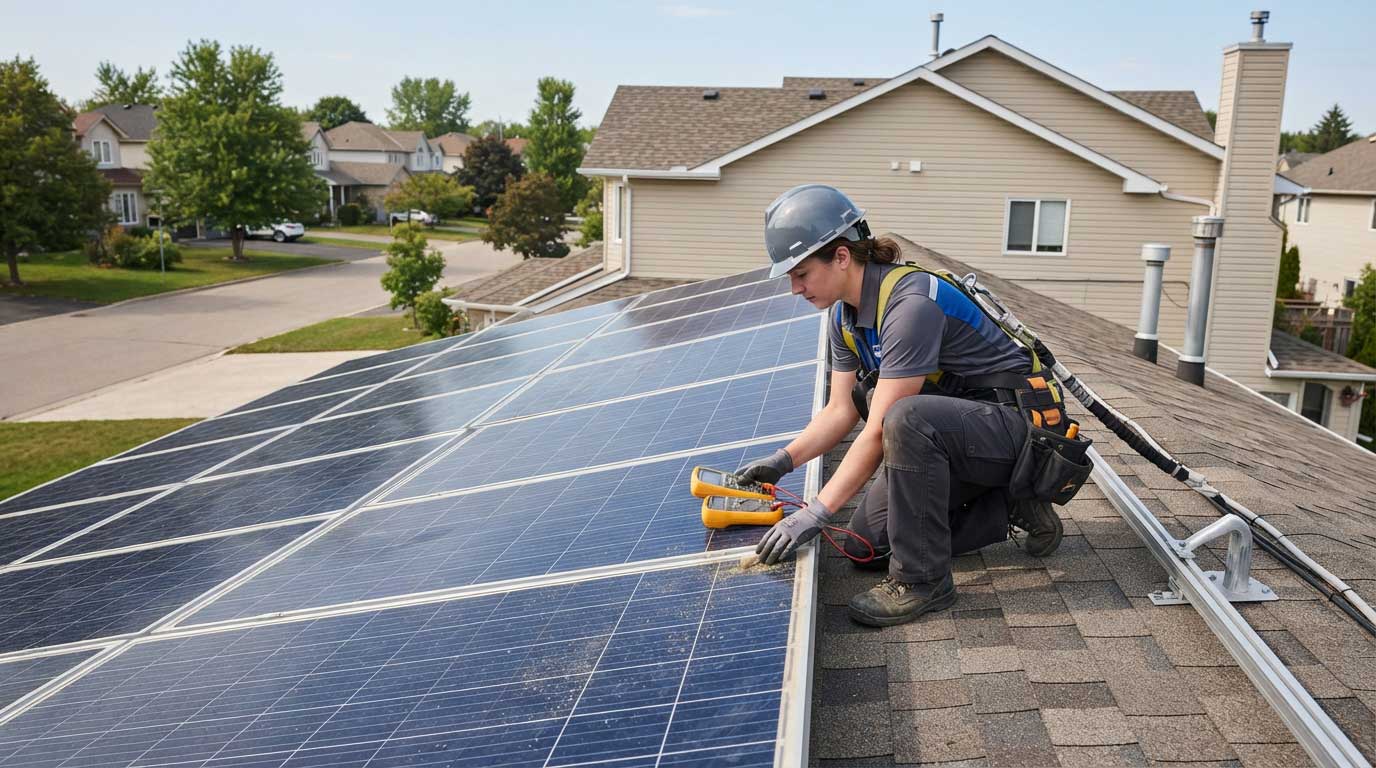
If cleaning is necessary, start with the module manufacturer’s instructions. Panel materials, mounting arrangements, and electrical configurations vary, so a method suitable for one installation may not be appropriate for another.
General precautions include:
- Prioritize safe access. Rooftop work can involve fall and electrical hazards. Use a qualified professional if the panels cannot be reached safely from the ground.
- Choose suitable conditions. Avoid working on hot modules or during conditions that make surfaces slippery or access unsafe.
- Use gentle cleaning methods. Where the manufacturer permits, use clean water and a soft, non-abrasive cleaning tool.
- Avoid harsh chemicals and abrasive materials. They may damage glass, coatings, seals, or other module components.
- Do not step on the panels. Ordinary solar modules are not designed to serve as walkways unless the manufacturer explicitly specifies otherwise.
- Do not spray electrical components indiscriminately. Follow the installation and equipment instructions, and do not open junction boxes or disconnect wiring as part of routine surface cleaning.
The U.S. Department of Energy’s operations and maintenance guidance advises using plain water or mild dishwashing detergent where appropriate and avoiding solvents, abrasives, and harsh detergents. Always defer to the specific module manufacturer if its instructions are more restrictive.
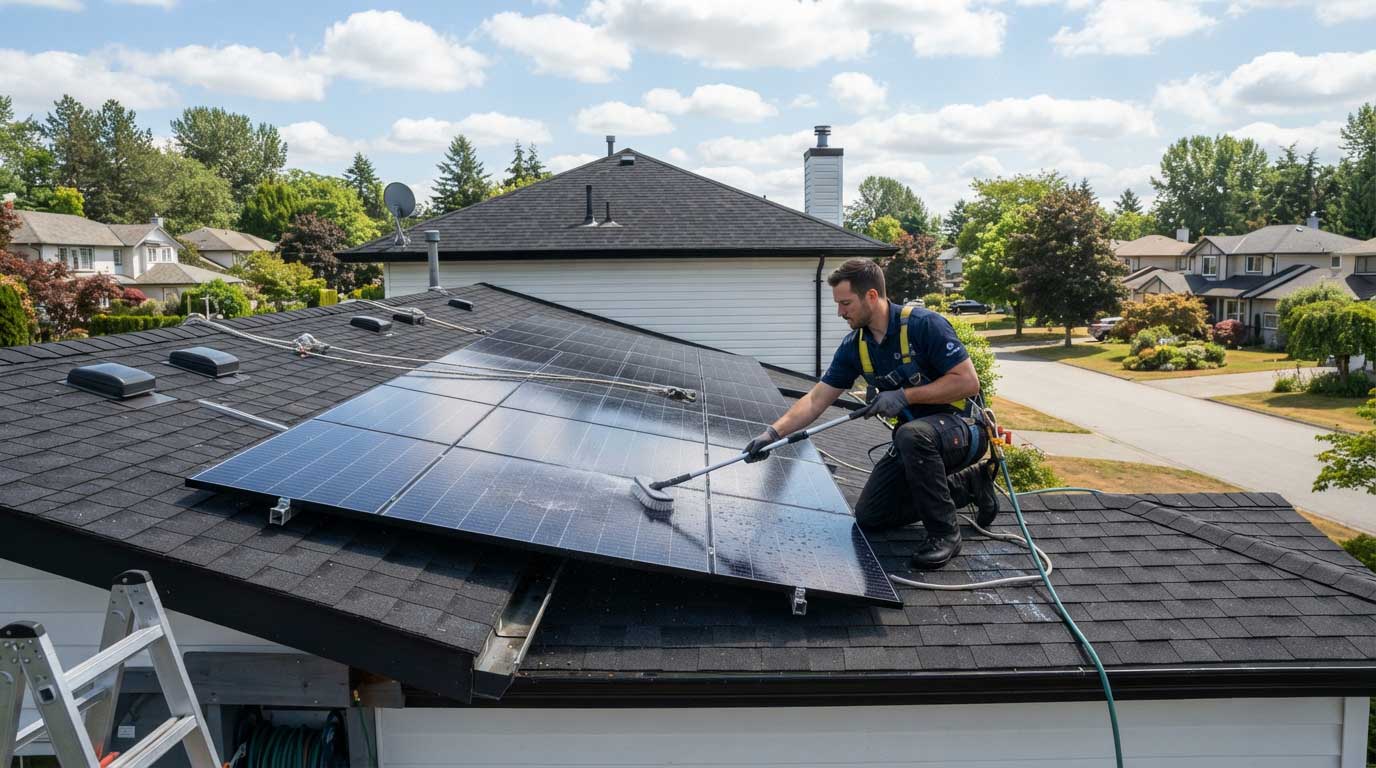
Does Rain Clean Solar Panels Well Enough?
Rain can remove loose dust and some surface dirt, but it is not a guarantee that panels will become completely clean. Pollen, sticky deposits, bird droppings, and dirt that collects along panel edges may remain after a shower.
NREL’s North Carolina pollen study is a useful reminder: even locations with regular rainfall can experience meaningful soiling losses. The researchers observed that rain did not fully restore performance to pre-pollen levels at the studied sites.
That does not mean every system needs frequent washing. It means rain should be treated as one part of the maintenance picture—not proof that cleaning is never required.
FAQ About Do I Need to Clean My Solar Panels?
Will dirty solar panels stop working?
No. They can continue generating electricity, but deposits that block sunlight may reduce their output. The impact depends on the type and amount of soiling and the site conditions.
Can I clean solar panels with a garden hose?
Possibly, if the module manufacturer permits it and the installation can be accessed safely. Avoid directing water at electrical equipment or using excessive pressure unless the manufacturer explicitly allows it.
Is it safe to use soap on solar panels?
Only use a mild, manufacturer-approved cleaning solution when needed. Avoid harsh detergents, solvents, and abrasive cleaners that could damage the module surface or coatings.
Do solar panels need cleaning after every rainstorm?
No. Routine cleaning after every storm is generally unnecessary. Inspect for deposits that remain and consider cleaning when buildup is significant or performance evidence supports it.
Can I walk on solar panels to clean them?
Do not walk on ordinary solar panels. Walking can damage modules even when cracks or other defects are not immediately visible. Use safe access routes or hire a qualified technician.
Does cleaning always increase solar power output?
Not necessarily. Cleaning can help when soiling is reducing the amount of sunlight reaching the cells, but the benefit depends on the dirt and site conditions. It will not fix unrelated problems such as shading, inverter faults, or wiring issues.
Conclusion
Do I need to clean my solar panels? Yes, when dirt or deposits build up enough to warrant it—but not automatically on a rigid schedule. Inspect the system, consider local conditions, compare production carefully, and follow the manufacturer’s cleaning and safety instructions. For Bright Solar customers, the module’s own maintenance guidance should always take priority over generic advice.
The prev: Do Solar Panels Add Value to Your House?The next: Can You Walk on Solar Panels?
Related recommendations
-

How Much Does Solar Panels Cost?
124How much does solar panels cost? Discover real solar panel prices, installation factors, system costs, and expert advice to plan your solar investment.
View details -
How Much Does a Solar Panel System Cost?
131How much does a solar panel system cost? Learn residential solar pricing, installation factors, incentives, and real cost insights from Bright Solar experts.
View details -
How to Compare Marine Flexible Solar Panels?
282Learn how to compare marine flexible solar panels beyond wattage. Discover real-world insights on durability, ETFE materials, saltwater resistance, and lifespan before buying.
View details -
How to Clean Solar Light Panels?
264Learn how to clean solar light panels properly, remove dirt from garden solar lights, improve charging performance, and extend solar lighting lifespan.
View details