How to make solar panel at home?
To make a solar panel at home, assemble photovoltaic cells, connect them with proper wiring, protect them inside a suitable enclosure, and test electrical output safely. A homemade panel is mainly for learning and small experiments.
How to make solar panel at home step by step
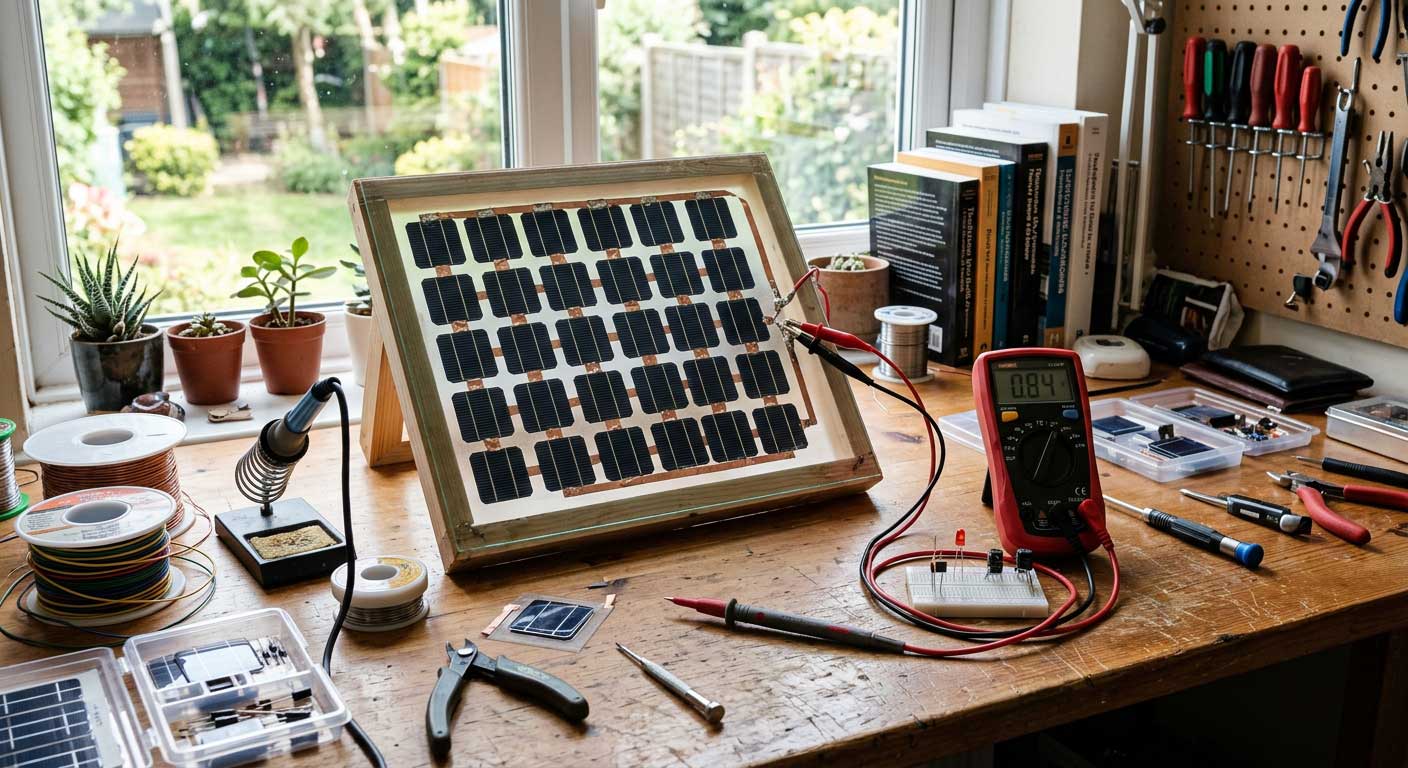
Learning how to make solar panel at home can help people understand how photovoltaic technology converts sunlight into electricity. A DIY solar panel project is useful for education, demonstrations, and small low-power applications, but commercial solar modules require advanced manufacturing equipment, quality control, and certified materials.
At Bright Solar, we develop flexible solar panels for RV, marine, portable, and off-grid applications. When discussing DIY solar concepts with customers, our engineers often explain the difference between assembling a small experimental panel and manufacturing a reliable energy product. A working solar panel is not only a group of solar cells connected together; durability depends on encapsulation, electrical design, weather protection, and long-term material performance.
A basic homemade solar panel project includes:
| Component | Purpose |
|---|---|
| Solar cells | Convert sunlight into electricity |
| Conductive wire | Connect cells electrically |
| Soldering tools | Create cell connections |
| Protective surface | Shield cells from damage |
| Junction connection | Transfer generated power |
The basic energy process:
Sunlight → Solar cells → DC electricity → Controller or small load
Materials needed to make a solar panel at home
Select suitable solar cells
The first step in how to make solar panel at home is choosing photovoltaic cells.
Common DIY options include:
- Monocrystalline solar cells
- Polycrystalline solar cells
- Small educational solar cells
Monocrystalline cells are widely used because they generally provide higher efficiency compared with older photovoltaic technologies.
According to the U.S. Department of Energy, photovoltaic cells generate electricity when semiconductor materials absorb photons from sunlight and release electrons, creating electrical current.
Prepare the basic materials
Typical DIY materials include:
- Solar cells
- Bus wire
- Tab wire
- Flux pen
- Soldering iron
- Protective backing
- Transparent cover material
- Electrical connectors
A simple project may create a small solar module, but the final output depends on:
- Number of cells
- Cell efficiency
- Sunlight intensity
- Connection quality
Step-by-step process for building a homemade solar panel
Step 1: Arrange the solar cells
Place solar cells in the desired pattern.
Common arrangements:
- Series connection for higher voltage
- Parallel connection for higher current
Example:
If one small solar cell produces approximately 0.5V, multiple cells connected in series can create a higher operating voltage.
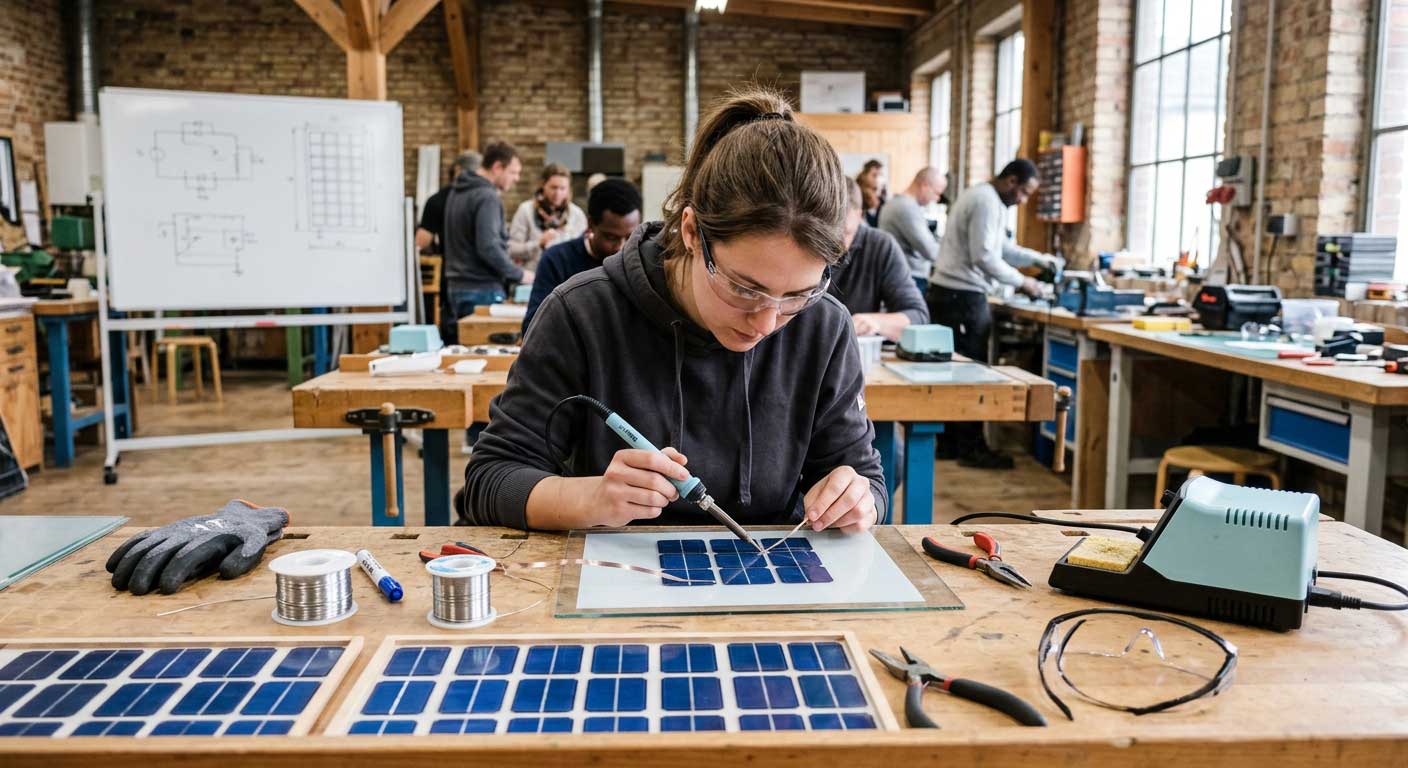
Step 2: Connect solar cells together
Solar cells require careful electrical connections.
The process usually involves:
- Aligning cells correctly
- Connecting tab wires
- Soldering connections
- Checking electrical continuity
This stage requires patience because solar cells are thin and fragile.
In professional solar manufacturing, automated equipment is used to reduce cell damage and maintain consistent electrical performance.
Step 3: Protect the solar cells
A homemade solar panel needs protection from:
- Moisture
- Dust
- Physical impact
- Temperature changes
Commercial solar panels use specialized encapsulation materials such as EVA and protective back sheets to improve durability.
DIY panels may not achieve the same weather resistance as factory-produced modules.
How much power can a homemade solar panel produce?
Factors affecting DIY solar panel output
The electricity produced by a homemade solar panel depends on several conditions.
Main factors:
| Factor | Impact |
|---|---|
| Solar cell quantity | More cells increase output |
| Cell efficiency | Higher efficiency improves production |
| Sunlight exposure | More sunlight increases generation |
| Wiring quality | Poor connections reduce performance |
For example, a small educational solar panel may only power:
- LED lights
- Small fans
- Sensors
- Educational electronics
It is usually not designed to replace a residential solar system.
DIY solar panel vs professional solar panel
Key differences
| Feature | DIY Solar Panel | Professional Solar Panel |
|---|---|---|
| Manufacturing | Manual assembly | Automated production |
| Testing | Limited | Certified testing |
| Weather resistance | Depends on materials | Designed for outdoor use |
| Lifespan | Variable | Long-term engineered performance |
| Application | Learning projects | Homes, RVs, commercial systems |
At Bright Solar, flexible solar panels are designed for applications where weight, shape, and installation conditions matter. Products for marine and off-grid environments require protection against moisture, vibration, and outdoor exposure that simple DIY assemblies may not provide.
Safety considerations when making solar panels at home
Handle solar cells carefully
Solar cells can break easily.
Avoid:
- Excessive bending
- Strong pressure
- Incorrect soldering temperature
Test electrical output safely
Before connecting loads:
- Check voltage
- Confirm polarity
- Avoid short circuits
- Use proper electrical protection
Understand limitations
A homemade solar panel is excellent for learning, but professional applications require:
- Reliable materials
- Electrical testing
- Safety certifications
- Long-term durability
FAQ About Making Solar Panels at Home
Can I really make a solar panel at home?
Yes. You can build a small solar panel for educational projects, but commercial solar panels require professional manufacturing processes.
What materials are needed to make a solar panel?
Basic materials include solar cells, wires, soldering tools, protective materials, and electrical connectors.
How much electricity can a homemade solar panel produce?
Output depends on cell quantity, efficiency, sunlight conditions, and connection quality.
Is a DIY solar panel cheaper than buying one?
For small experiments, DIY can be affordable, but commercial panels usually provide better reliability and performance.
Can homemade solar panels power a house?
No. Residential solar systems require professionally manufactured panels, inverters, batteries, and safety equipment.
How long does a homemade solar panel last?
Lifespan depends on materials, protection methods, and environmental exposure.
Are DIY solar panels safe?
They can be safe when properly assembled, but electrical testing and protection are important.
Final Answer: How to make solar panel at home?
Understanding how to make solar panel at home provides valuable knowledge about photovoltaic technology and solar electricity generation. A DIY panel can demonstrate how solar cells work, but professional solar modules require advanced manufacturing, testing, and durable materials.
Bright Solar develops flexible solar panel solutions for RV, marine, portable, and off-grid applications where reliable renewable energy performance is required.
The prev: How to keep snow off solar panels?
Related recommendations
-

How to Attach Flexible Solar Panel to RV Roof?
253Learn how to attach flexible solar panel to RV roof safely using adhesive, screws, and proper sealing methods. Expert RV solar installation tips from Bright Solar.
View details -
How Much Electricity Do Solar Panels Generate?
276How much electricity do solar panels generate? Learn real solar energy output, daily kWh production, panel factors, and expert insights from Bright Solar.
View details -
are portable solar panels any good?
225Are portable solar panels any good for camping, RVs, and backup power? Discover real-world performance, charging speed, and expert insights from Bright Solar.
View details -
How Many Kilowatts Can a Solar Panel Produce?
281How many kilowatts can a solar panel produce? Learn typical solar panel power output, real-world performance, and expert insights from Bright Solar to estimate your energy production.
View details